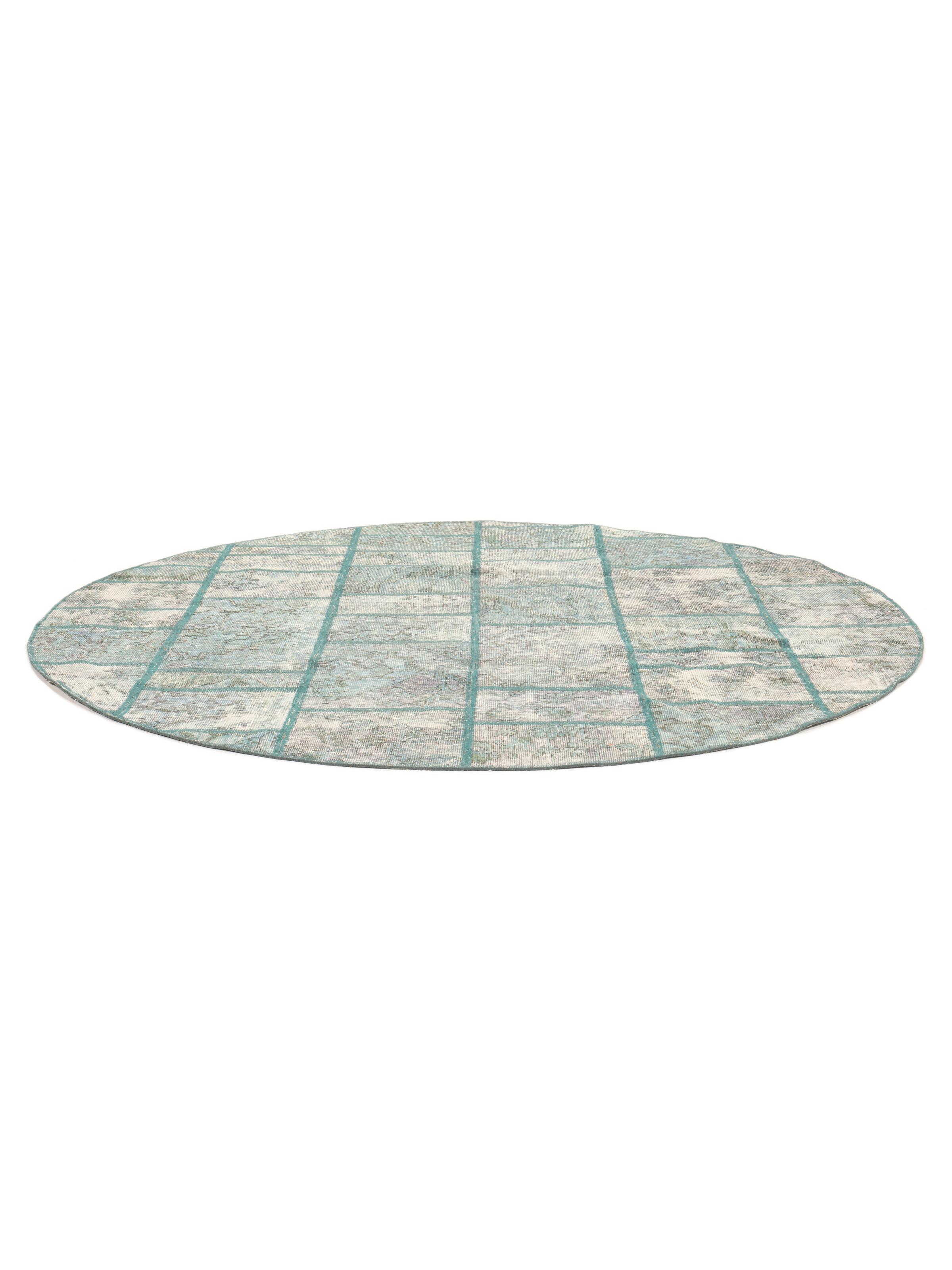
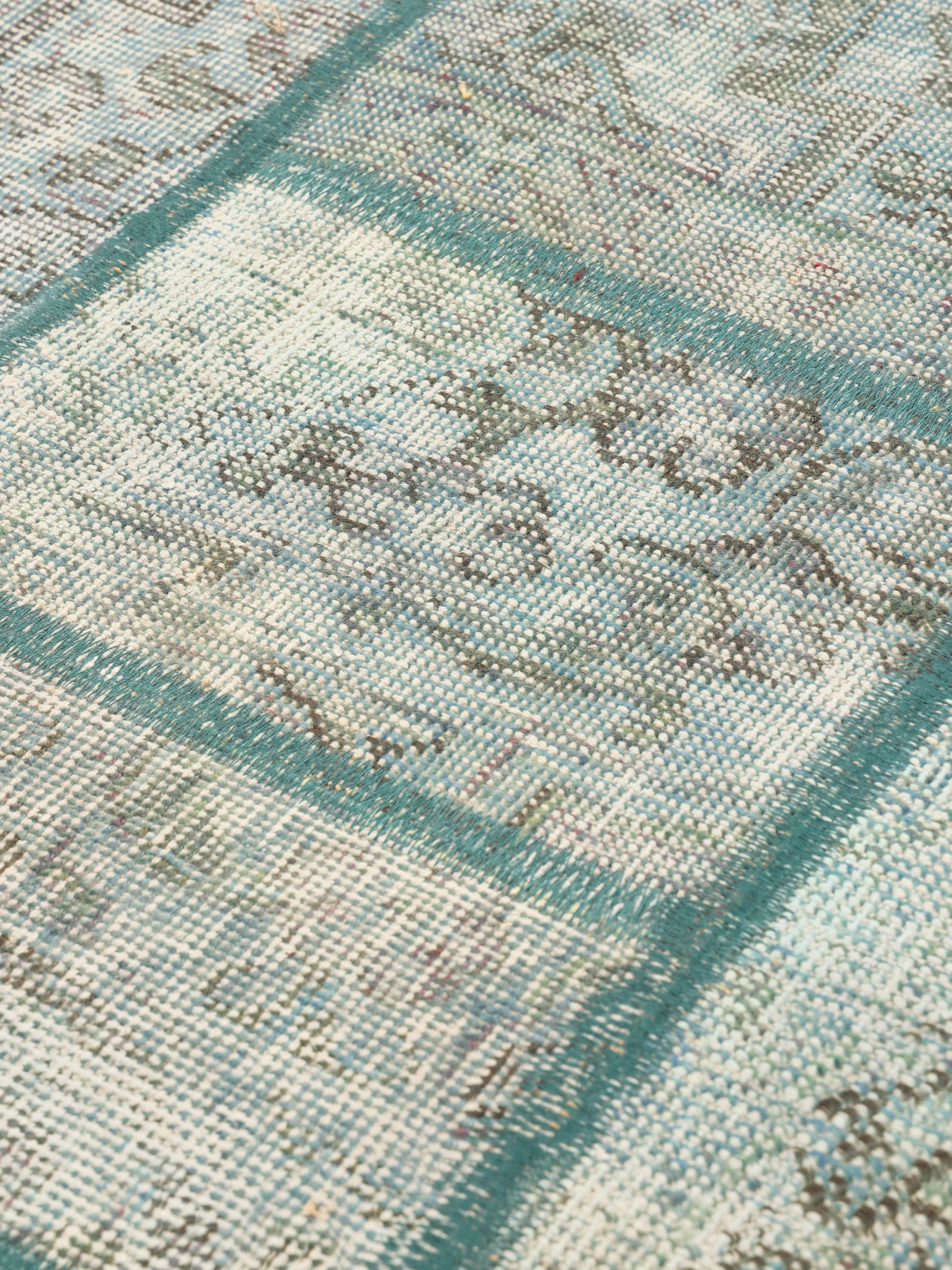
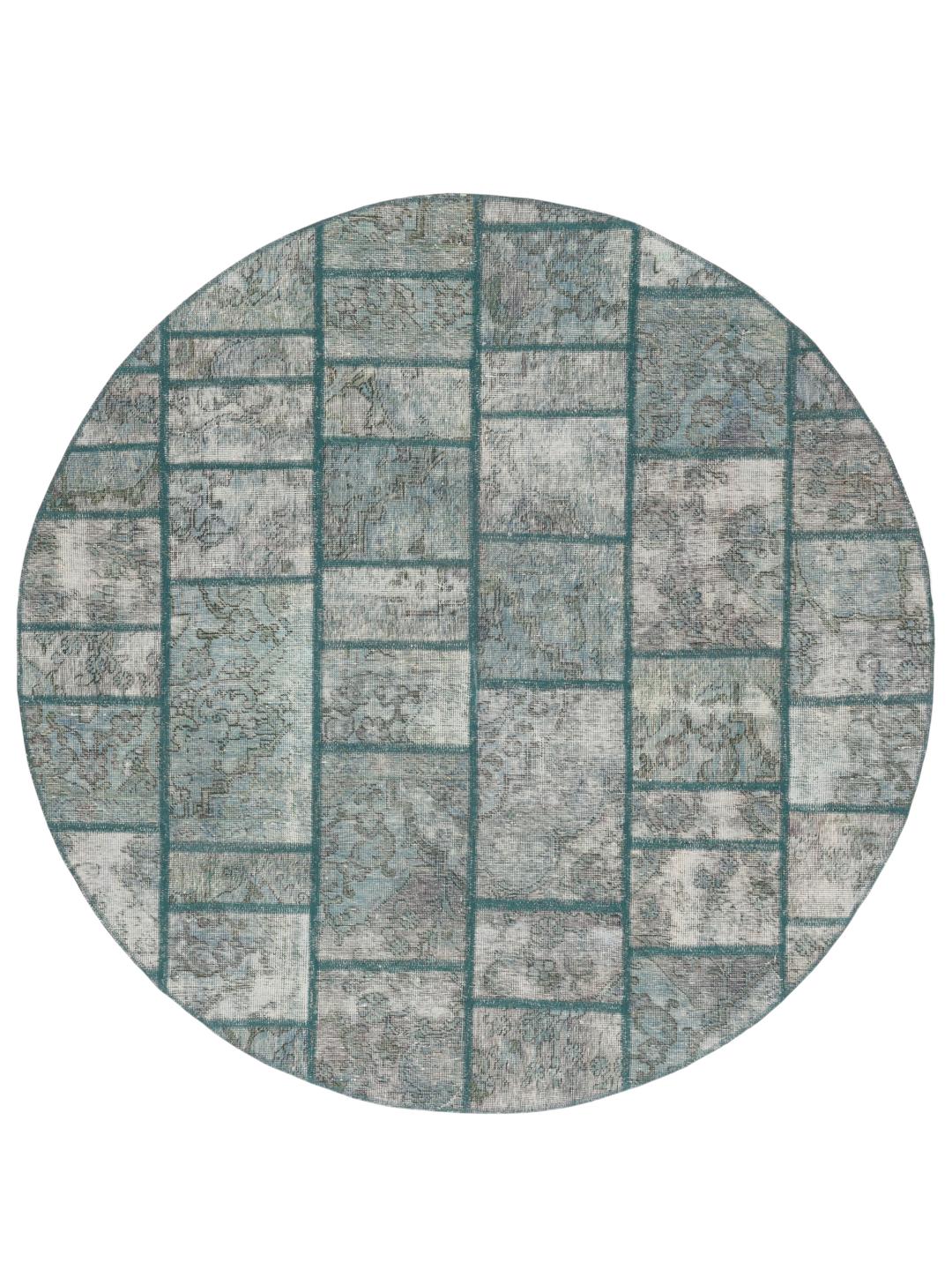
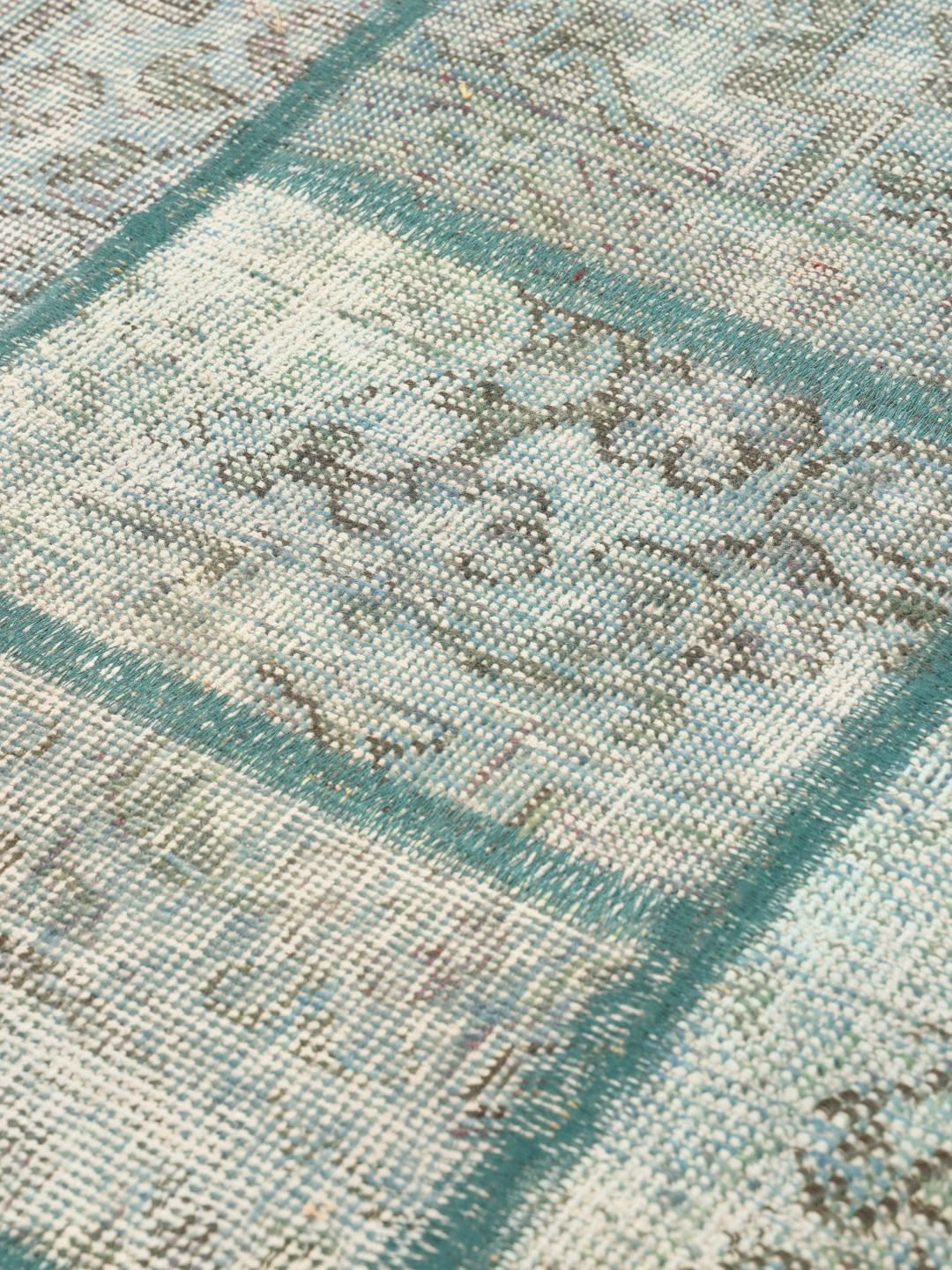
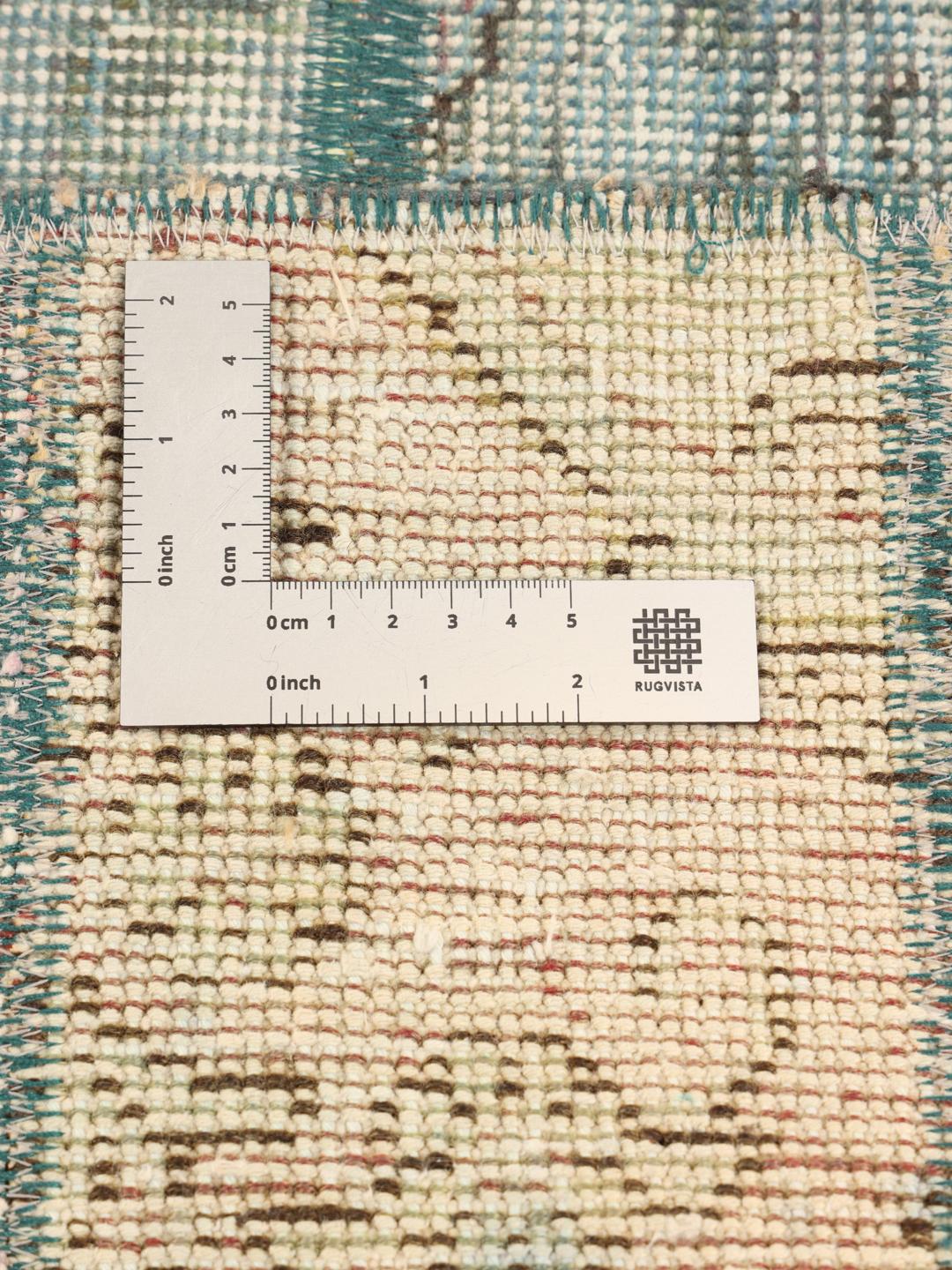
Patchwork rugs represent a fascinating evolution in the history of textile art, particularly within the Middle Eastern tradition. Historically, when a larger, hand-knotted rug became damaged or worn in specific areas, the remaining intact portions were salvaged rather than discarded. These fragments were then ingeniously repurposed by master weavers into new, smaller compositions, giving a second life to the craftsmanship and history embedded within the original fibres.
The terminology used to describe these rugs often refers to the 'over-dyeing' or 'patching' process, where fragments are unified through careful colour treatment and creative placement. This technique is essential for quality, as it balances the varying age and wear of the individual pieces, resulting in a harmonious aesthetic that highlights the intricate patterns of the original weaves. It transforms what might have been a forgotten relic into a vibrant, contemporary design element.
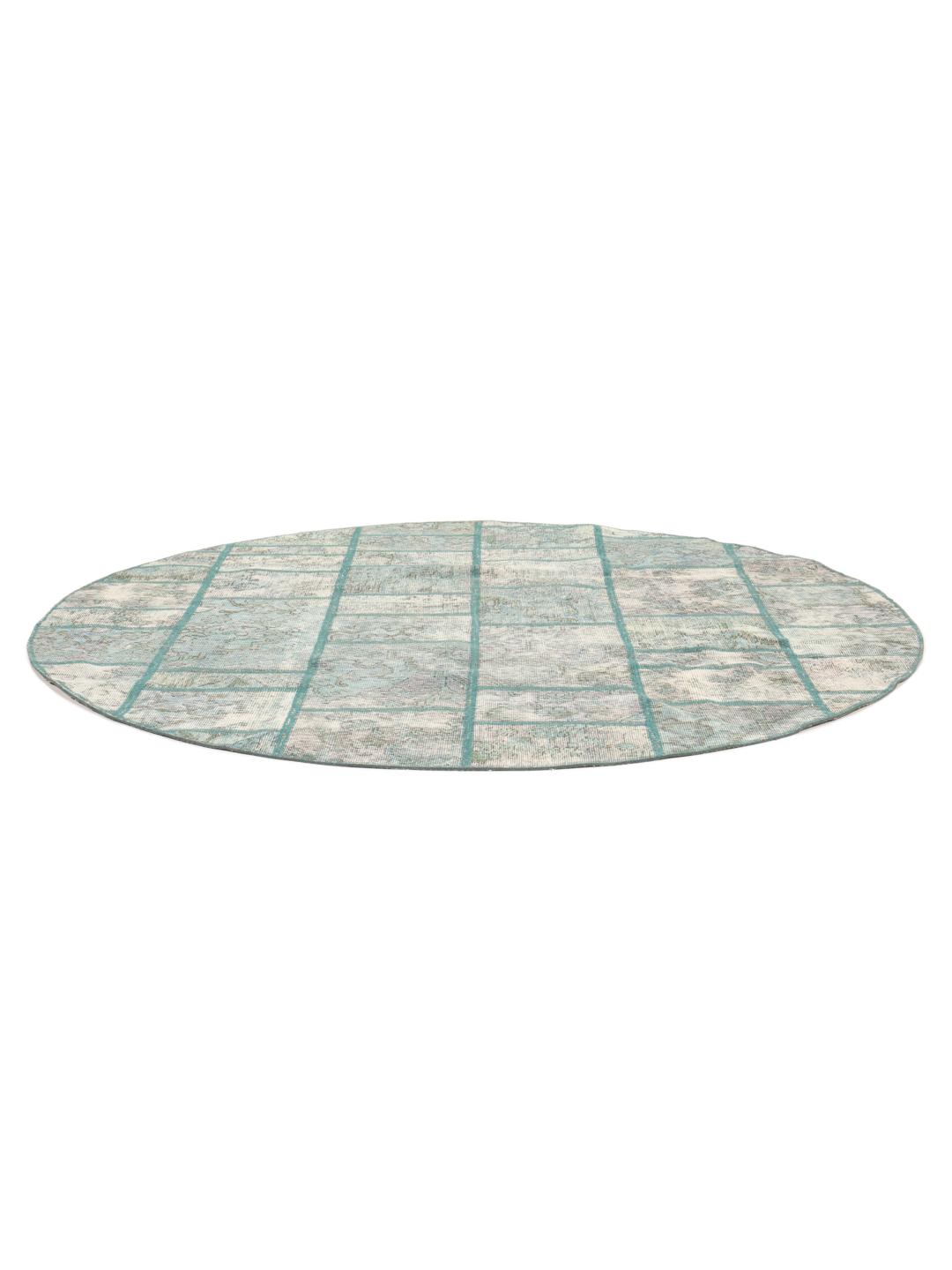
Signature design elements in these rugs often include faded echoes of traditional floral or geometric patterns, which are now framed within a modern, structured layout. The borders and internal lines of the patchwork create a grid-like contrast that emphasises the complexity of the motifs contained within each square or rectangle. This specific rug uses a round shape to soften these linear boundaries, creating a unique visual tension that feels both nostalgic and fresh.
Owning a patchwork rug is a way of preserving the legacy of traditional weaving while embracing a sustainable, modern lifestyle. These pieces are highly valued by collectors because they serve as a physical record of the skill and patience inherent in the original hand-knotted works. By bringing one into your home, you are not just decorating a floor, but honouring a long-standing tradition of resourcefulness and artistic reinterpretation.