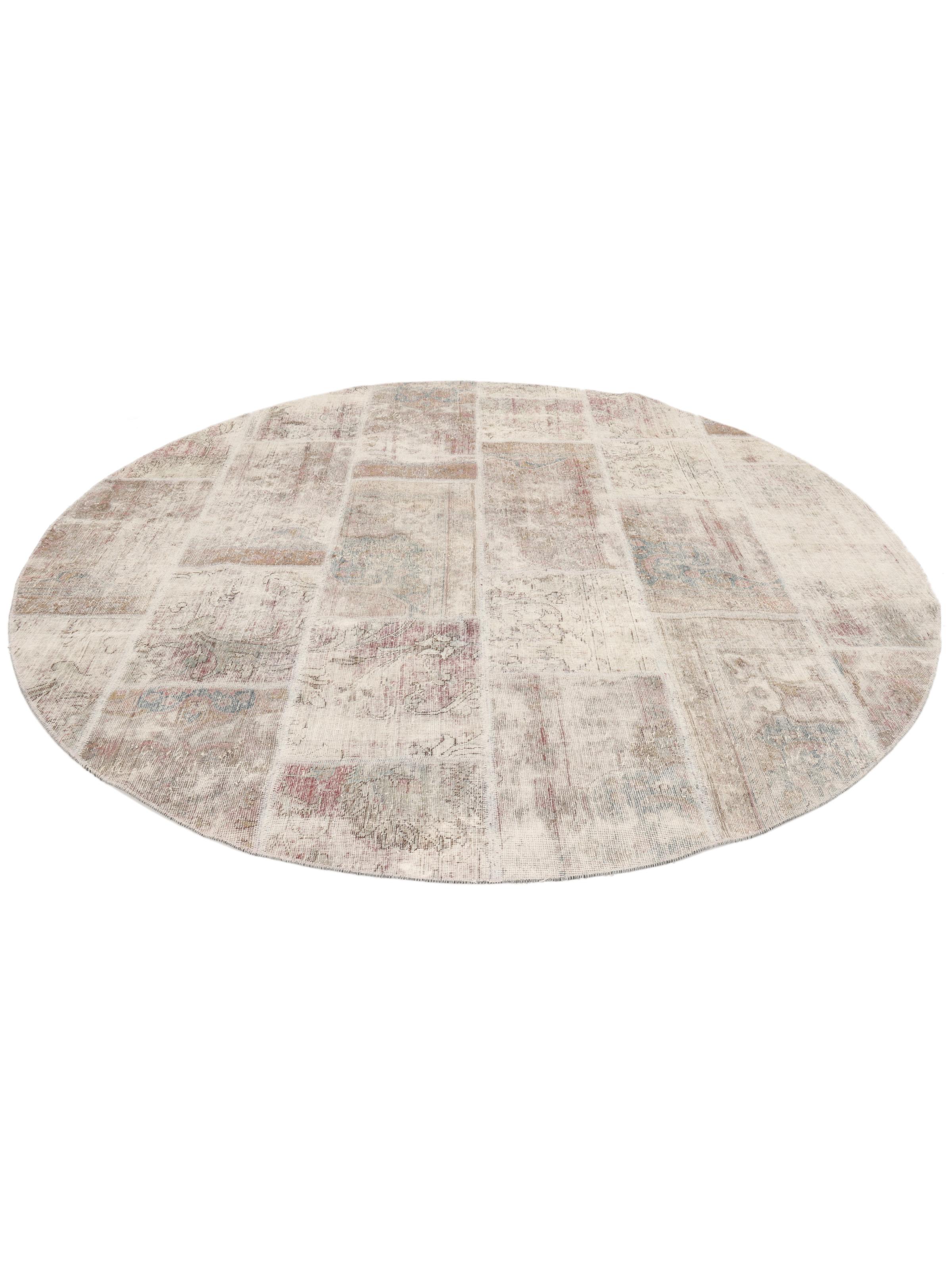
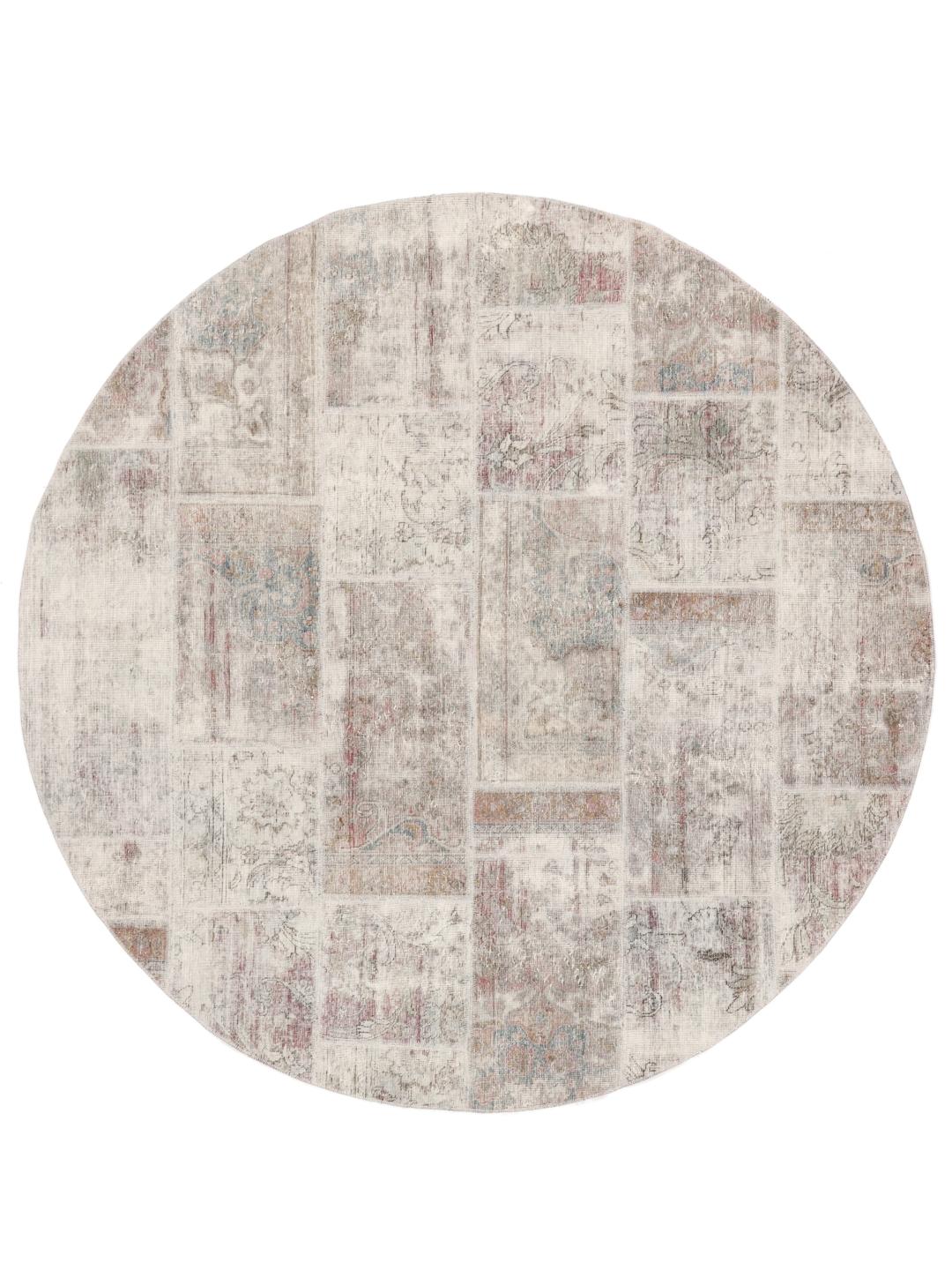
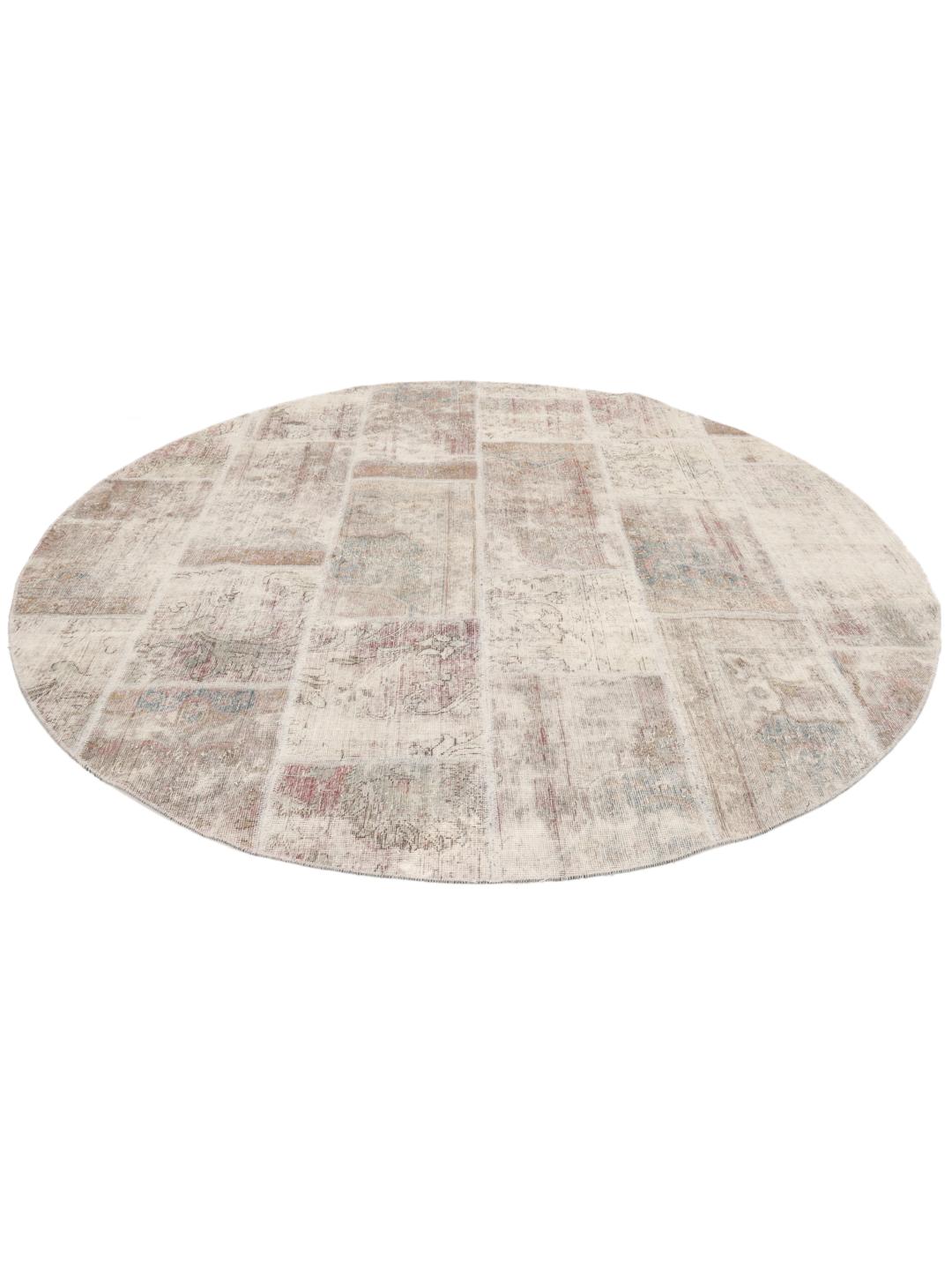
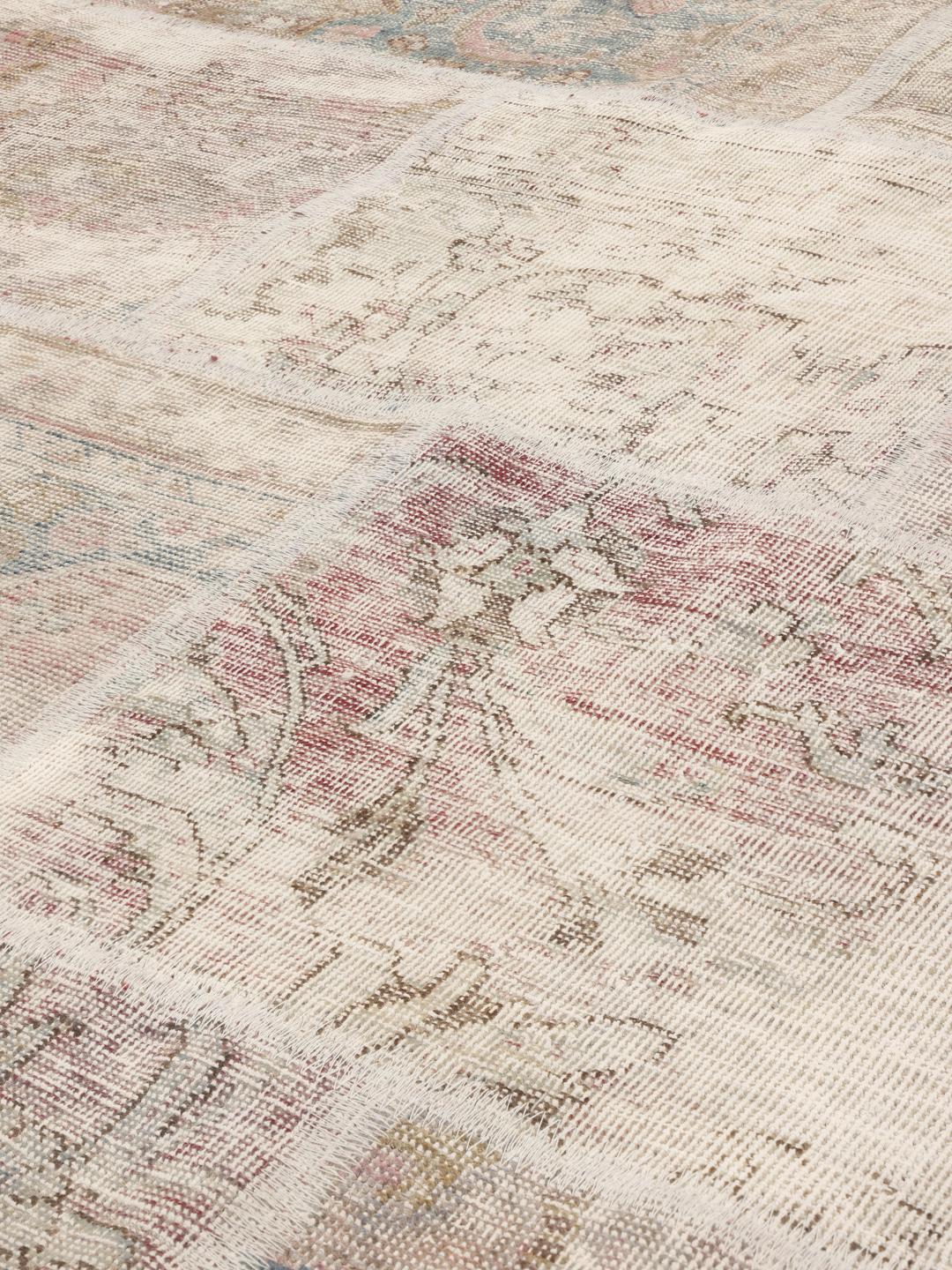
The art of the patchwork rug is a contemporary evolution of age-old Middle Eastern weaving traditions. For centuries, artisans in the region have created hand-knotted rugs that serve as central elements of the home, often passing these skills down through generations. The modern patchwork movement honours this legacy by taking fragments from older, worn rugs—often those that have served a family for decades—and giving them a second life through creative reassembly.
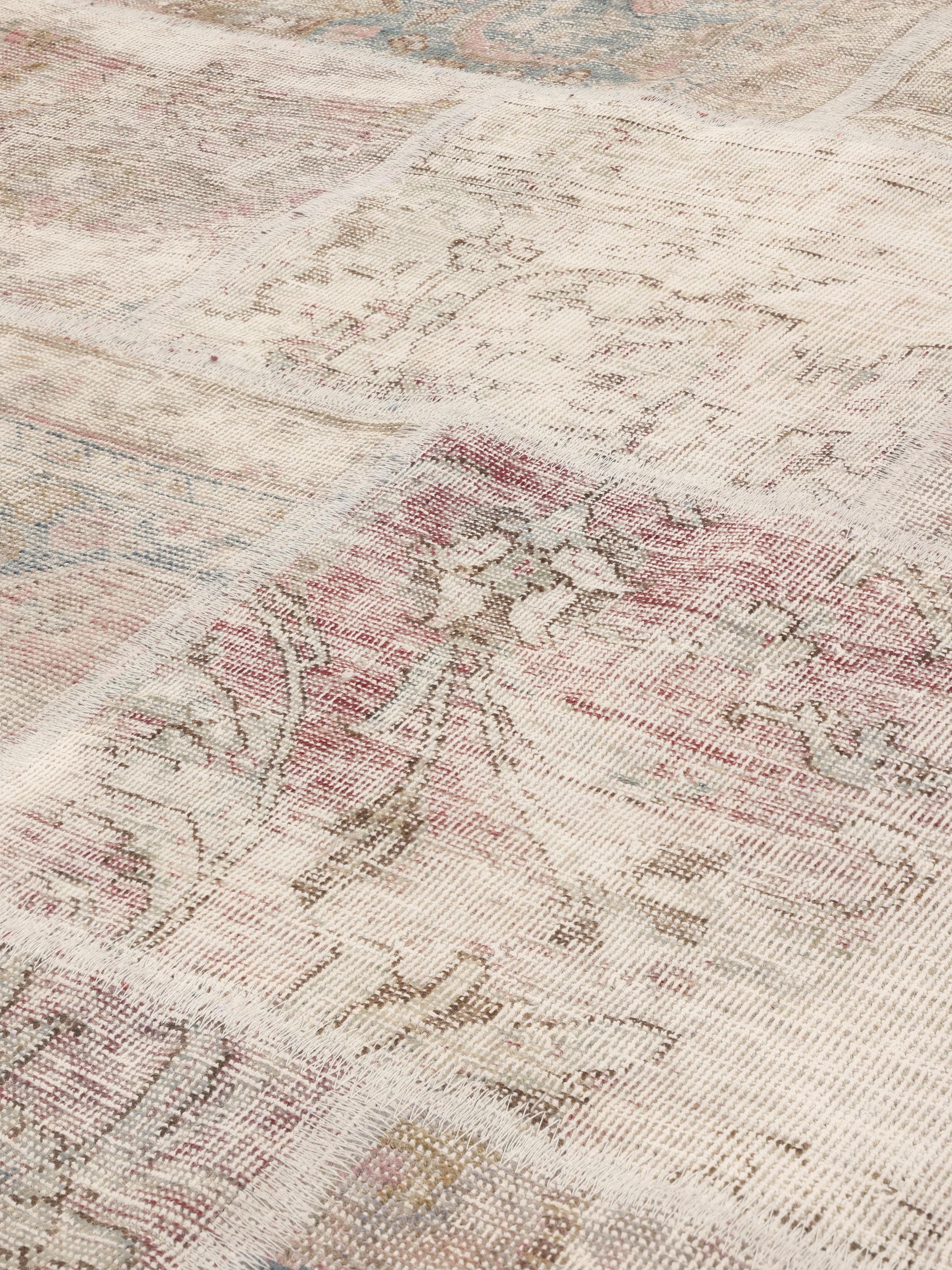
Technical mastery is essential in this craft, as the weaver must have an deep understanding of pile density, fibre durability, and the way different wool types respond to wear. By combining these salvaged, high-quality elements, the weaver creates a new, robust structure that benefits from the strength of the original knotting. This process requires a discerning eye to match the pile height and colour palette, ensuring the final rug feels like a singular, unified design rather than a collection of disparate parts.
Visually, these rugs often feature a medley of classic motifs, including geometric shapes, stylised florals, and remnants of intricate borders. Because the segments are taken from different, authentic rugs, the final composition often displays a fascinating dialogue between various regional design styles. A single rug might feature subtle traces of traditional medallion patterns side-by-side with tribal geometric motifs, creating a complex, artistic narrative across the floor.
Owning a patchwork rug is an investment in cultural continuity and sustainable luxury. These pieces are highly valued by collectors because they preserve the history of the original textiles while offering a fresh, contemporary look. By selecting such a rug, you are not just purchasing a floor covering, but a piece of heritage that keeps the spirit of traditional hand-knotting alive in a modern context.