Chinese rug weaving has a storied tradition that dates back centuries, often reflecting the philosophical and artistic values of the culture. Unlike some other regional traditions that focus on dense, all-over patterns, many classic Chinese rugs are celebrated for their sophisticated use of open space and symbolic imagery. The inspiration often comes from nature, literature, and religious motifs, resulting in a style that is both understated and deeply symbolic.
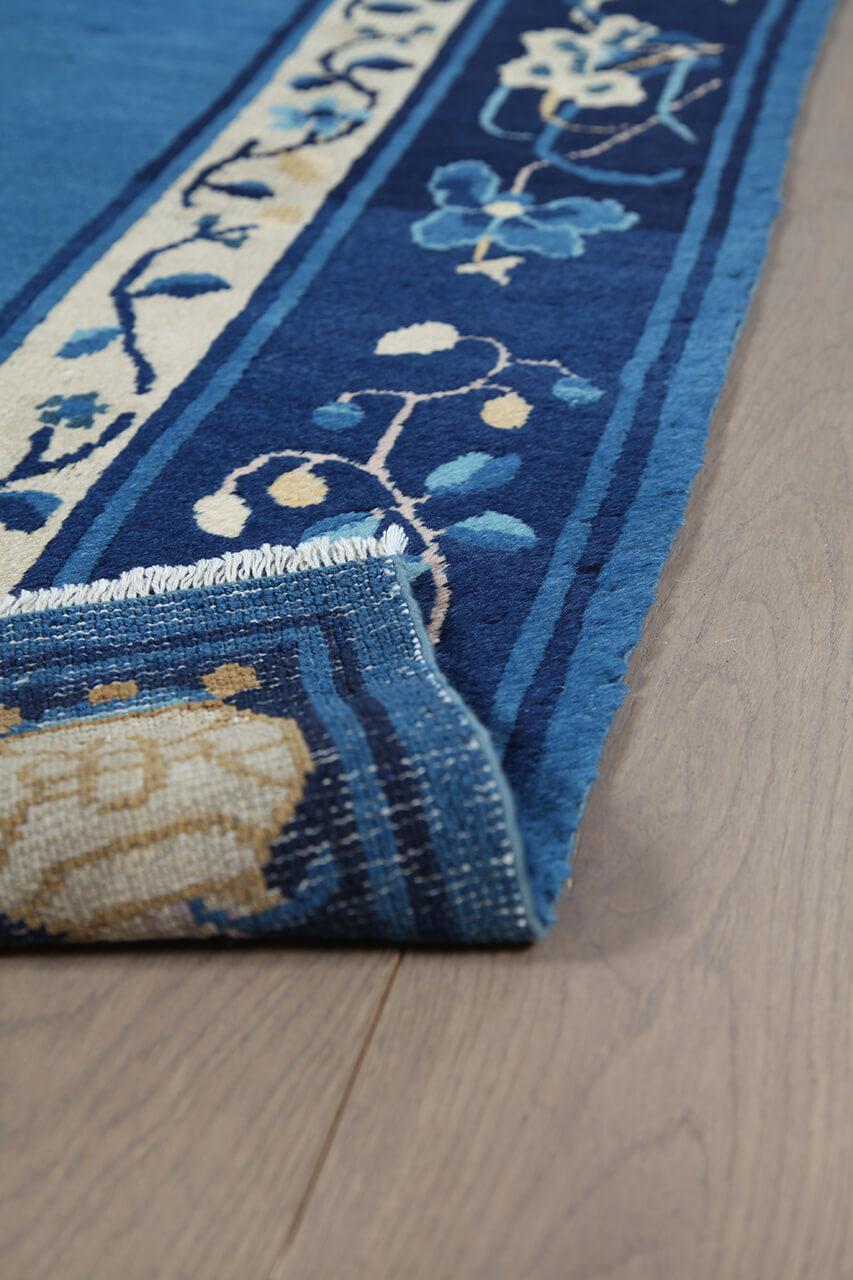
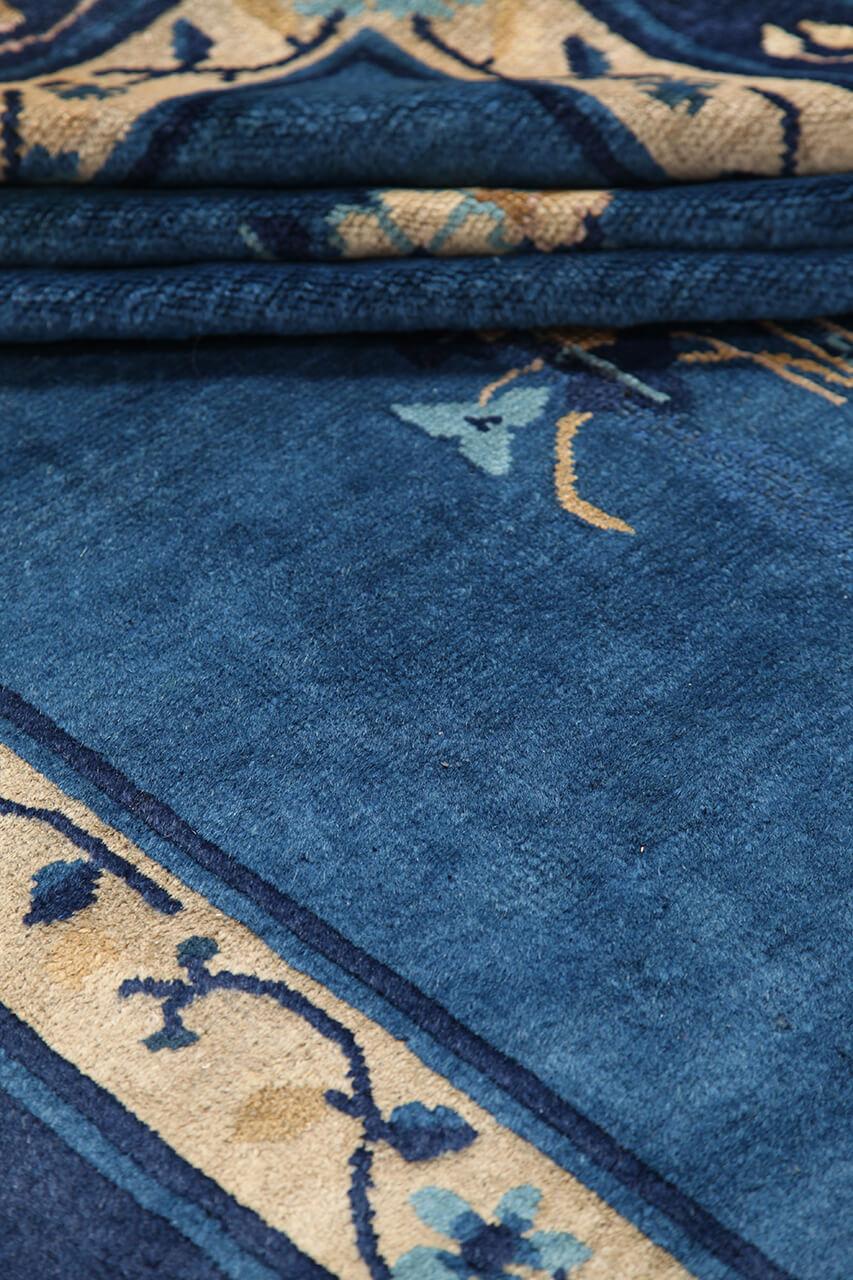
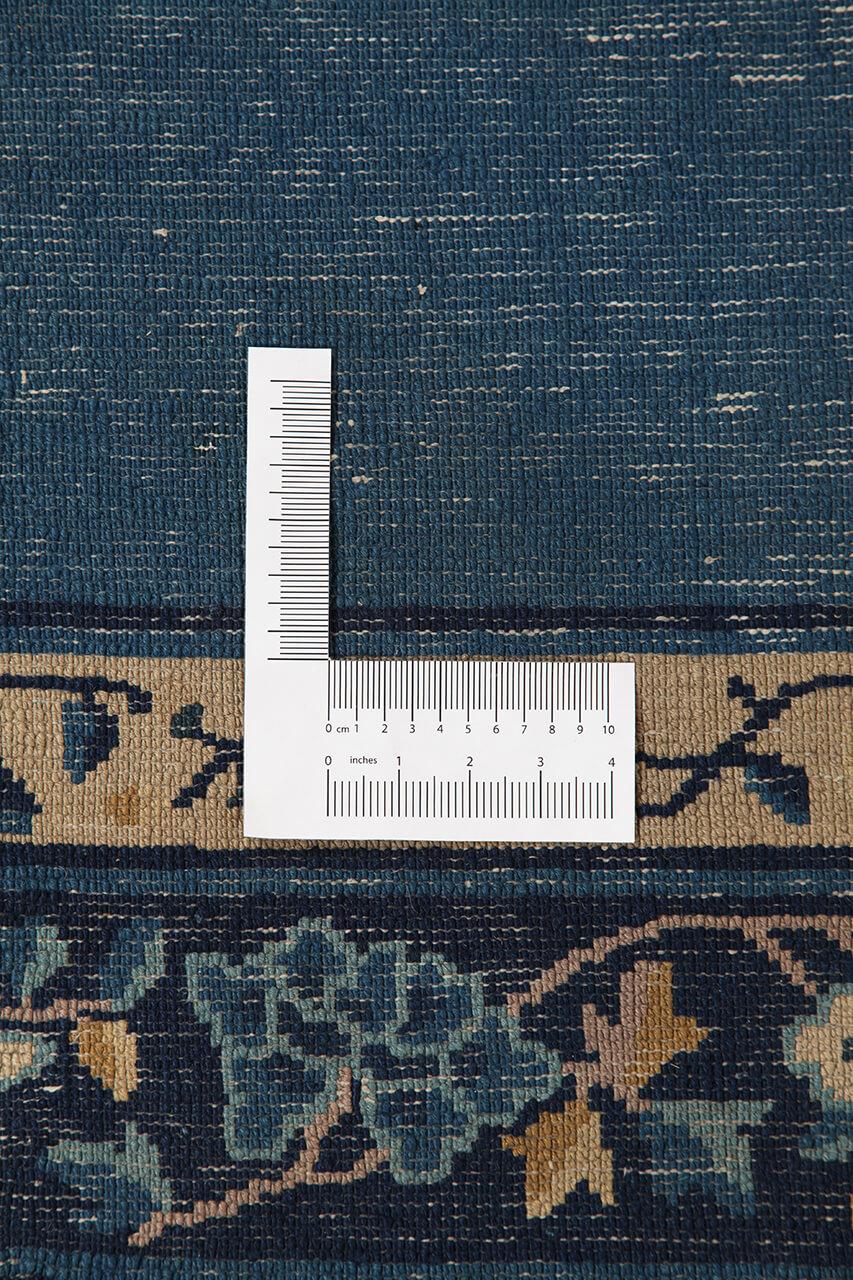
The terminology used to describe these rugs often refers to the specific cultural techniques that define their structure. The construction typically involves a cotton foundation, which provides the necessary stability for the dense wool pile. This combination is highly effective, as the cotton foundation resists stretching over time, while the wool pile provides the softness and lustre that these rugs are known for, ensuring they age beautifully.
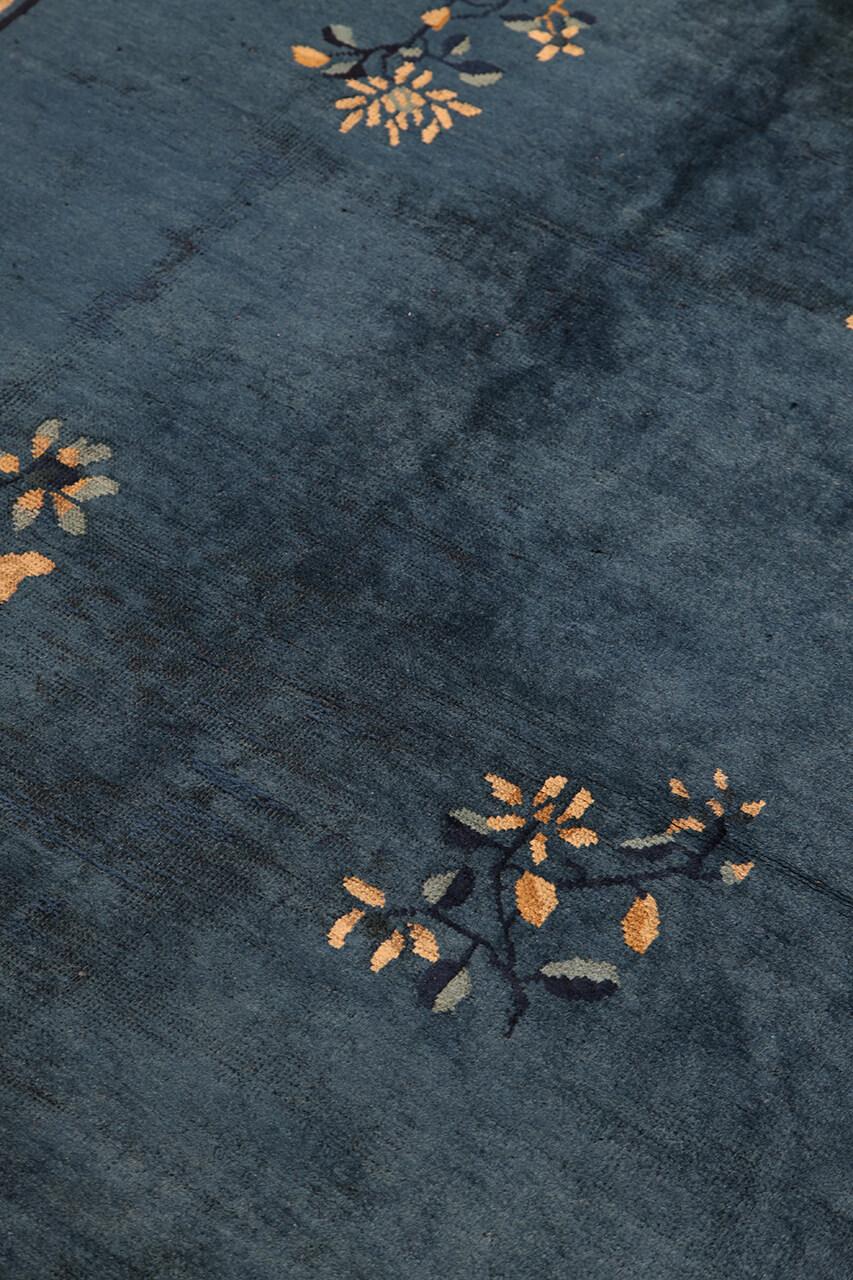
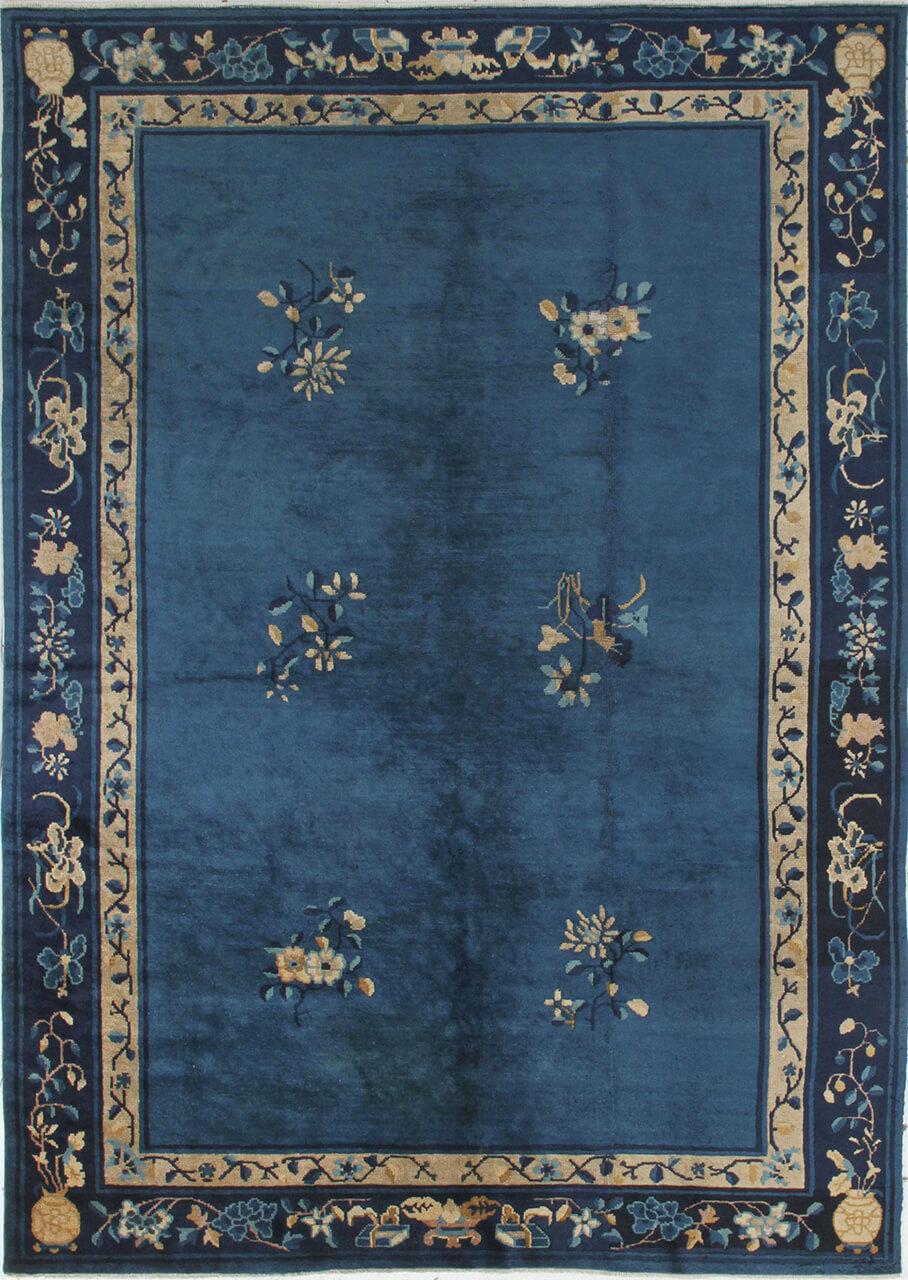
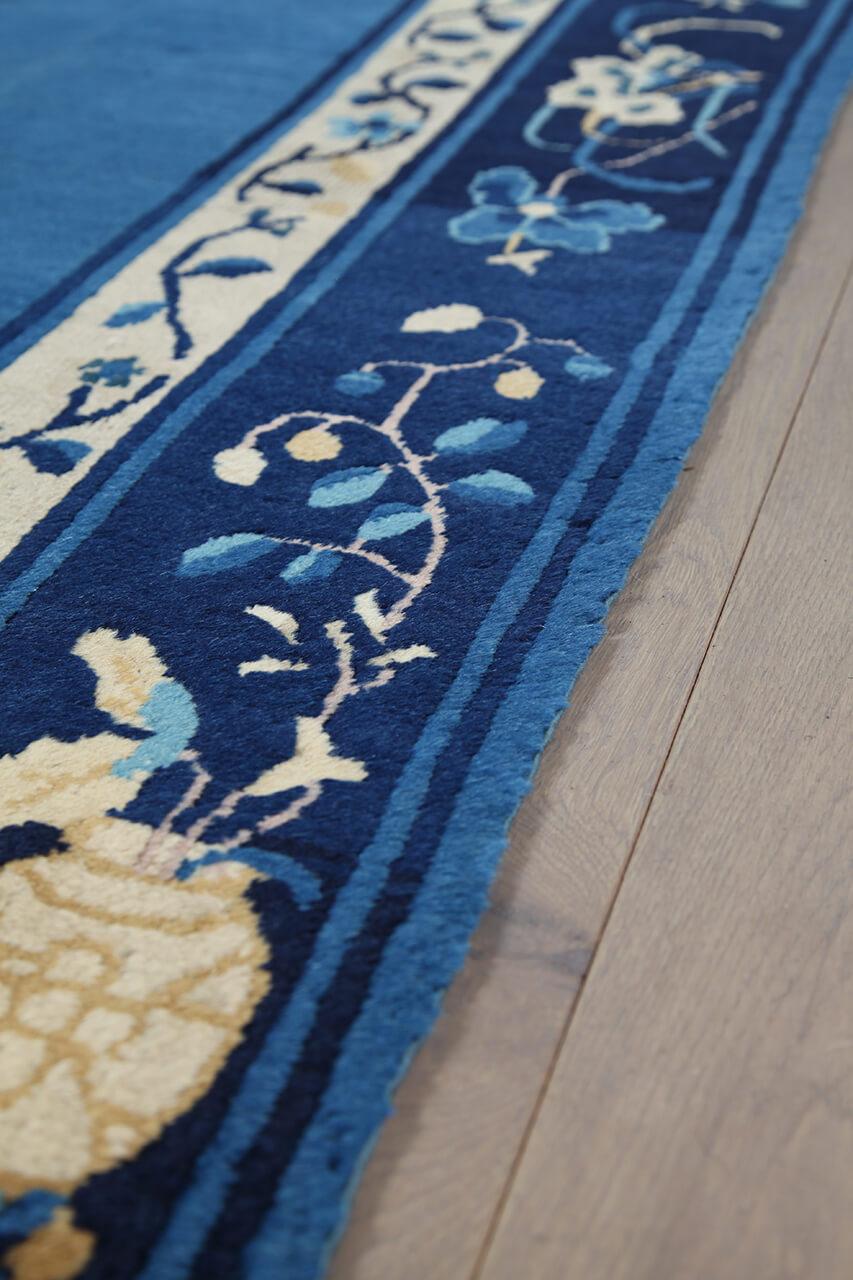
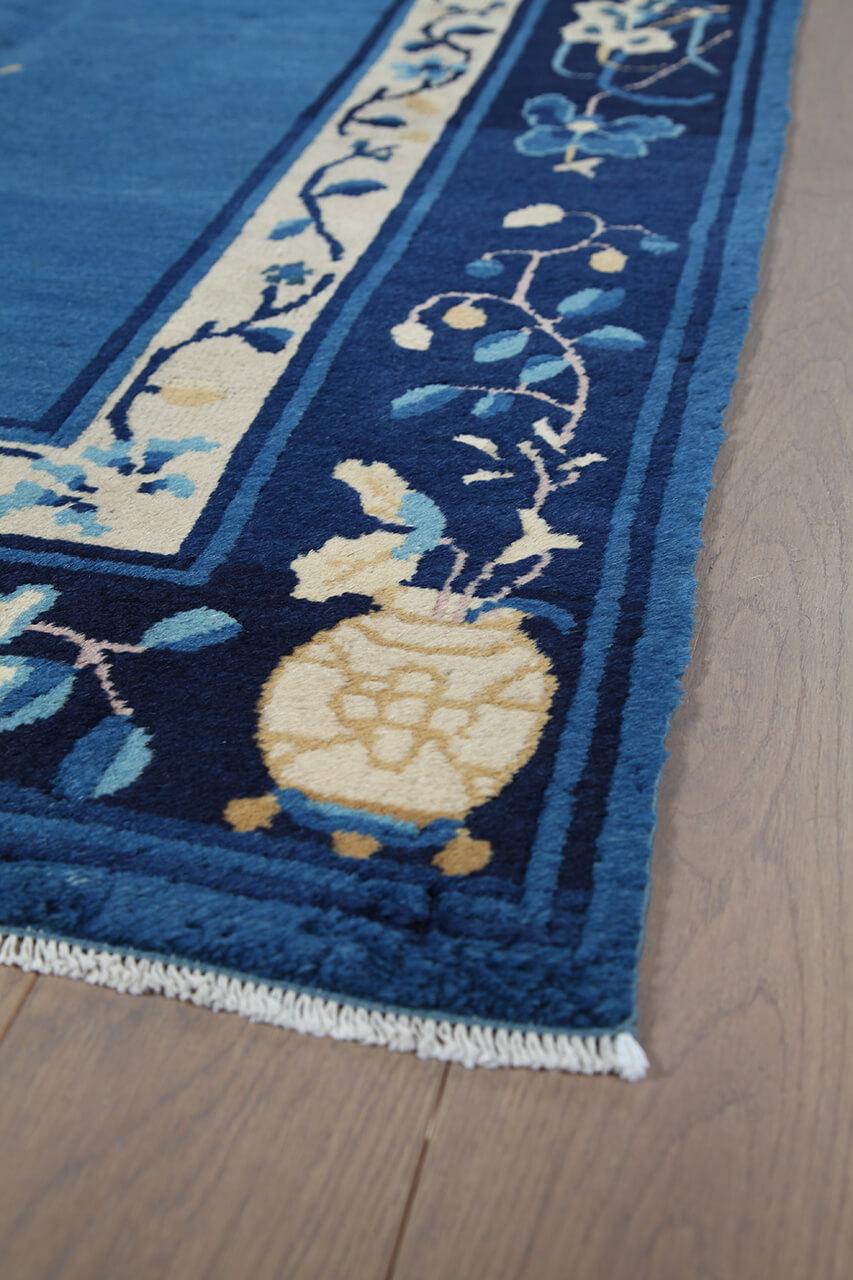
Signature design elements in this category frequently include floral sprays, vases, and stylized animals, often framed by a wide, decorative border. The colour palette is traditionally restrained, utilising natural dyes that have mellowed over time to create the harmonious, muted tones seen in antique examples. The specific blue field of this rug is a hallmark of the tradition, representing a classic aesthetic choice that emphasises serenity and balance.
Collectors value these rugs not only for their beauty but for their cultural significance as remnants of a pre-industrial era. Owning an antique Chinese rug is an investment in heritage, representing a level of skill and artistic intent that is increasingly rare. It is a piece that carries the weight of history, serving as a reminder of the enduring power of handmade craft to transform a living environment into a space of reflection and history.