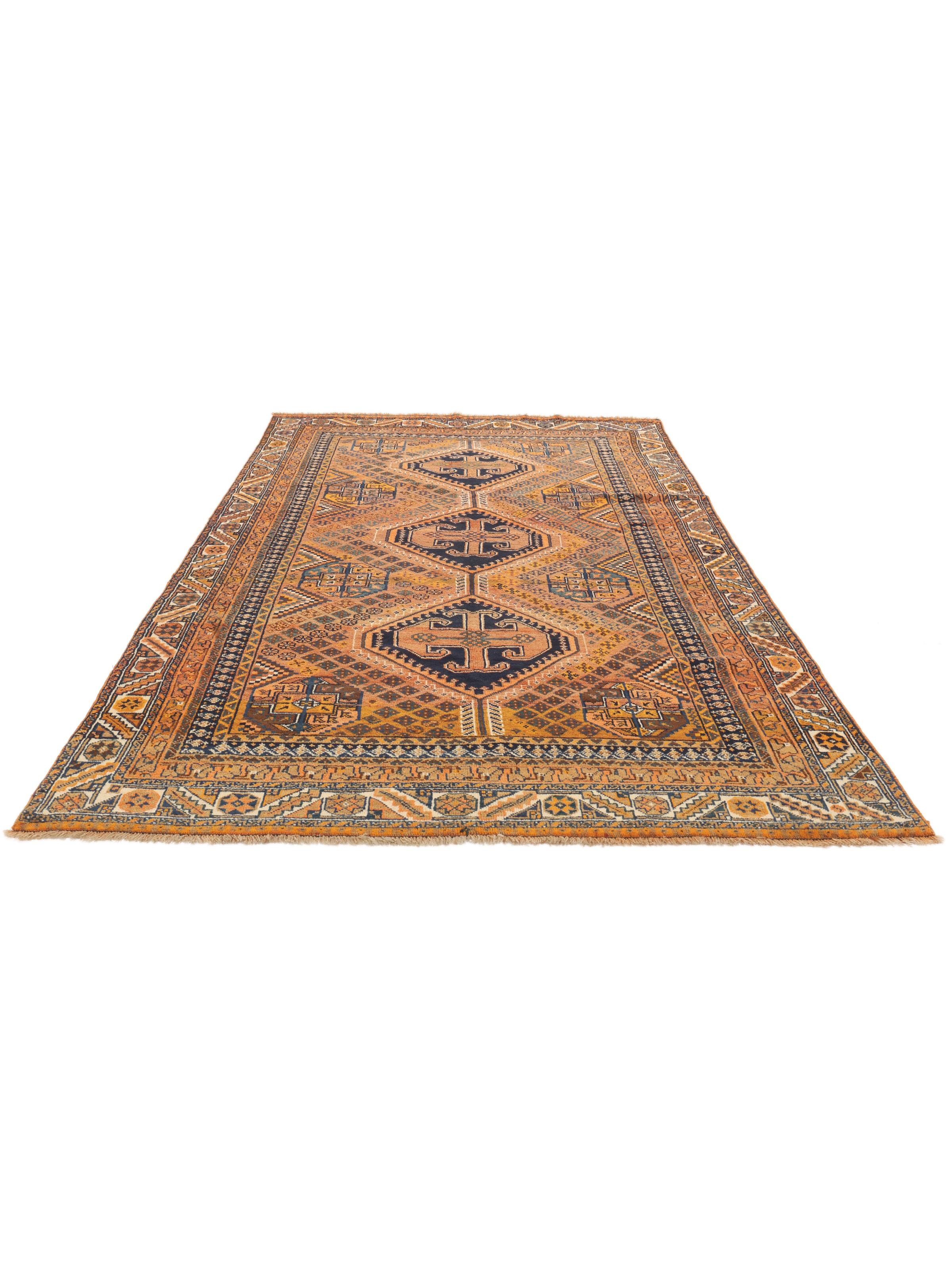
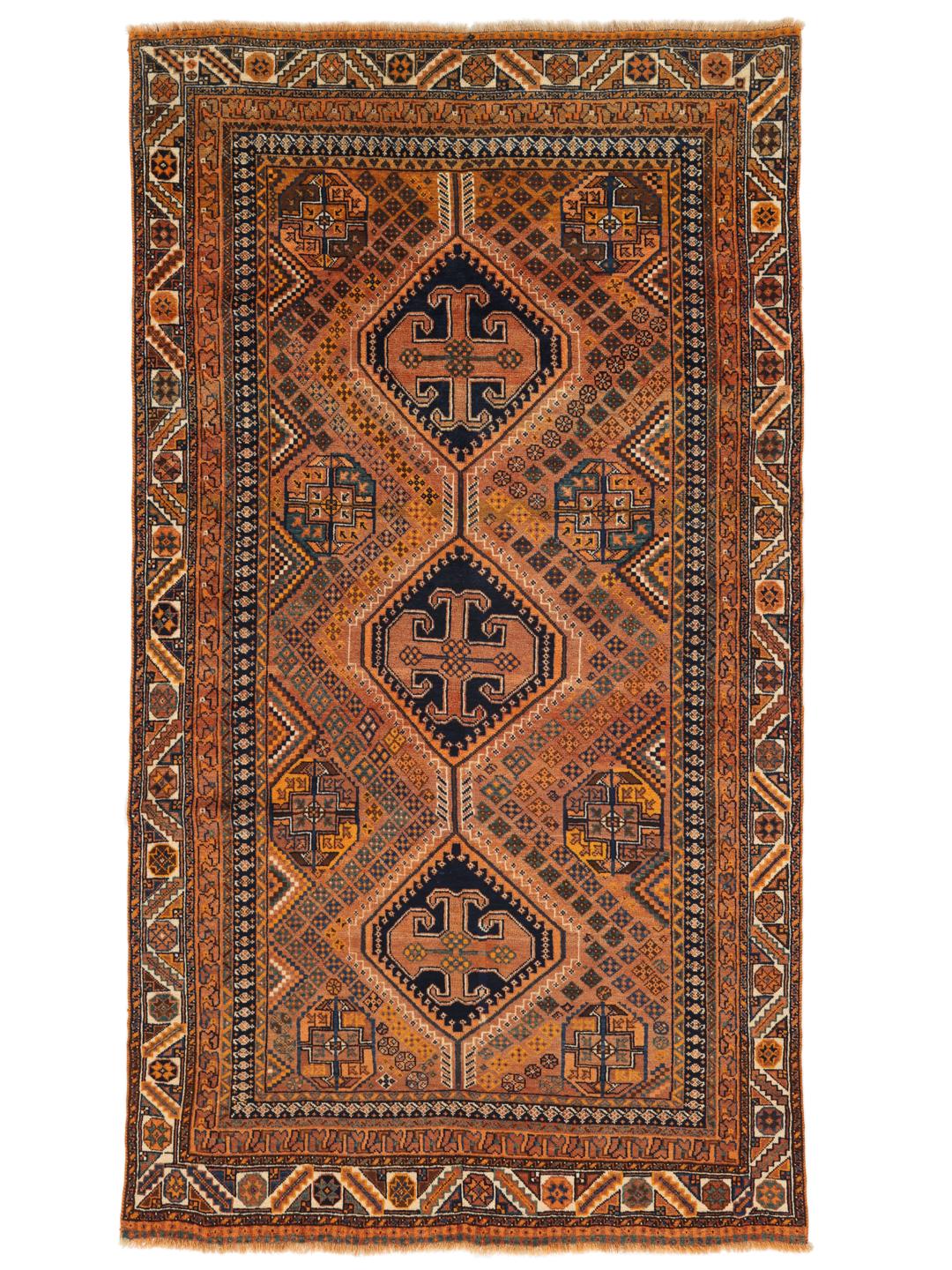
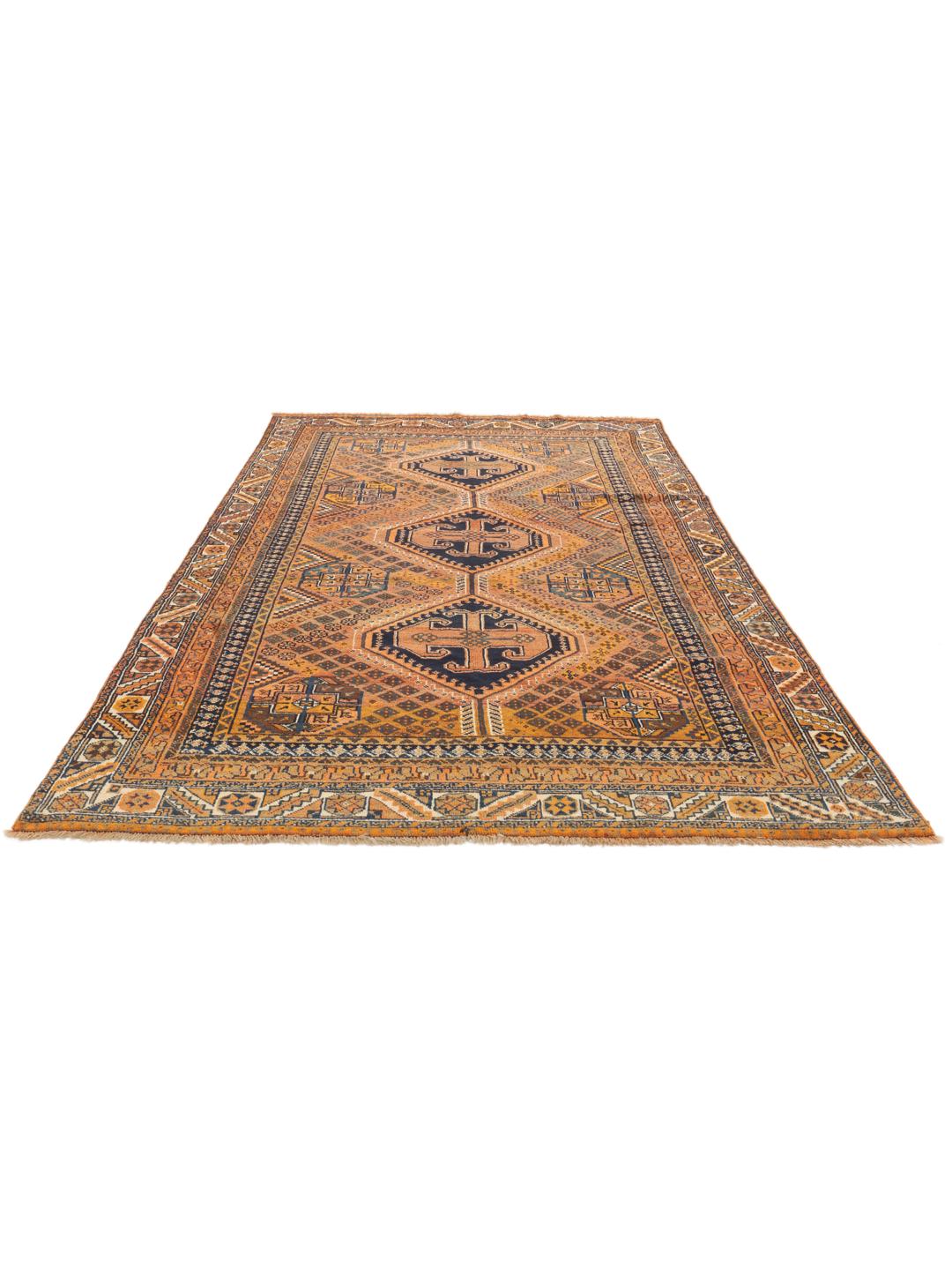
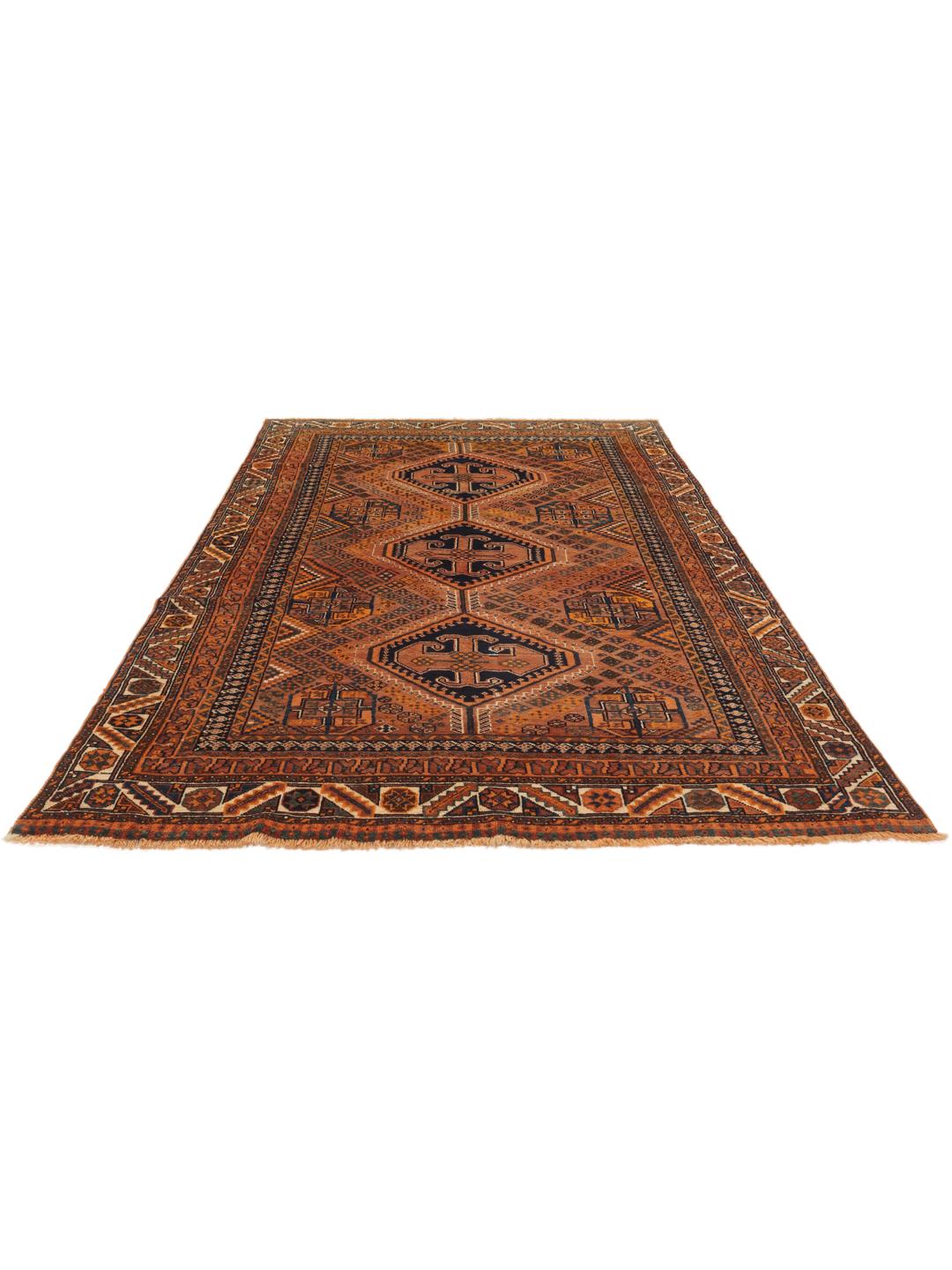
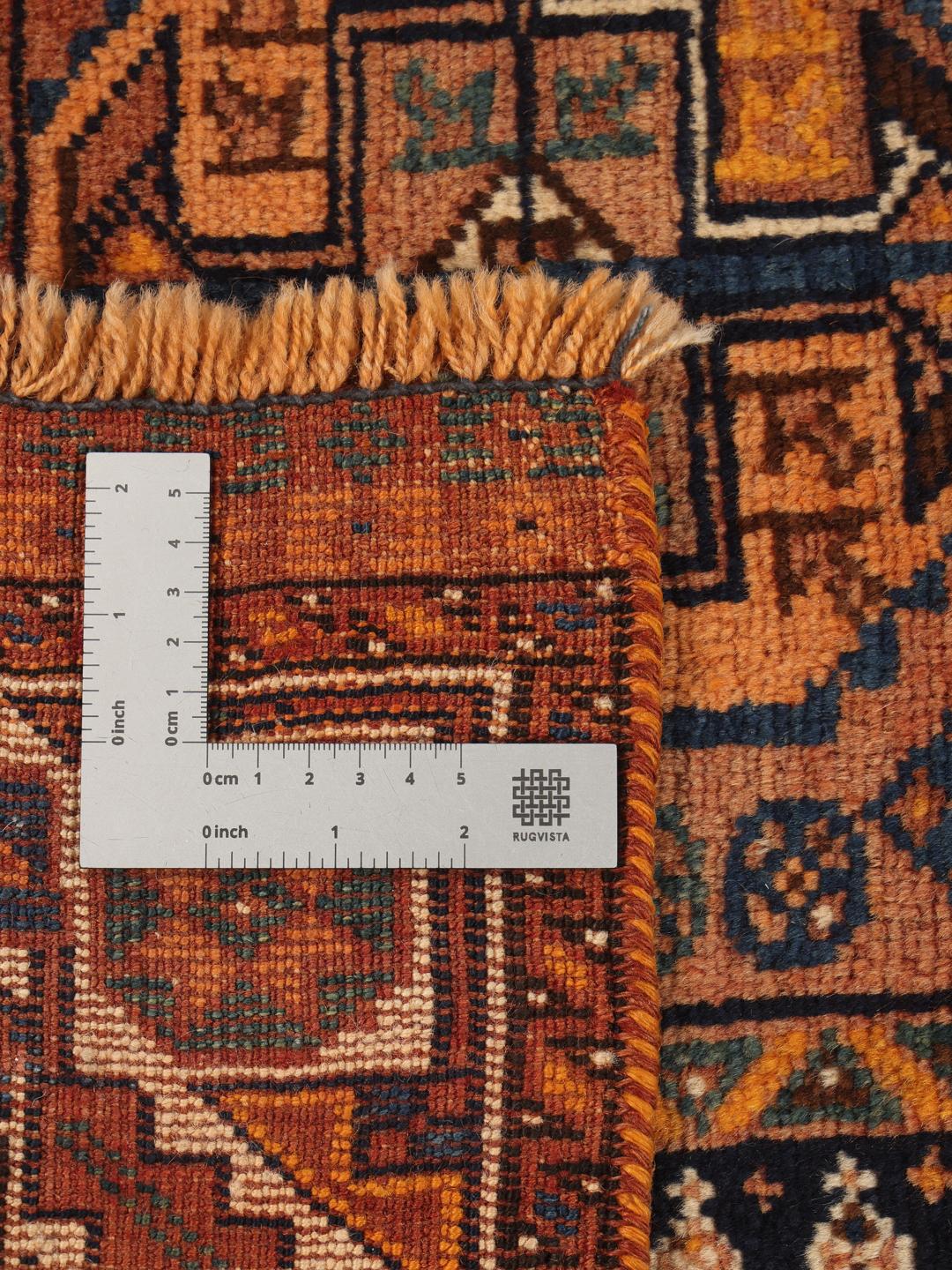
The Qashqai rugs are named after the nomadic tribes of the Zagros Mountains in the Middle East. For centuries, these resilient people travelled with their flocks, weaving rugs that served both functional and artistic purposes in their seasonal migration. These rugs were essential for daily life in tents, providing warmth against the mountain chill and serving as a canvas for the tribe's visual storytelling.
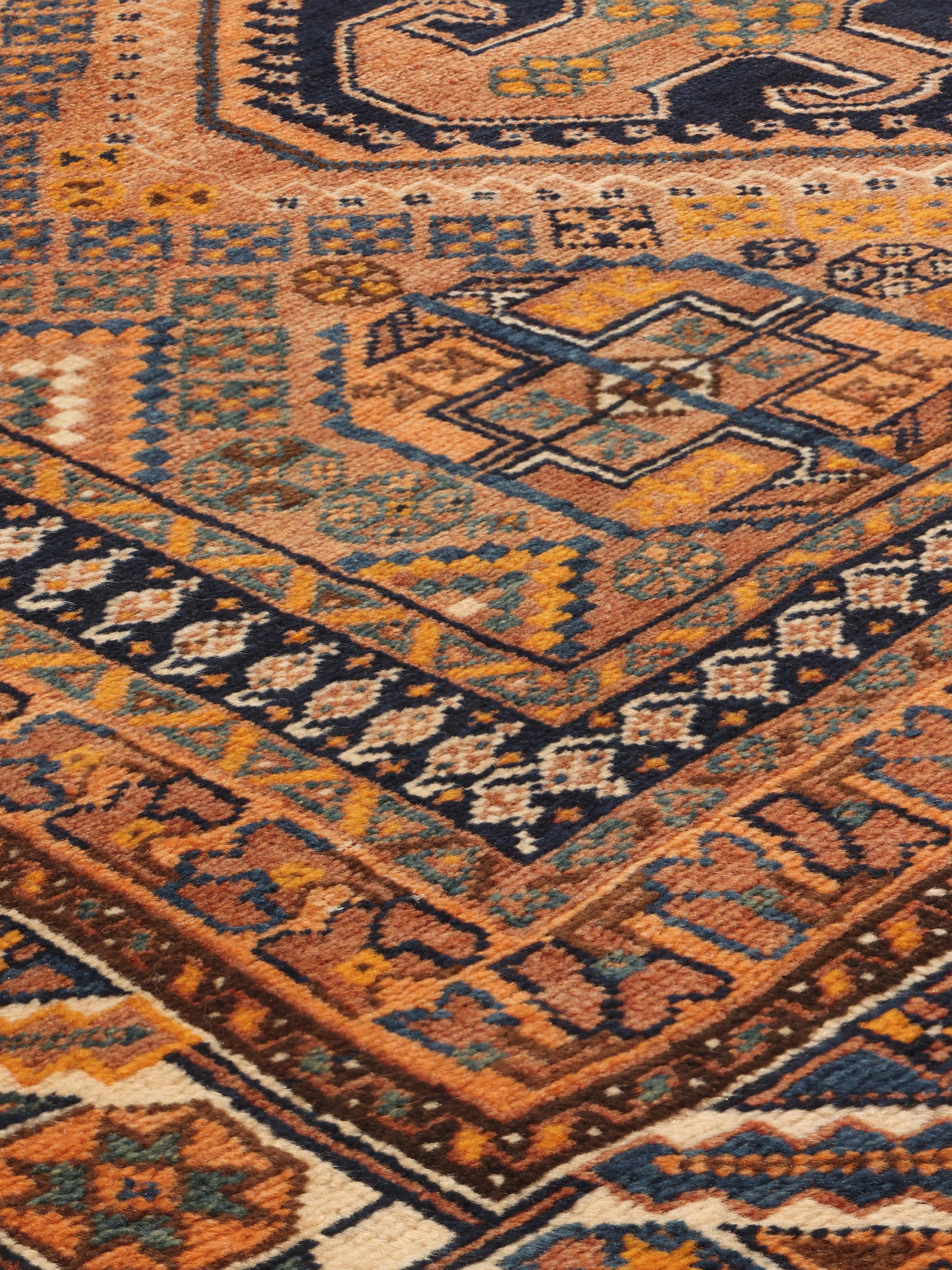
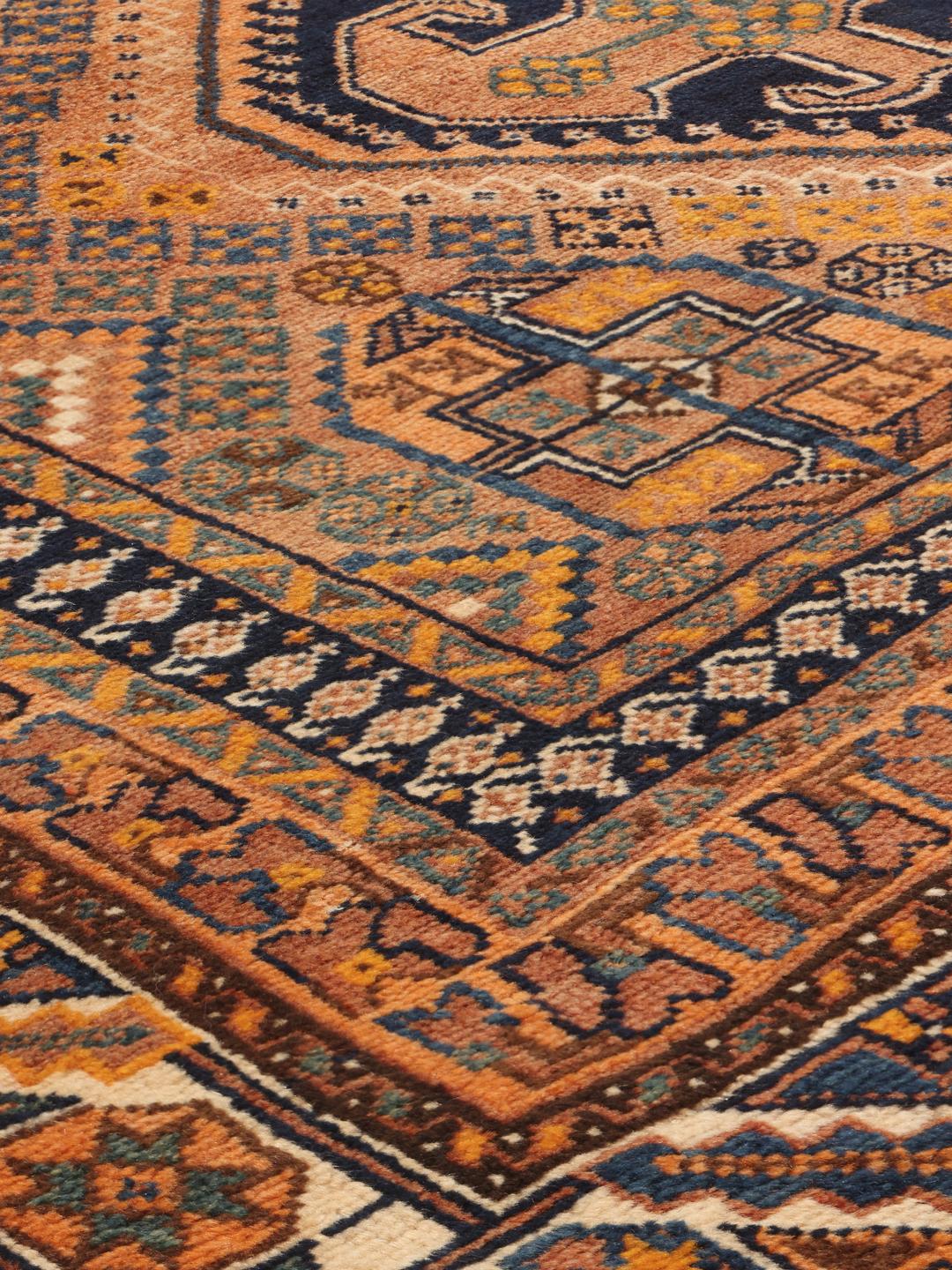
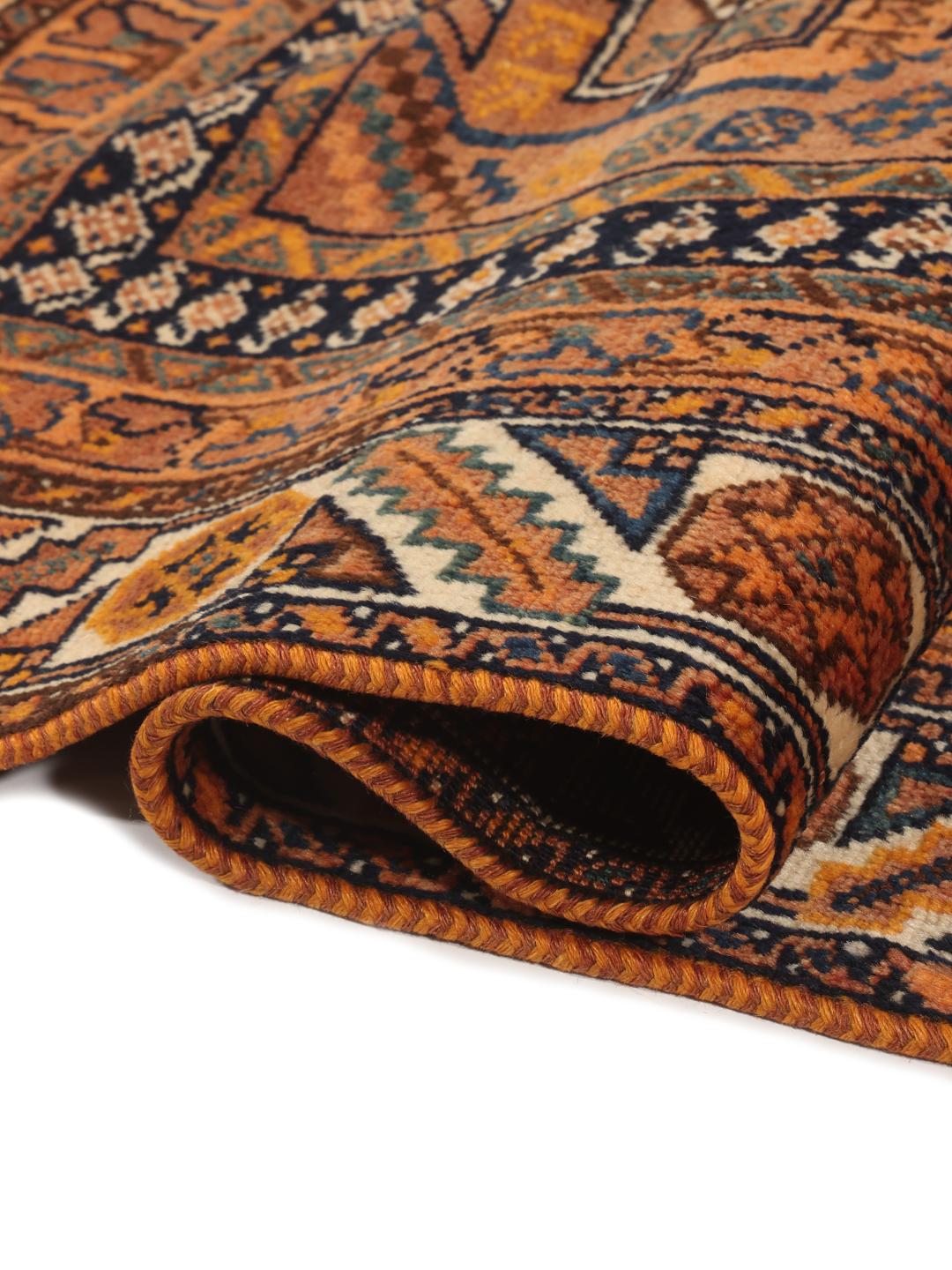
The term hand-knotted refers to the laborious process of tying each individual strand of Wool onto the foundation threads, a technique passed down through generations. This is not merely a method of assembly but a language of craft that allows for the creation of intricate, durable, and highly detailed designs that hold their form and lustre for decades.
Signature design elements of these rugs often include geometric medallions, stylised floral motifs, and repeating patterns that represent the natural world and tribal symbols. The use of a deep, warm palette is characteristic, often featuring earthy browns and deep blues that reflect the natural environment of the weaving region. The borders are typically filled with protective geometric patterns, framing the field with a formal, harmonious structure.
Owning a piece from this tradition is an opportunity to acquire a work of art that embodies the skill, patience, and cultural history of its makers. These rugs are highly valued by collectors not just for their aesthetic appeal, but for the tangible connection they offer to a storied way of life. Each rug is a testament to the artisan's individual expression within the constraints of their tribal tradition.