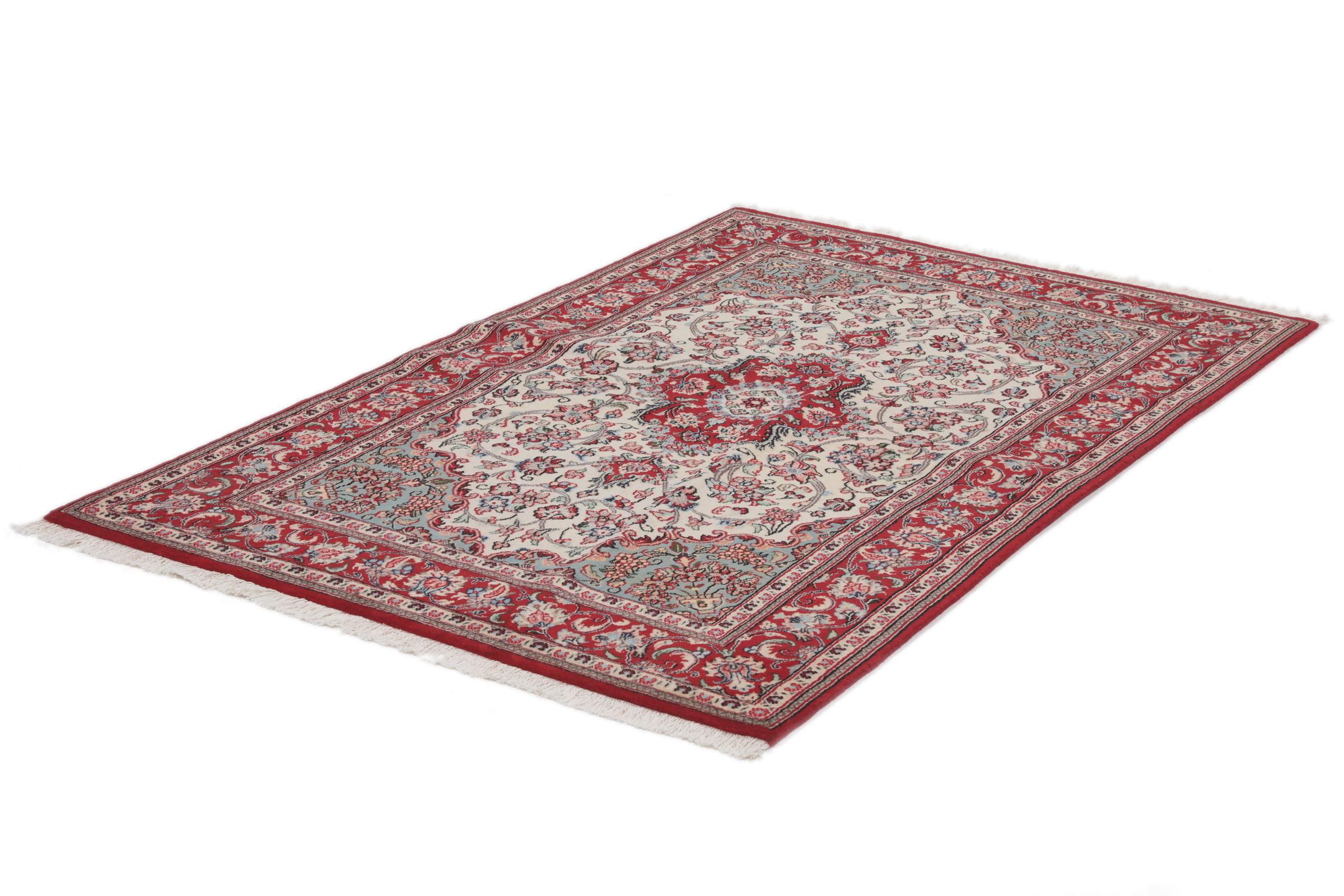
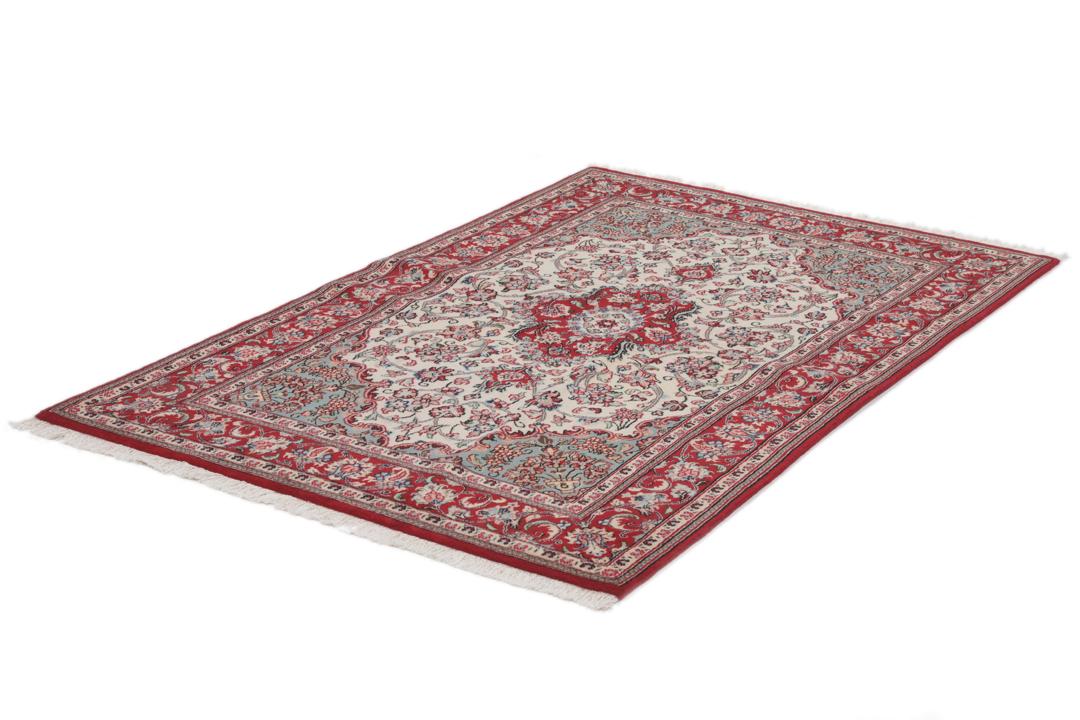
The Ghom rug tradition originates from the holy city of Ghom in the Middle East, a region renowned for its relatively recent but highly prestigious contribution to the world of fine rug weaving. While other regions have centuries of history, Ghom became a significant centre for high-quality weaving in the early 20th century, quickly establishing a reputation for innovation and artistic freedom.
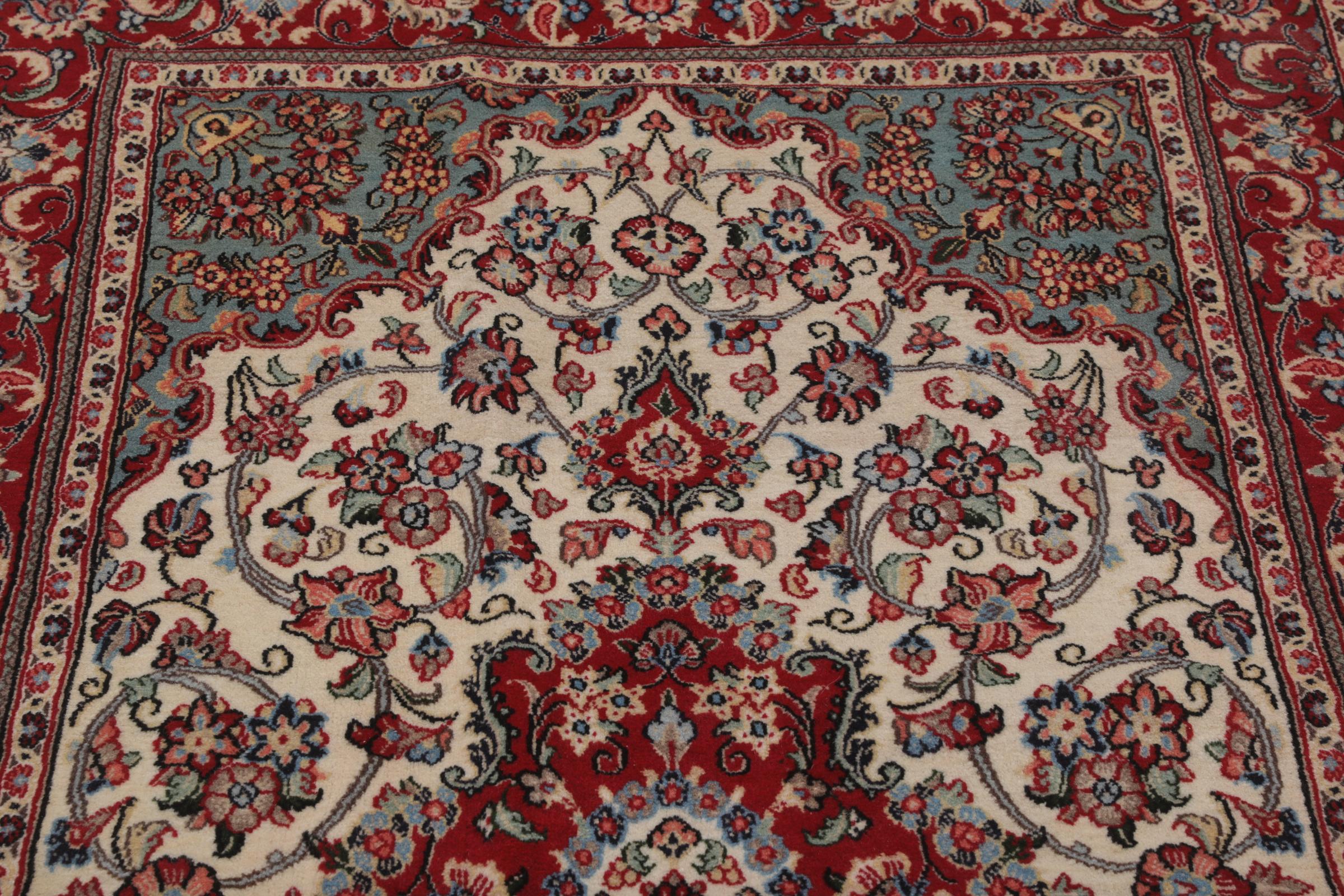
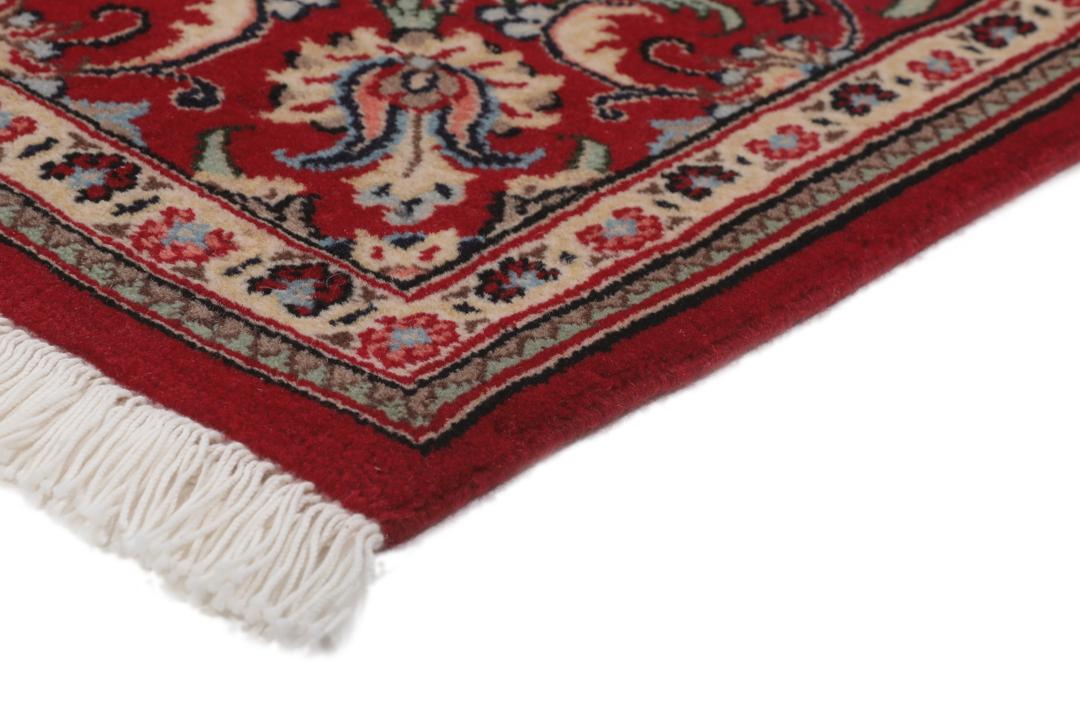
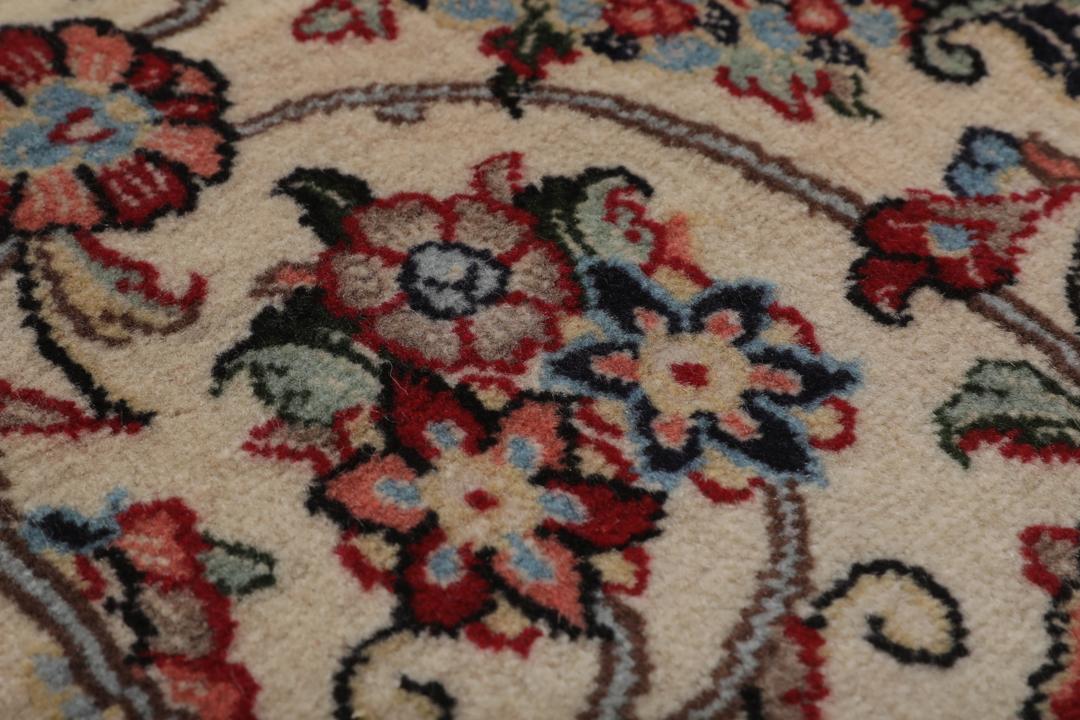
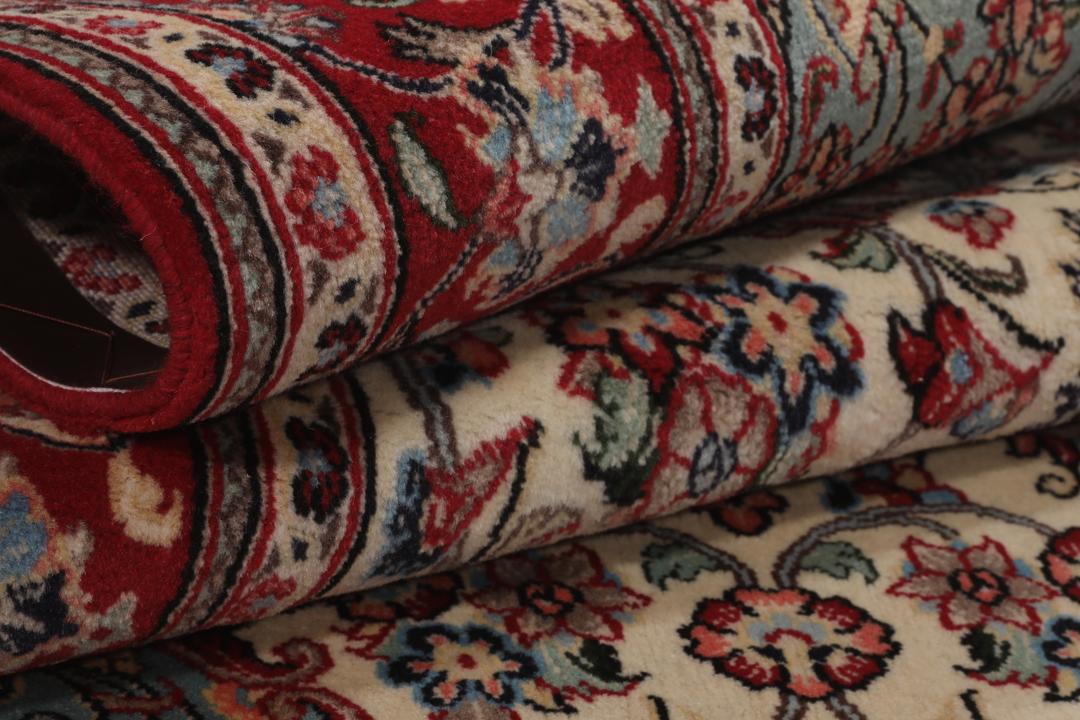
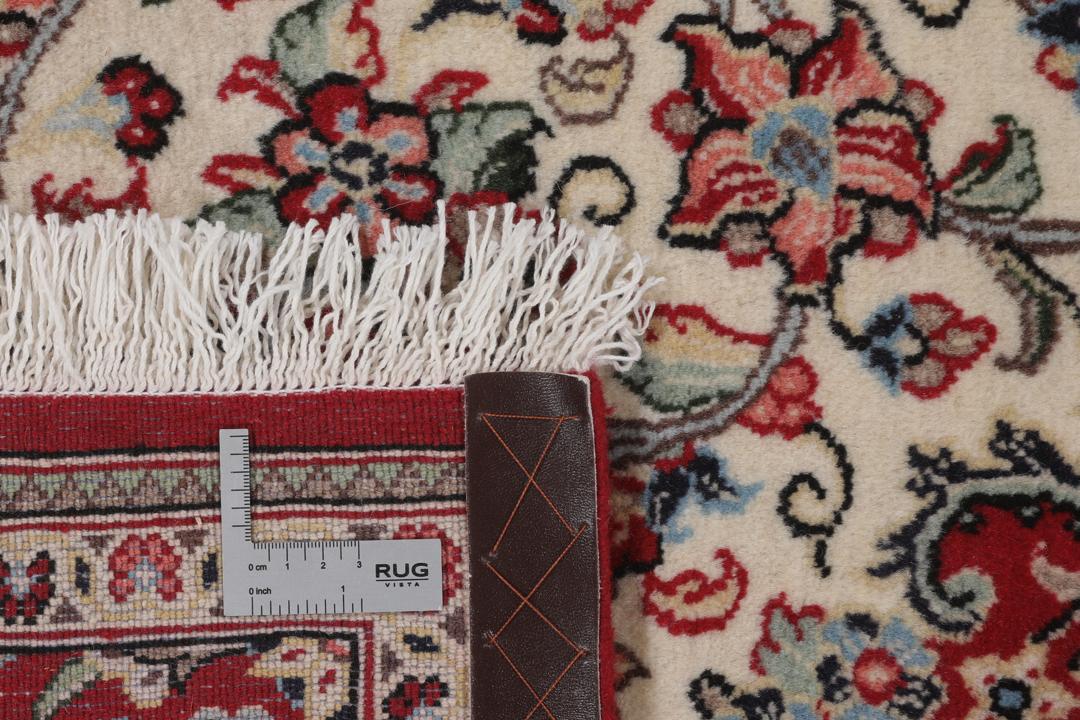
The term Ghom often refers to rugs that demonstrate exceptional technical mastery, particularly through the use of high-quality materials. These rugs are celebrated for their fine construction, which allows for intricate patterns and a smooth, lustrous finish that highlights the beauty of the design. The precision involved in their creation is a hallmark of the region's dedication to the craft.
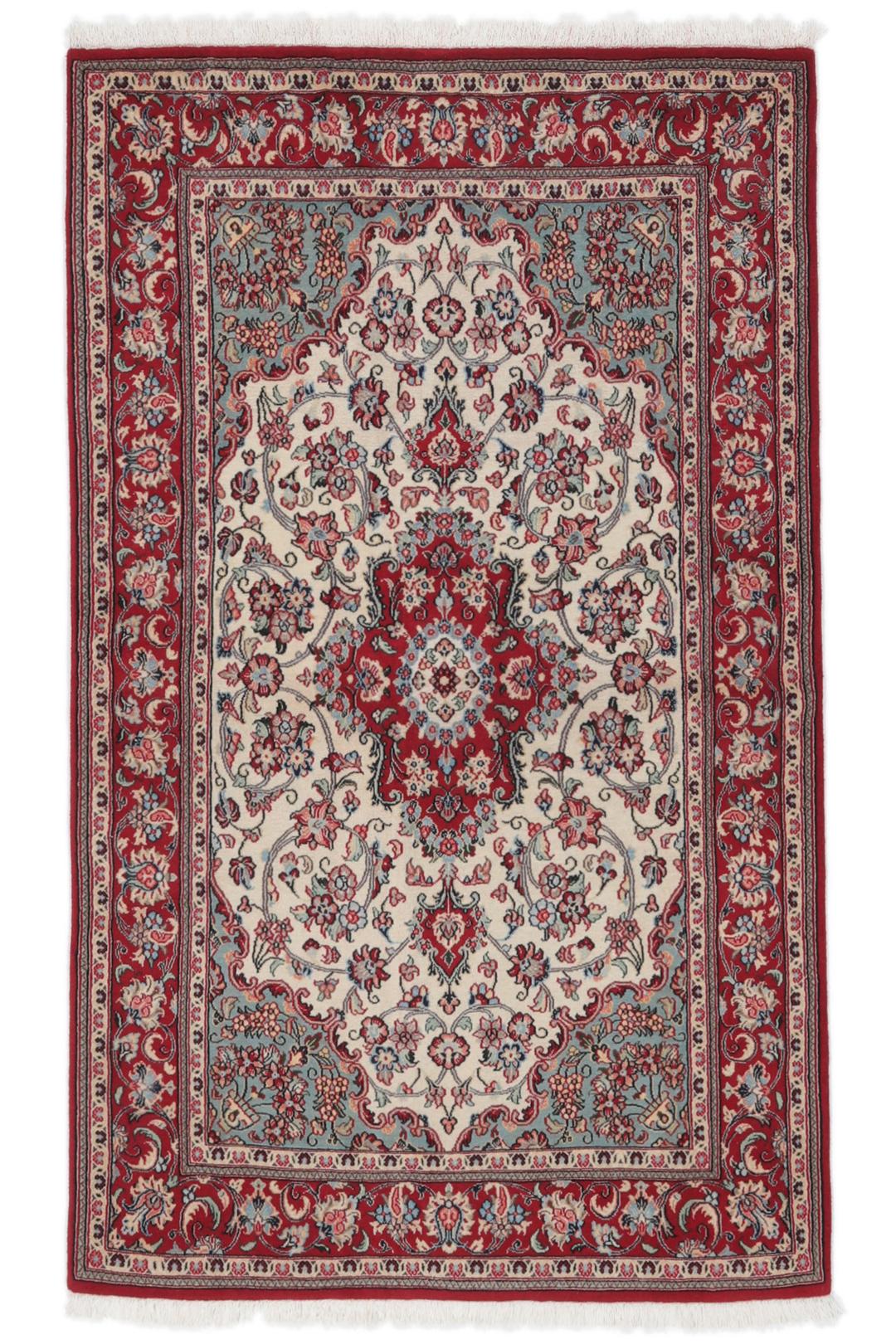
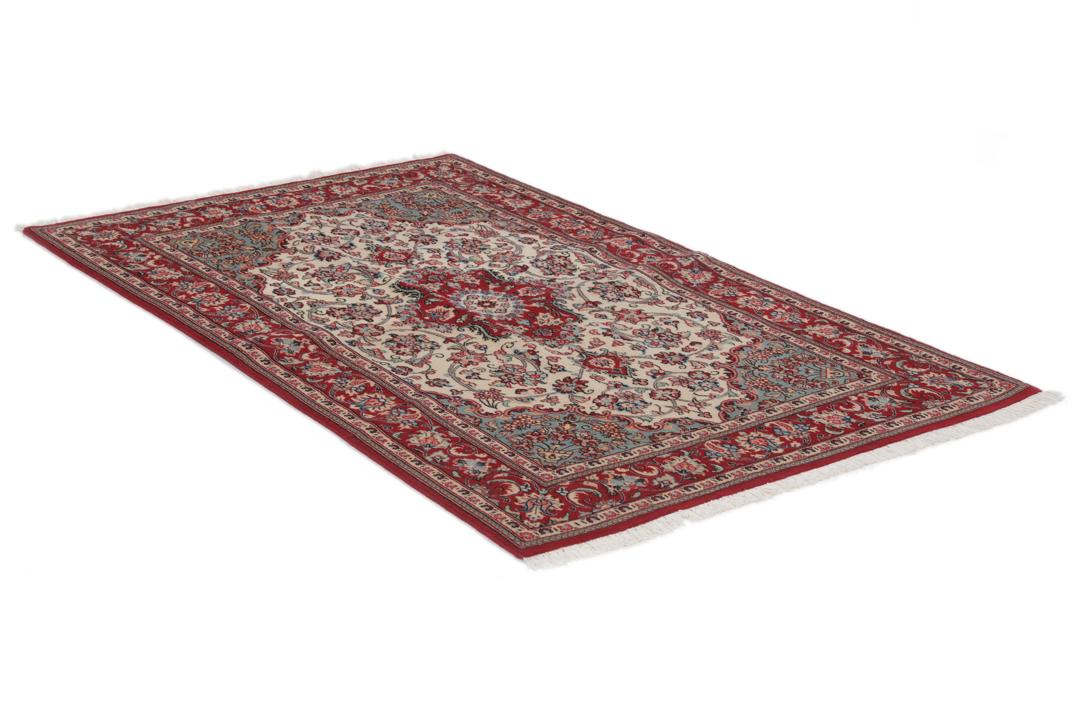
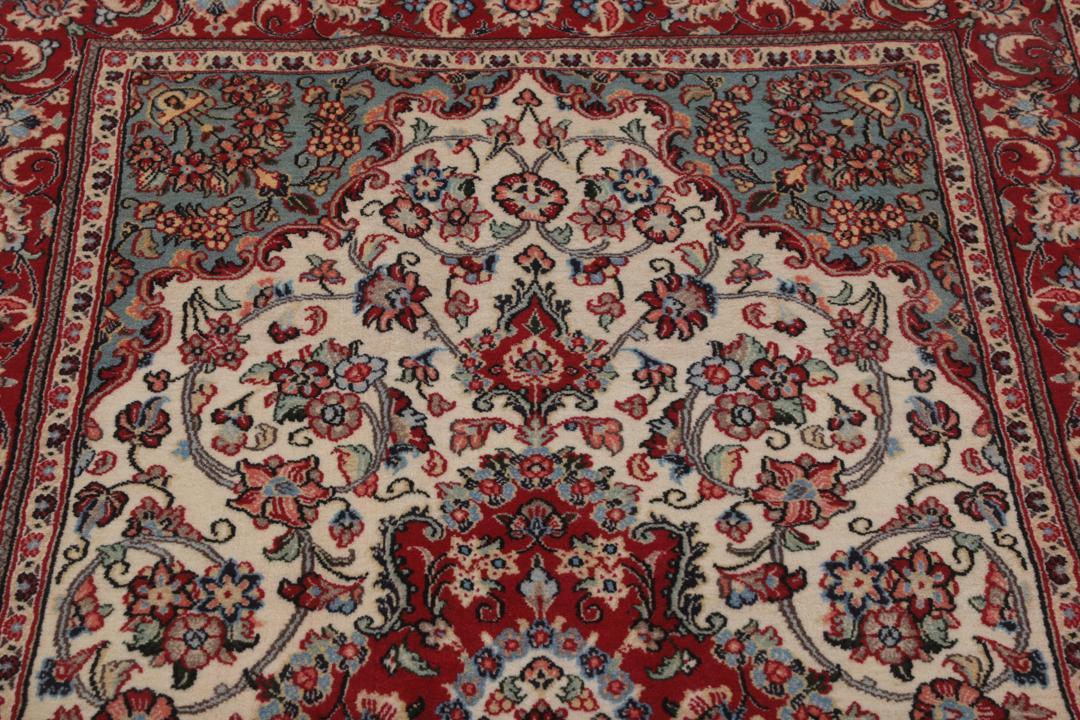
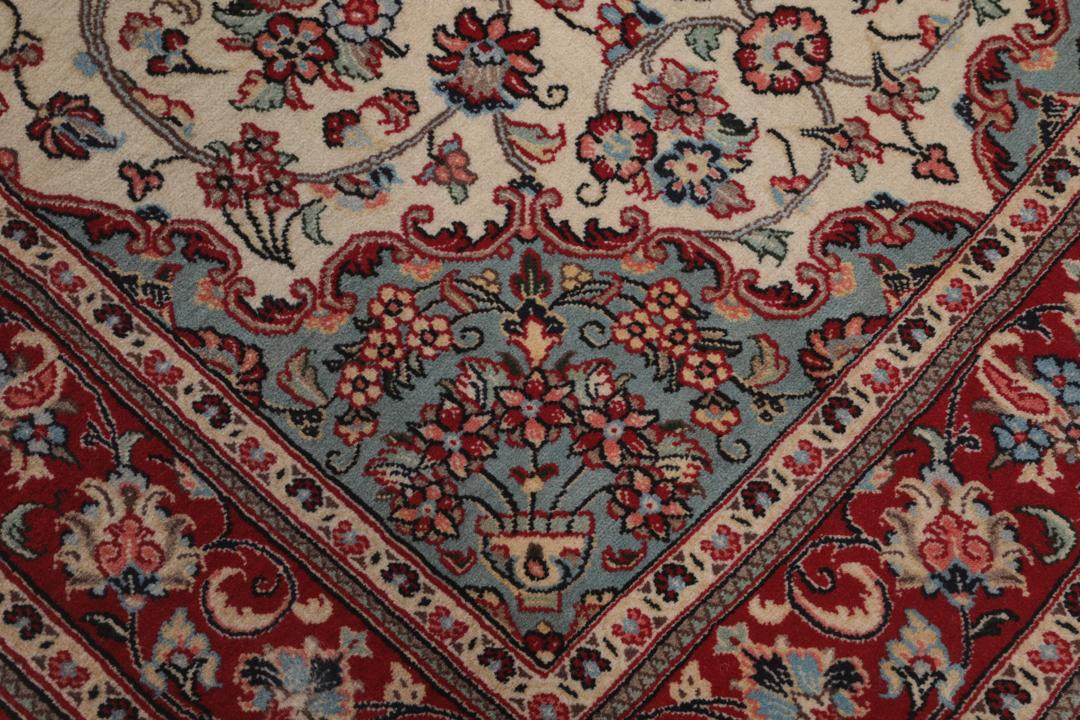
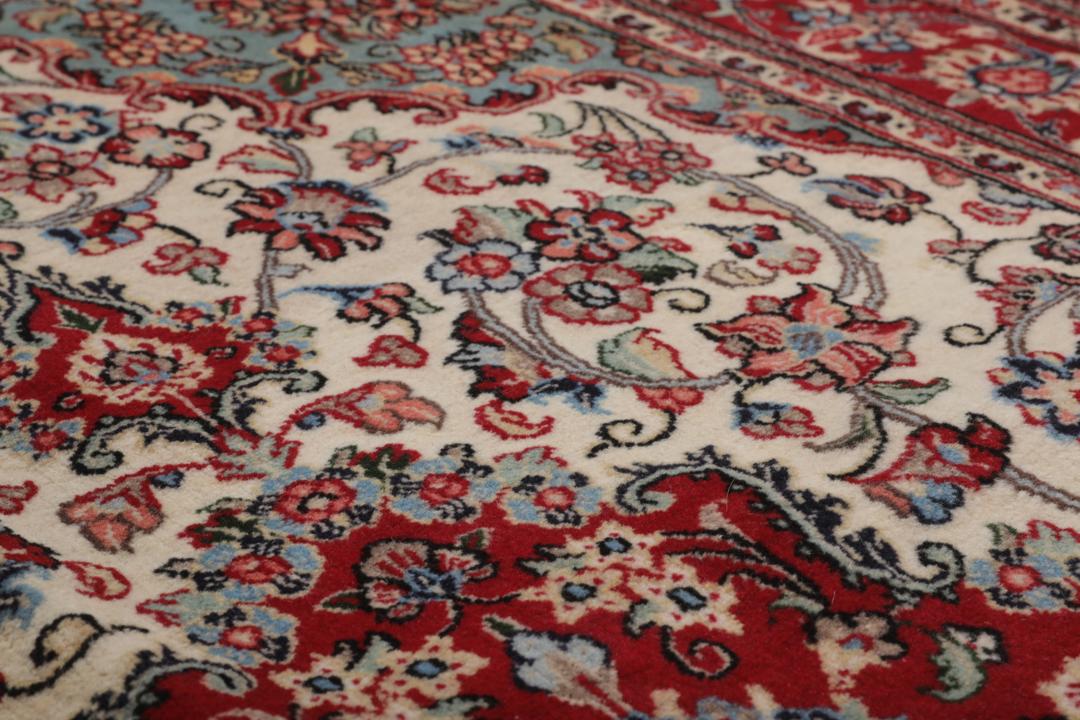
Visually, Ghom rugs are known for their diversity, often drawing inspiration from other classic traditions while maintaining a distinct, refined aesthetic. The floral medallion seen here is a classic signature, reflecting a mastery of balance and symmetry. The use of traditional red and blue tones serves to emphasise the complexity of the organic motifs and the clarity of the borders.
Collectors value Ghom rugs for their combination of artistic beauty and technical excellence. Owning a piece from this tradition is an investment in a living heritage, as it represents a unique intersection of creative vision and meticulous manual labour that remains highly sought after by those who appreciate the enduring value of authentic, hand-crafted textiles.