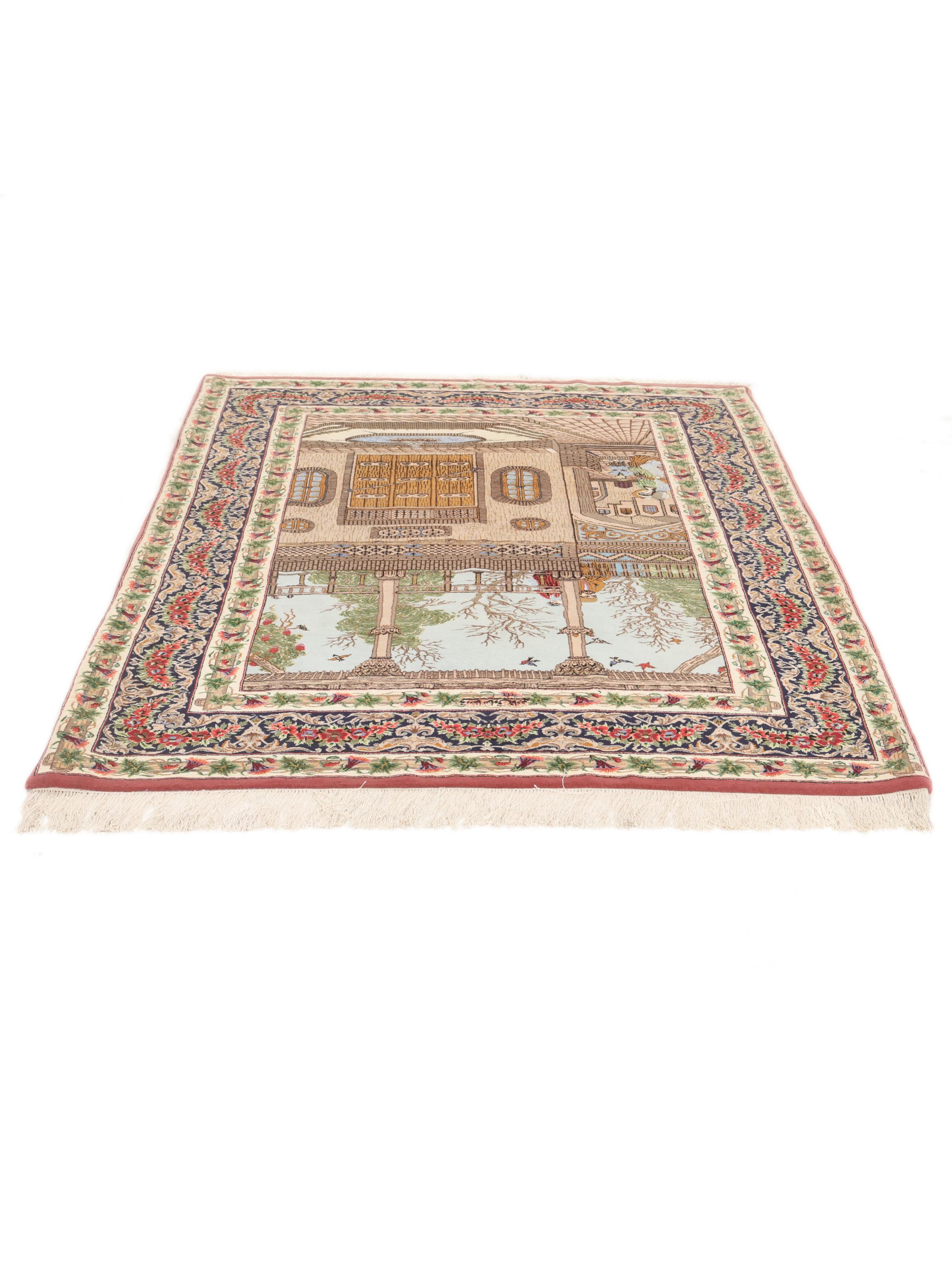
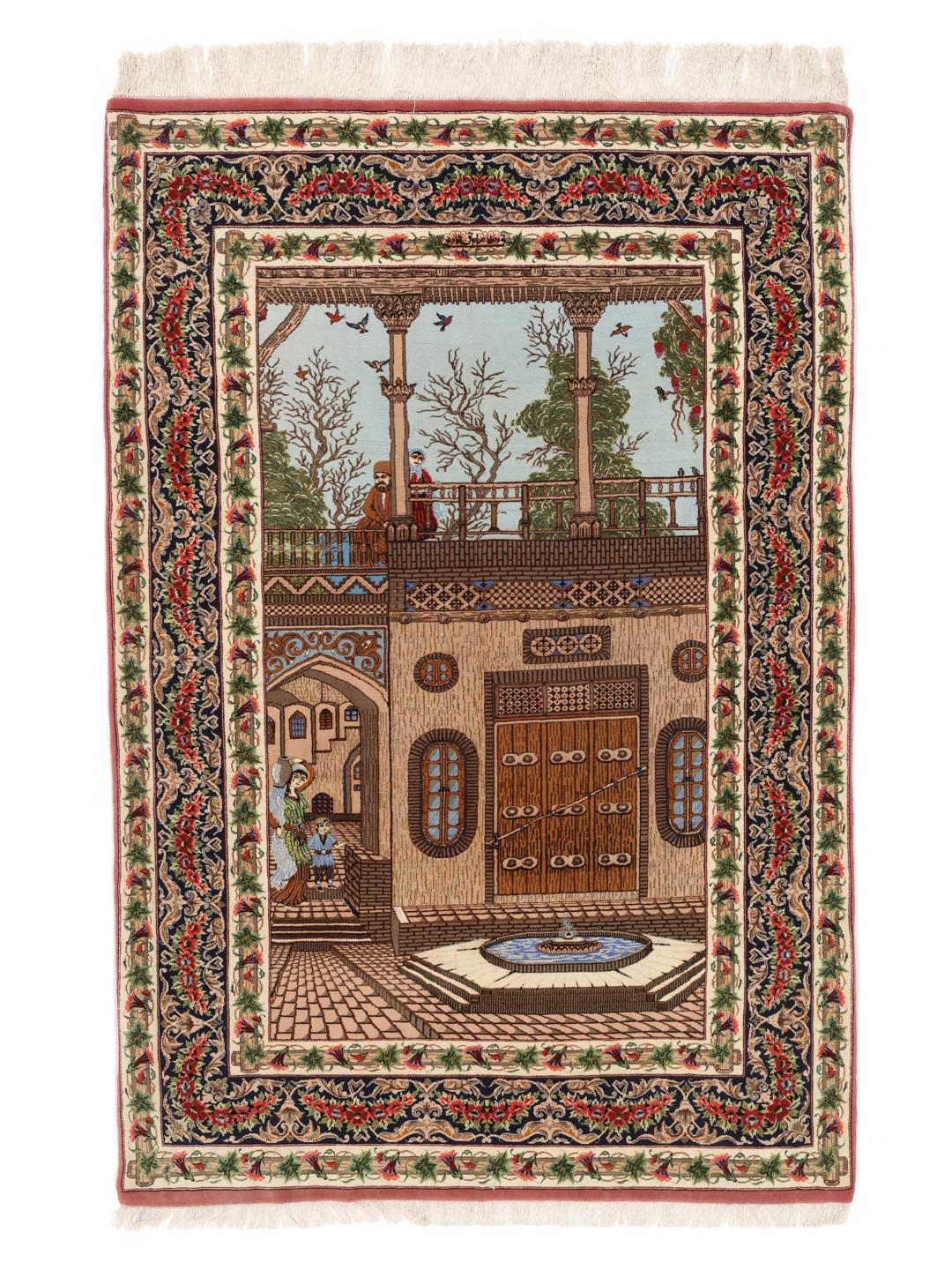
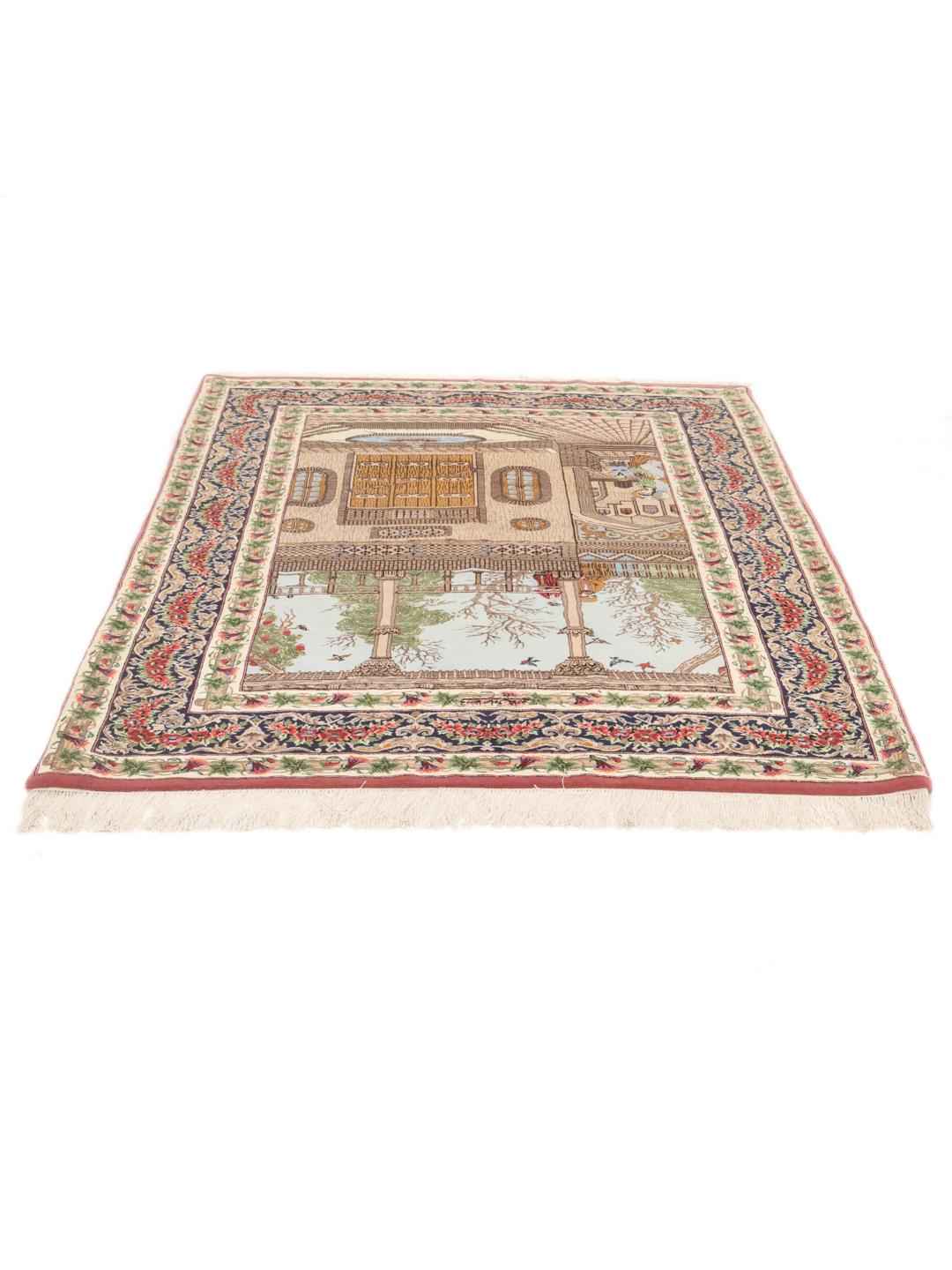
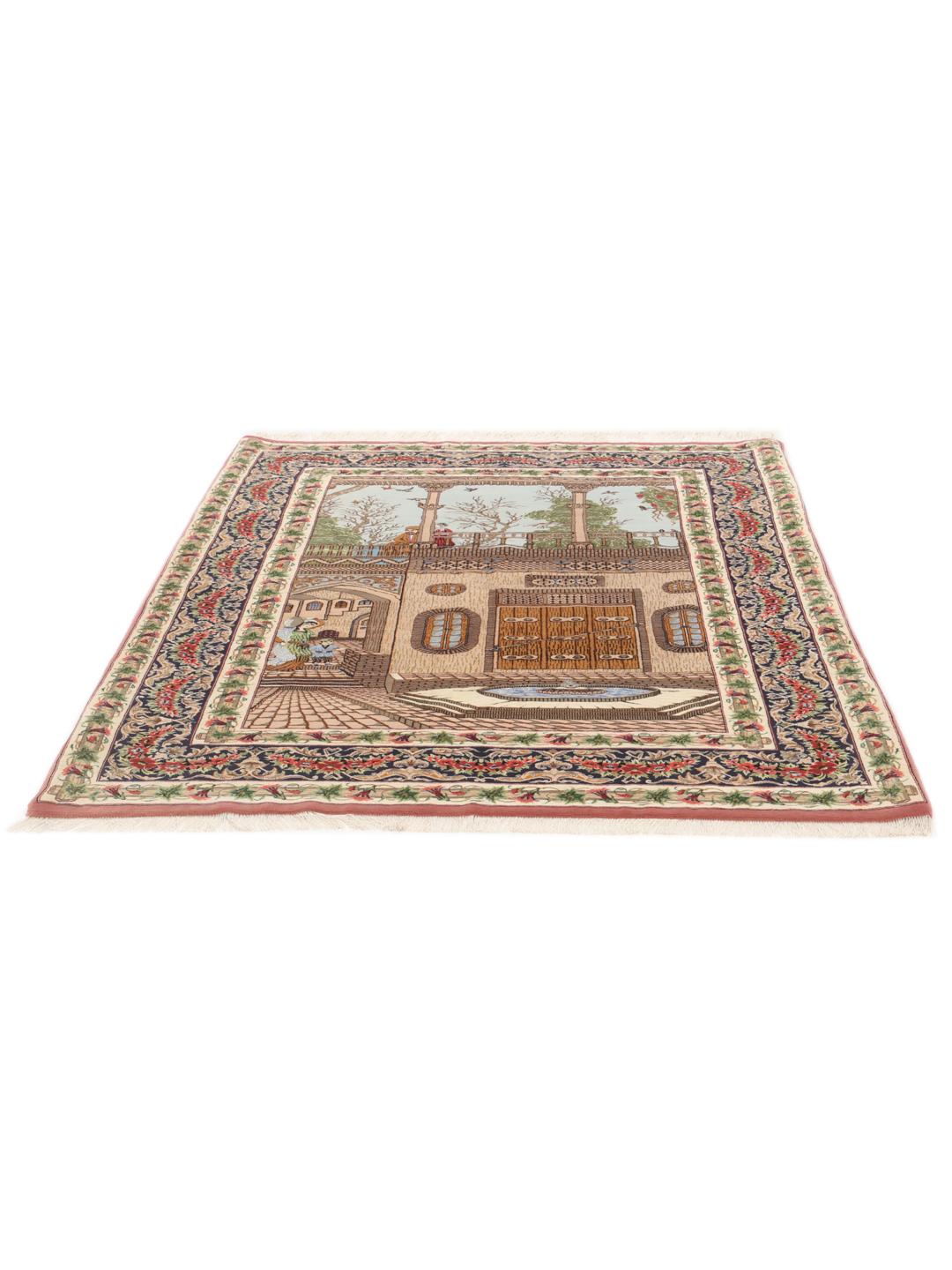
The tradition of pictorial rugs, often referred to as 'pictorial' or 'figurative' rugs, has a long and storied history in the Middle East. Unlike traditional rugs that focus solely on geometric or floral patterns, these pieces serve as narrative canvases, often depicting local legends, historical events, or scenes from daily life within a courtyard or garden setting.
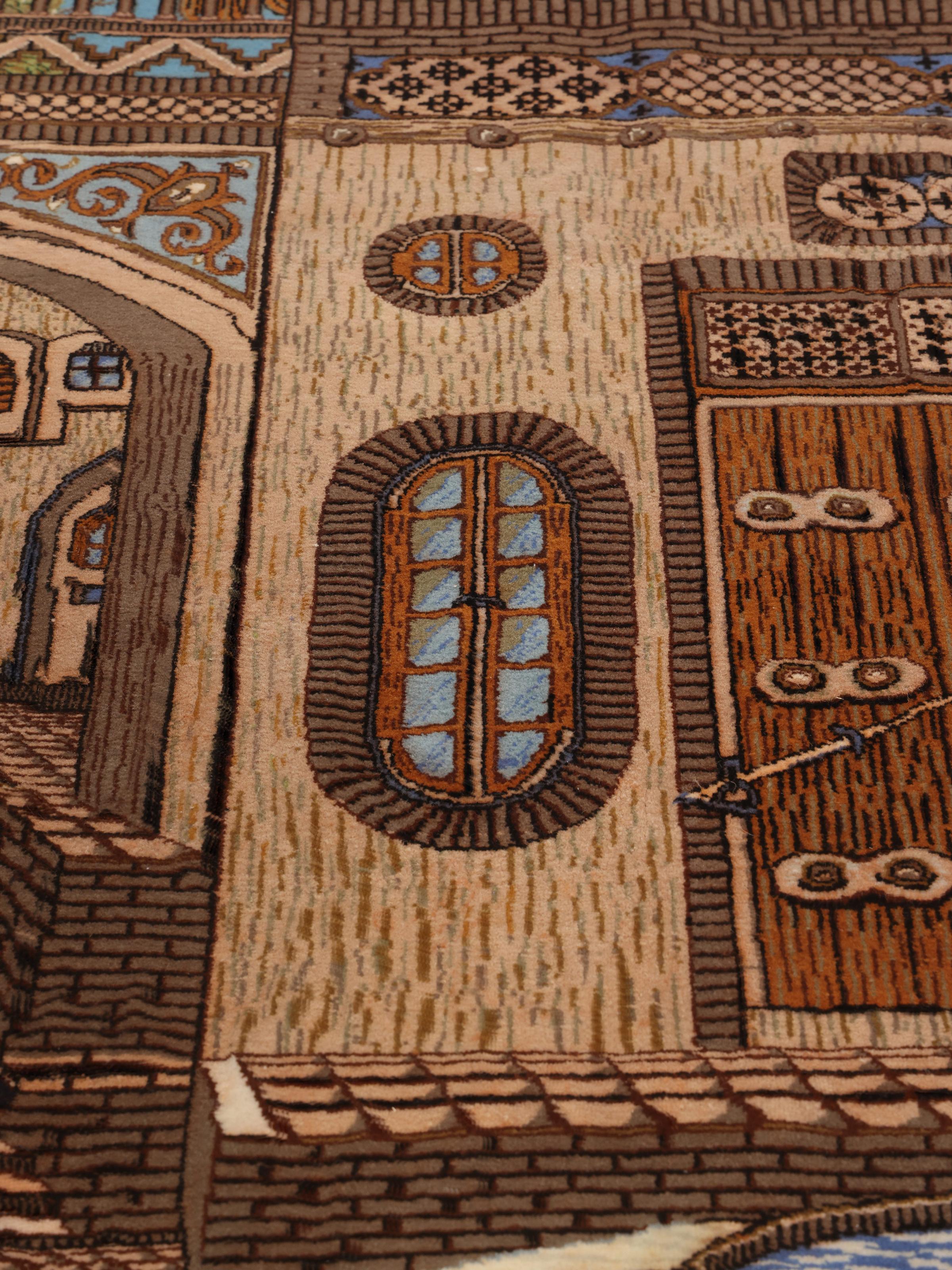
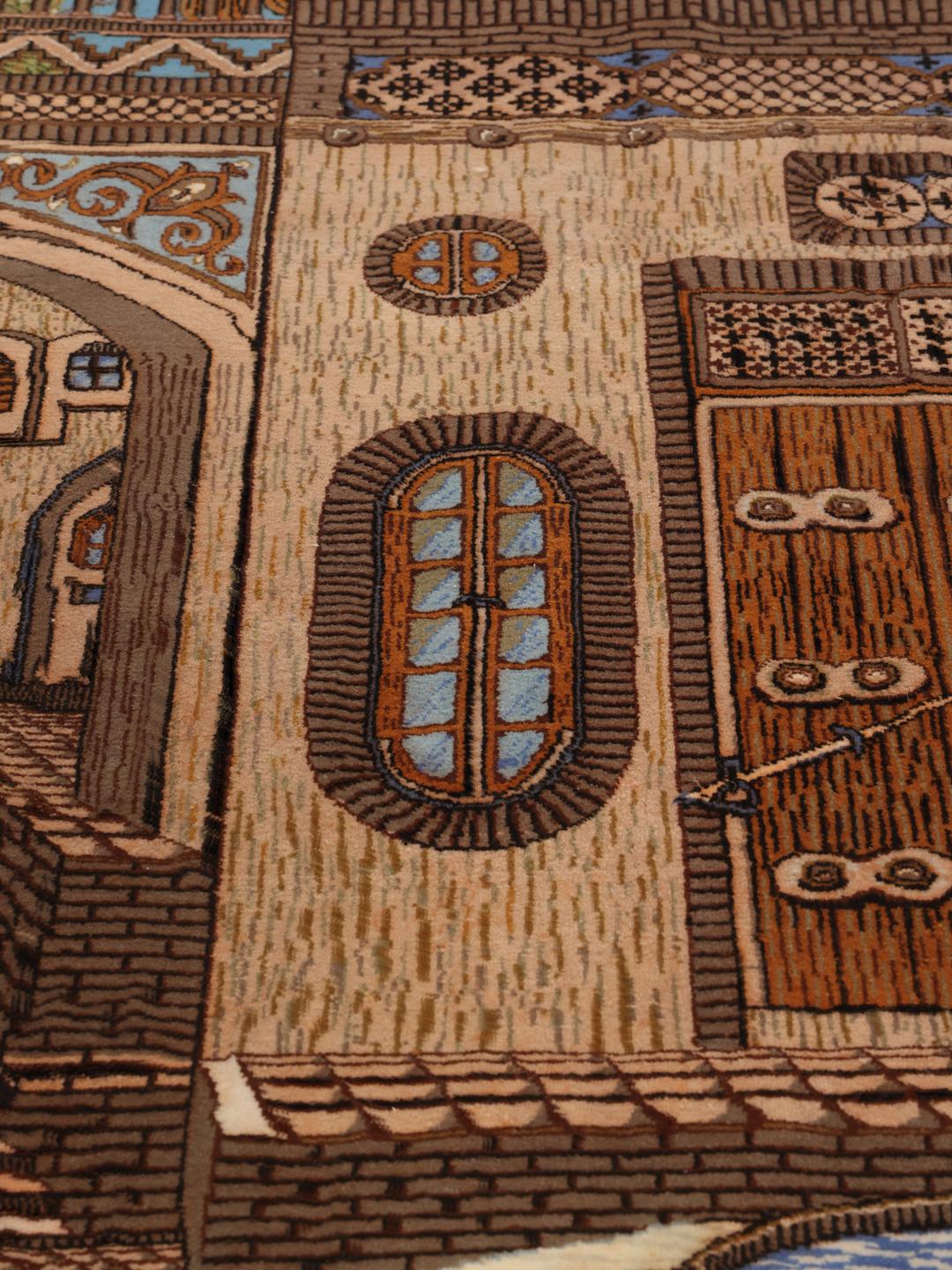
The term 'Ghom' refers to a city in the Middle East renowned for its sophisticated workshops and exceptional attention to detail. Weavers here are celebrated for their ability to blend traditional techniques with artistic innovation, often producing rugs that are as much gallery-worthy wall hangings as they are functional floor coverings. The precision required to execute these complex scenes is a hallmark of the Ghom style.
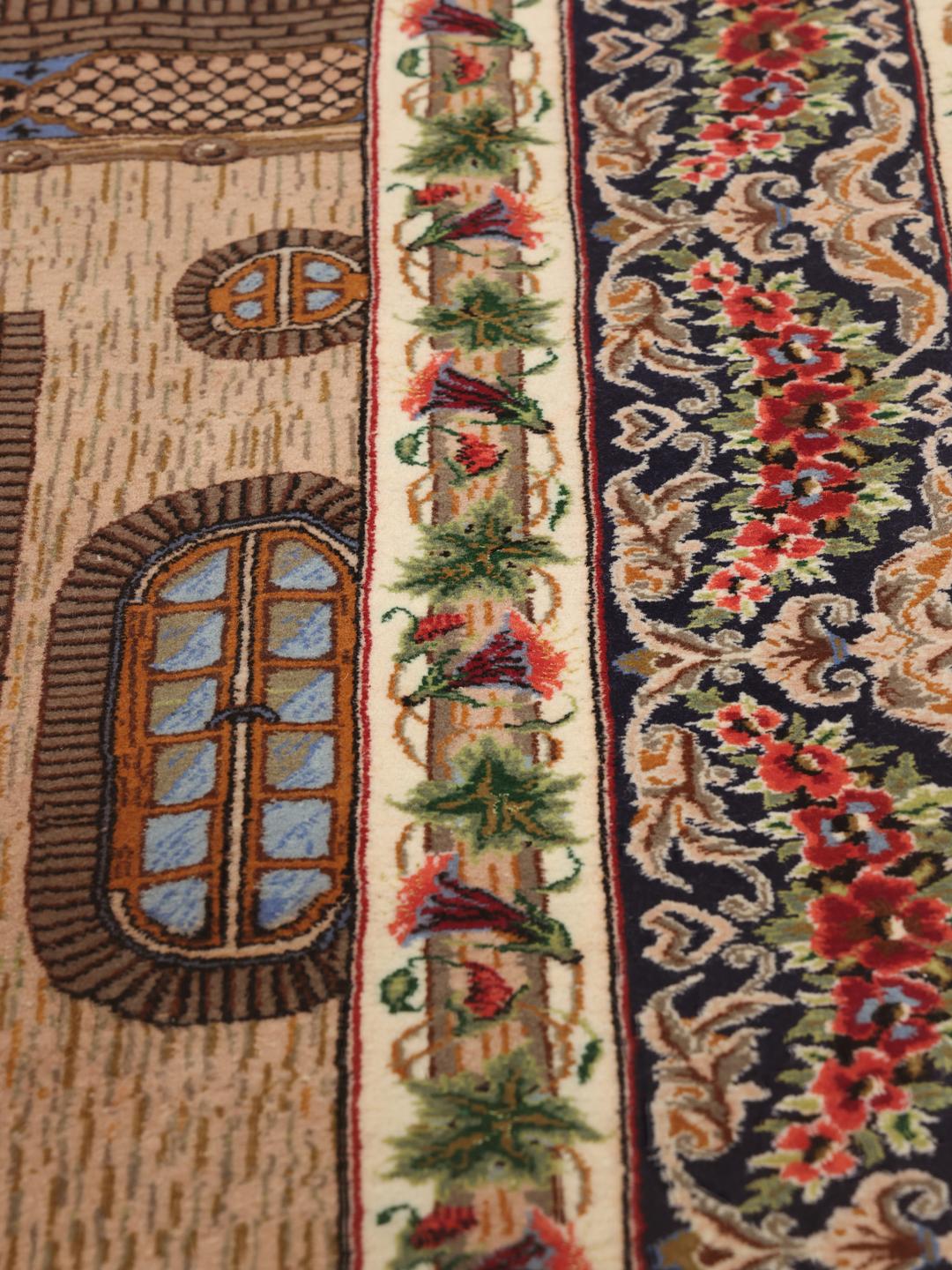
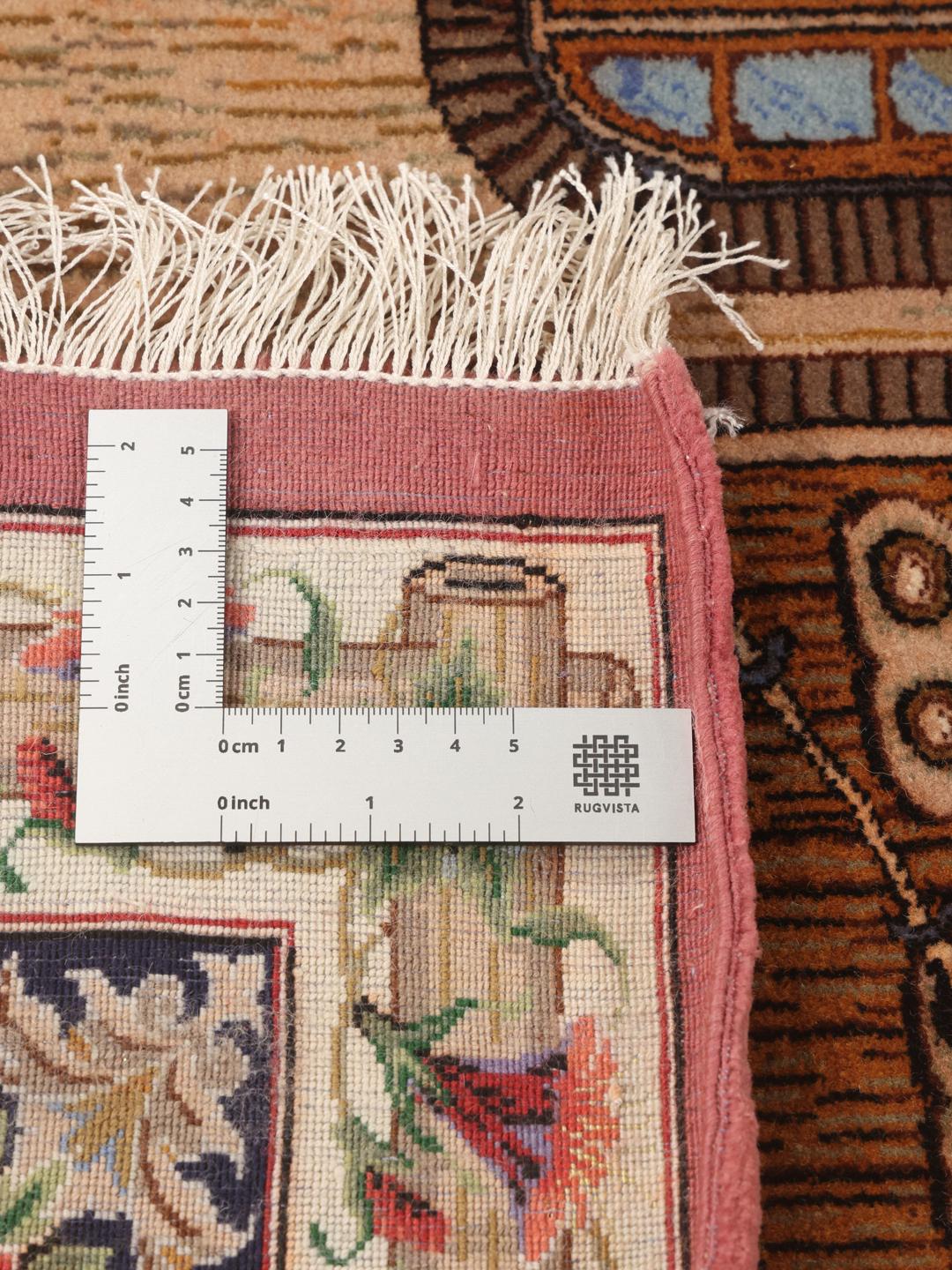
Design elements in these rugs often include architectural frames, such as the arched gateways and balconies seen in this piece. These motifs serve to create a sense of depth, effectively turning the rug into a window looking out onto a peaceful, idealized world. The borders are frequently filled with intricate floral or vine-scroll patterns, which act as a formal frame for the central narrative taking place within.
Owning a pictorial rug of this calibre is a way of connecting with a rich cultural heritage. These pieces are highly valued by collectors because they represent a convergence of fine art and technical skill. Each rug is a testament to the artisan's vision and the enduring legacy of Middle Eastern weaving, making it a significant addition to any home that appreciates the intersection of history and craft.