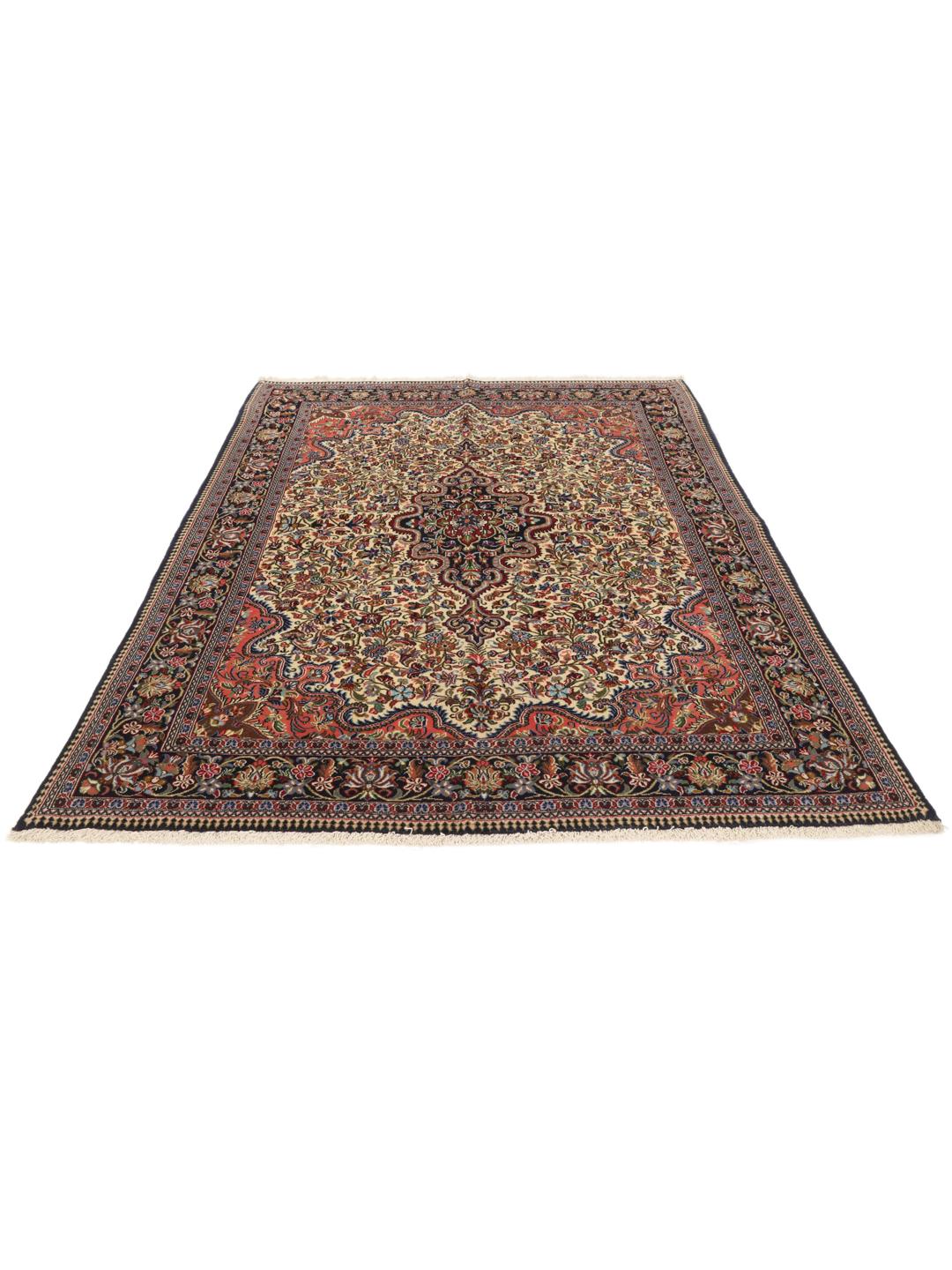
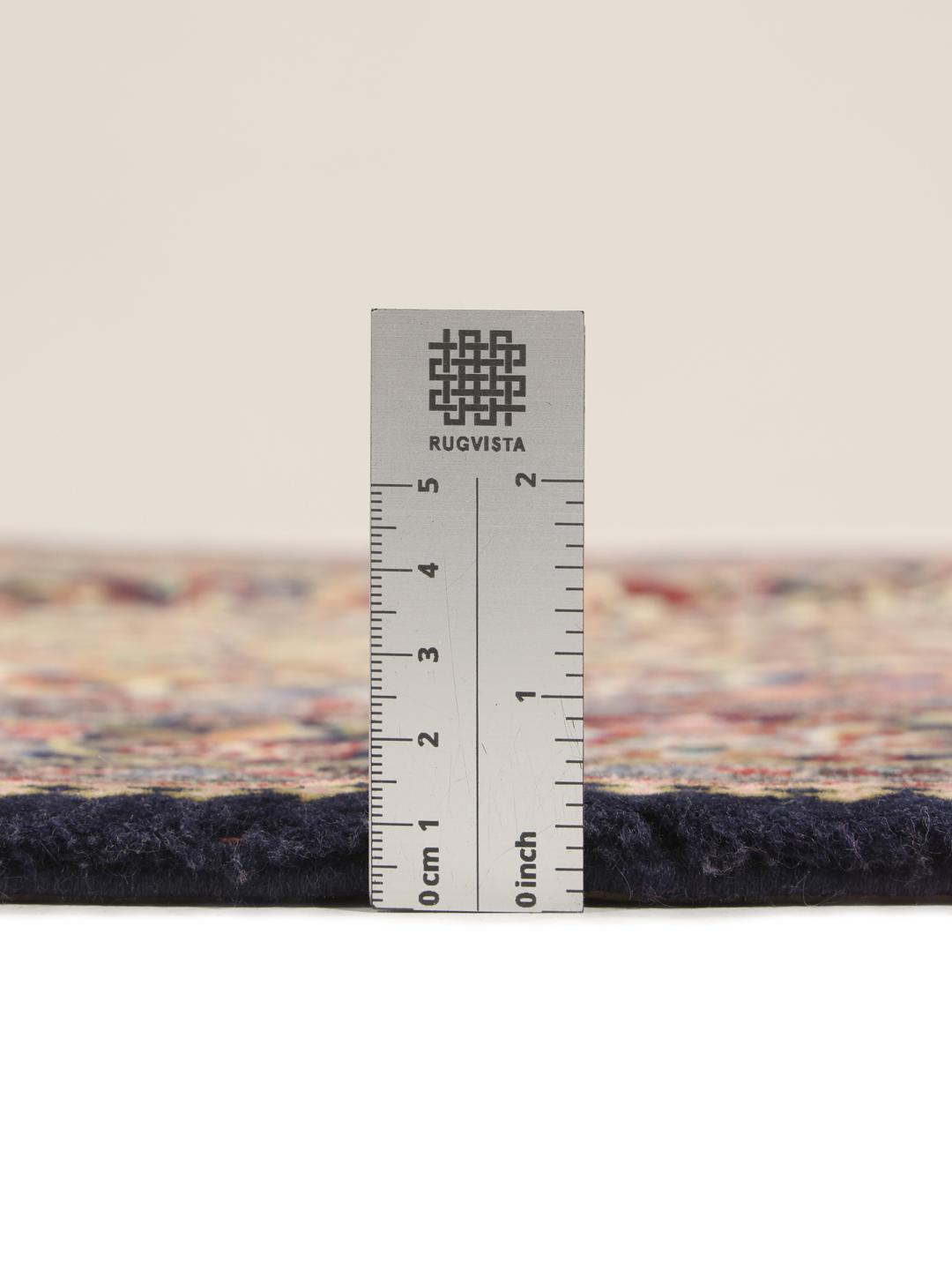
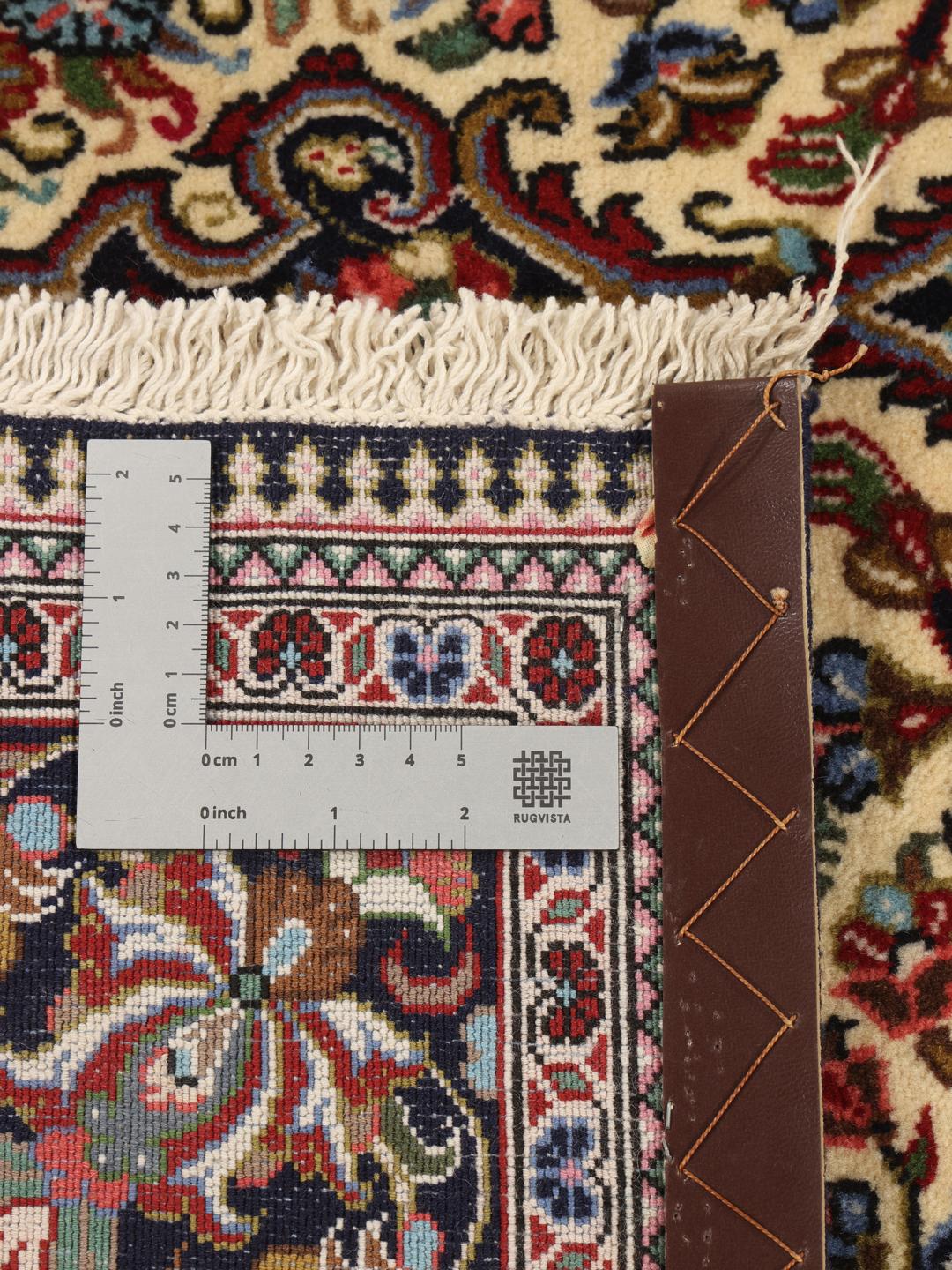
The Sarouk tradition originates from the village of the same name in the central Middle East, a region renowned for its long-standing contribution to textile history. For generations, weavers in this area have been celebrated for their ability to blend complex, curvilinear floral designs with a robust construction style that makes their rugs highly sought after by those who appreciate both aesthetics and longevity.
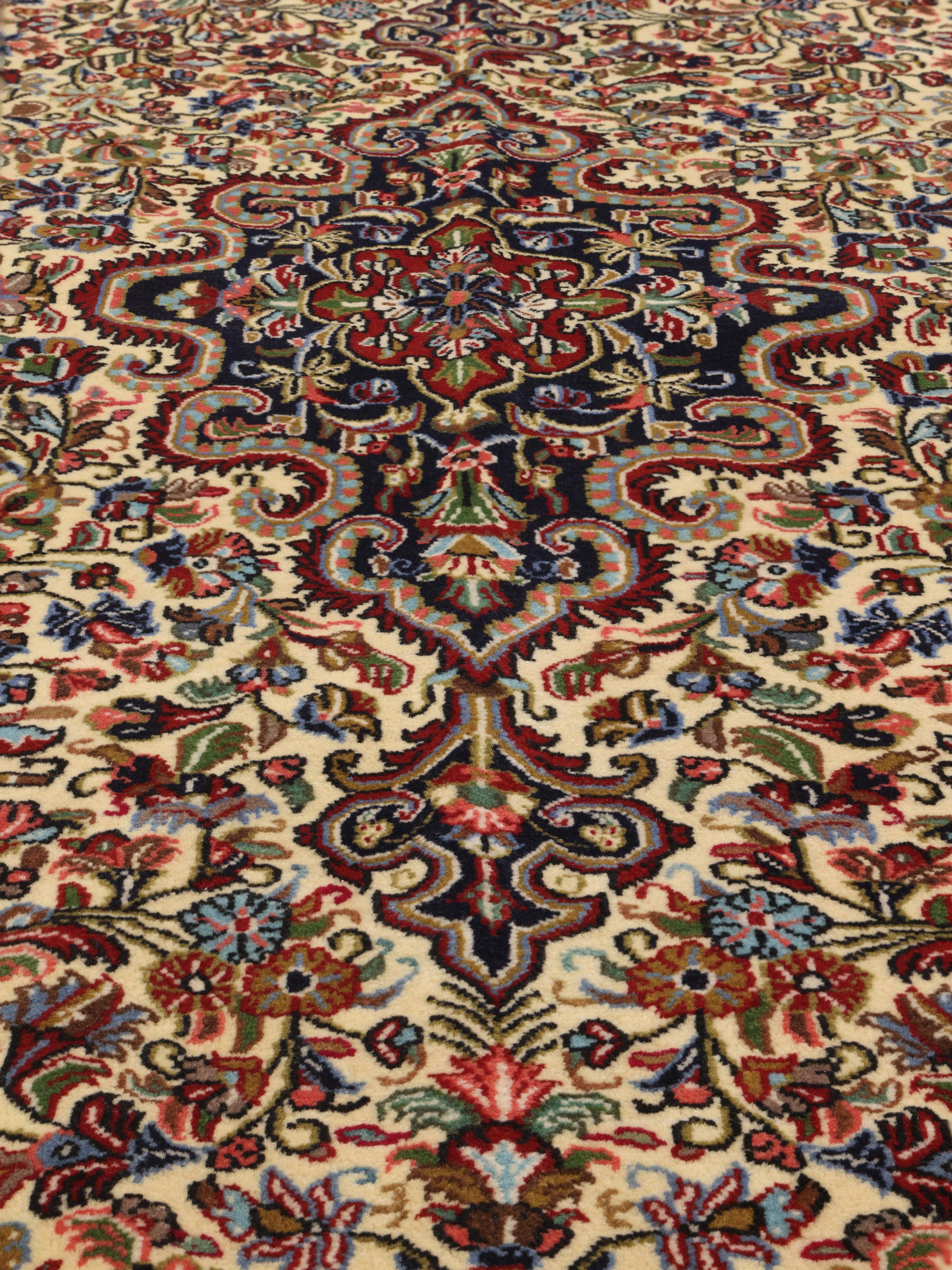
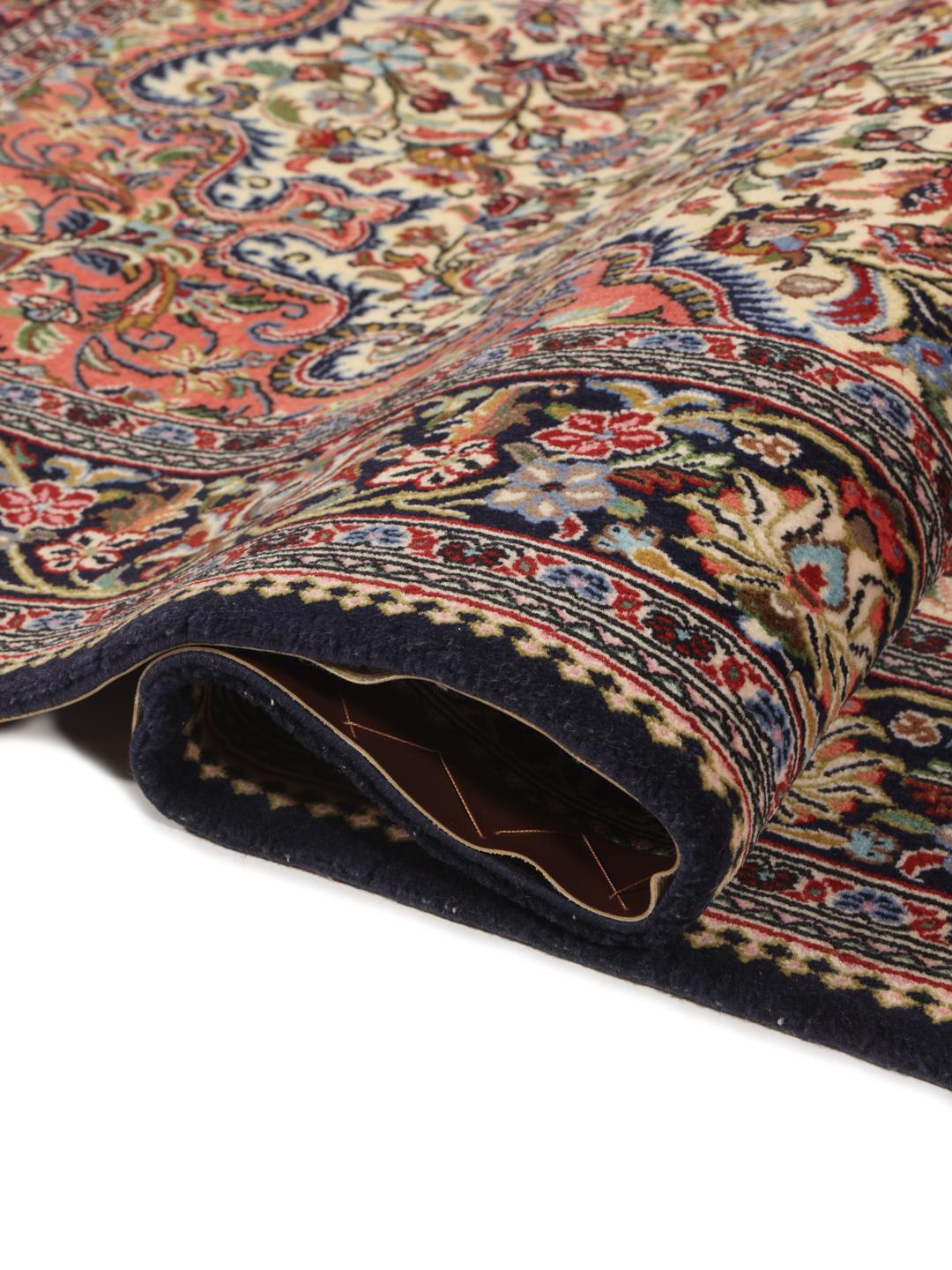
The designation 'Ghom' often refers to the city where the rug was commissioned or finished, and the use of high-quality materials is a hallmark of this category. The term 'Kork' refers to the use of fine, soft wool from the sheep's undercoat, which is prized for its lustre and durability. This material choice is what gives the rug its signature soft, velvety feel and its ability to age beautifully over time.
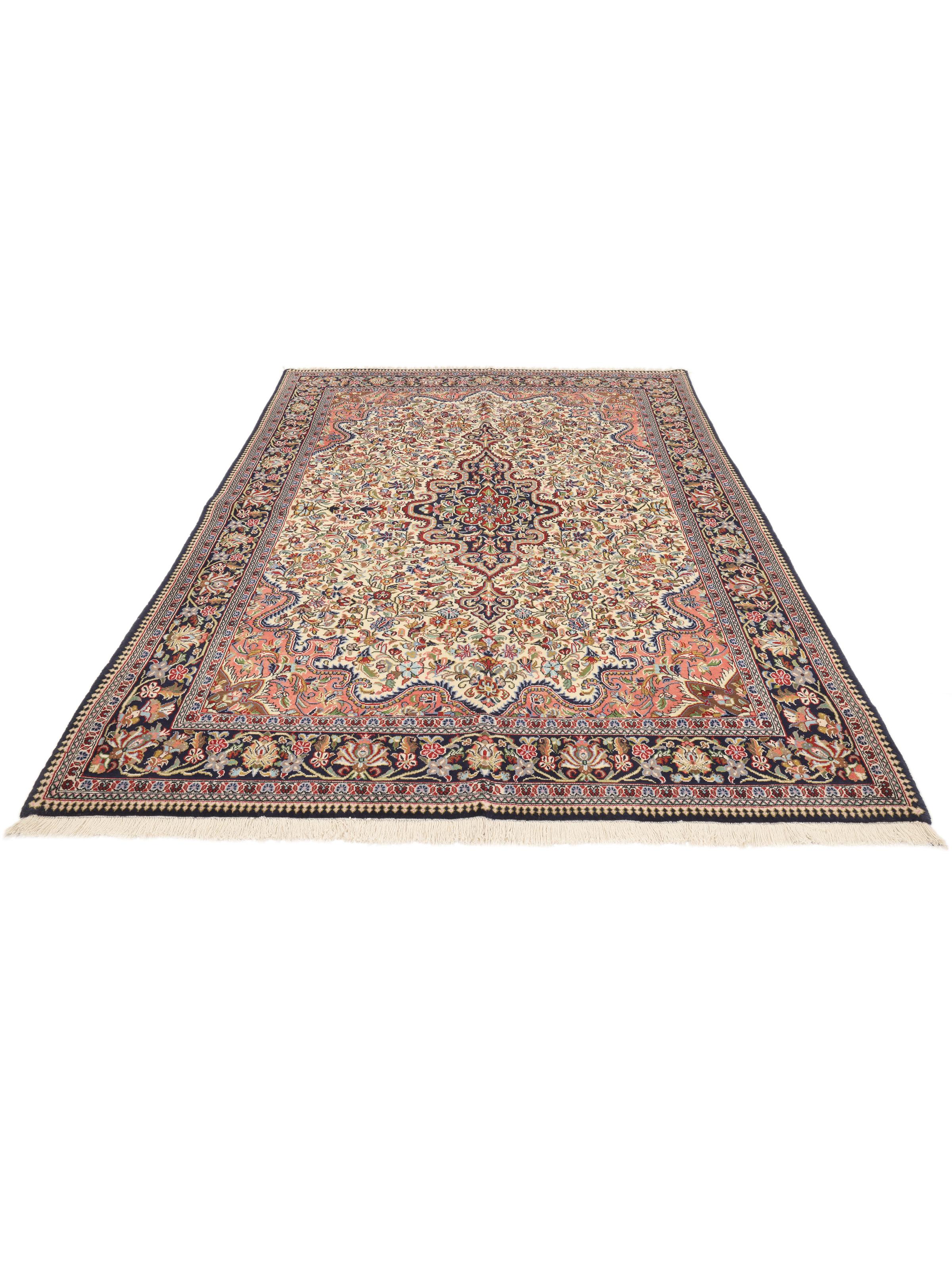
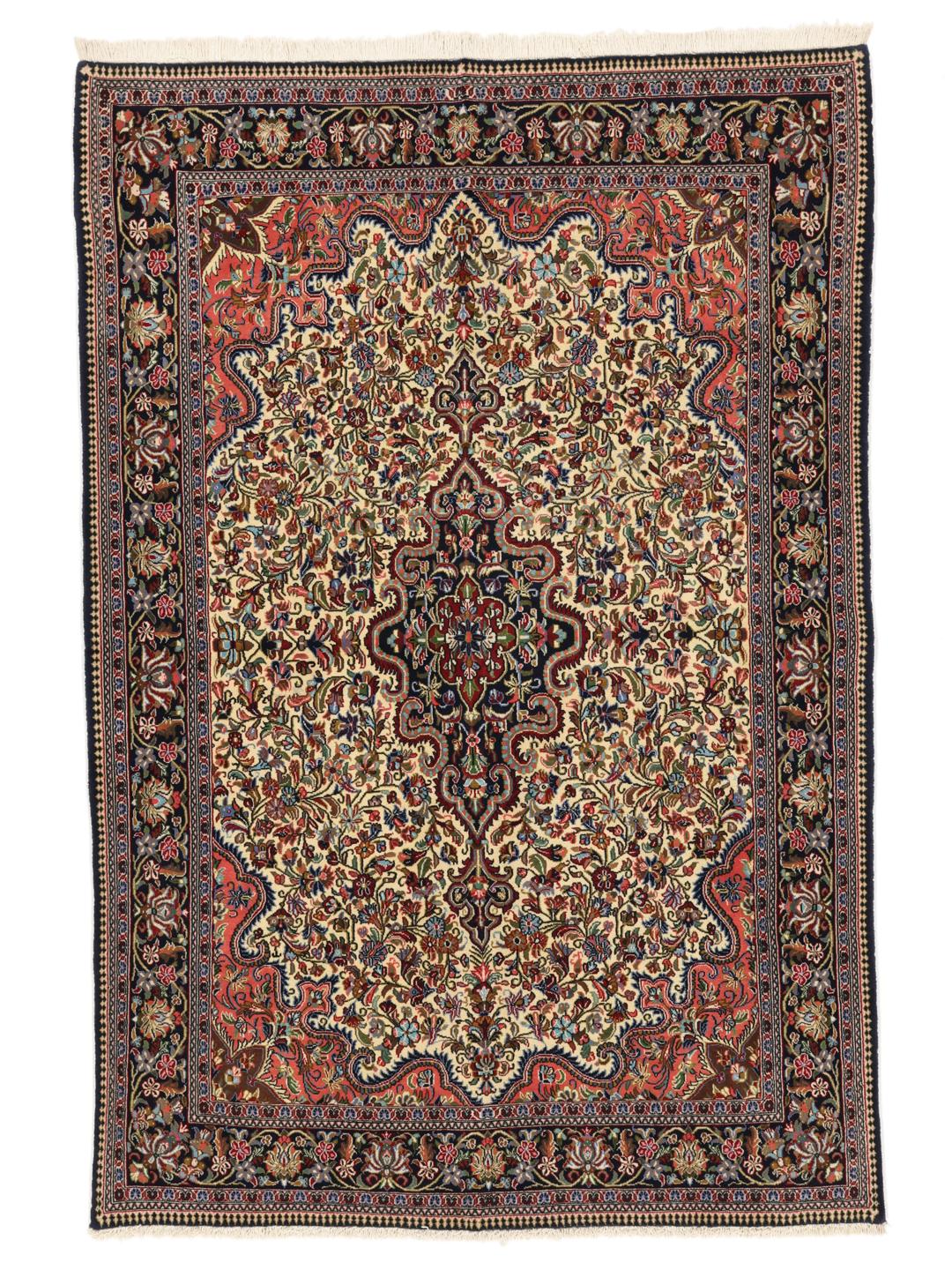
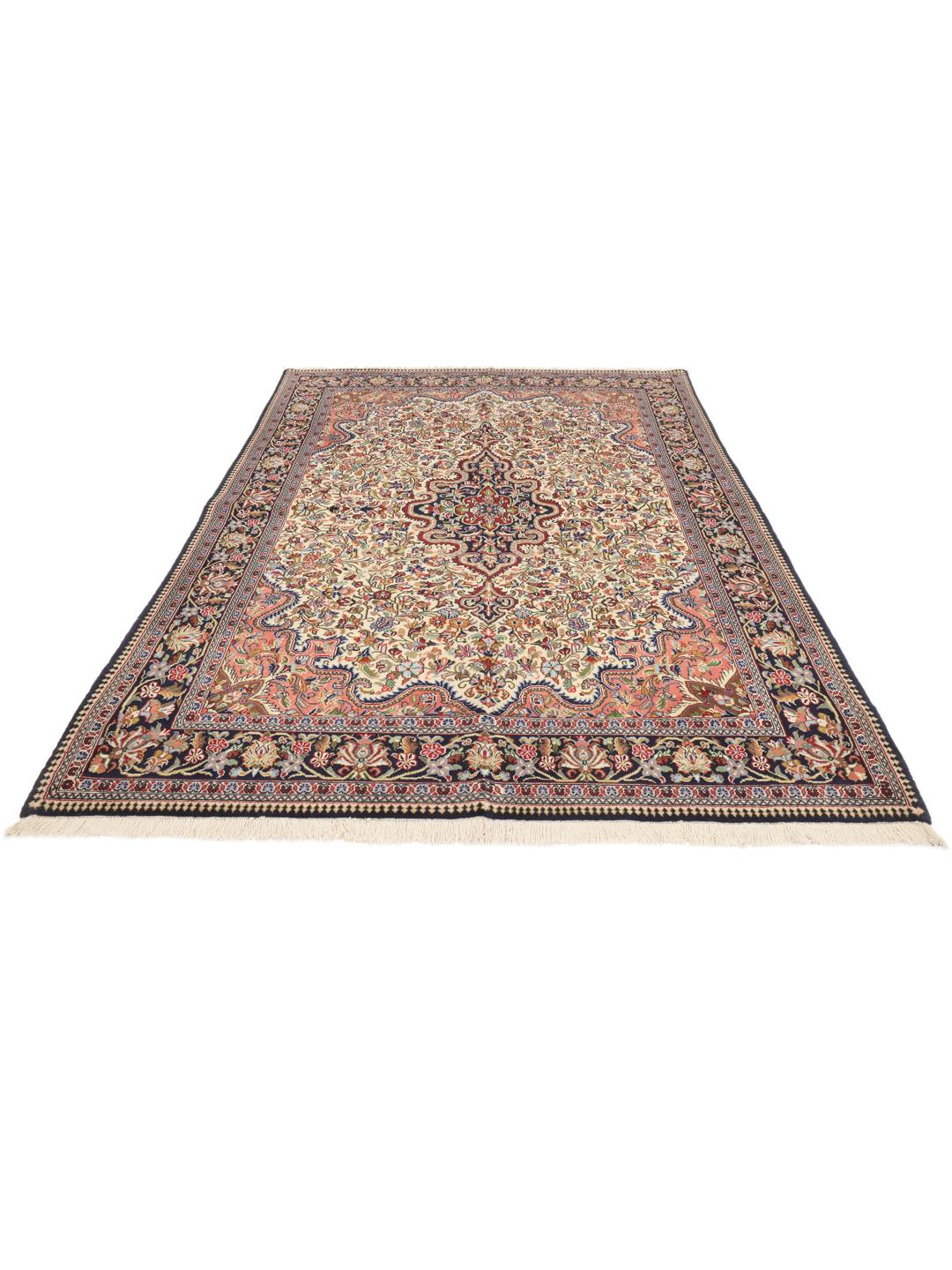
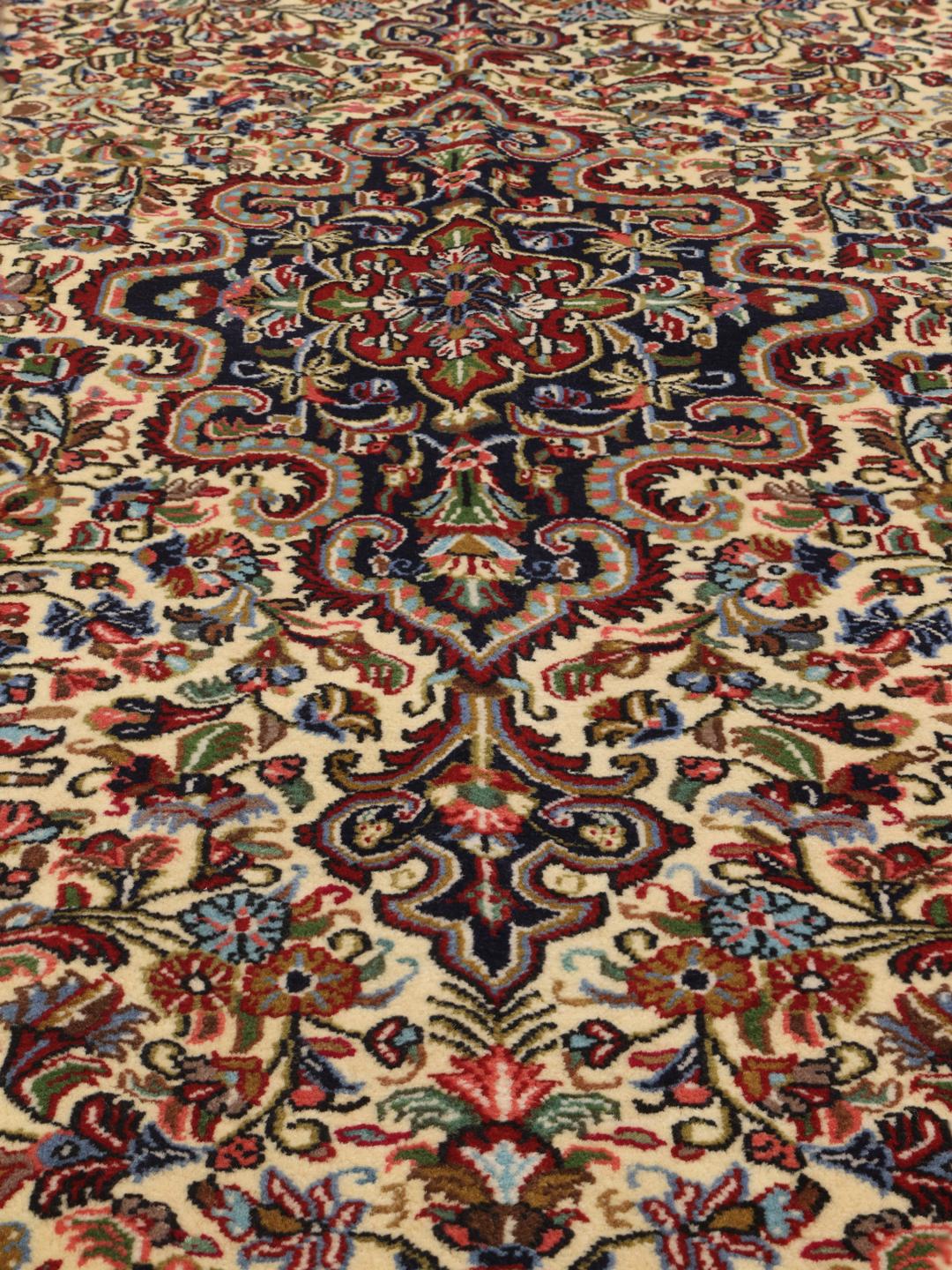
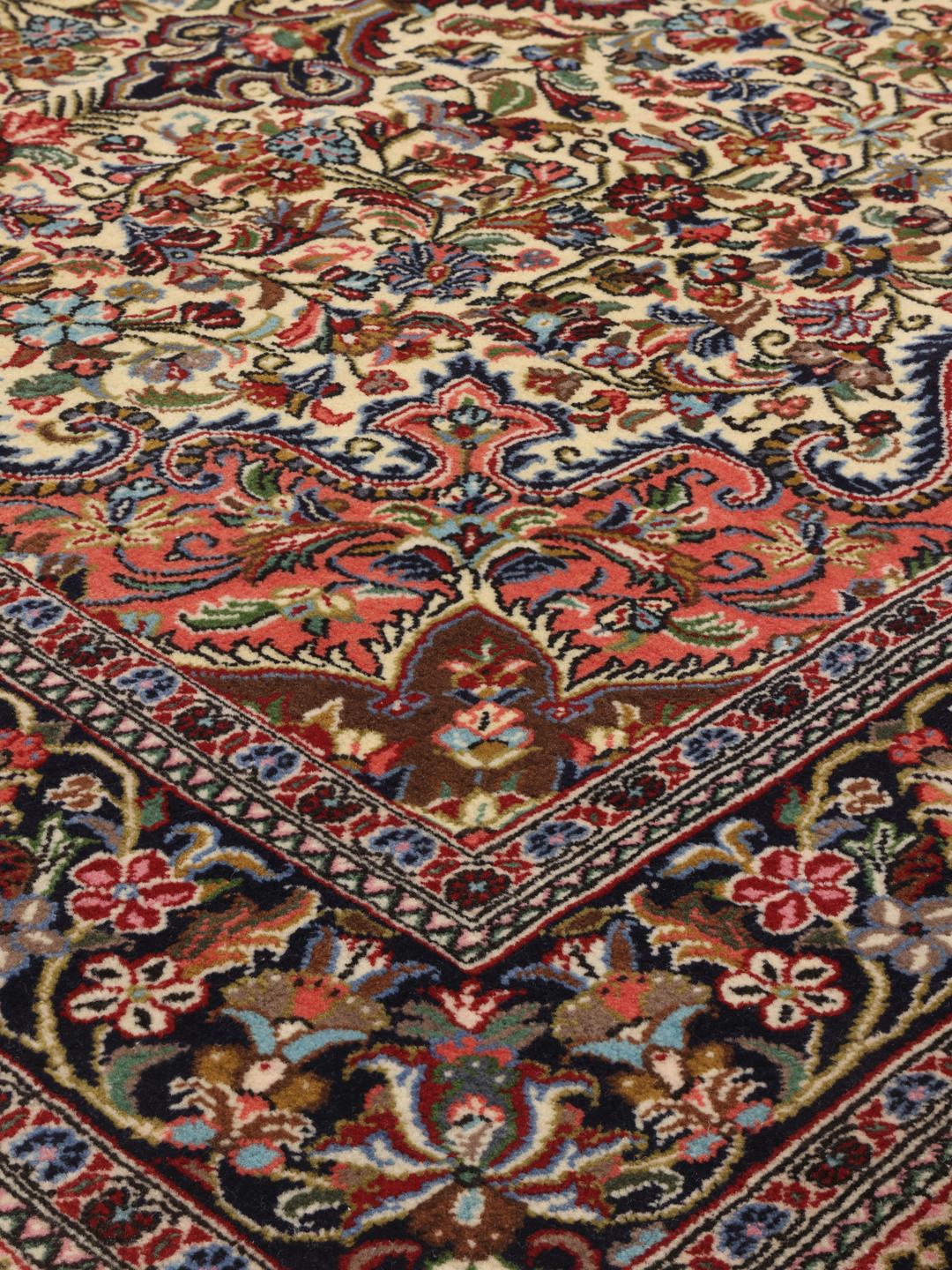
Visually, Sarouk rugs are famous for their medallion-based layouts and flowing, organic floral patterns that seem to vine across the field. While traditional red and blue palettes are common, the artistic variation found in these rugs—often incorporating shades of cream, gold, and deep navy—showcases the creative freedom of the weavers who produce them.
Collecting a piece from this tradition is an investment in cultural heritage. These rugs are valued not just for their beauty, but for the history of craftsmanship they represent. By choosing this piece, you are continuing a legacy of textile art that has been refined through centuries of practice in the Middle East.