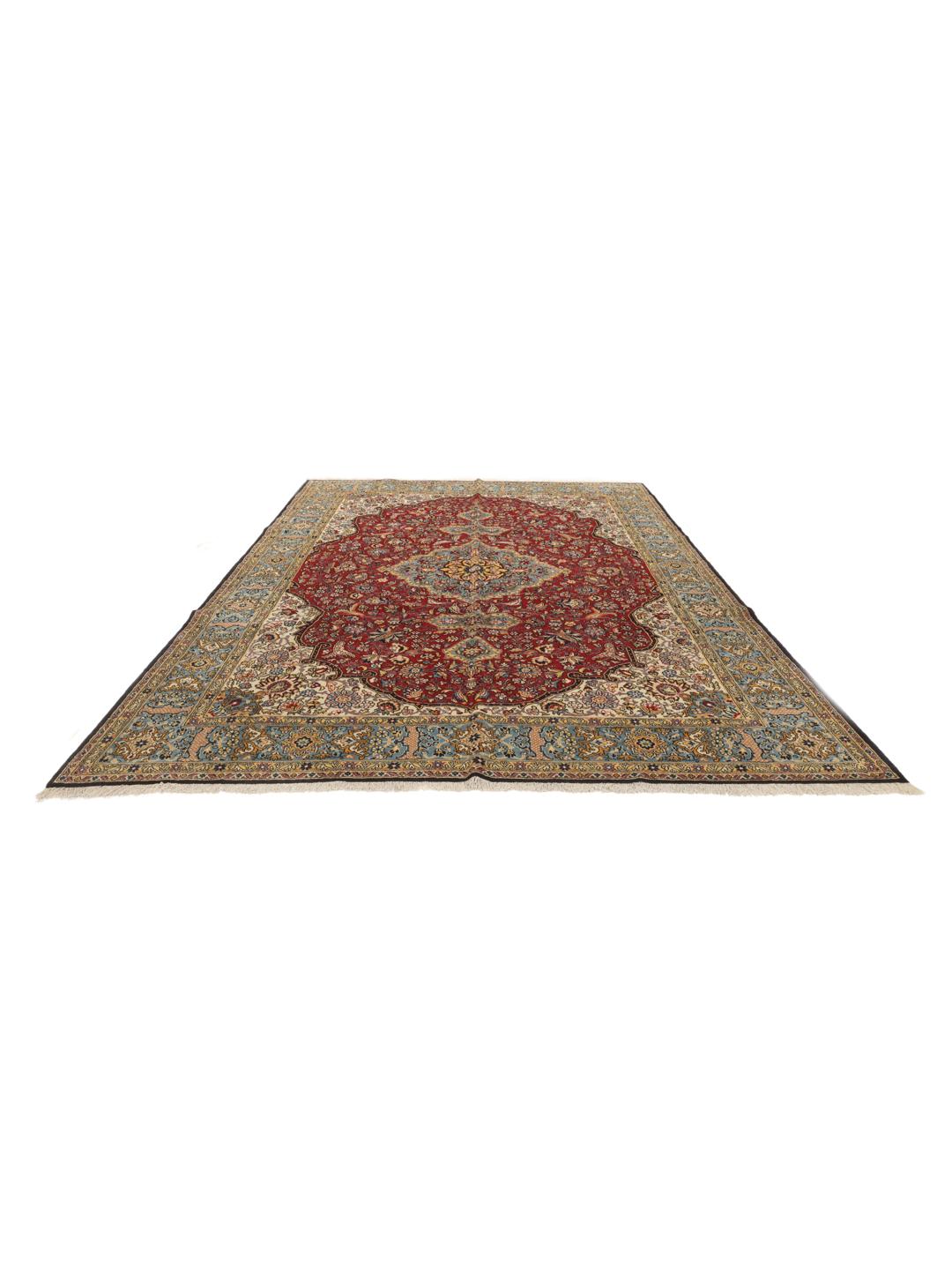
The Sarouk tradition is one of the most celebrated in the history of Middle Eastern rug weaving, originating from the village of Sarouk in the central part of the region. These rugs gained significant popularity in the early 20th century, particularly in Western markets, due to their exceptional durability and the sophistication of their floral designs.
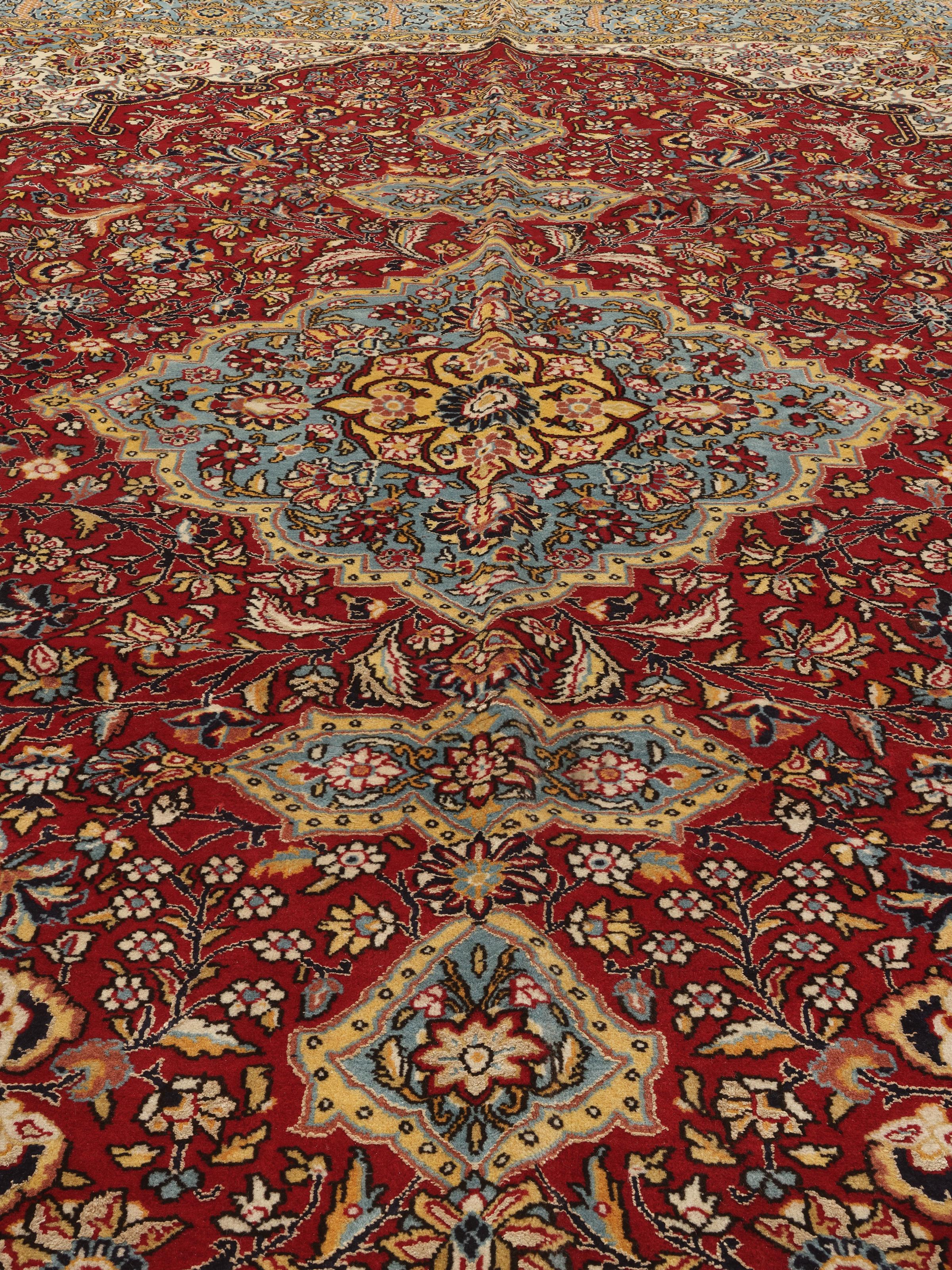
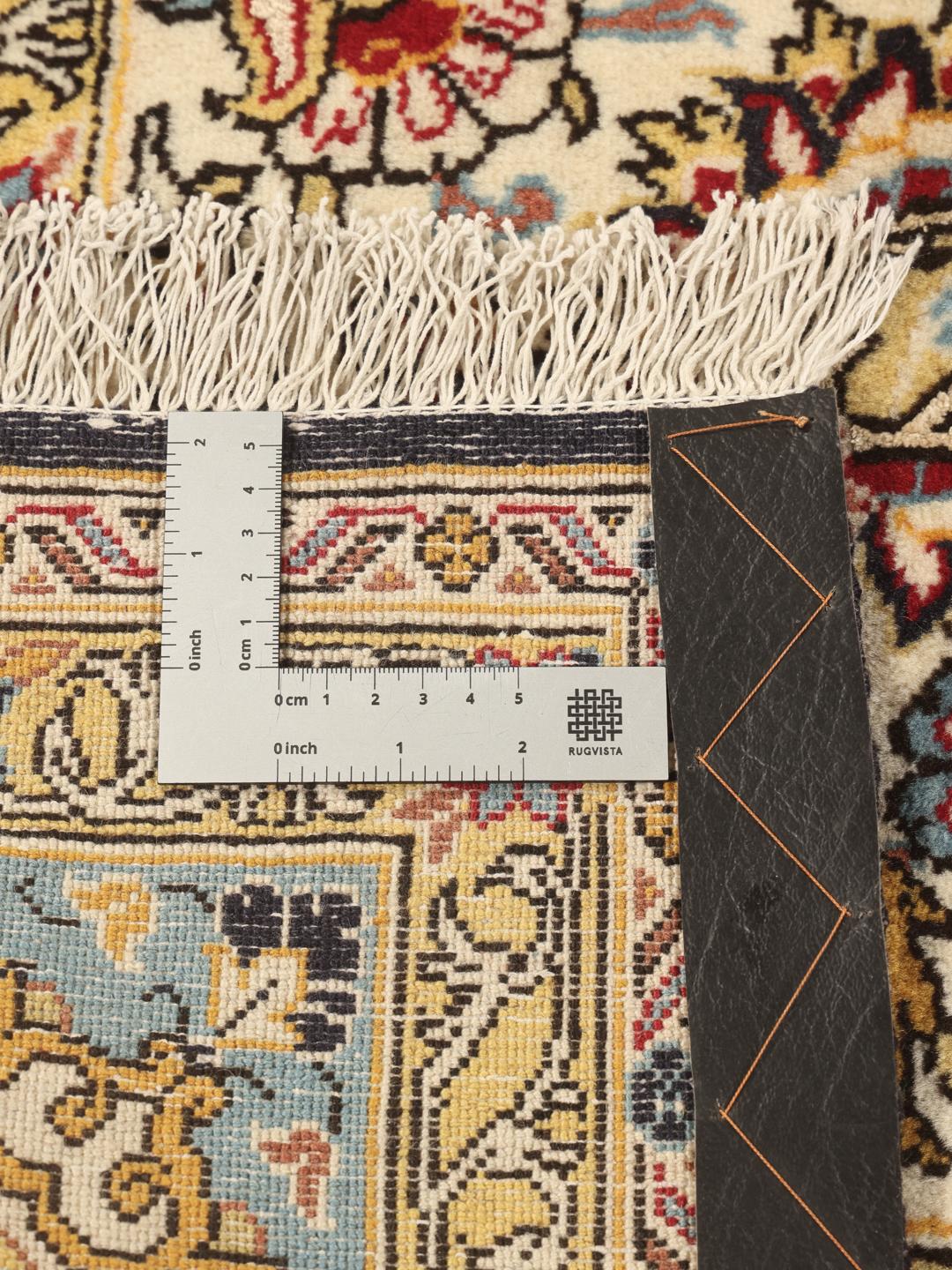
The construction of such rugs typically involves a sturdy foundation using cotton, which provides the necessary stability for the dense wool pile. This combination is highly regarded because it creates a robust, long-wearing surface that retains its rich colours and intricate patterns even after decades of use in a busy home.
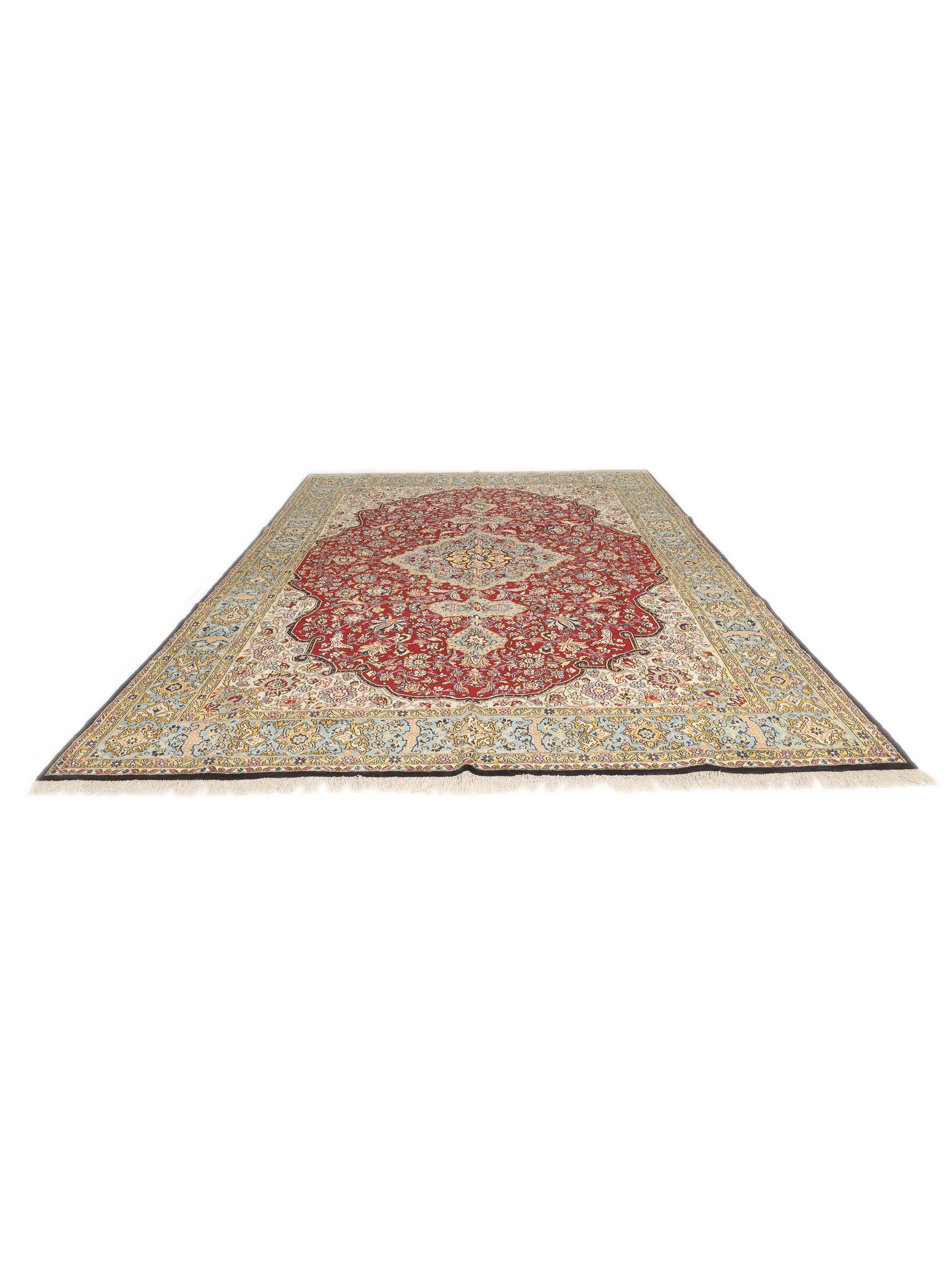
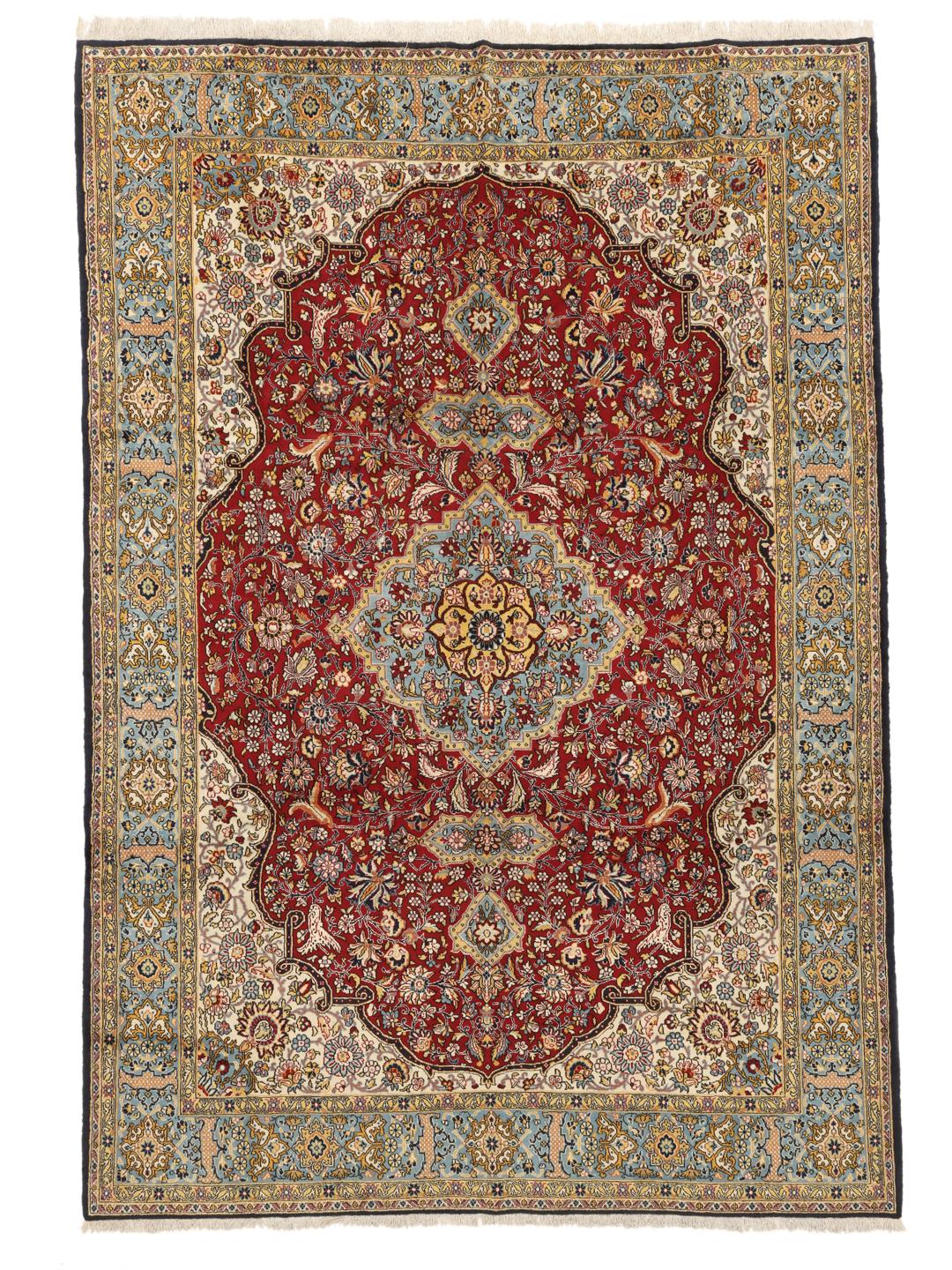
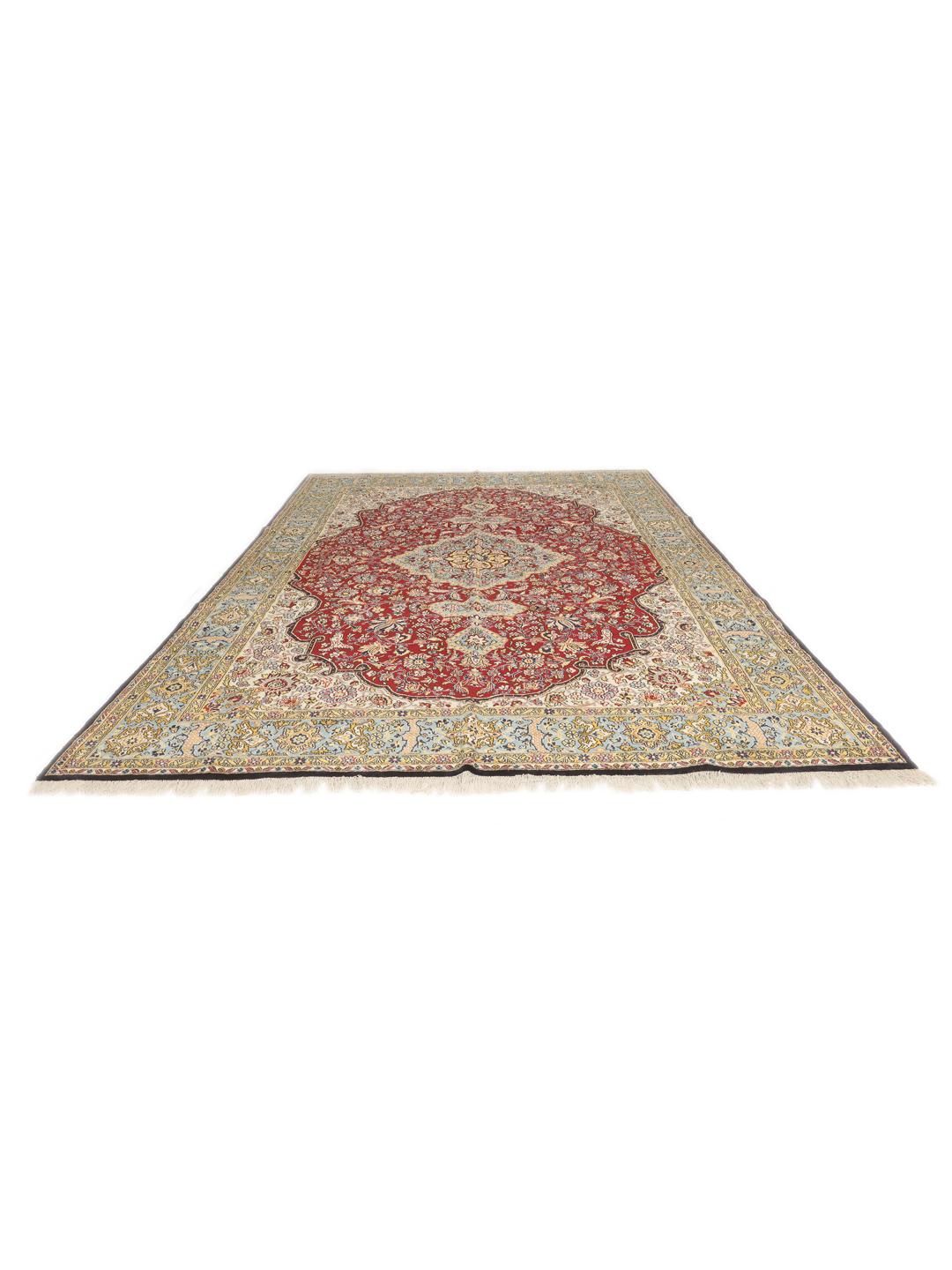
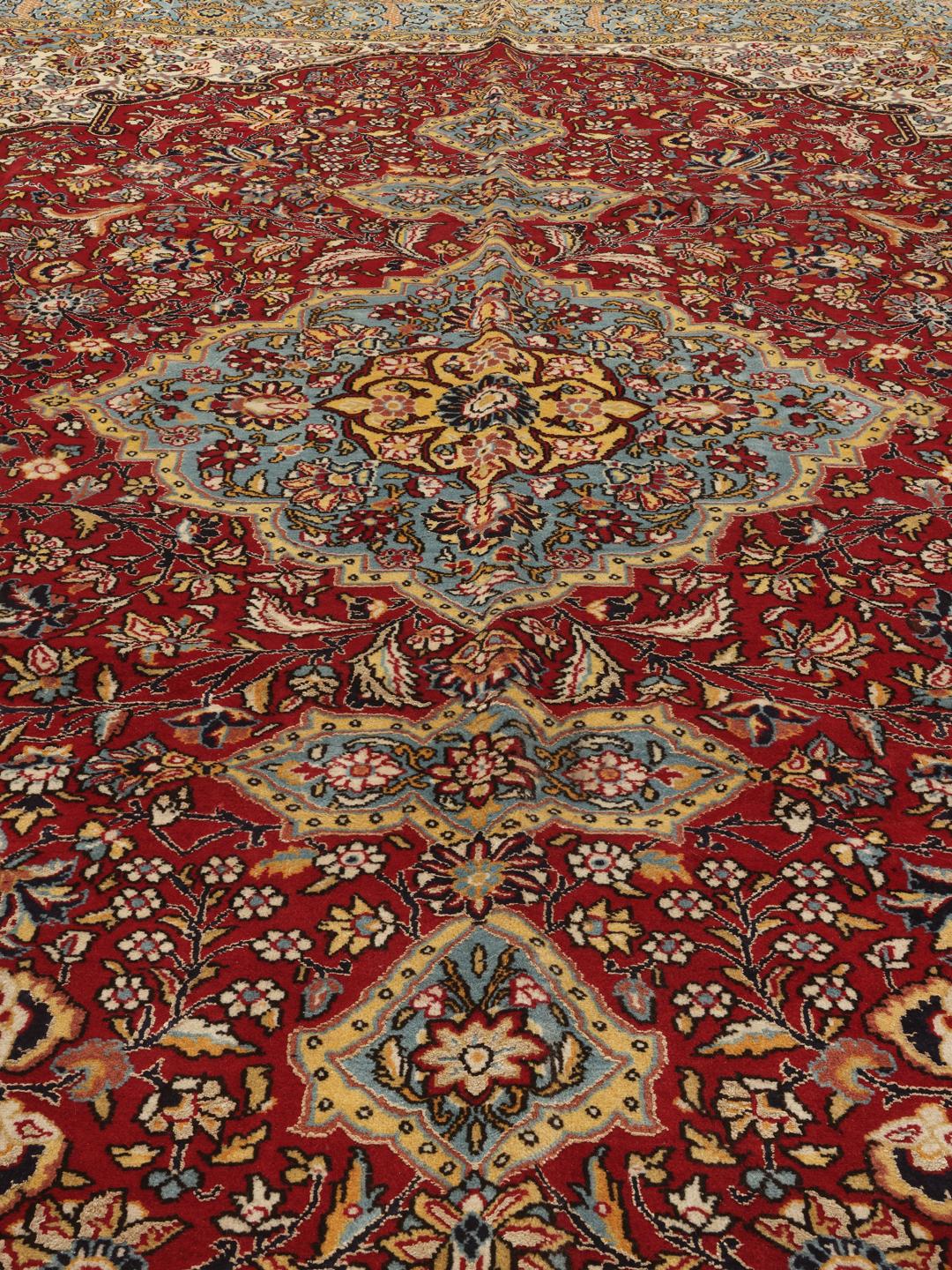
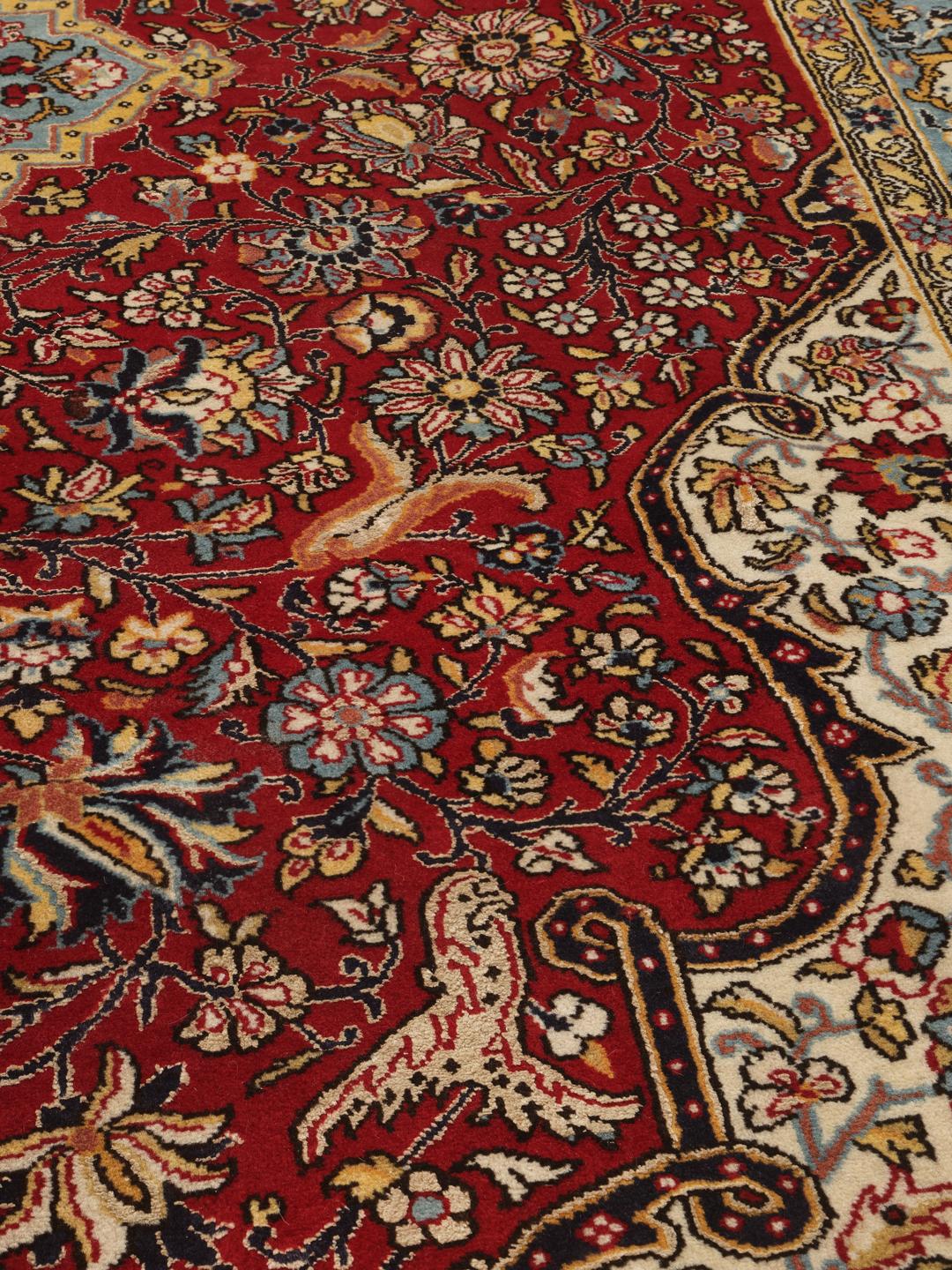
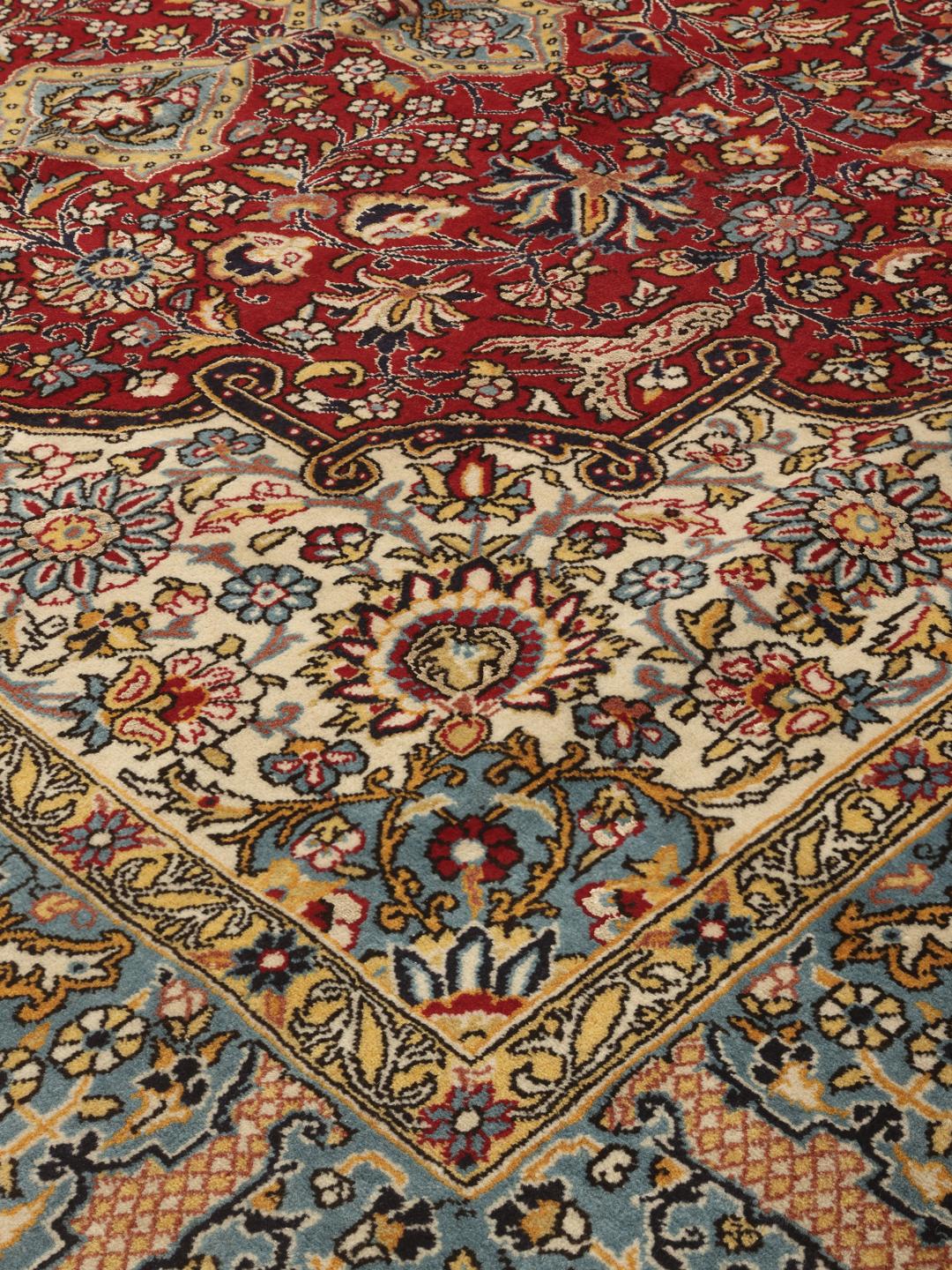
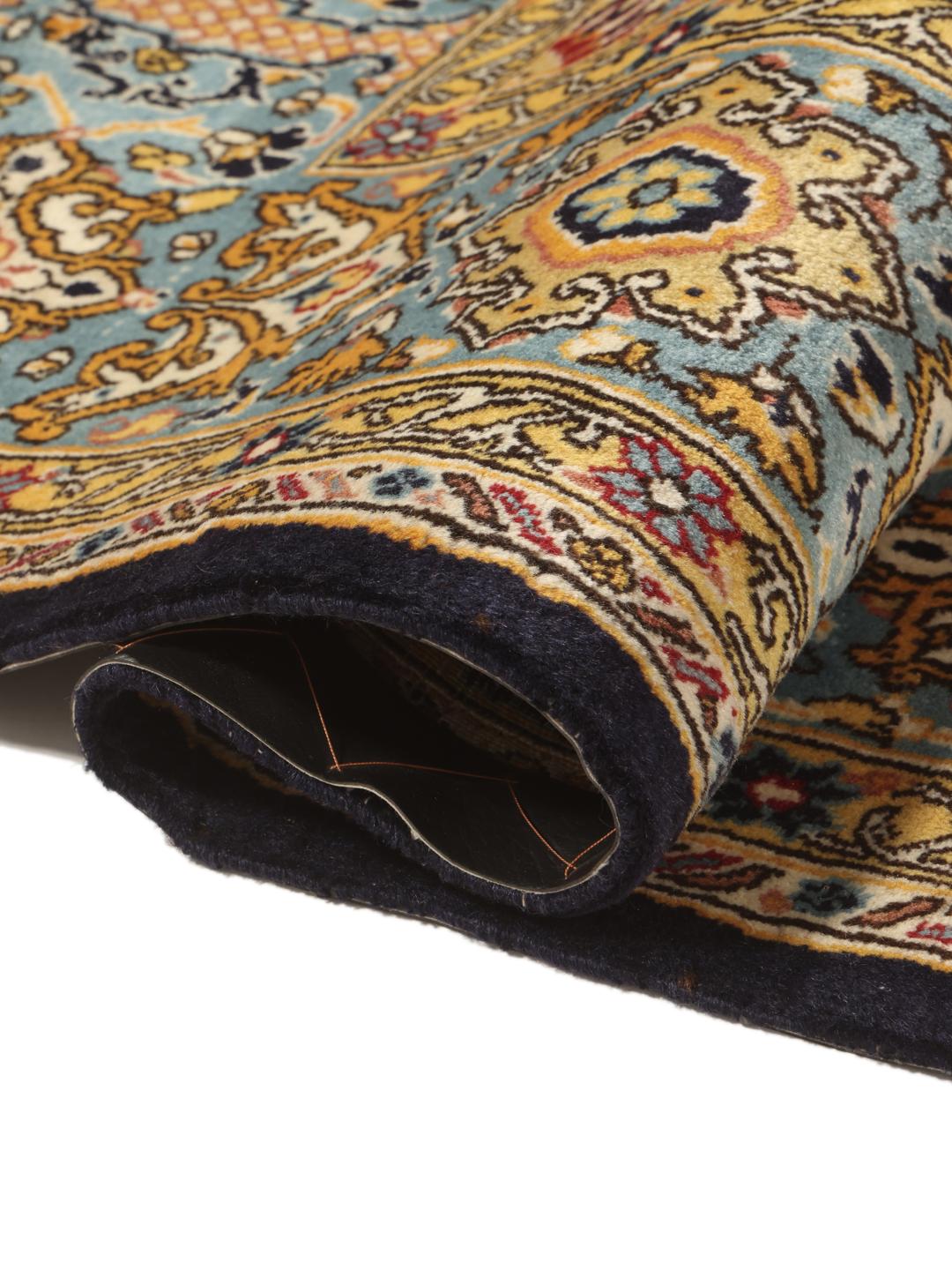
Visually, these rugs are known for their signature floral style, often featuring central medallions surrounded by elaborate vines, palmettes, and blossoms. While many traditional examples use a classic red field to create a warm, inviting atmosphere, the addition of blues and creams in the borders helps to balance the composition and highlights the technical mastery of the weaver.
Owning a piece from this tradition is an investment in both history and craft. These rugs are highly sought after by collectors and interior enthusiasts alike, as they represent a bridge between ancient techniques and the functional needs of the modern home, offering a timeless aesthetic that gains character as it ages.