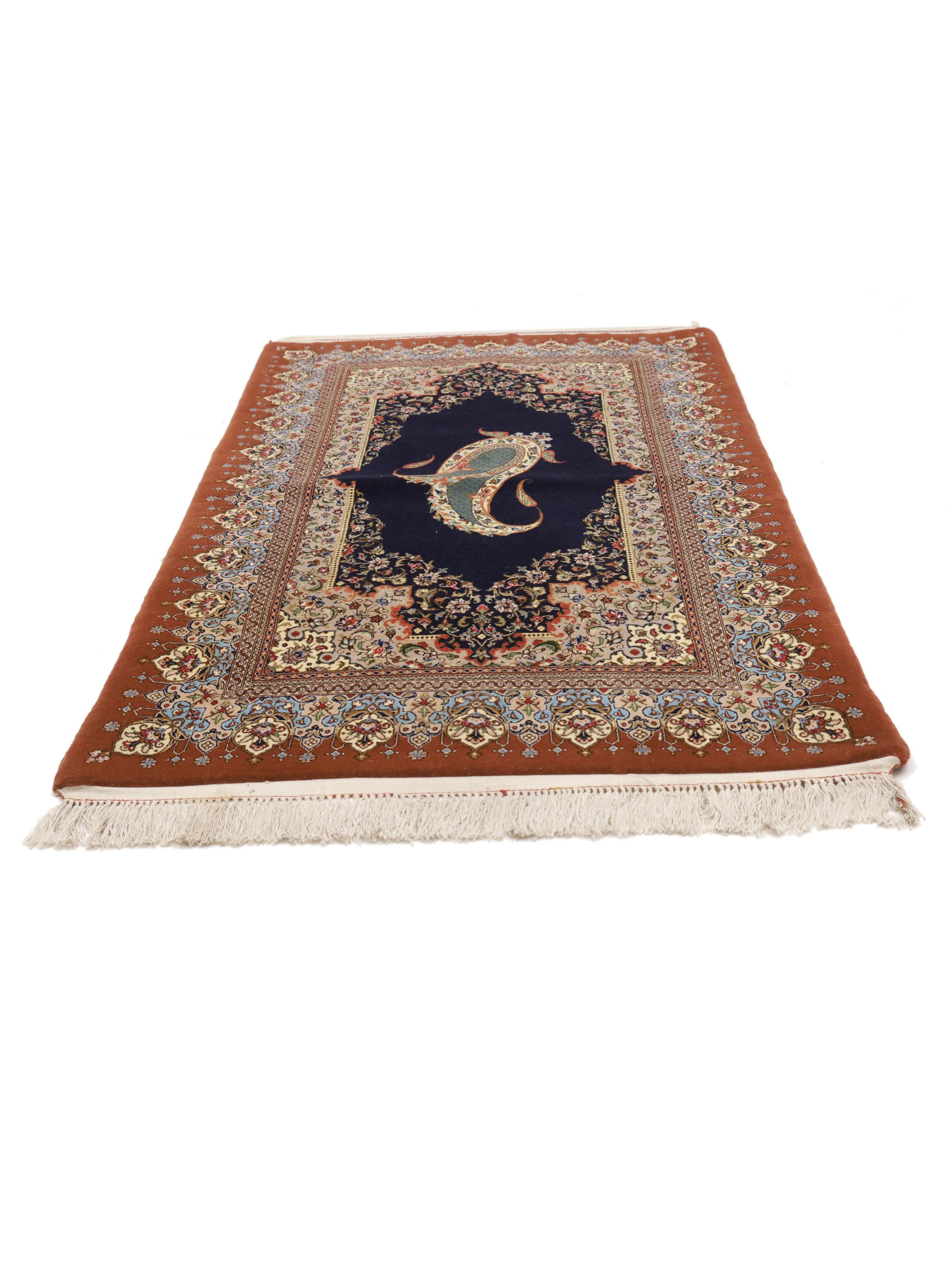
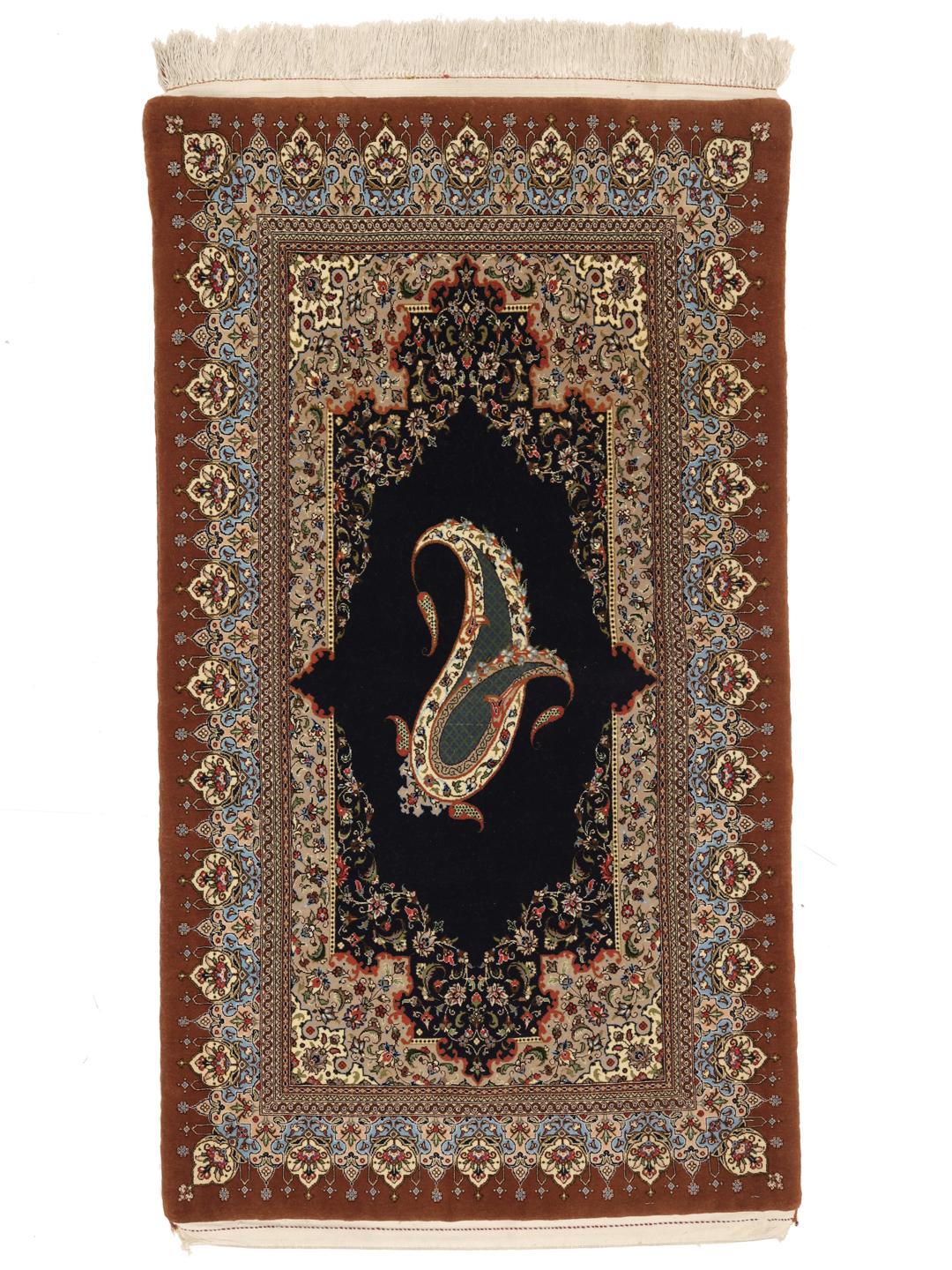
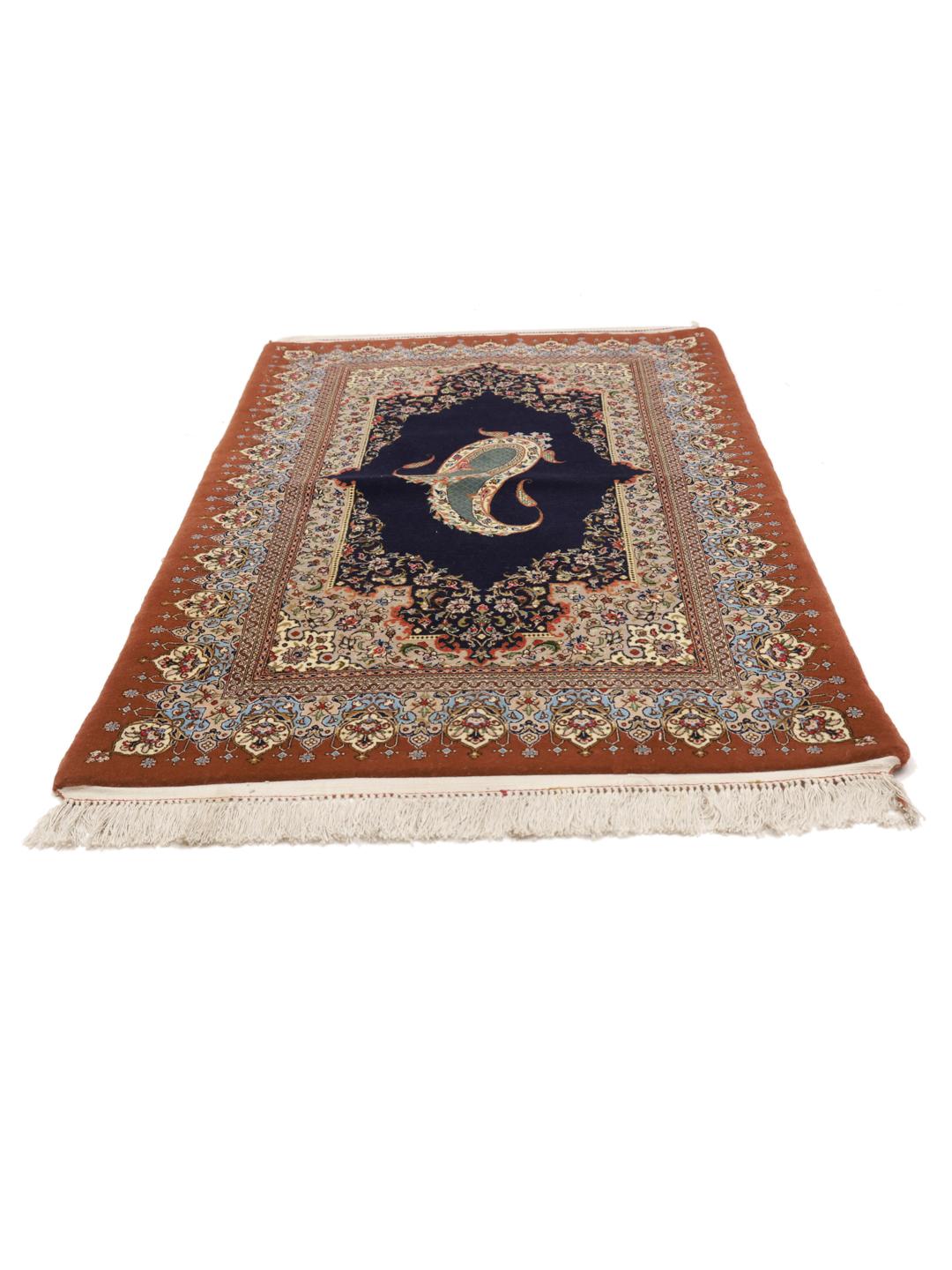
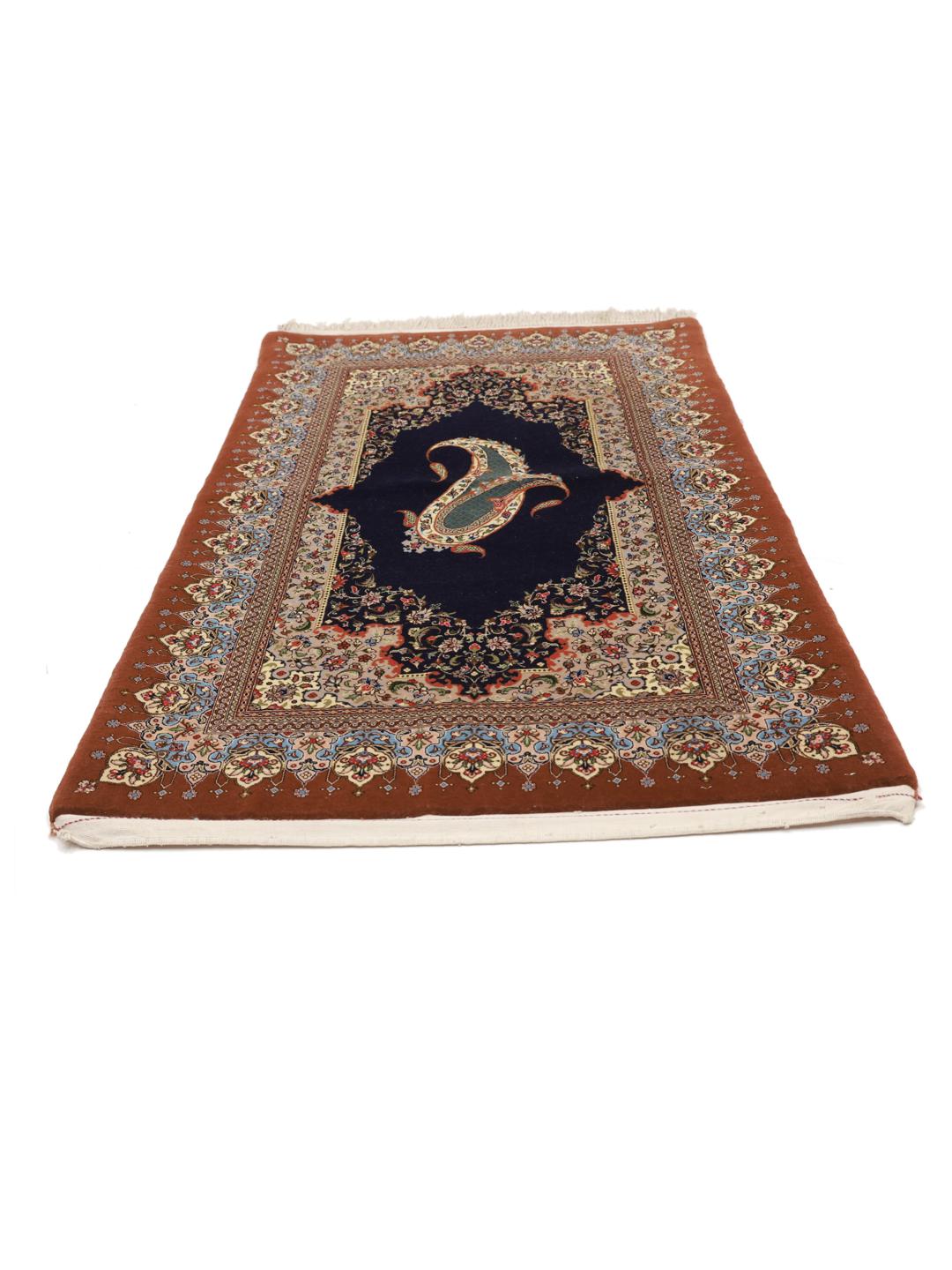
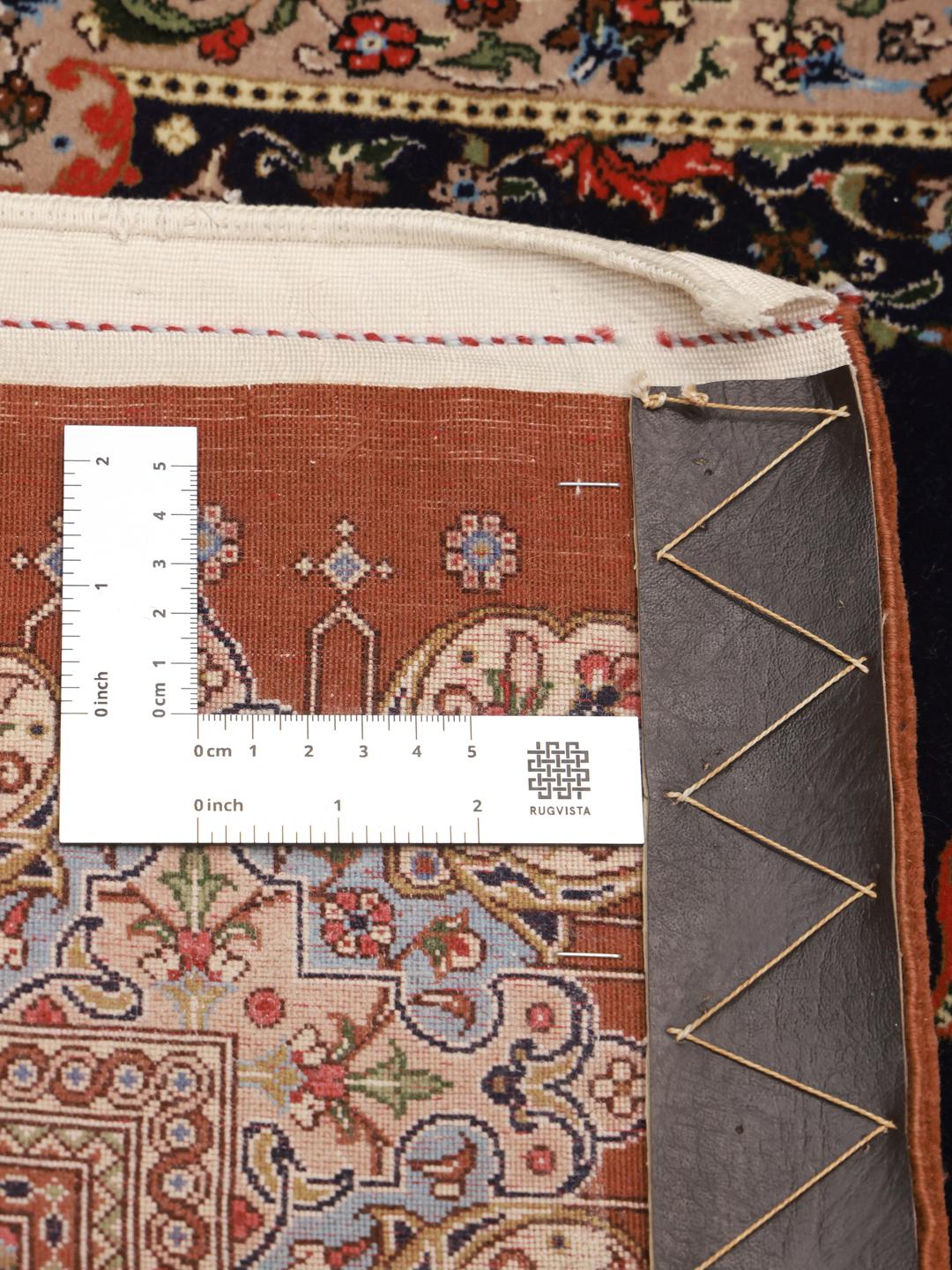
The Ghom tradition finds its roots in the holy city of Ghom, located in the heart of the Middle East. While historically known as a centre for religious study, it emerged in the 20th century as a hub for sophisticated rug weaving. Unlike older regional traditions that relied on set tribal designs, Ghom weavers were innovators, adopting and refining patterns from across the region to create their own distinctive, highly detailed aesthetic.
The term 'Kork' refers to the use of exceptionally fine, soft wool harvested from the neck and shoulders of sheep, which is then often combined with silk highlights to add a subtle, shimmering quality to the design. This blend allows for a finer weave and more intricate patterns than standard wool, resulting in a rug that is both soft to the touch and visually complex.
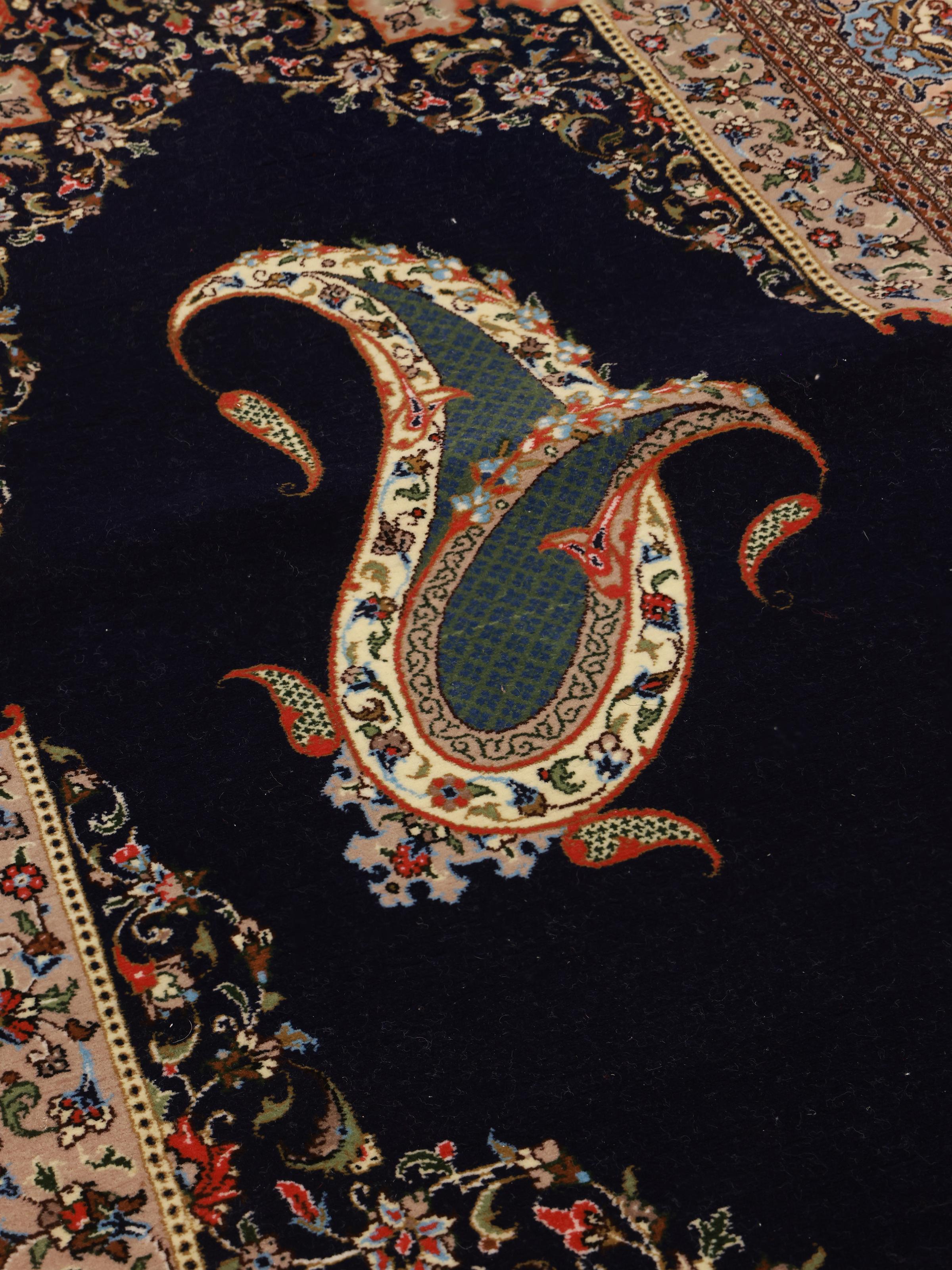
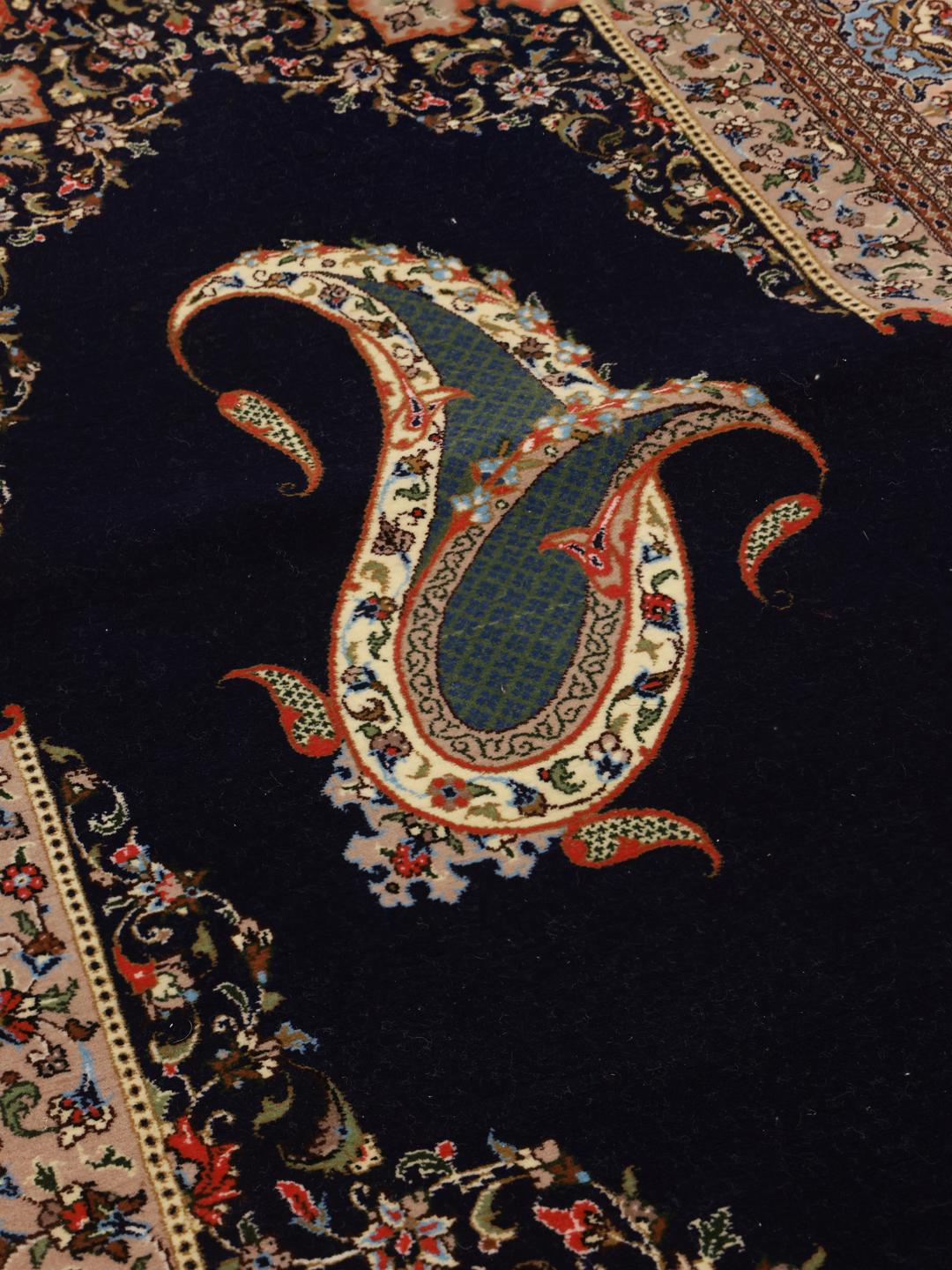
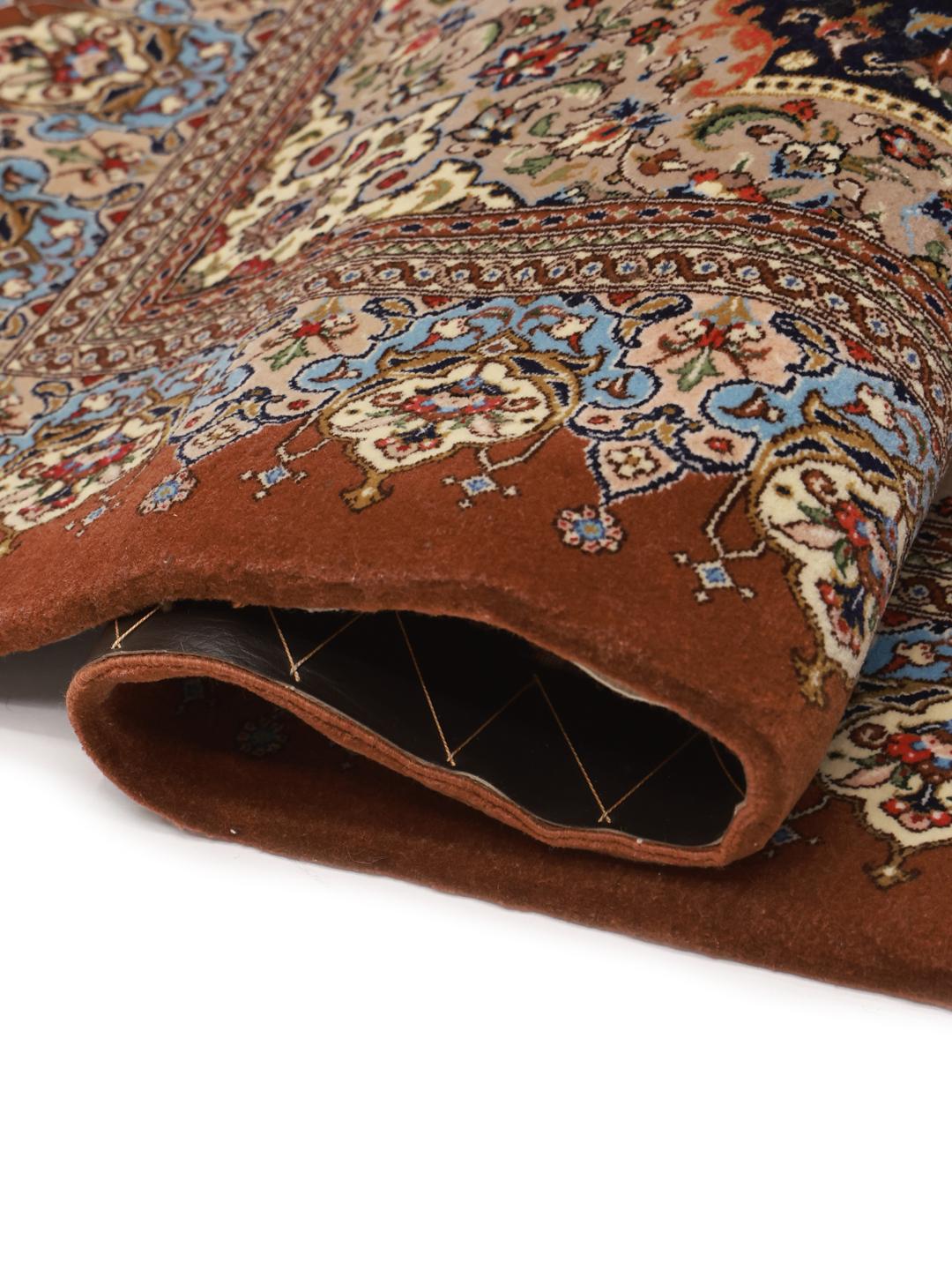
Visually, Ghom rugs are celebrated for their diverse repertoire, often featuring the classic paisley, or 'buta', motif alongside intricate floral scrolls and medallion designs. The borders are typically multi-layered and filled with precise, miniature floral work that requires a steady hand and a keen eye. The use of a dark, contrasting field in this piece is a sophisticated nod to the tradition of using colour to create depth and focus.
Owning a Ghom rug is a significant acquisition for any collector or lover of fine interiors. These rugs are highly valued for their technical perfection and the way they blend traditional craftsmanship with a refined, almost painterly approach to design. To possess one is to connect with a legacy of artistic evolution, where the weaver’s skill transforms raw materials into a lasting piece of cultural heritage.