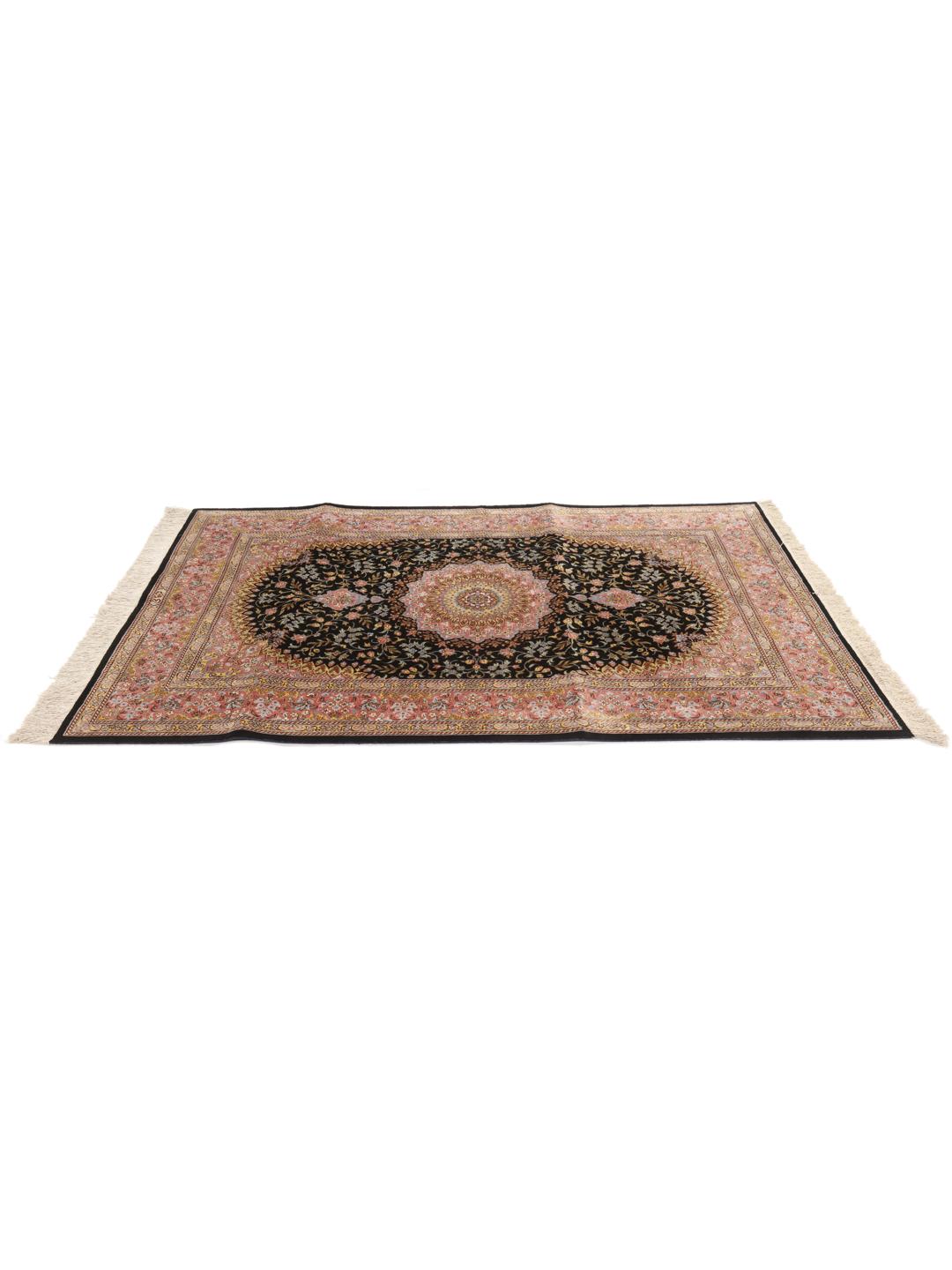
Ghom rugs hail from the holy city of Qum in the Middle East, a region that emerged as a major centre for rug production relatively recently in the 20th century. Despite this shorter history compared to older weaving hubs, Qum quickly gained a worldwide reputation for producing some of the finest silk rugs in existence. The weavers here are known for their experimental spirit, often blending traditional patterns with innovative colour palettes and high-quality materials.
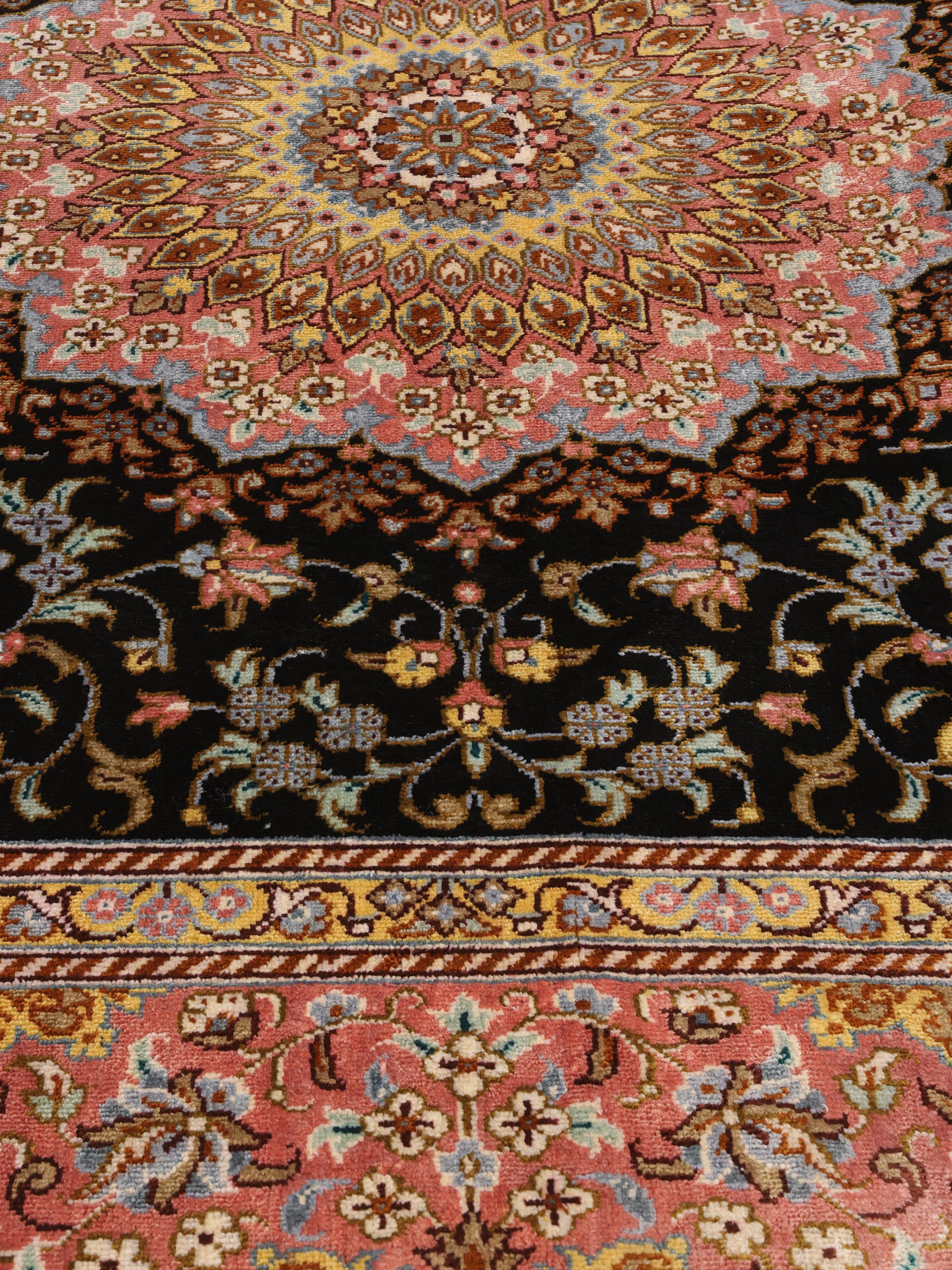
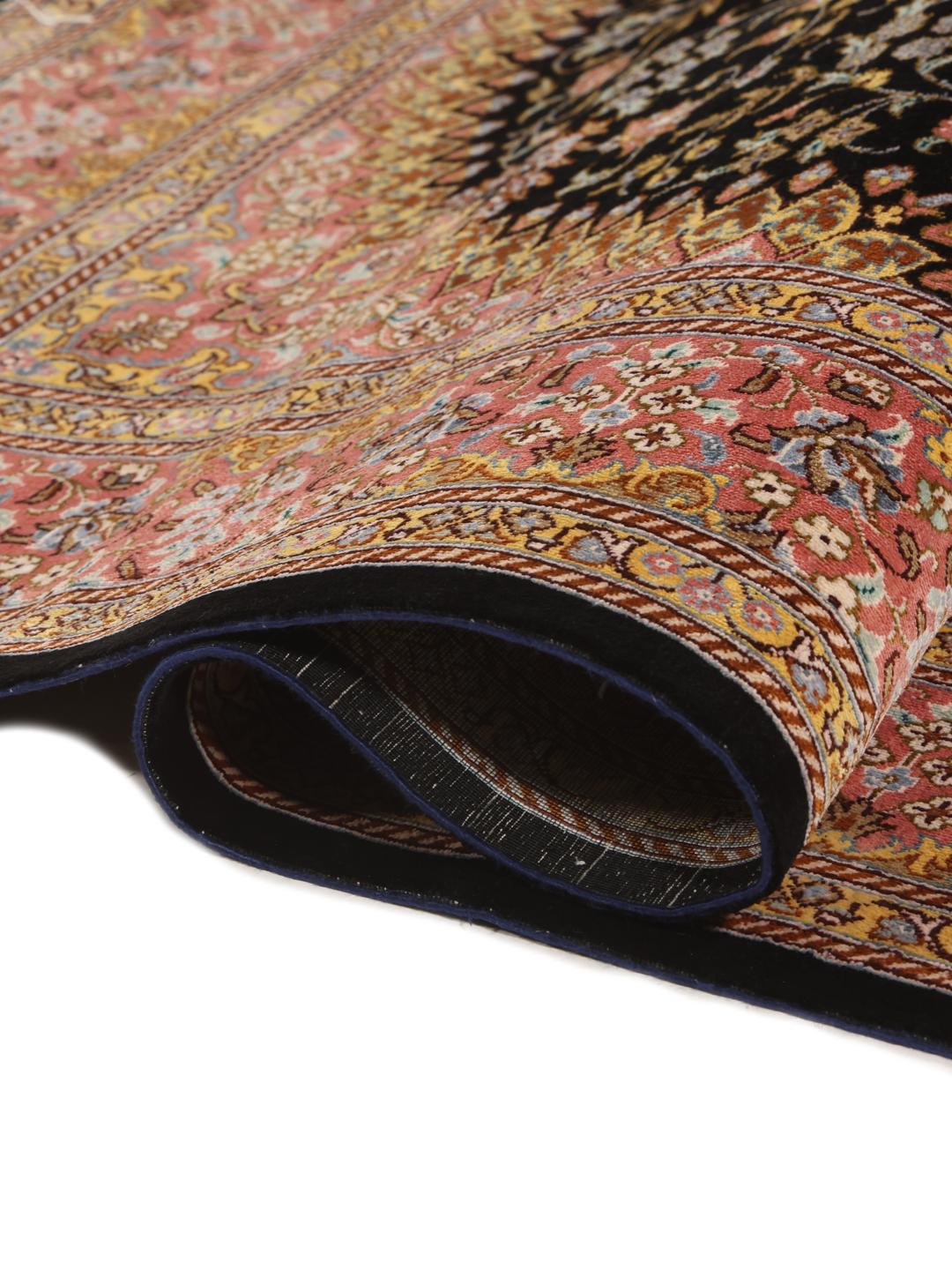
The term 'Ghom' or 'Qum' is synonymous with a level of technical excellence that few other regions can match. The use of silk in both the pile and the foundation is a hallmark of this tradition, allowing for a thinner, more flexible rug that can accommodate incredibly complex, curvilinear designs. This technical choice is what allows for the high knot counts that define the category, as the fine silk threads permit much tighter weaving than coarser wool.
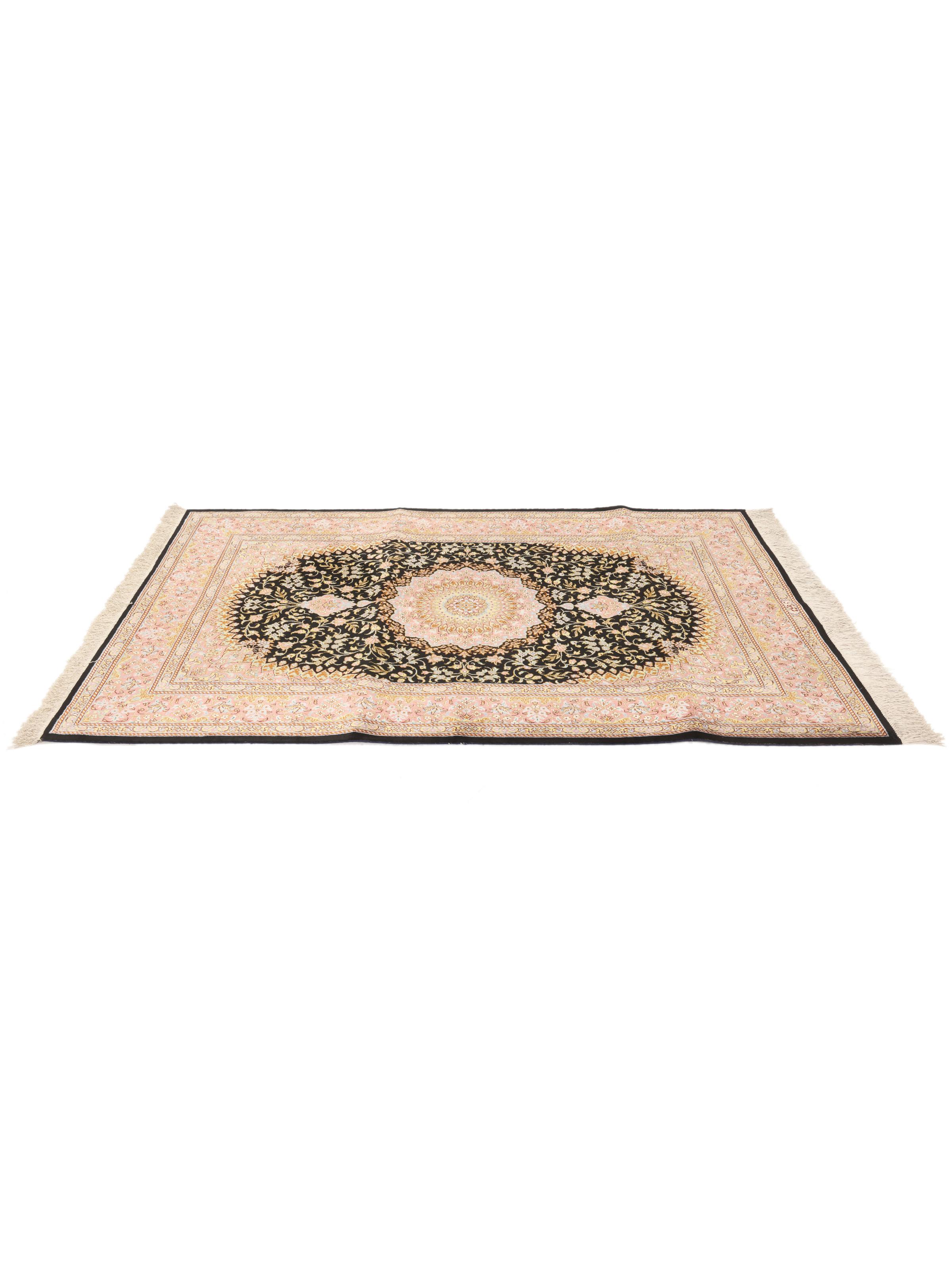
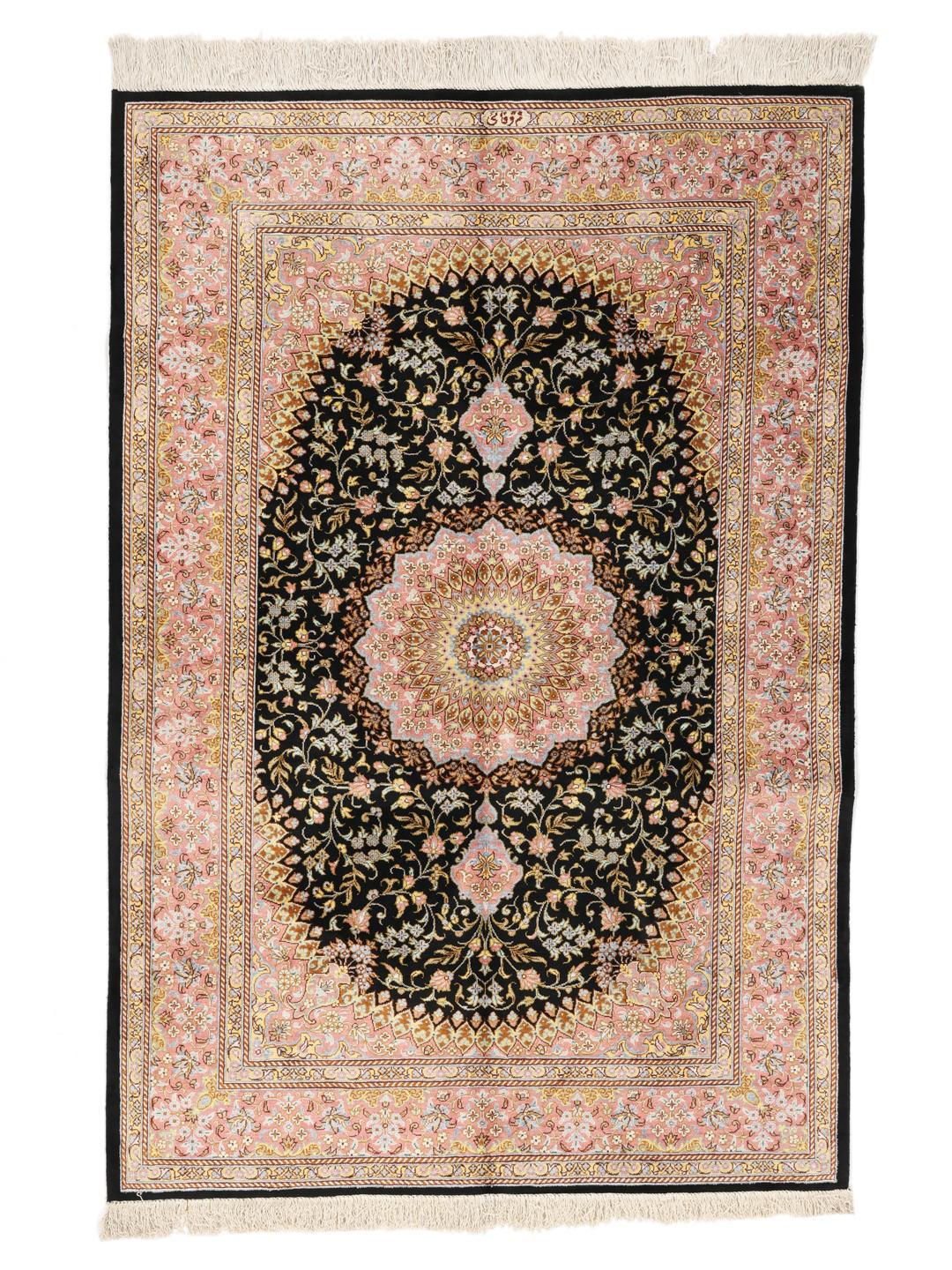
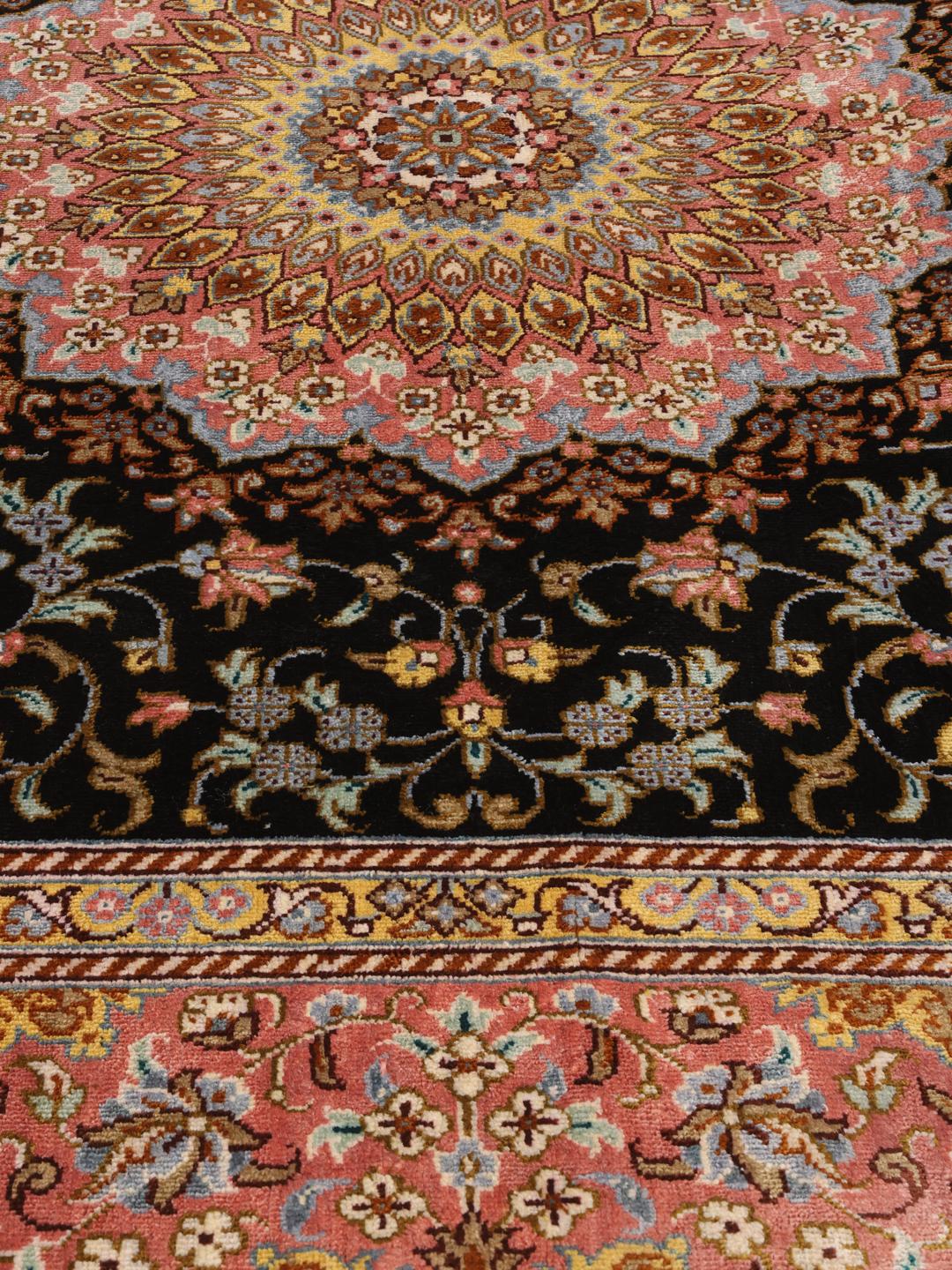
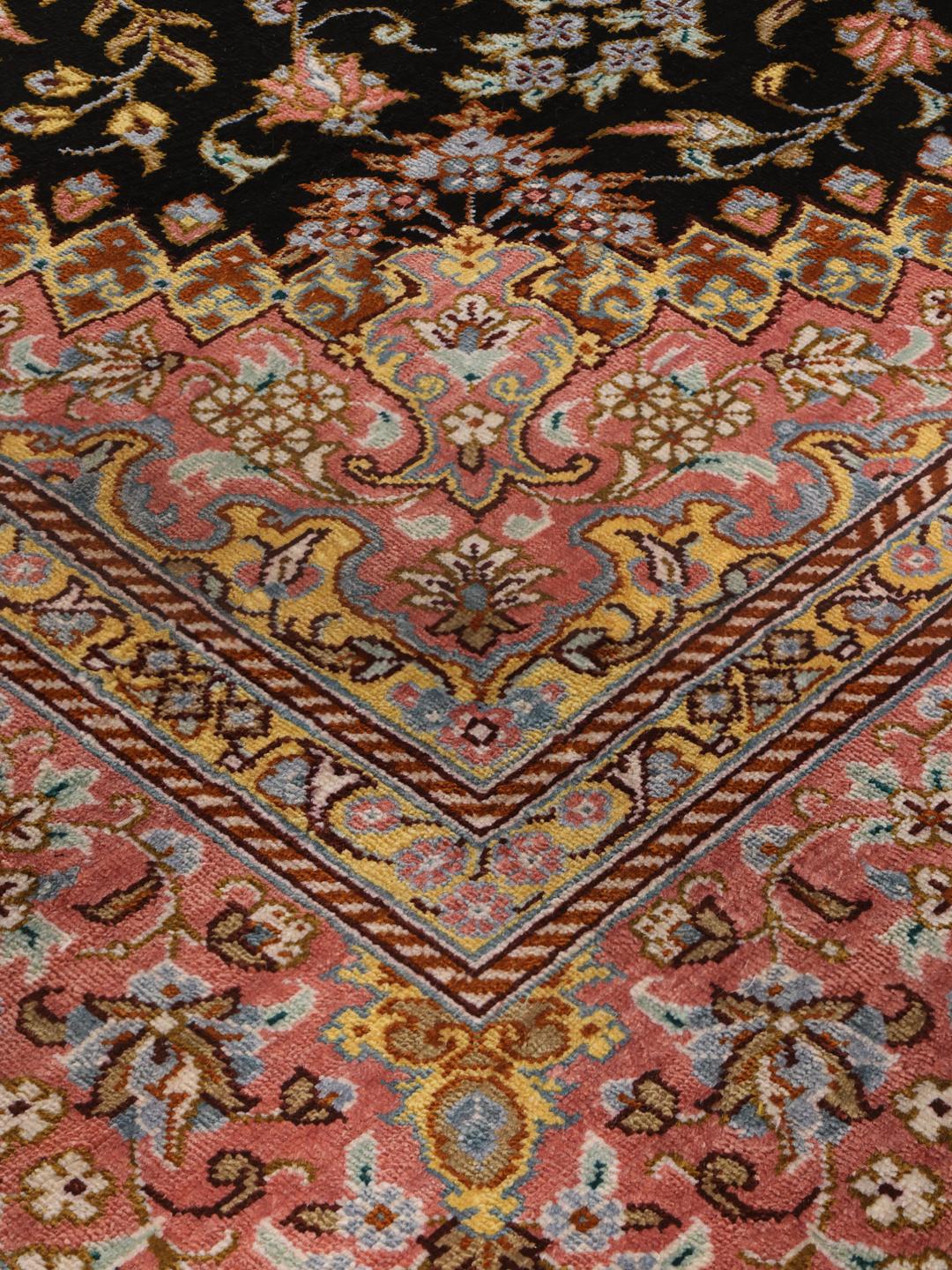
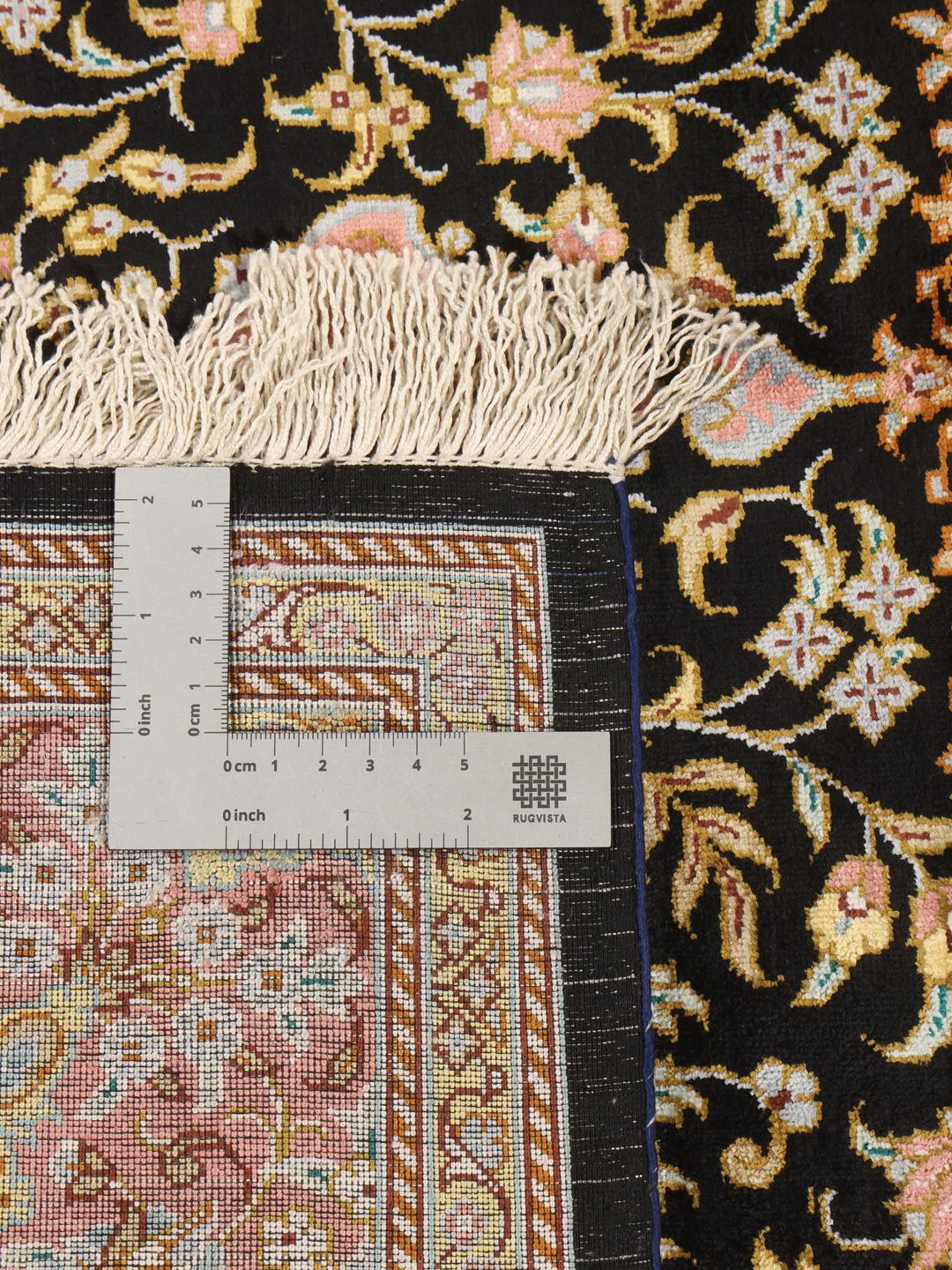
Visually, these rugs are often defined by their ornate, garden-inspired motifs, featuring elaborate floral sprays, vases, and central medallions. While traditional designs often draw from classical Middle Eastern floral schemes, the execution in Qum is frequently more detailed and refined. The contrast between the dark field and the lighter, detailed botanical elements seen here is a classic signature of the style, designed to create a sense of depth and focus.
Collecting a Ghom silk rug is an investment in a modern heritage of excellence. Because these rugs represent the pinnacle of skilled hand-weaving, they are highly sought after by collectors who value the marriage of delicate materials and precise craftsmanship. Owning one is a mark of appreciation for the enduring skill of the artisans and the cultural weight of a region that has redefined what a hand-knotted rug can be.