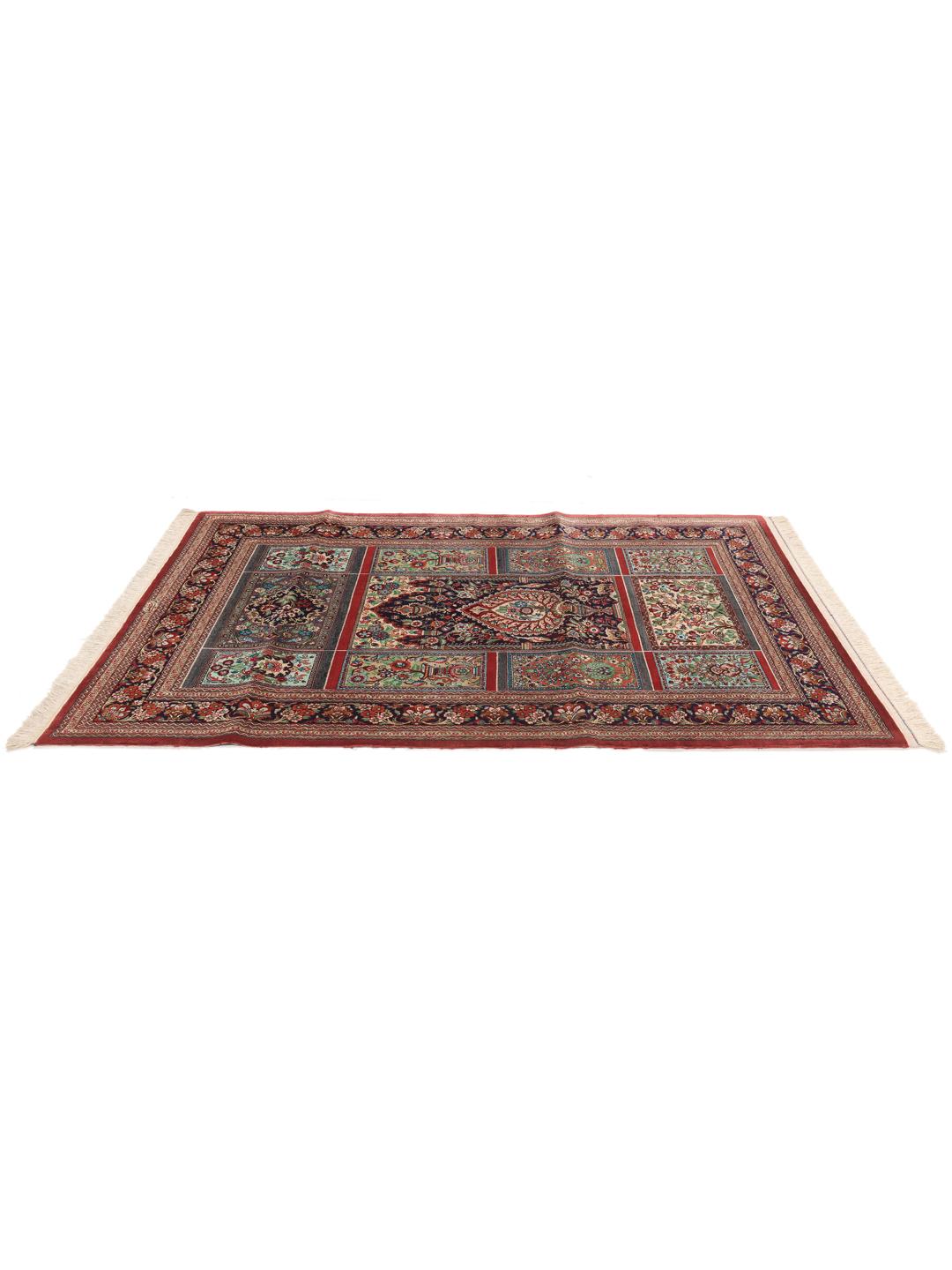
The tradition of Ghom silk weaving originates from the holy city of Qum in the Middle East, a region that only gained prominence as a major weaving centre in the early 20th century. Despite its relatively recent emergence compared to other ancient weaving hubs, Qum quickly became synonymous with the highest standards of silk production. These rugs are celebrated for their technical perfection and the way they incorporate sophisticated, often multi-layered, artistic visions.
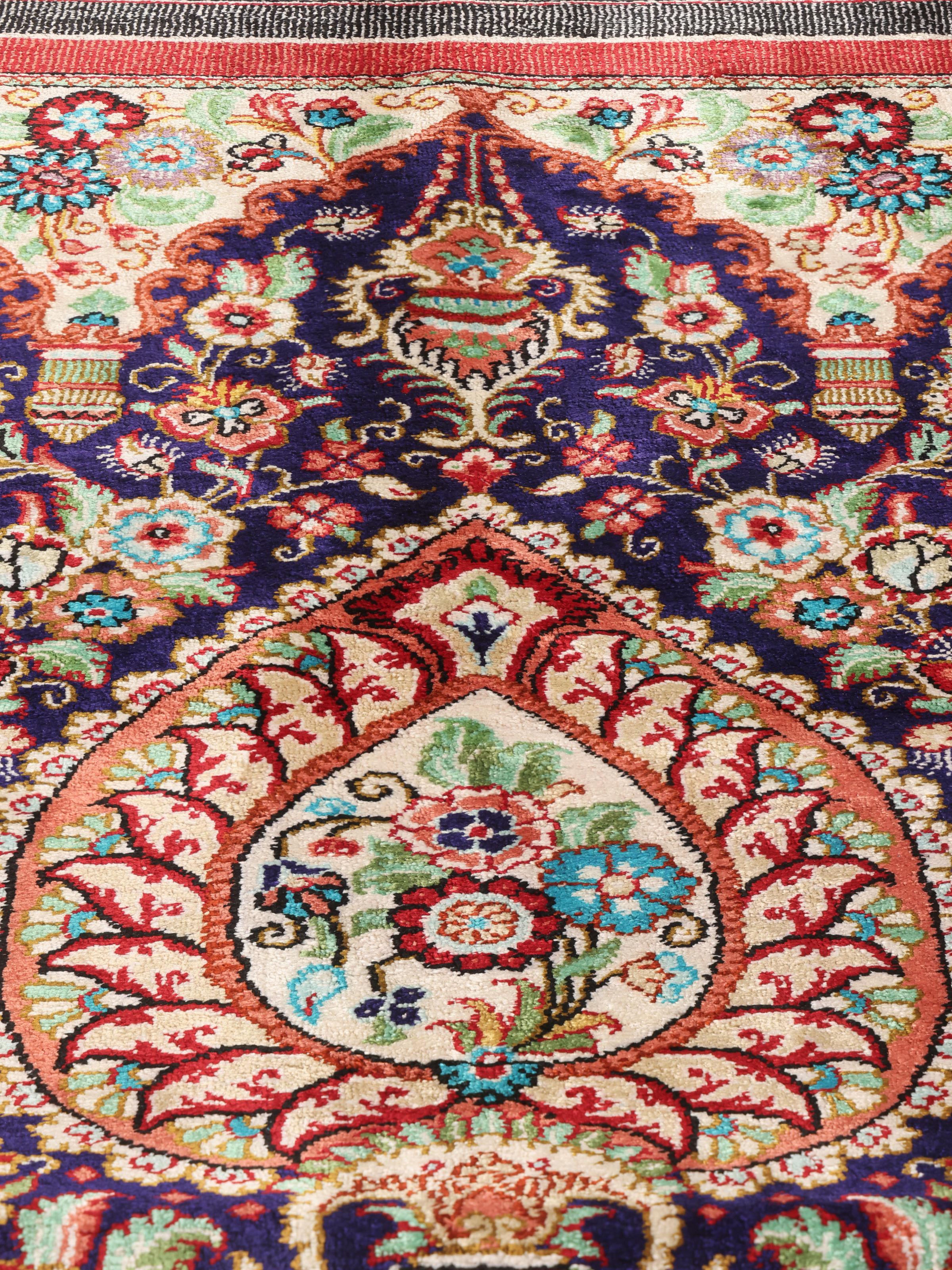
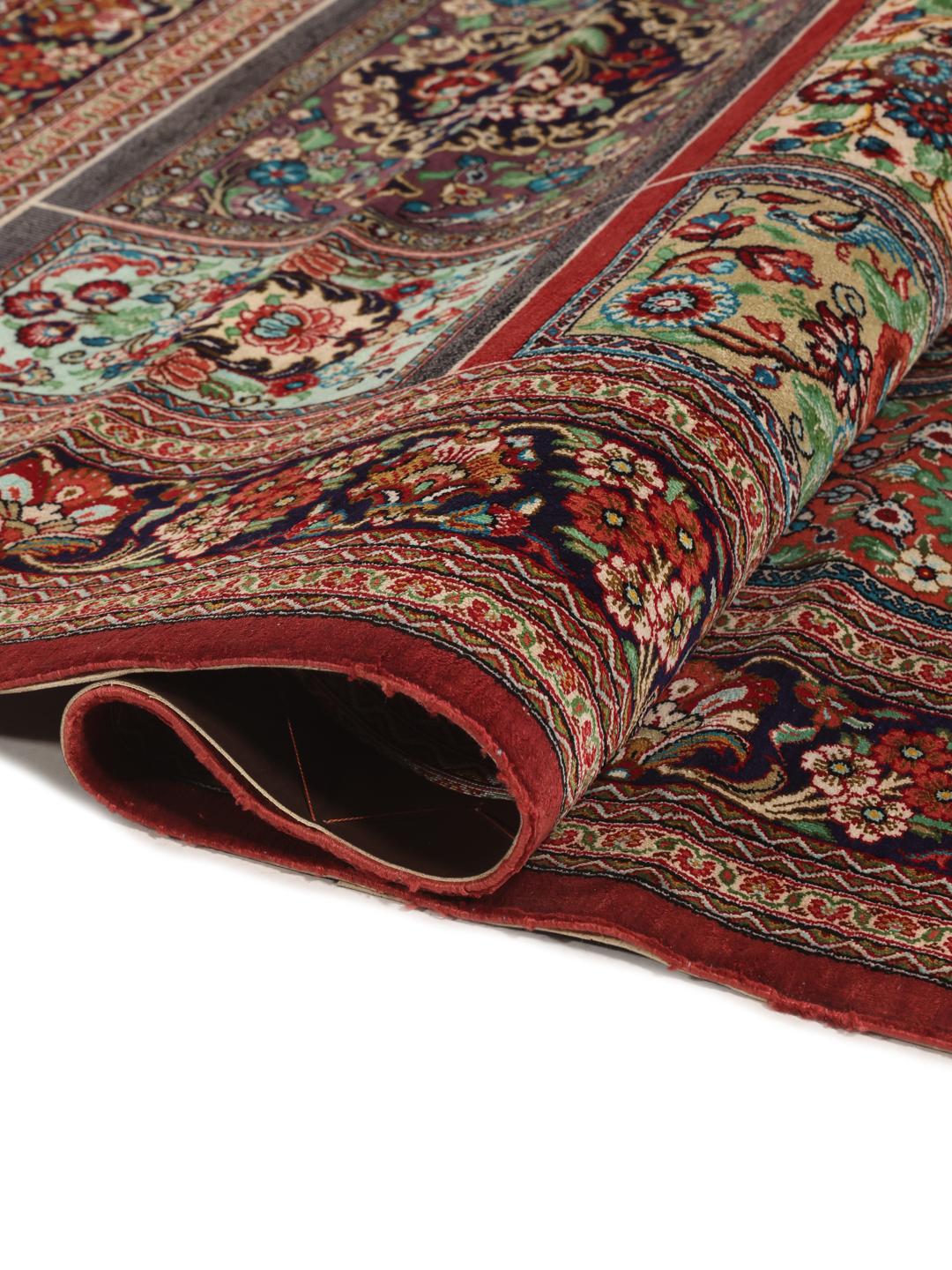
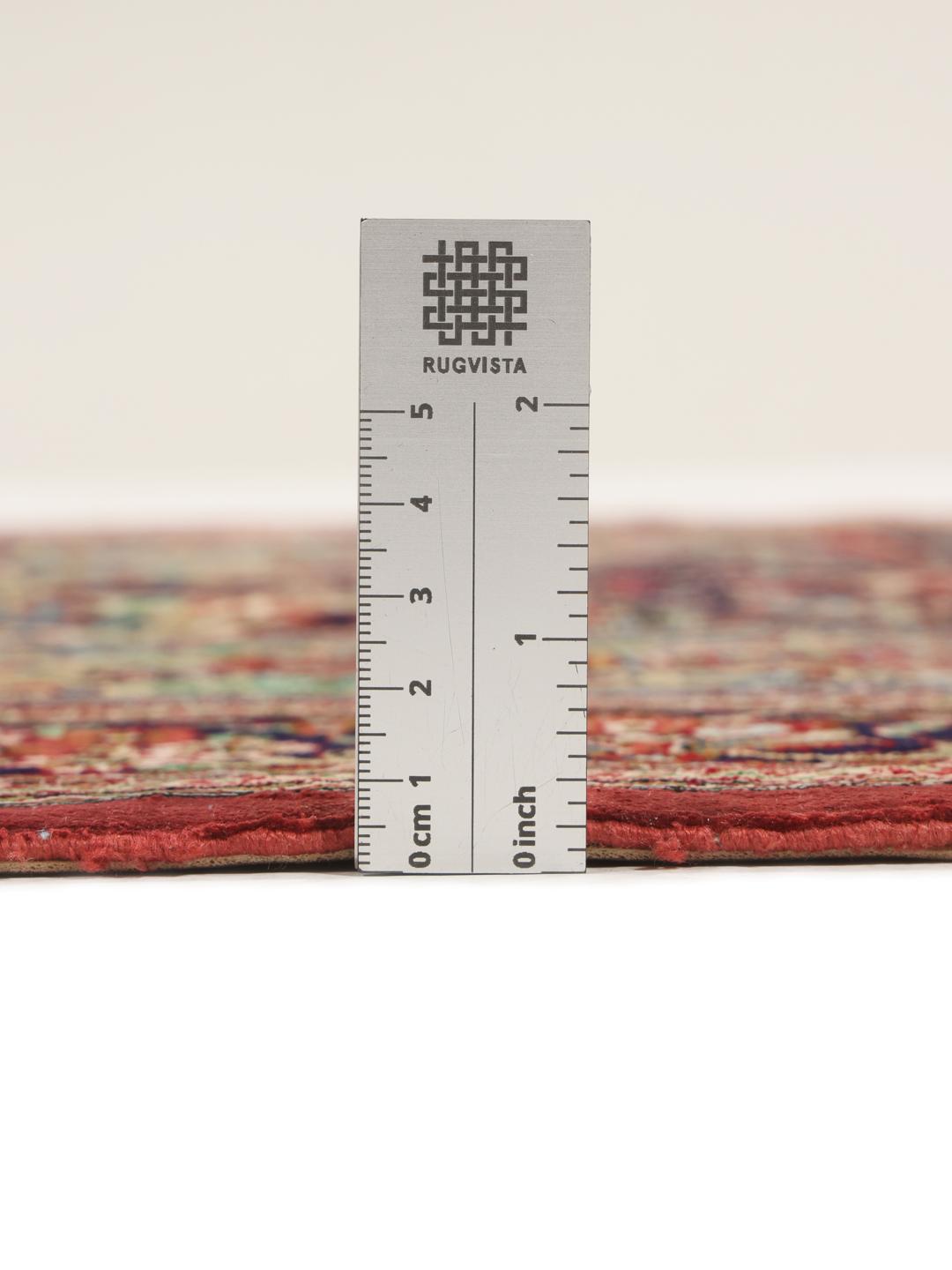
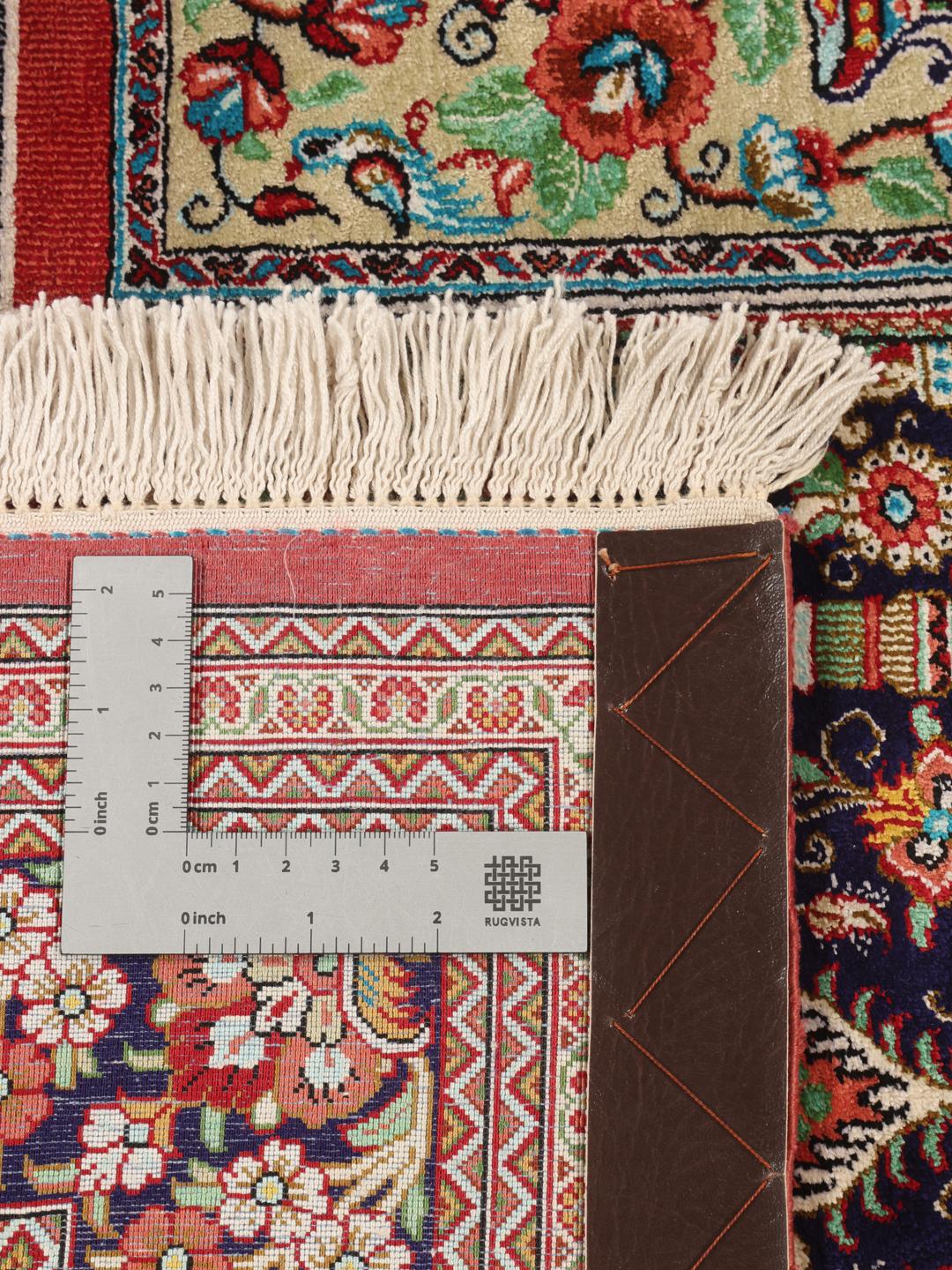
A defining characteristic of Ghom rugs is the use of pure silk throughout the entire construction. This choice of material allows for a finer weave and a thinner, more flexible handle than wool. The technical challenge of working with such fine, delicate threads is what makes these pieces so highly regarded; it requires a level of dexterity and vision that only the most experienced master weavers possess.
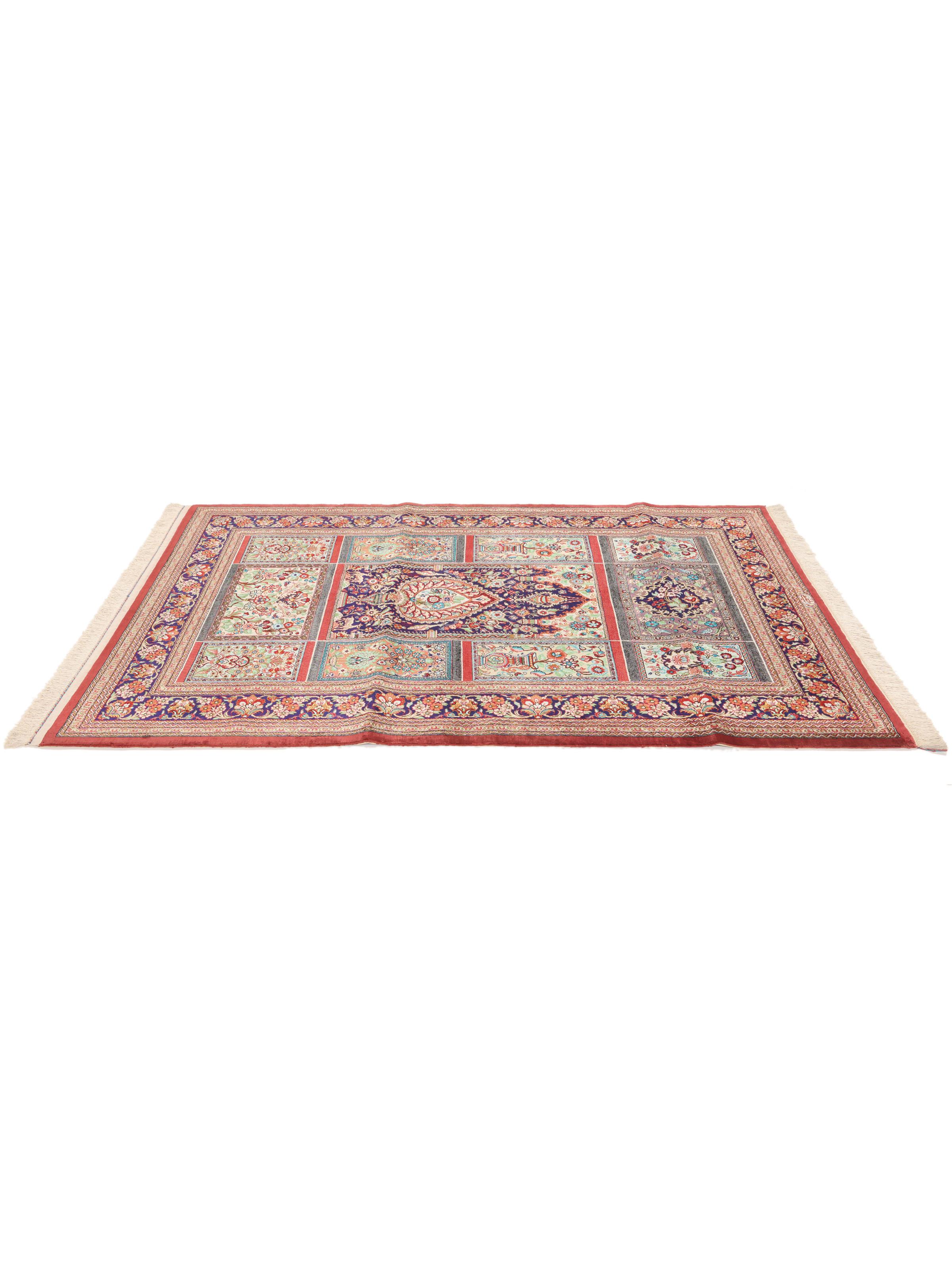
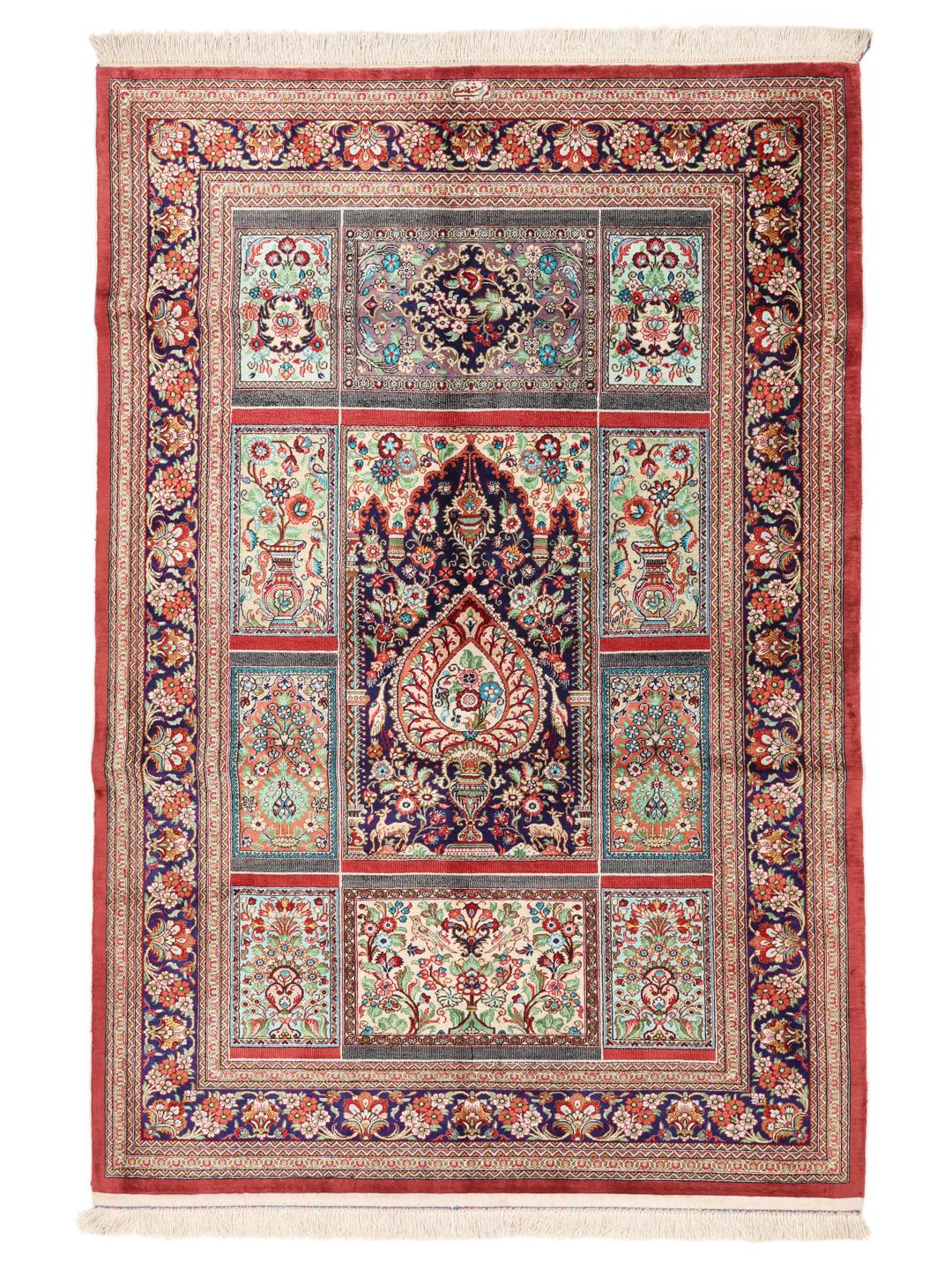
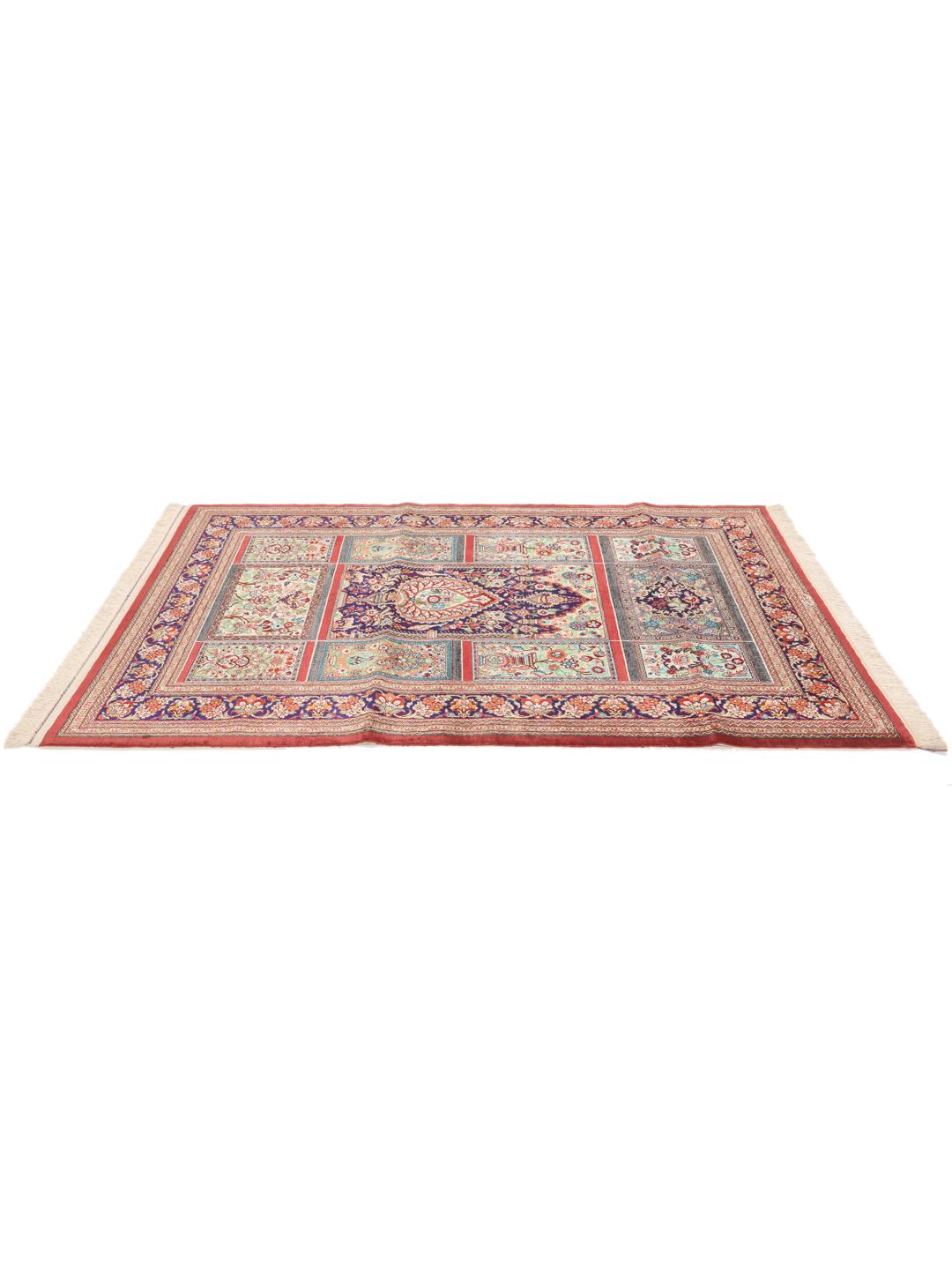
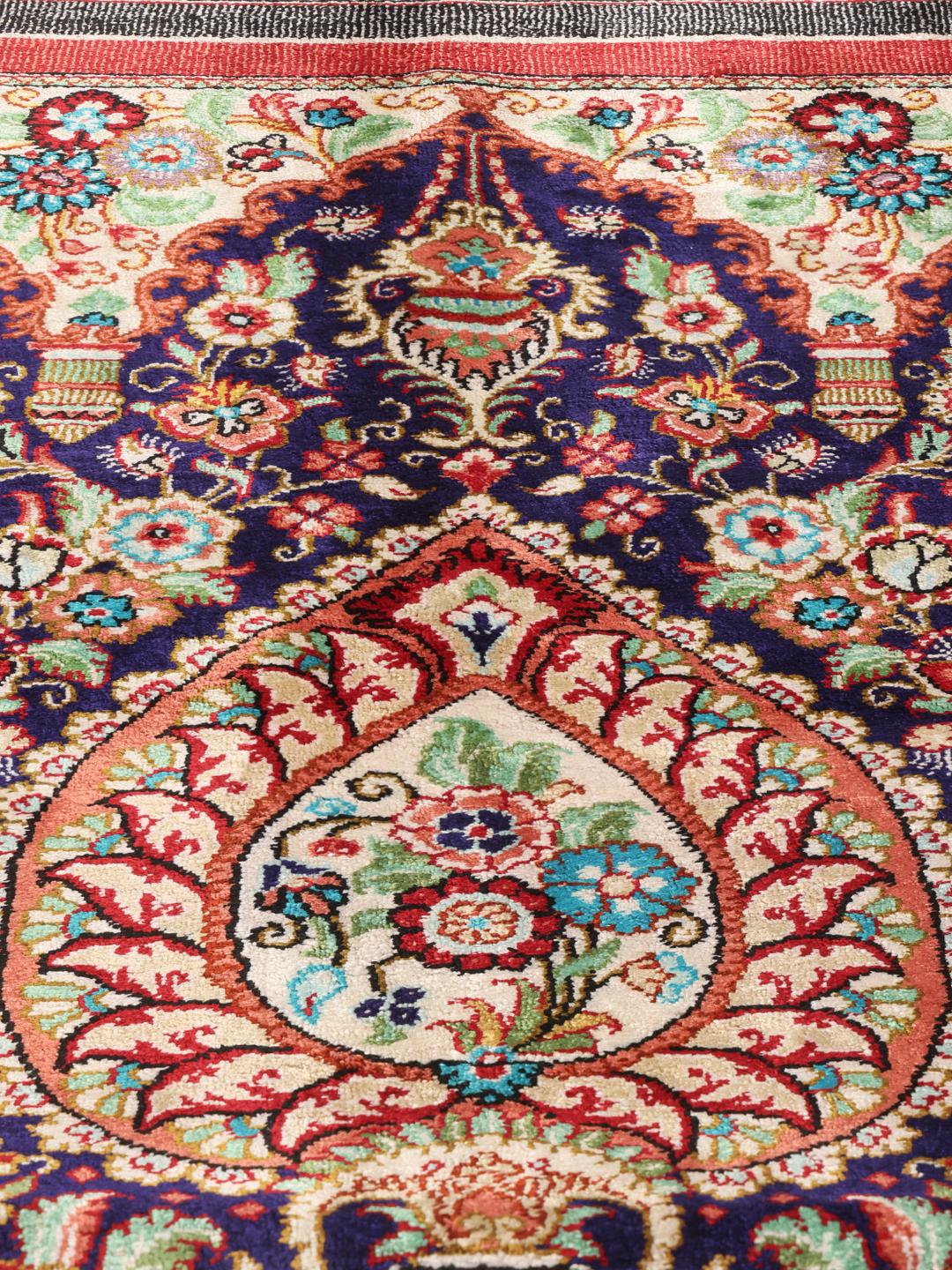
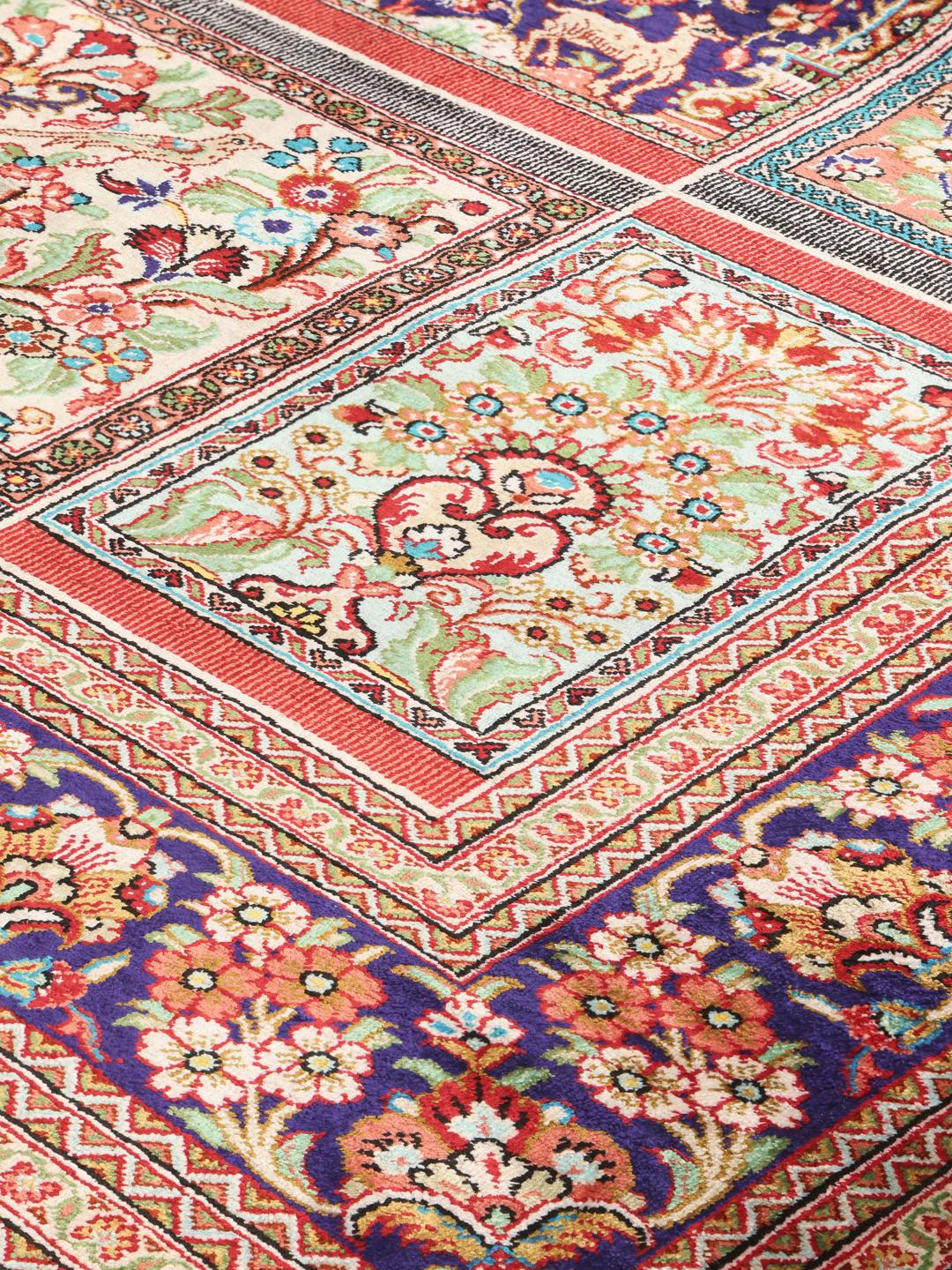
Visually, these rugs are known for their intricate, nature-inspired patterns, often featuring elaborate floral motifs, vases, and detailed border systems. The designers frequently draw from classical garden themes, filling the field with a symphony of blossoms and flowing foliage. This specific piece stands out for its balanced layout and the way it utilises space to showcase a central, ornate medallion surrounded by smaller, equally detailed panels.
Collectors value Ghom silk rugs not only for their aesthetic beauty but also for the status they hold as the pinnacle of contemporary Middle Eastern craft. Owning one is an investment in cultural heritage and a testament to an art form that prioritises precision and elegance above all else. These rugs are considered the jewels of any collection, prized for their ability to remain vibrant and relevant across generations.