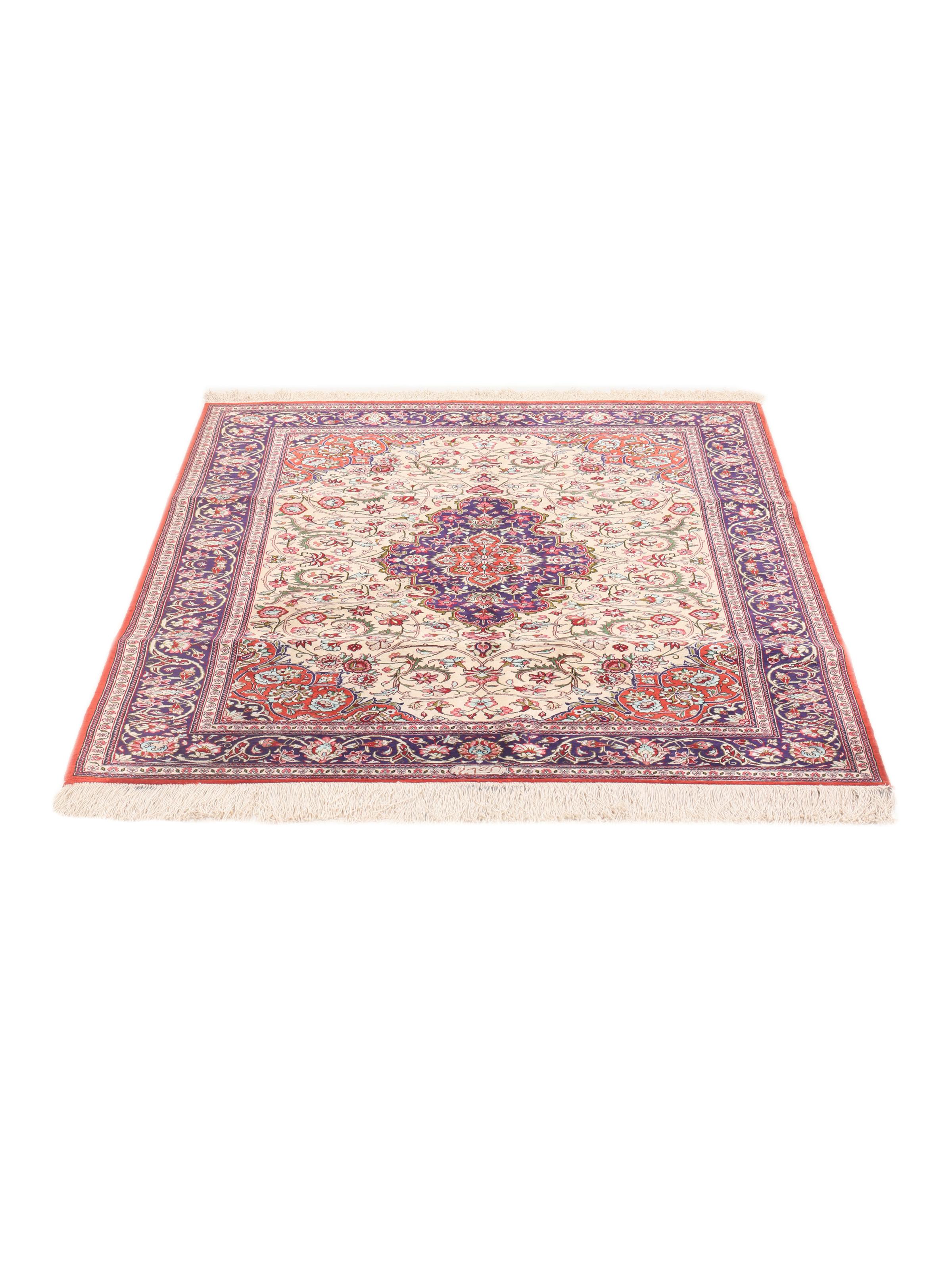
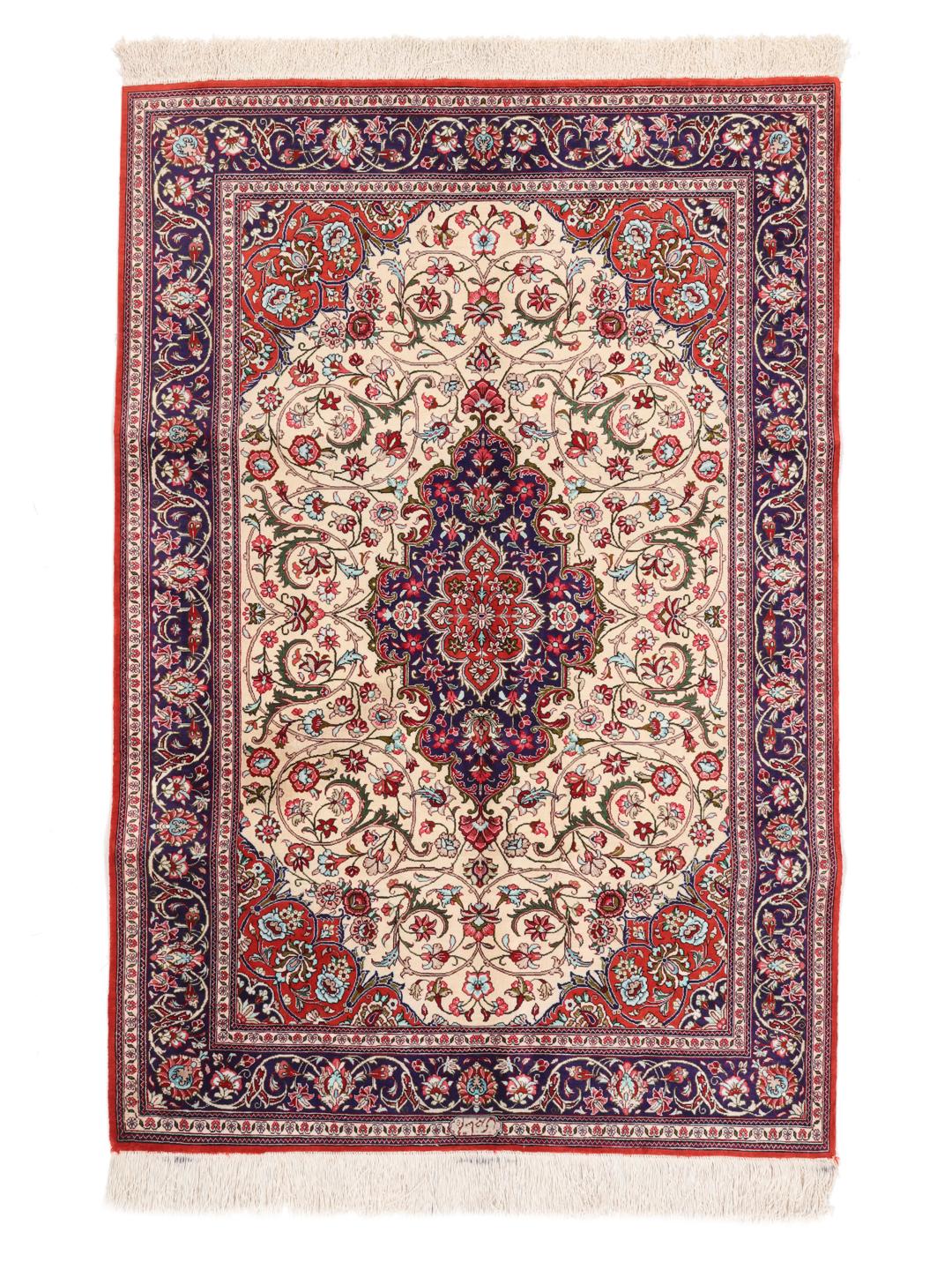
Ghom rugs originate from the holy city of Qum in the Middle East, a centre known for its relatively modern but highly influential contribution to rug weaving. While cities like Tabriz or Kashan have centuries of history, Qum rose to prominence in the 20th century by embracing silk as a primary material. The region became famous for pushing the boundaries of what could be achieved with fine threads, often experimenting with bold colour palettes and intricate designs.
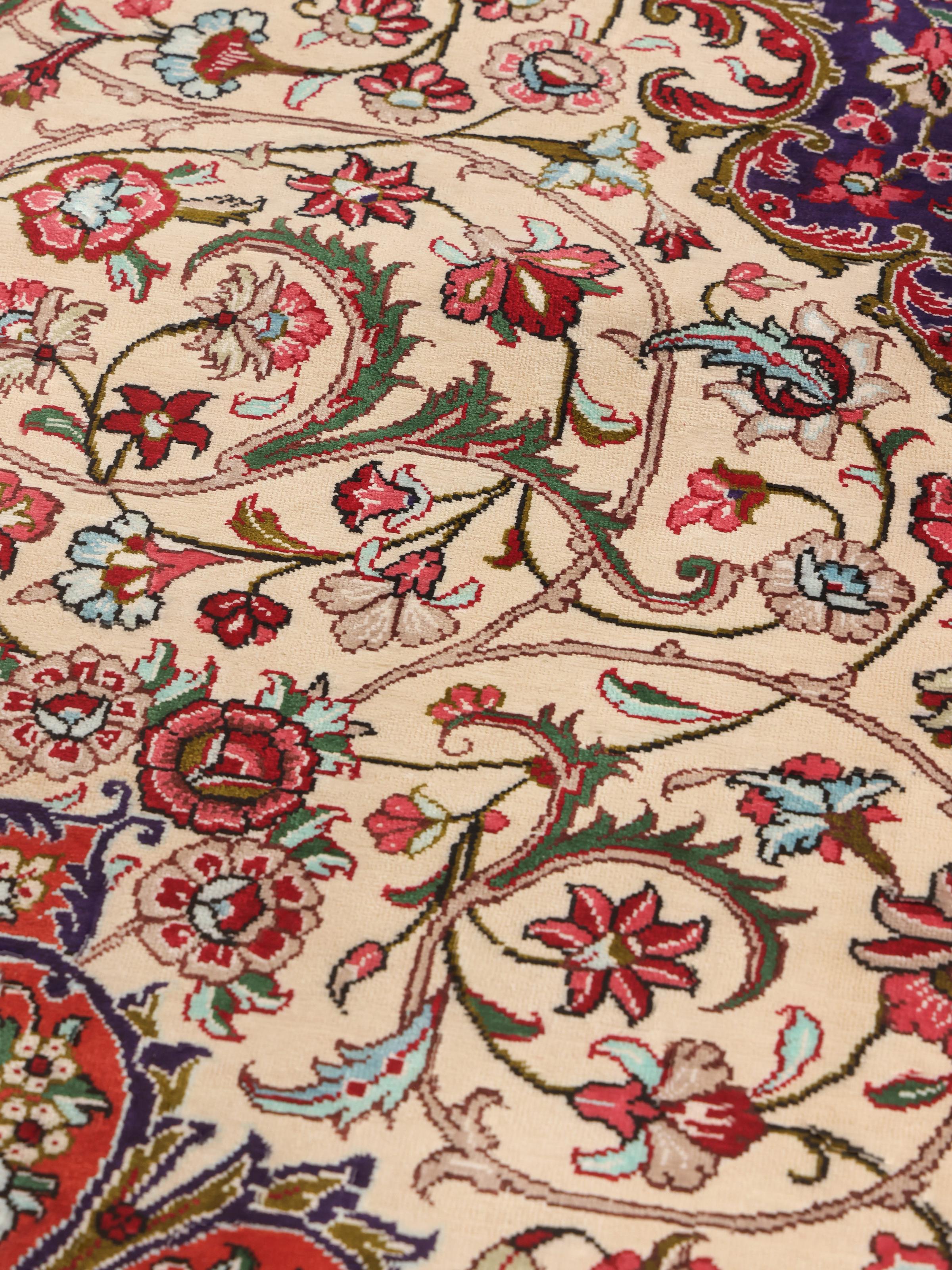
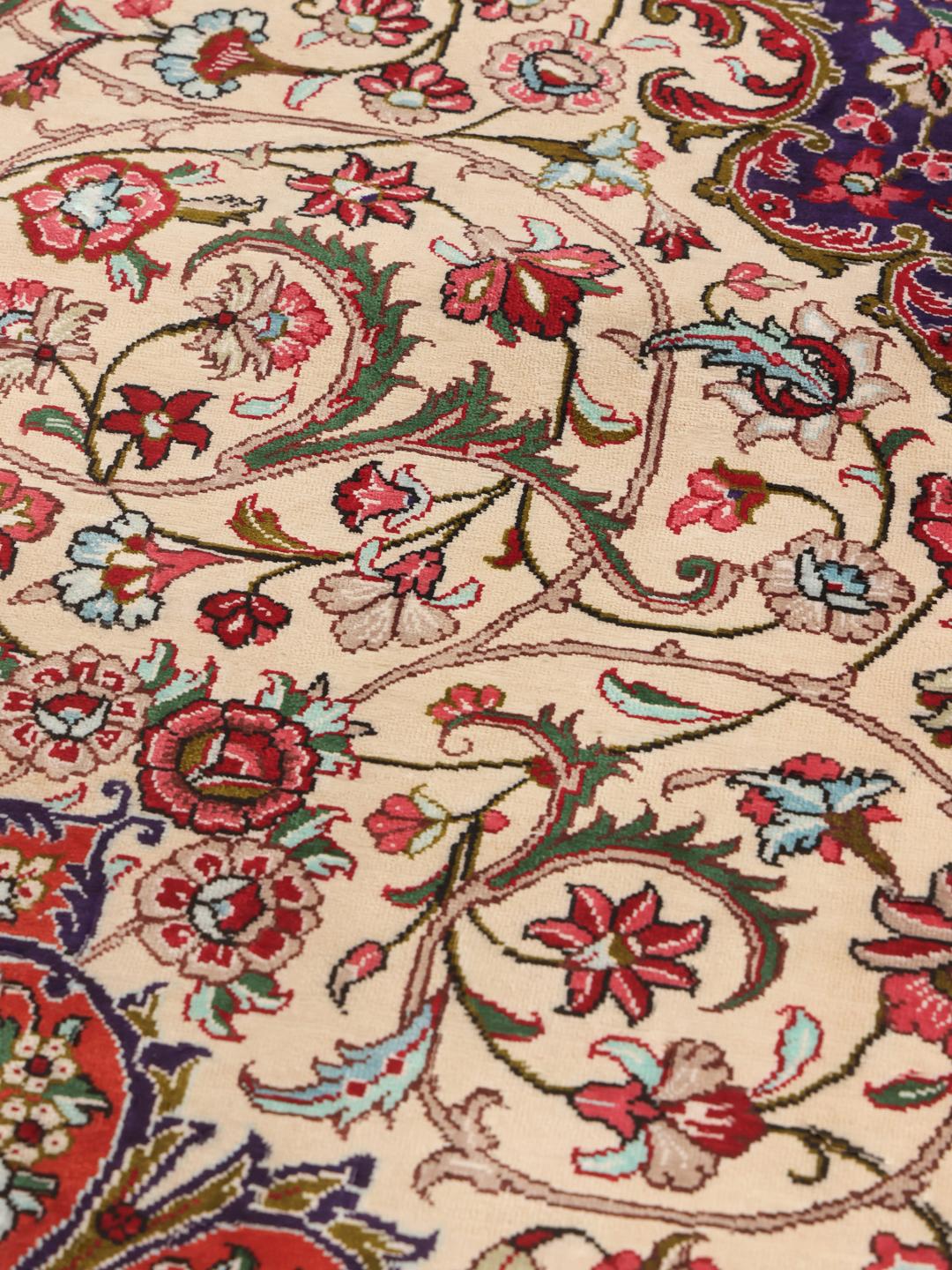
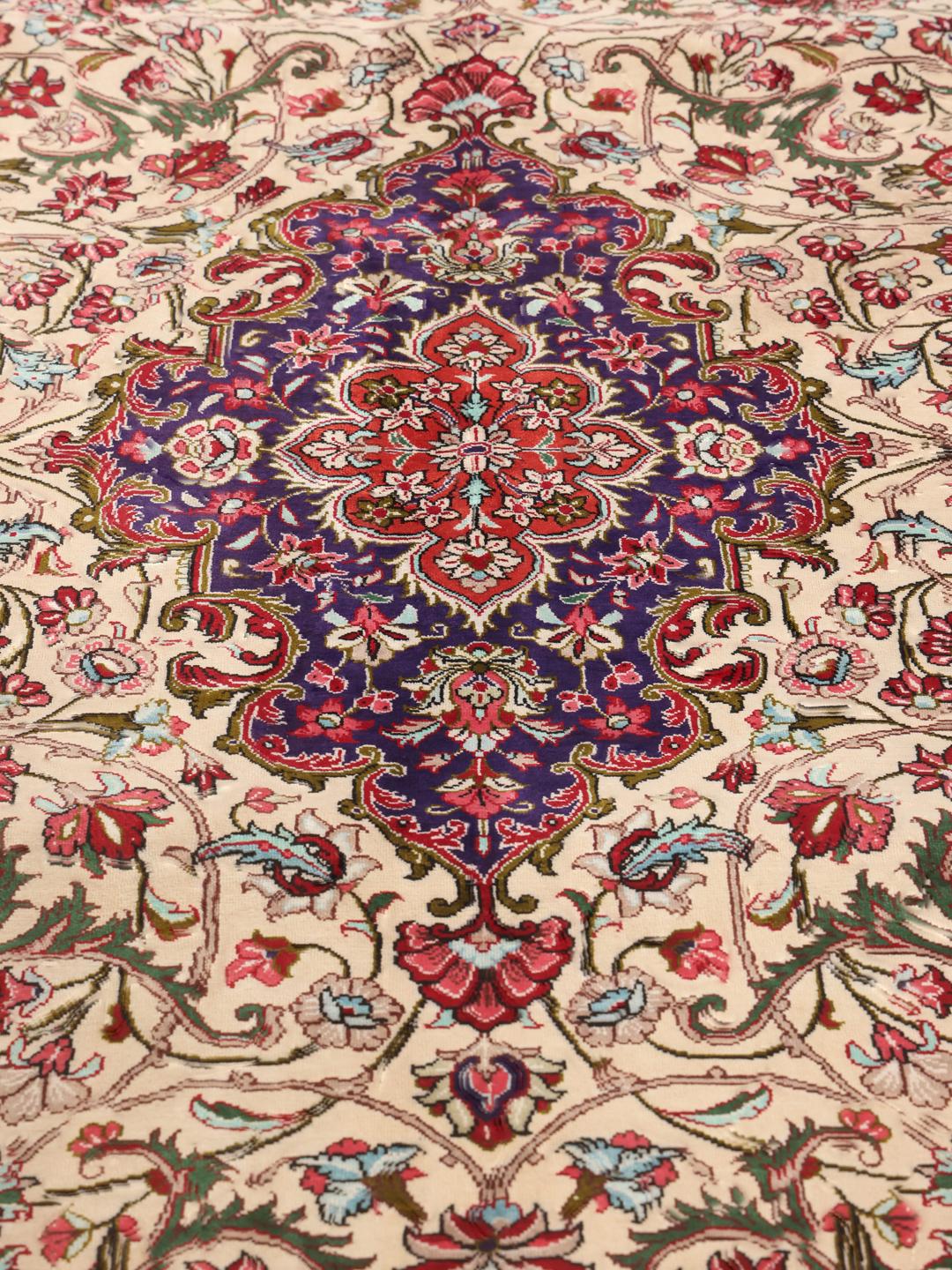
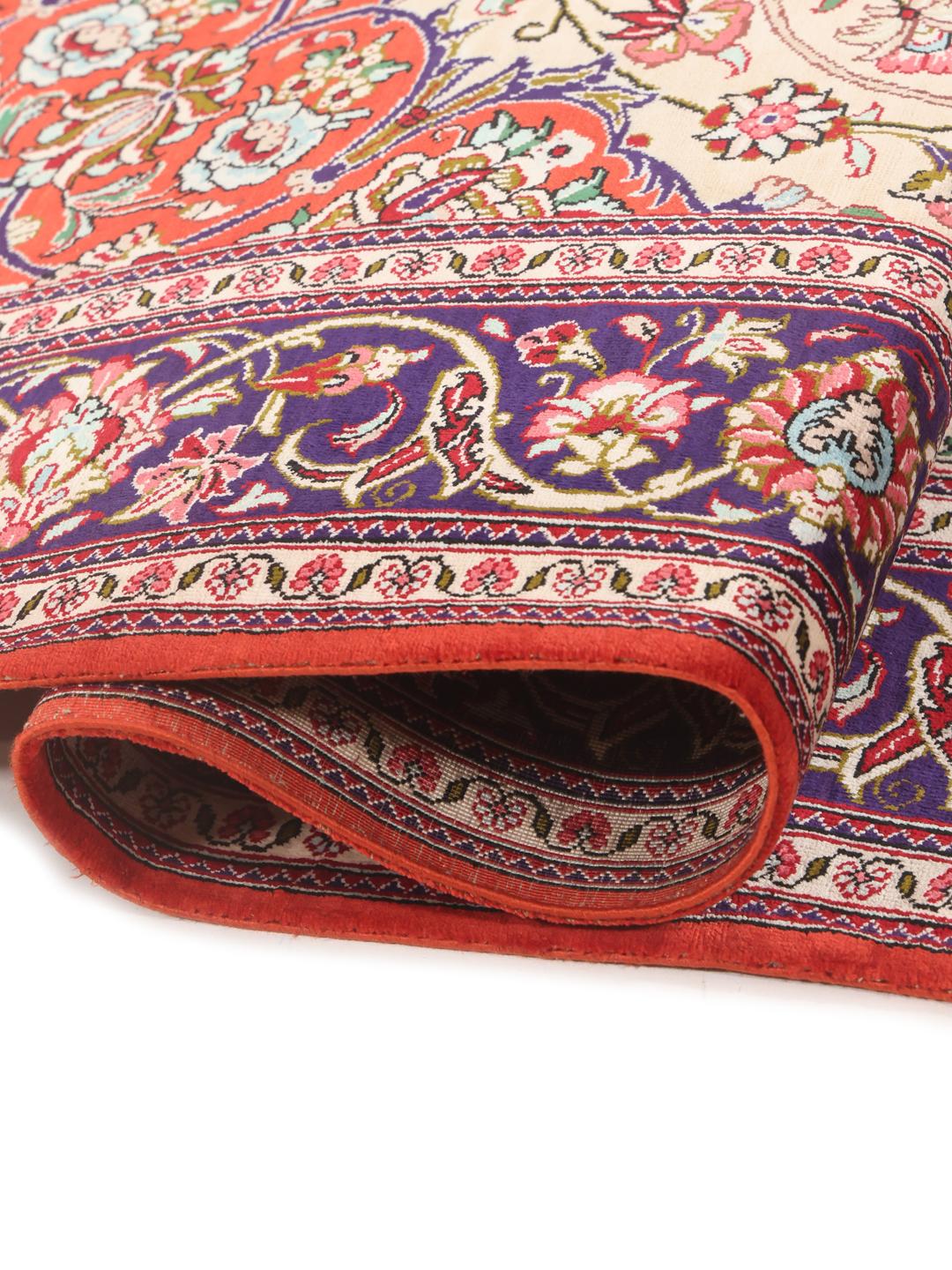
The technical mastery required to work with silk is significant, as the material is much finer and more challenging to handle than wool. In the context of these rugs, the use of silk allows for a much higher knot density, which directly translates to the level of detail and sharpness seen in the floral motifs. This technique is what gives these rugs their signature lustrous finish and exceptionally smooth, cool touch.
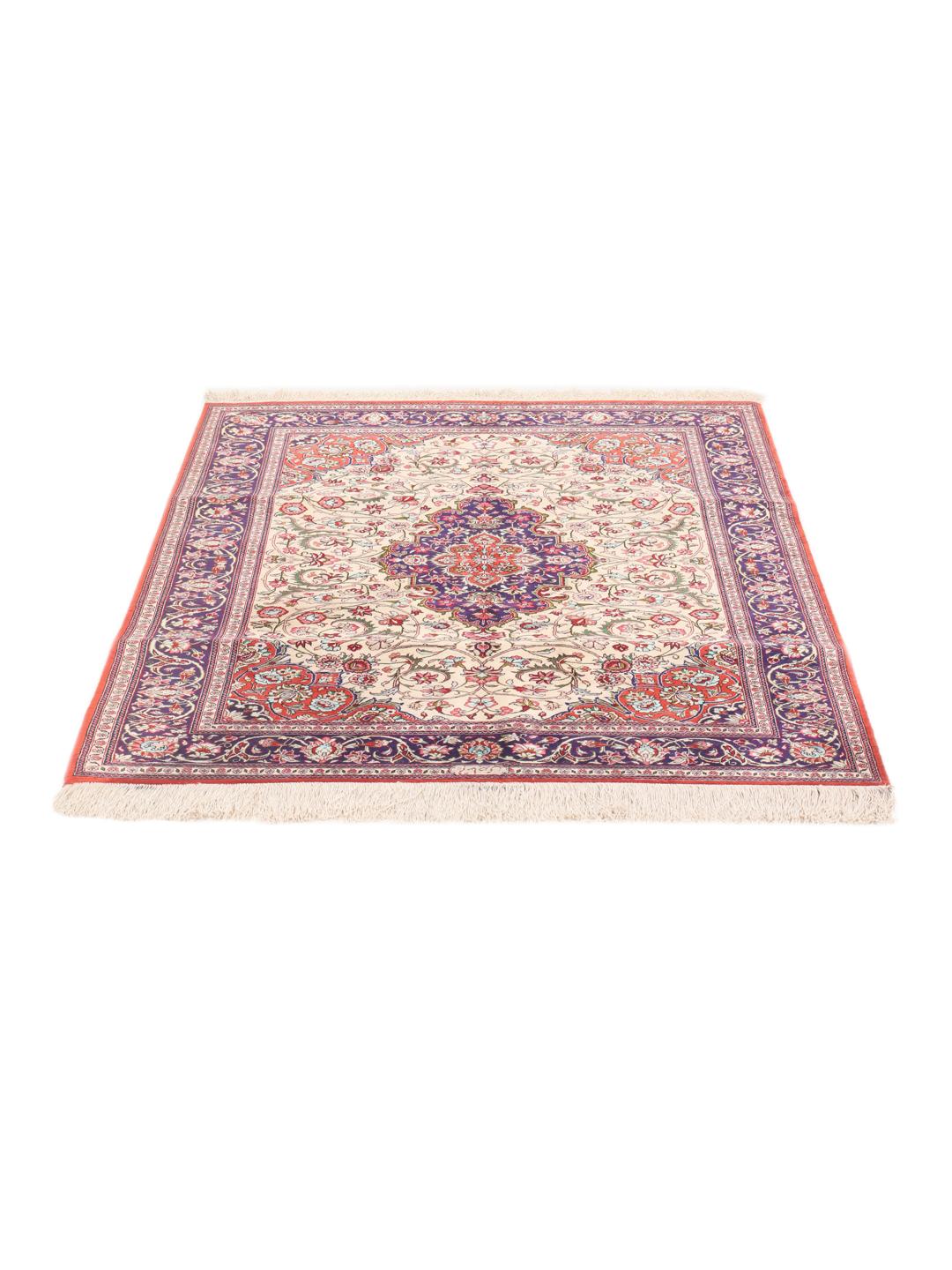
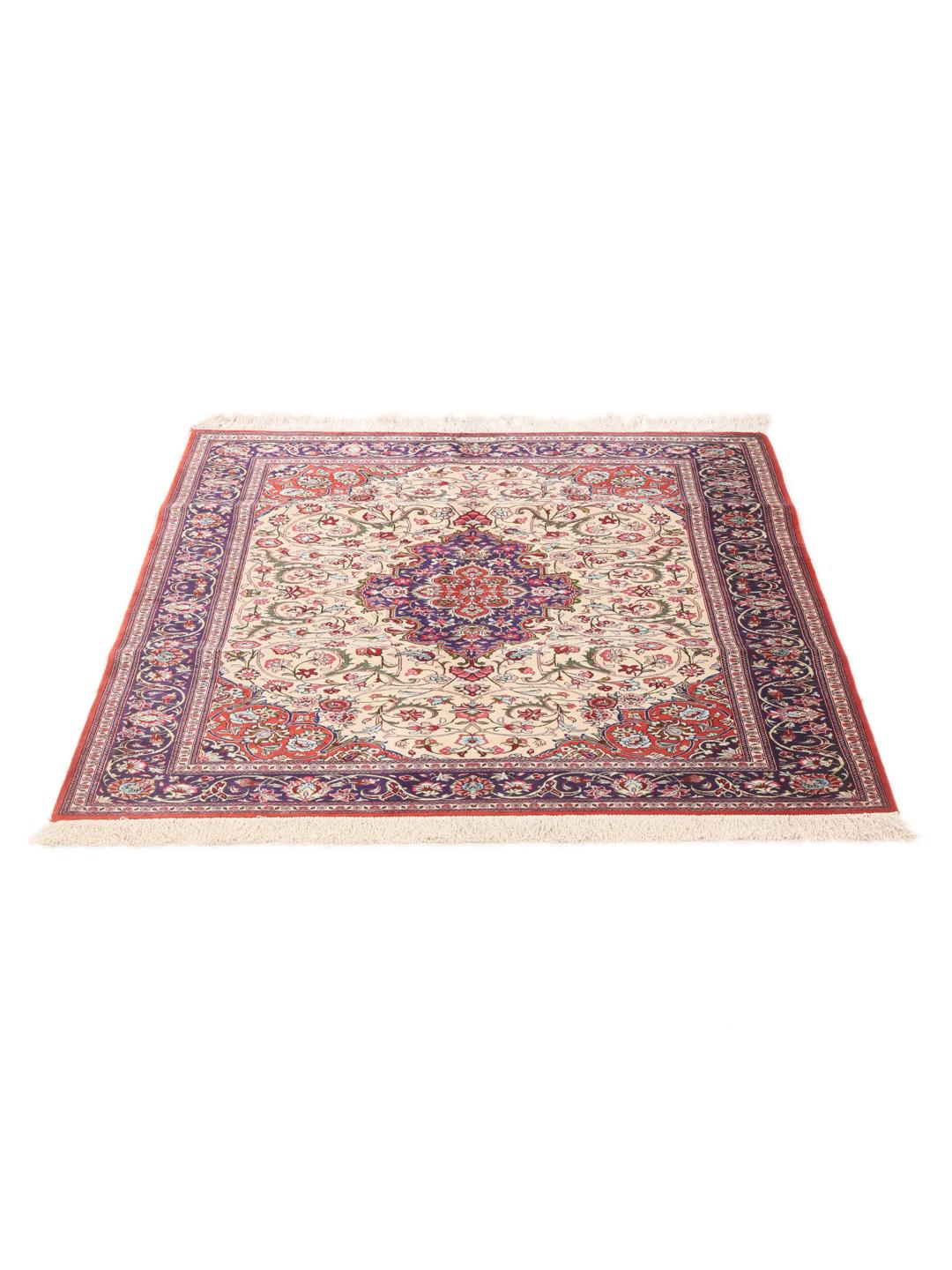
The design vocabulary of Qum is vast, often drawing inspiration from classic garden motifs, hunting scenes, and the traditional medallion style seen here. These patterns are typically framed by elaborate borders that guide the eye toward the centre, creating a sense of balance and harmony. The use of vibrant, contrasting colours is a hallmark of the tradition, designed to showcase the light-reflecting properties of the silk fibres.
Collectors value these rugs for their technical perfection and the sheer human effort required to complete them. Owning a piece from this tradition is a testament to the appreciation of fine craft and artistic heritage. It represents a bridge between ancient techniques and modern design sensibilities, making it a cornerstone piece for those who value heritage, skill, and the enduring quality of artisanal work.