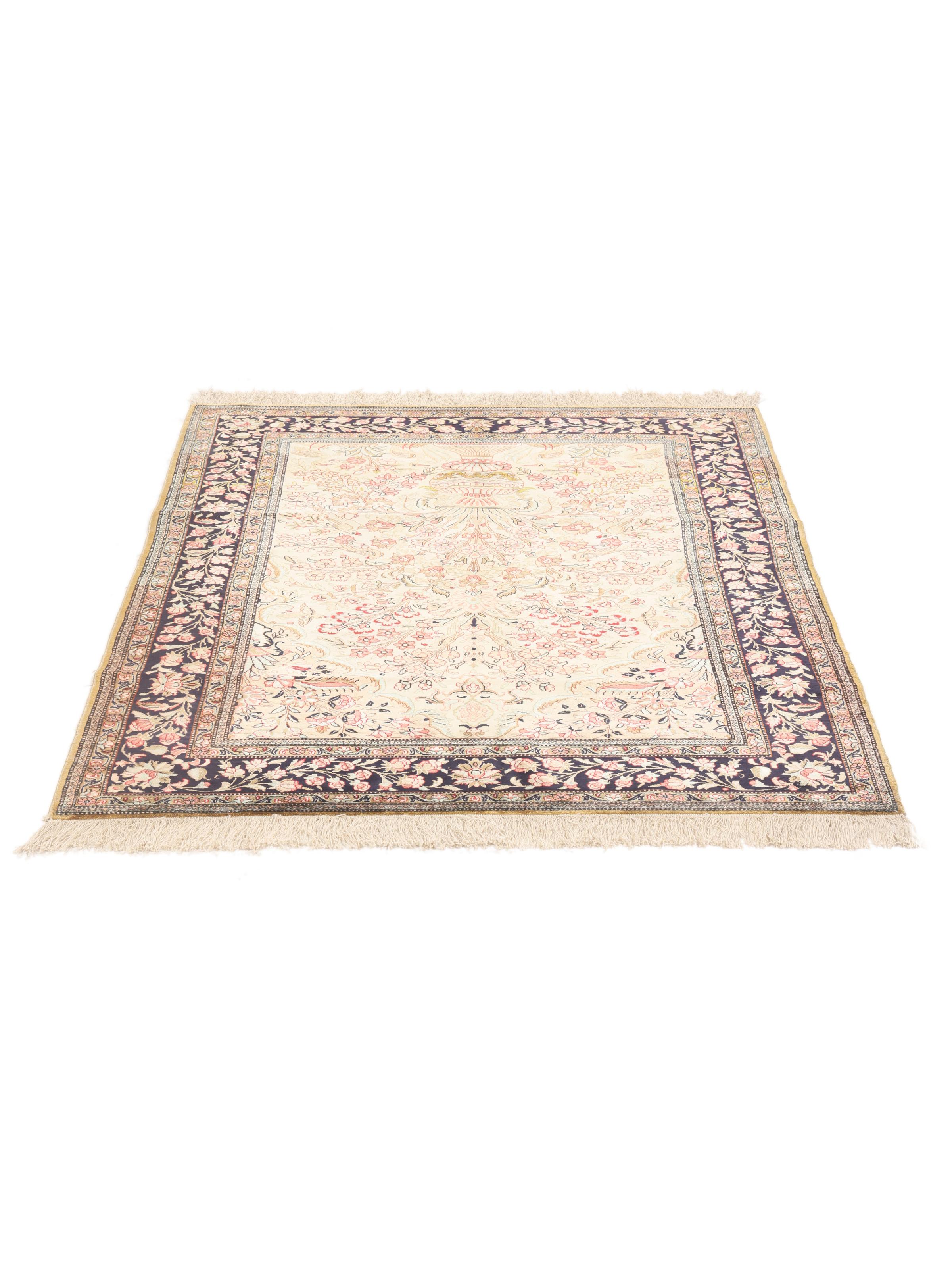
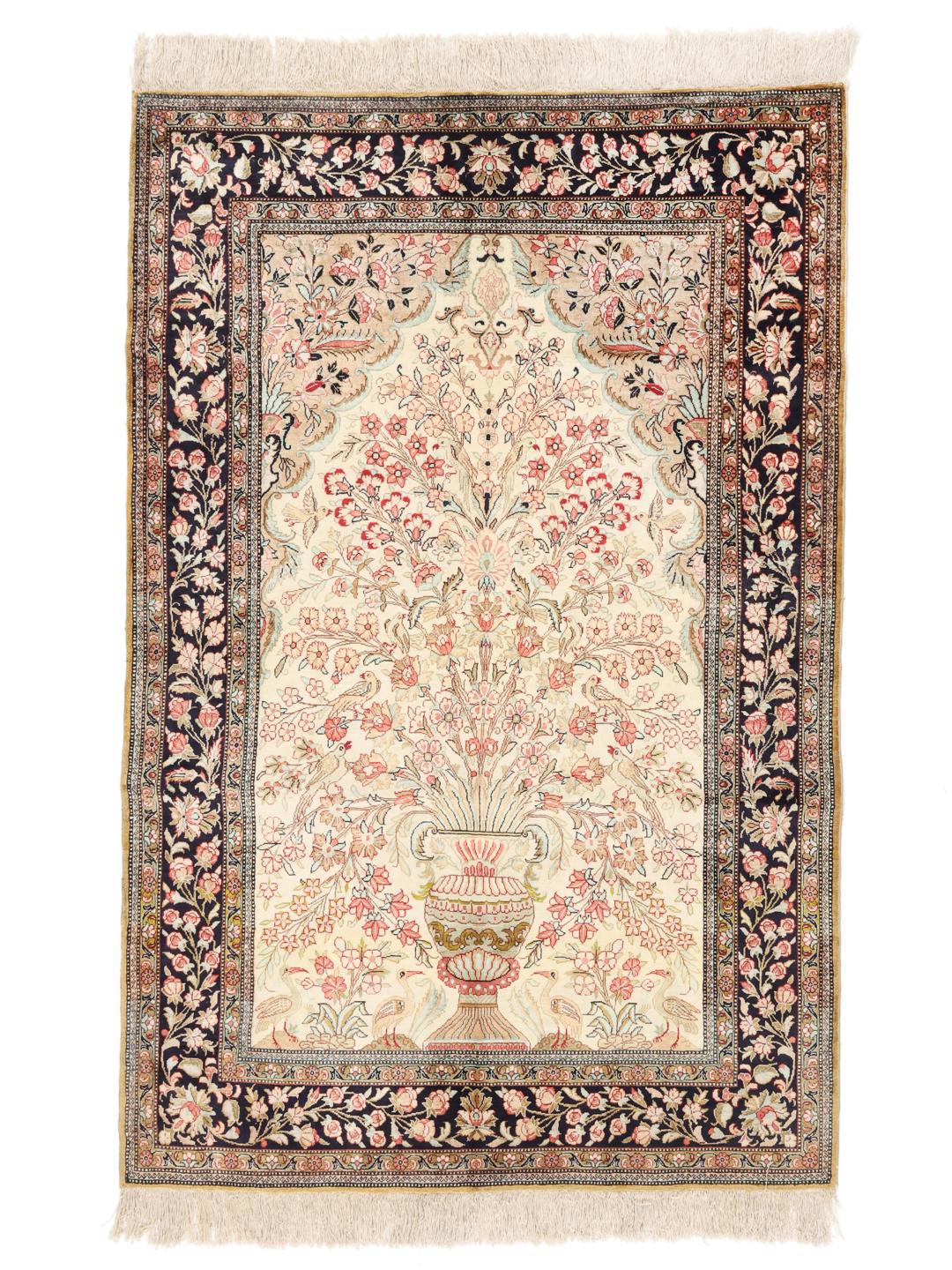
The tradition of rug weaving in Qum, located in the Middle East, is relatively young compared to other historic centres, yet it has quickly risen to prominence through a reputation for absolute excellence. While many regions have centuries of history, Qum weavers began to gain international acclaim in the early 20th century by focusing on high-quality materials and technical innovation. They are particularly famous for their mastery of silk, which allows for intricate designs that are rarely seen in other traditions.
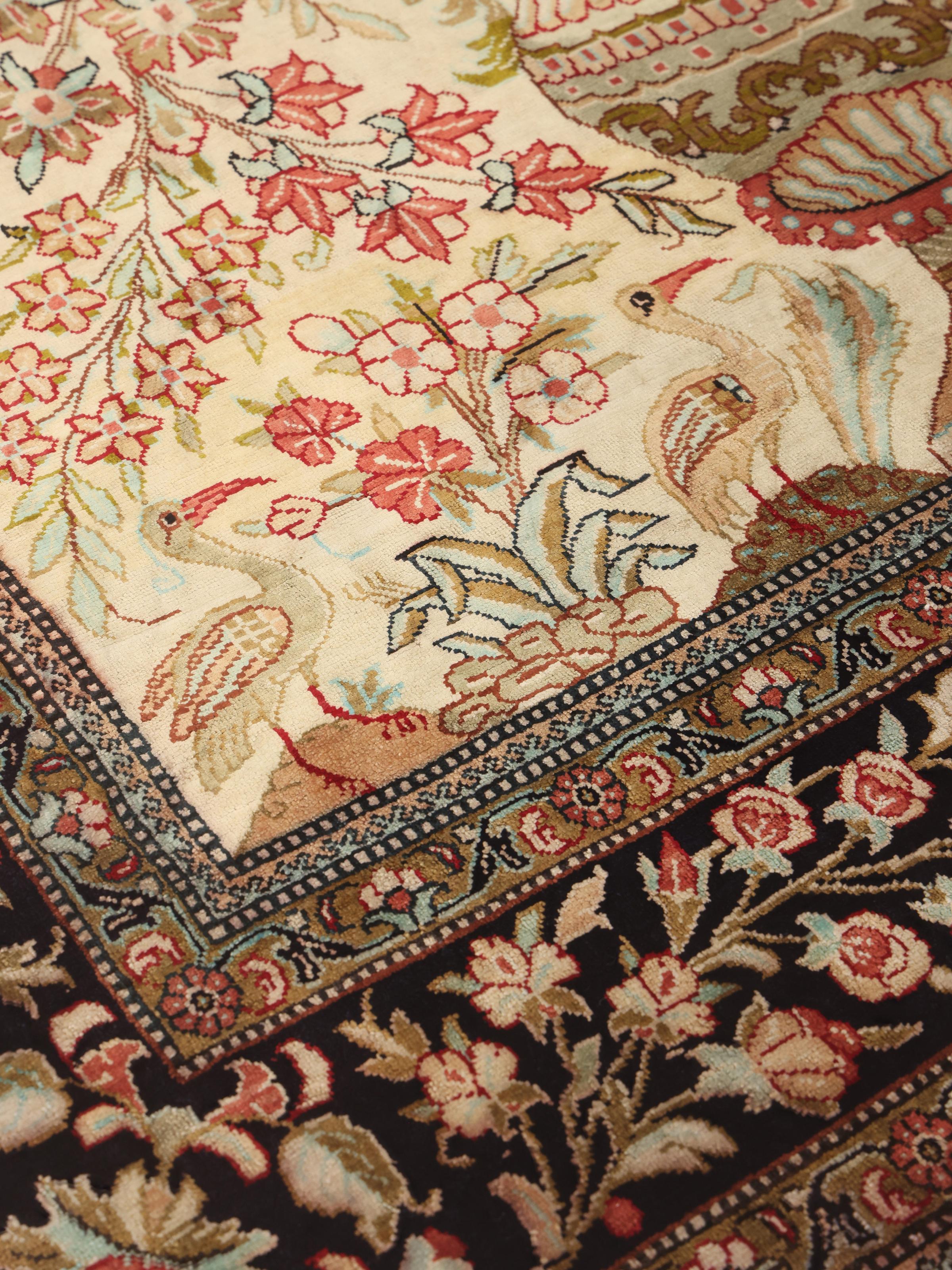
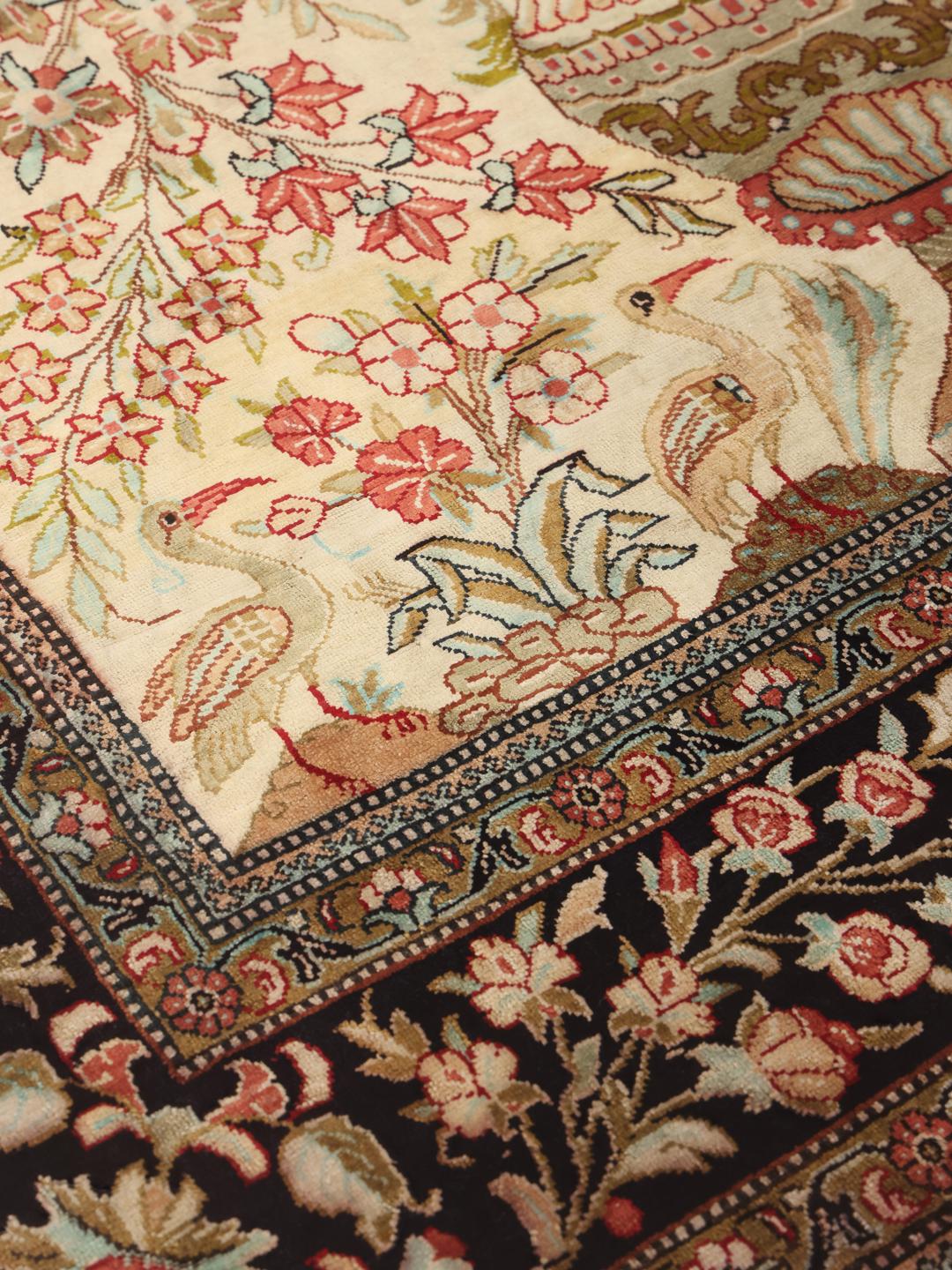
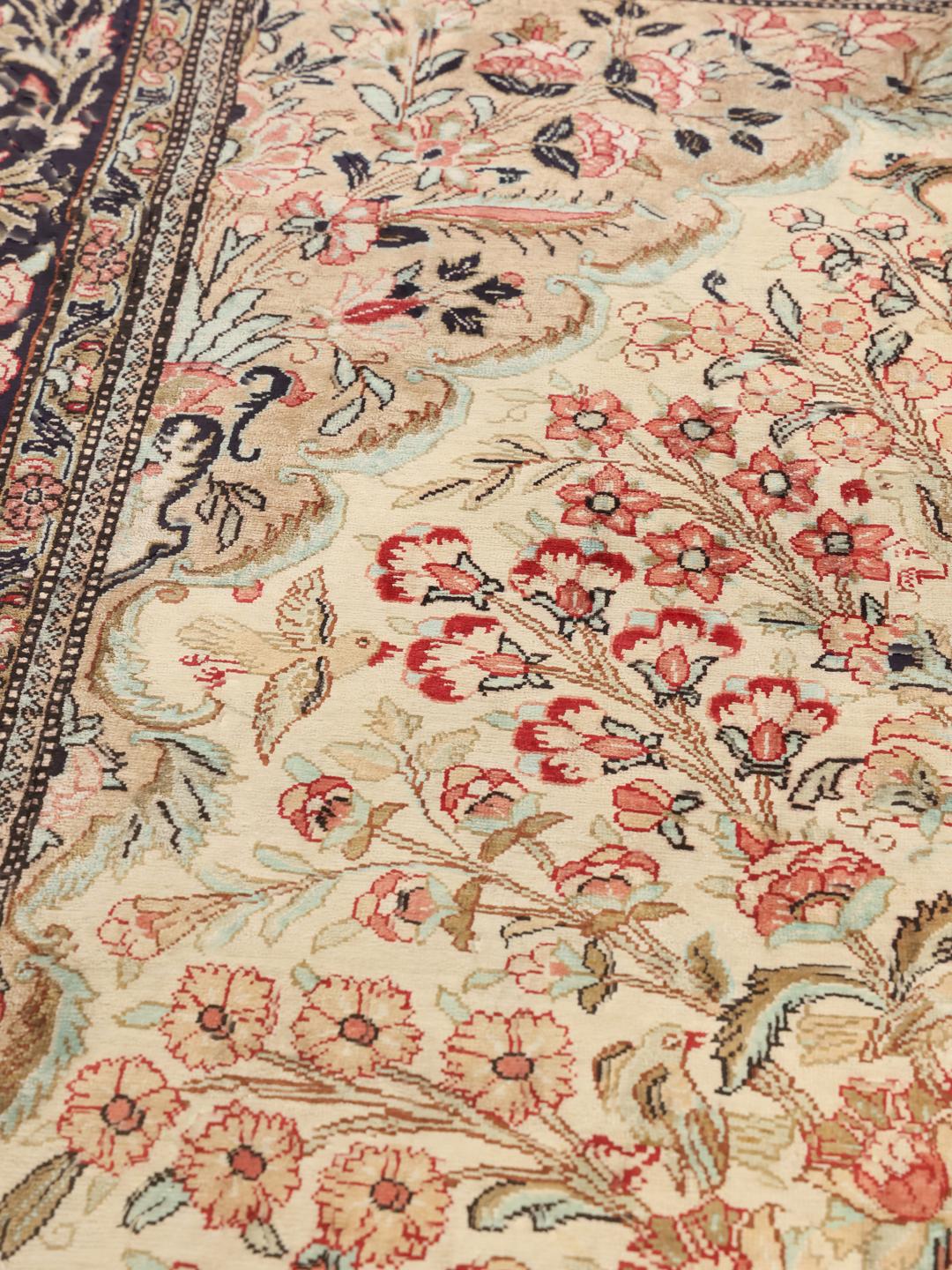
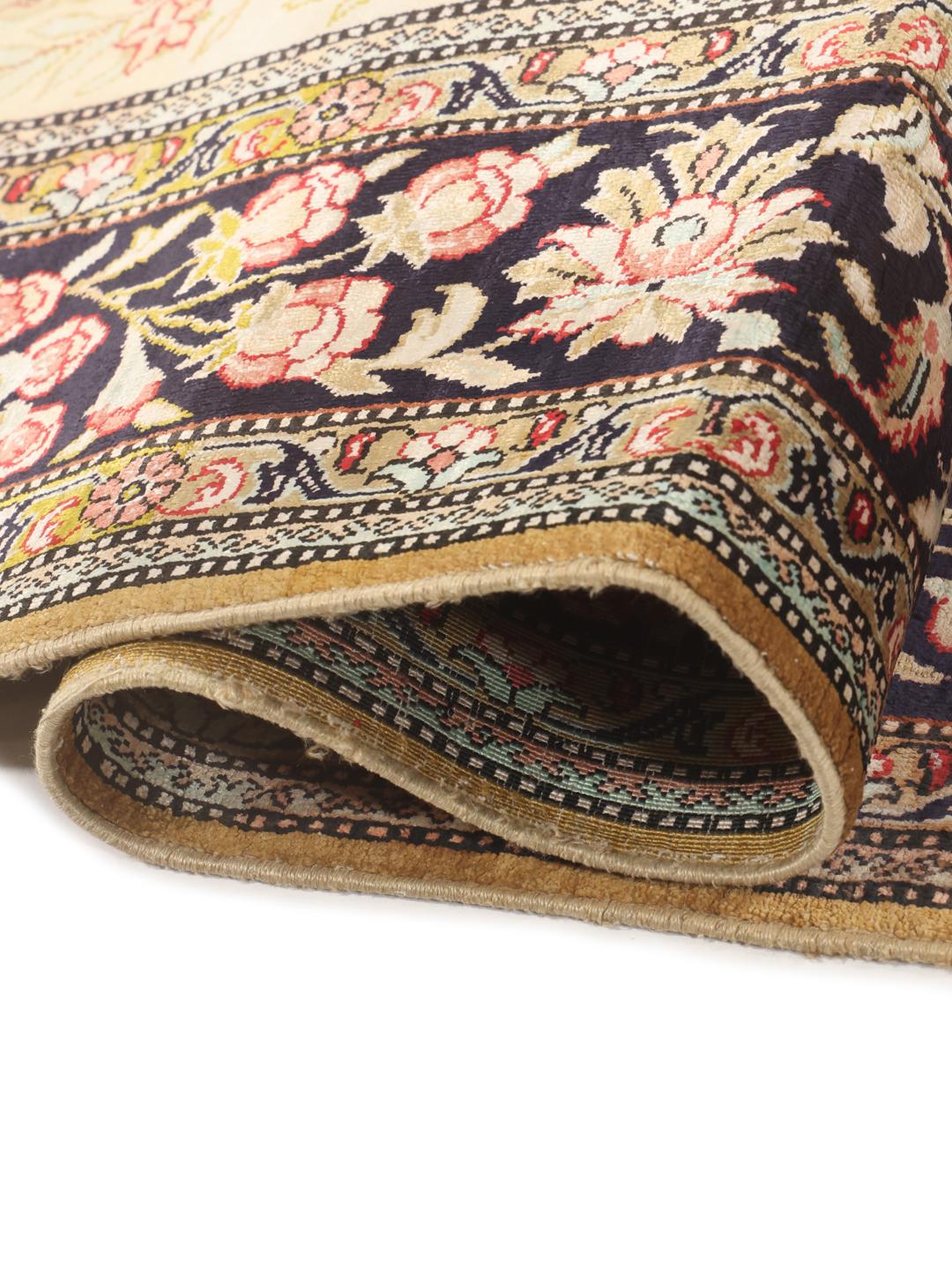
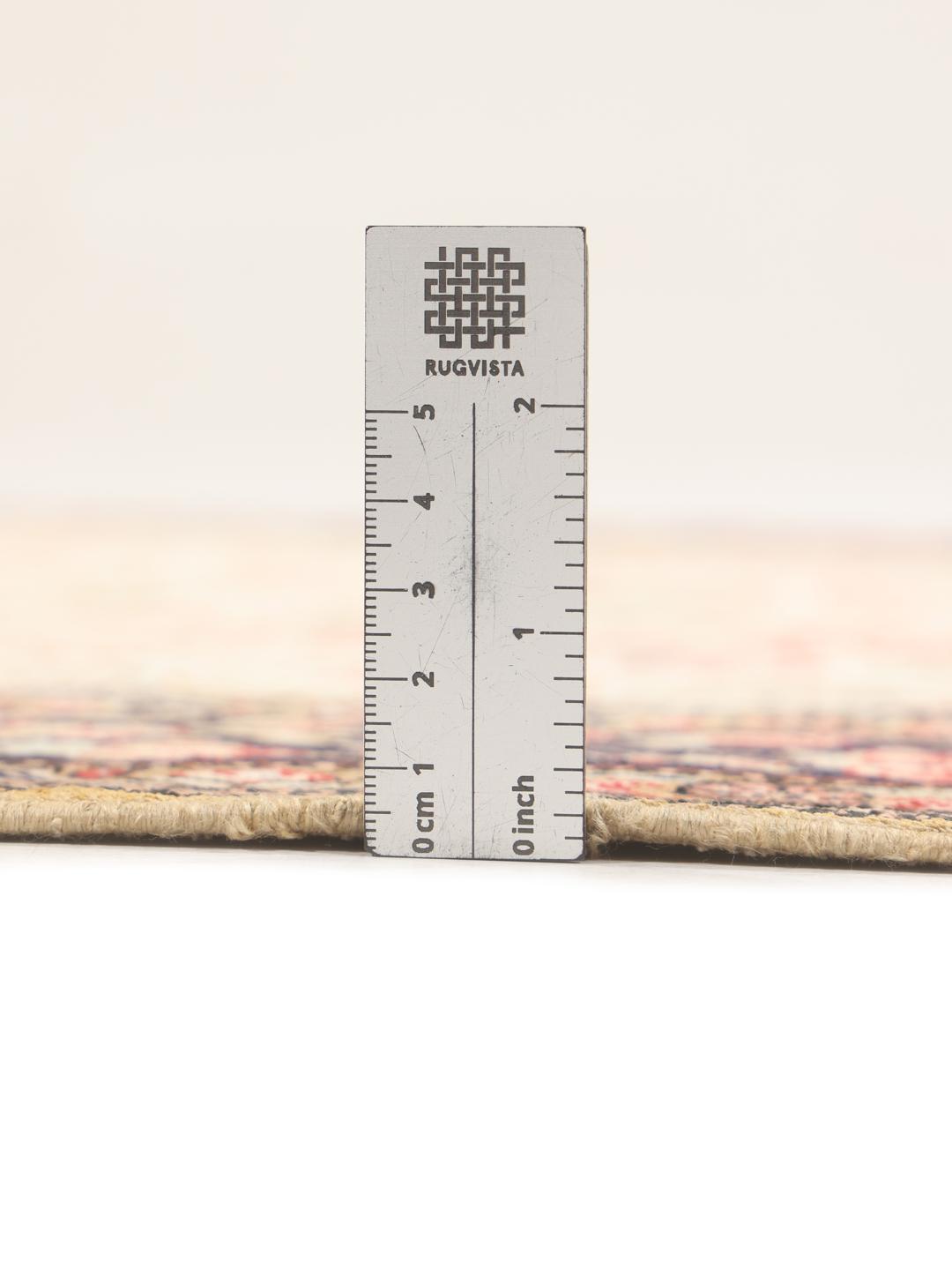
The technical term 'silk' refers to the use of high-quality, lustrous fibres derived from silkworms, which are renowned for their strength and ability to hold vibrant colours. In Qum rugs, this material is used to achieve an exceptionally fine weave. This fine construction is essential for the detailed, often pictorial, patterns that characterise the region's output. The resulting pile is not only soft but also incredibly durable, provided it is cared for with the respect such a fine textile deserves.
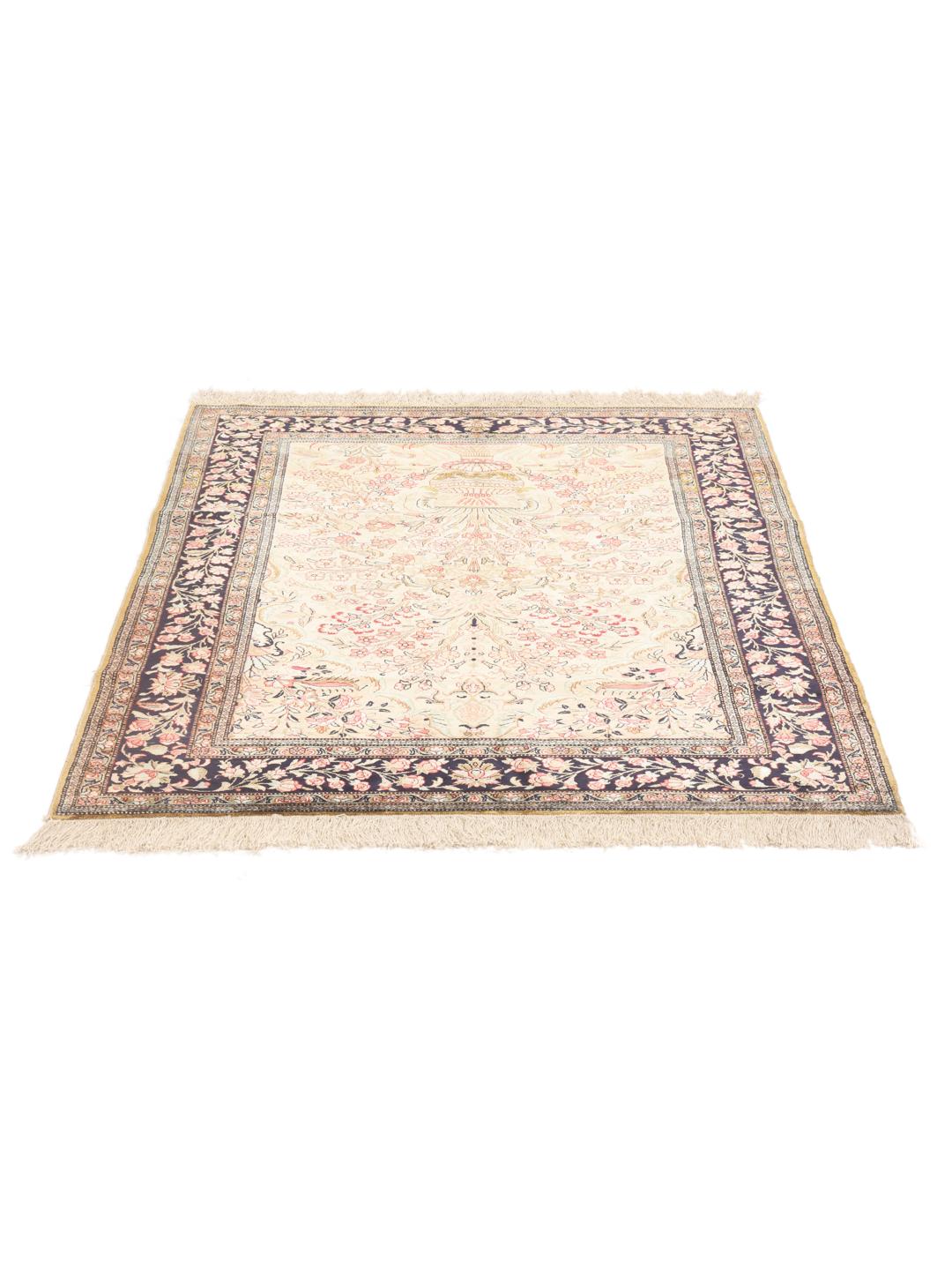
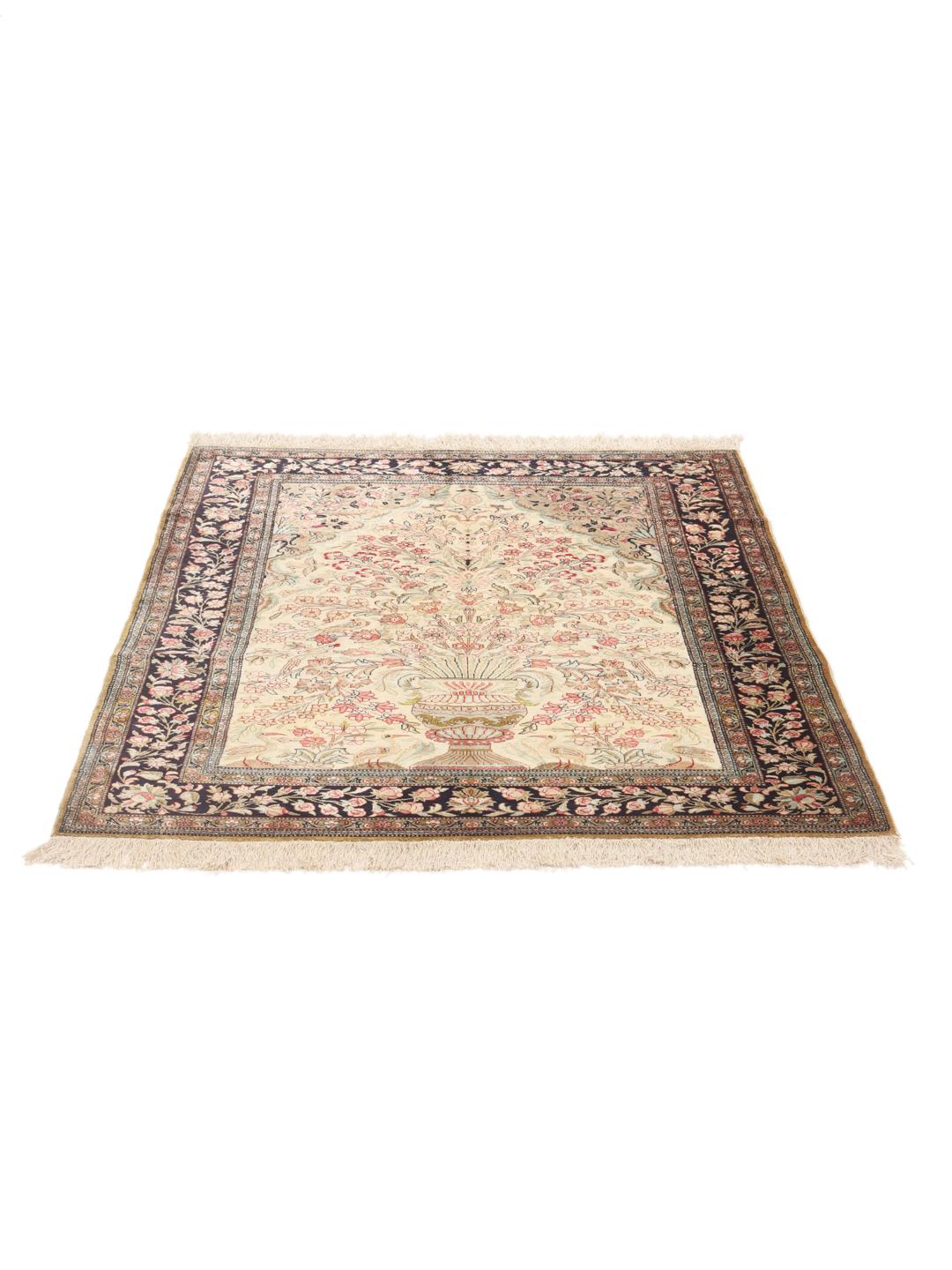
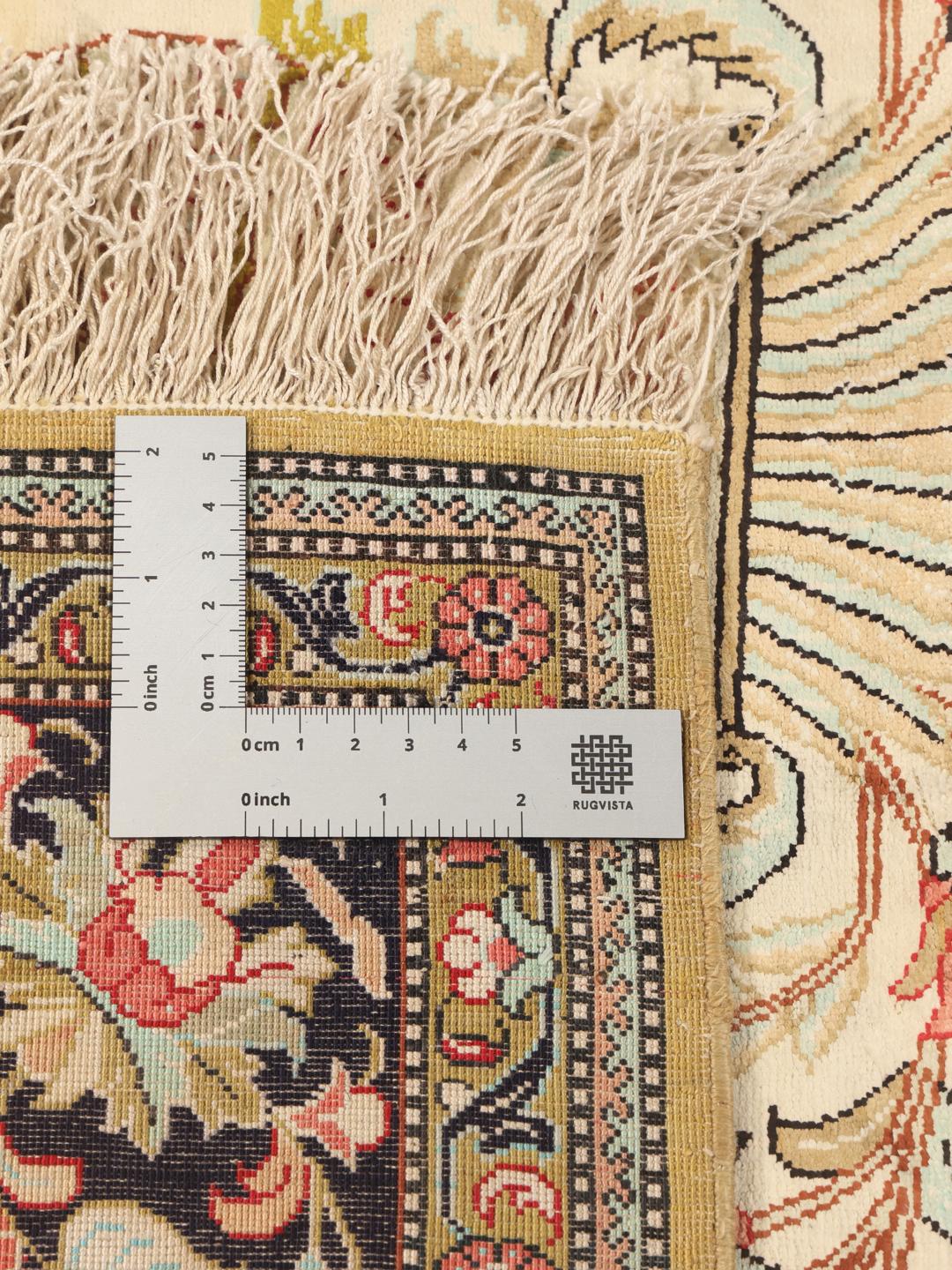
Signature design elements of Qum rugs often include the vase motif, as seen here, or the garden design, where the field is divided into sections representing a paradise garden. These rugs often feature a rich, dark border that frames the lighter, more complex central field. The use of floral motifs, birds, and intricate vines is central to their visual language, reflecting a long-standing appreciation for nature and classical artistic themes.
Owning a Qum silk rug is considered a mark of refined taste. These pieces are highly sought after by collectors not just for their beauty, but for the immense skill required to produce them. Because they are crafted with such precision and represent the pinnacle of Middle Eastern weaving, they are viewed as long-term investments that carry a sense of heritage and artistic accomplishment into any home.