Ghom rugs originate from the holy city of Qum in the Middle East, a centre of culture and religious significance. While the tradition of rug weaving in this region is relatively modern compared to other ancient hubs, it has quickly risen to prominence by specialising in the most refined and technically demanding work. These rugs are celebrated for their creative freedom and the adoption of diverse patterns that blend traditional motifs with innovative colour palettes.
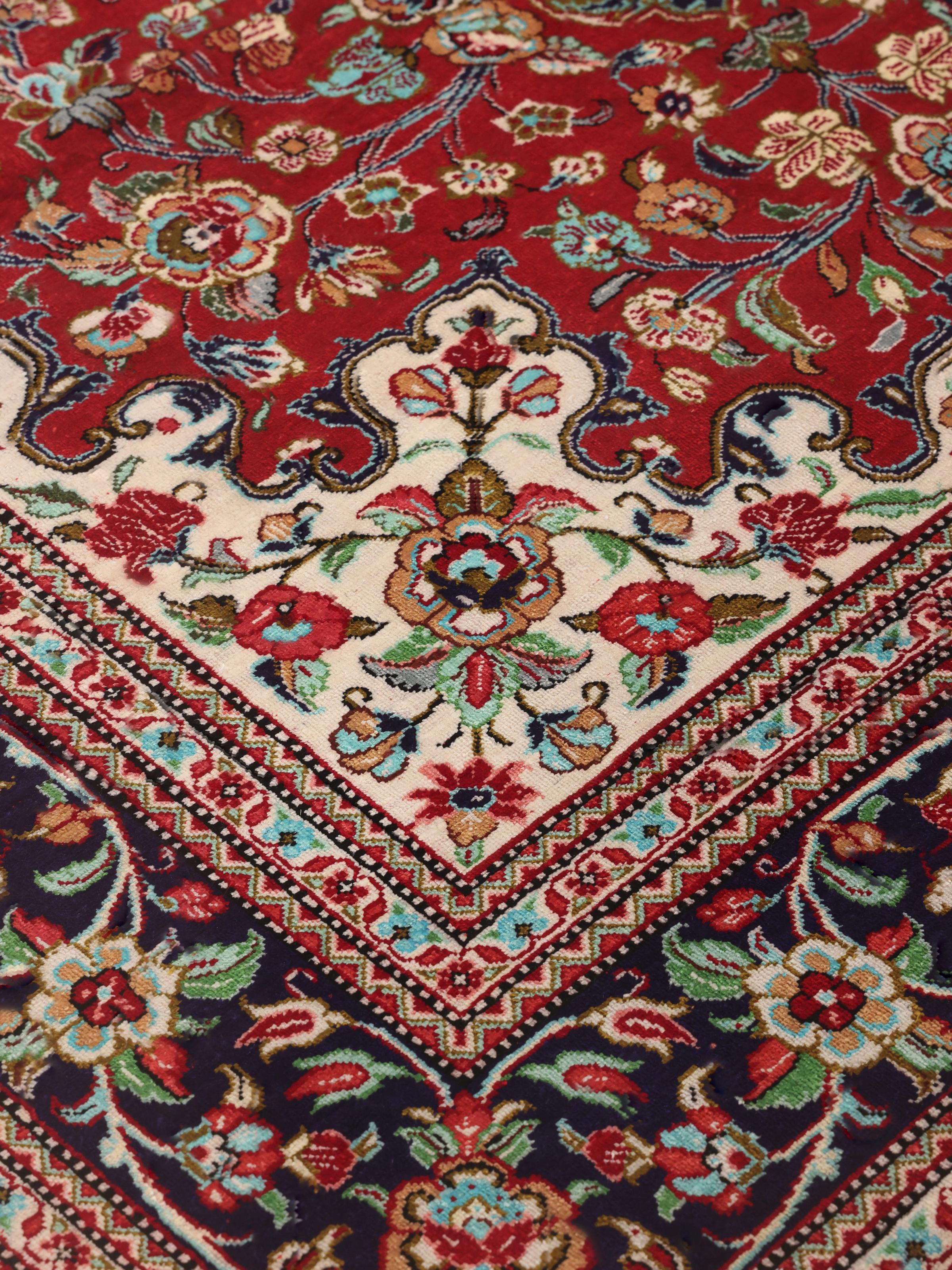
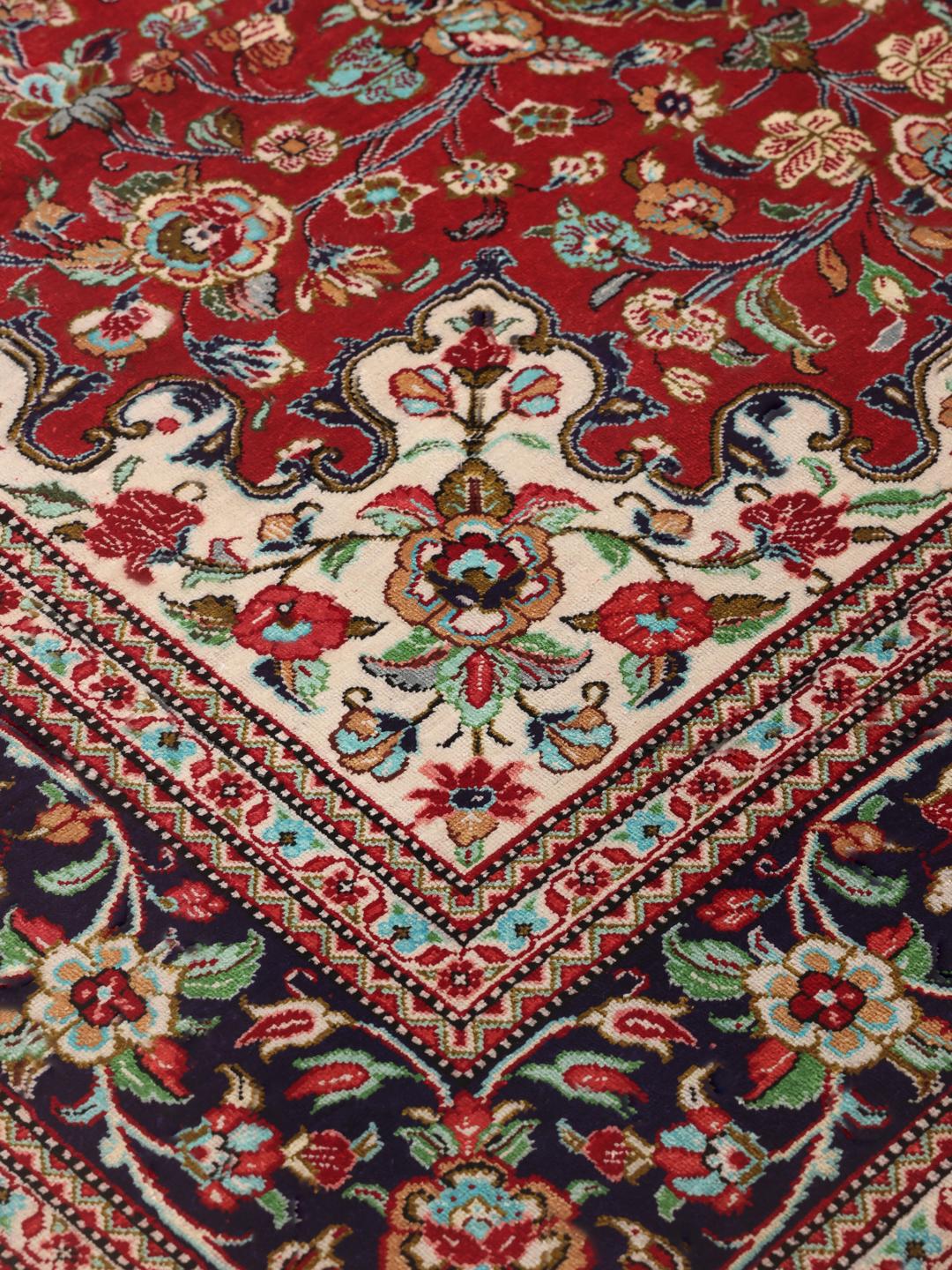
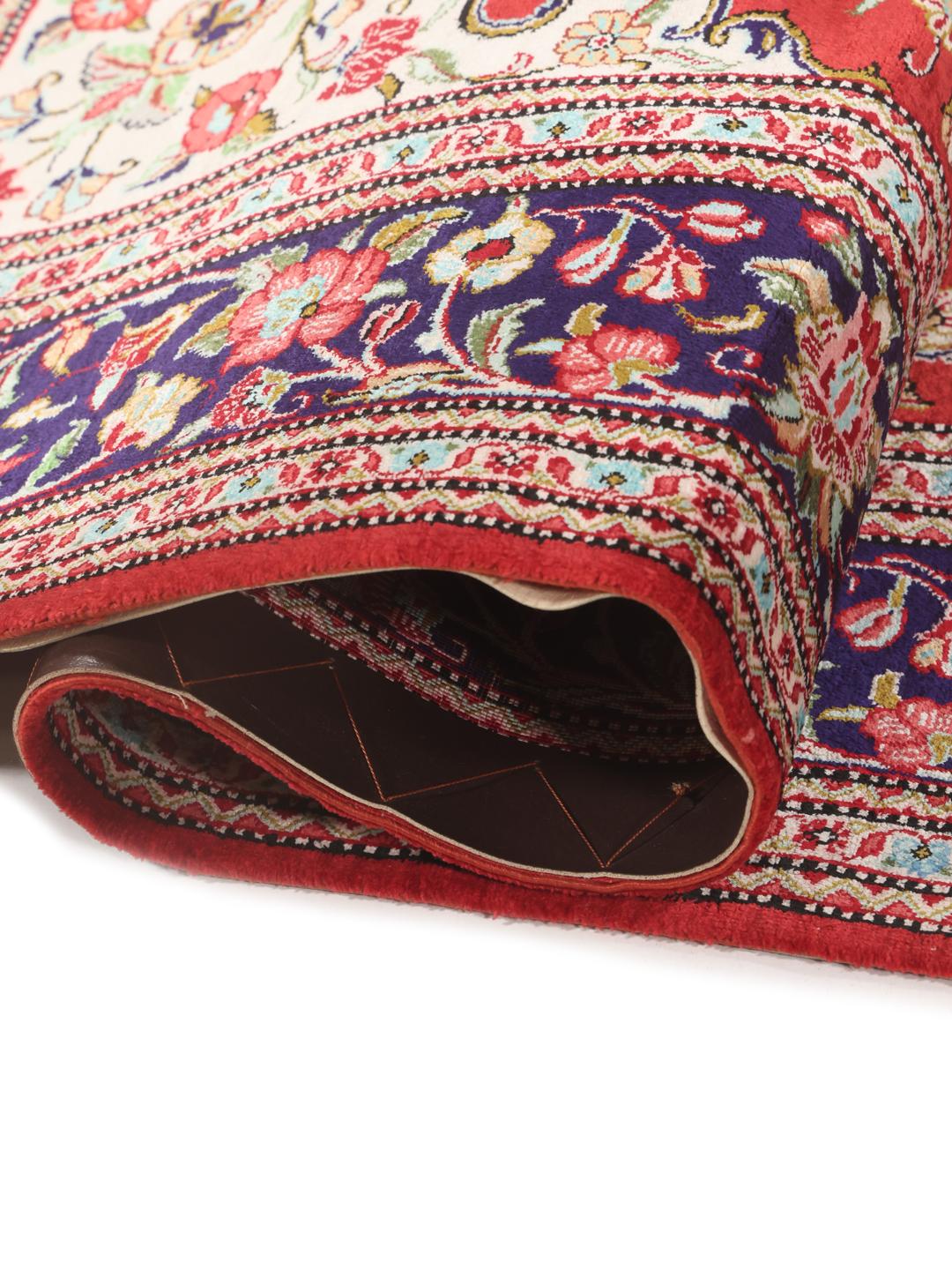
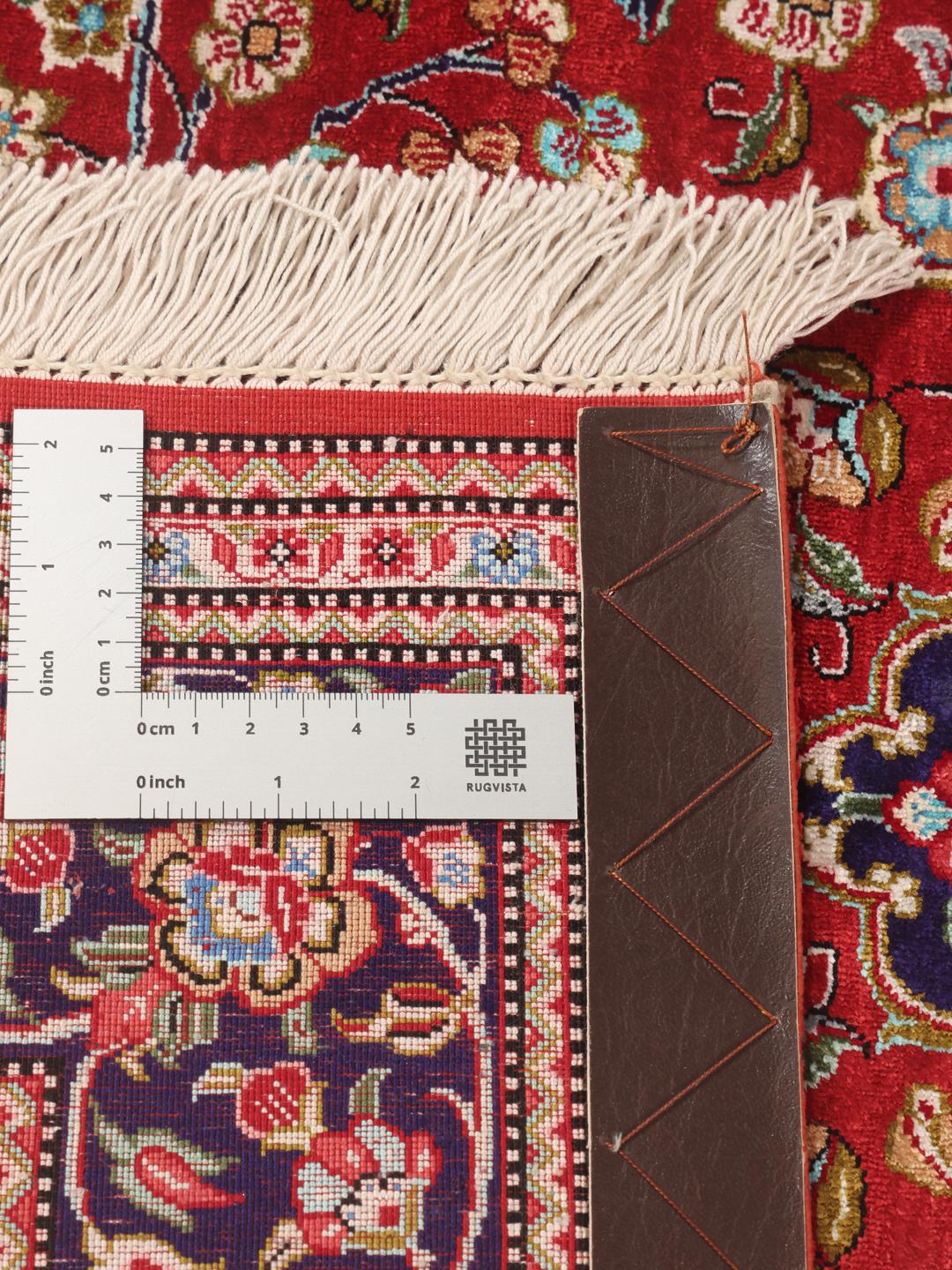
The hallmark of this style is the extraordinary attention to detail made possible by the use of fine, durable materials. The term hand-knotted refers to the traditional, labour-intensive method where each knot is tied individually by the weaver, a technique that creates a robust structure and allows for the extreme precision seen in the intricate floral patterns. This creates a denser, more lustrous surface that remains a benchmark for quality in the world of fine rugs.
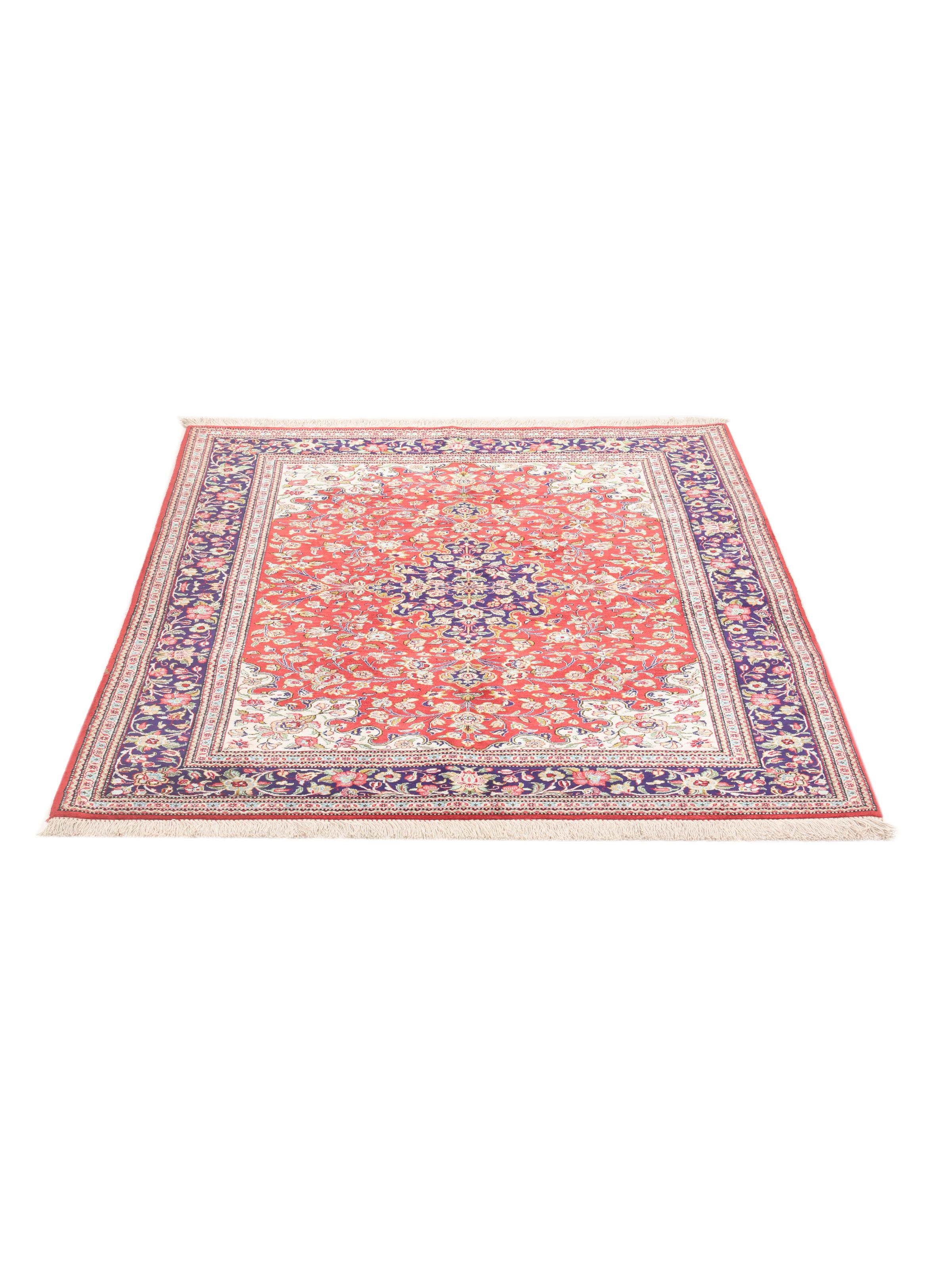
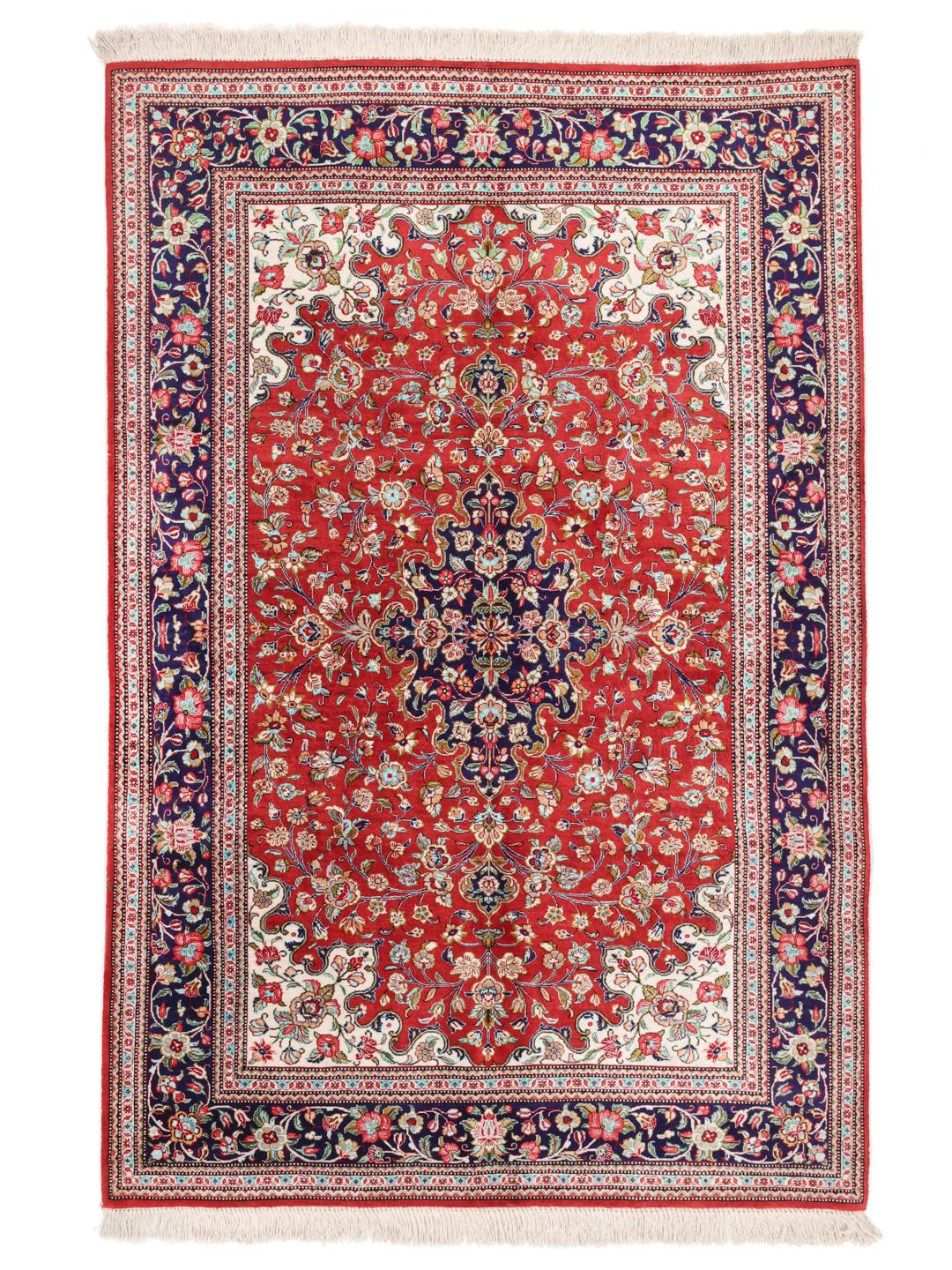
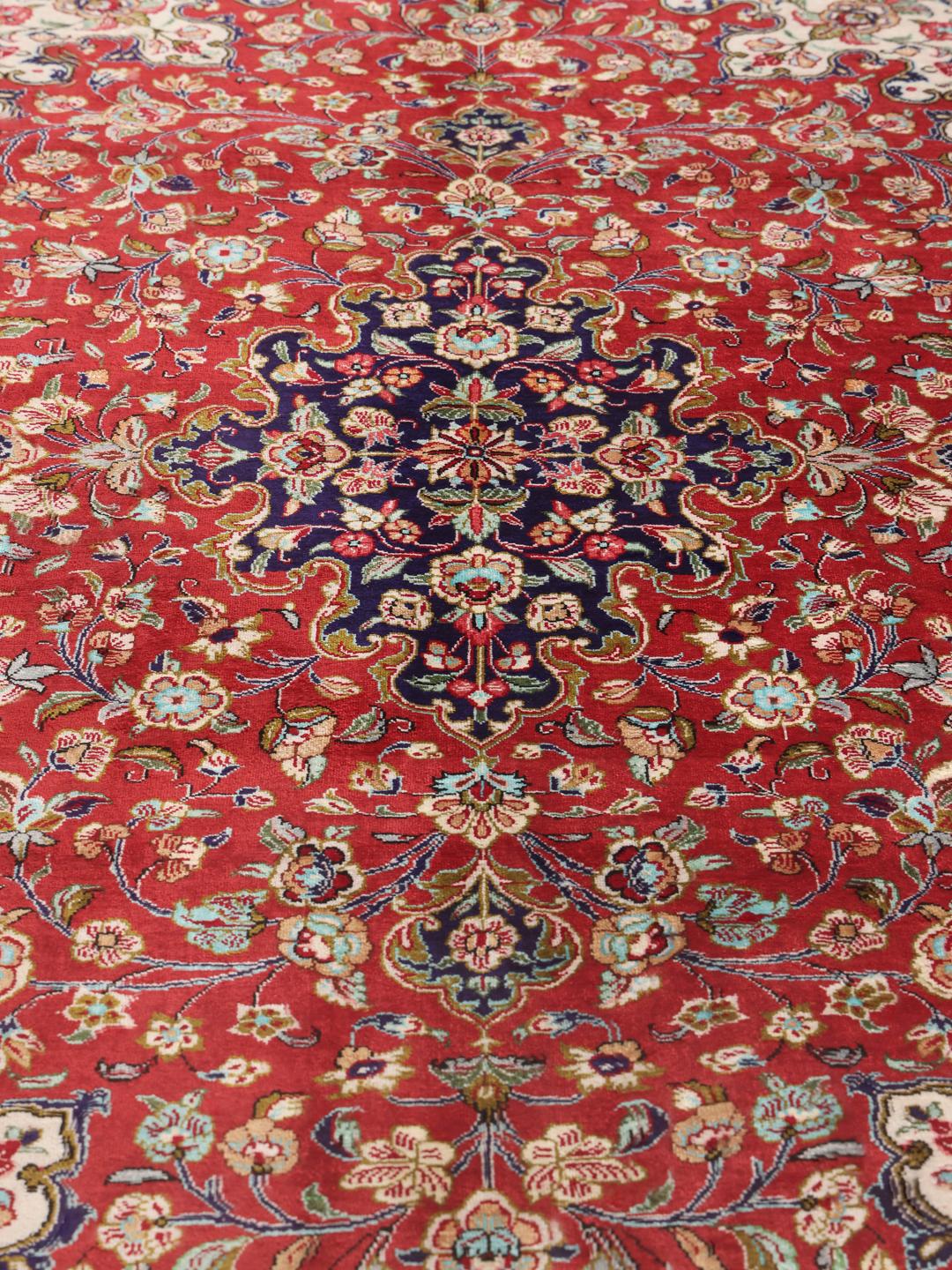
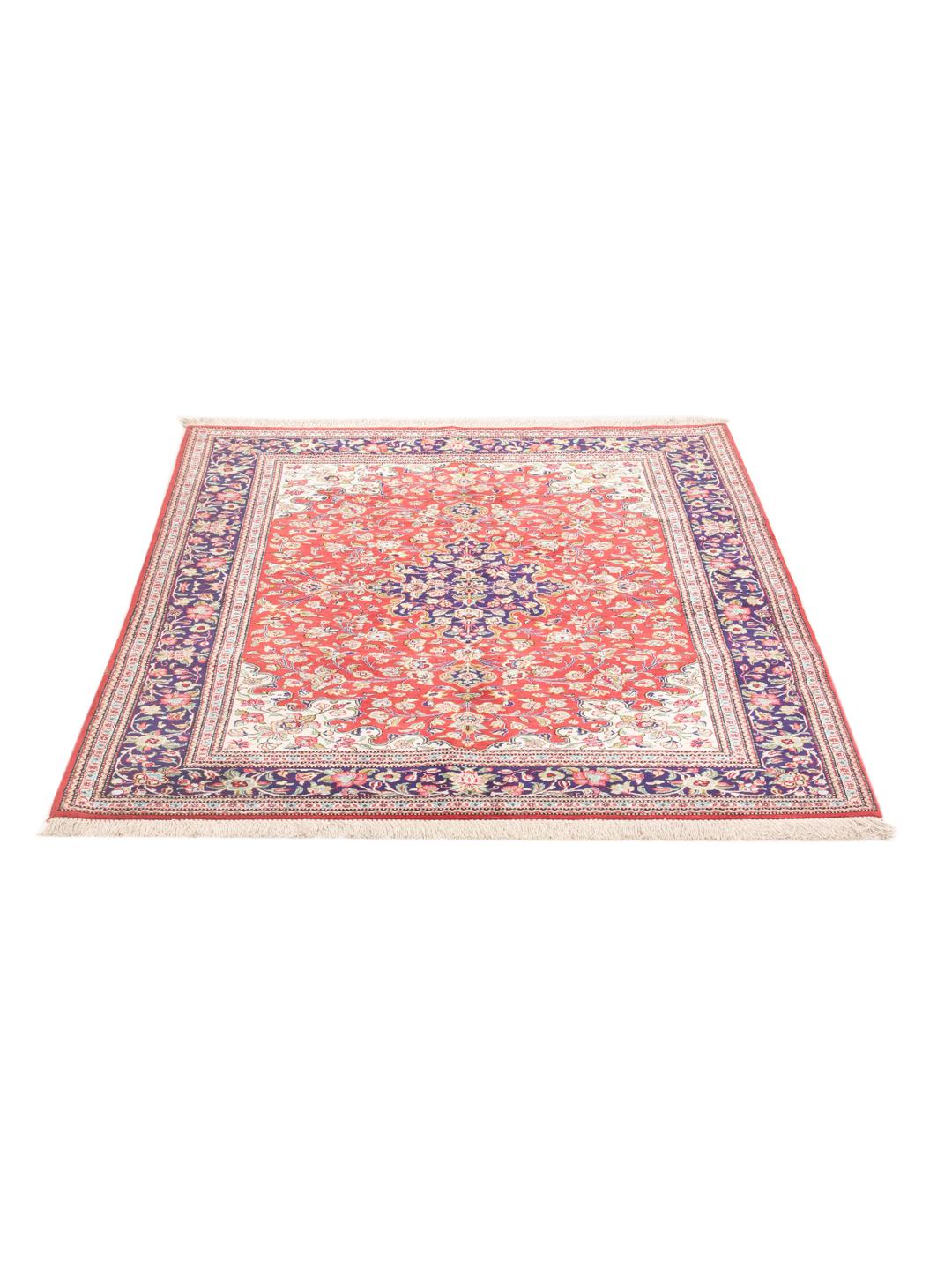
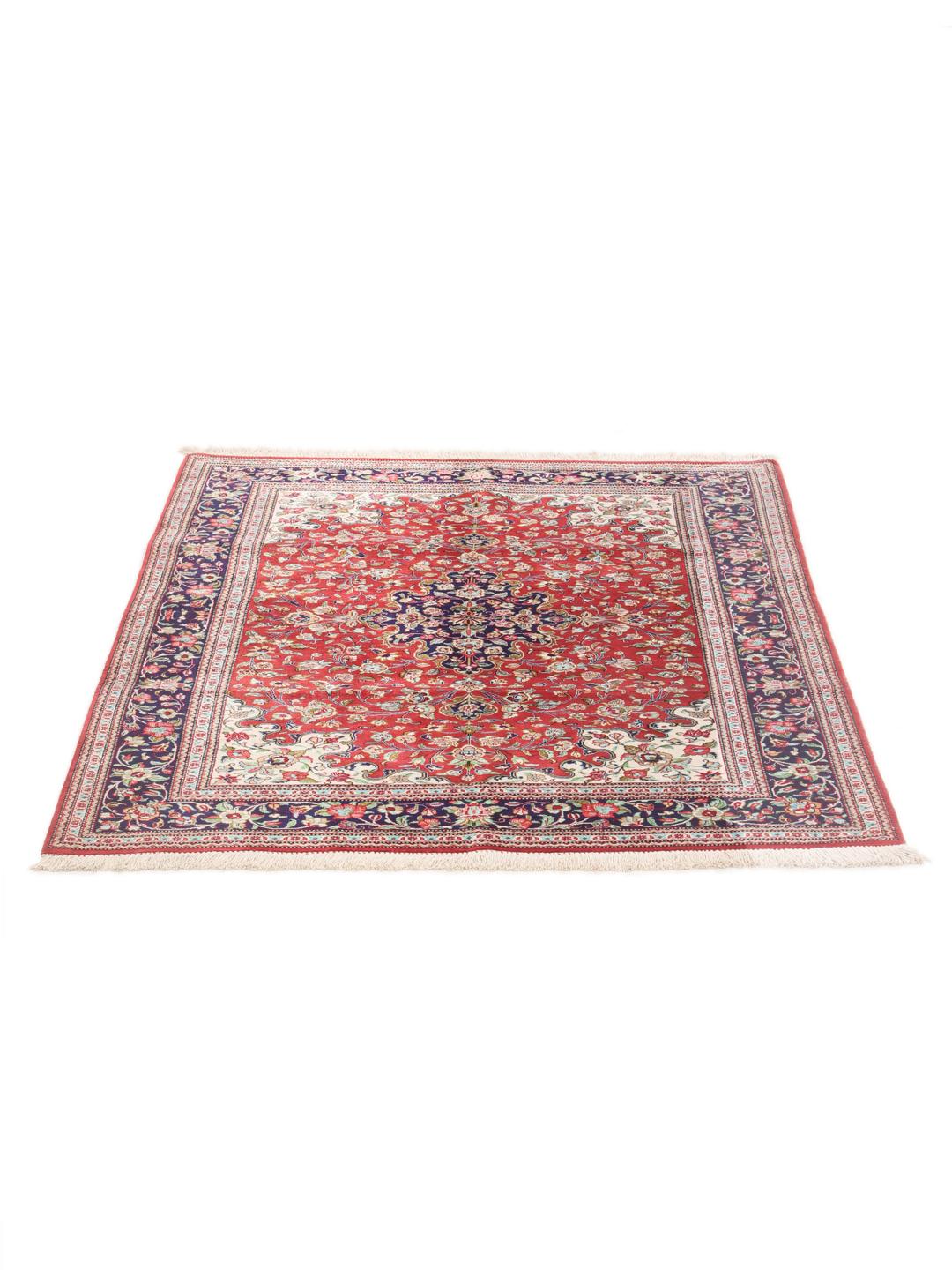
Visually, these rugs are often defined by their elaborate floral themes, featuring scrolling vines, delicate blossoms, and complex medallions that span the entire field. The borders are typically as detailed as the centre, creating a balanced and harmonious composition. While this specific piece features a classic red and blue palette, the tradition is known for its bold experiments with colour, making every piece a unique expression of the weaver's artistic intent.
Collecting a rug from this tradition is an investment in a living craft. They are highly valued for their ability to bring a sense of history and sophisticated artistry into a modern home. Owning one means participating in a legacy where skill is passed down through generations, and where the value lies not just in the finished product, but in the months of dedication and the human touch that makes each rug a singular, irreplaceable object.