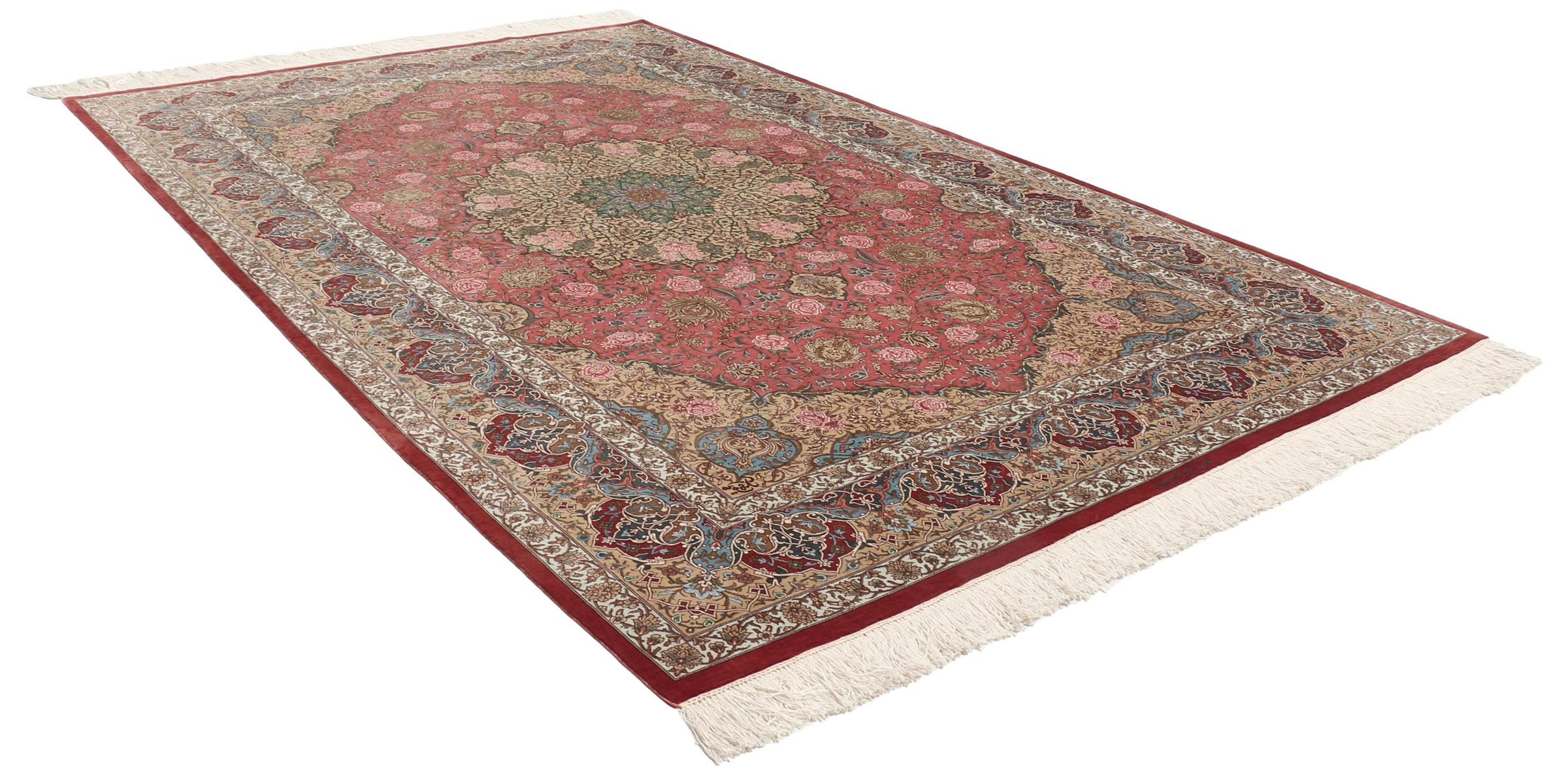
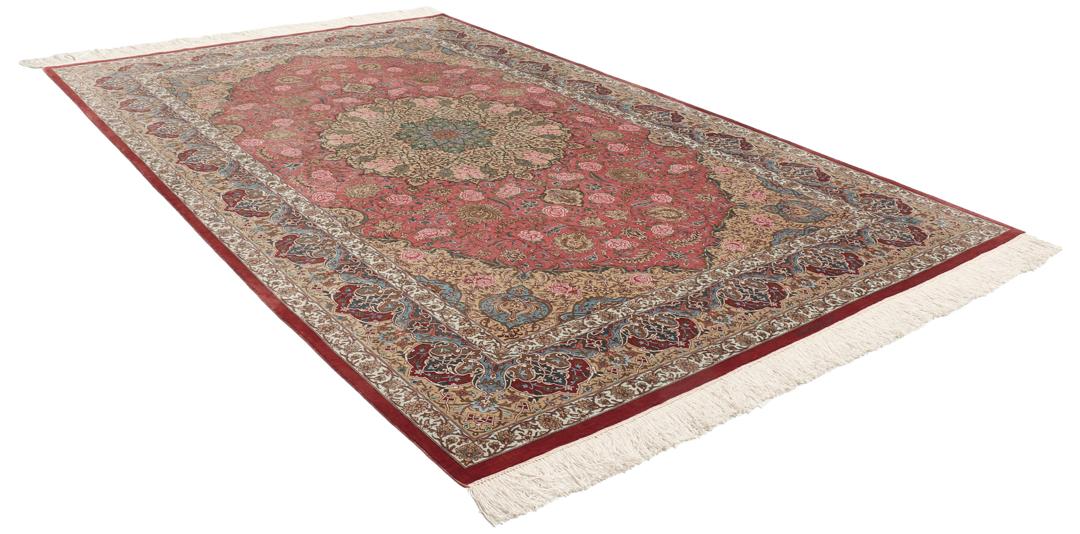
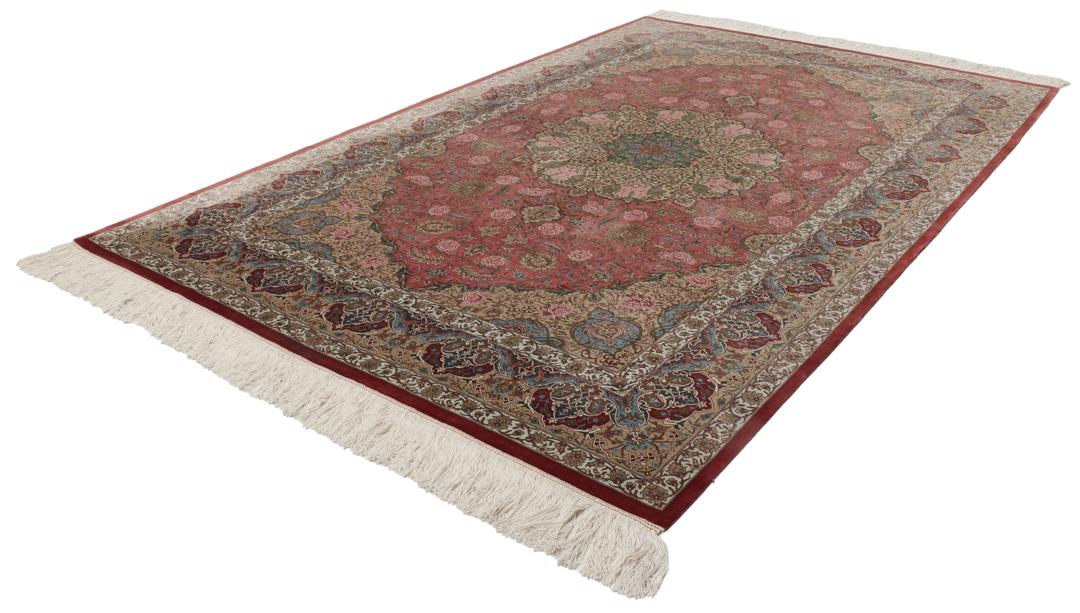
The tradition of weaving in the city of Qum is relatively young compared to other ancient centres in the Middle East, yet it has quickly risen to represent the pinnacle of technical perfection. While many regions rely on centuries-old tribal patterns, Qum weavers have historically been innovators, often drawing inspiration from the finest designs of other regions and elevating them through the use of luxurious materials and incredible knot counts.
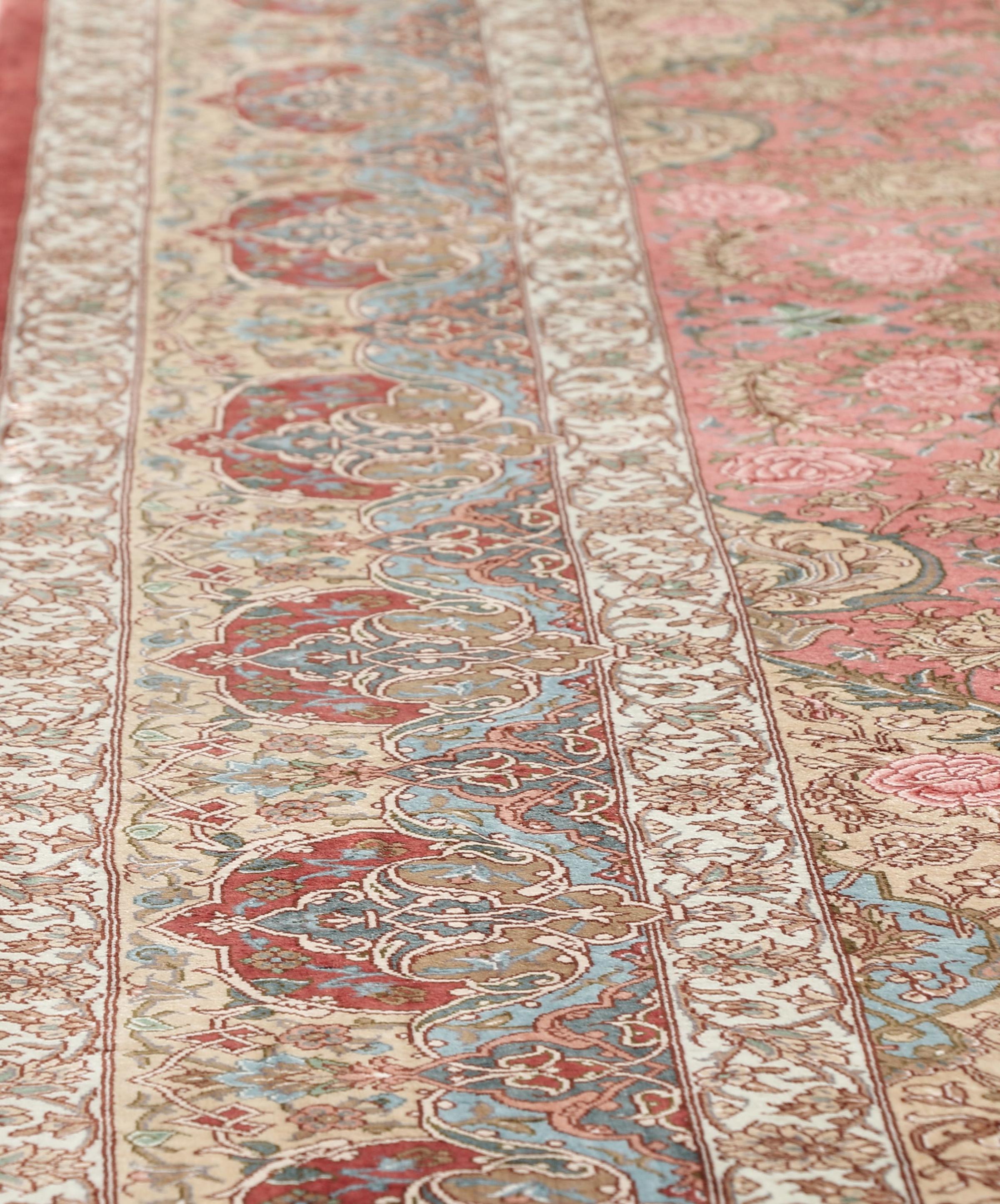
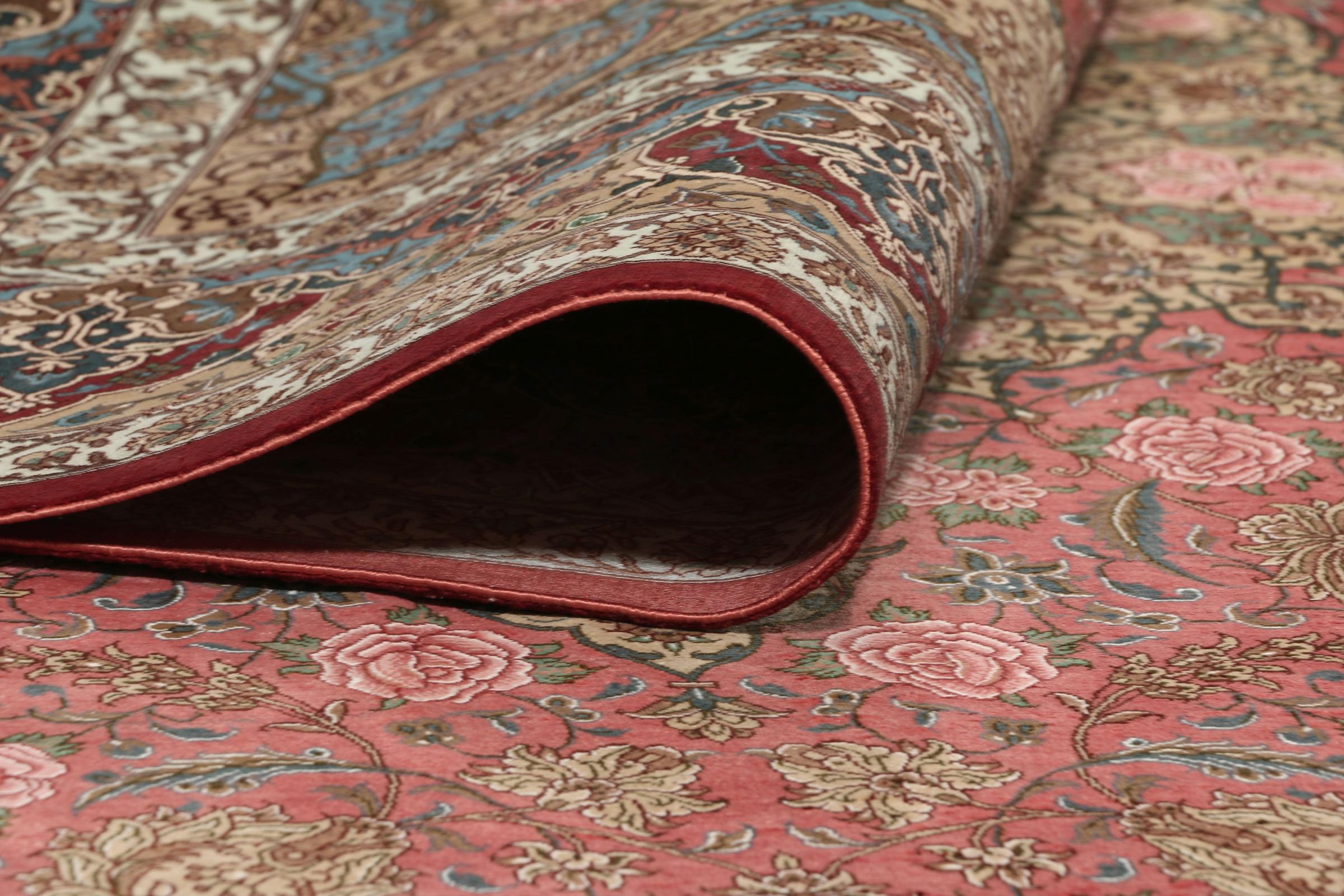
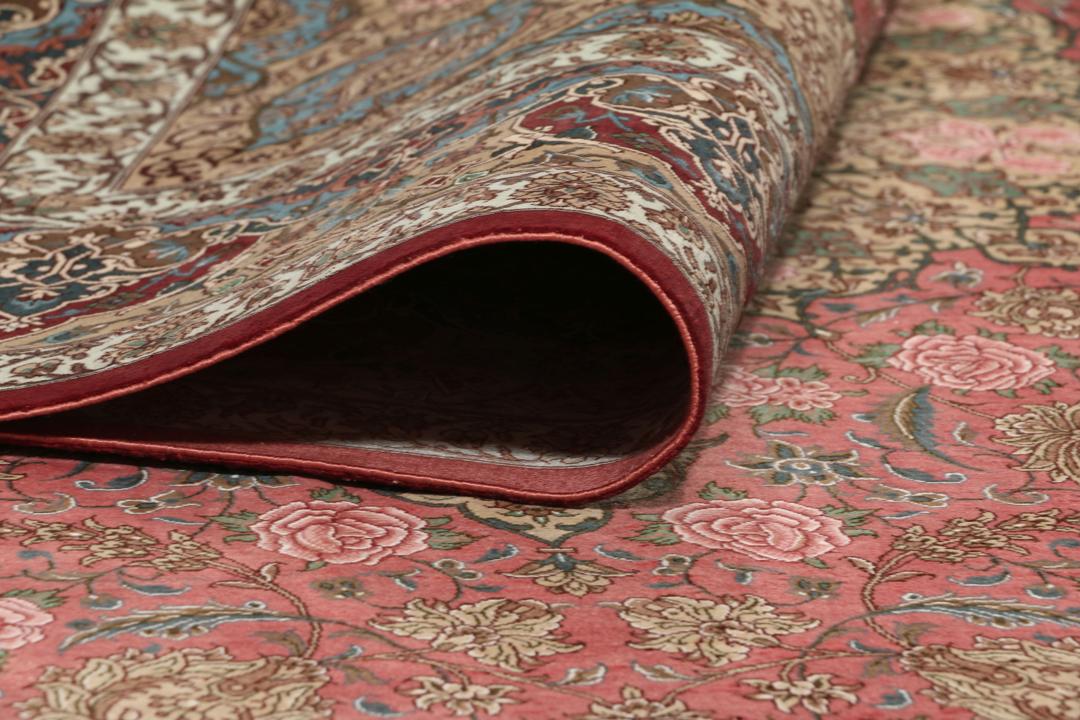
The term silk refers to the material used throughout the pile, which is prized for its strength, fineness, and ability to hold vibrant, saturated dyes. In the context of these rugs, the use of silk allows for a level of detail that would be impossible with coarser fibres. It creates a luminous, almost metallic sheen that makes the intricate patterns appear to shimmer as one moves across the room.
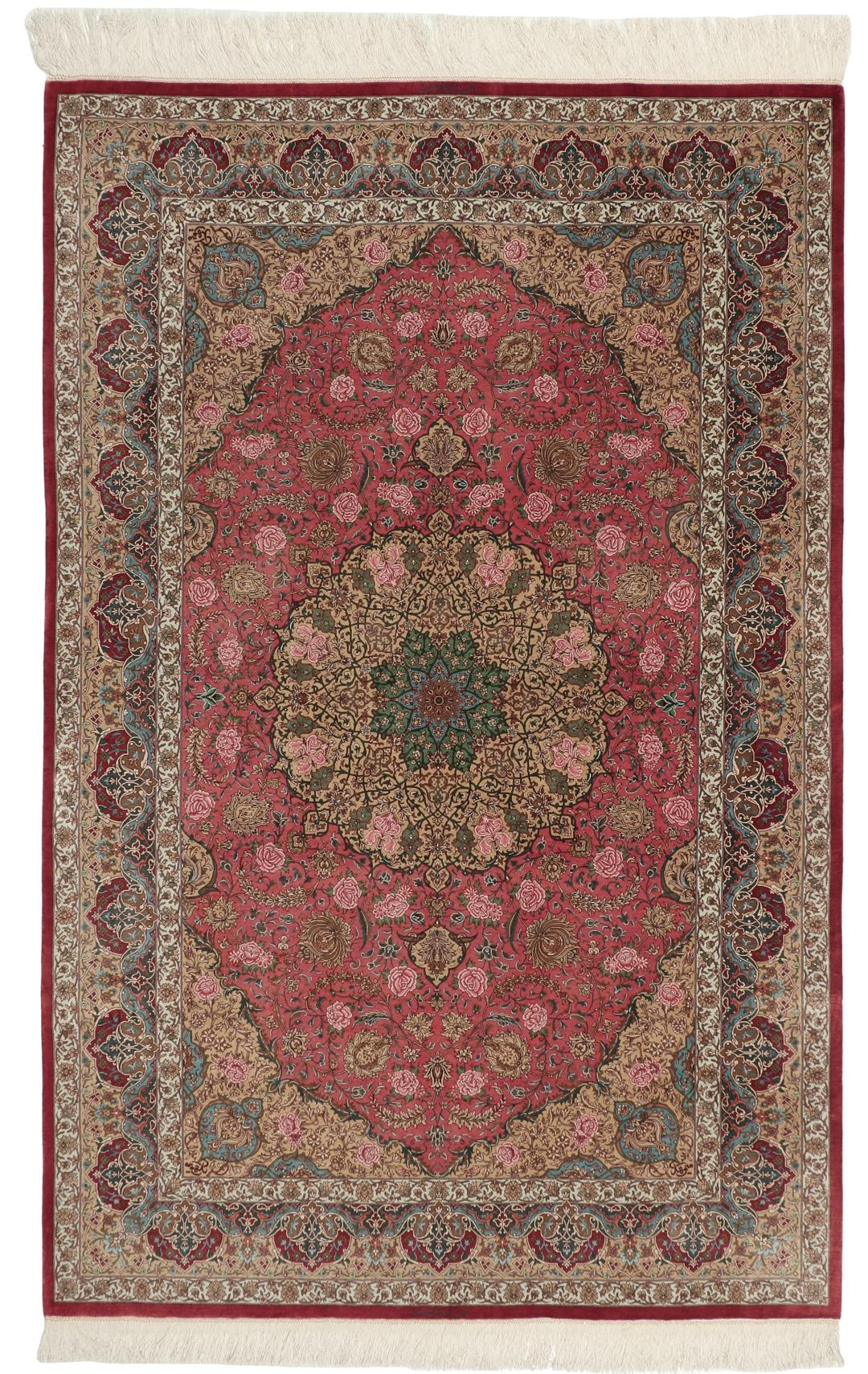
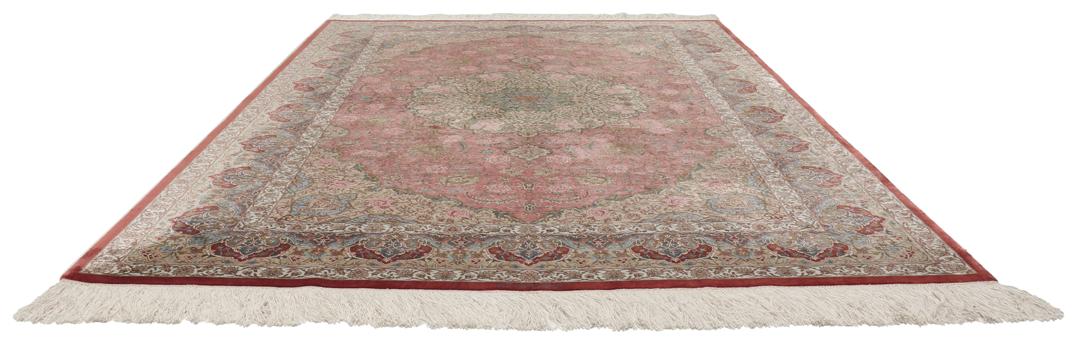
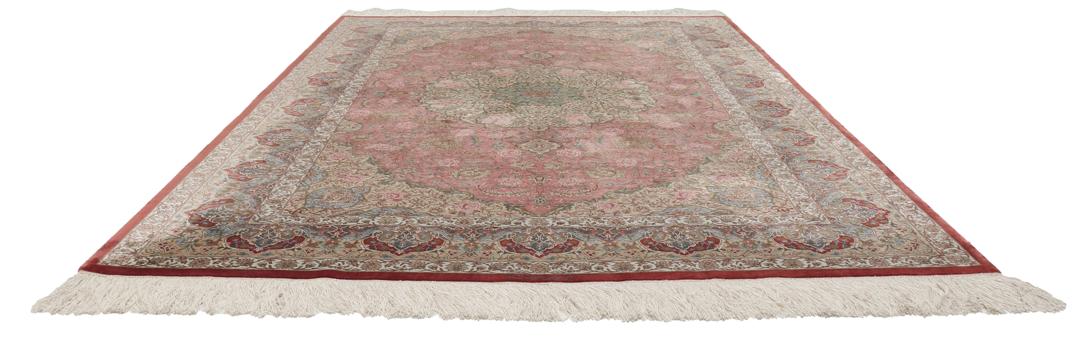
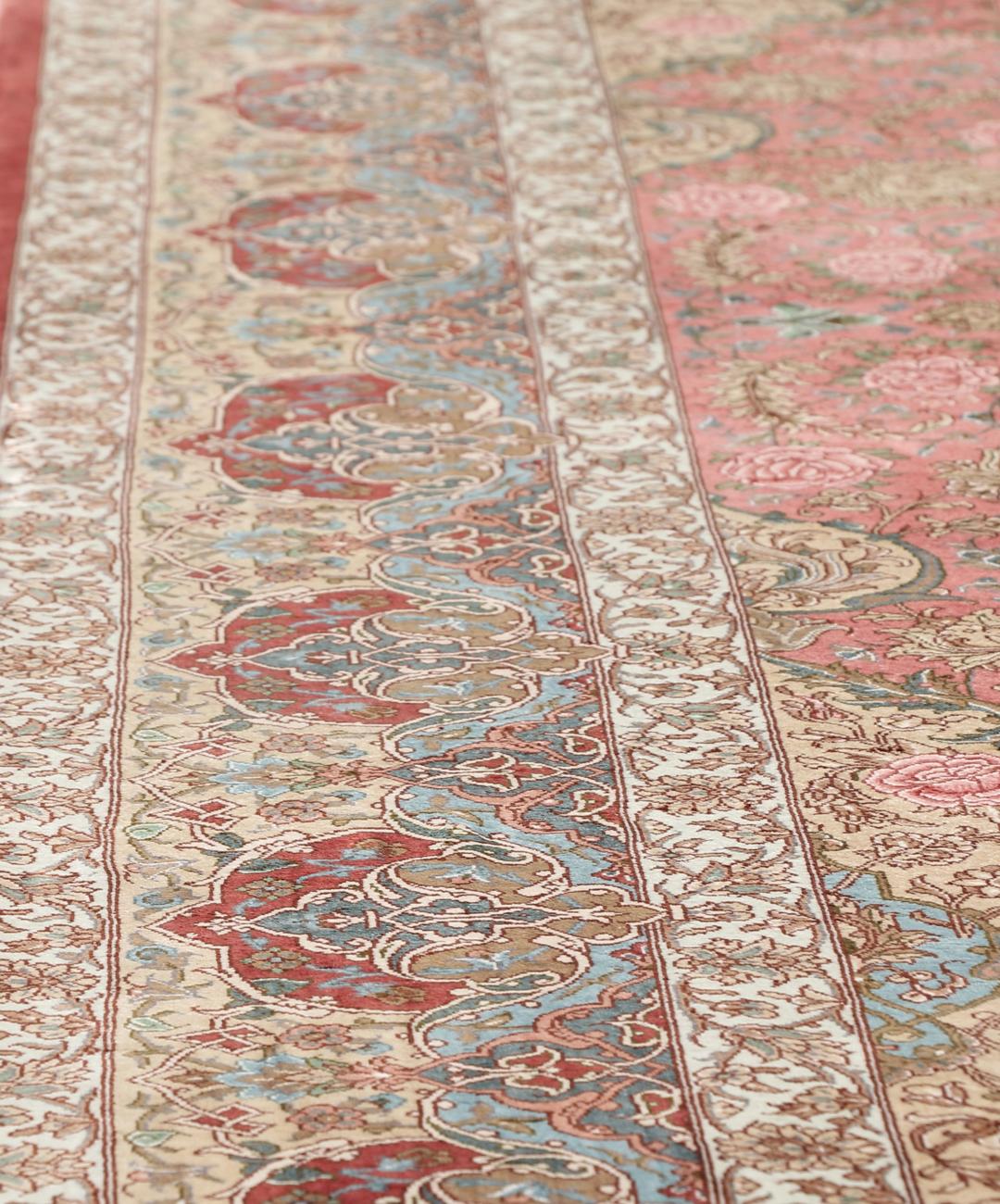
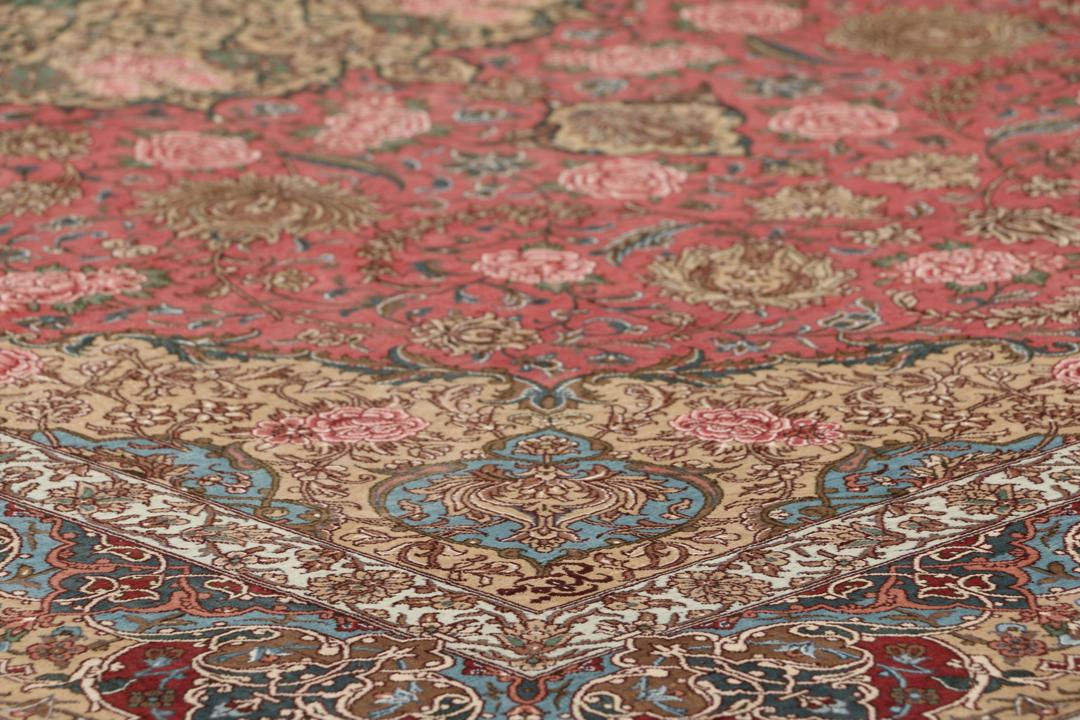
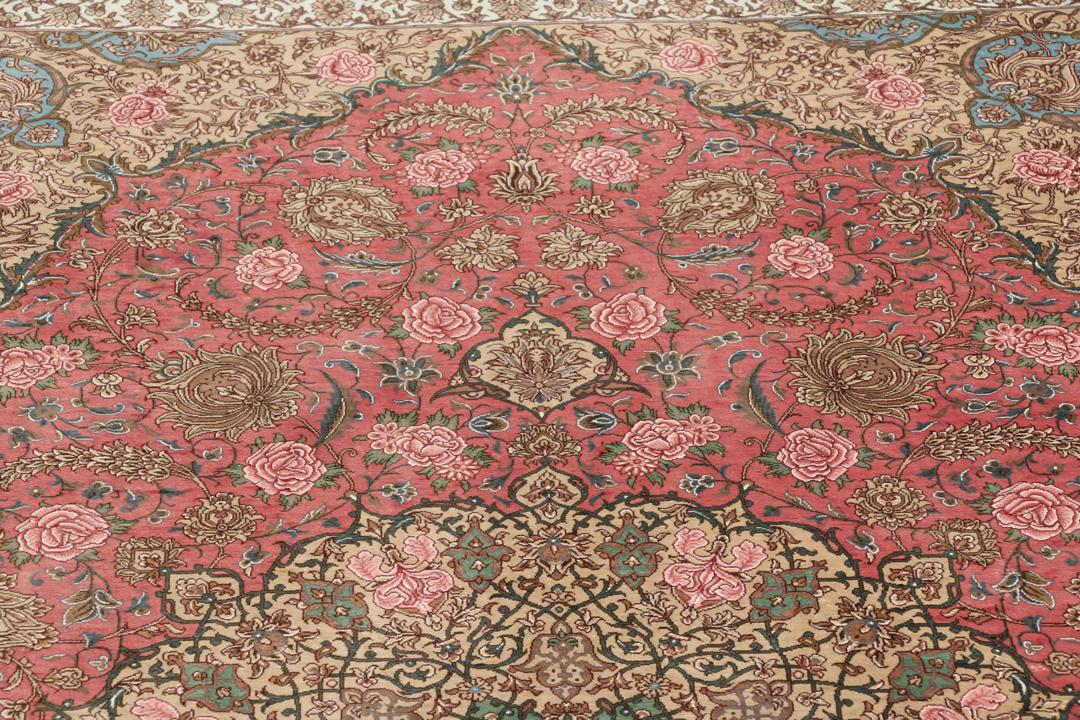
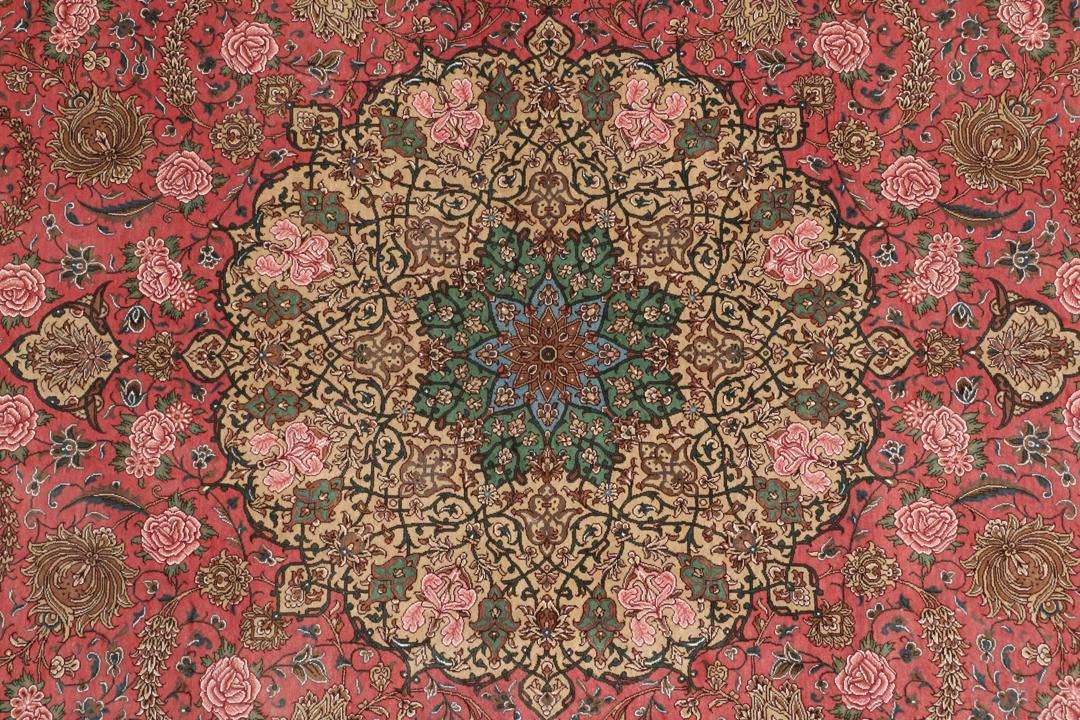
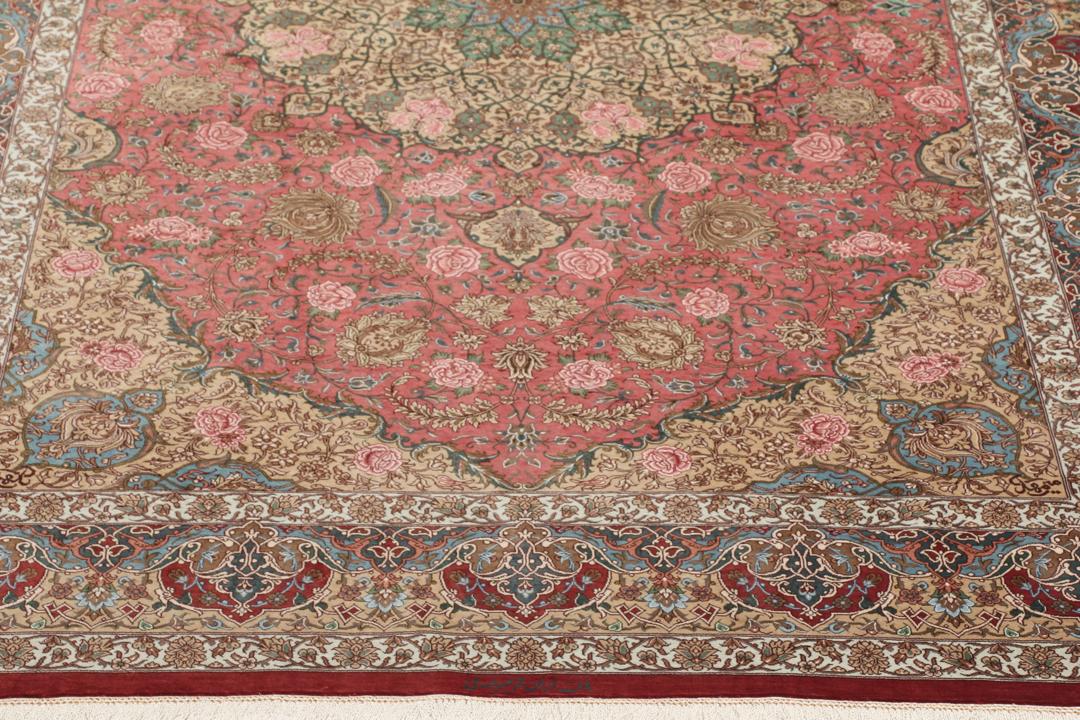
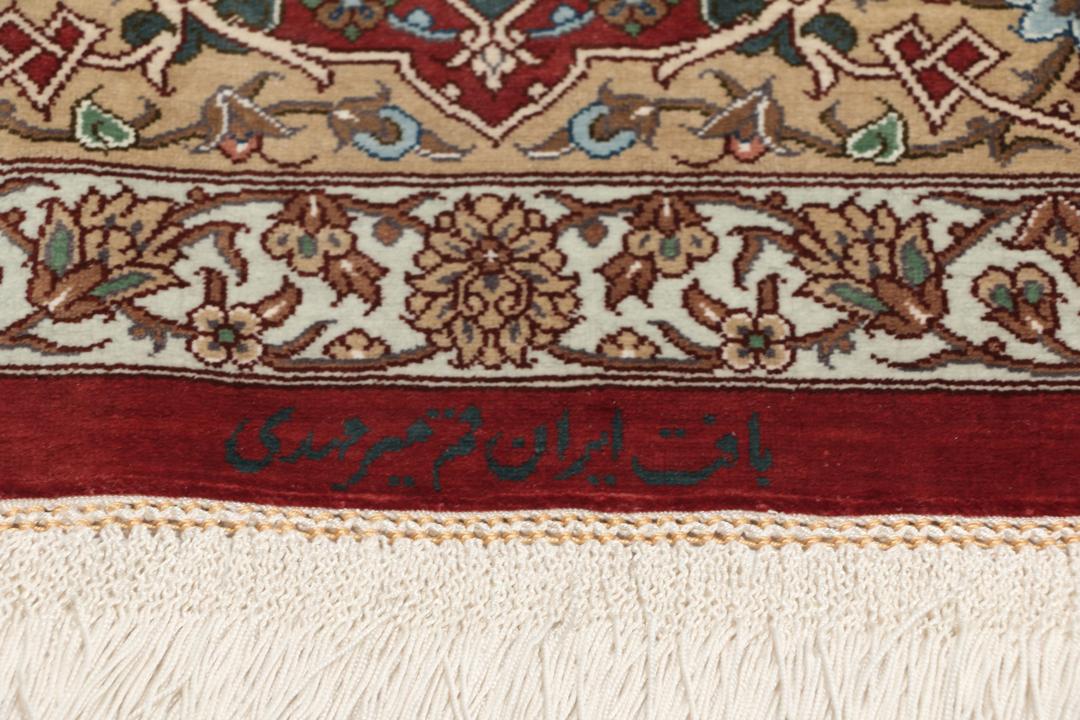
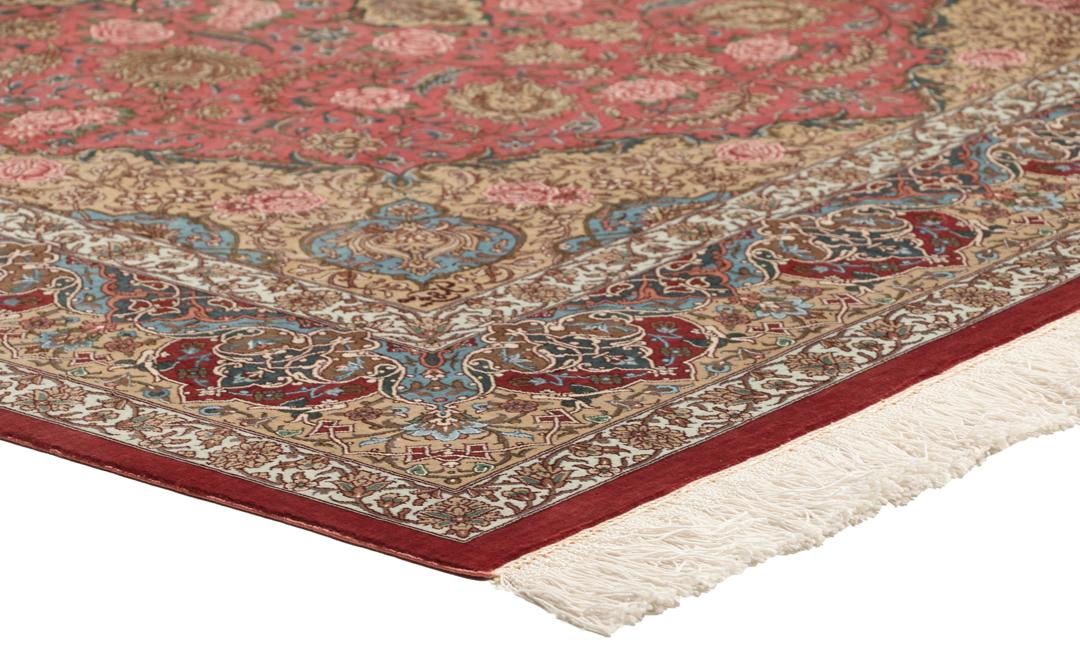
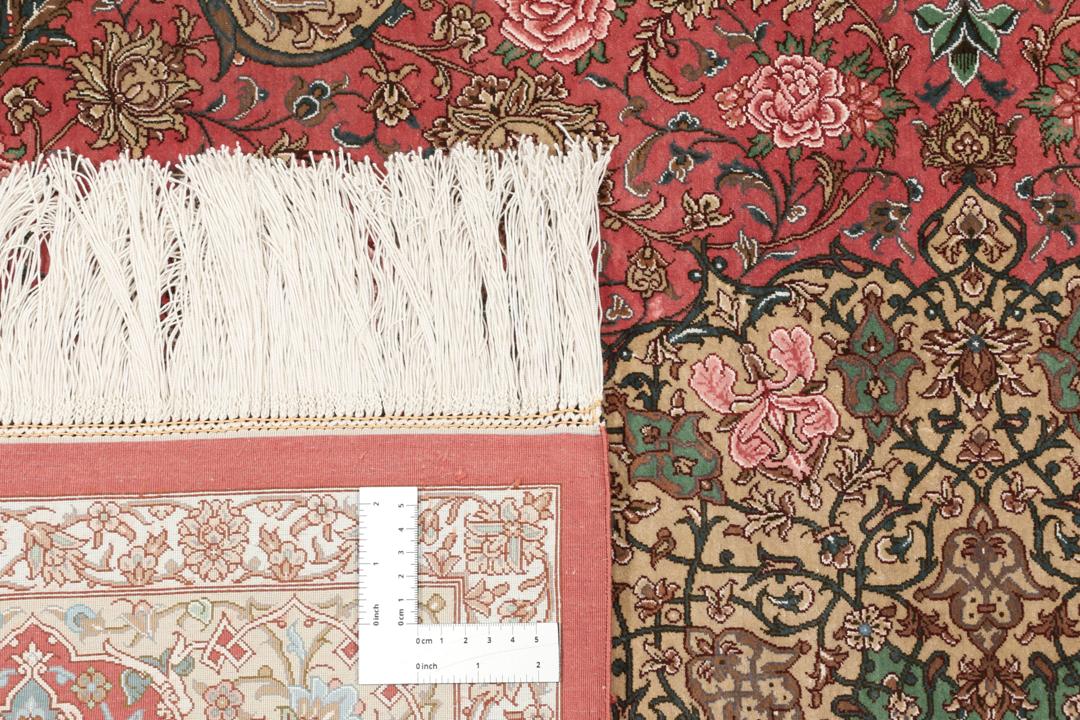
Qum designs are famous for their artistic versatility and precision. You will often see elaborate medallion patterns surrounded by dense, swirling floral motifs, birds, and sometimes even hunting scenes. The borders are typically multi-layered and highly detailed, serving to frame the central 'garden' of the rug. The colour palettes are often bold and sophisticated, utilising deep reds, creams, and earthy tones that have become synonymous with the region's output.
Collectors value these rugs not only for their beauty but for the immense skill they represent. Owning a piece from this tradition is a sign of appreciation for the highest tier of hand-woven craft. These rugs are rarely just floor coverings; they are considered significant cultural assets, preserved for their technical mastery and the enduring legacy of the artisans who dedicate their lives to perfecting this demanding craft.