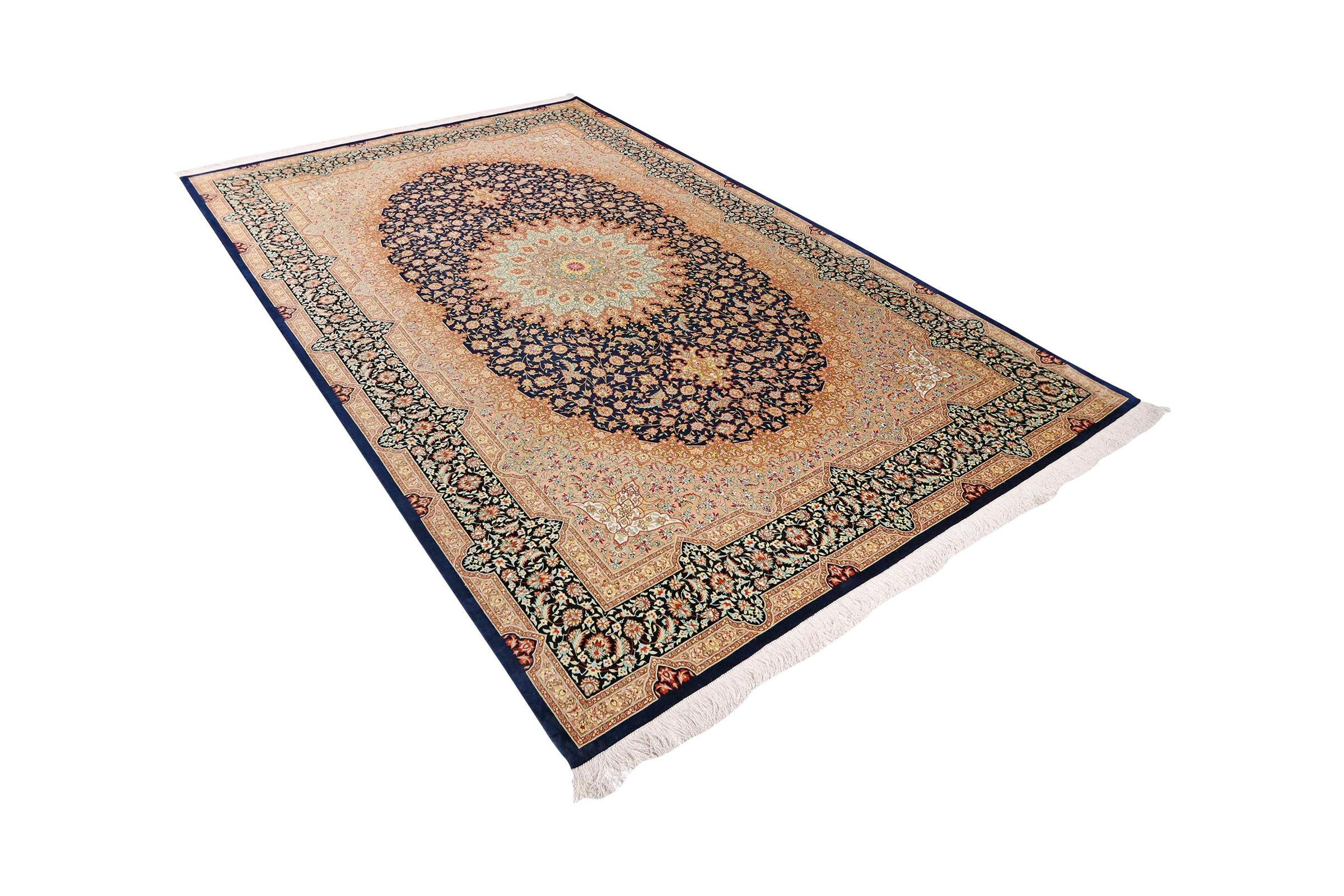
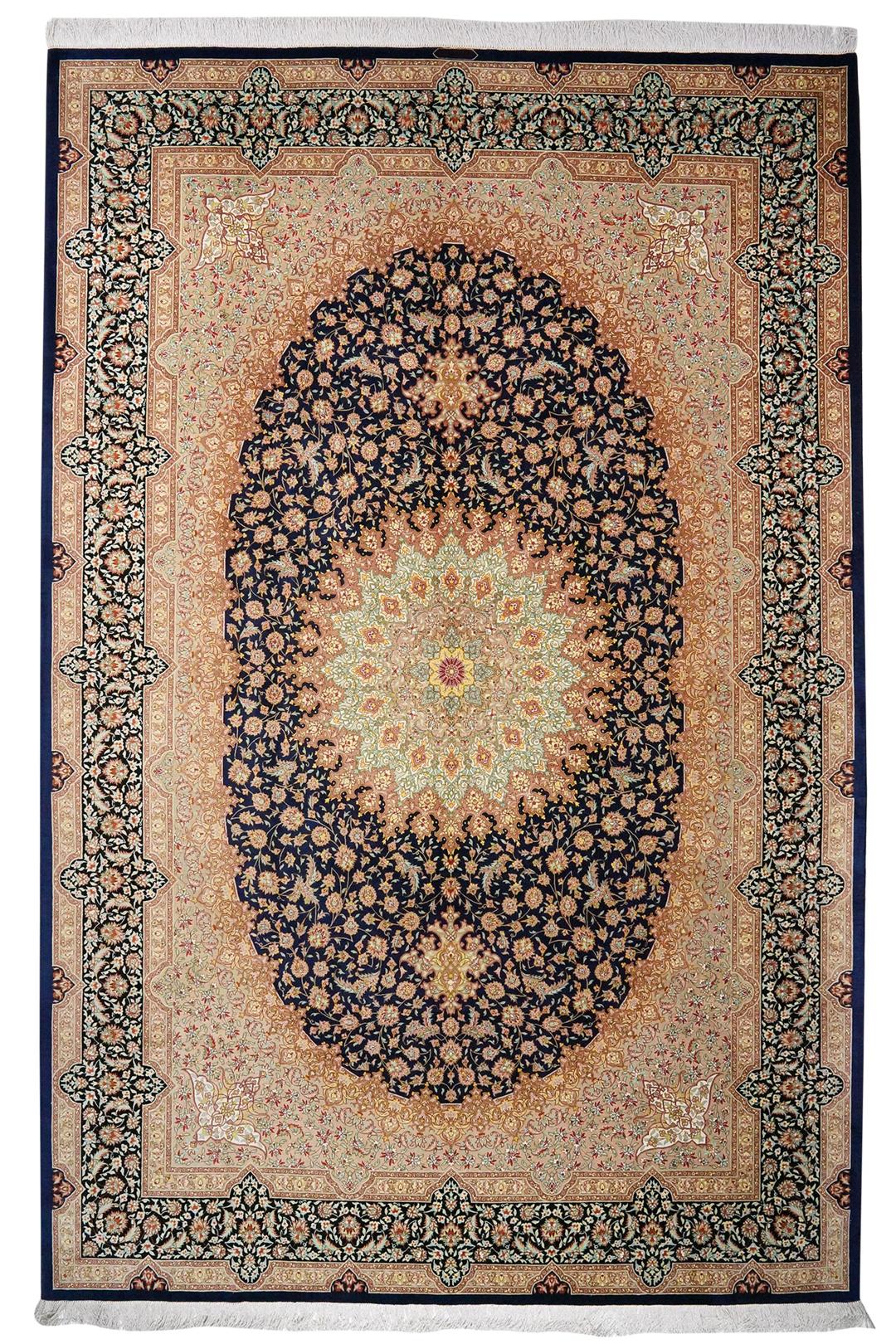
Qum, located in the heart of the Middle East, is renowned for producing some of the most sophisticated silk rugs in the world. While the city has a long history as a centre of religious and scholarly life, it emerged in the 20th century as a hub for exceptional rug weaving, drawing on centuries of regional tradition to create works of art that are celebrated for their technical perfection.
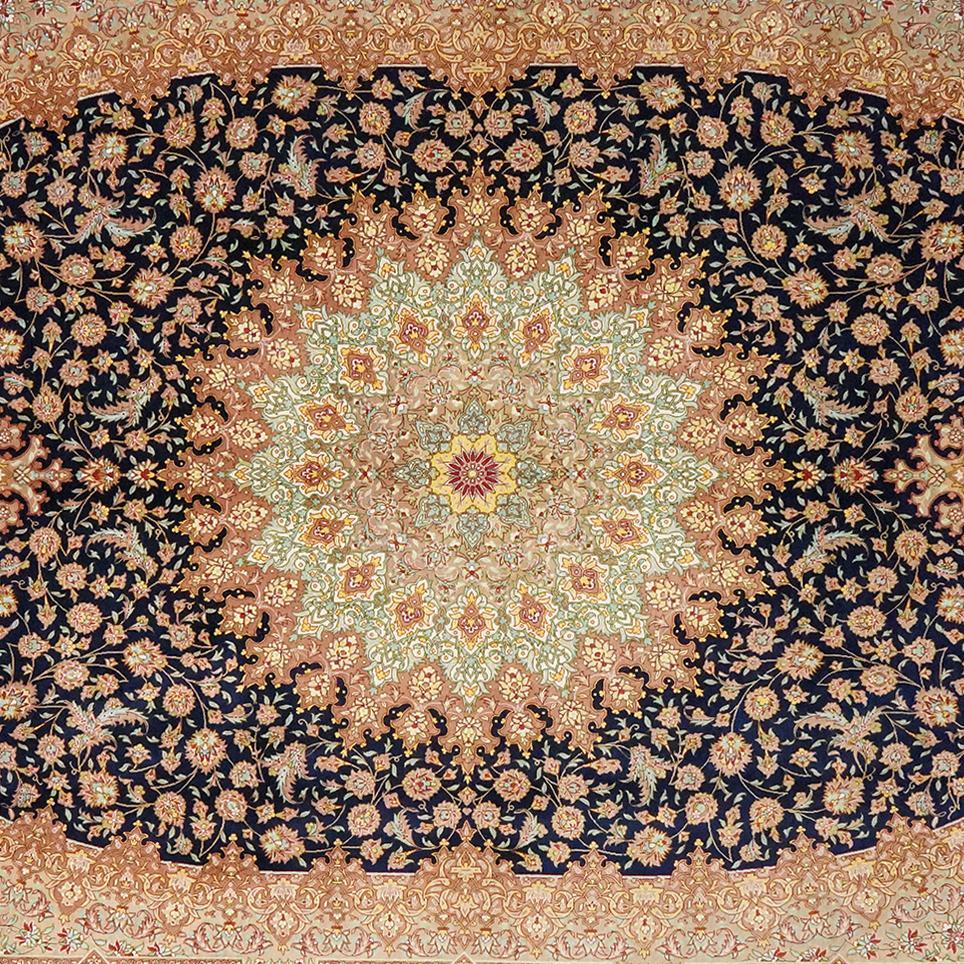
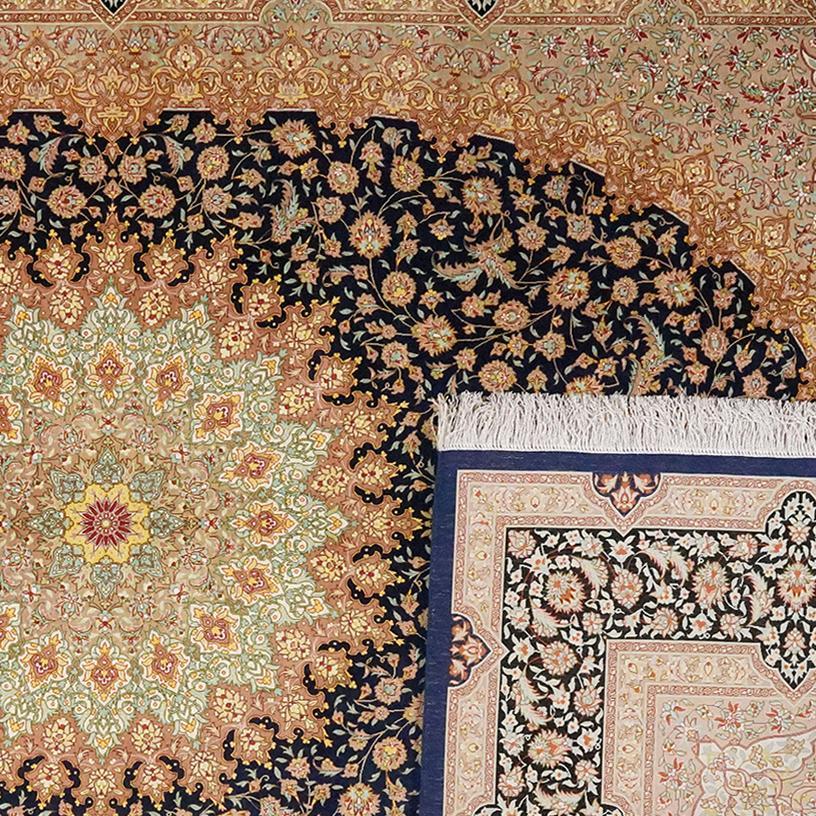
The term Qum silk refers to the use of fine silk for both the pile and the foundation, a hallmark of this category. This all-silk construction is significant because it allows for an incredibly tight knot density, which in turn enables weavers to execute complex, curvilinear patterns that would be impossible to achieve with coarser materials. This technical mastery is why Qum rugs are often compared to fine paintings.
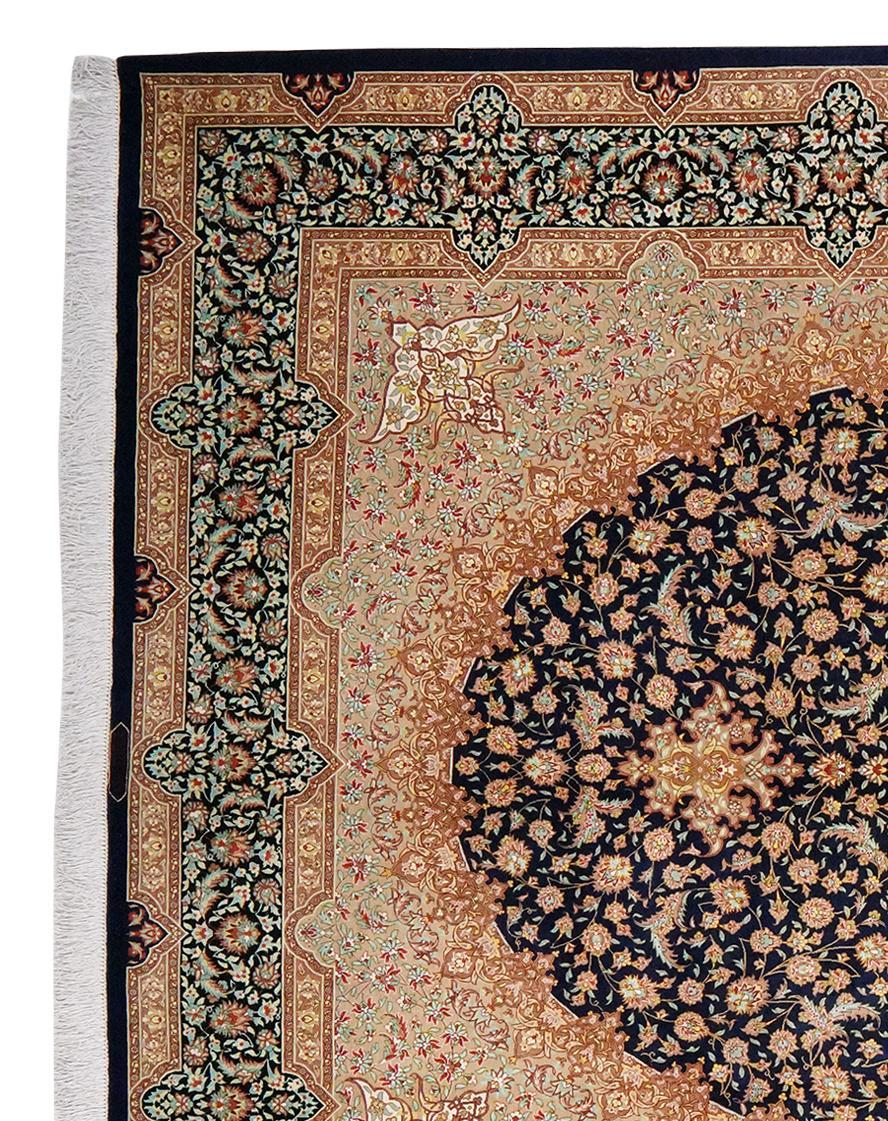
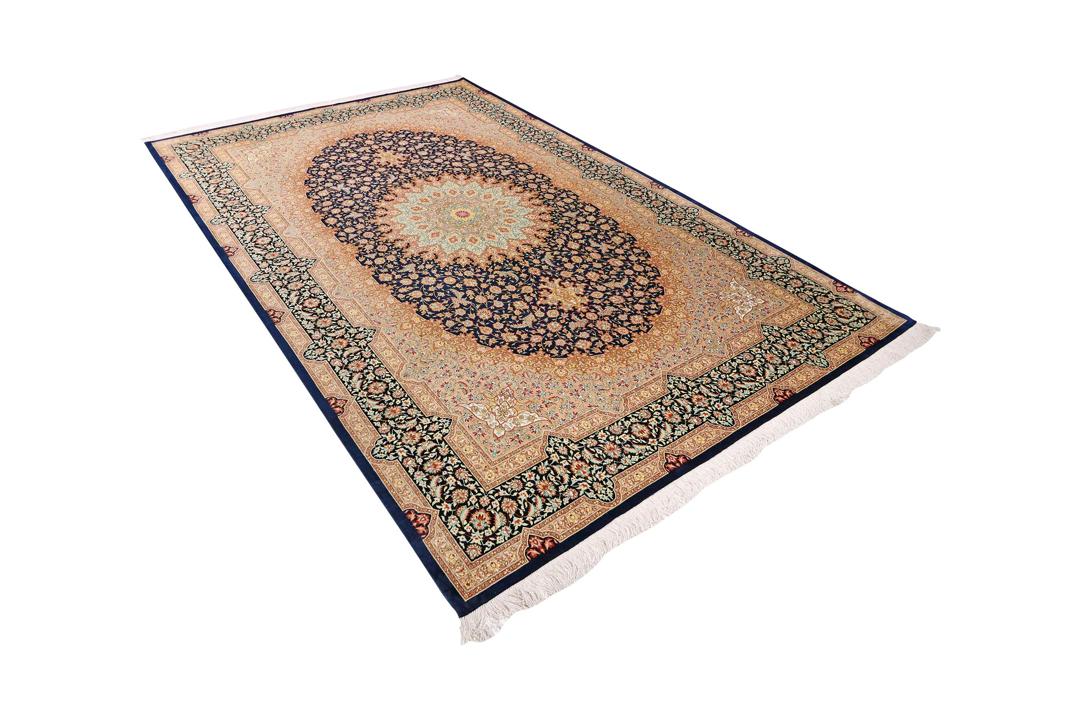
The design language of these rugs is deeply rooted in classic Middle Eastern motifs. You will typically find a central medallion surrounded by dense floral scrolls, vines, and palmettes. The borders are often equally intricate, acting as a frame for the central field. This specific piece displays these classic elements, with a harmonious balance of colour and symmetry that reflects the traditional aesthetics of the region.
These rugs are highly valued by collectors and enthusiasts for their combination of artistic vision and master-level skill. Owning a Qum silk rug is more than just acquiring a floor covering; it is a commitment to preserving a heritage of craft. The rarity of these pieces, combined with the immense time required to produce them, makes them a lasting treasure that often becomes a family heirloom.