Ghom rugs hail from the central region of the Middle East, a city that historically served as a centre for religious study and trade. While other regions have centuries-old traditions of carpet weaving, the industry in Ghom is relatively more modern, beginning to flourish significantly in the early 20th century. This allowed the artisans of the city to innovate and experiment, leading to the development of a unique style that is celebrated for its technical mastery and creative freedom.
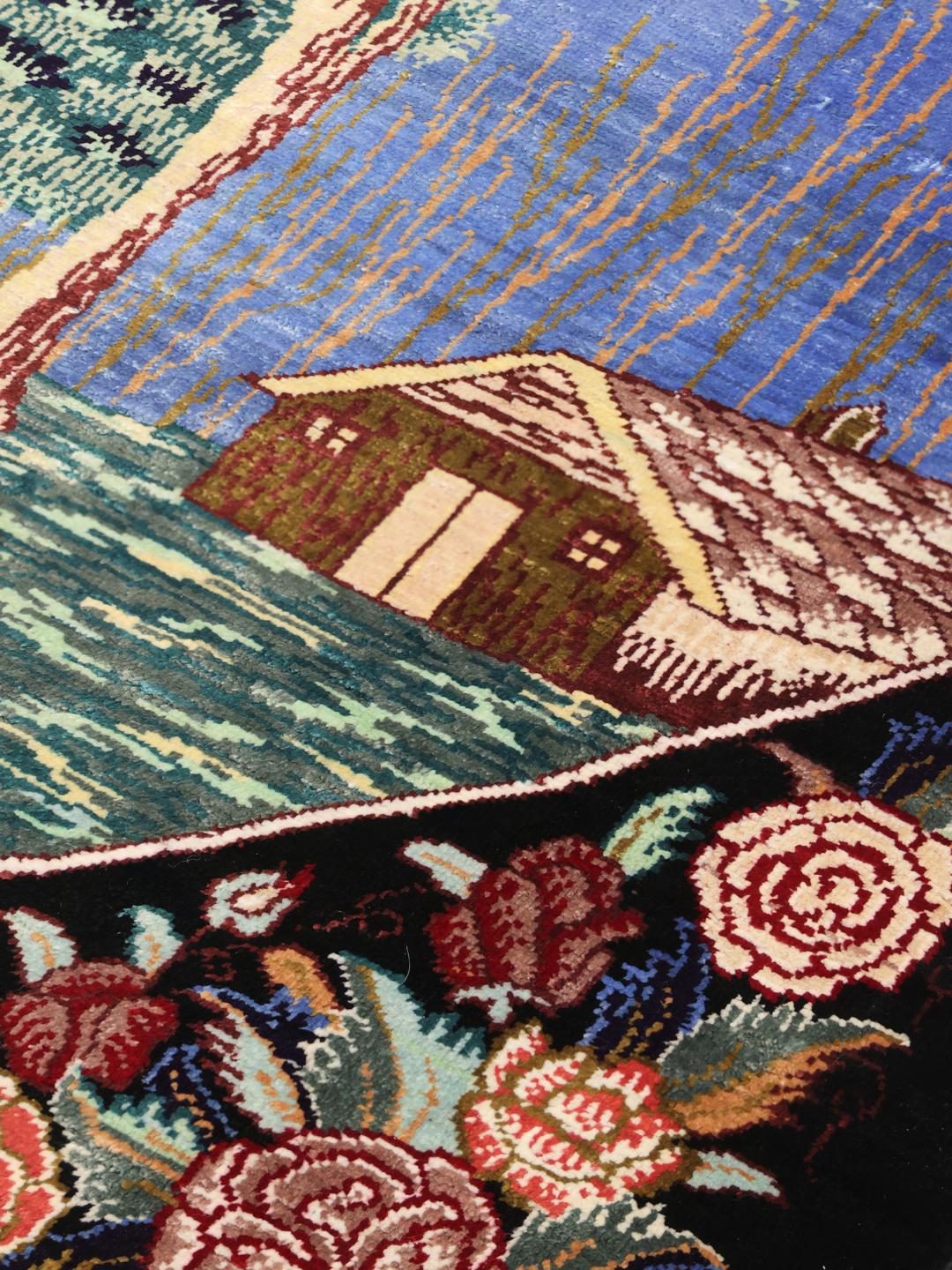
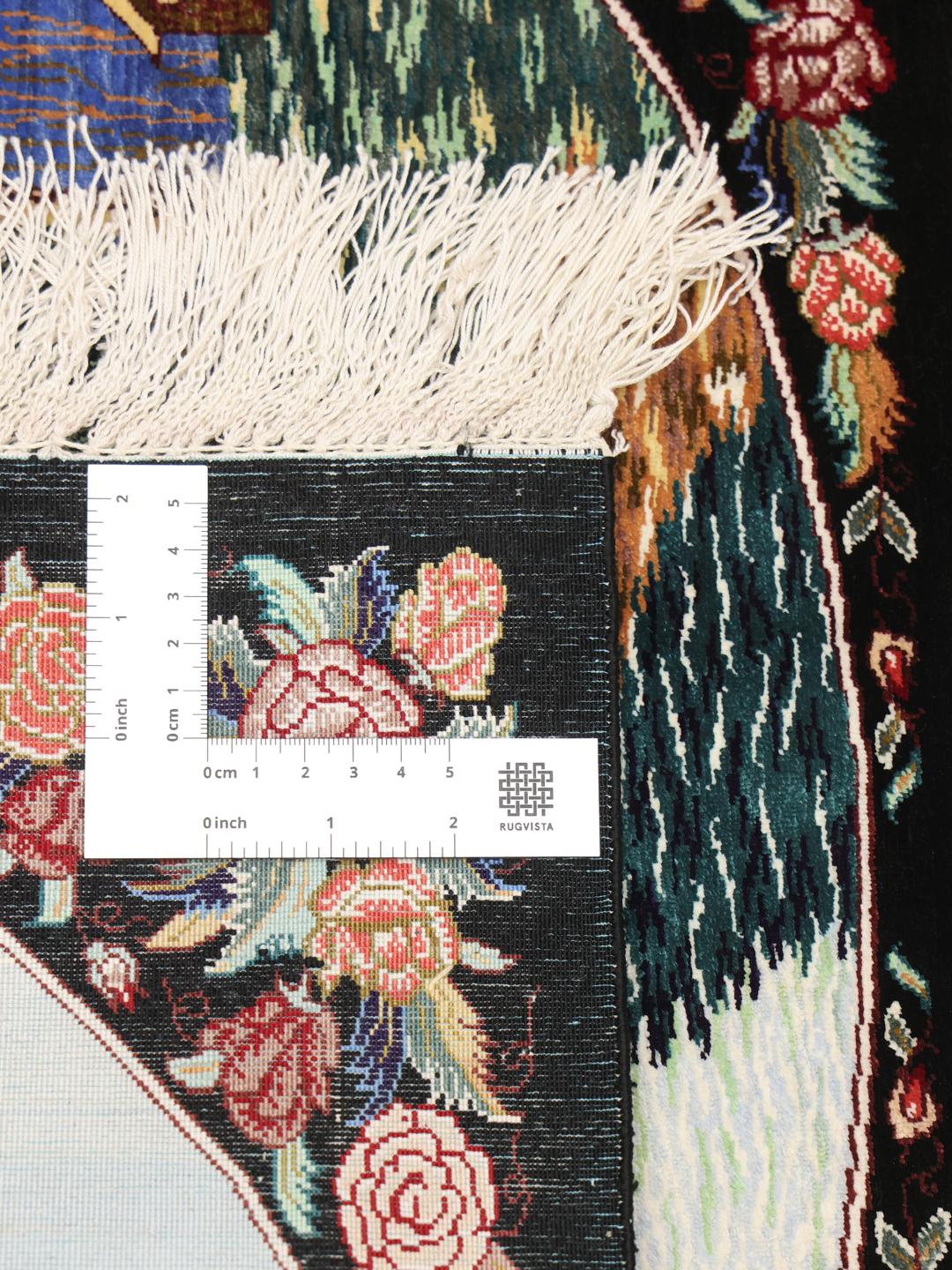
The term Ghom is synonymous with high-quality materials and, most notably, fine silk construction. The use of silk in both the pile and the foundation is a hallmark of this tradition, allowing for a thinner, more supple rug that can support an incredible density of knots. This technical choice is what enables the intricate, painterly designs that define the region's output, as the fine threads allow for a level of detail that would be impossible with coarser materials.
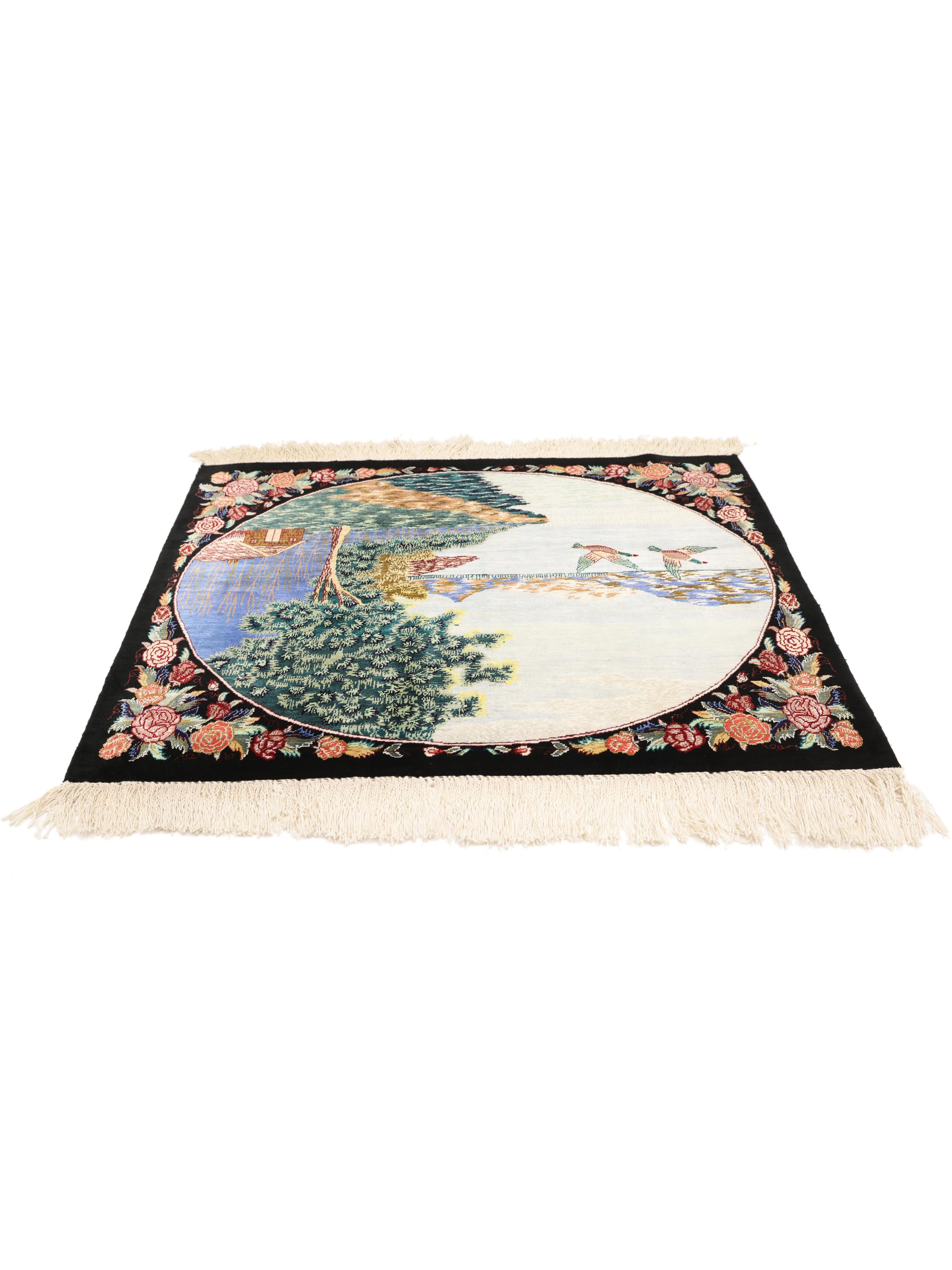
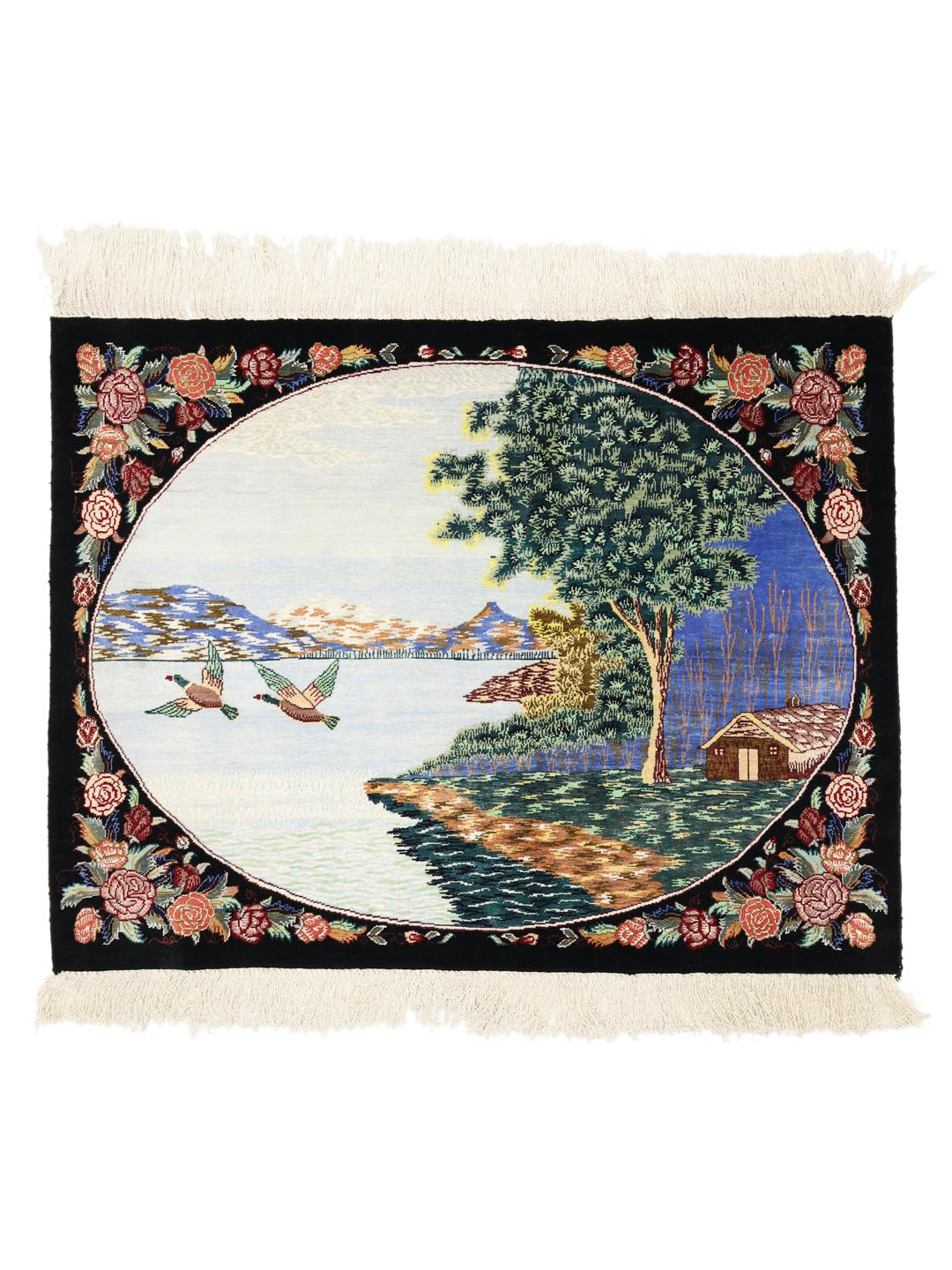
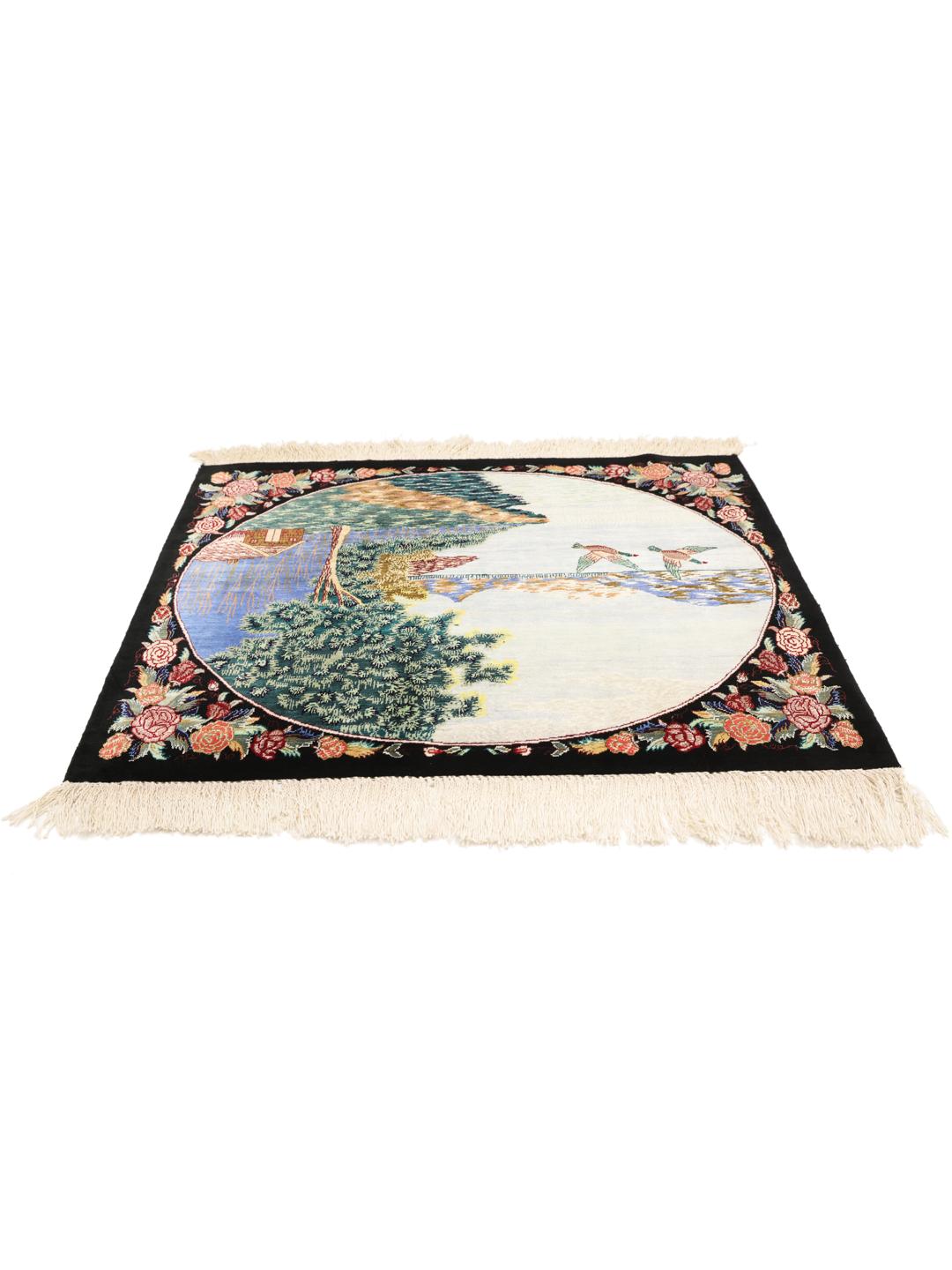
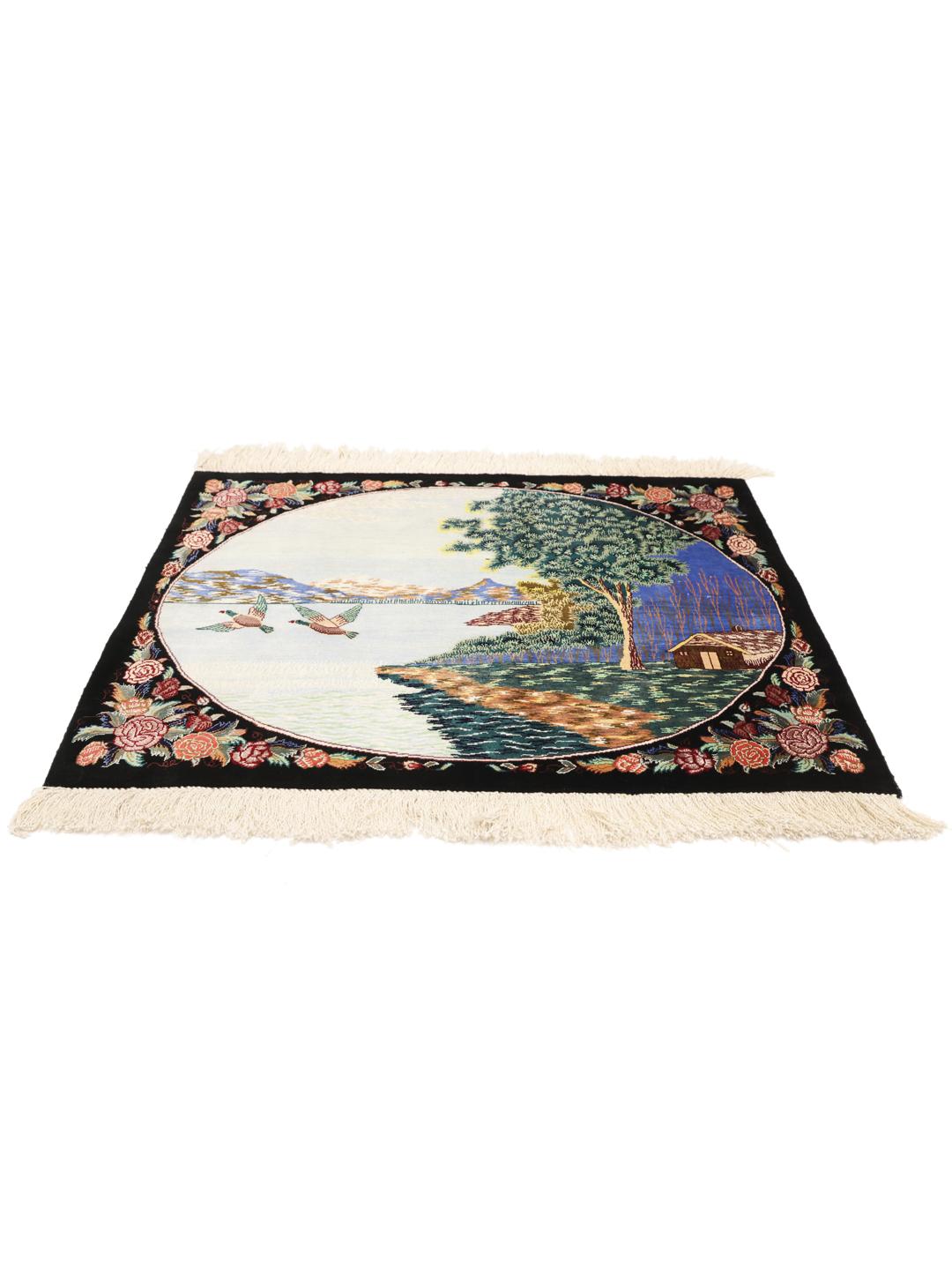
Visually, these rugs are known for their diversity of design, moving away from traditional tribal patterns toward more complex pictorial, floral, or even garden motifs. The landscape scene featured here is a classic example of this evolution, where the weavers use the rug as a canvas to depict nature with realistic shading and depth. The borders are often just as elaborate as the centre, filled with detailed blossoms that frame the main subject.
Owning a piece from this tradition is akin to owning a fragment of cultural history. These rugs are highly sought after by collectors not only for their aesthetic beauty but for the immense skill required to produce them. They represent a pinnacle of decorative textile art, where the marriage of premium materials and human ingenuity creates a product that is as much about heritage and artistic expression as it is about functional home decor.