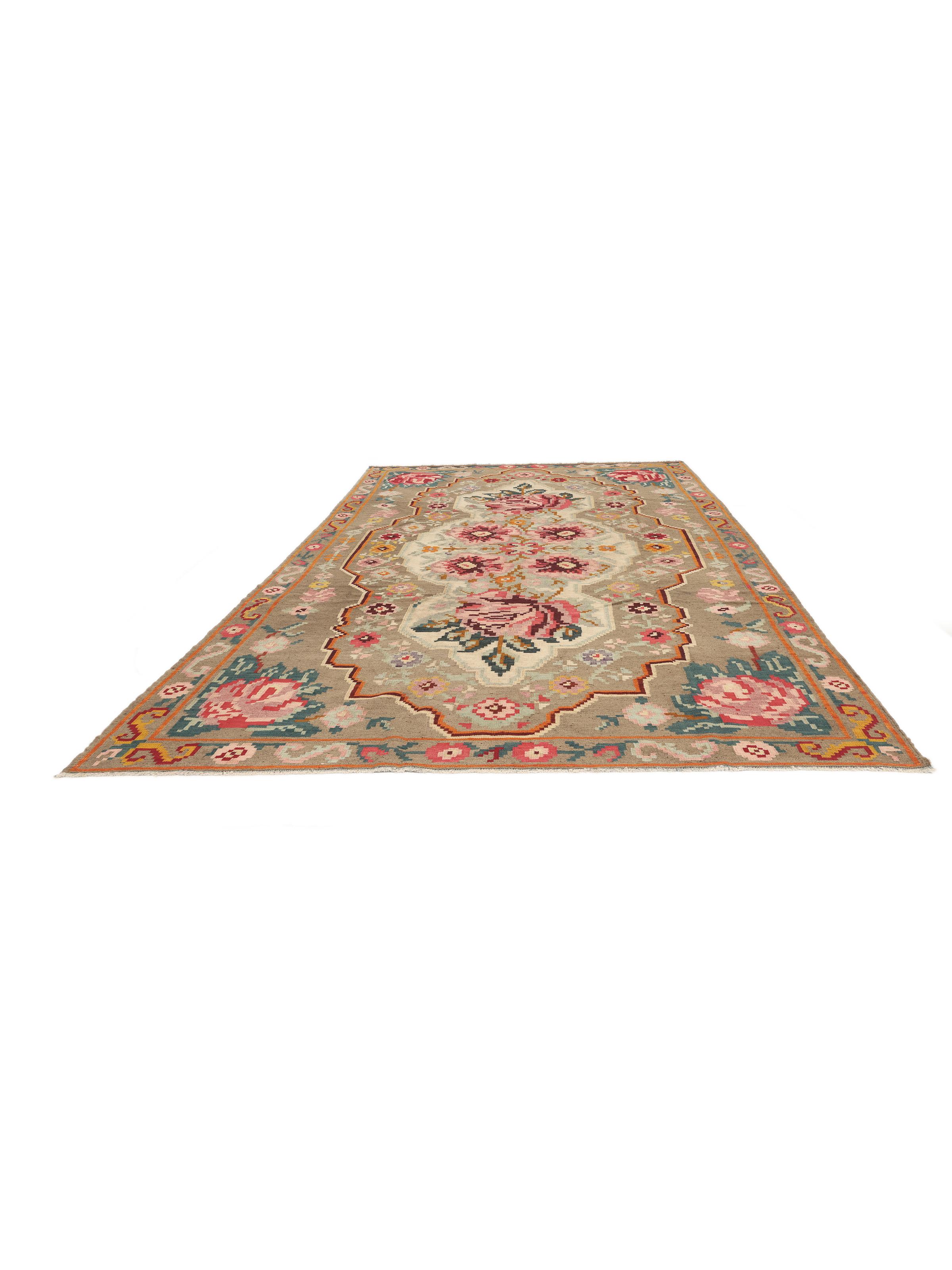
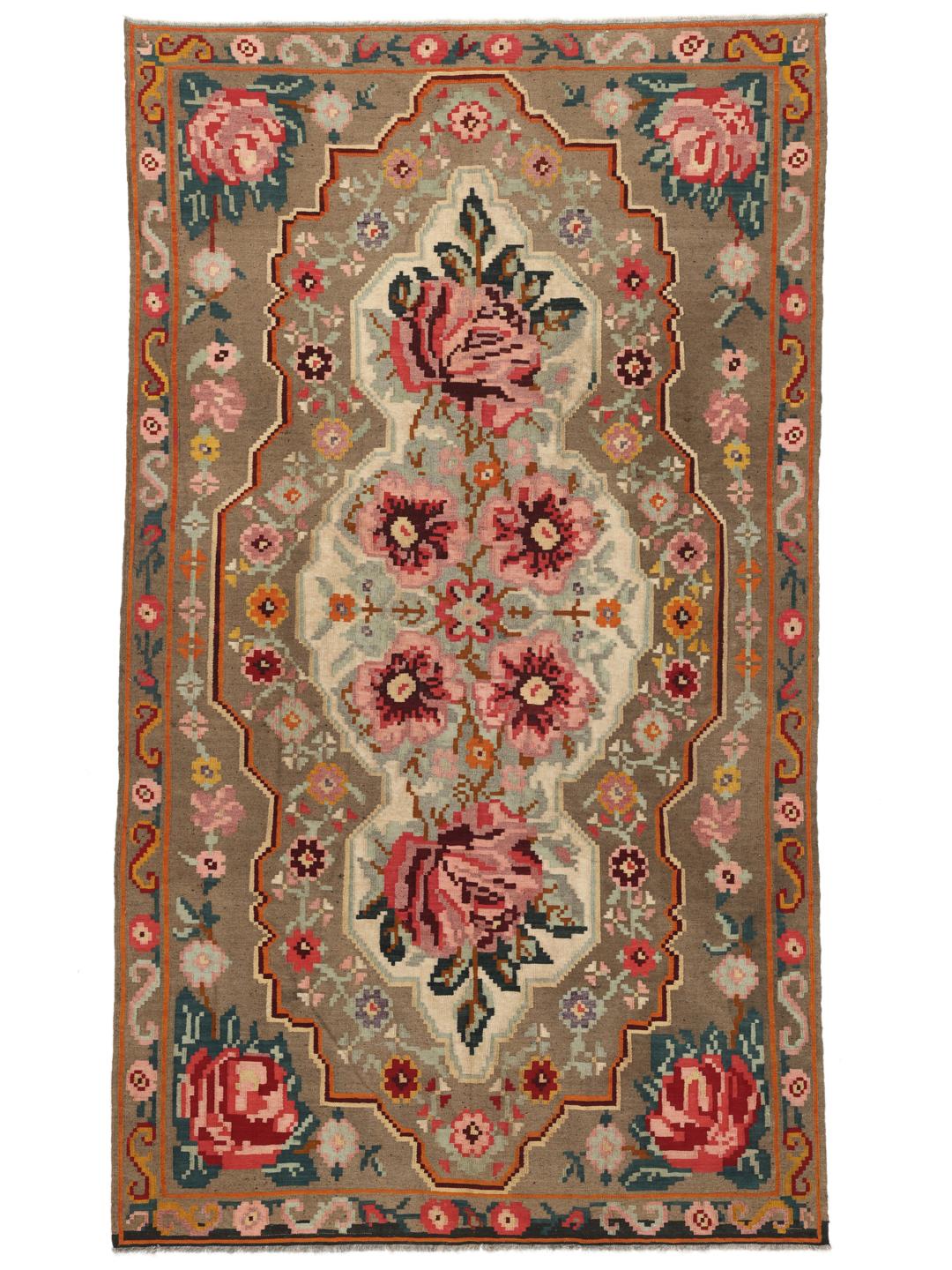
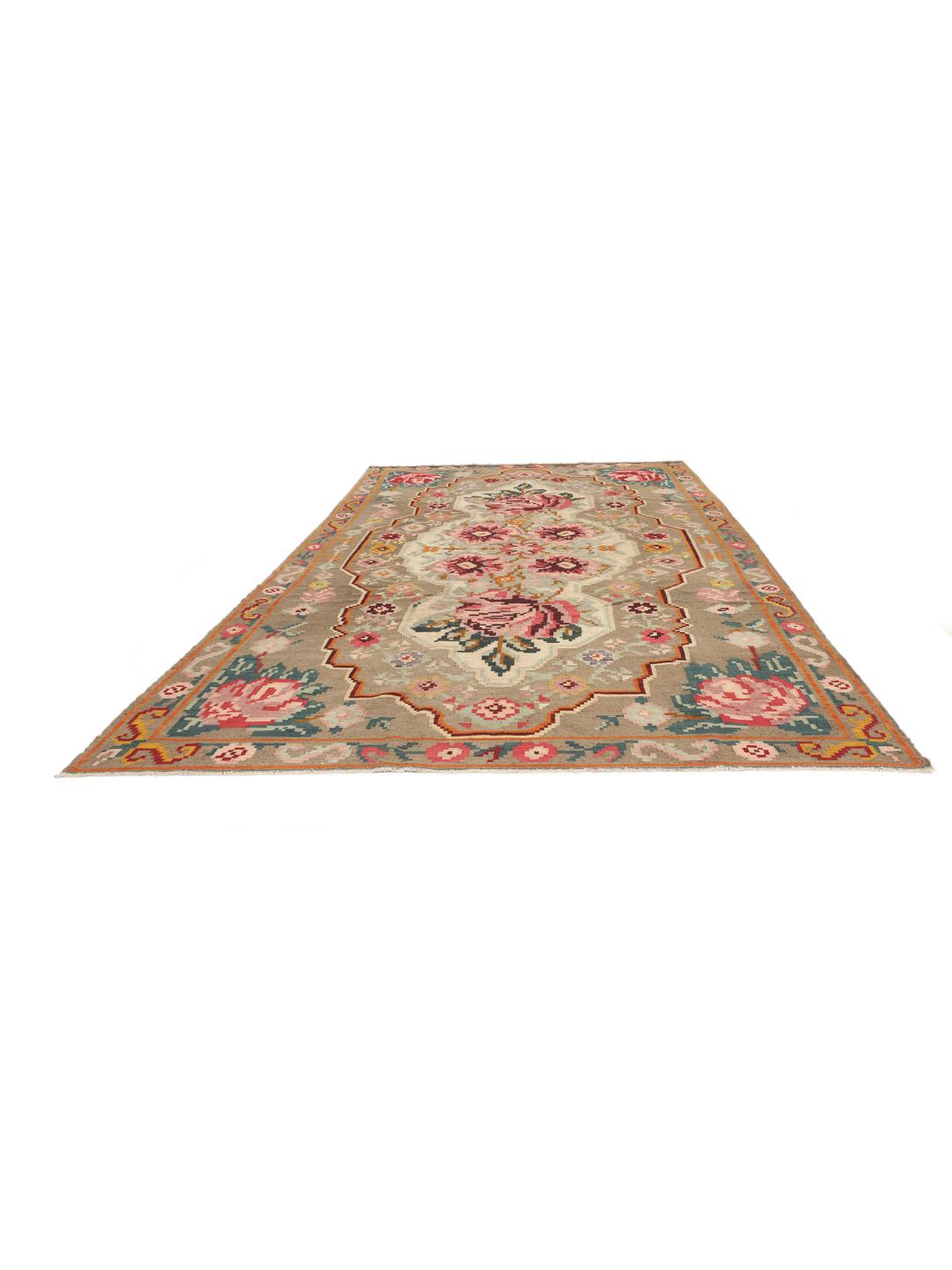
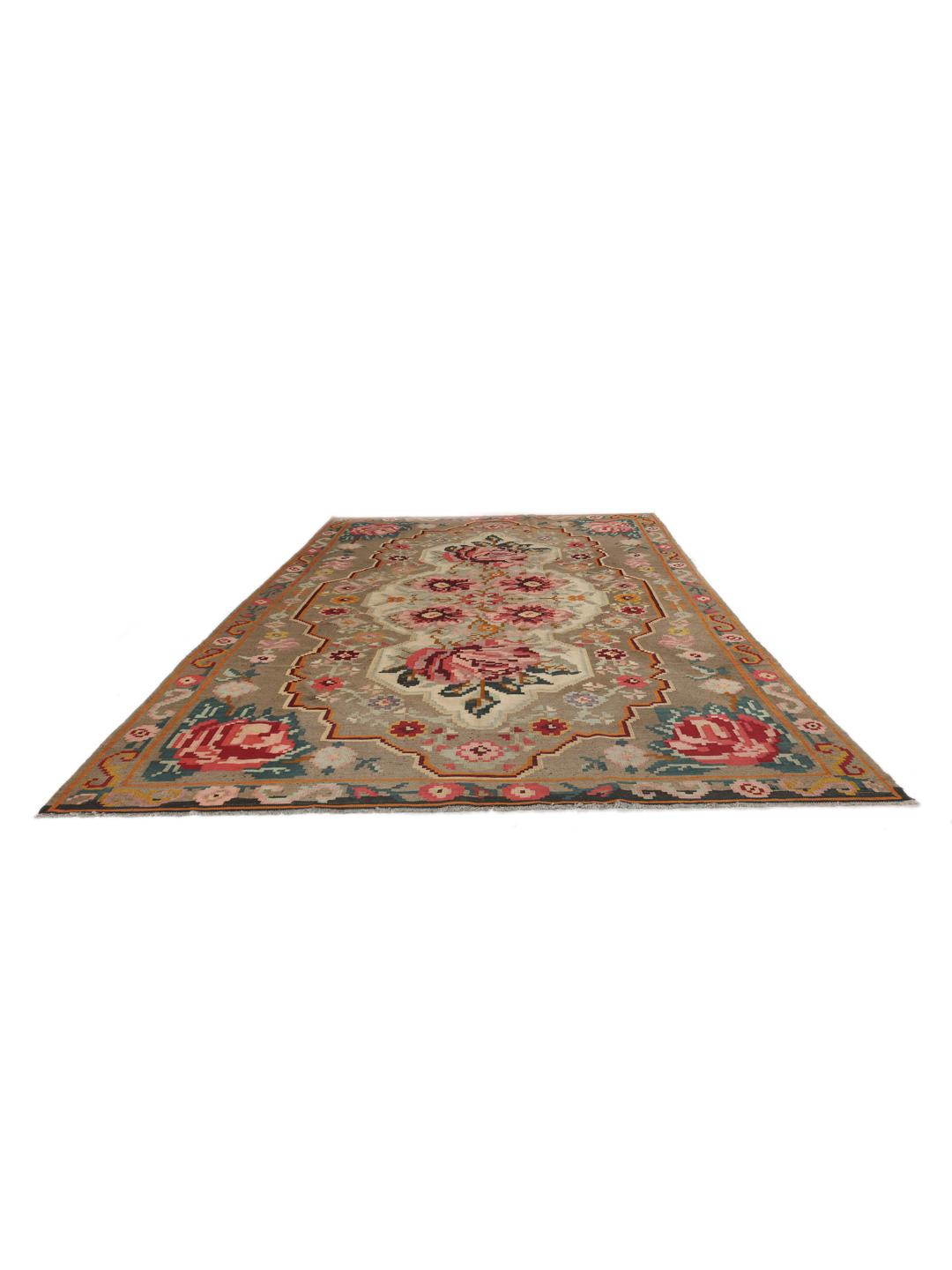
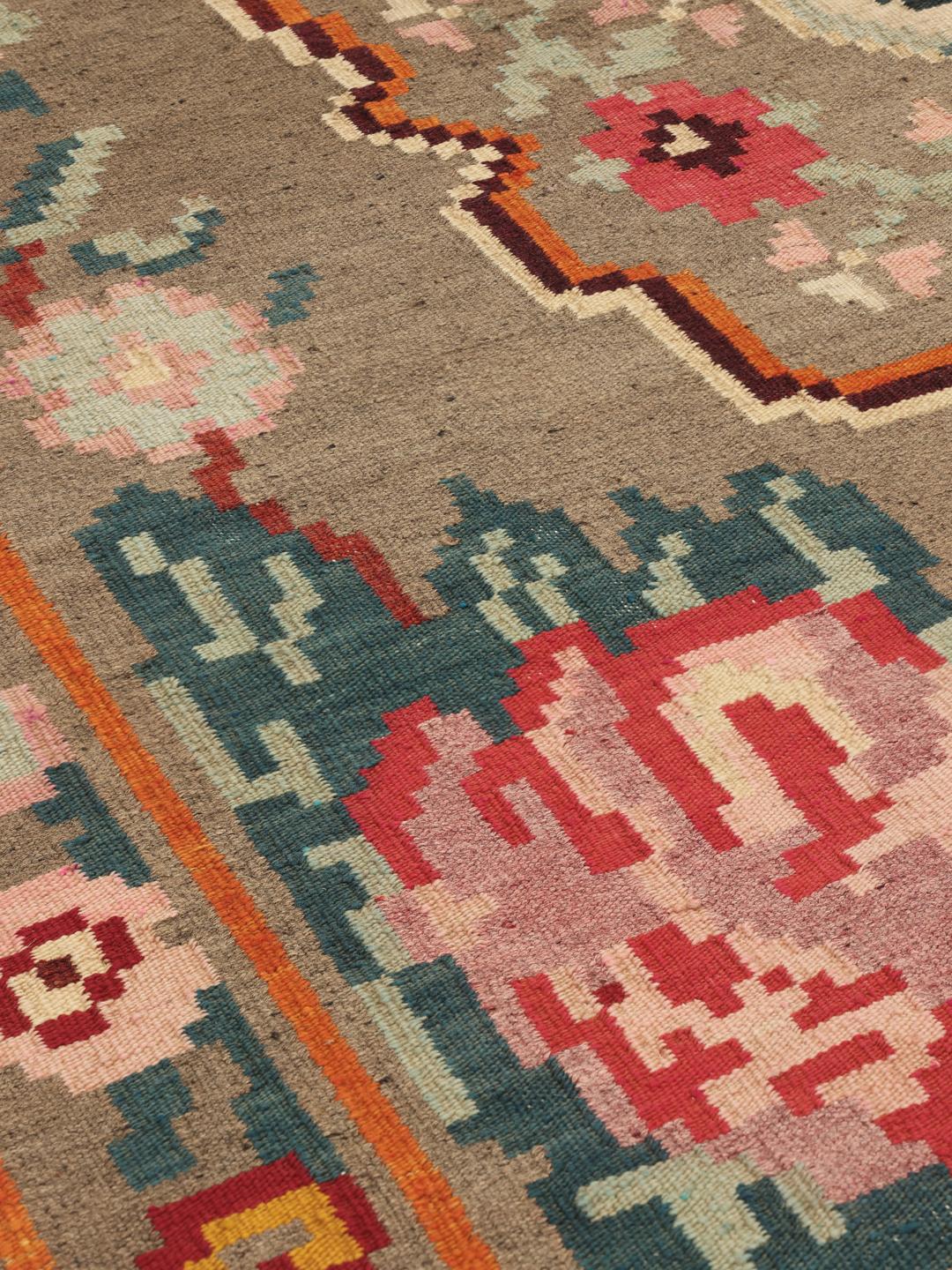
Rose Kelims originate from the historical region of Moldova, where the art of weaving has long been a central part of cultural identity. These rugs are deeply rooted in the traditions of the local communities, where flat-weave techniques were passed down through generations to create textiles that were both functional and decorative. The floral designs, particularly the rose, became a signature motif, reflecting the region's love for their lush, natural landscapes.
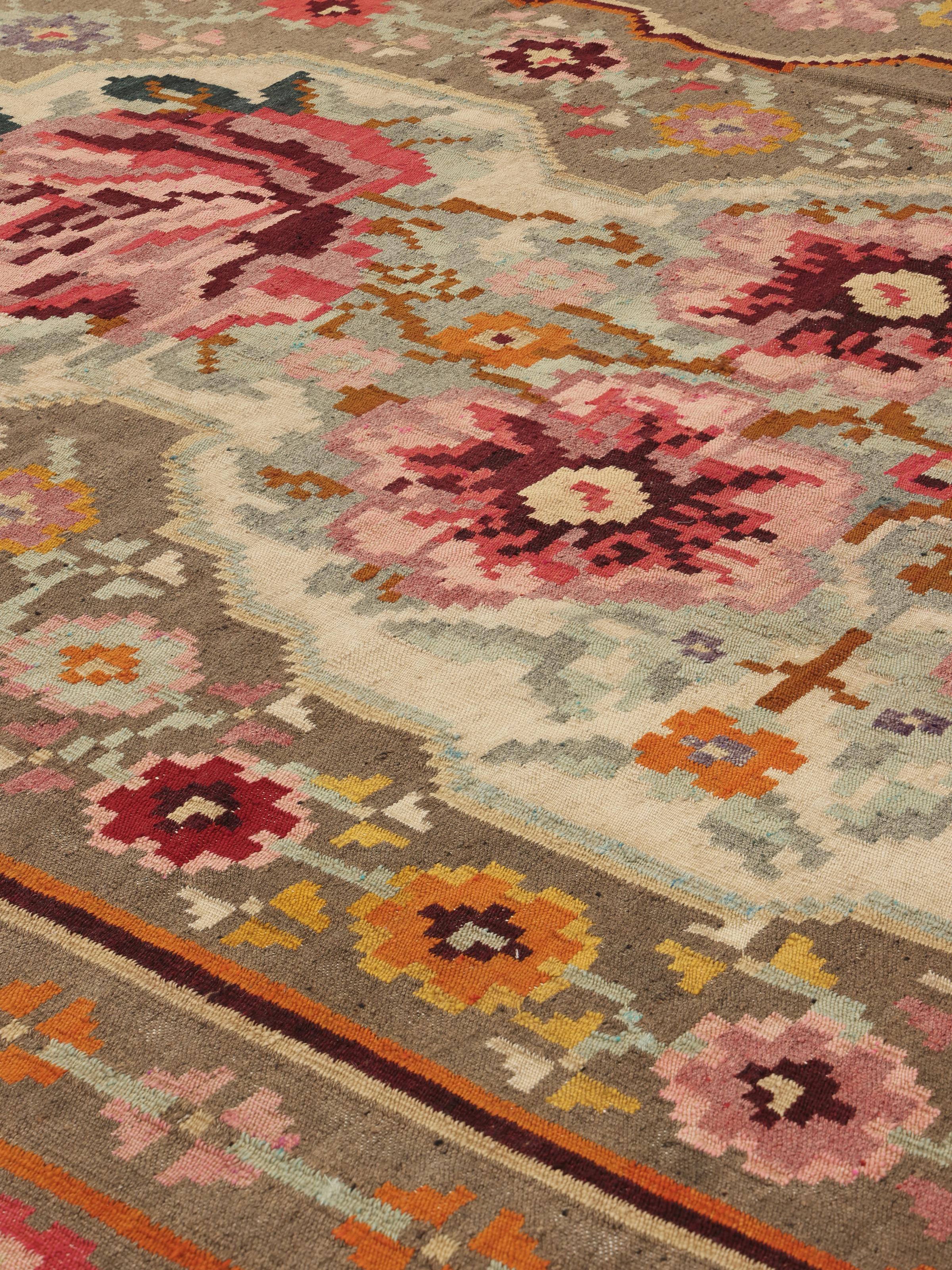
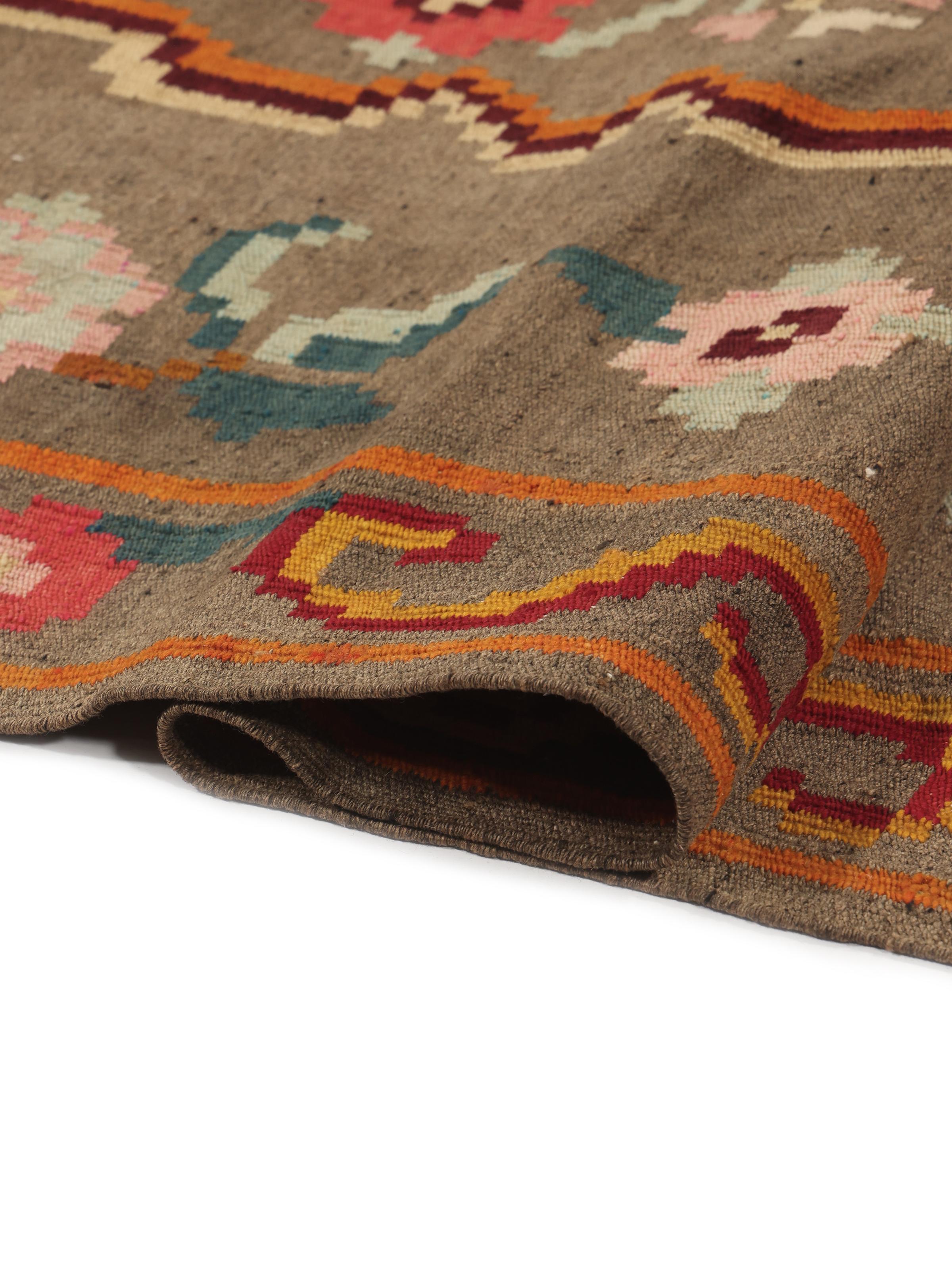
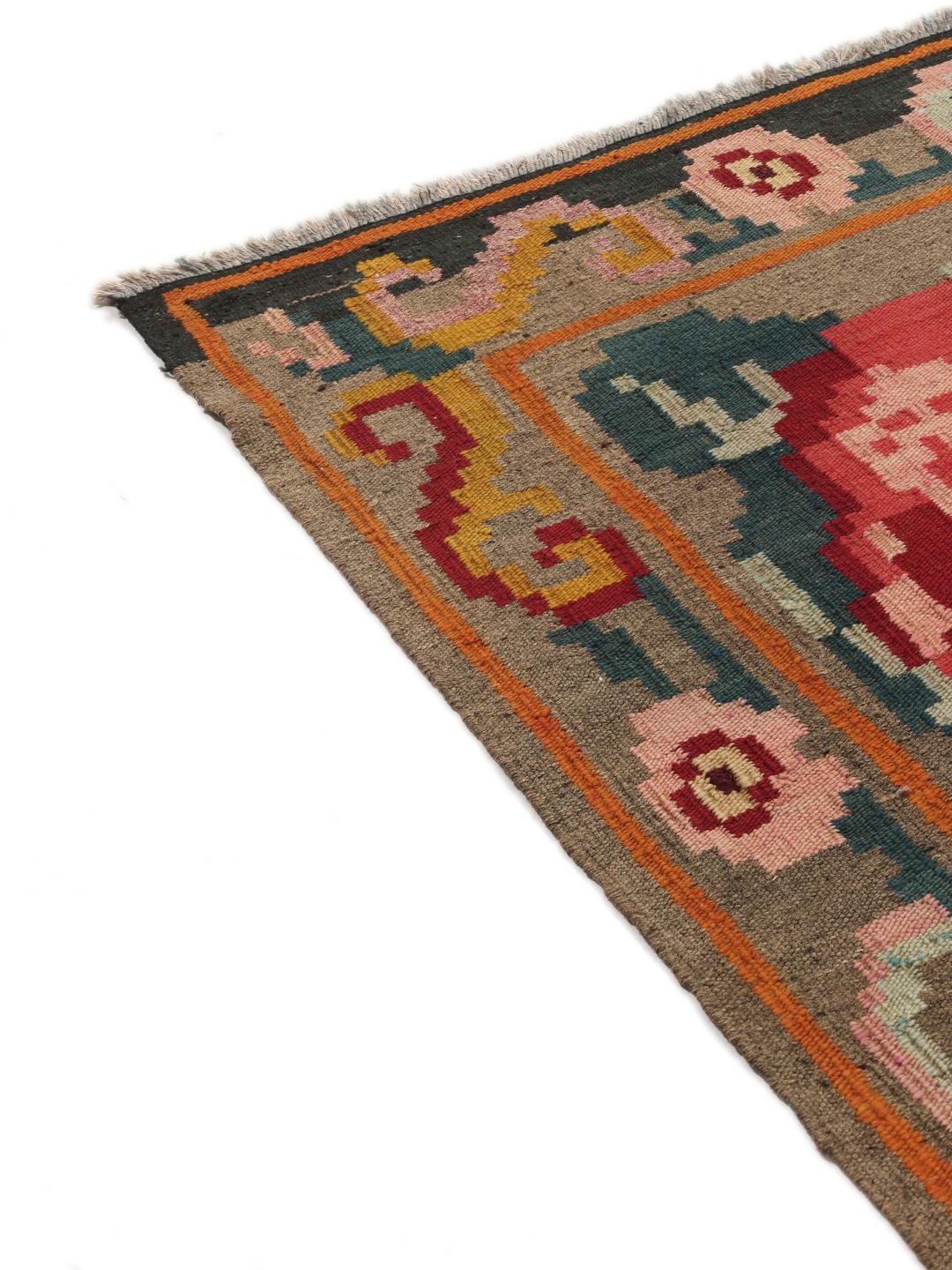
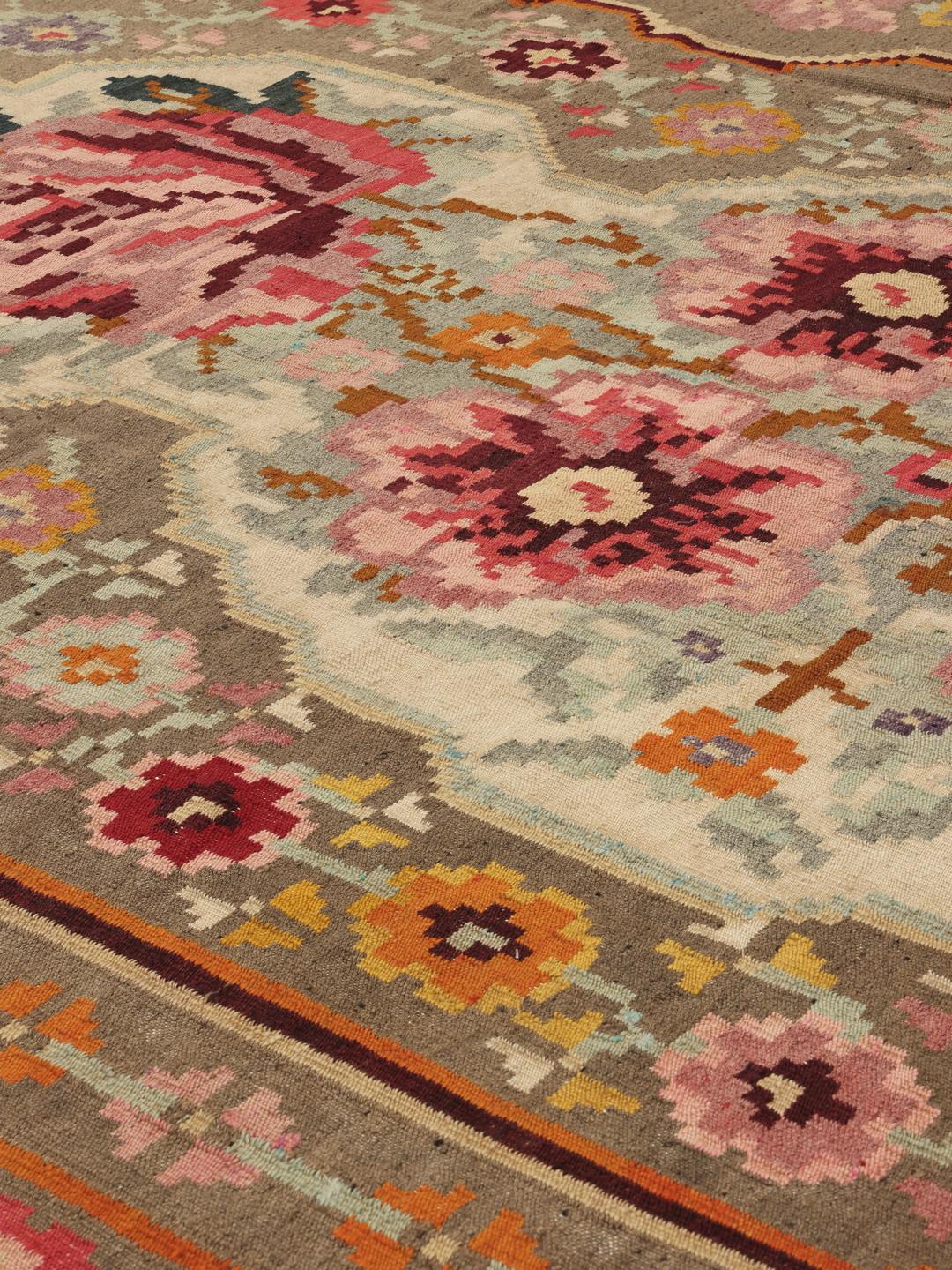
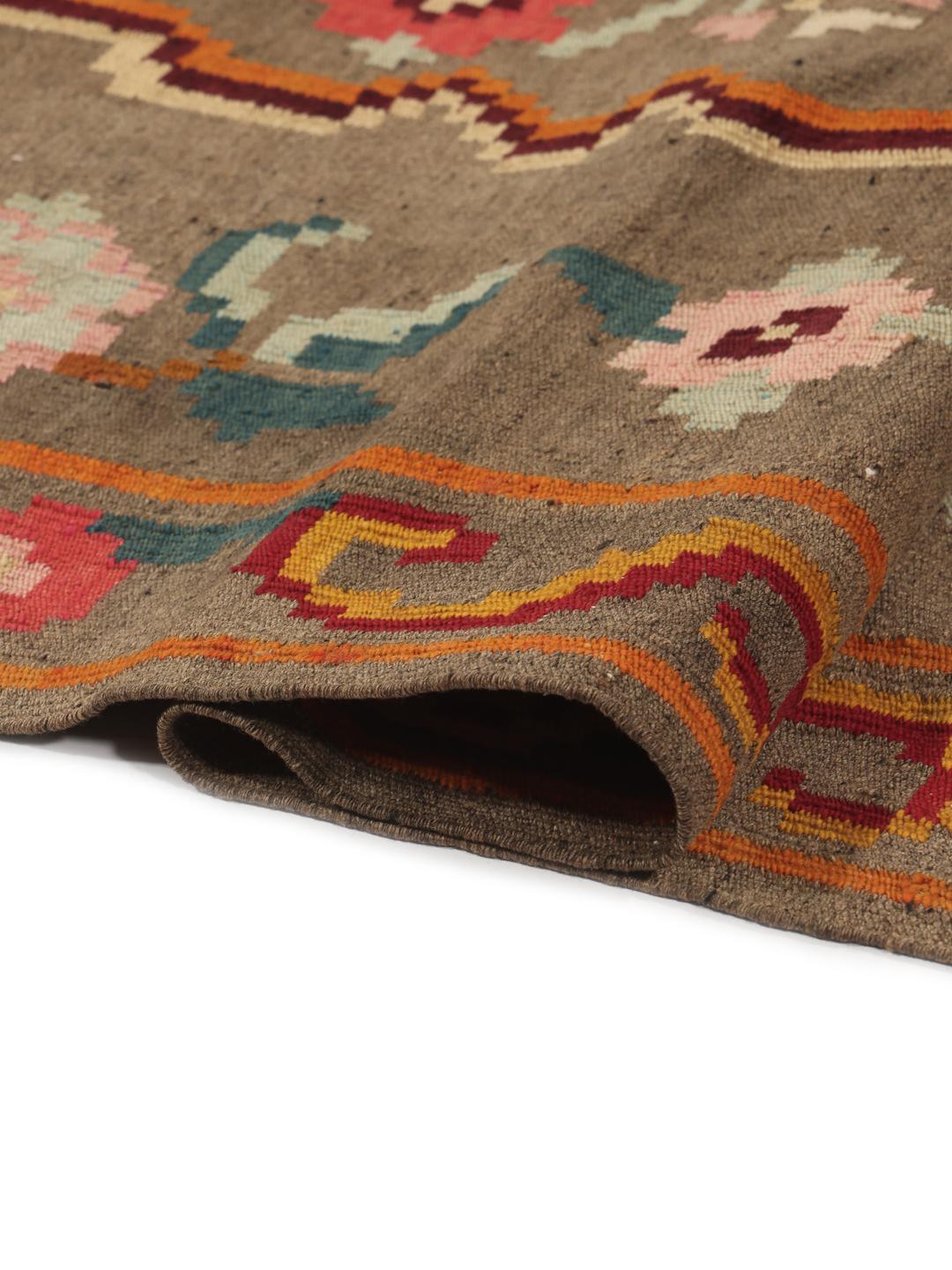
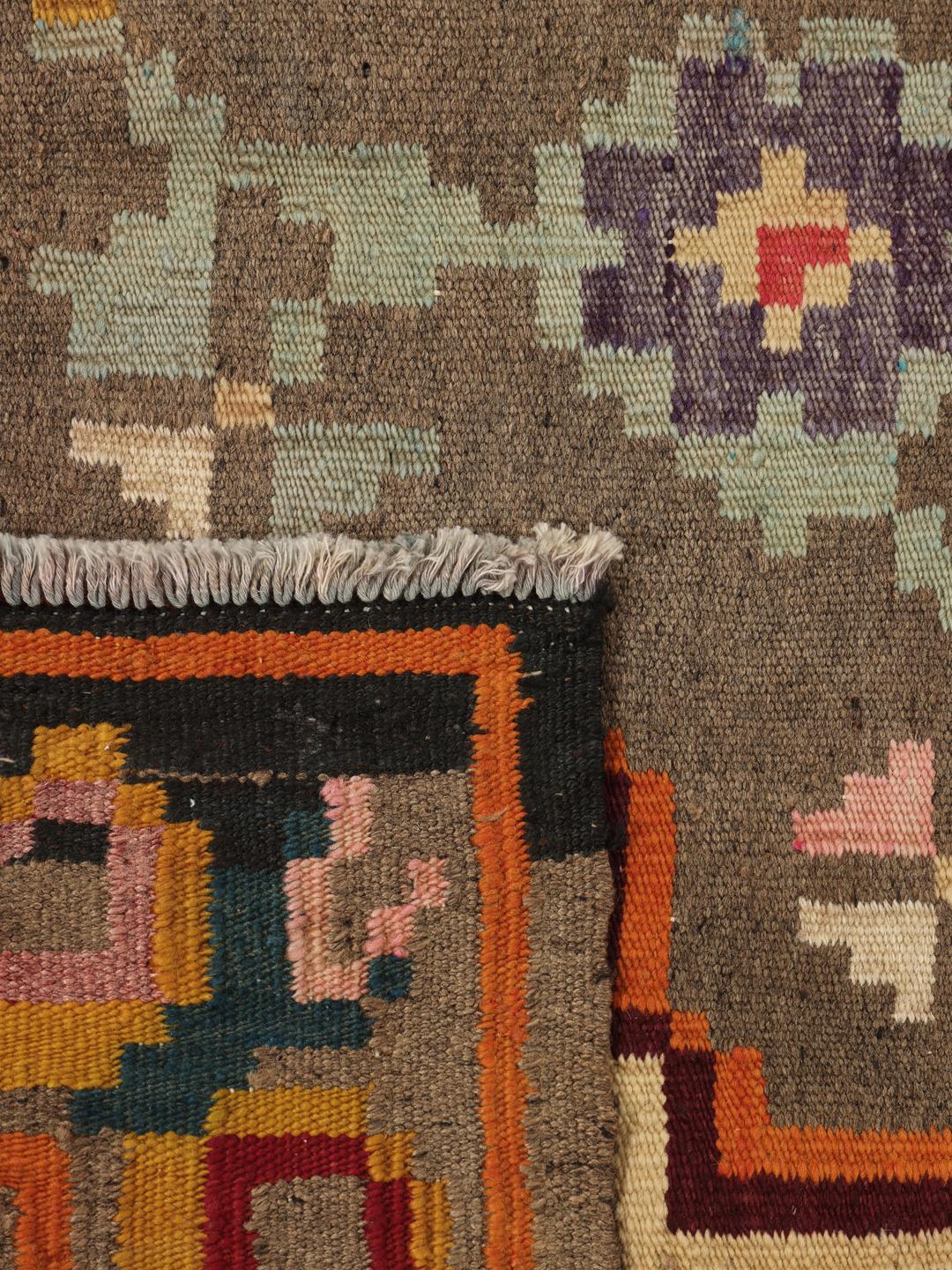
The term 'kilim' refers to a specific style of tapestry-woven, pileless rug. Unlike knotted rugs, these are created by tightly interlacing the warp and weft strands, which gives them their characteristic flat, durable, and lightweight quality. This technique allows for intricate, sharp-edged geometric and floral patterns to be created with remarkable precision, making them highly prized for their clarity of design and technical complexity.
Signature elements of a traditional Moldavian Rose Kelim include bold, naturalistic flower arrangements, often featuring large roses set against a dark or neutral field. These patterns are frequently framed by decorative borders that anchor the composition. Unlike the geometric abstraction seen in many other Middle Eastern kilims, the Moldavian style is celebrated for its more fluid, painterly approach to floral representation, often inspired by classic European textile arts.
Today, these rugs are highly sought after by collectors and interior designers alike for their unique ability to bridge the gap between traditional craft and contemporary home decor. Owning a genuine Rose Kelim is a way to preserve a rich cultural legacy while adding a touch of sophisticated, historical charm to a modern interior. Each piece serves as a tangible record of the weaver's skill, offering a level of authenticity and character that mass-produced items cannot match.