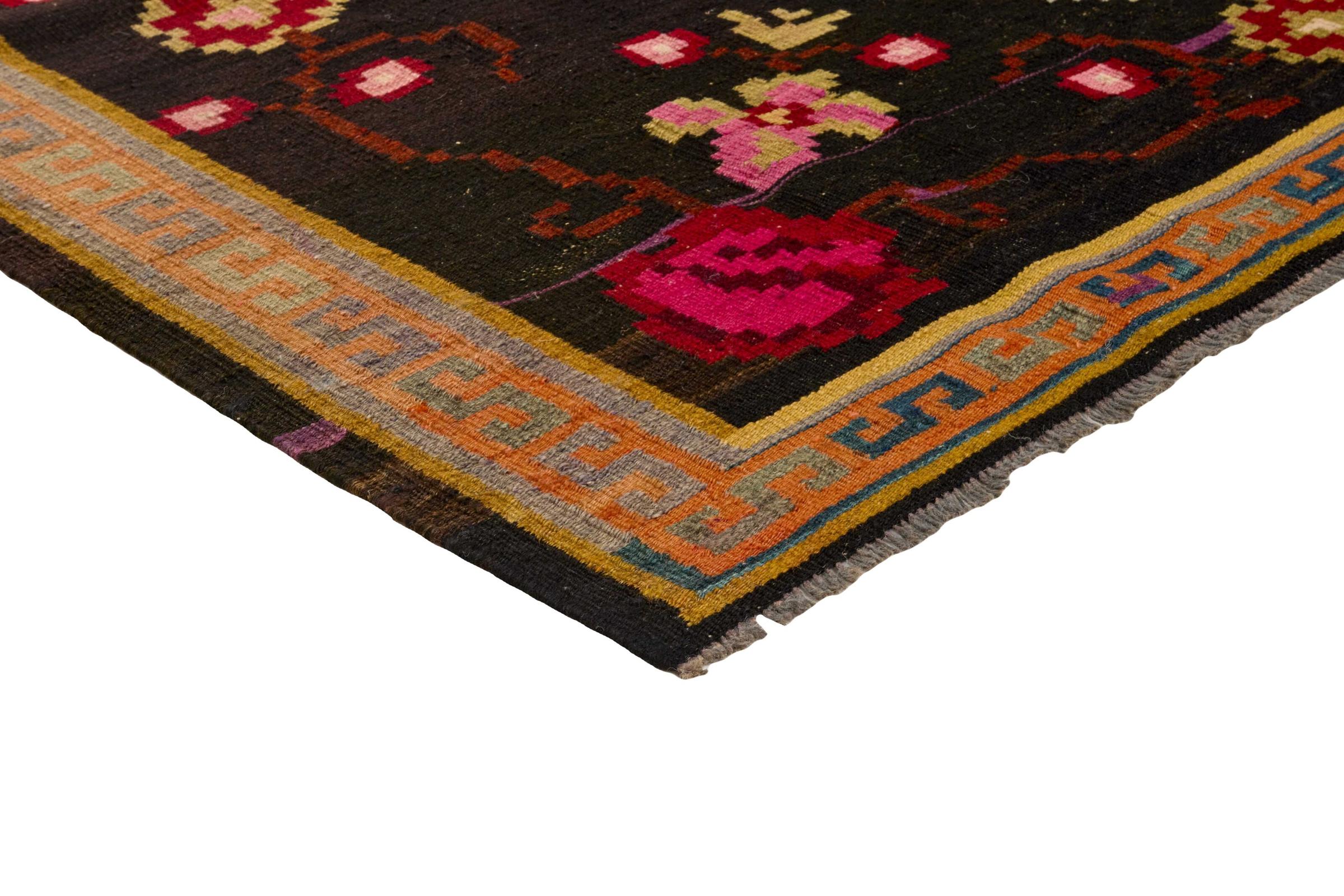
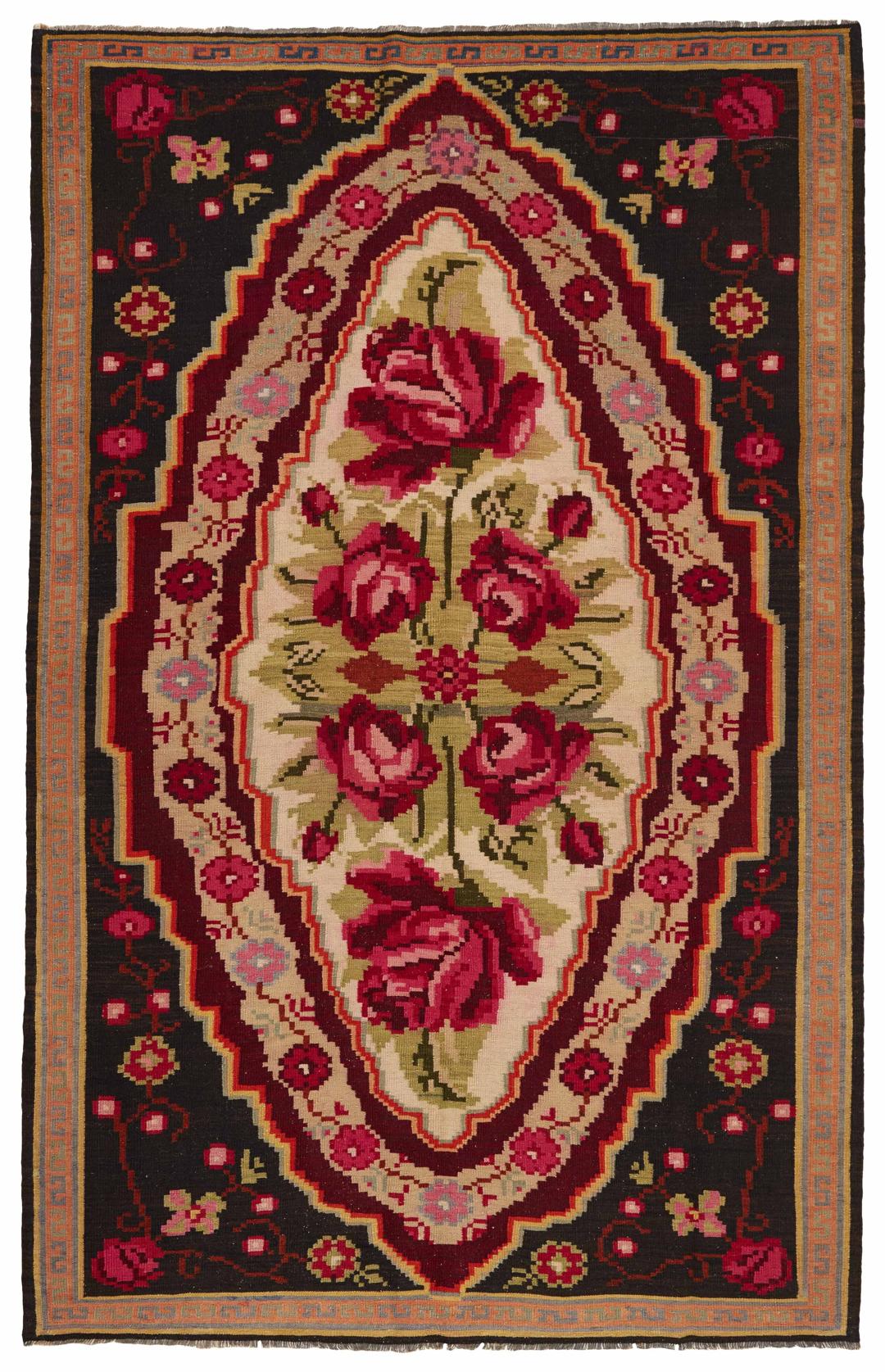
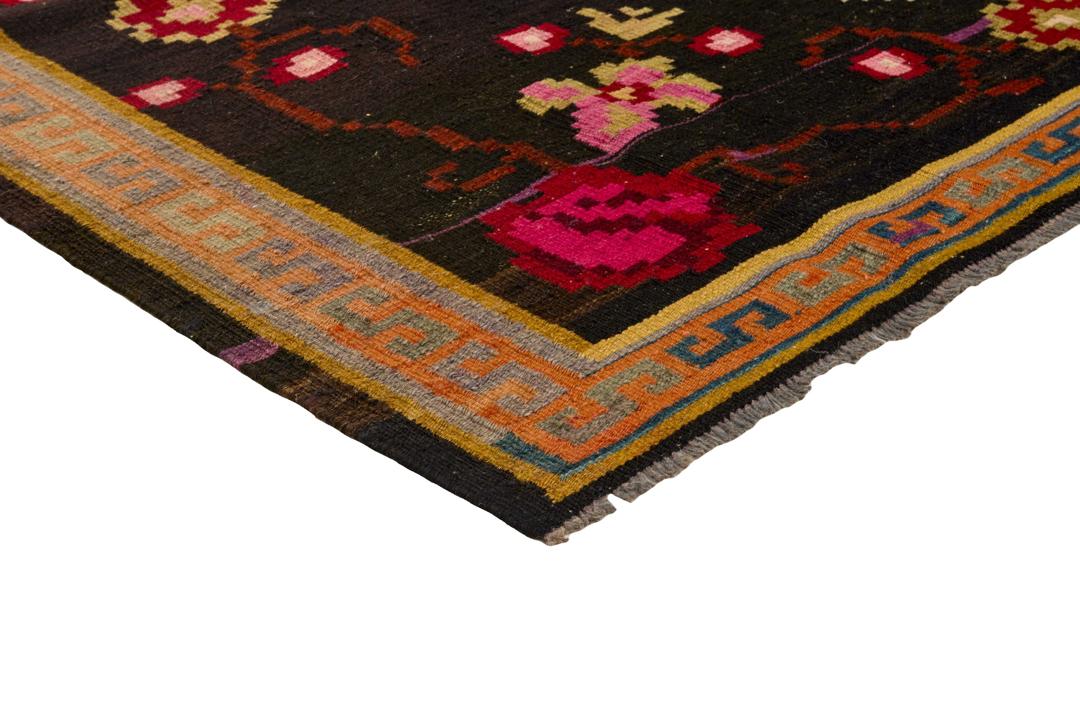
The Rose Kelim tradition hails from Moldova, a region with a rich history of textile production that blends Eastern European aesthetics with influences from Middle Eastern weaving techniques. Historically, these rugs were not merely functional items; they were essential components of the domestic landscape, often gifted at weddings or used to decorate the walls and floors of traditional homes to signify prosperity and artistic appreciation.
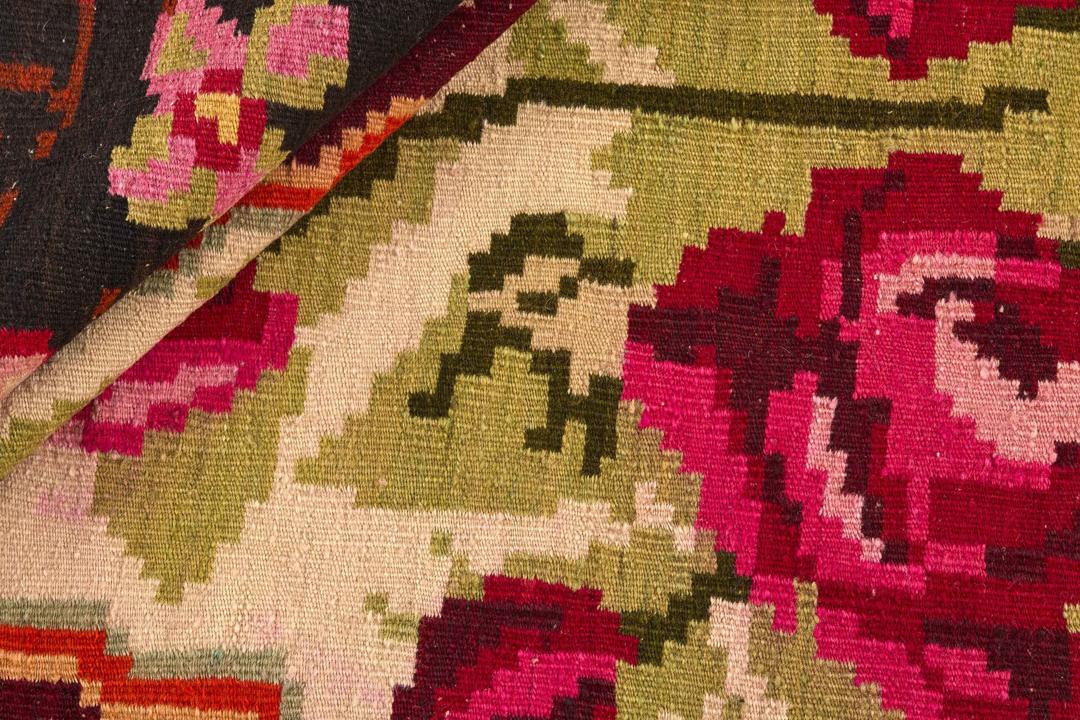
Technically, the term Kelim refers to a flat-weave construction, meaning the rug is created without a knotted pile. This technique relies on the interweaving of the warp and weft threads to create a smooth, tapestry-like surface. This method is highly prized for its versatility and the crispness it allows in geometric and floral patterns, as the weaver can achieve sharp, clean lines that define the intricate rose motifs characteristic of this specific regional style.
The signature design language of Moldovan Kelims is defined by these lush, larger-than-life floral motifs, particularly the rose, which serves as a central symbol of passion and nature. Unlike the abstract geometric patterns found in many other weaving traditions, the Moldovan Kelim is famously representational. The deep, dark fields often seen in these pieces are designed to make the vibrant pinks and reds of the flowers pop, creating a dramatic visual depth that is instantly recognisable to collectors.
Today, these rugs are highly sought after by those who value authentic heritage and the skill required to produce such detailed work. Owning a piece from this tradition is an act of preservation, as it keeps the unique cultural narrative of Moldovan textile art alive. Each rug serves as a bridge to the past, offering a sophisticated aesthetic that feels as relevant today as it did when it was first crafted.