Sarouk rugs originate from the Markazi region of Persia, specifically around the village of Sarouk, which became renowned for producing some of the most durable and finely crafted floor coverings in the world.
During the late 19th and early 20th centuries, weavers in this region developed a distinct aesthetic that caught the attention of international markets, blending traditional village weaving methods with refined court designs.
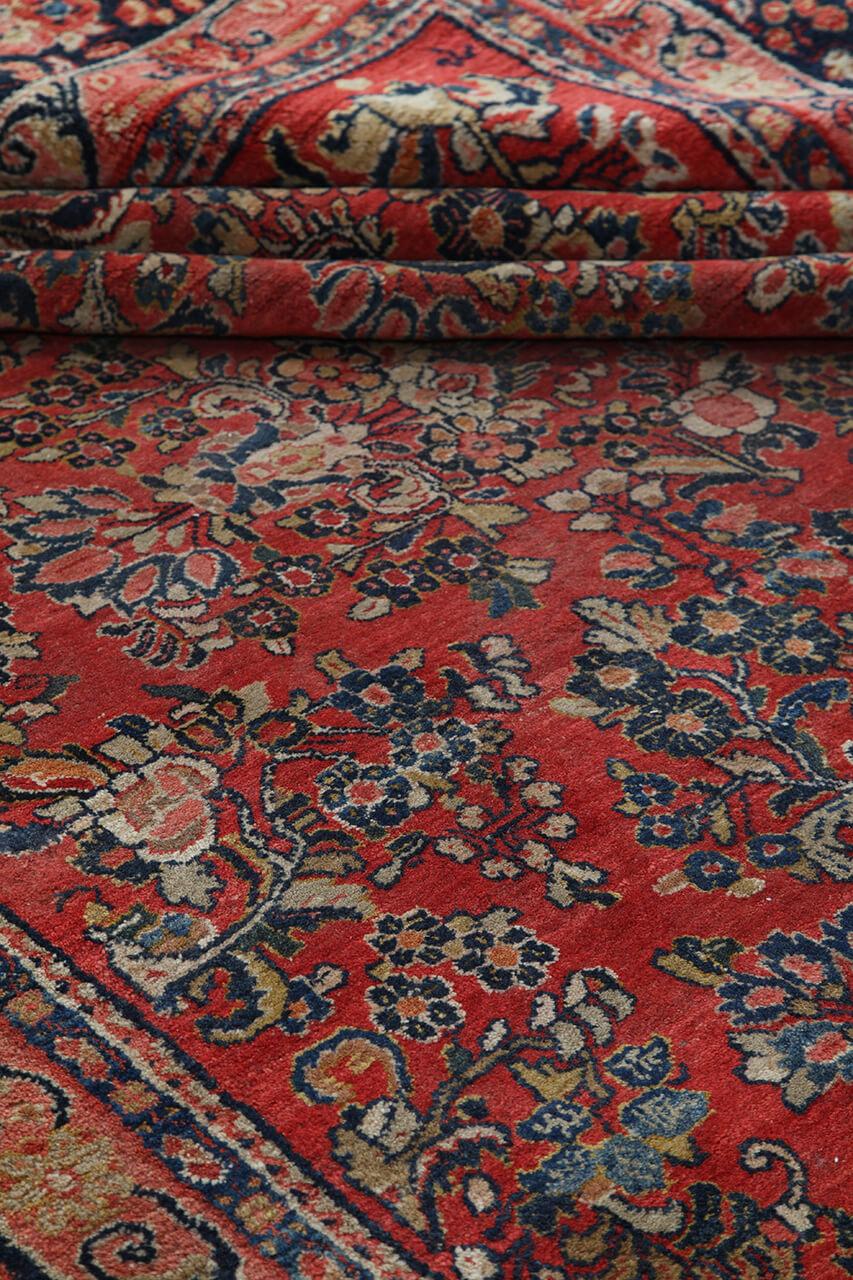
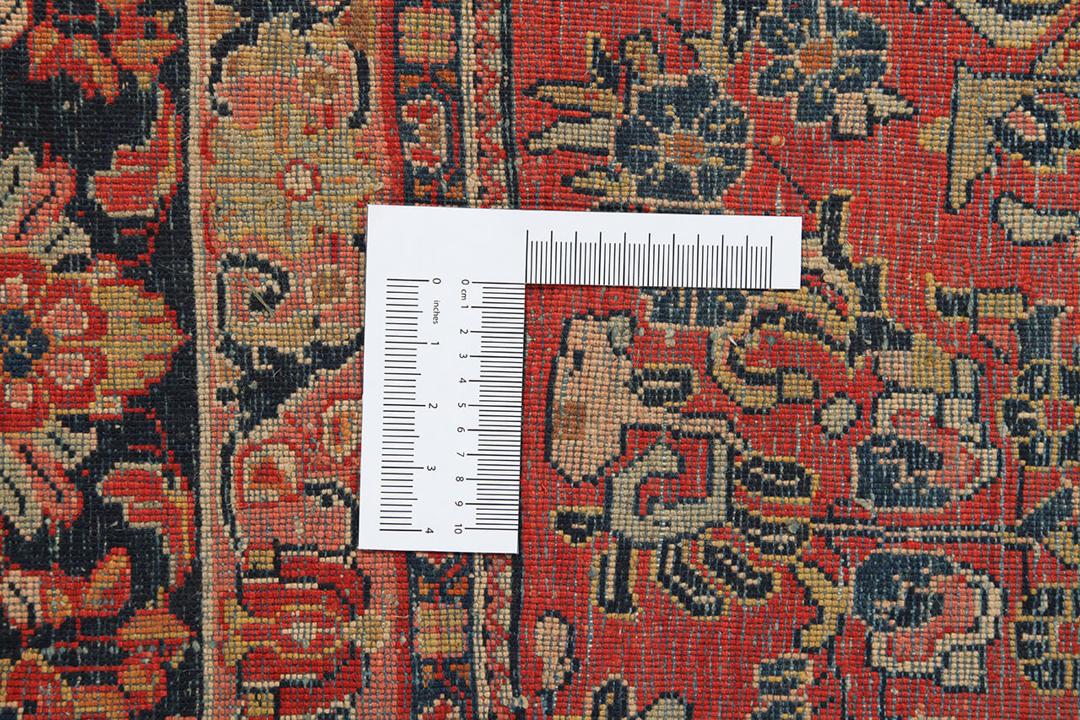
The construction relies on a dense foundation where tightly packed wool piles are hand knotted onto sturdy warp and weft threads.
This traditional technique results in a heavy, robust structure that protects the wool fibers from wear and gives the rug its characteristic longevity and rich drape.
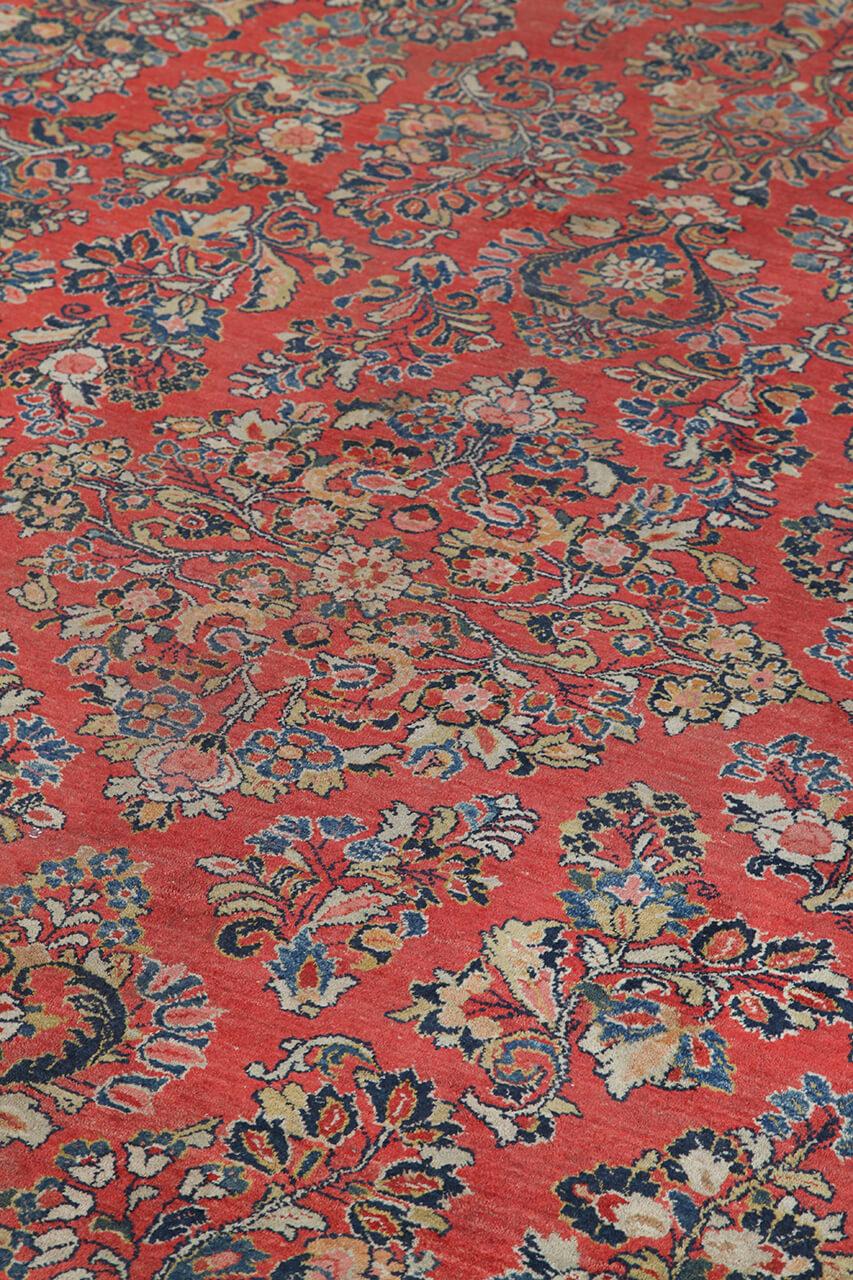
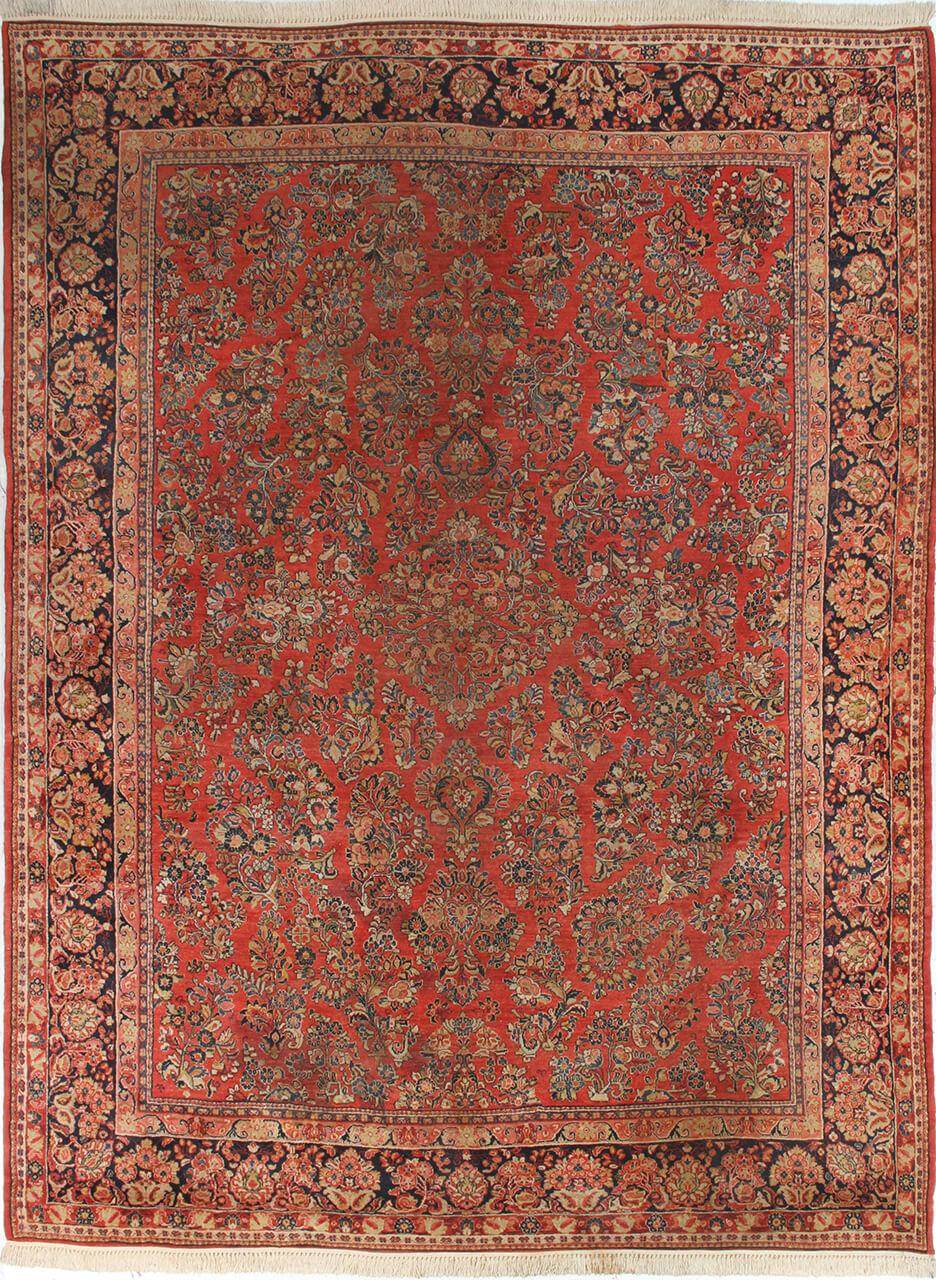
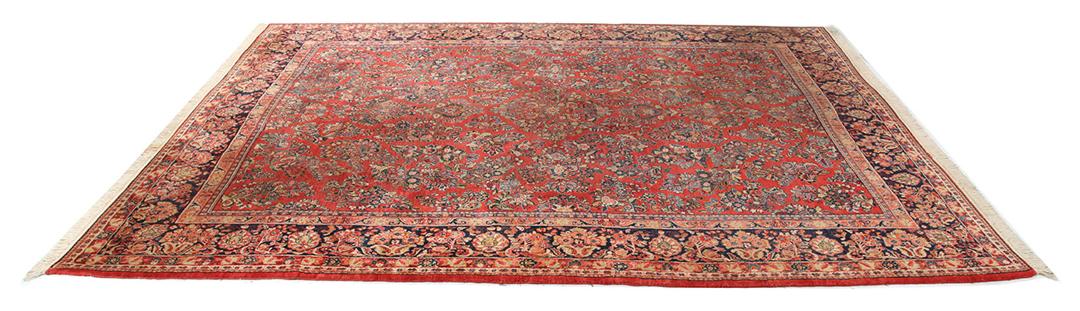
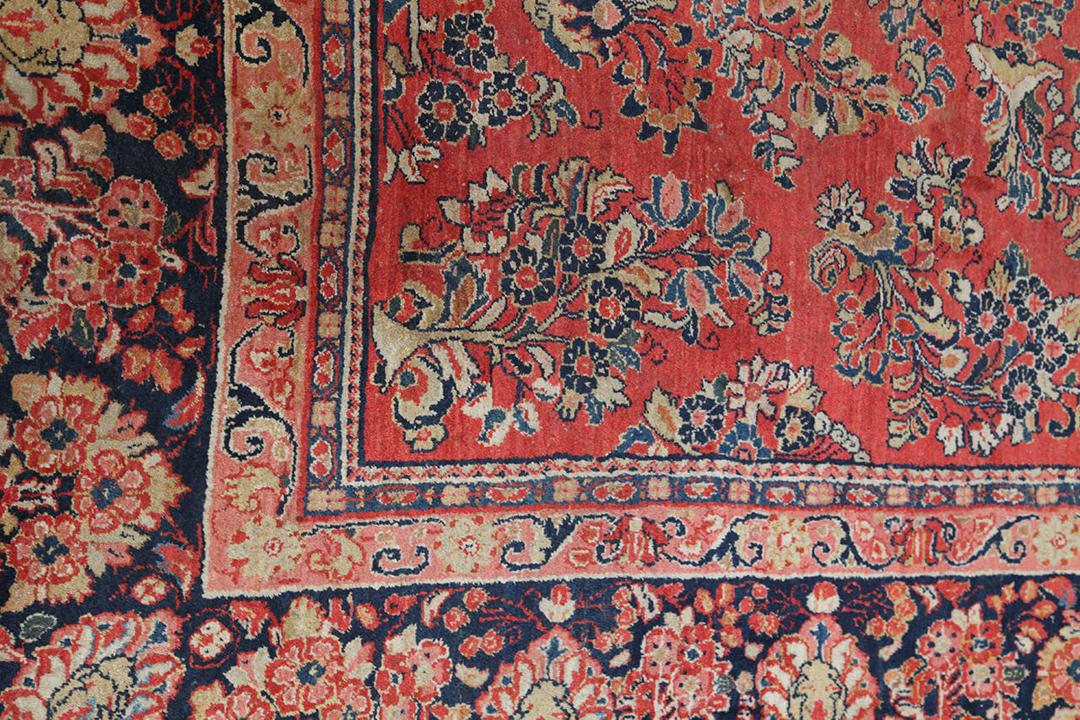
Visually, Sarouk rugs are celebrated for their sophisticated floral compositions, often featuring central medallion arrangements or all-over botanical motifs set against deep red fields.
The borders are typically filled with scrolling vines and palmettes, framed by narrower guard stripes that anchor the complex composition.
Collecting an antique Sarouk means acquiring a piece of living cultural heritage that embodies the patience and skill of traditional Persian craftsmanship.
These rugs are valued not only for their decorative presence but for their ability to carry stories across generations, serving as enduring testaments to human artistry.