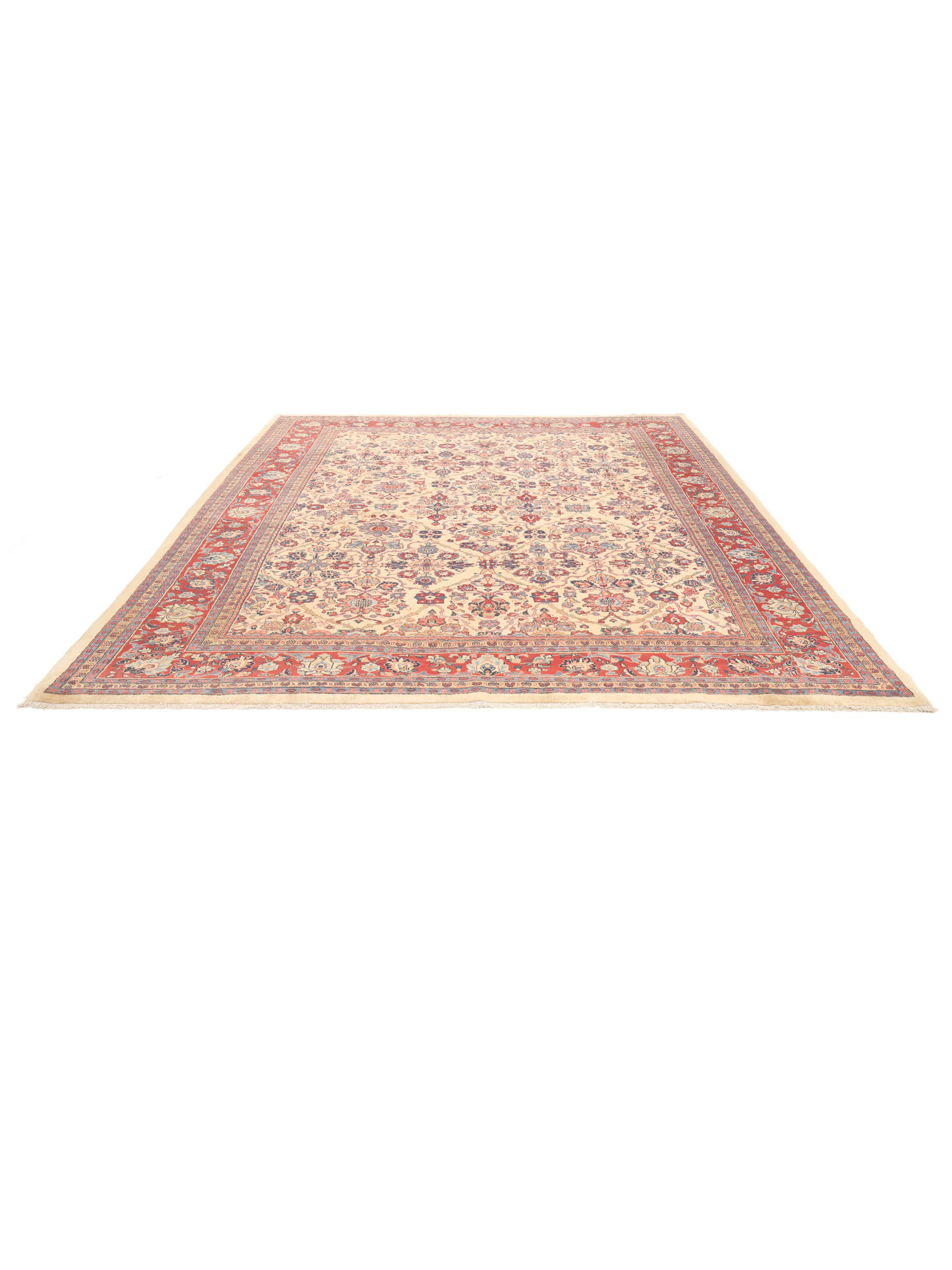
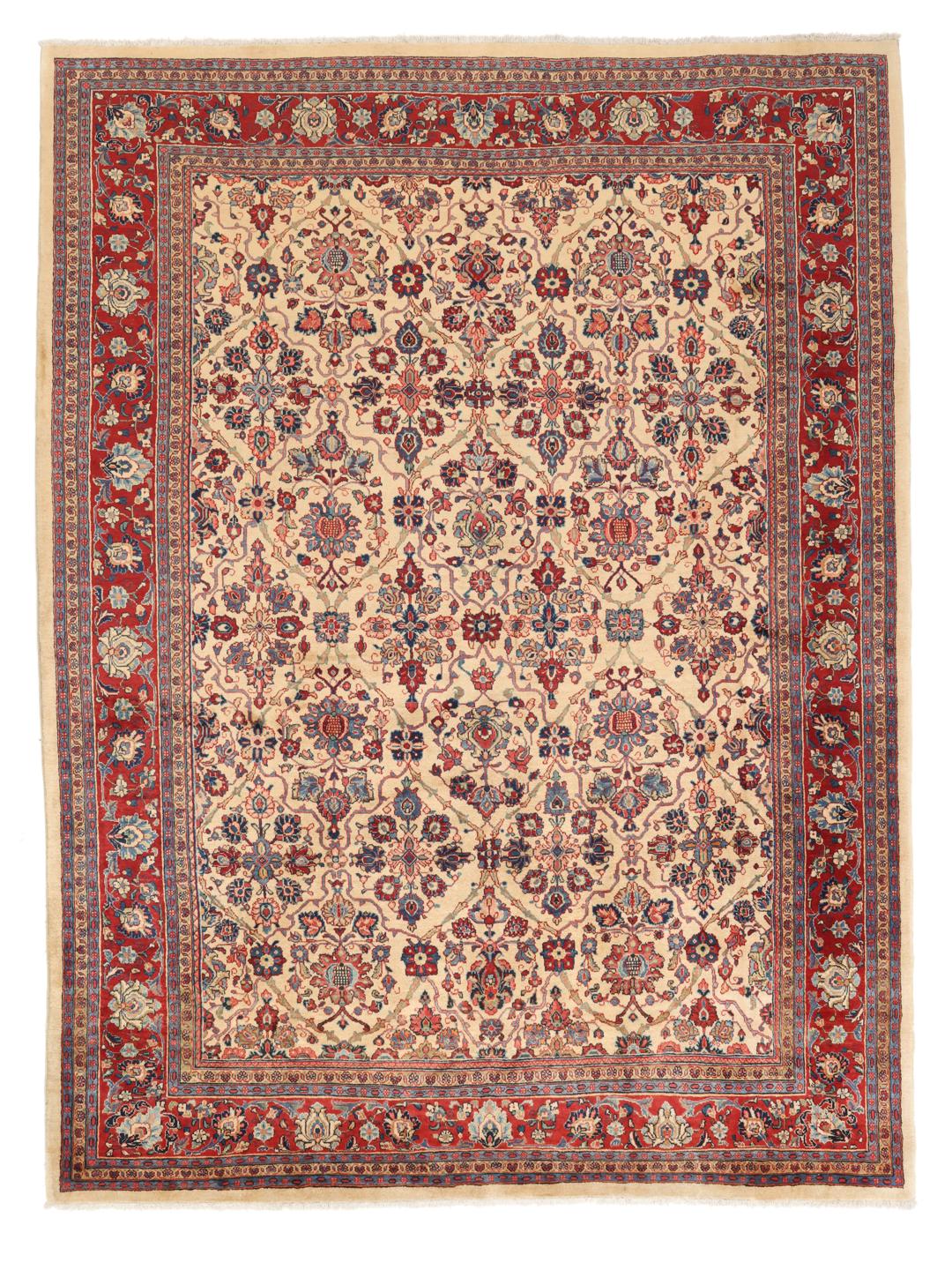
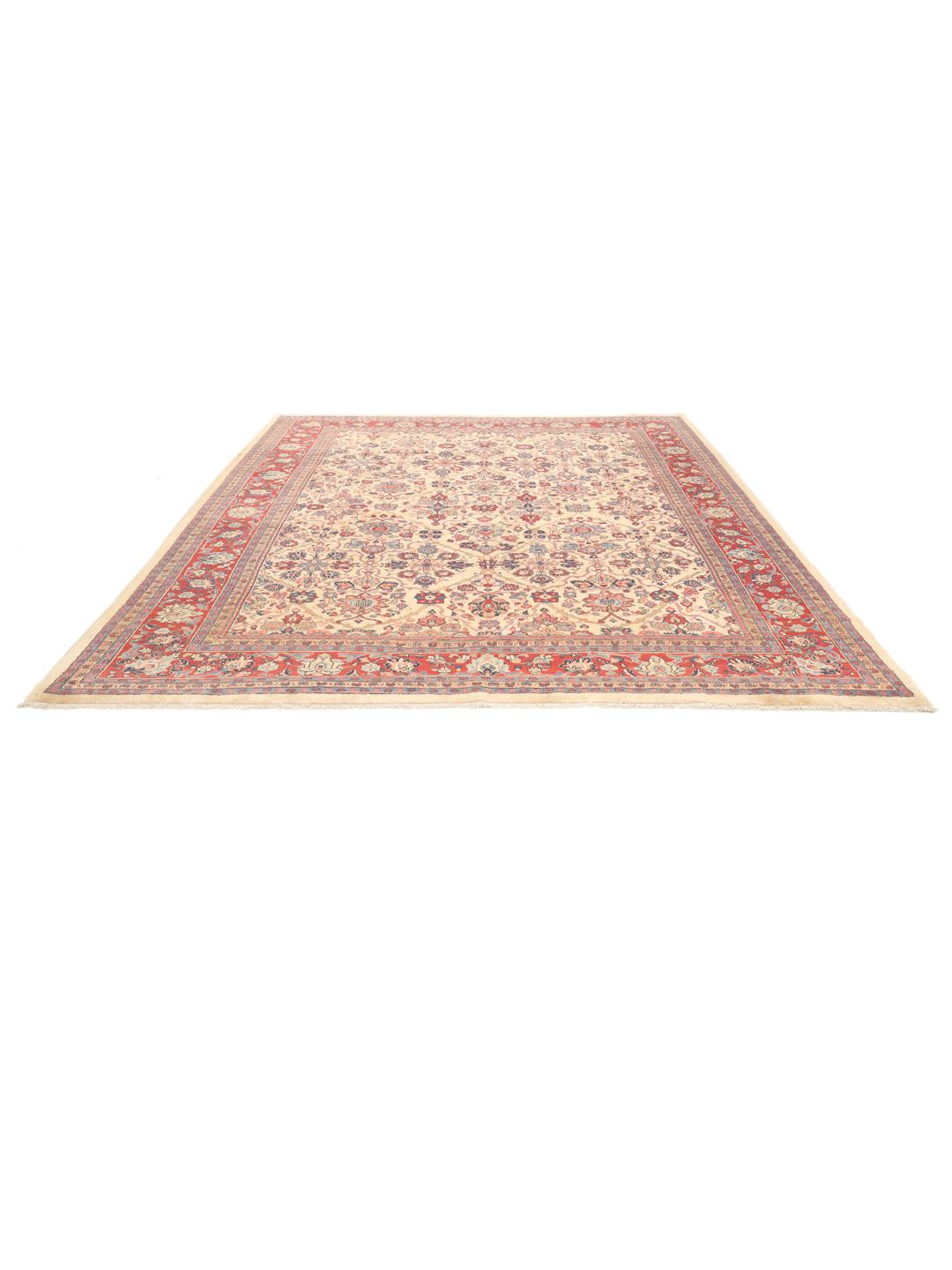
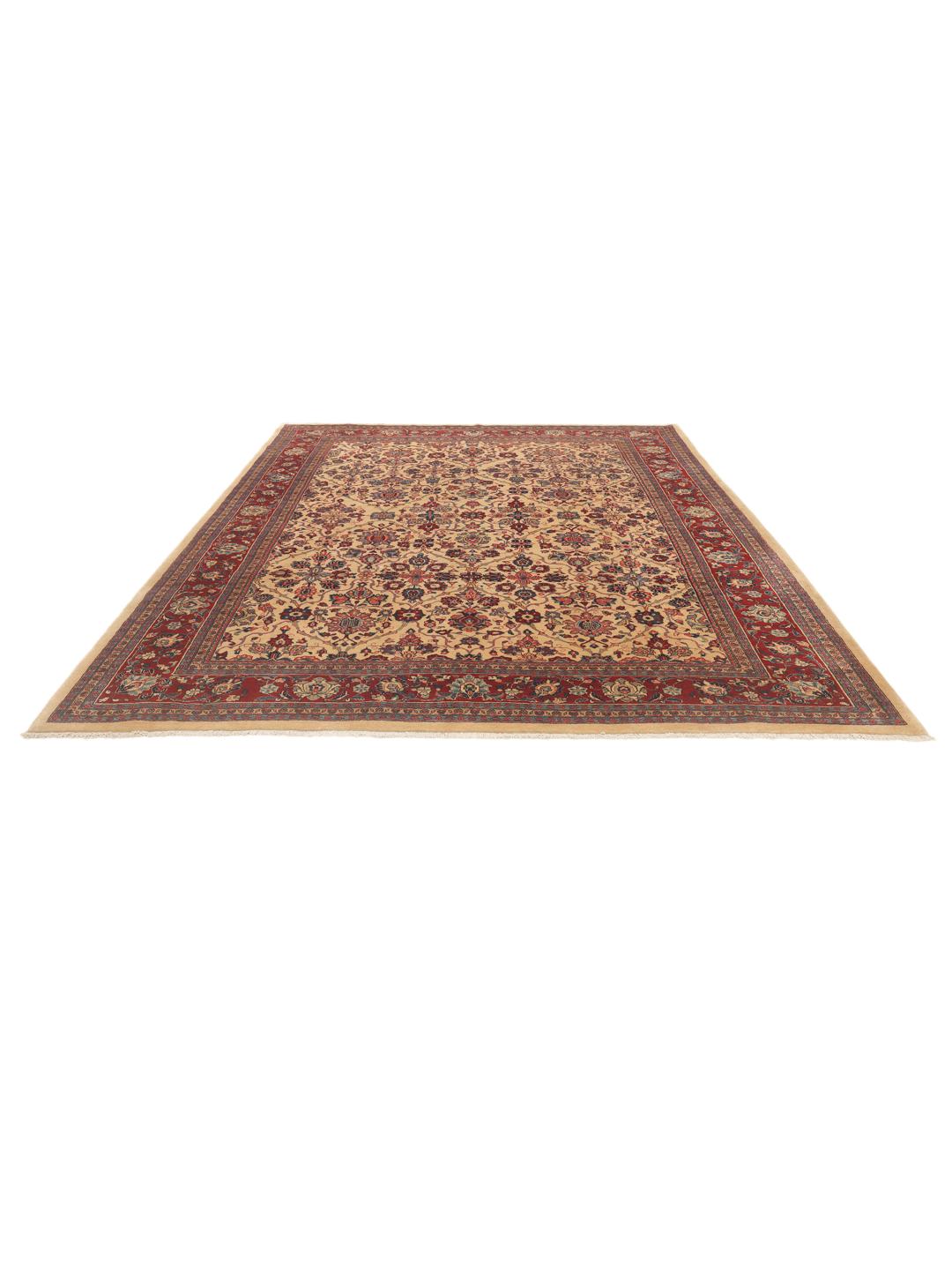
The Sarough tradition originates from the village of Sarouk in the Arak region of the Middle East, a name that has become synonymous with some of the most resilient and beautiful floor coverings in the world. Historically, these rugs gained international prominence in the early 20th century, when their reputation for exceptional wool quality and dense, sturdy construction made them highly sought after by collectors and families alike.
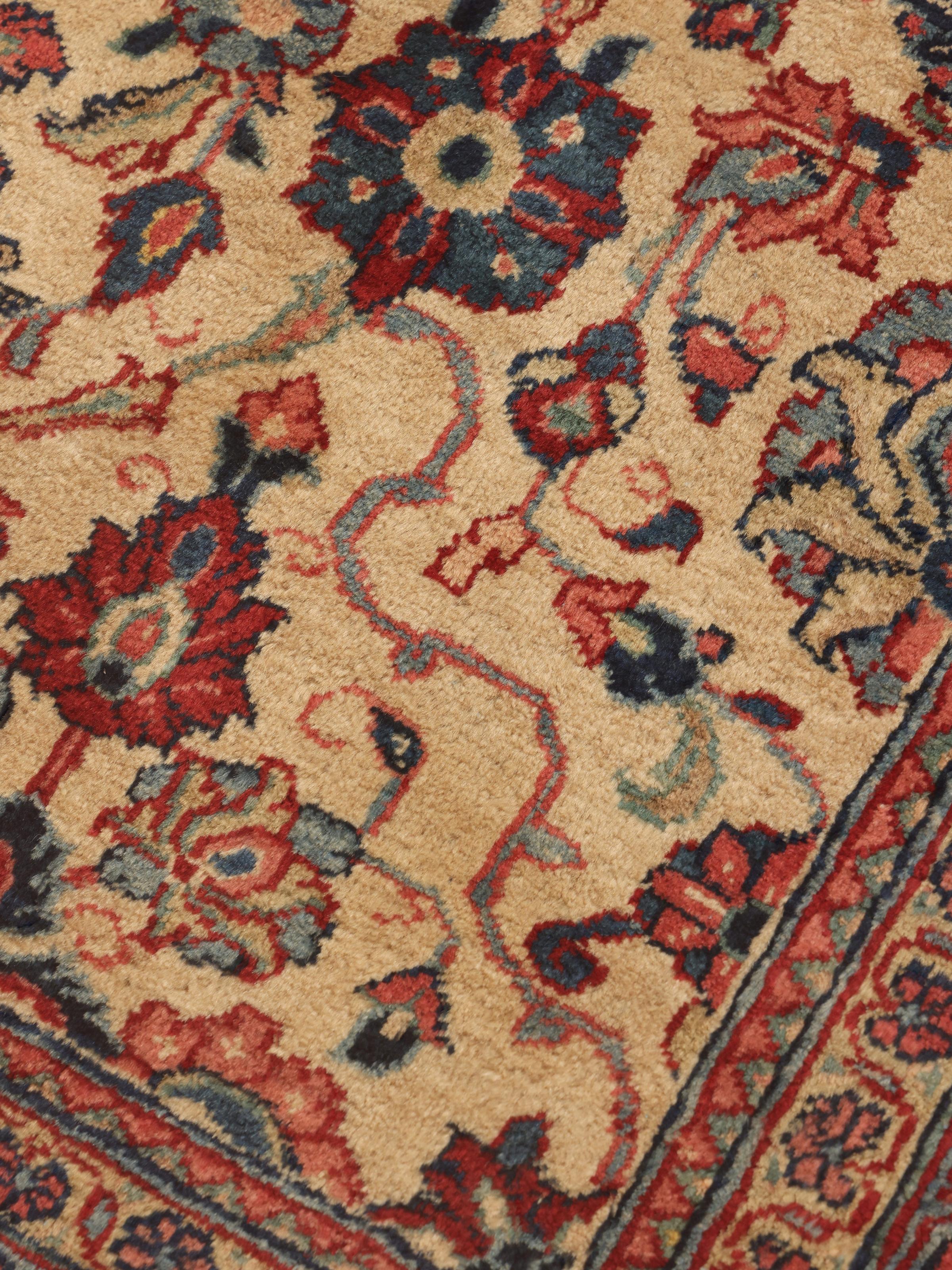
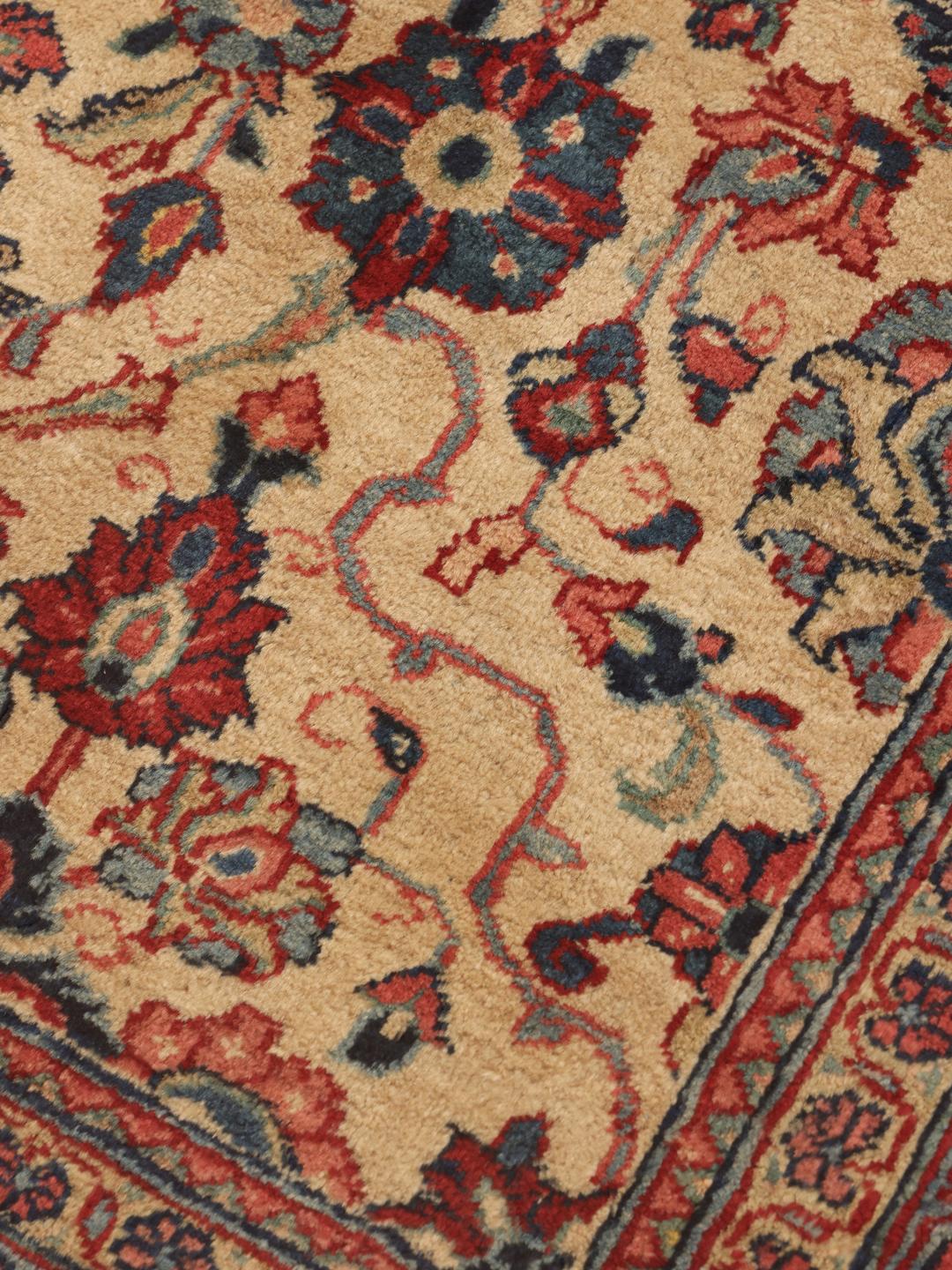
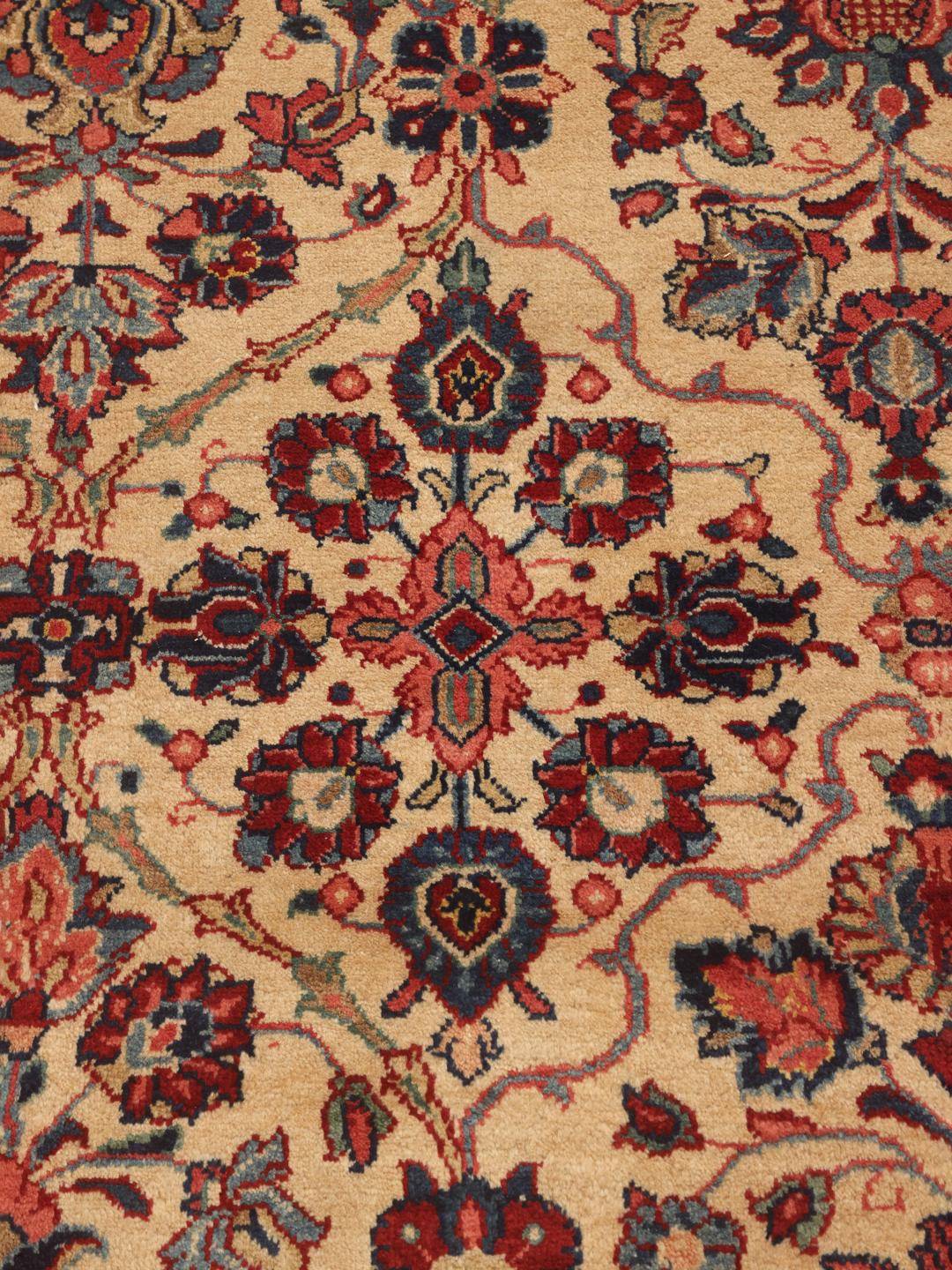
What defines a Sarough is often its 'fine' or 'American' style, which refers to a specific evolution in the early 1900s to suit Western tastes. This involved using a more refined knotting technique that allowed for more intricate floral arrangements and a lighter, more elegant aesthetic. The use of high-quality wool, which is naturally rich in lanolin, results in a sheen that softens the vibrant tones over time, giving the rug a graceful, aged appearance.
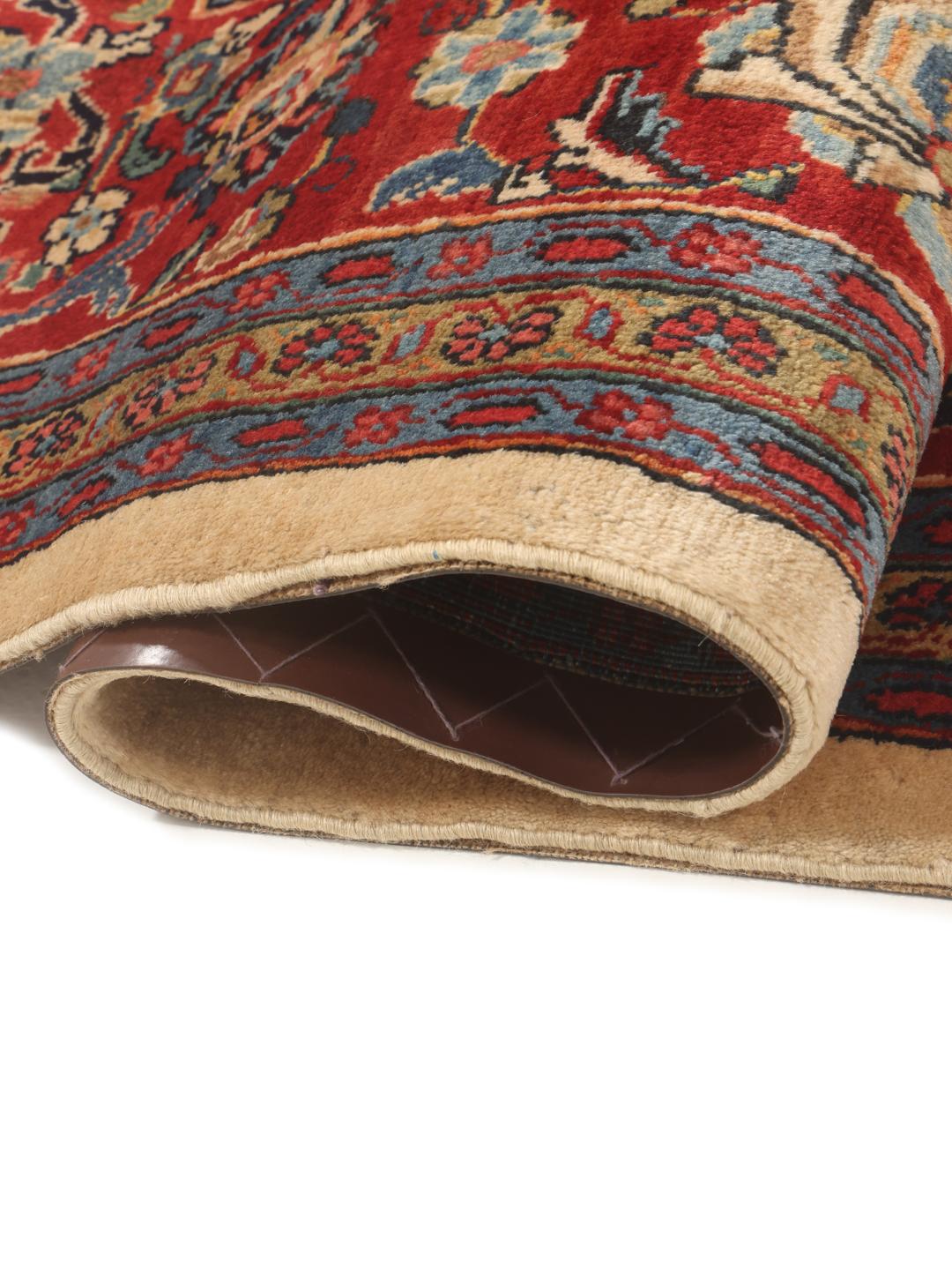
The visual language of the Sarough is deeply rooted in elaborate floral motifs, often featuring a central medallion surrounded by scrolling vines, palmettes, and leaves. These organic shapes are typically set against a field that balances bold colours with more muted, earthy tones. The formal border framing the central field acts as a frame, drawing the eye inward to the complex interplay of petals and stems that define the rug's character.
Collecting a Sarough rug is an act of preserving a heritage of craft that has survived for centuries. These rugs are valued not just for their visual appeal but for their ability to become family heirlooms. Owning one means participating in a long-standing tradition of domestic artistry, where the skill of the weaver is permanently captured in the weave, offering both cultural significance and a timeless sense of home.