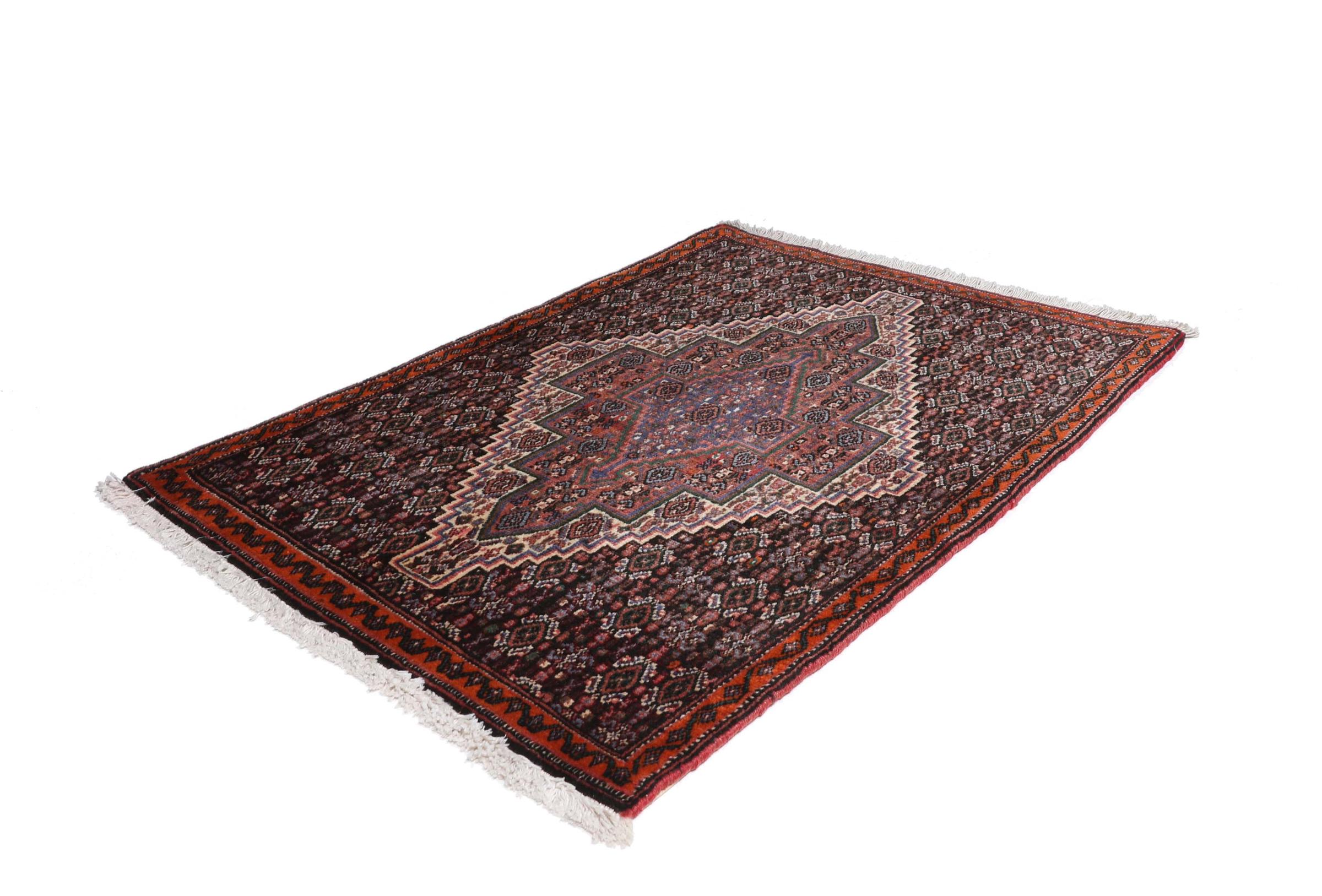
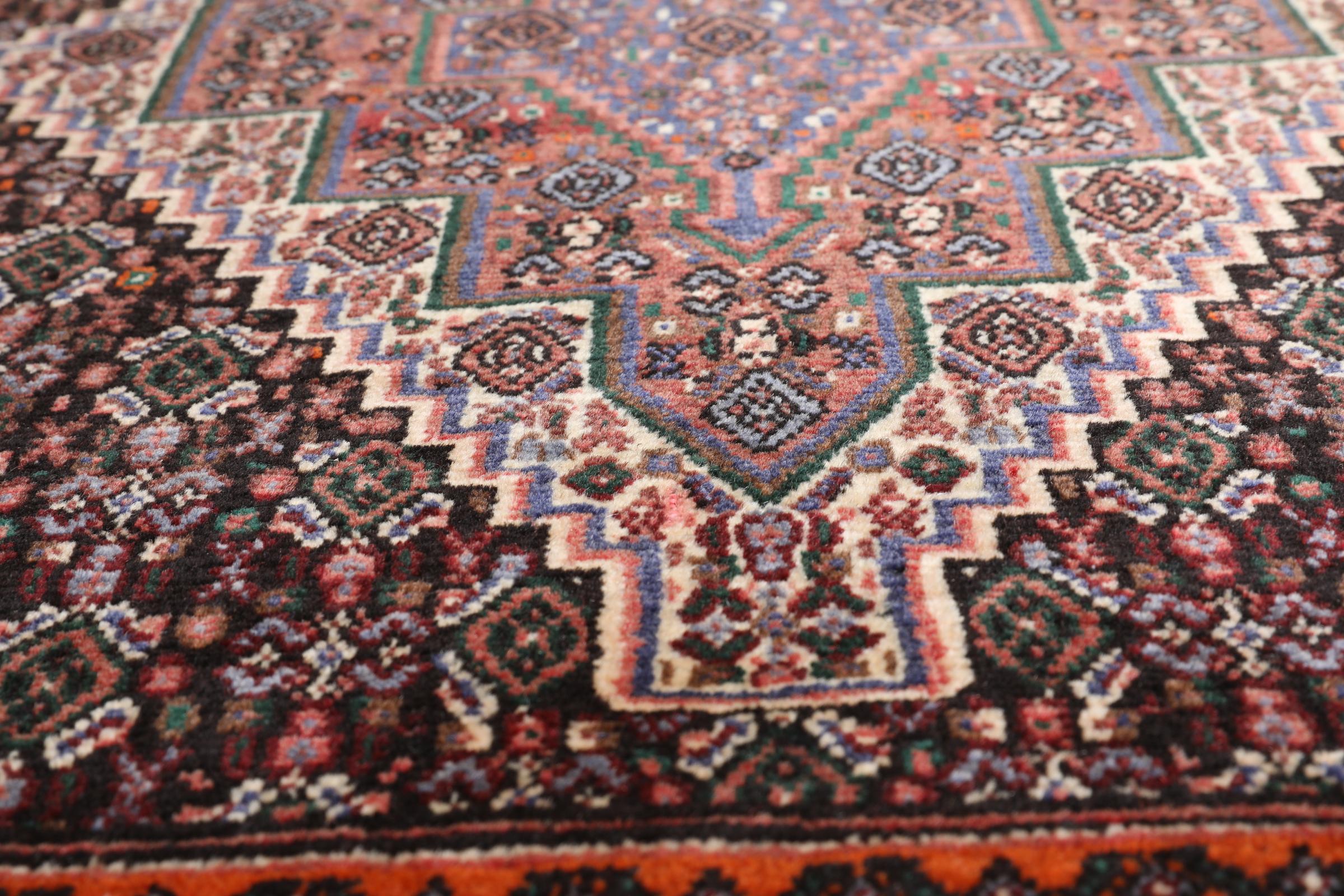
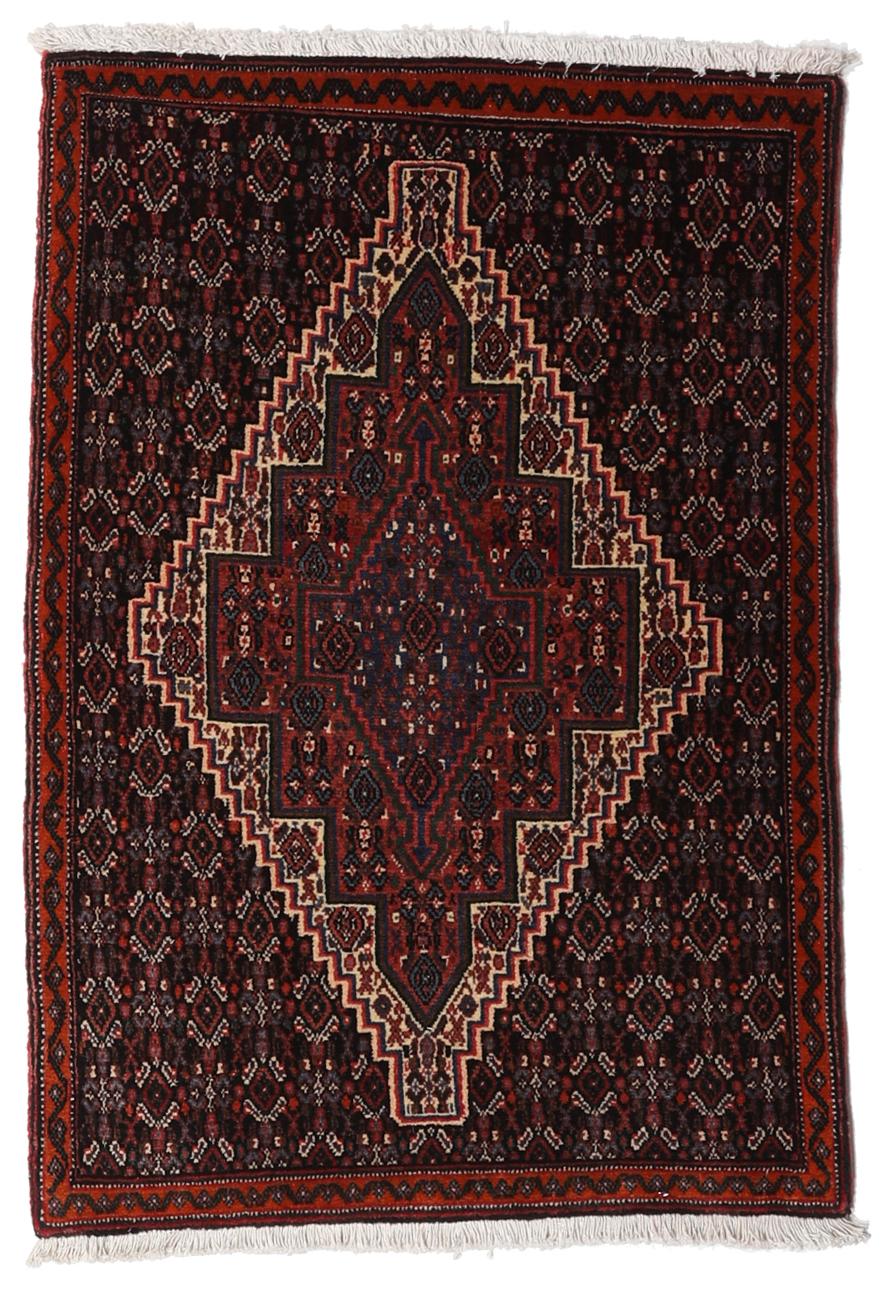
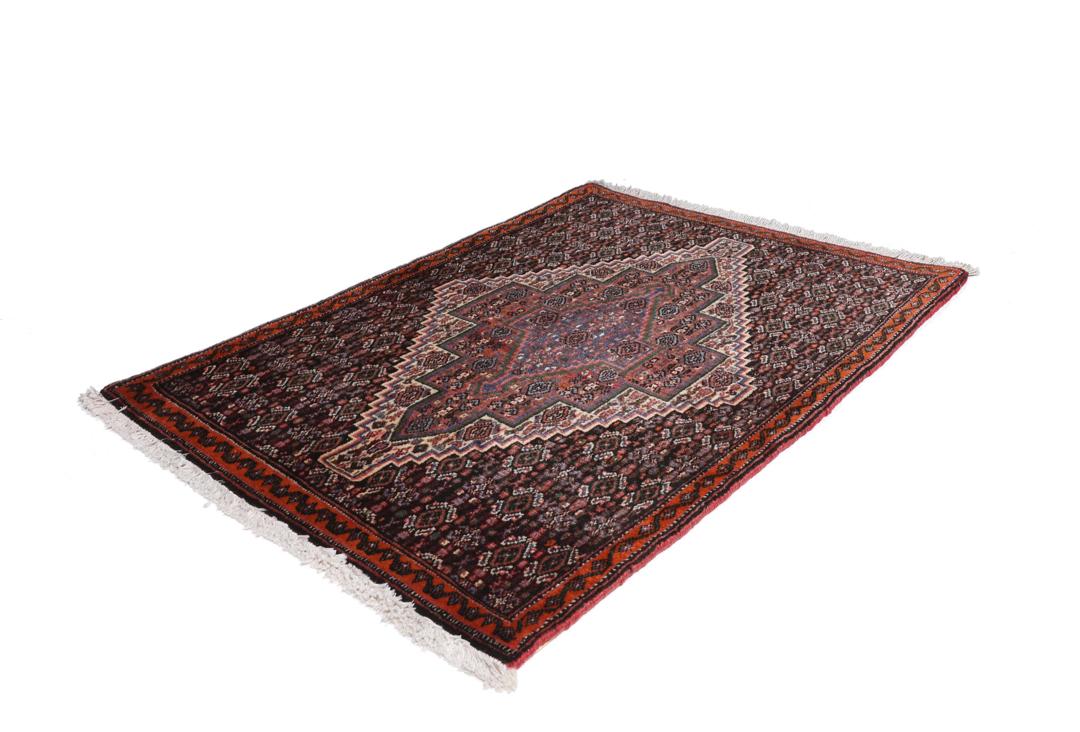
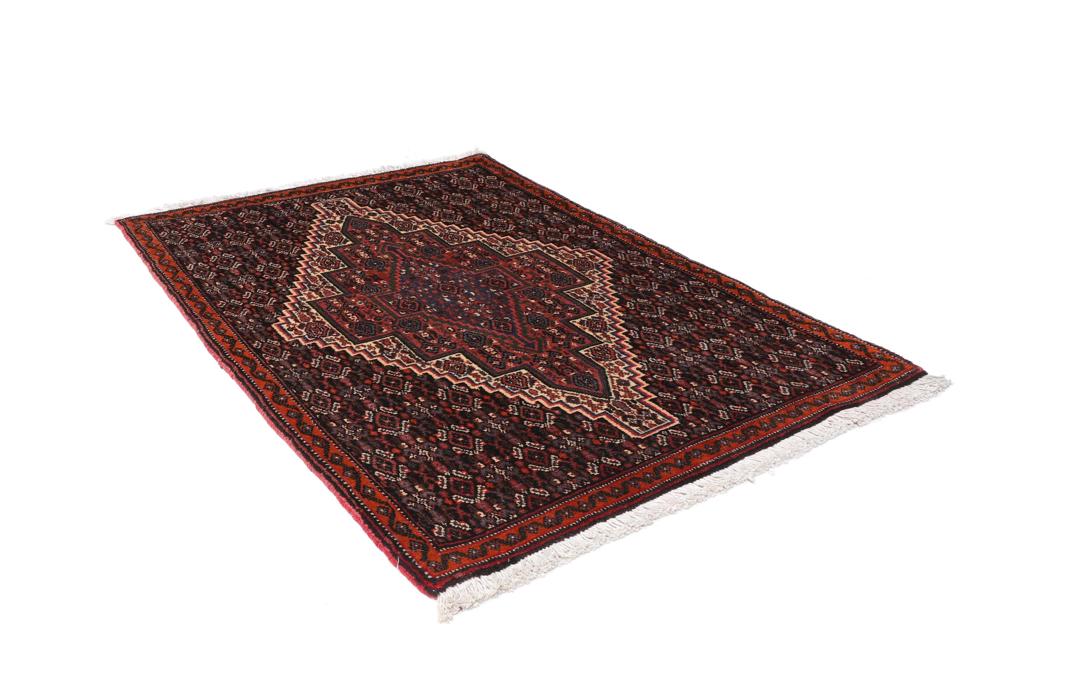
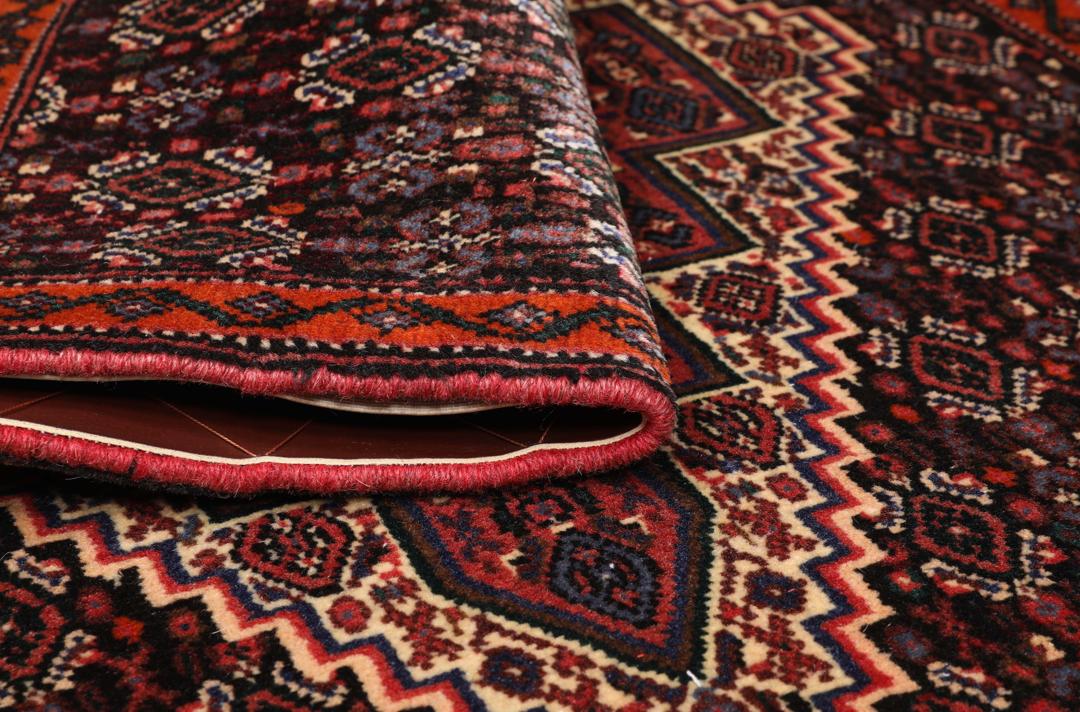
Senneh rugs originate from the city of Sanandaj in the Middle Eastern region of Kurdistan. This area has long been a crossroads of culture, and its weaving traditions are celebrated for their refinement and the sophisticated use of colour and form. These rugs are deeply embedded in the cultural fabric of the region, where weaving is a storied craft passed down through generations.
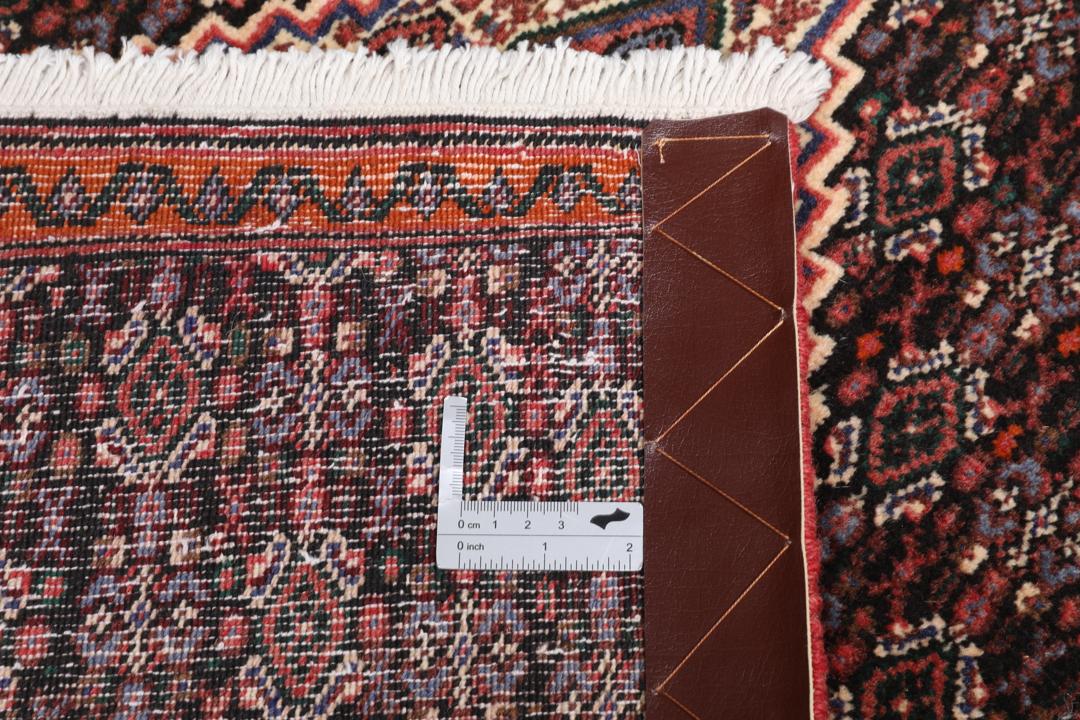
The term Senneh refers to a specific technique and aesthetic that prioritises precision. A hallmark of this style is the use of a single-weft construction, which results in a thinner, more flexible rug that is known for its remarkable durability. This technical approach allows for the creation of intricate, sharp patterns that are characteristic of the region.
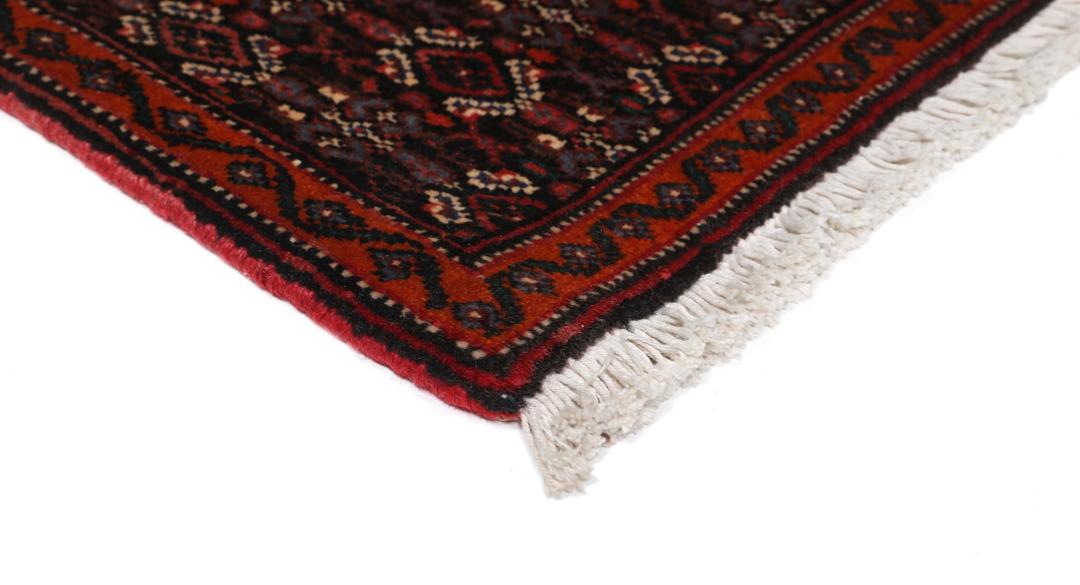
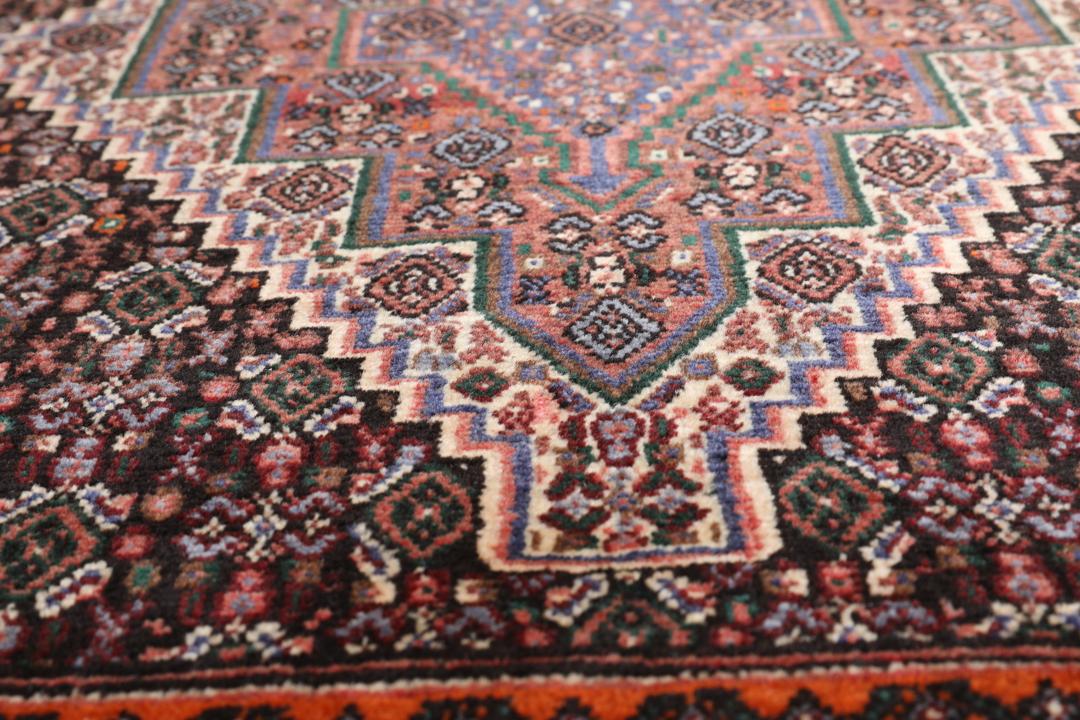
Design-wise, these rugs are famous for their elegant, often repeating patterns that may include the delicate Herati motif or, as seen here, a striking central medallion. The borders are typically formal and balanced, framing the field with geometric precision. The deep, saturated palette is a signature, often employing traditional dyes that age beautifully over time.
Collectors value these pieces not only for their aesthetic grace but for the immense skill required to produce them. Owning a Senneh rug is an investment in cultural history, representing a bridge between ancient nomadic influences and refined urban artistry. It is a piece that carries the weight of tradition while serving as a functional, elegant addition to the modern home.