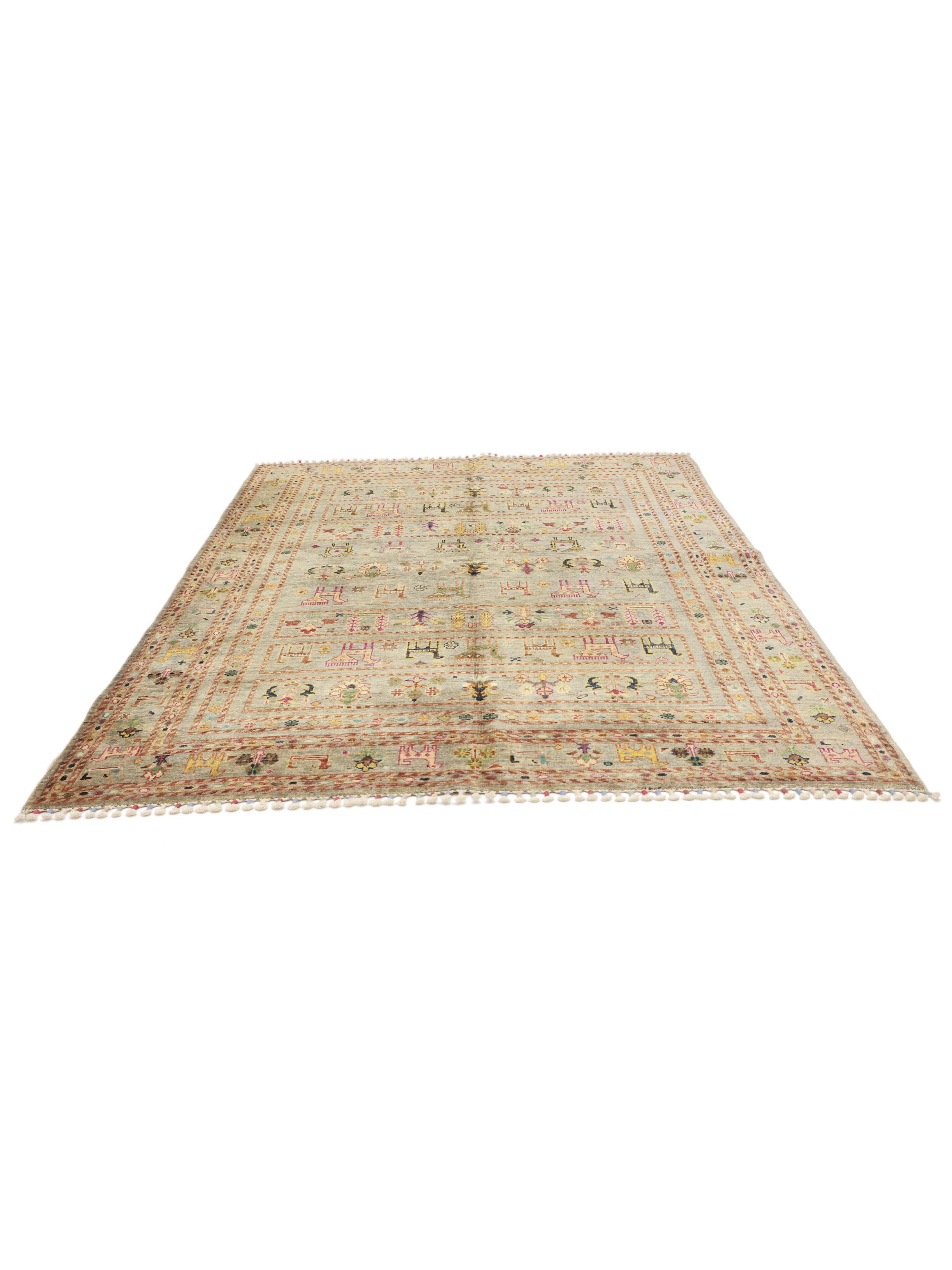
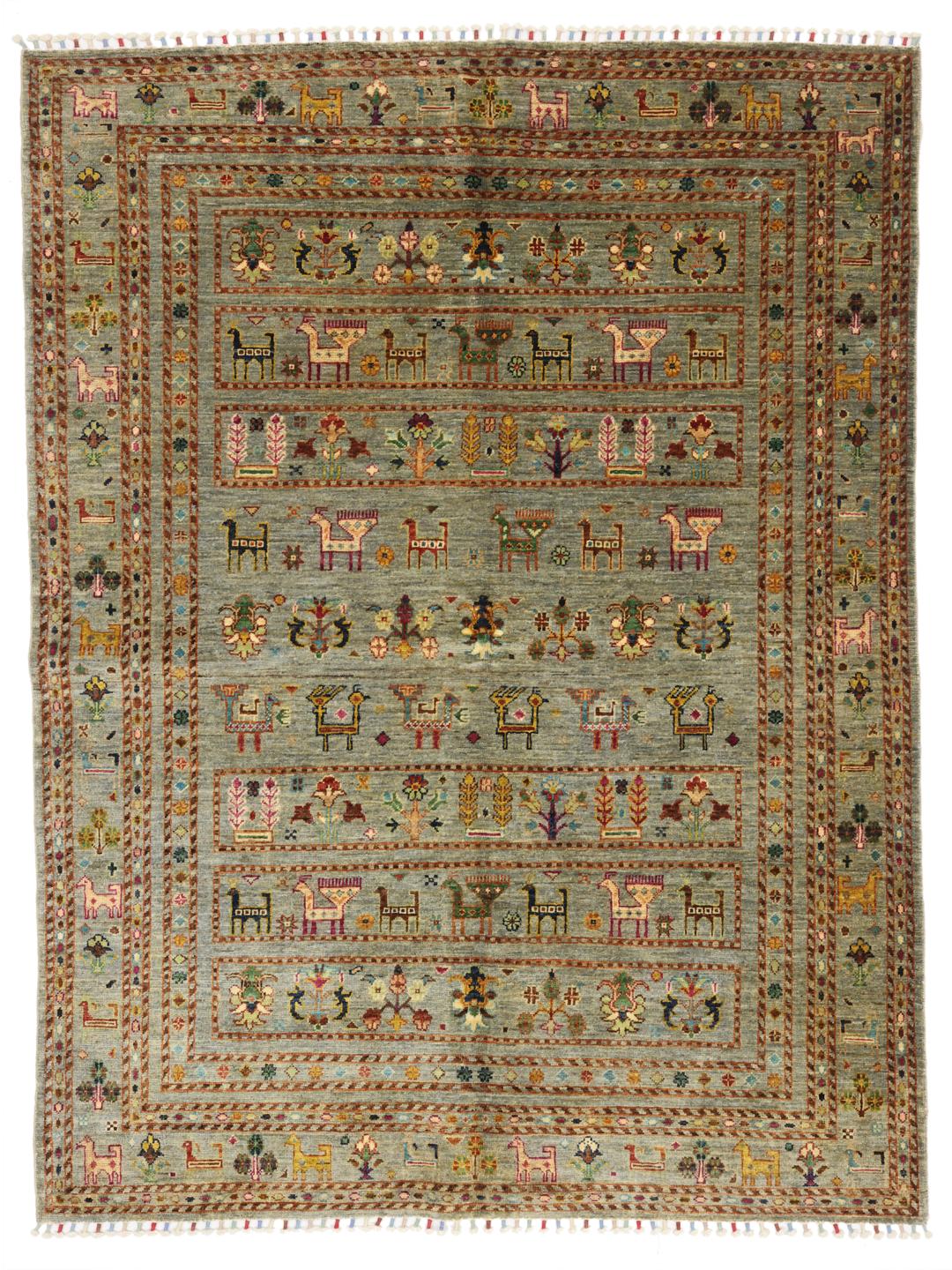
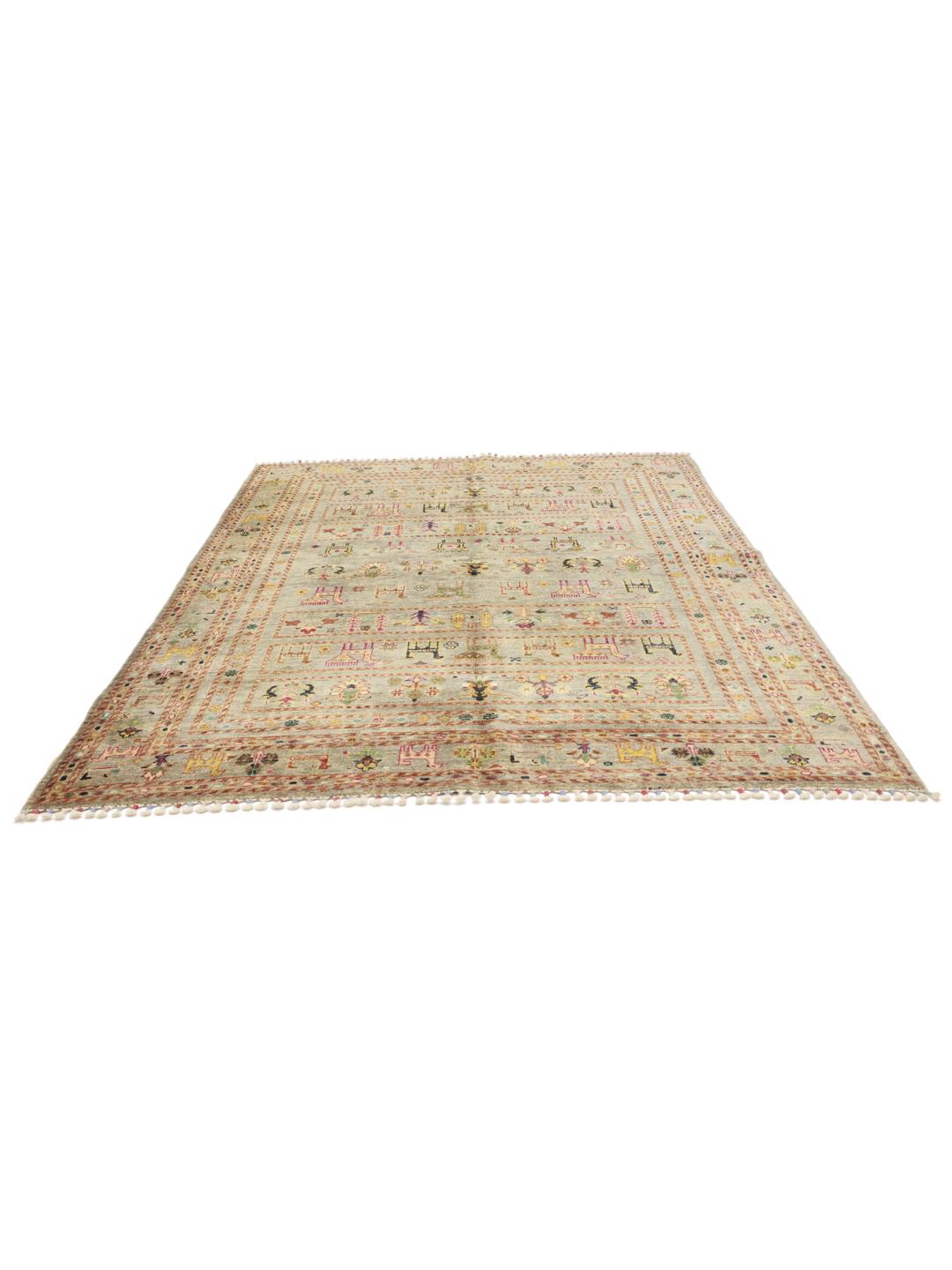
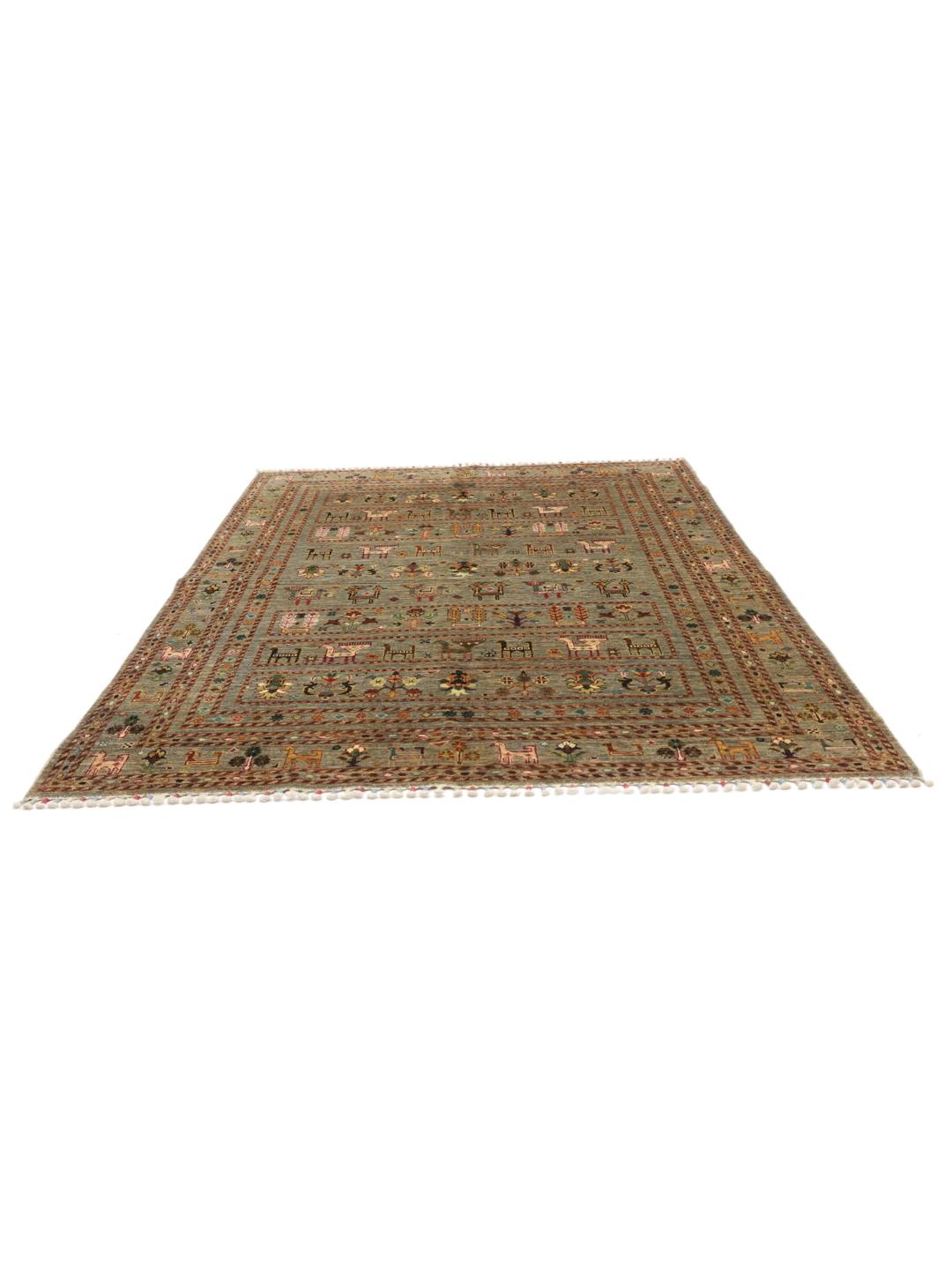
The Shabargan tradition finds its roots in the rich weaving landscape of northern Afghanistan. These rugs are deeply influenced by the artistic heritage of the region, where weavers have long used their craft to document daily life, folklore, and the surrounding natural world through vivid imagery.
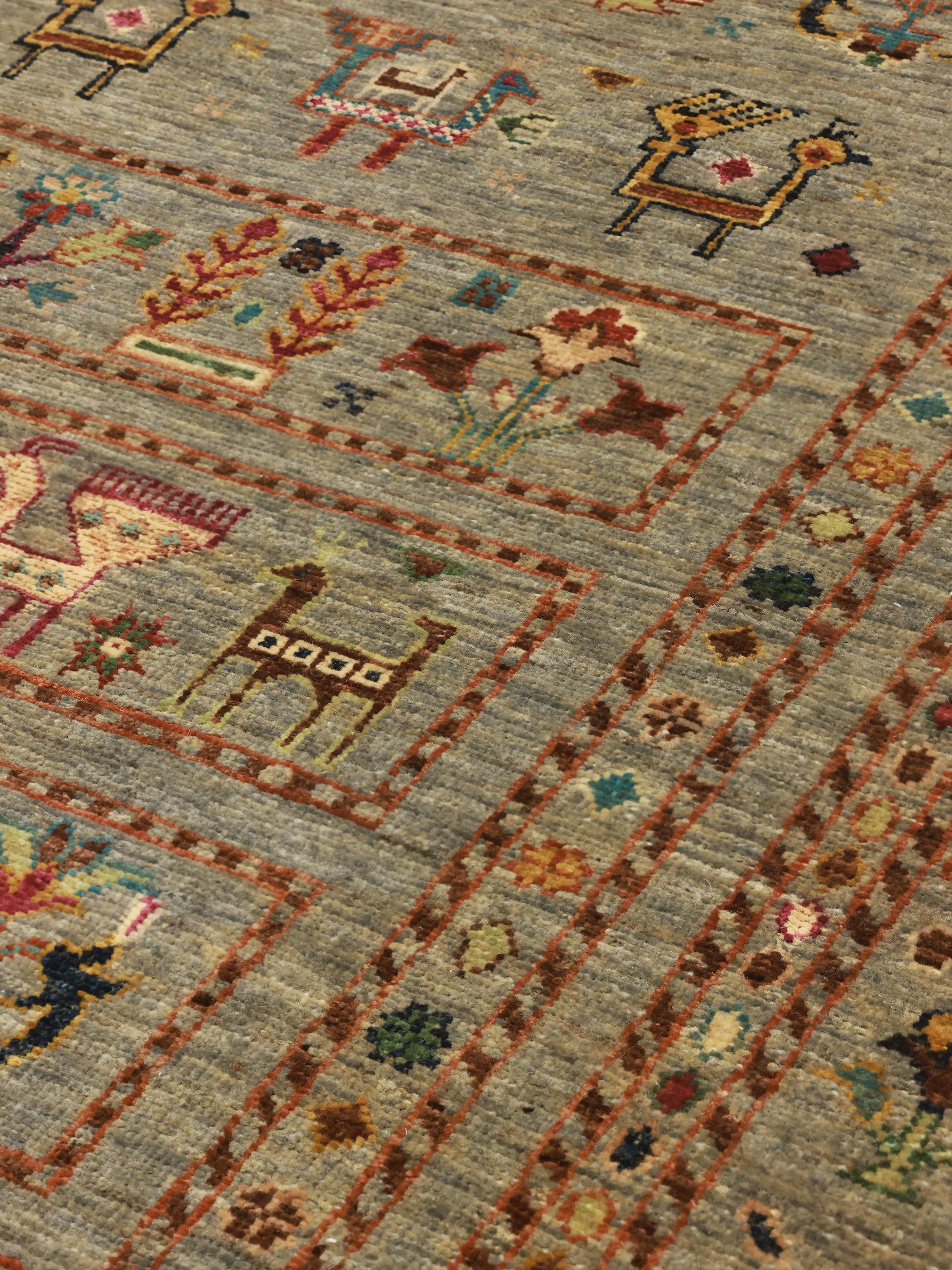
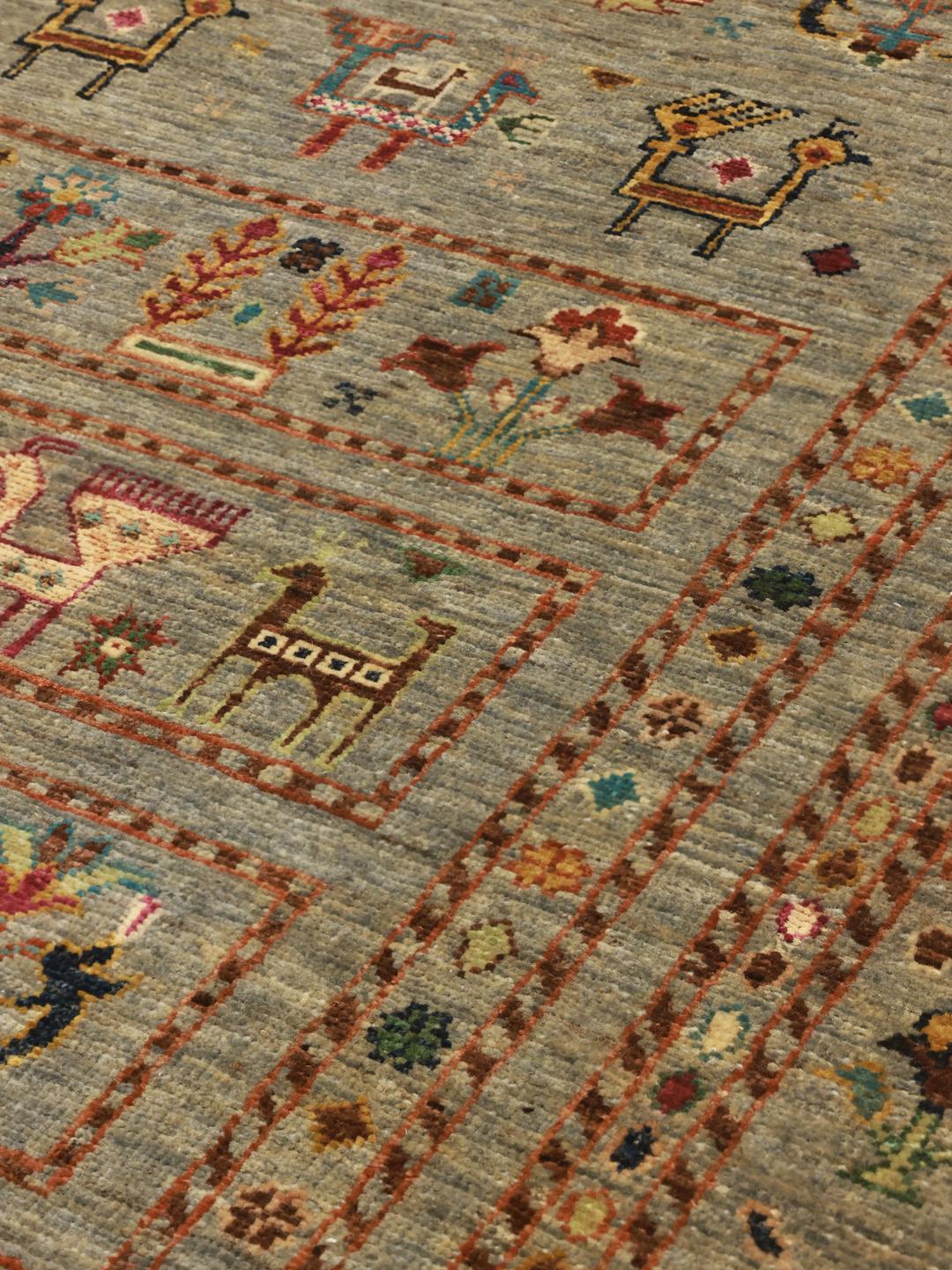
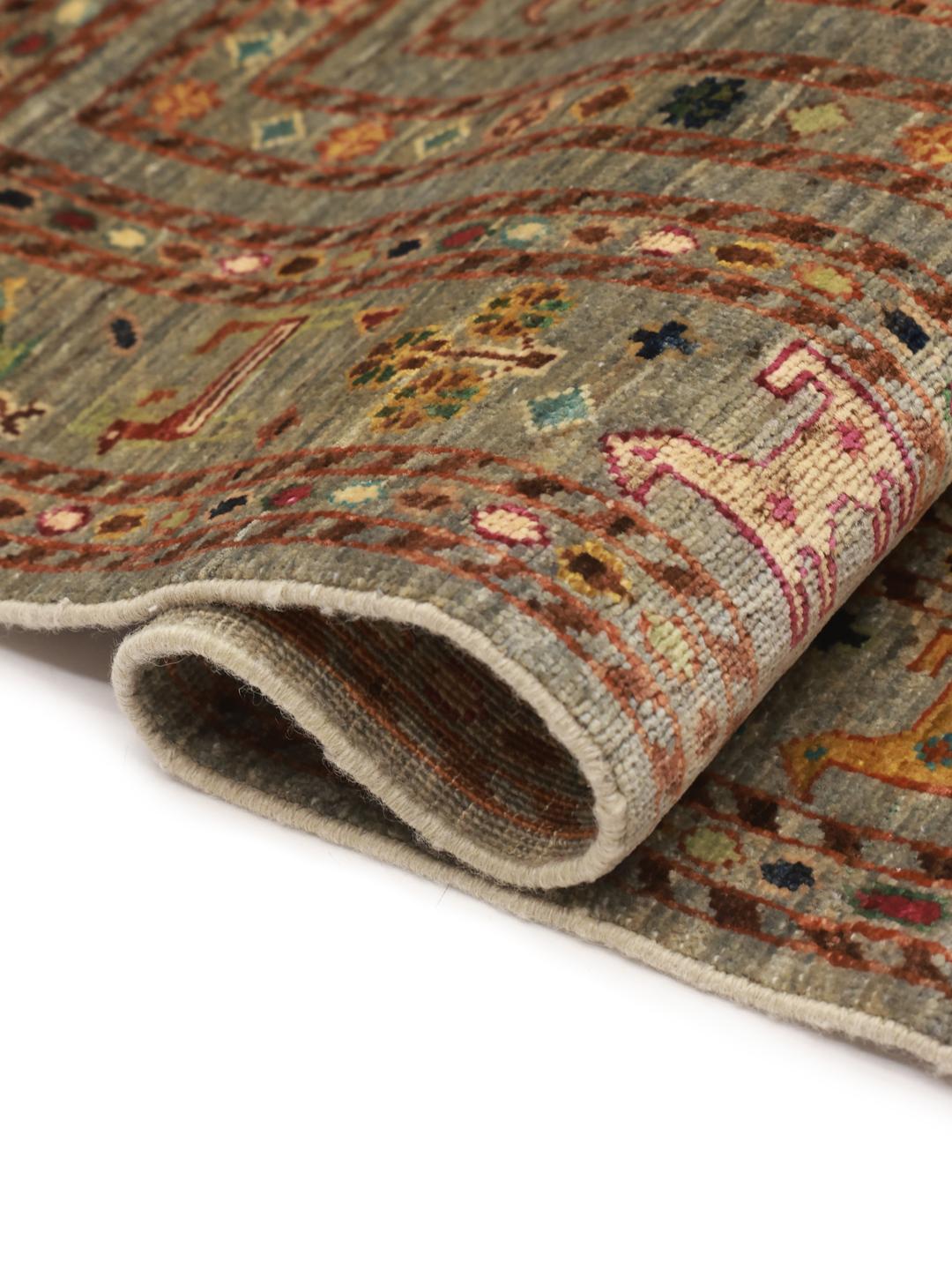
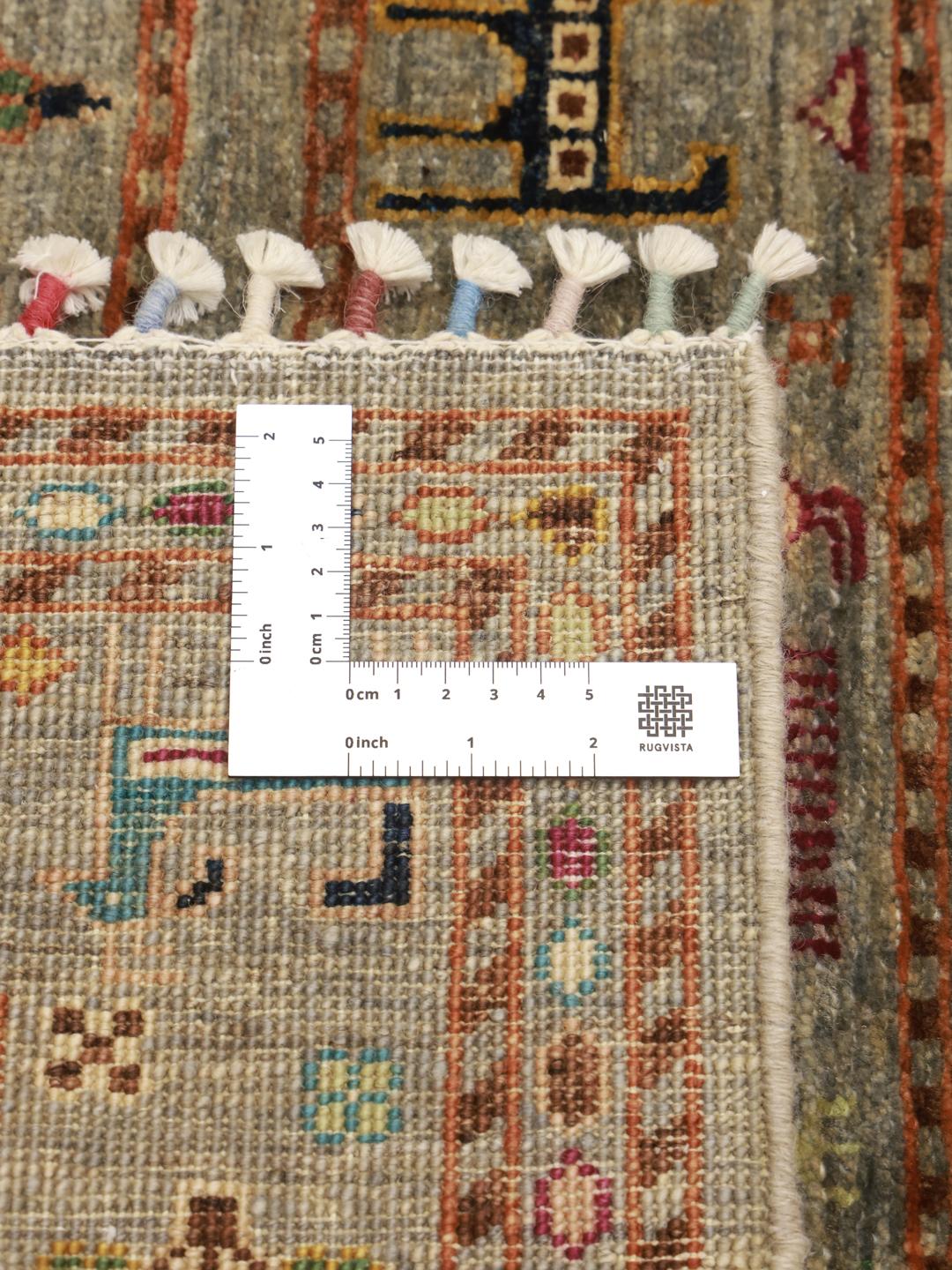
The term 'hand-knotted' refers to the traditional, labour-intensive method of looping yarn around the warp threads of the foundation. This technique is the hallmark of quality in rug-making, as it allows for the creation of intricate patterns that remain stable and sharp over decades of use. It is a slow, methodical process that emphasises longevity.
Visually, these rugs are defined by their narrative quality. Unlike rugs that rely solely on geometric repetitions, this style often incorporates pictorial motifs such as stylised animals, trees, and flowers. The use of these motifs is a way of storytelling, turning the rug into a canvas that reflects the weaver's environment and cultural identity.
Collecting a rug from this tradition is an investment in human skill and regional history. These pieces are highly valued by those who appreciate the intersection of utility and fine art, as they possess a lasting aesthetic that transcends passing trends. By choosing a Shabargan, you are preserving a craft tradition that has been passed down through generations.