The tradition of rug weaving in Afghanistan is deeply rooted in the history of the Middle East, reflecting a long lineage of nomadic and village craft. These rugs are often named after the regions or towns where they are produced, such as Shabargan, a city in the northern part of the country with a rich history of trade and craftsmanship. This region has long served as a hub for weavers who combine ancient techniques with an evolving aesthetic.
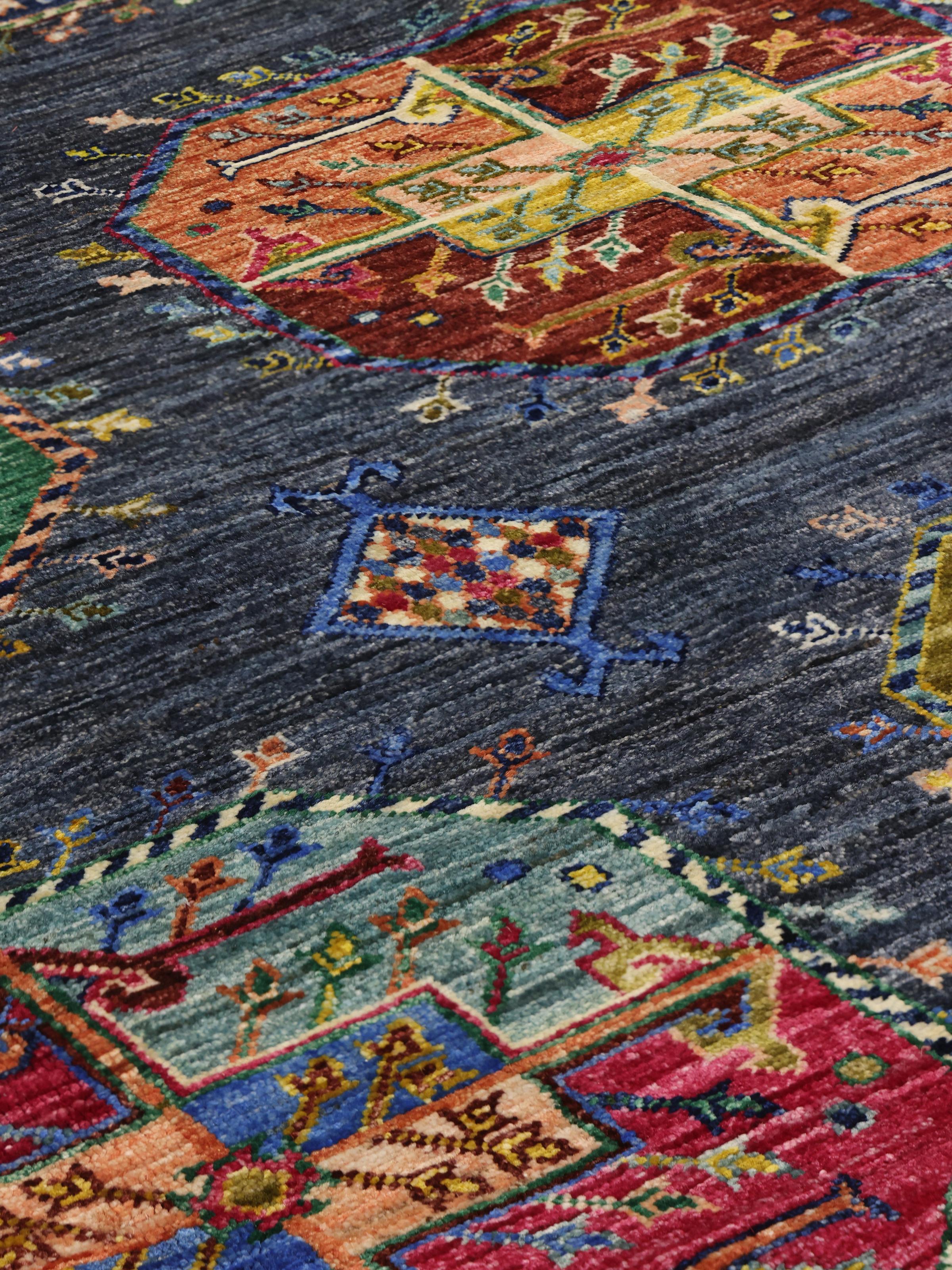
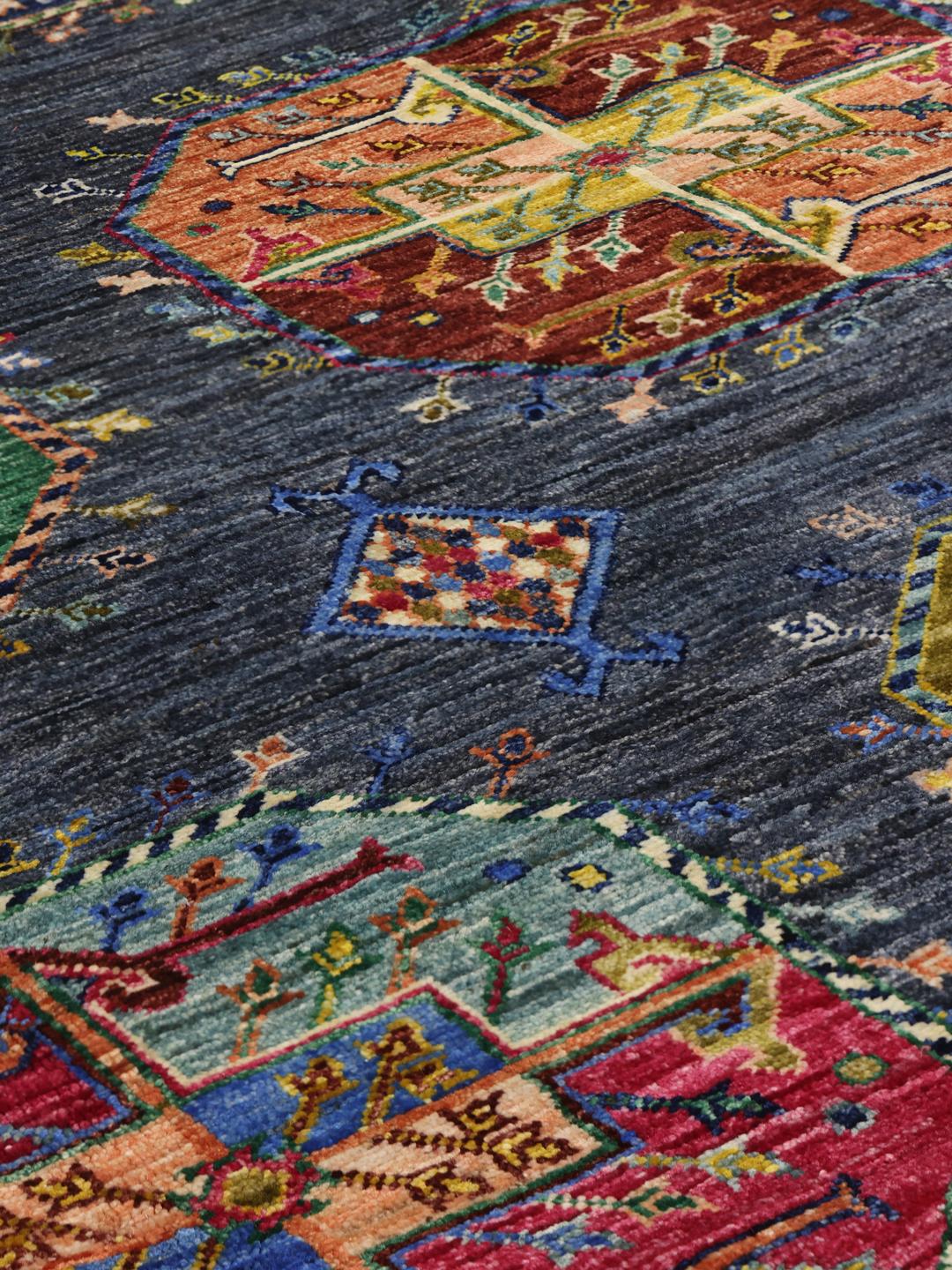
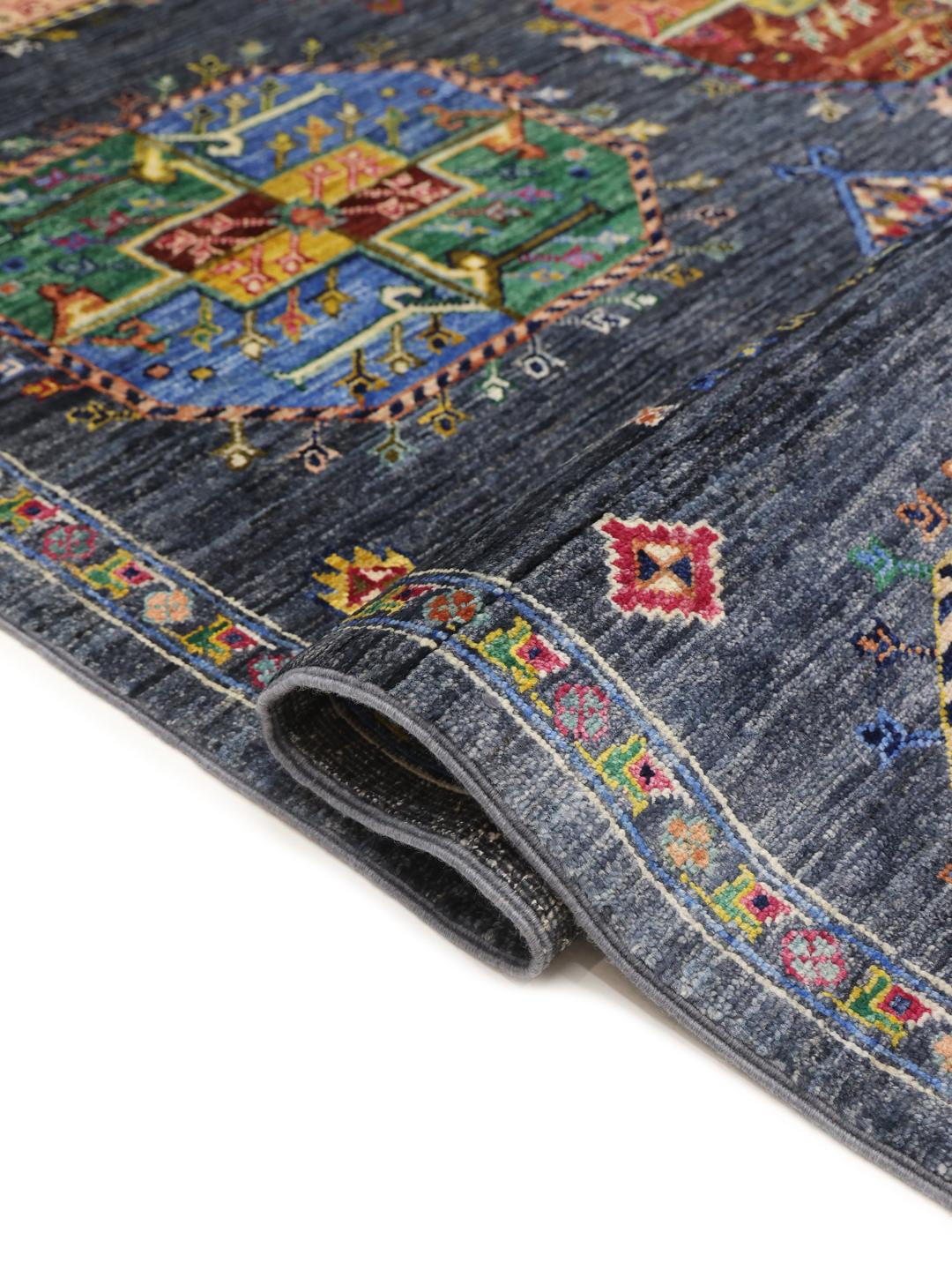
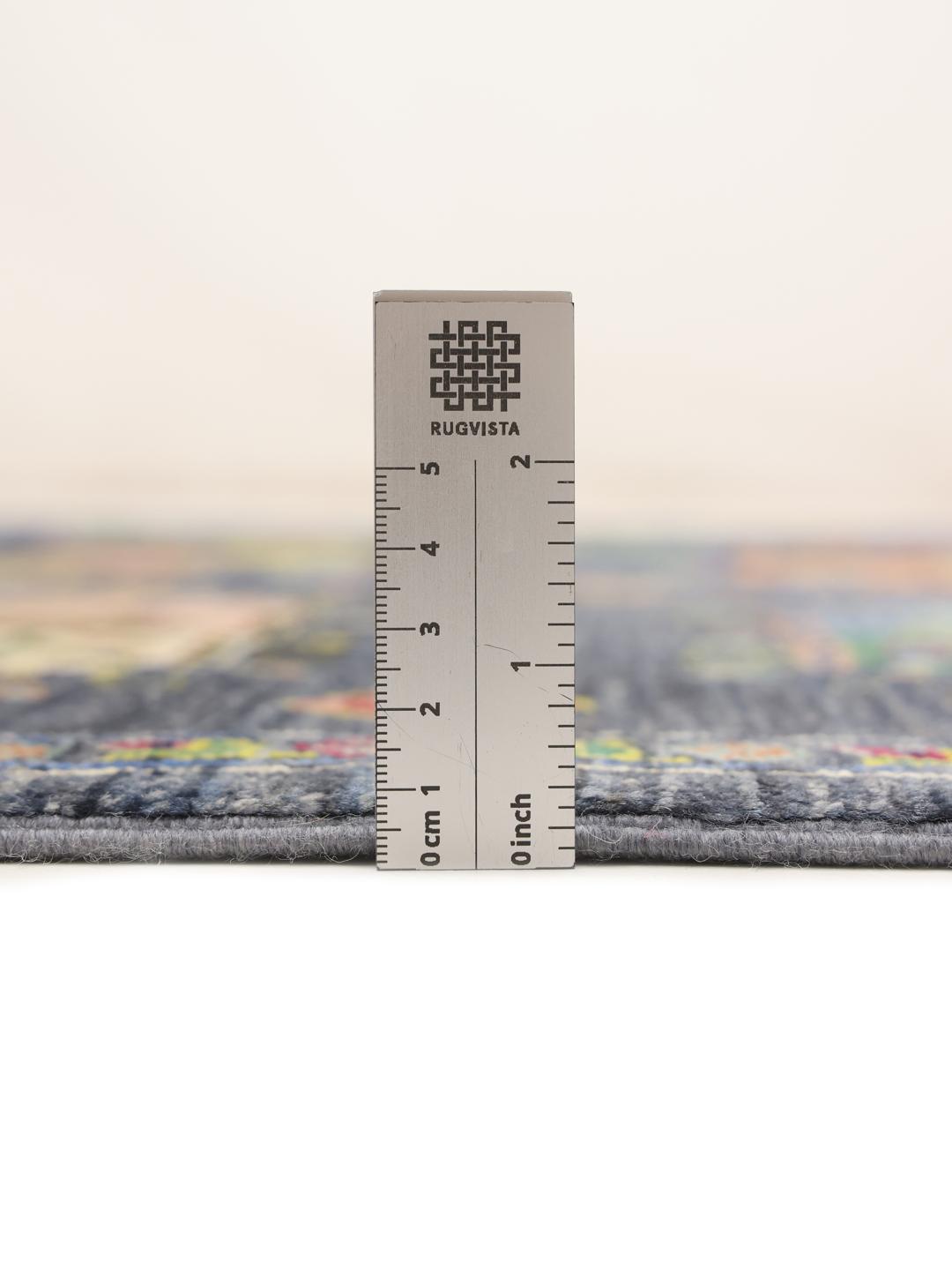
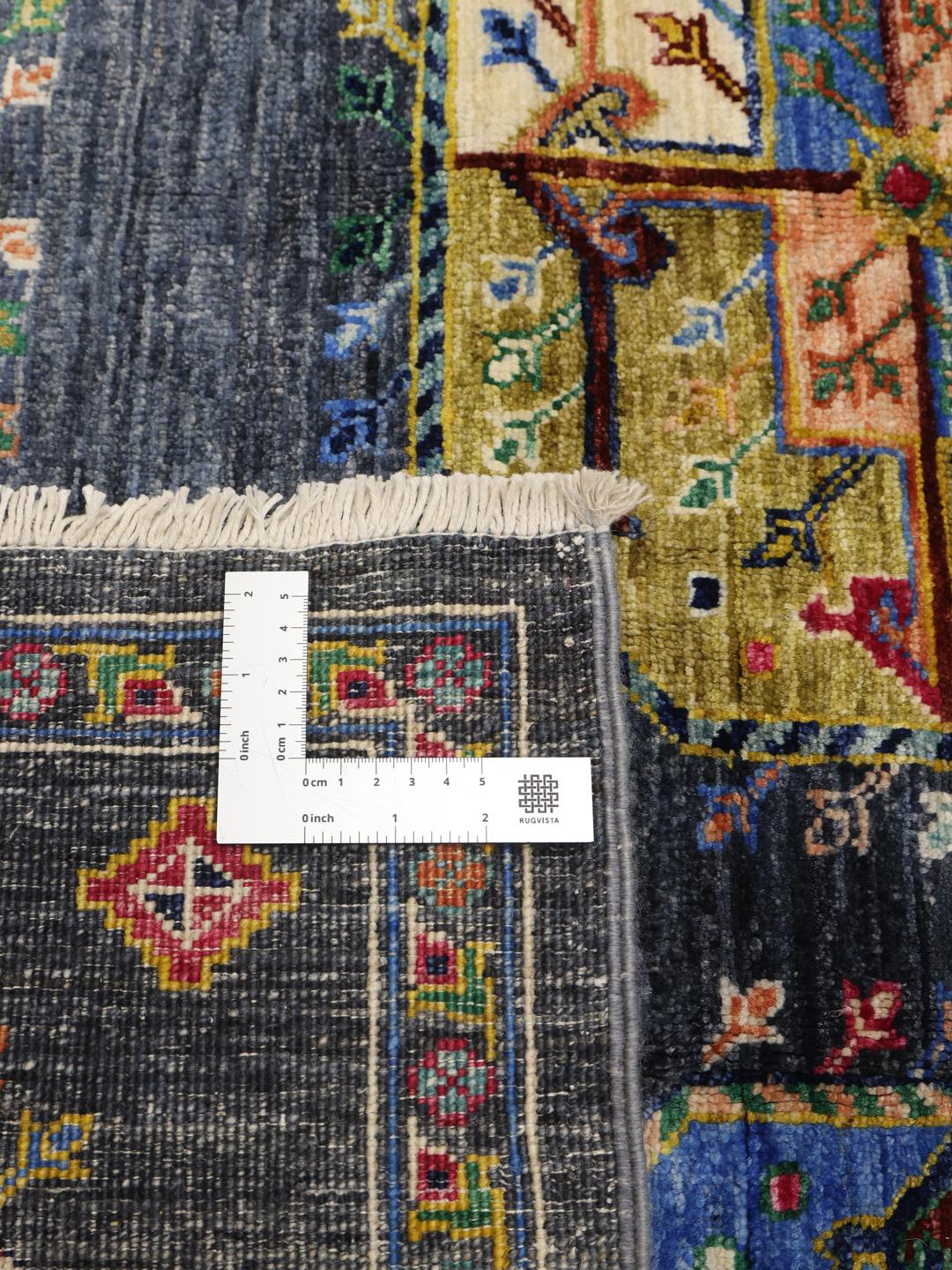
The technical quality of these rugs is defined by their dense, hand-knotted construction. Using high-quality Wool, artisans create a pile that is known for its resilience and natural lustre. The process involves a complex series of steps, starting from the preparation of the Wool to the careful, knot-by-knot weaving process that forms the foundation of the rug's longevity and tactile quality.
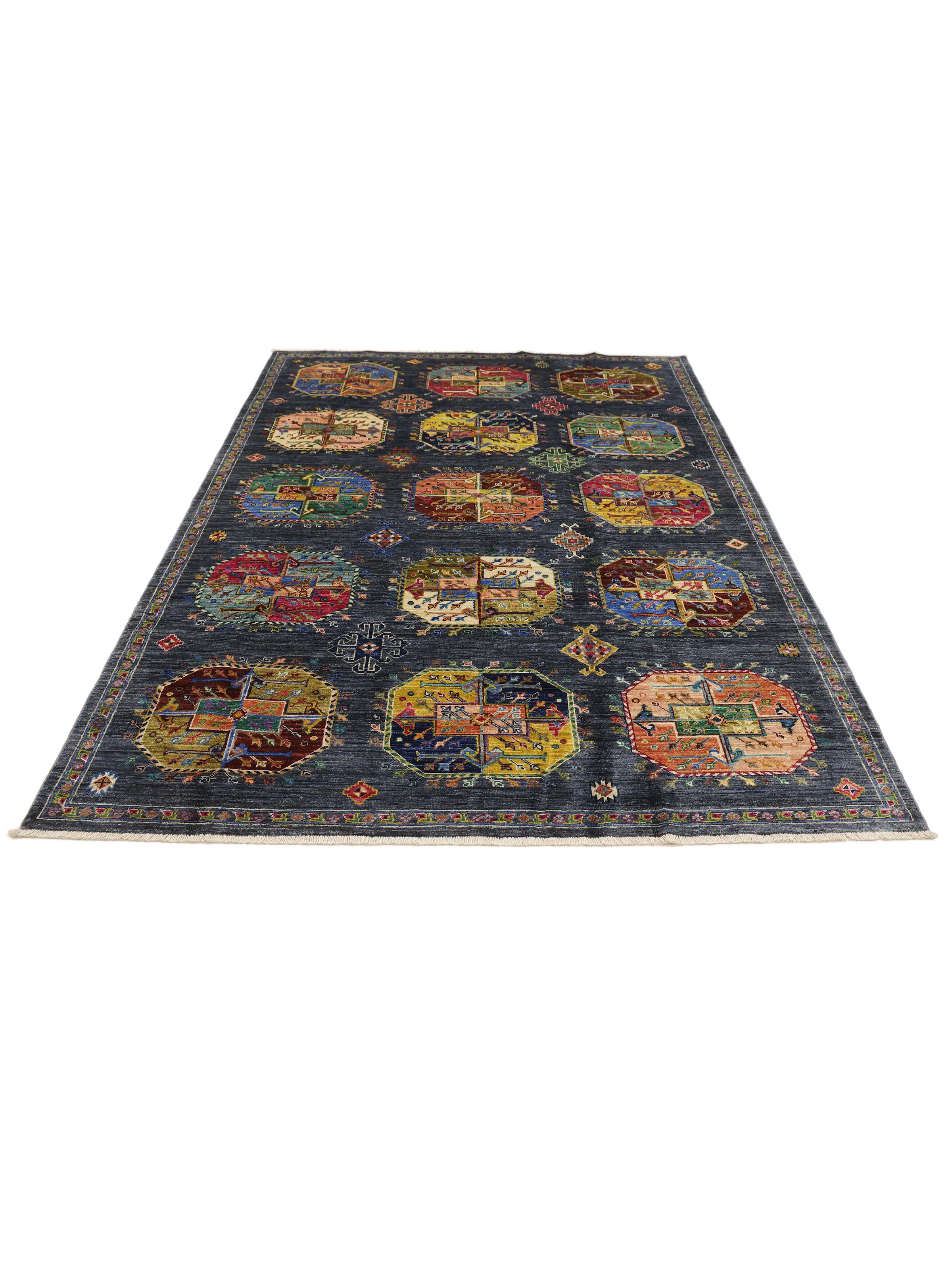
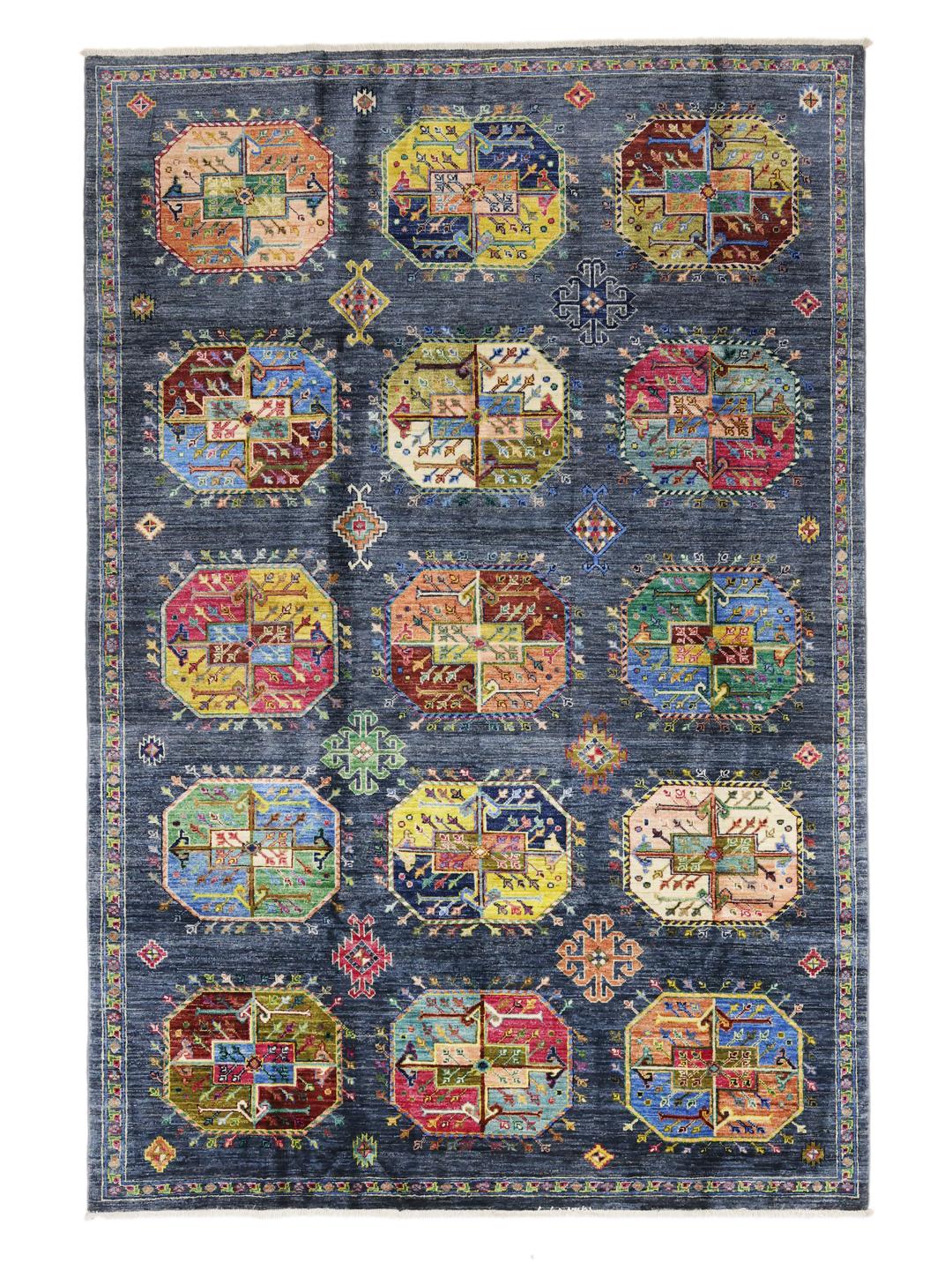
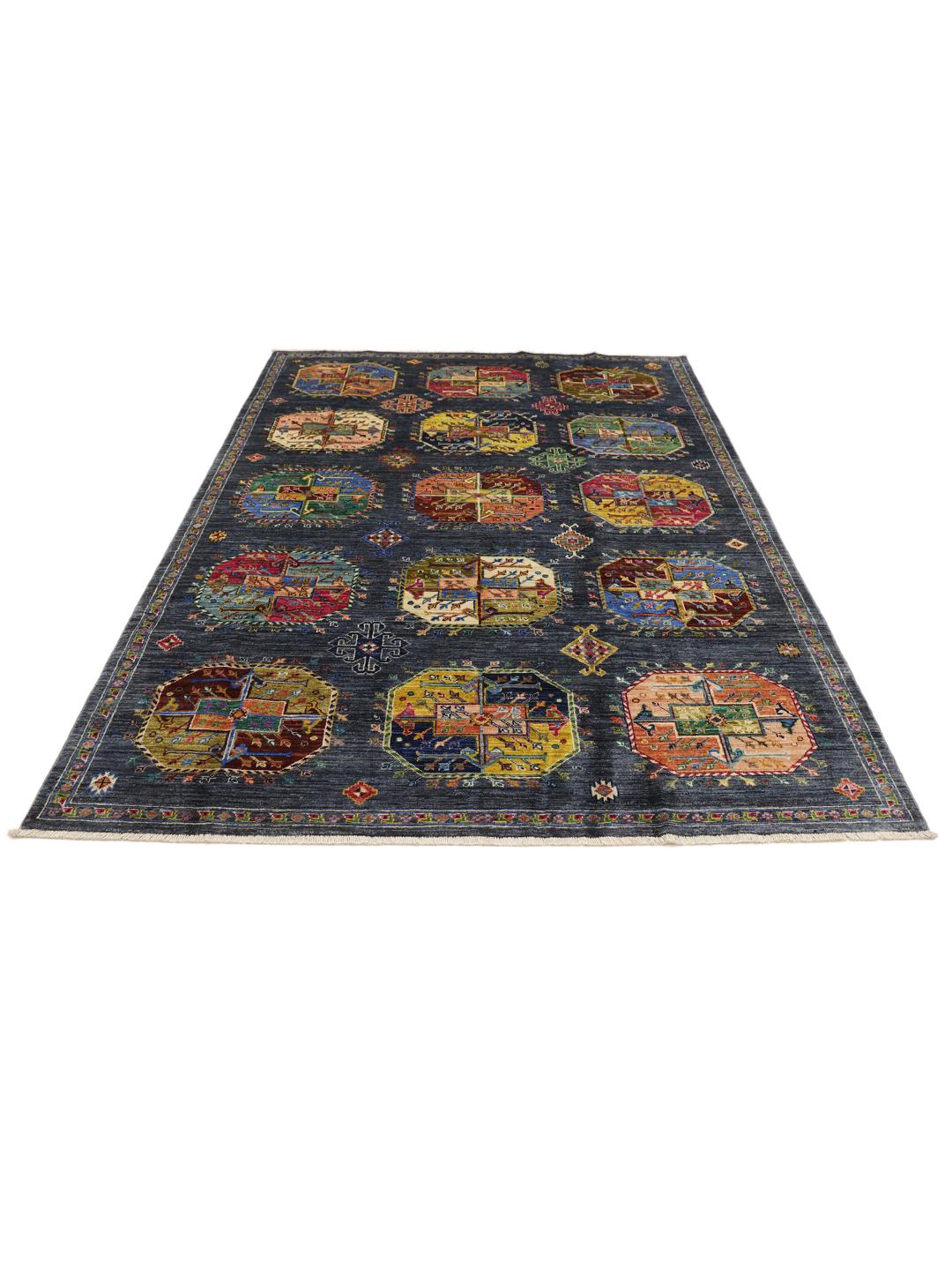
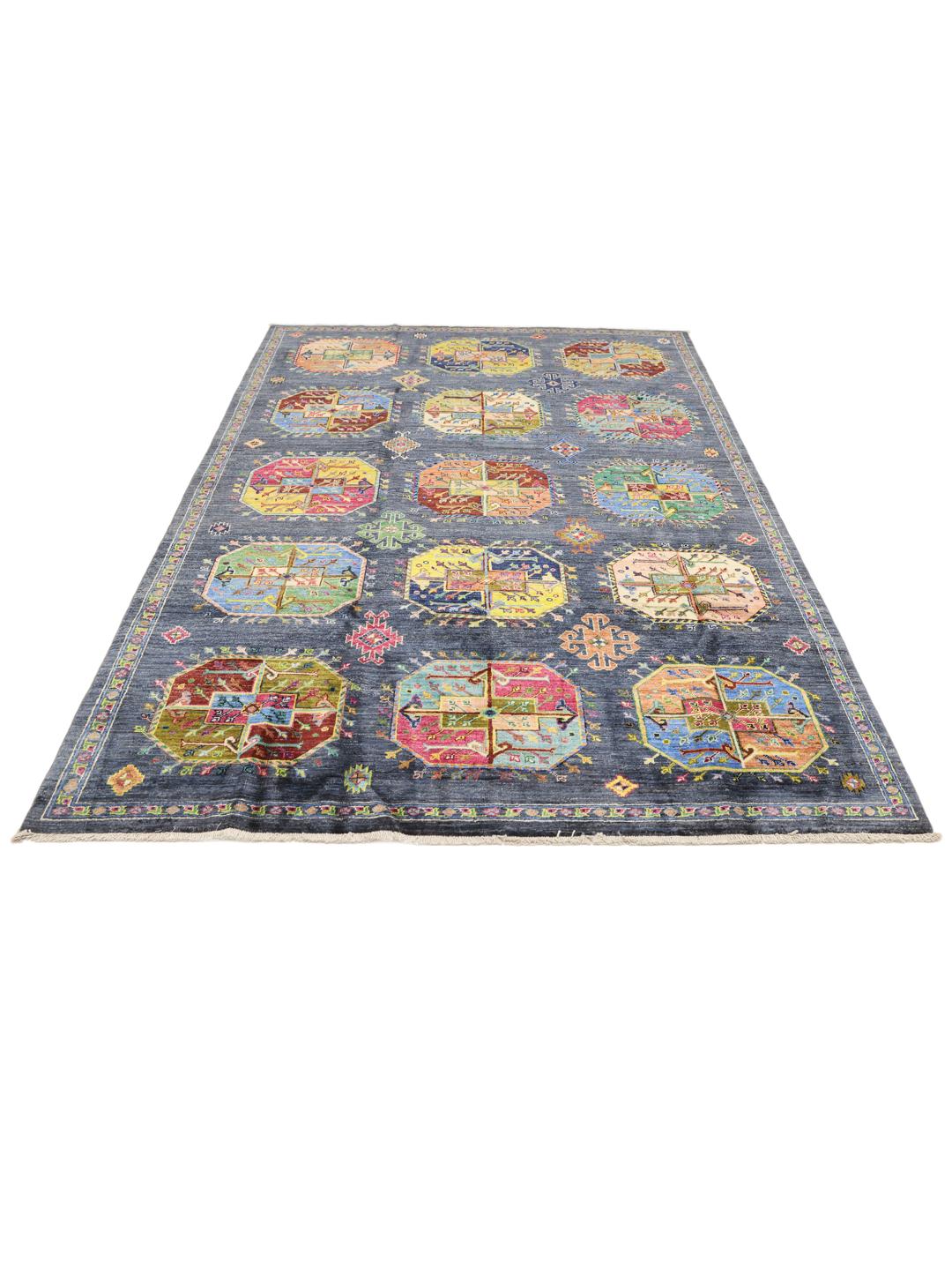
The visual language of this tradition is characterised by repeating geometric motifs, often referred to as guls or medallions. These patterns are not merely decorative but are deeply connected to the cultural identity of the weavers, often passed down through families. The use of a dark blue field in this particular piece is a sophisticated choice that allows the multi-coloured details to pop, showcasing a mastery of colour theory and pattern placement.
Collecting a rug from this tradition is an investment in human skill and cultural history. Each piece is a representation of the weaver's perspective and the time-honoured methods of the region. By choosing a hand-knotted piece, you are supporting a craft that values patience, precision, and the preservation of heritage, ensuring that the art of the loom continues to thrive in modern homes.