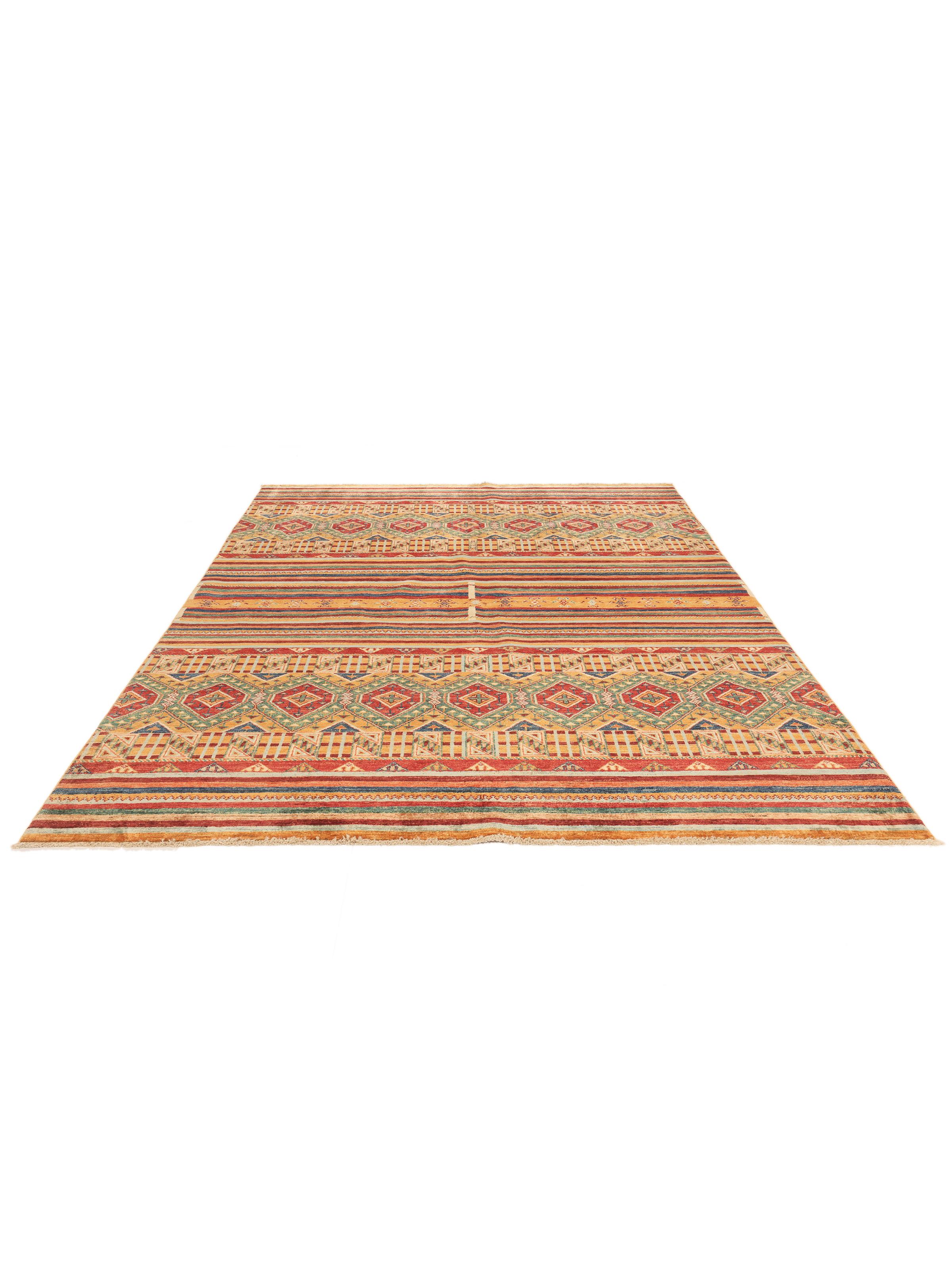
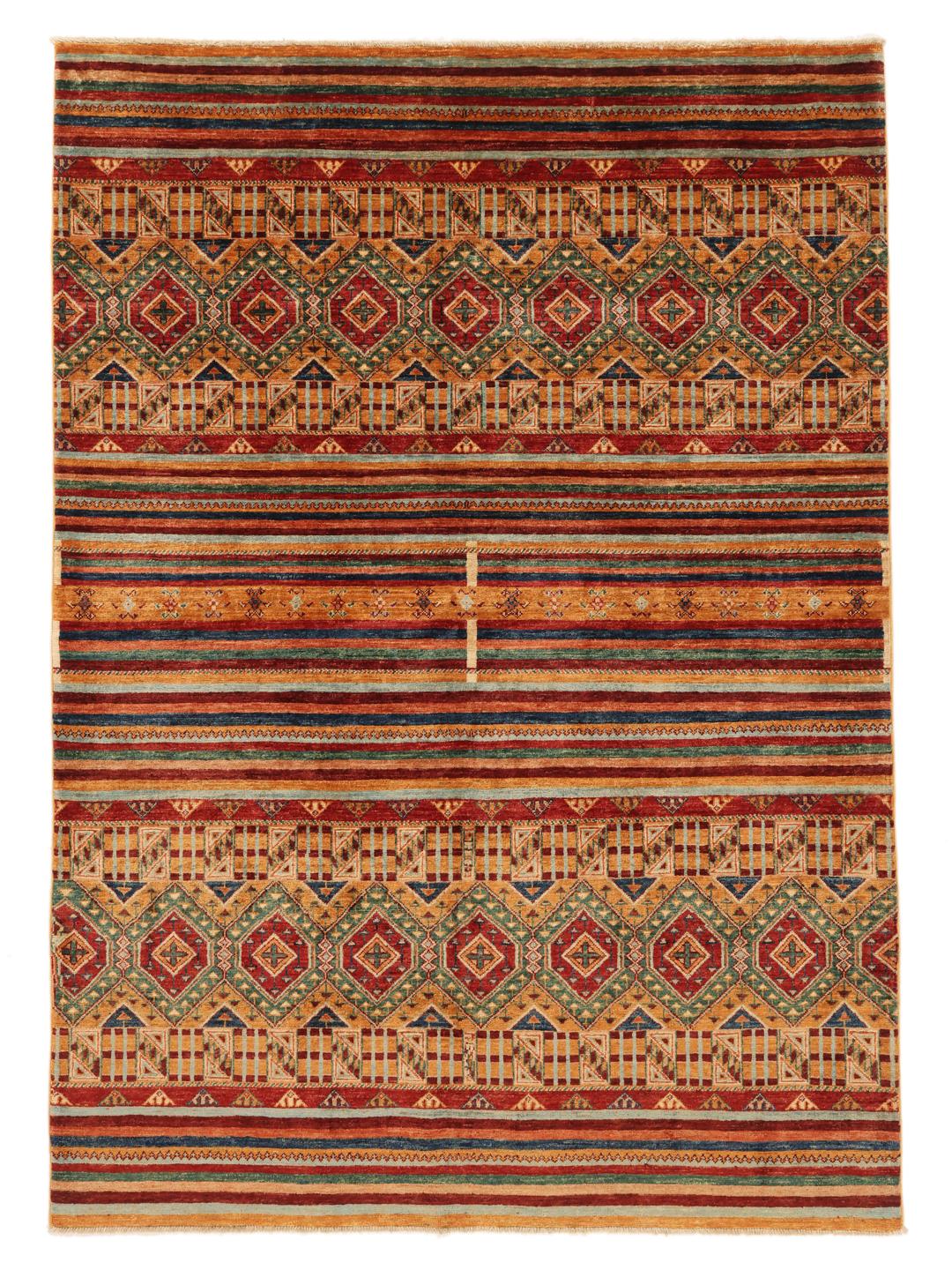
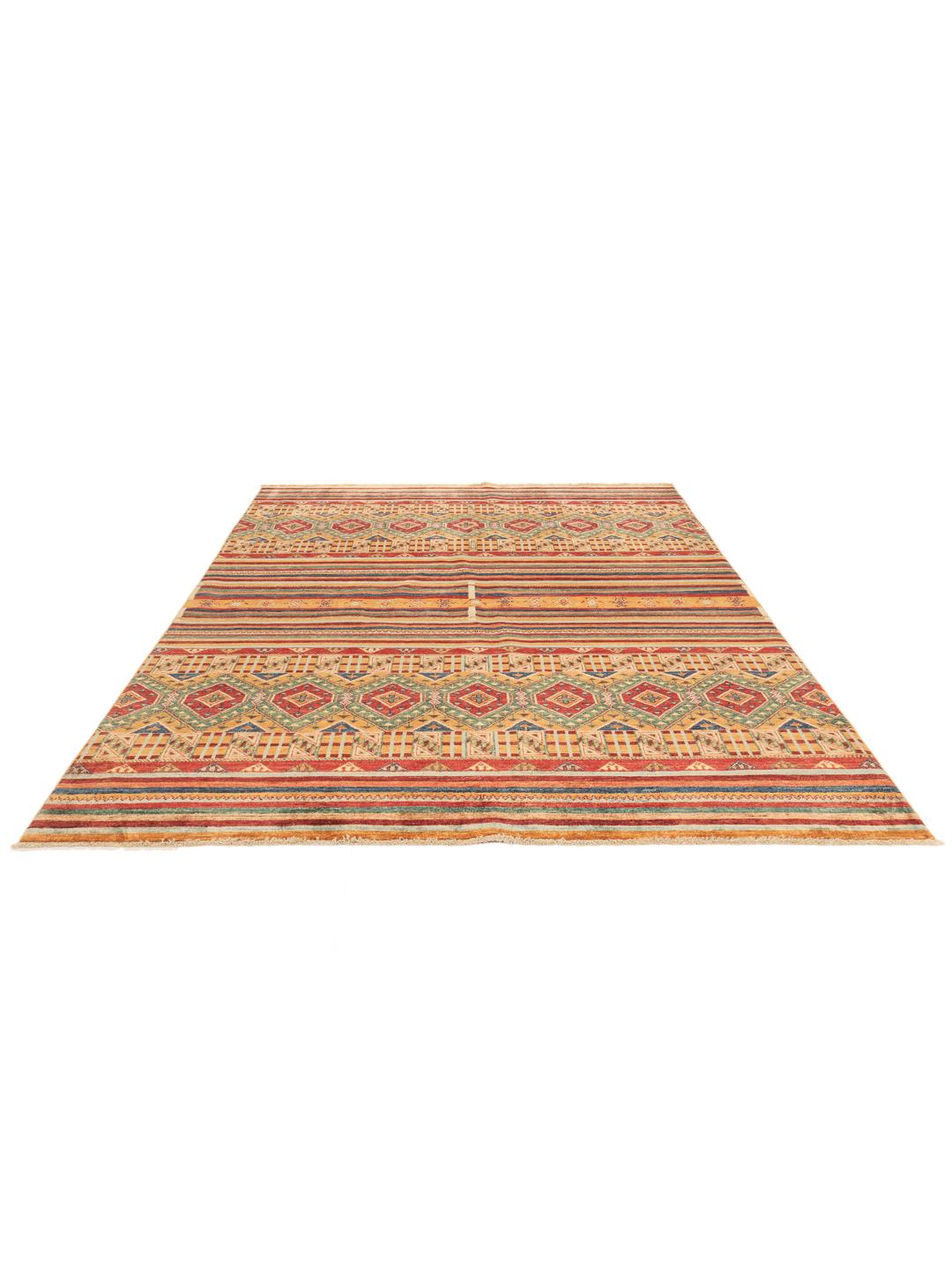
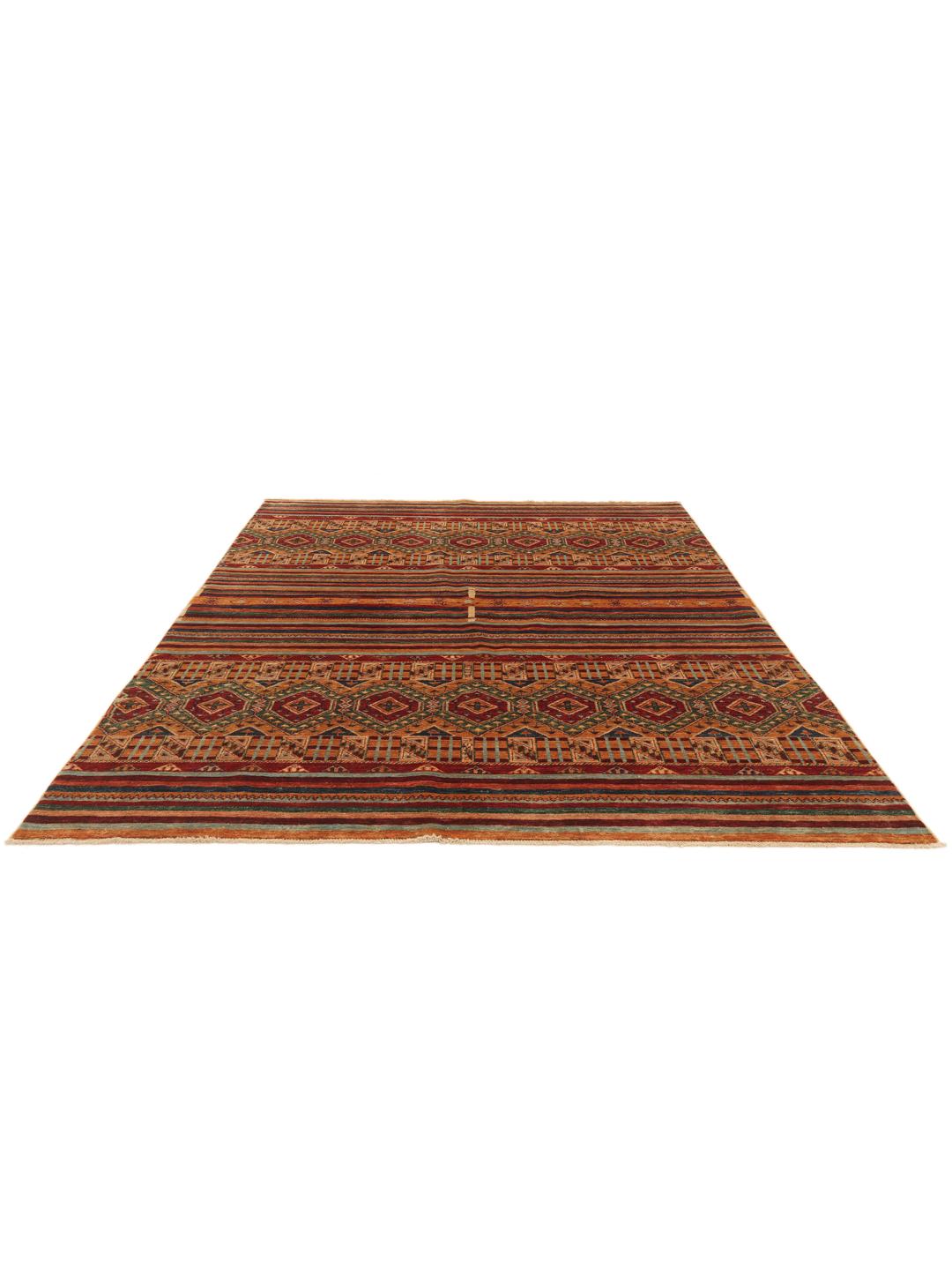
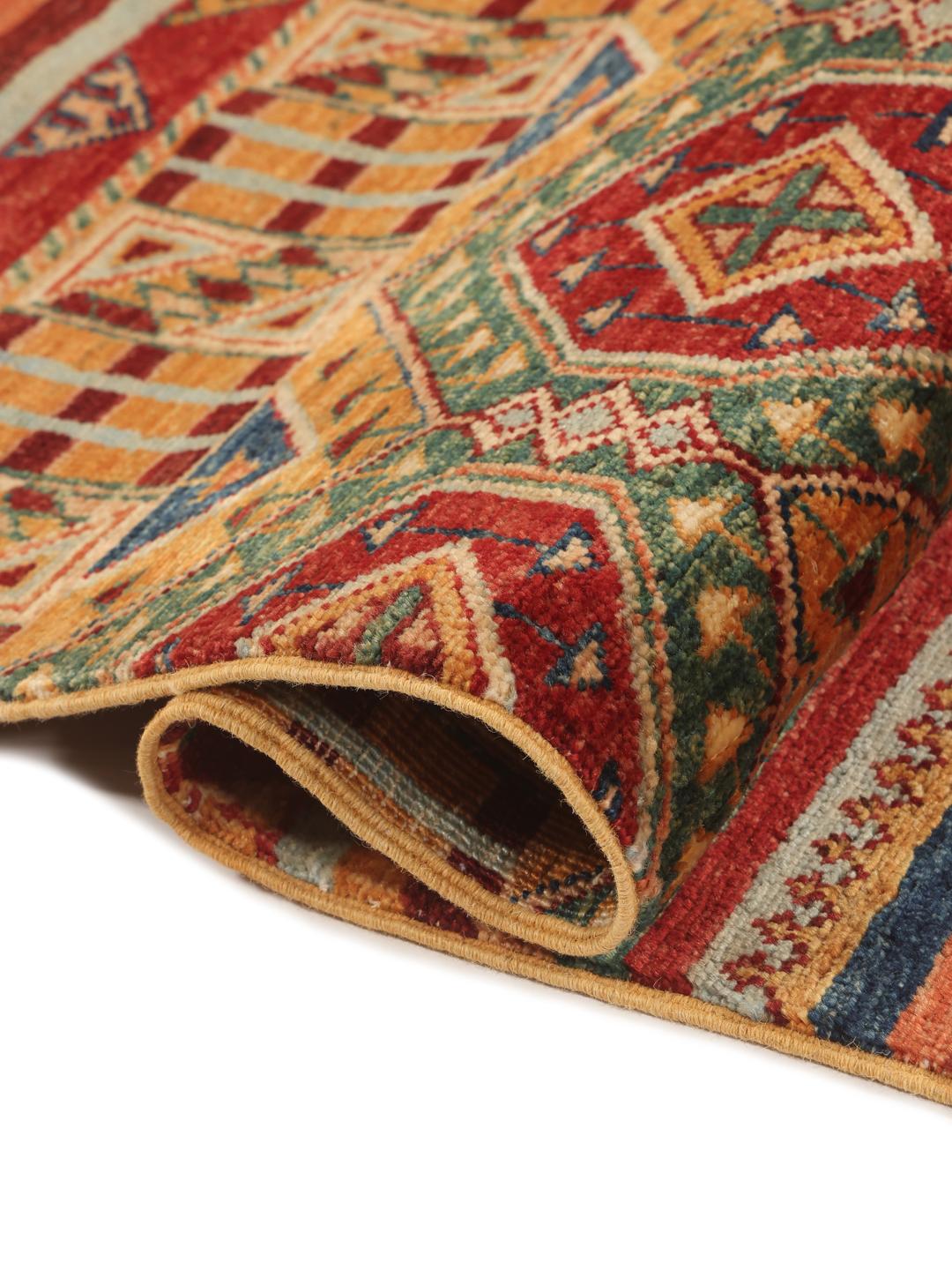
The Middle East has long been a crossroads of culture, and its rug-weaving traditions are deeply rooted in the nomadic and settled histories of the region. These rugs are born from a fusion of ancient tribal motifs and the creative vision of local artisans who pass their knowledge through generations. The evolution of these designs reflects the complex history of the area, blending influences from across the region into a cohesive and recognisable style.
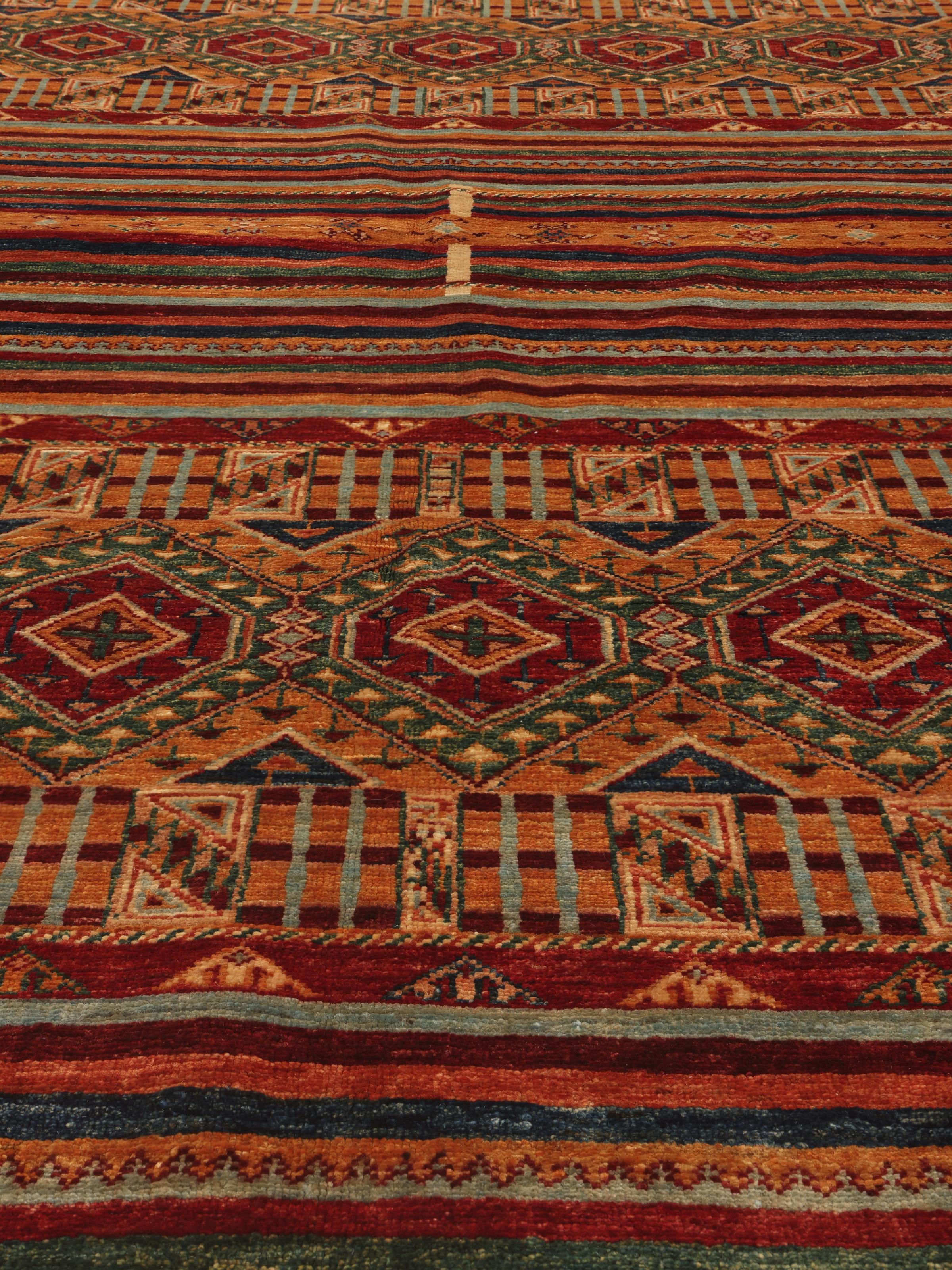
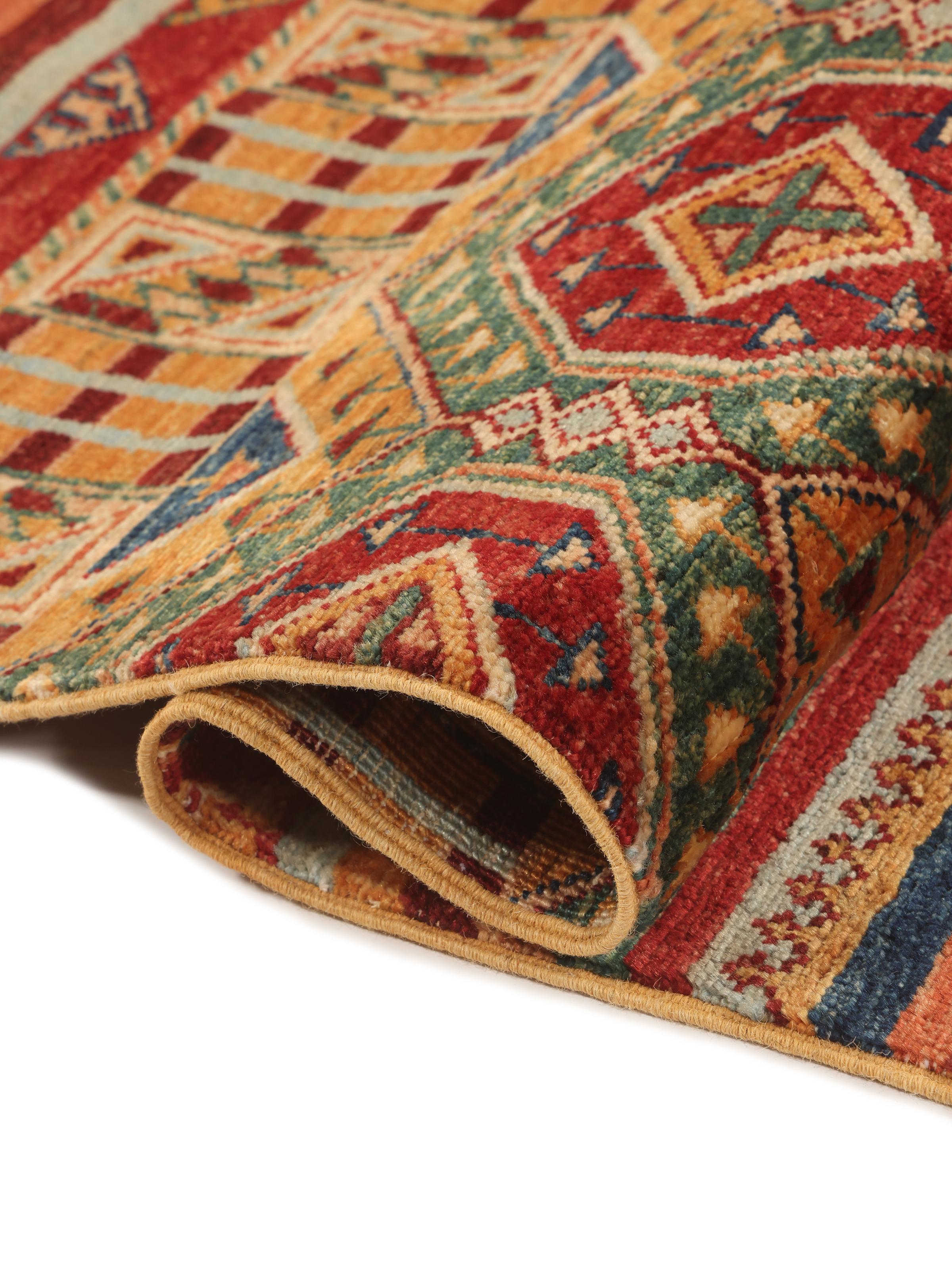
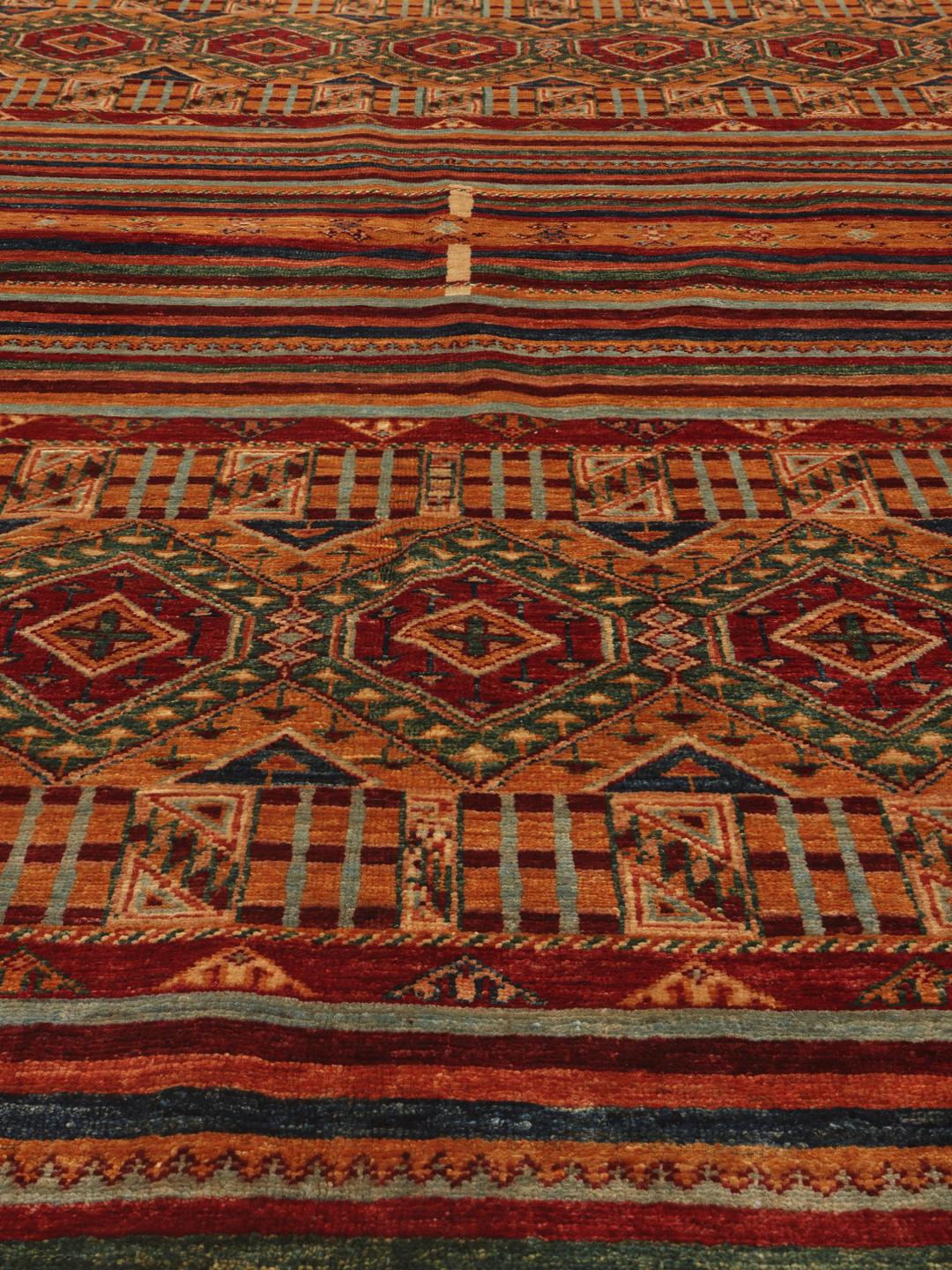
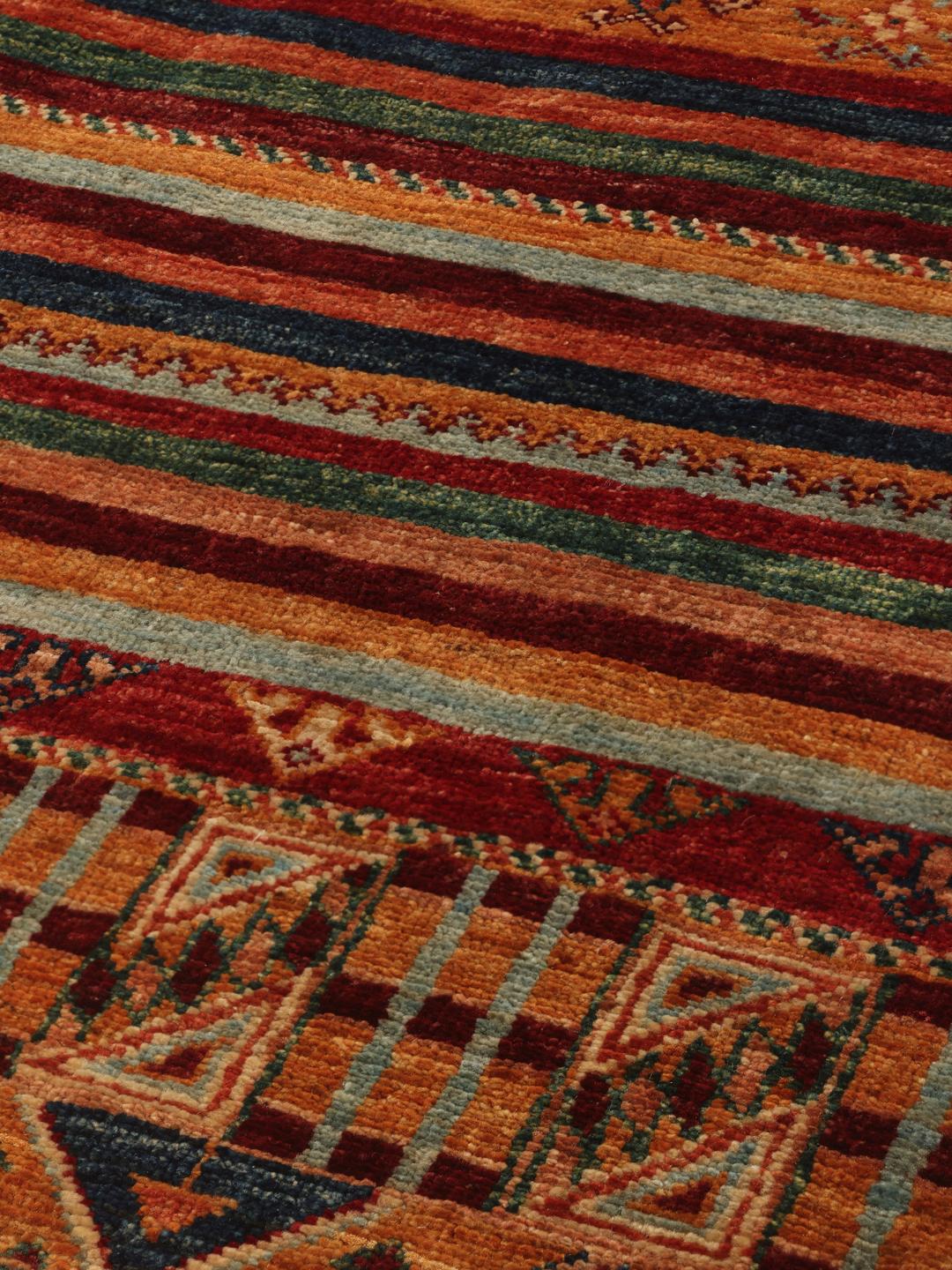
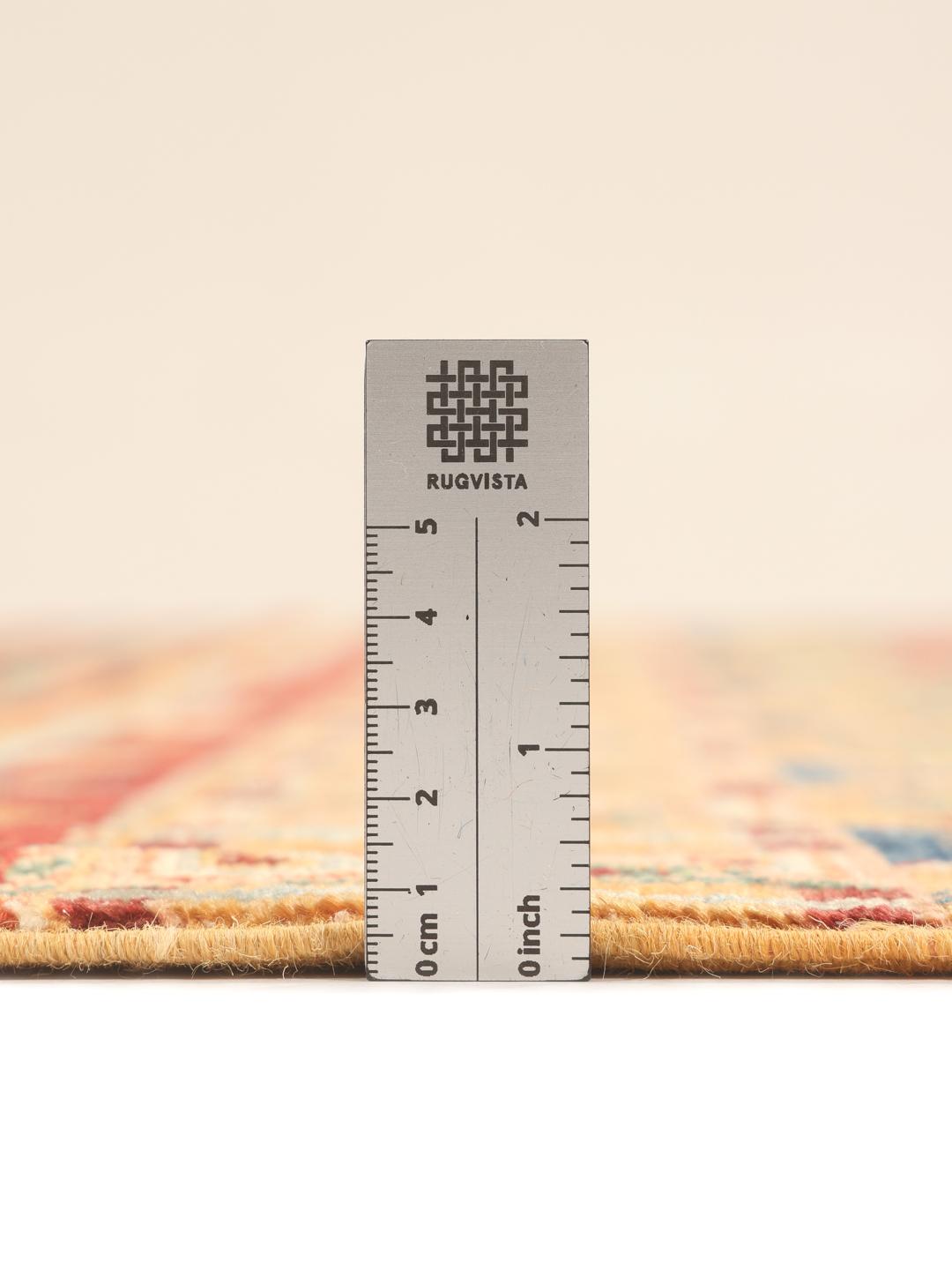
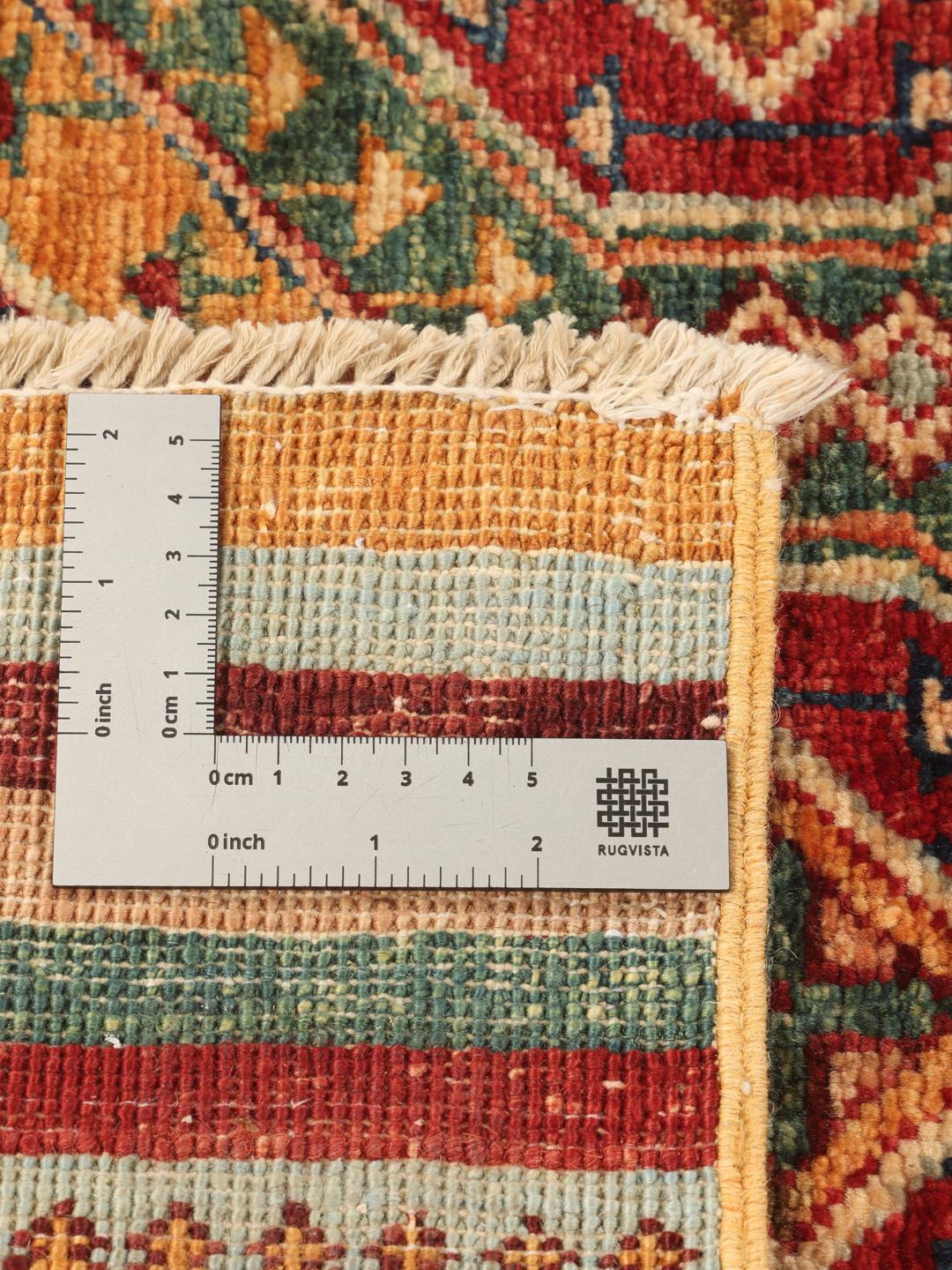
The term hand-knotted refers to the laborious technique of tying individual strands of Wool onto a foundation. This method is the hallmark of quality in the region, as it allows for intricate designs and a durable, dense pile that can withstand decades of use. Unlike simpler weaving methods, hand-knotting results in a luxurious feel and a weight that signals true craftsmanship.
The design language of this rug is characterised by its bold geometric motifs and rhythmic, stacked patterns. The use of repeating diamonds and octagons, often arranged within distinct horizontal bands, is a classic feature of regional design. These motifs are not merely decorative but often carry symbolic meanings related to protection, fertility, and the natural world, all brought to life through a vibrant and earthy colour palette.
Collecting these rugs is an investment in human skill and cultural heritage. They are highly valued for their authenticity and the sheer number of hours required to bring a single design to fruition. By owning this piece, you are not just acquiring a rug, but a tangible connection to an enduring tradition of artistry that celebrates the beauty of hand-wrought objects in a modern home.