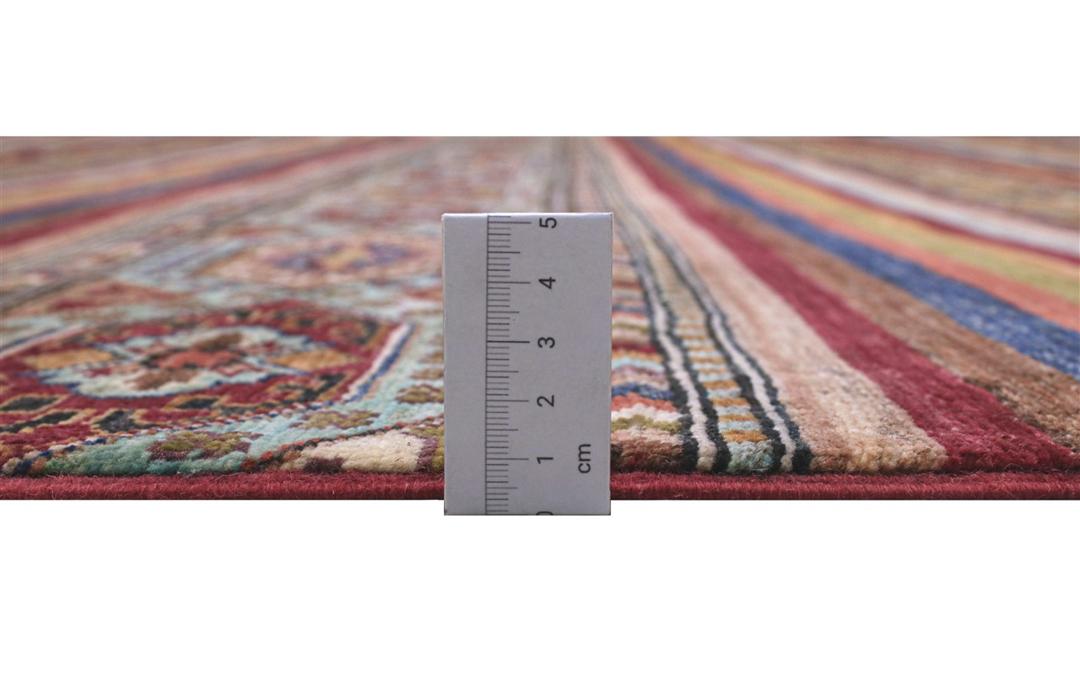
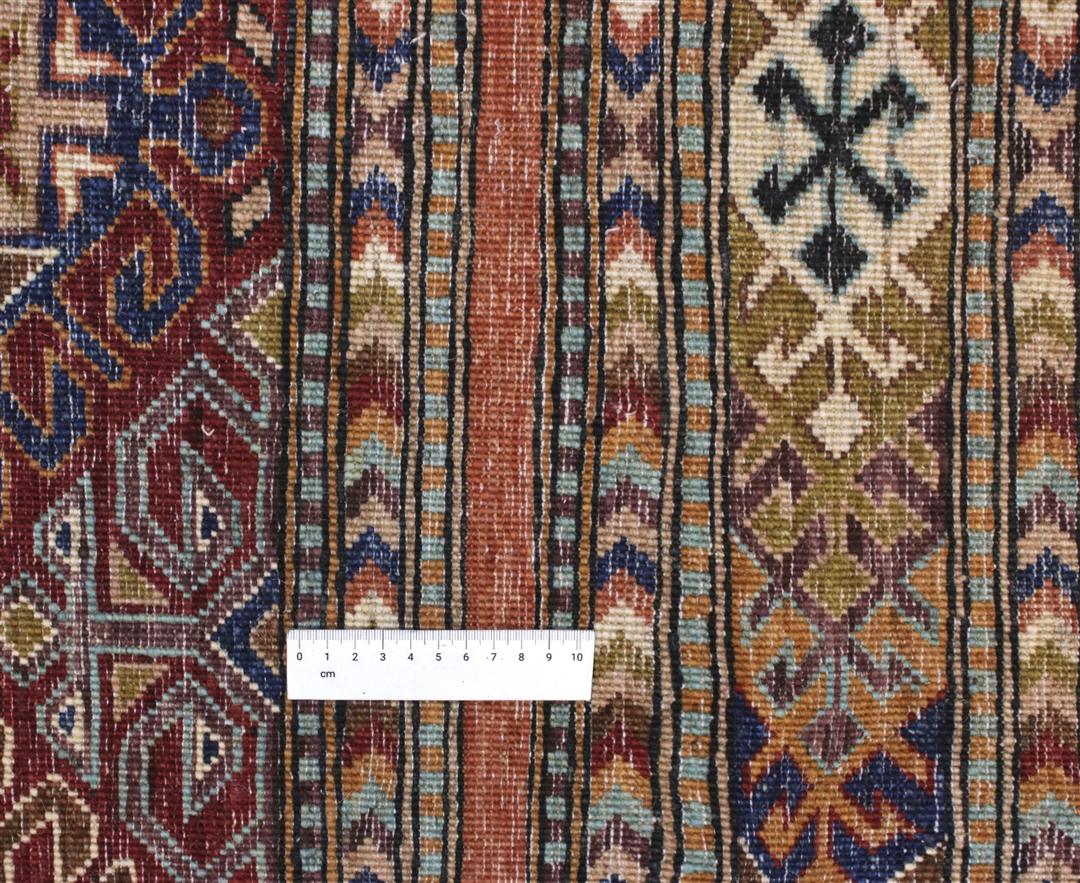
The Shabargan rug draws its inspiration from the storied weaving traditions of Afghanistan, a region with a long history of producing textiles that are as durable as they are beautiful. These rugs are often born from the nomadic and semi-nomadic cultures of the northern provinces, where the craft is passed down through generations. The evolution of these styles reflects a long history of cross-cultural exchange along the ancient trade routes that once connected East and West.
The term 'hand-knotted' refers to the foundational technique of tying individual strands of wool onto a warp and weft structure. This method is the hallmark of quality in the region, as it creates a dense, resilient pile that is far superior to machine-made alternatives. The skill required to maintain consistent tension across such a large surface is immense, reflecting a deep understanding of the medium that has been refined over centuries.
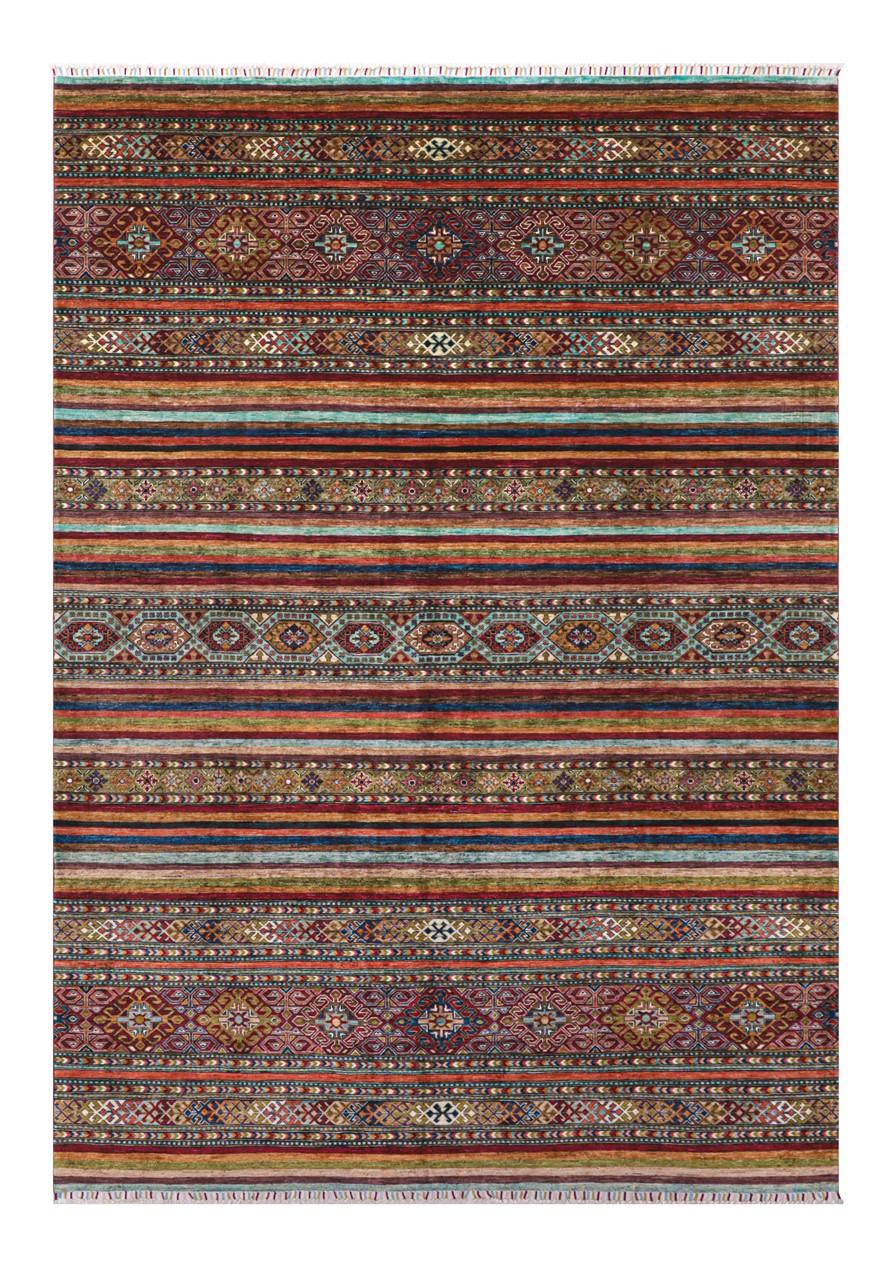
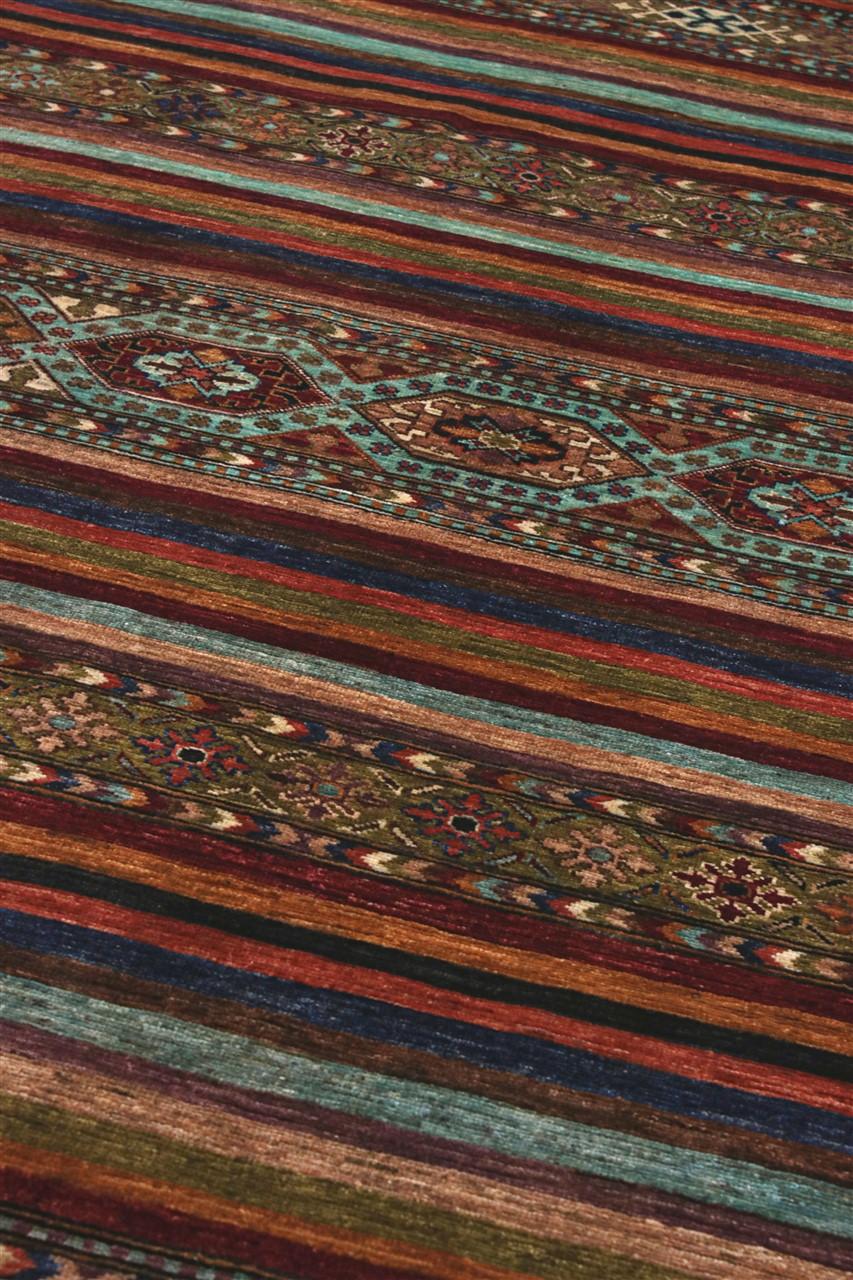
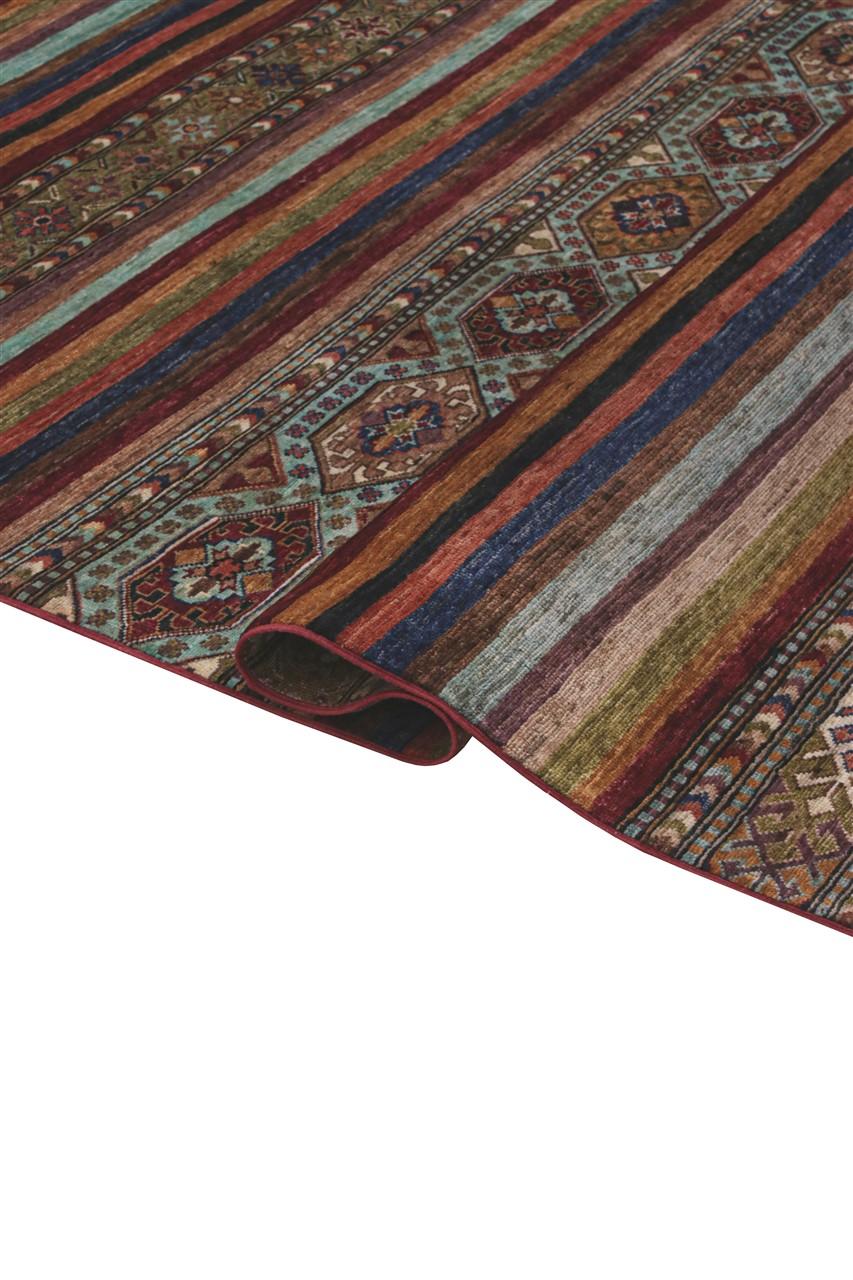
The visual language of this rug is defined by its bold, horizontal stripes and intricate geometric motifs, often referred to as tribal patterns. These elements are not merely decorative but are deeply rooted in the cultural identity of the weavers, often symbolising protection, fertility, or the natural landscape. The use of vibrant, contrasting colours is a signature of this tradition, allowing the rug to stand out as a bold, artistic statement.
Owning a piece from this tradition is an opportunity to connect with a legacy of artistry and persistence. These rugs are highly valued by collectors for their authenticity and the human story woven into every fibre. By bringing a piece like this into your home, you are not only decorating a space but also preserving a craft tradition that celebrates the beauty of hand-made objects in a modern, automated world.