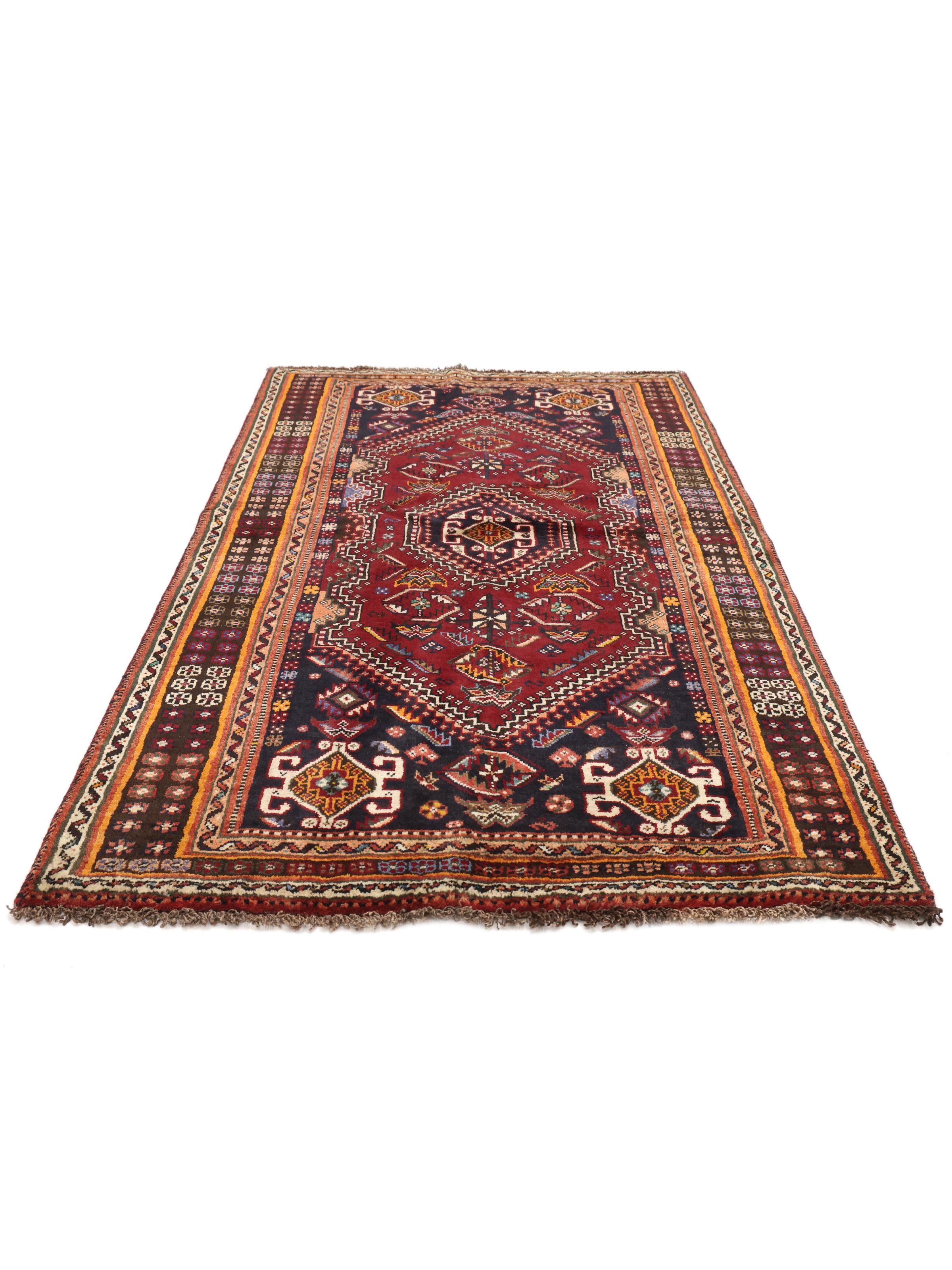
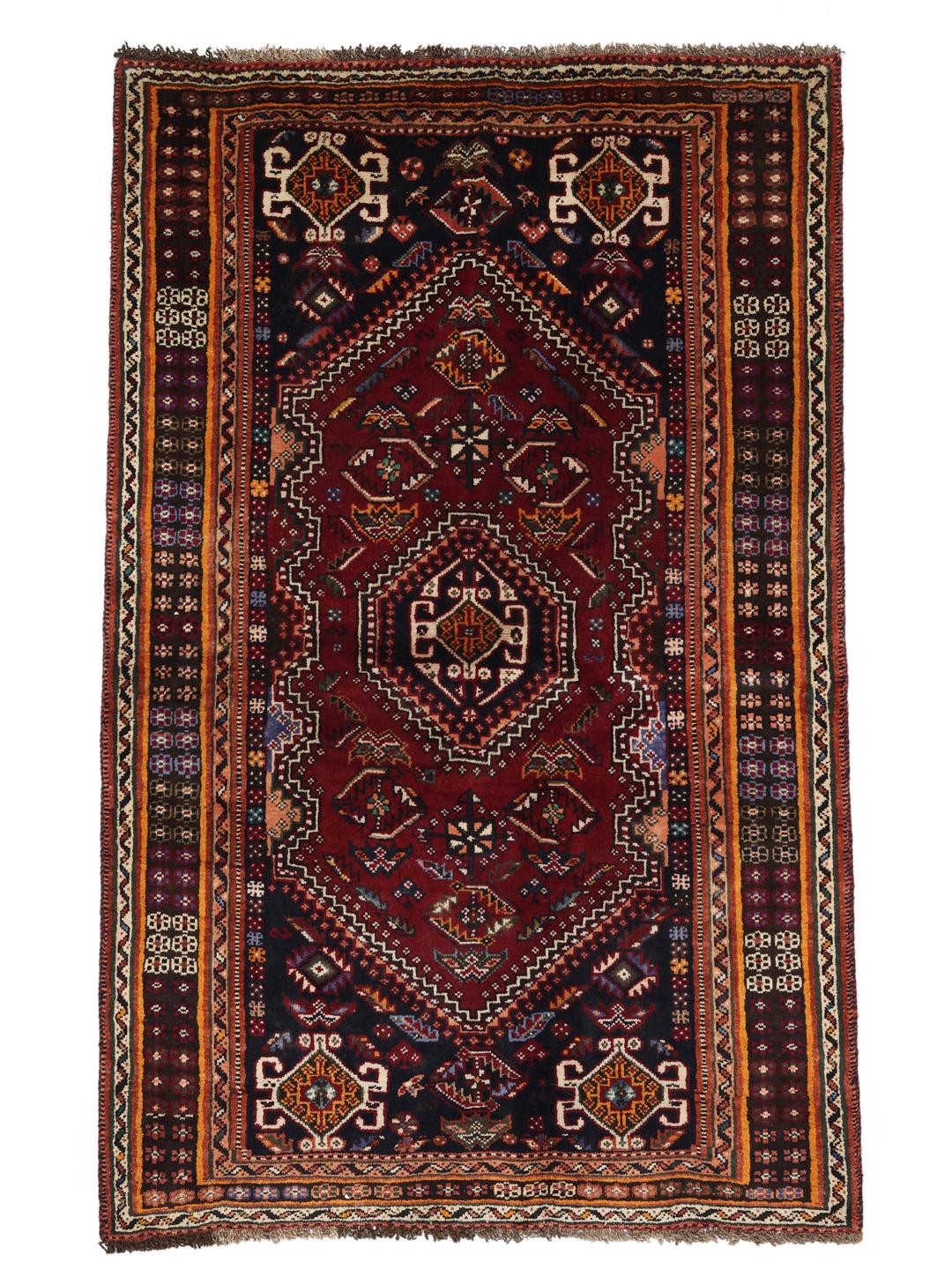
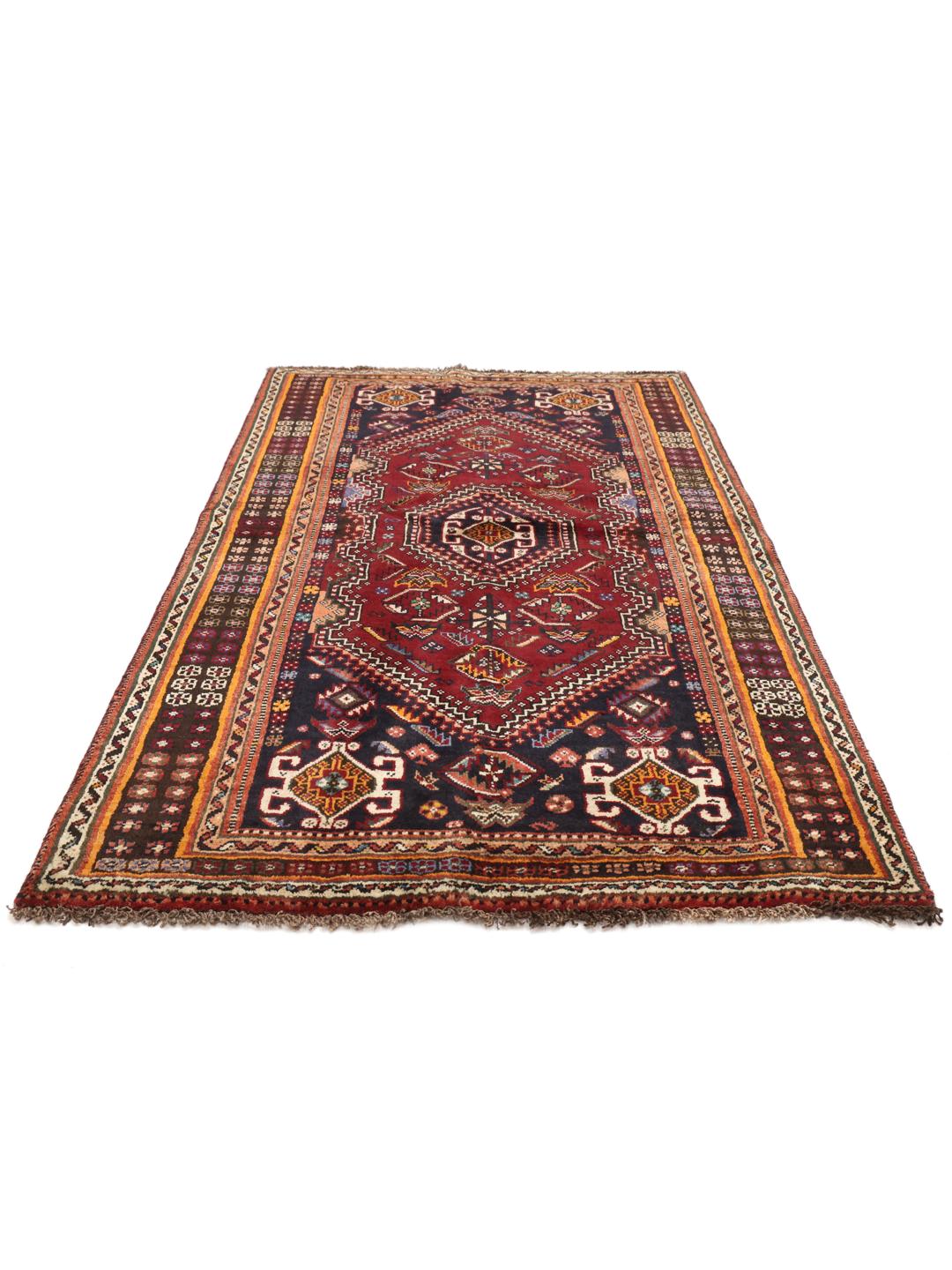
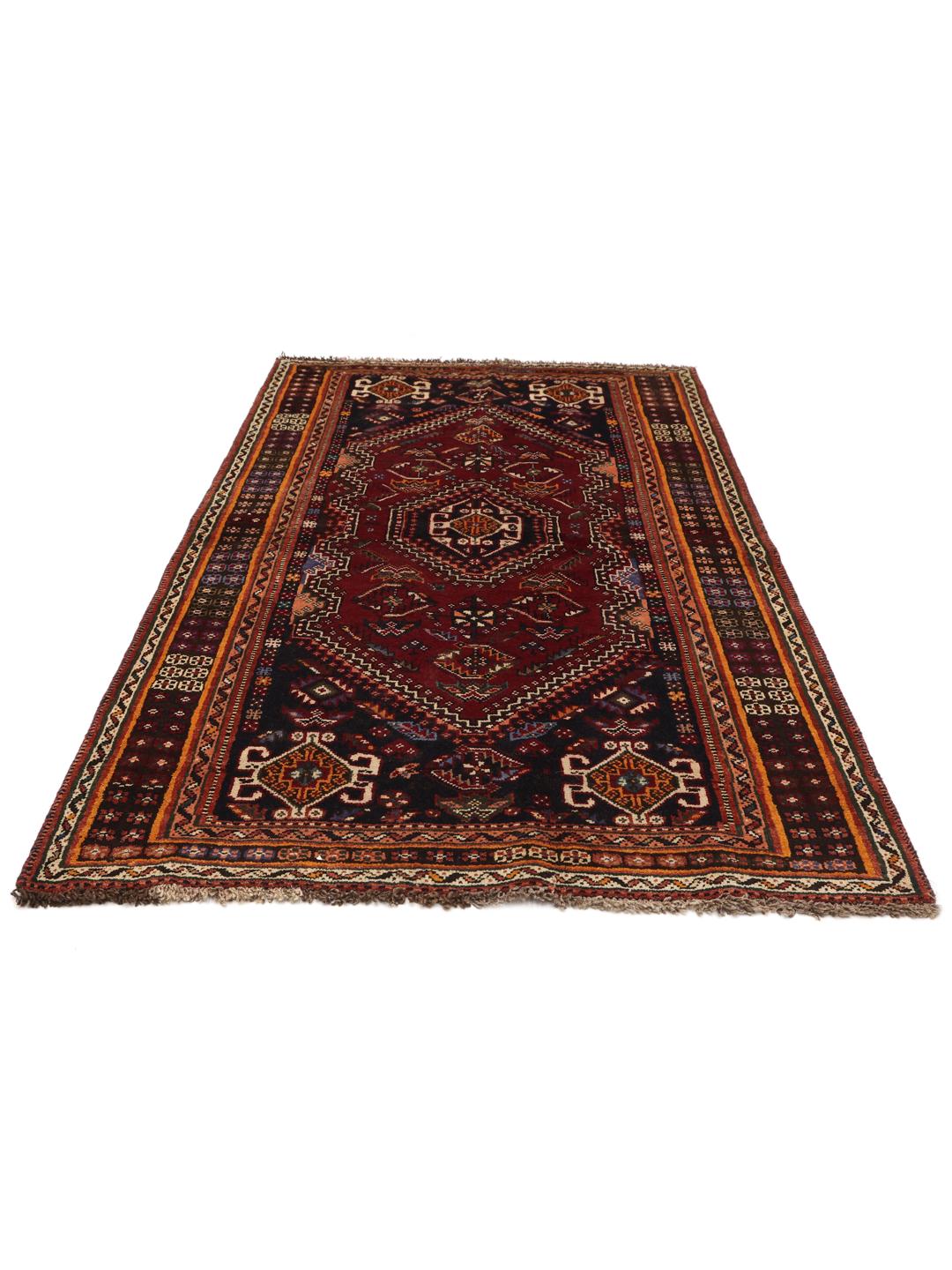
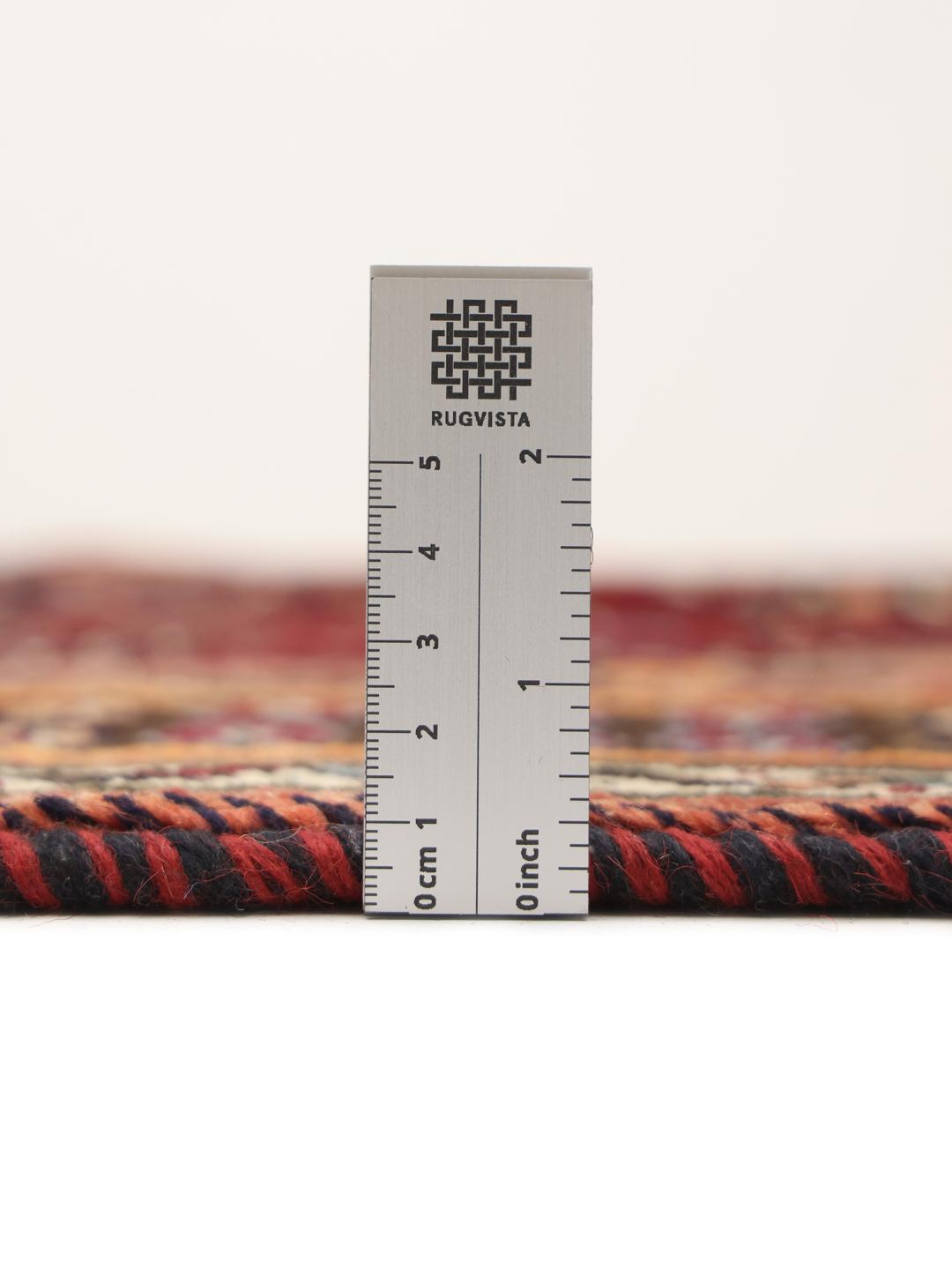
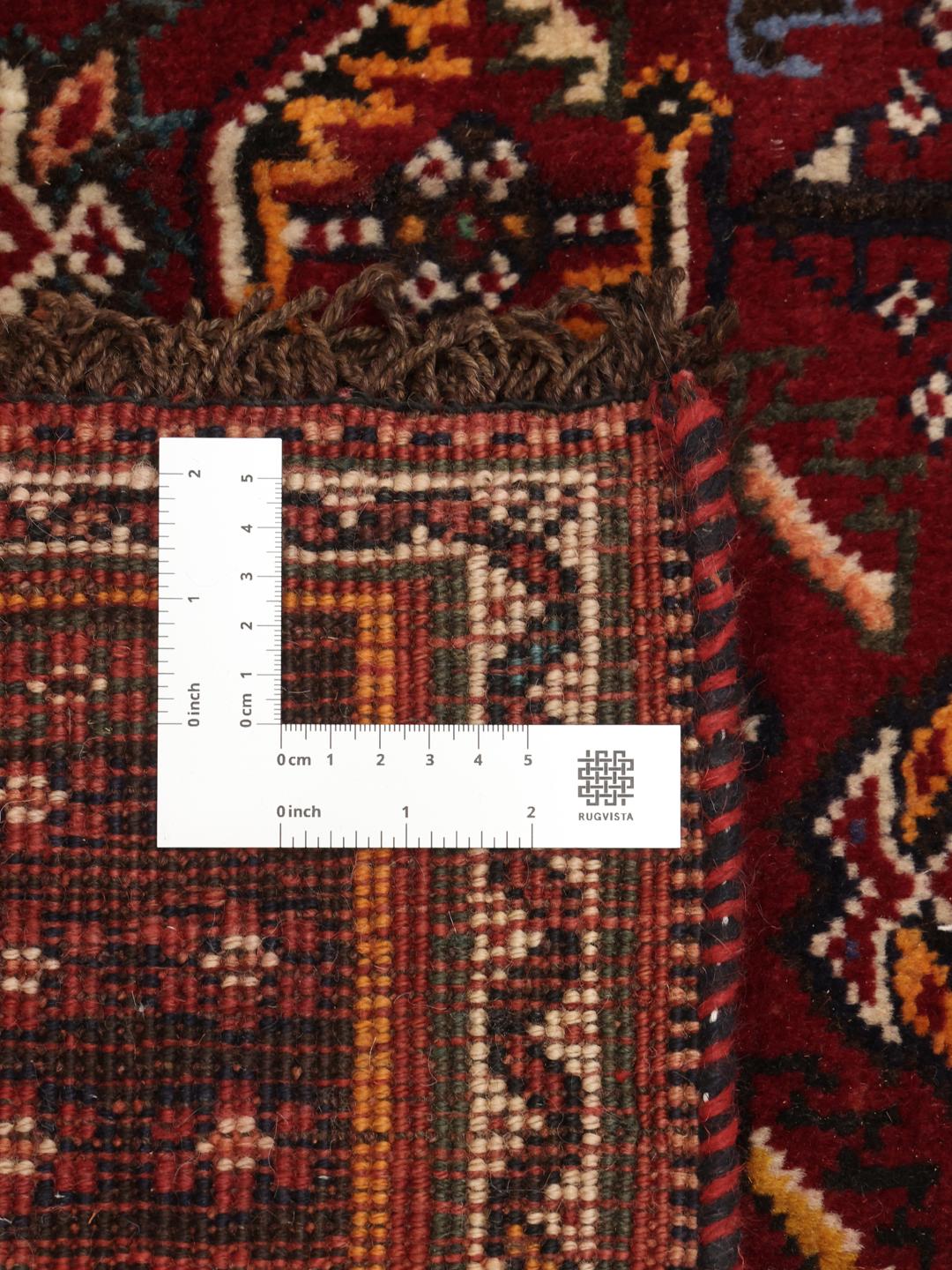
Shiraz rugs originate from the Fars province in the Middle Eastern region, a territory with a long and storied history of nomadic and village weaving. These rugs are traditionally crafted by various tribal groups, including the Qashqai and Khamseh confederacies, who have historically moved with the seasons. This nomadic heritage is reflected in the rug's design, which often features spontaneous and expressive motifs rather than strictly rigid, pre-planned layouts.
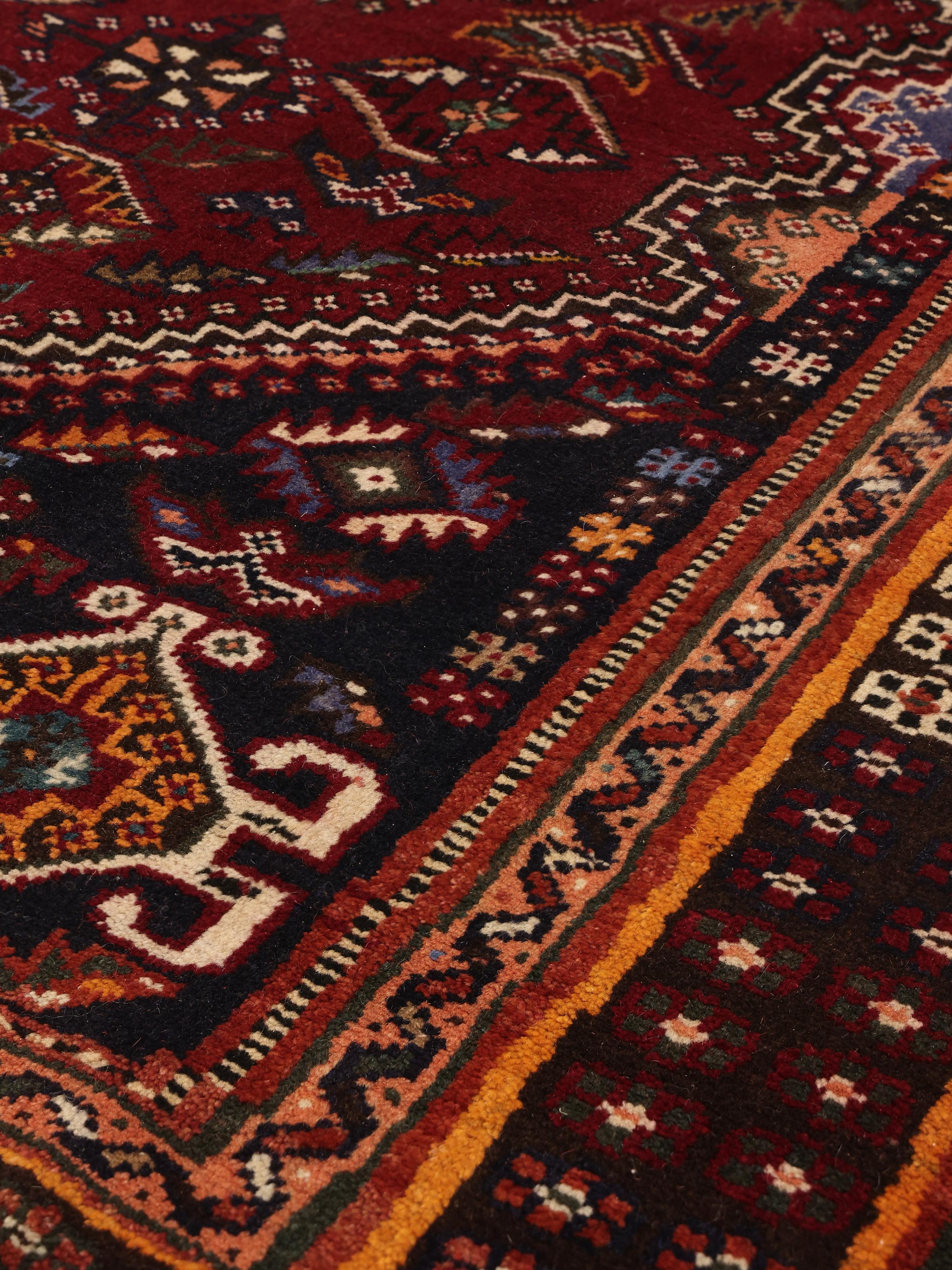
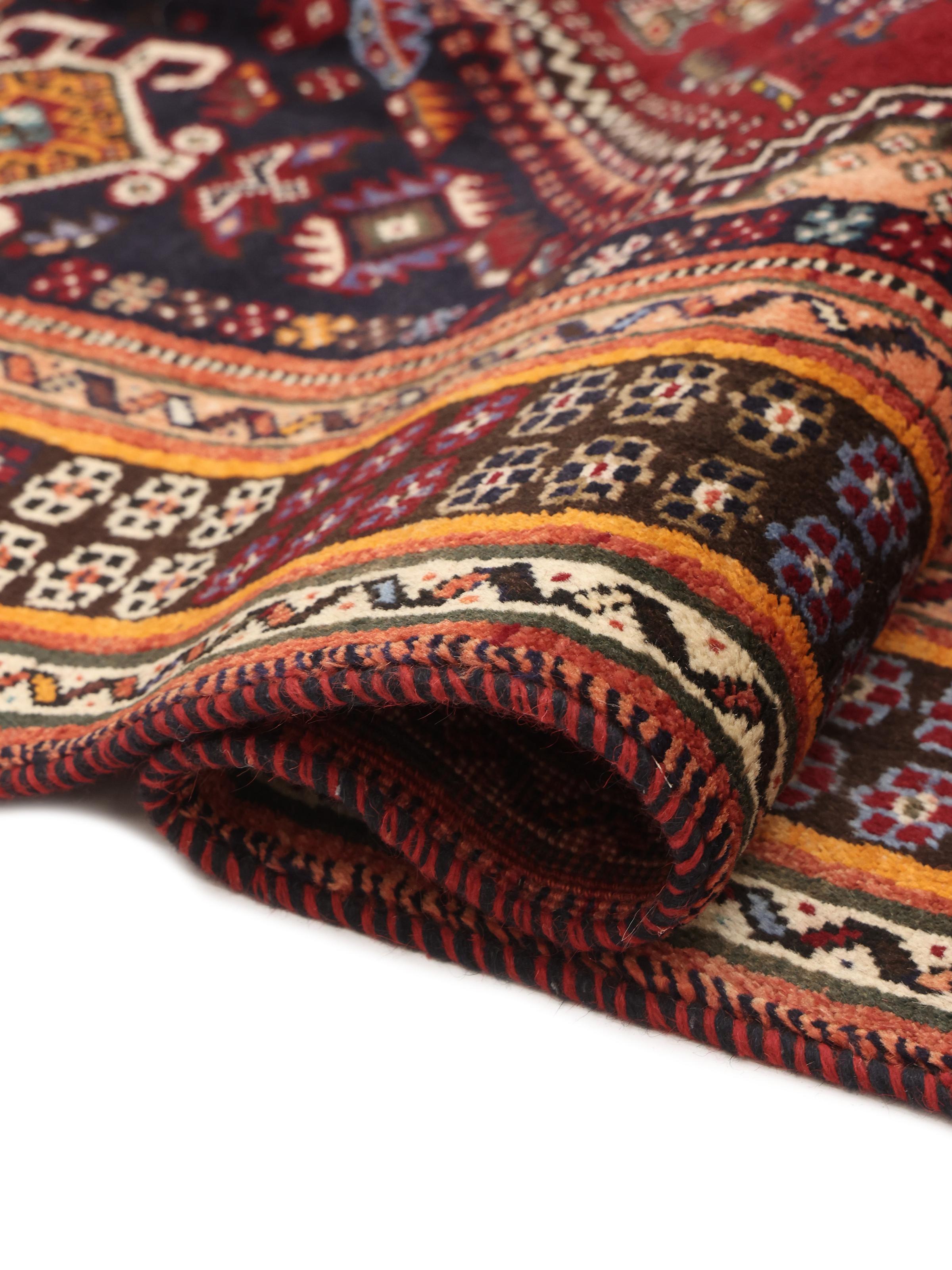
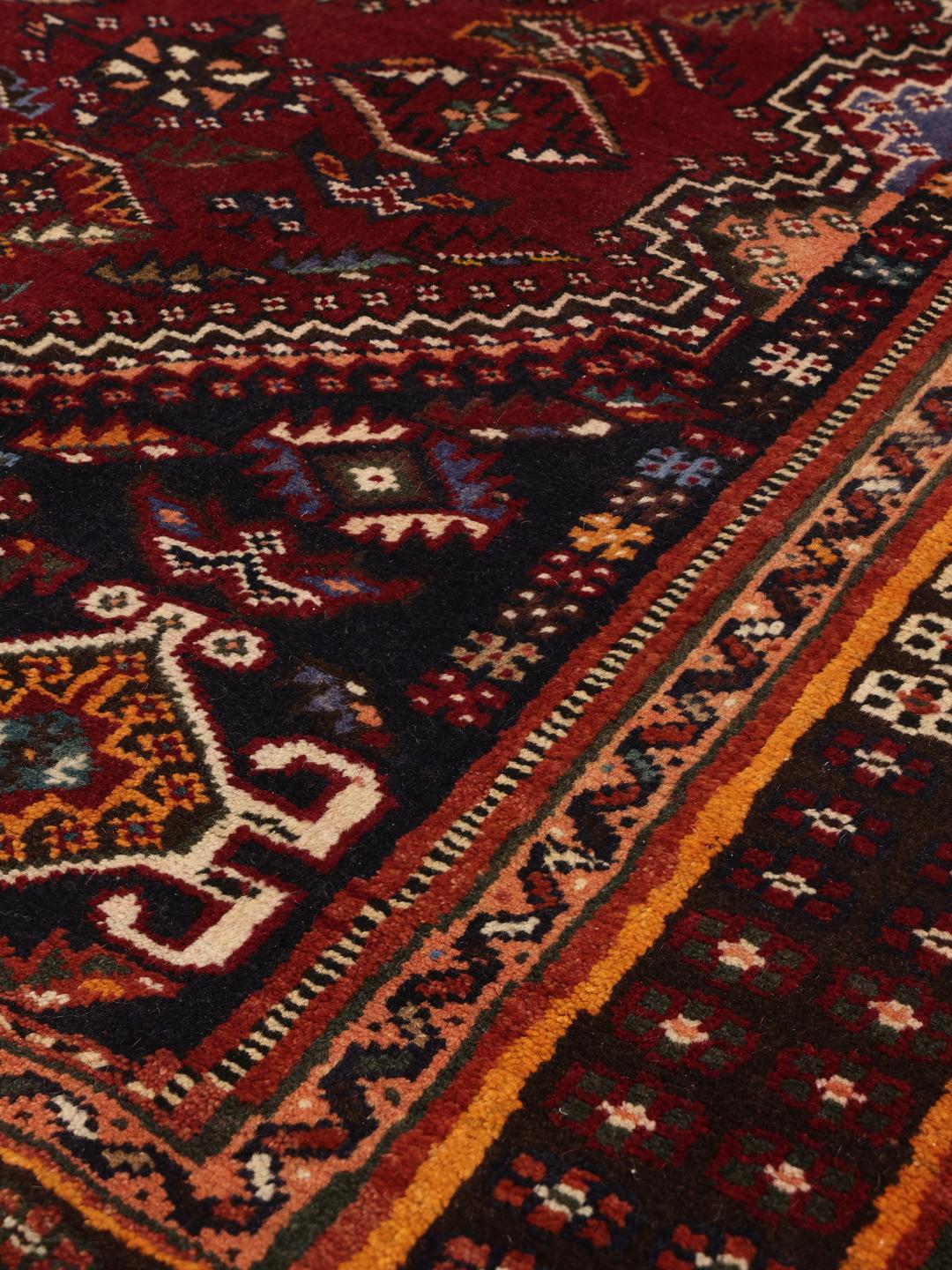
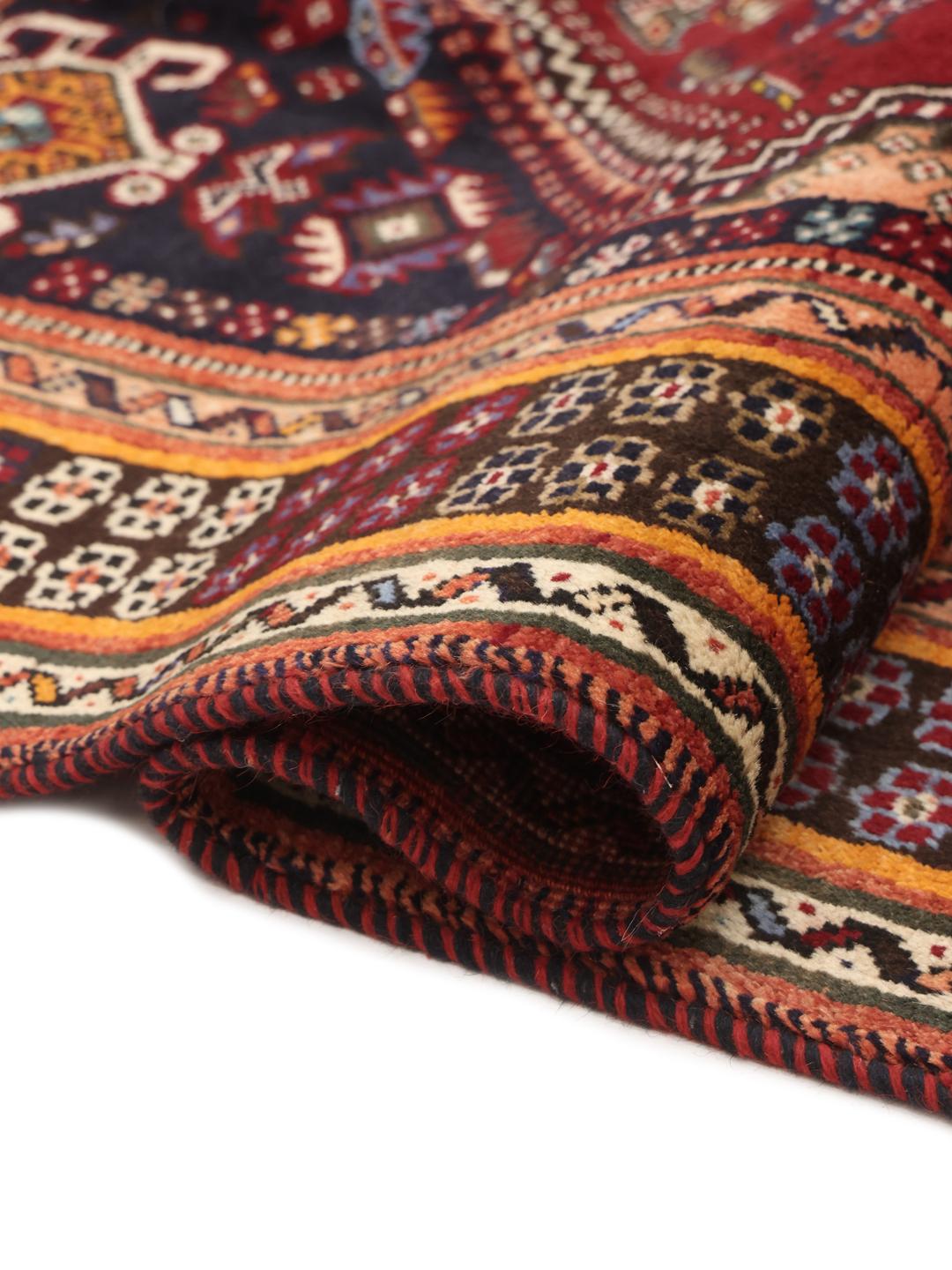
The construction of a Shiraz rug typically utilises wool for the pile, weft, and warp. This all-wool composition is highly valued for its durability and the natural lustre it imparts to the finished piece. The wool is often sourced locally from sheep raised in the rugged landscapes of the region, resulting in a robust, hardy fibre that ages beautifully over time and develops a unique patina with extended use.
Visually, Shiraz rugs are celebrated for their bold geometric language. Common design elements include stylised medallions, latch-hook motifs, and repeating floral or animal silhouettes that hold cultural significance for the weavers. The borders are often complex and multi-layered, framing the central field with an array of protective symbols. While red and deep blue are classic colour choices, the use of varied tones highlights the artisan's individual creativity.
For collectors and enthusiasts, these rugs are prized not just for their aesthetic appeal, but for their status as authentic folk art. They represent a connection to a way of life that balances utility with artistic expression, offering a window into the traditions of the nomadic tribes. Owning a piece like this is an invitation to engage with a cultural legacy that prioritises human skill and regional identity over mass production.