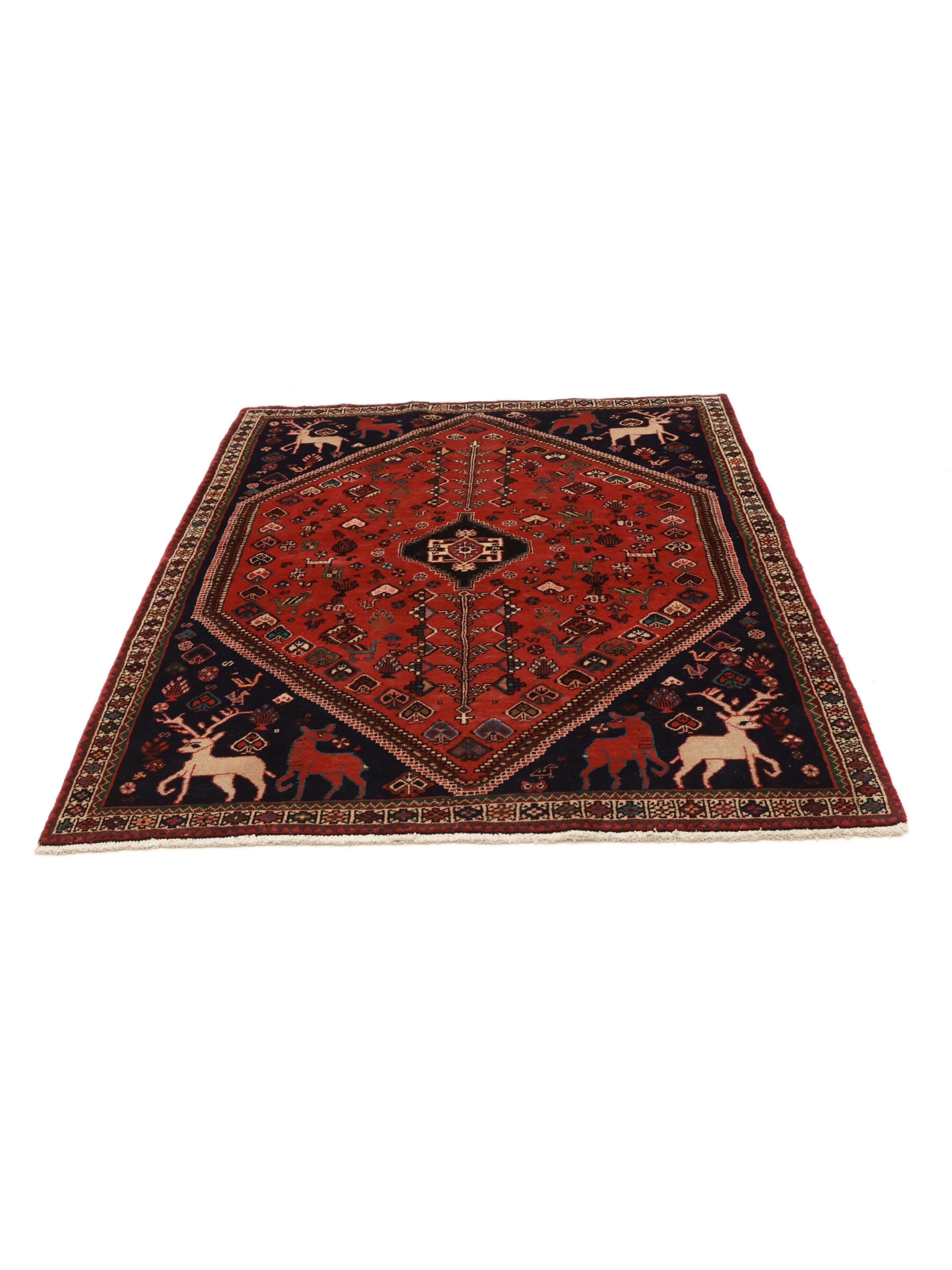
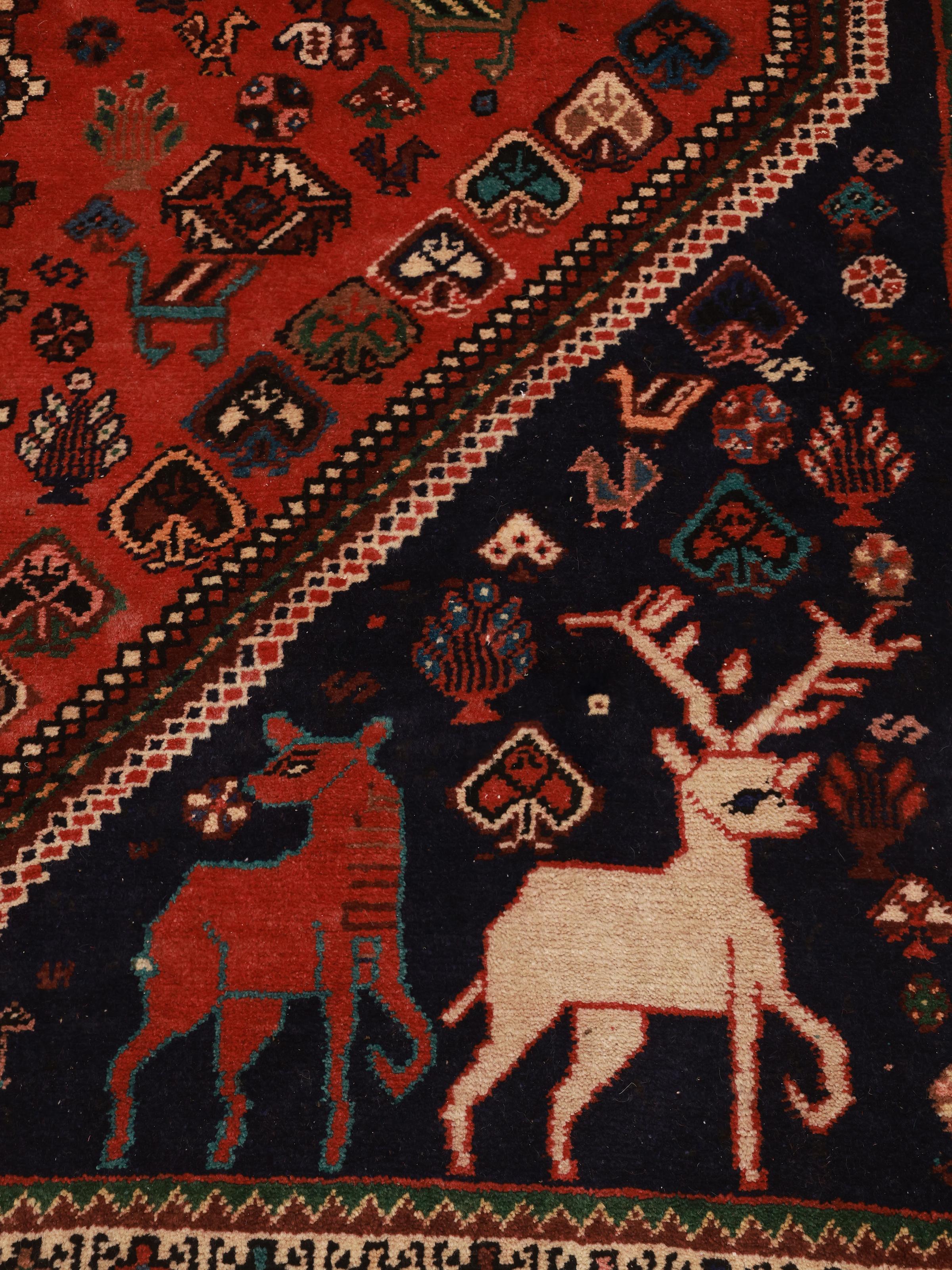
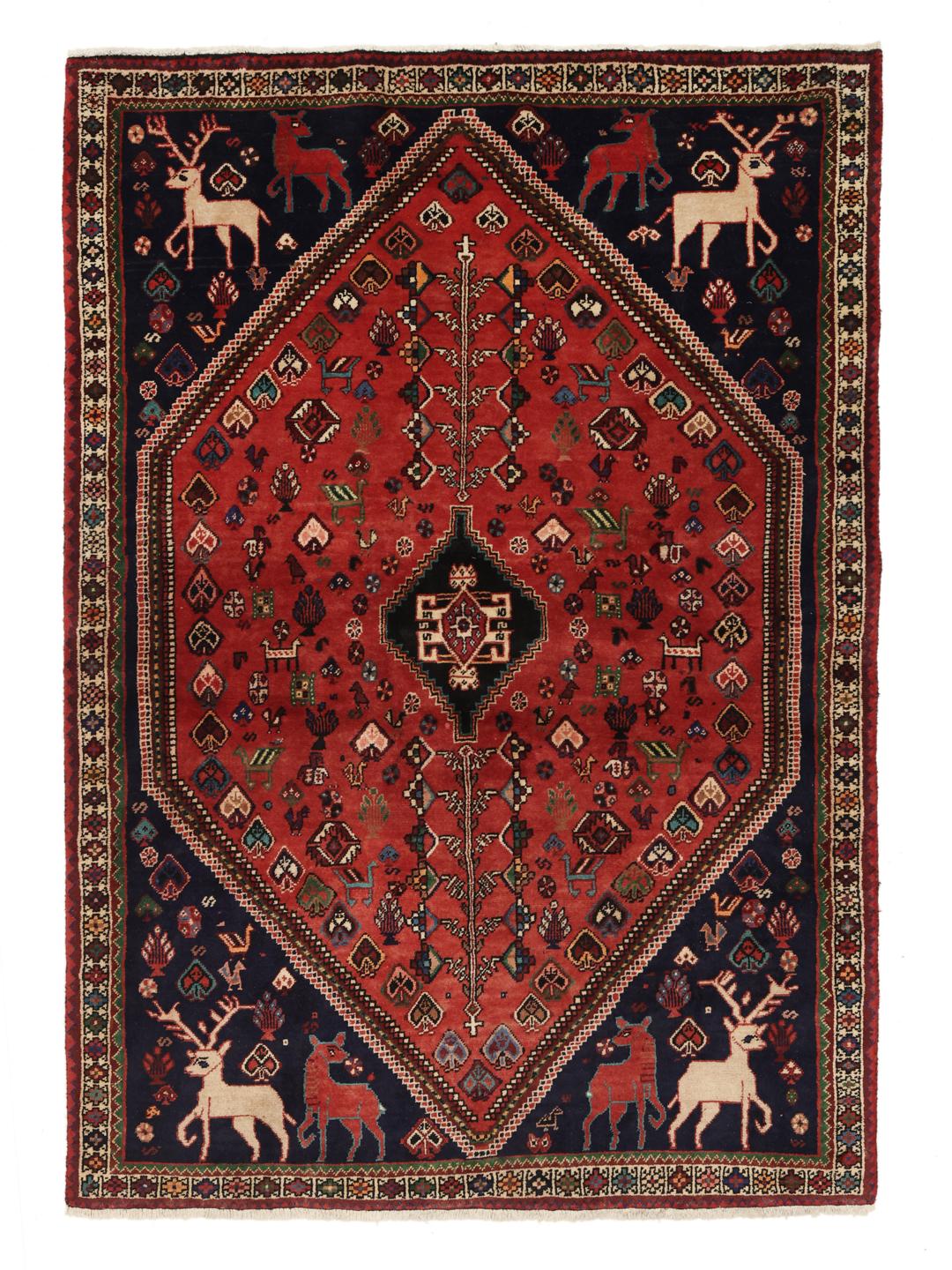
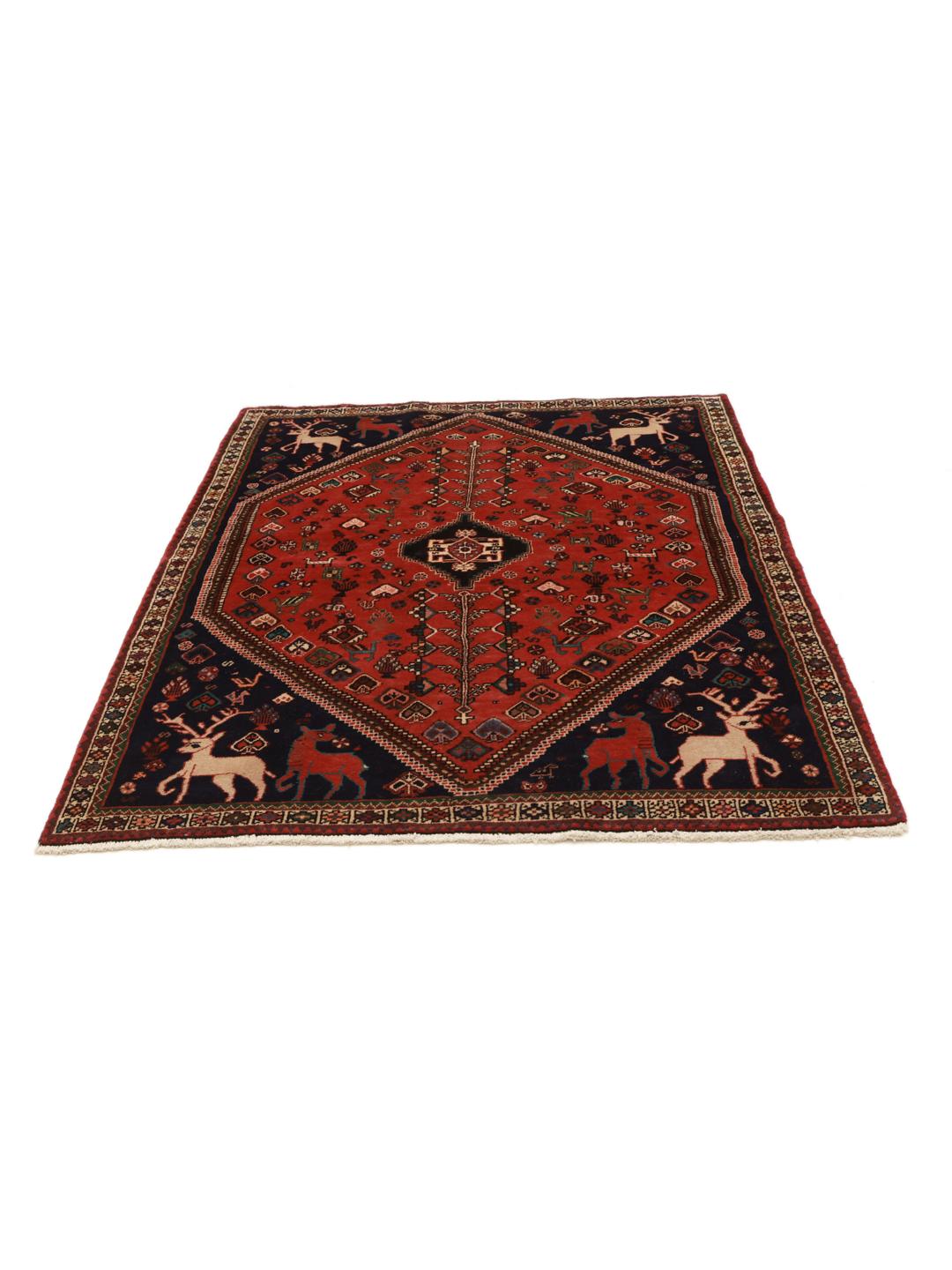
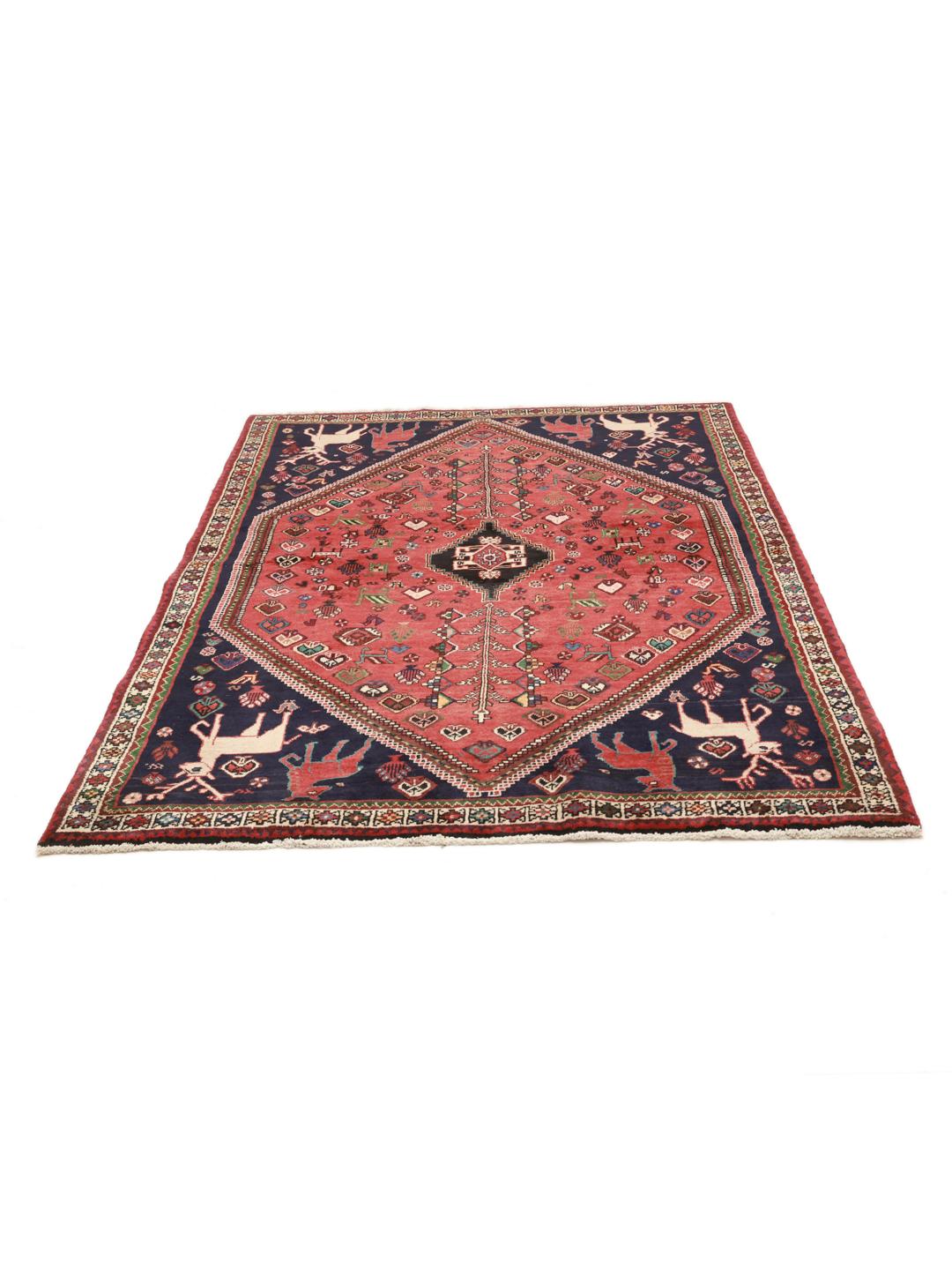
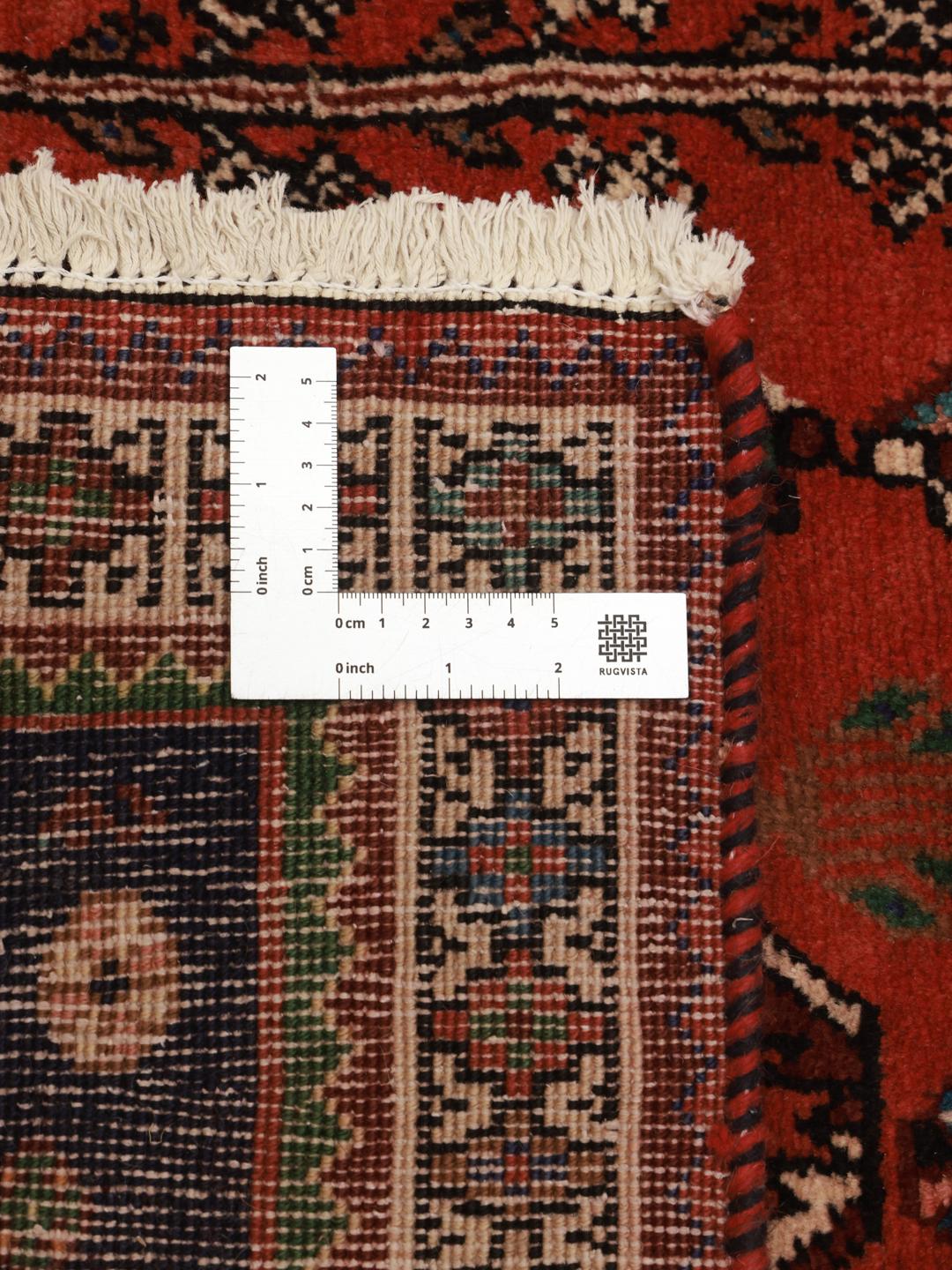
Shiraz rugs originate from the historic Fars province in the Southwestern Middle East, a region famous for its rich nomadic weaving heritage. Historically crafted by Qashqai and Khamseh tribespeople, these rugs reflect a semi-nomadic lifestyle where weaving traditions were passed down through generations of artisan families.
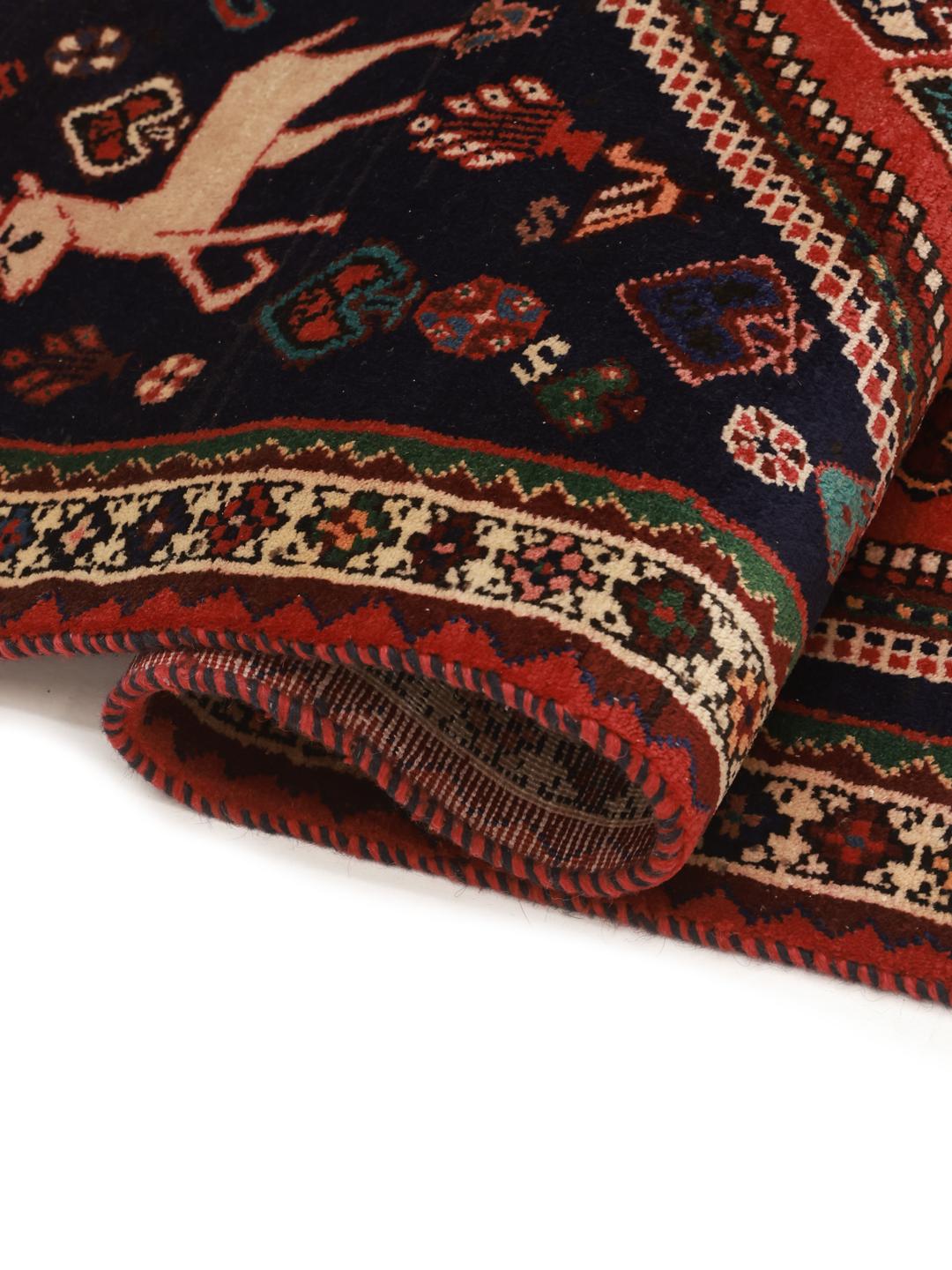
Unlike formal town rugs woven from detailed paper grids, traditional Shiraz pieces were often created spontaneously on portable horizontal looms. This technique allows individual weavers to introduce personal interpretations into classic tribal patterns, resulting in rugs that feel organic, expressive, and deeply rooted in regional culture.
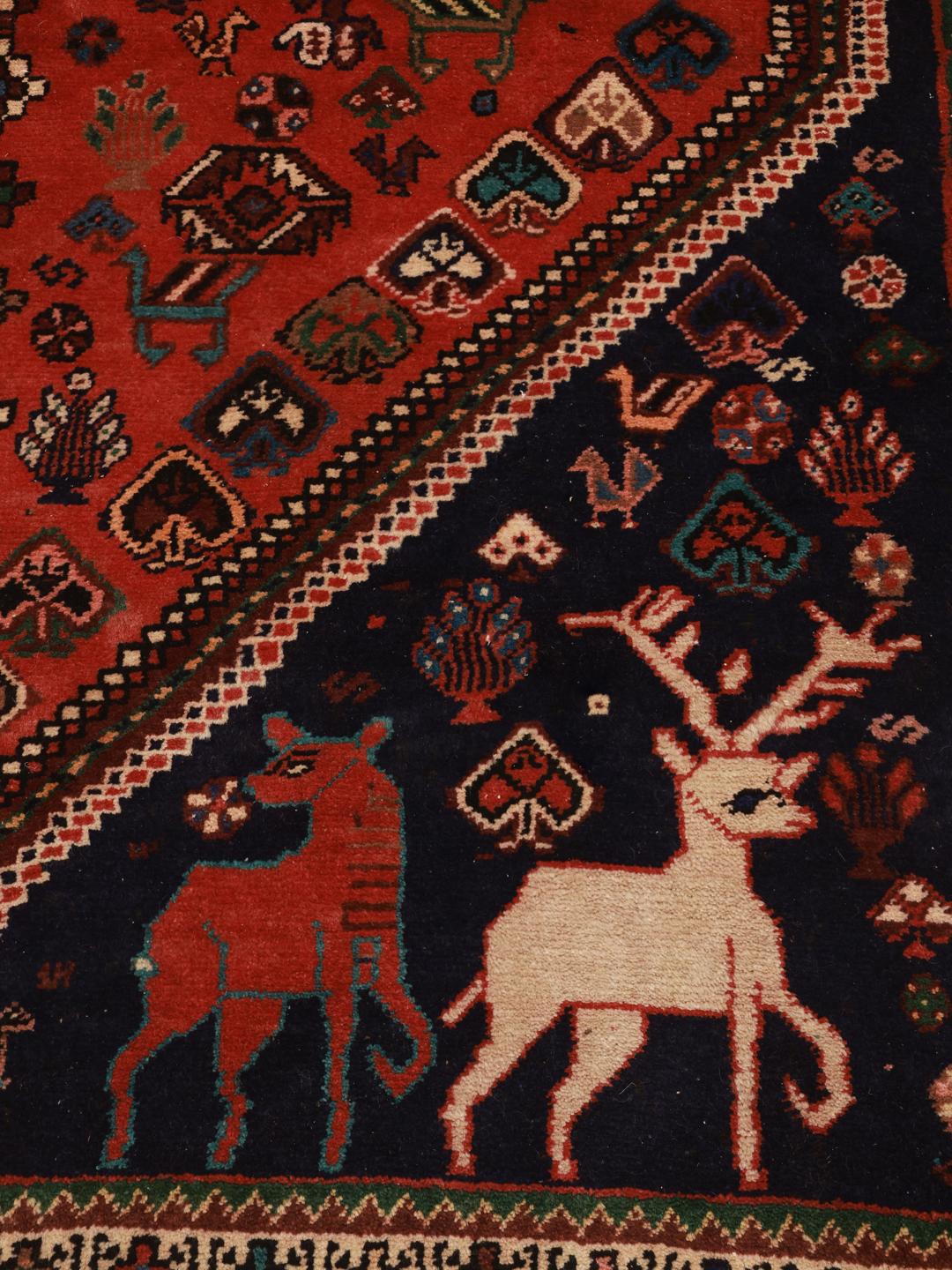
The visual language of Shiraz rugs features geometric medallions, repeating decorative borders, and charm-filled pictorial elements. Stylised bird motifs, deer, and small floral symbols often cover the main field, set against deep tones of dark red and dark blue derived from natural dye traditions.
Valued by collectors and interior enthusiasts alike, Shiraz rugs are prized for their authentic rustic charm and cultural weight. Owning a traditional hand-knotted Shiraz piece means connecting to an ancient lineage of tribal art that brings real history into modern living spaces.