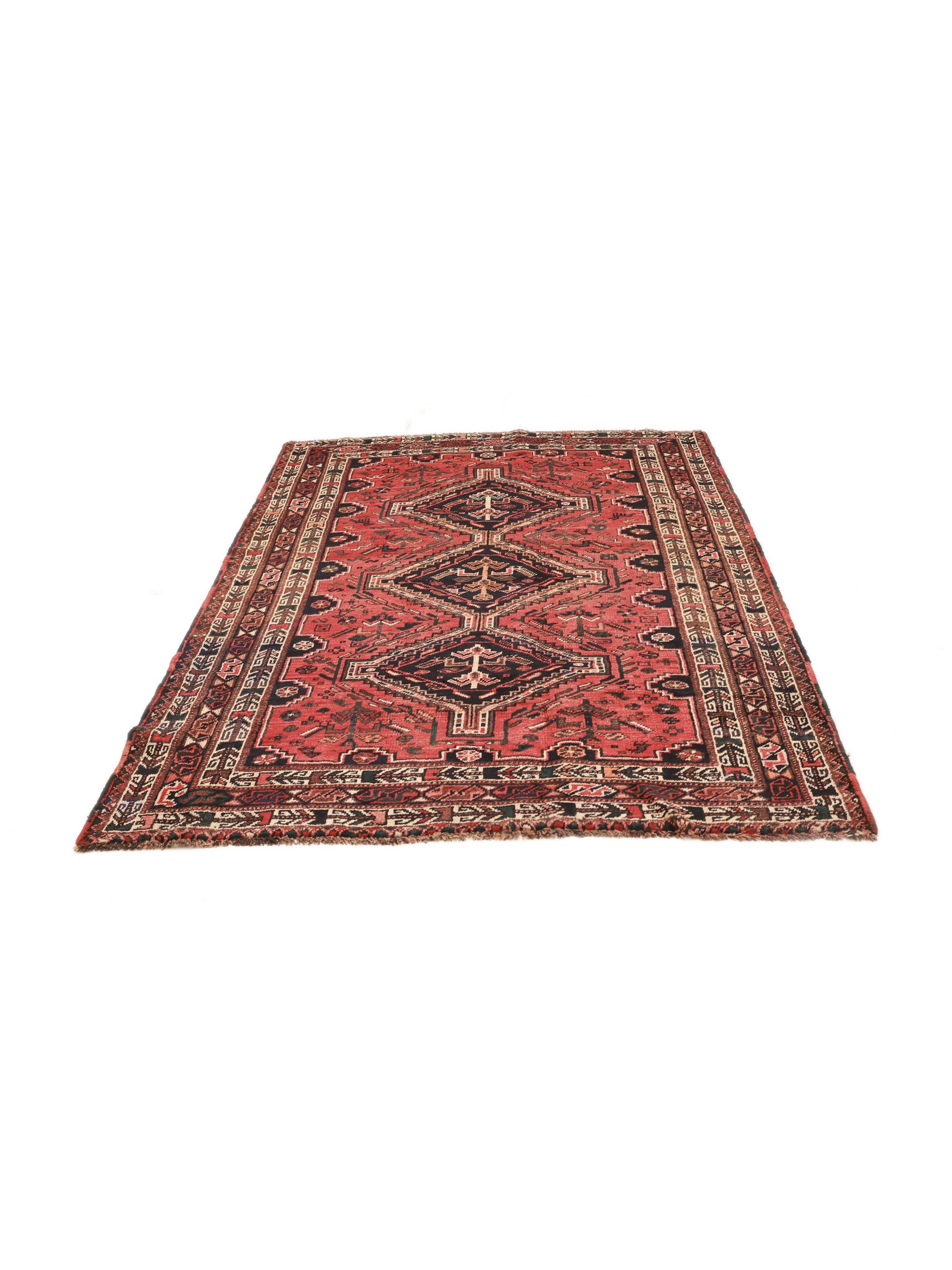
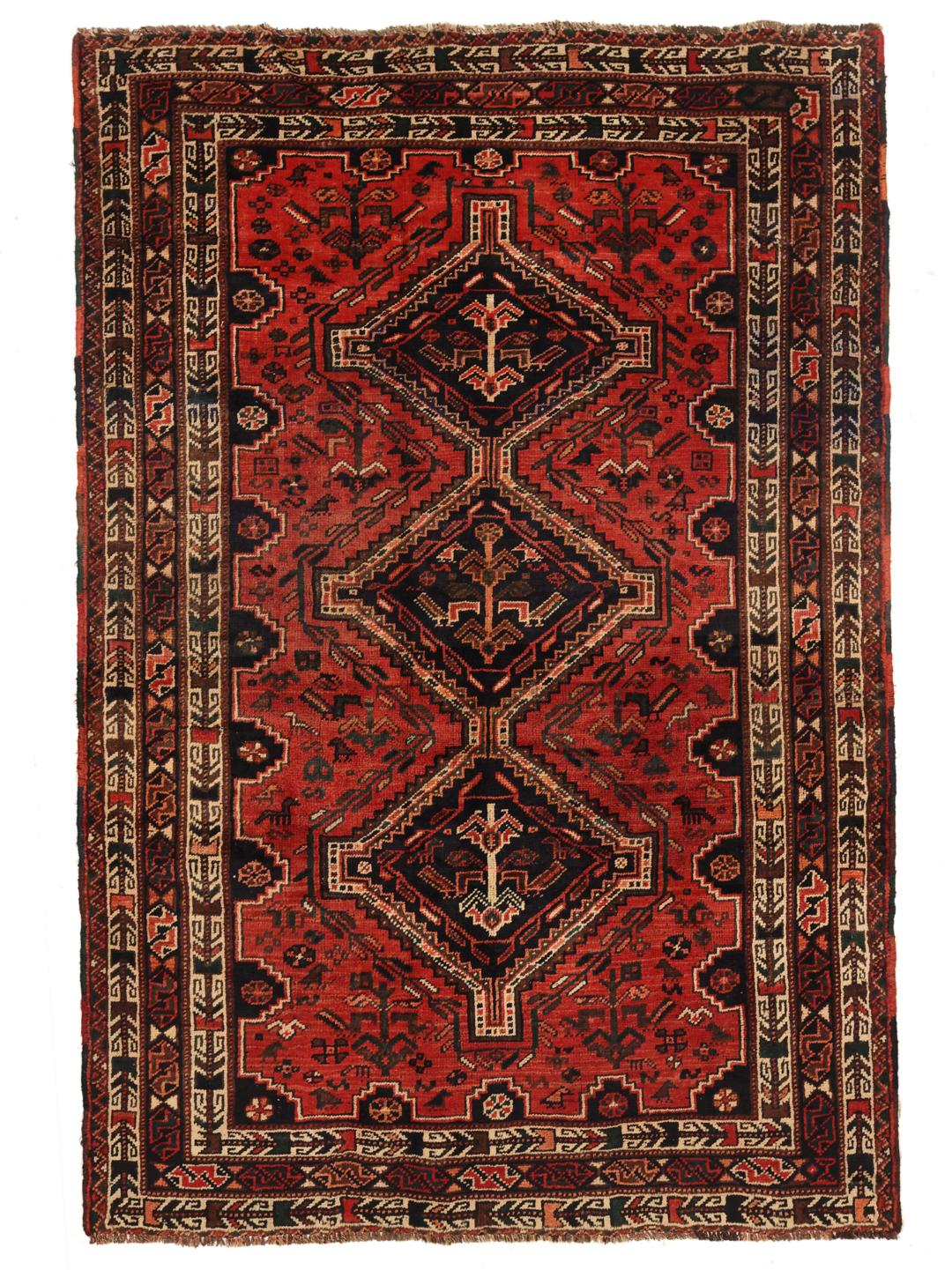
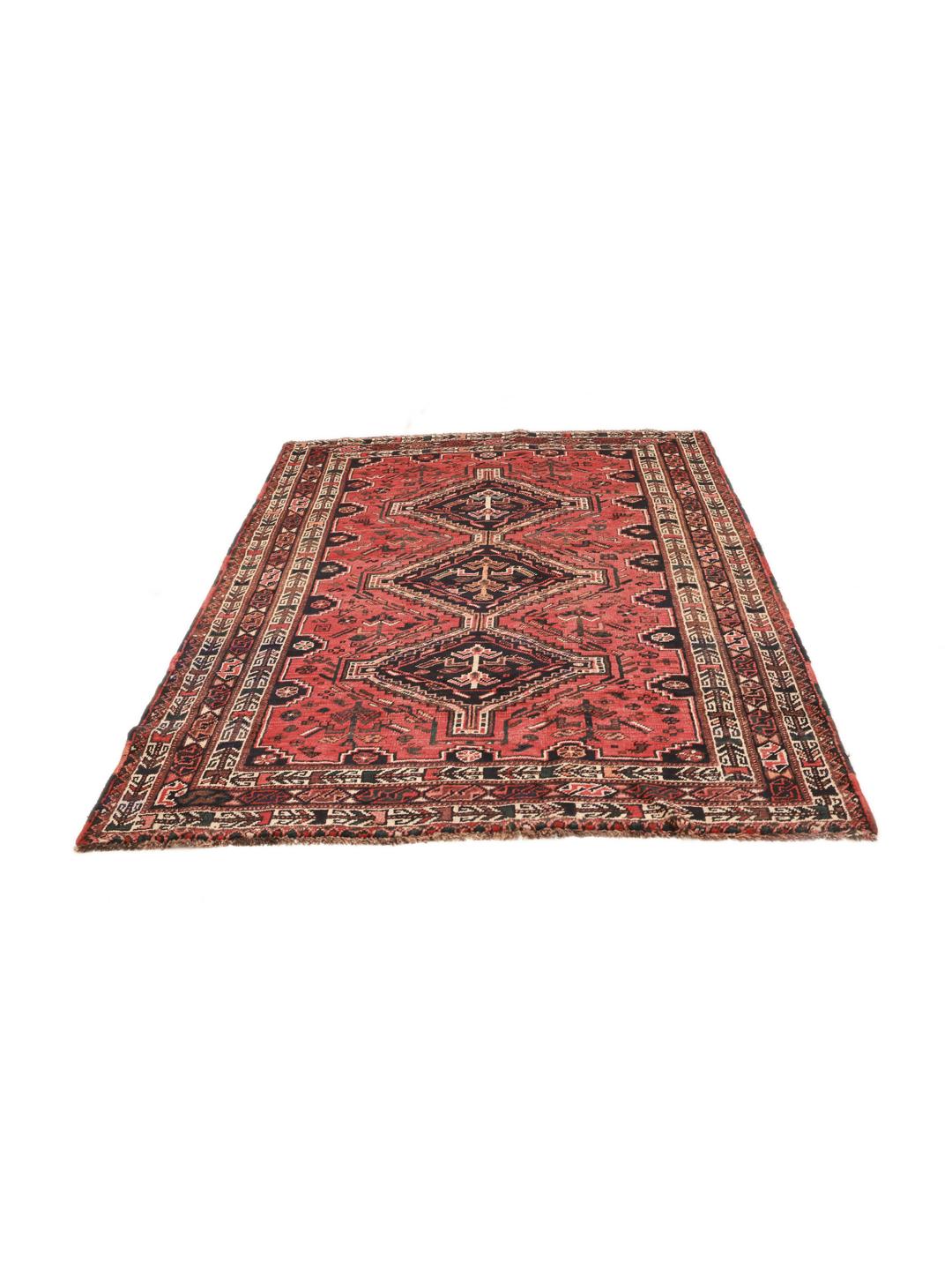
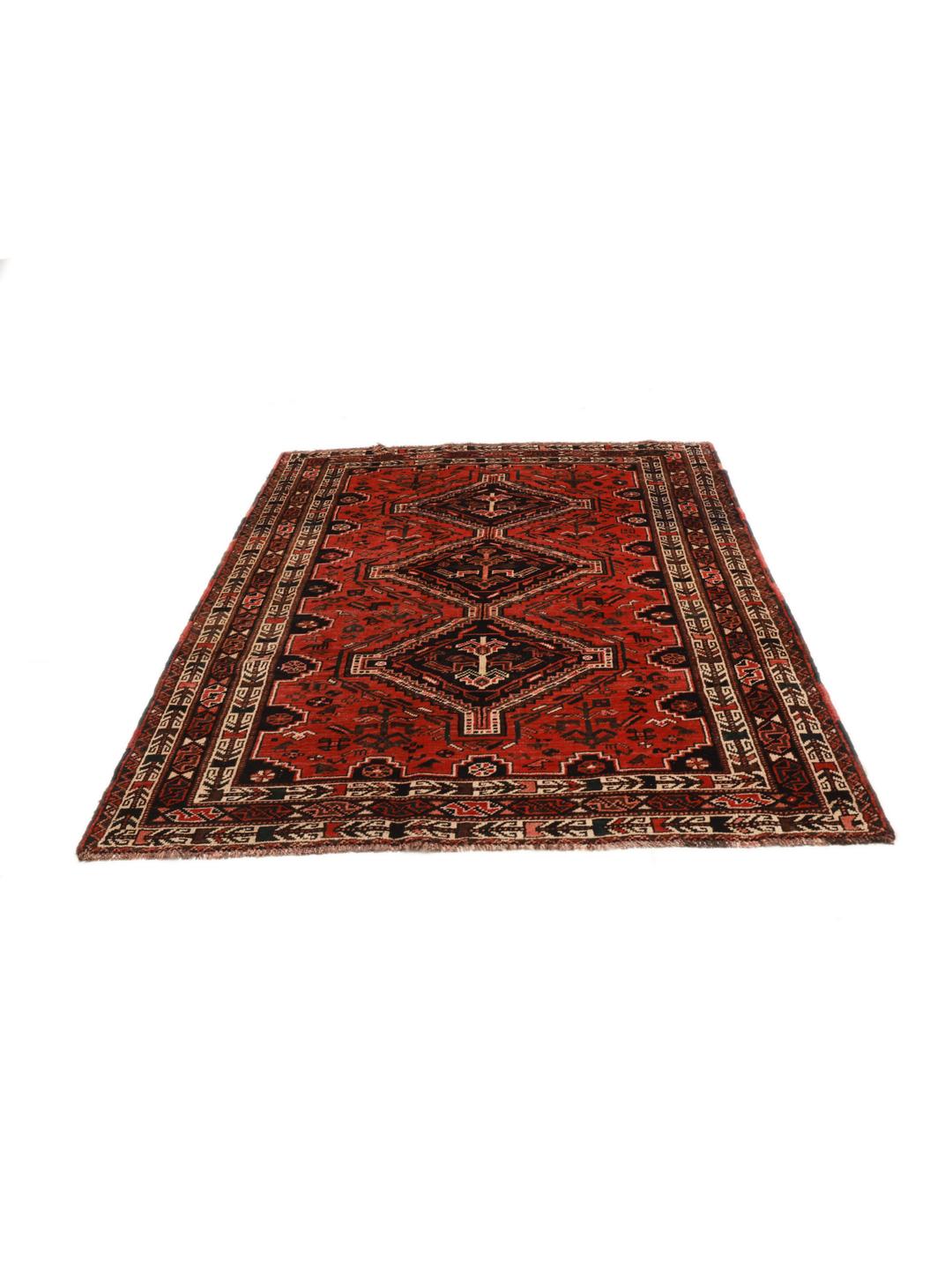
Shiraz rugs originate from the Fars province in the Middle East, a region with a deep-rooted history of nomadic and semi-nomadic weaving. These rugs are traditionally crafted by various tribal groups, including the Qashqai and Khamseh, who translate their cultural identities and surroundings into the intricate patterns found within the pile.
The term 'Shiraz' refers to the historic city that serves as the primary trade hub for these tribal weavings. Unlike city-based workshops that follow strict, pre-drawn cartoons, these rugs are often woven from memory, allowing the weaver to express individual creativity while staying within the traditional visual language of their specific tribe.
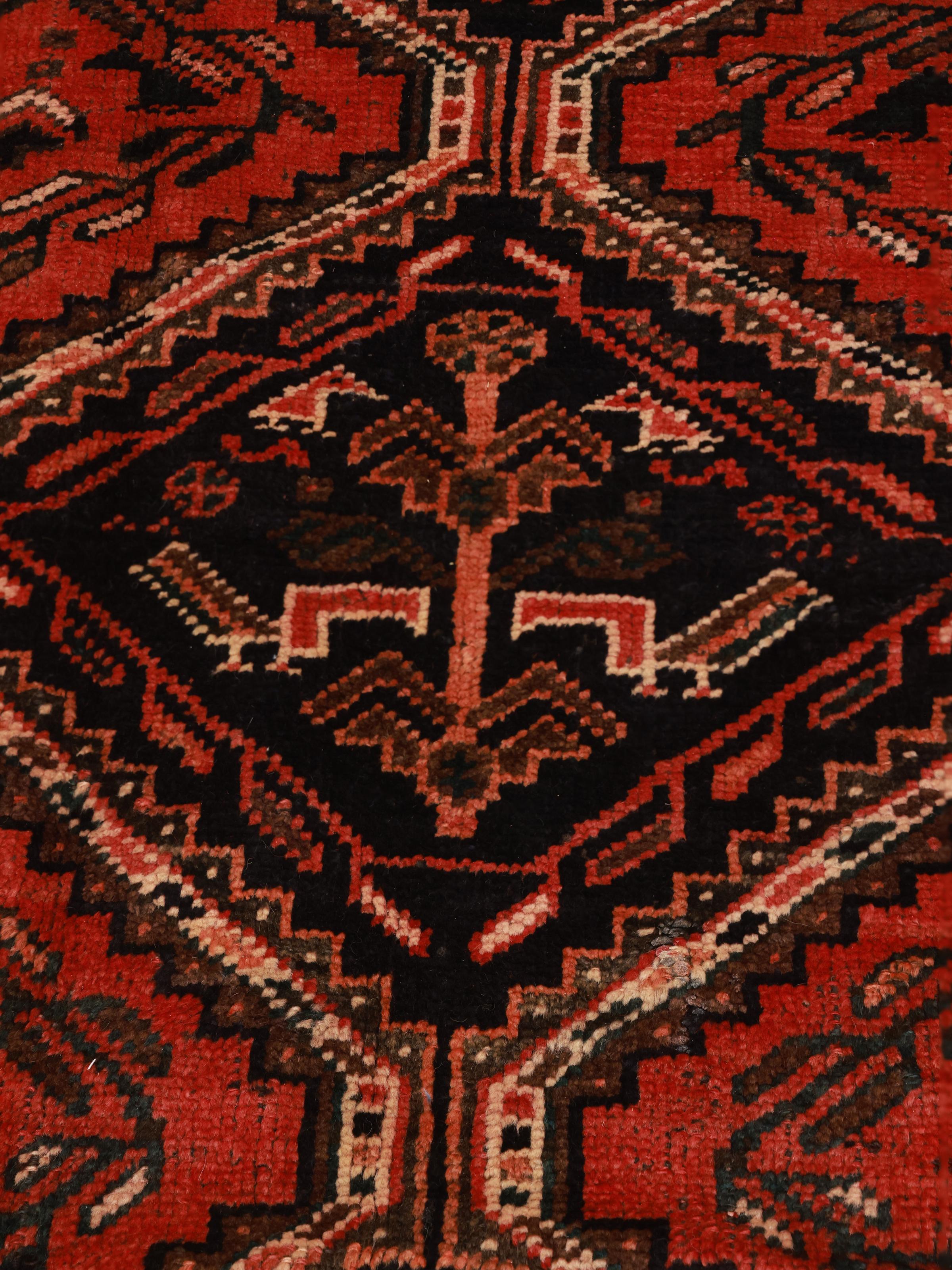
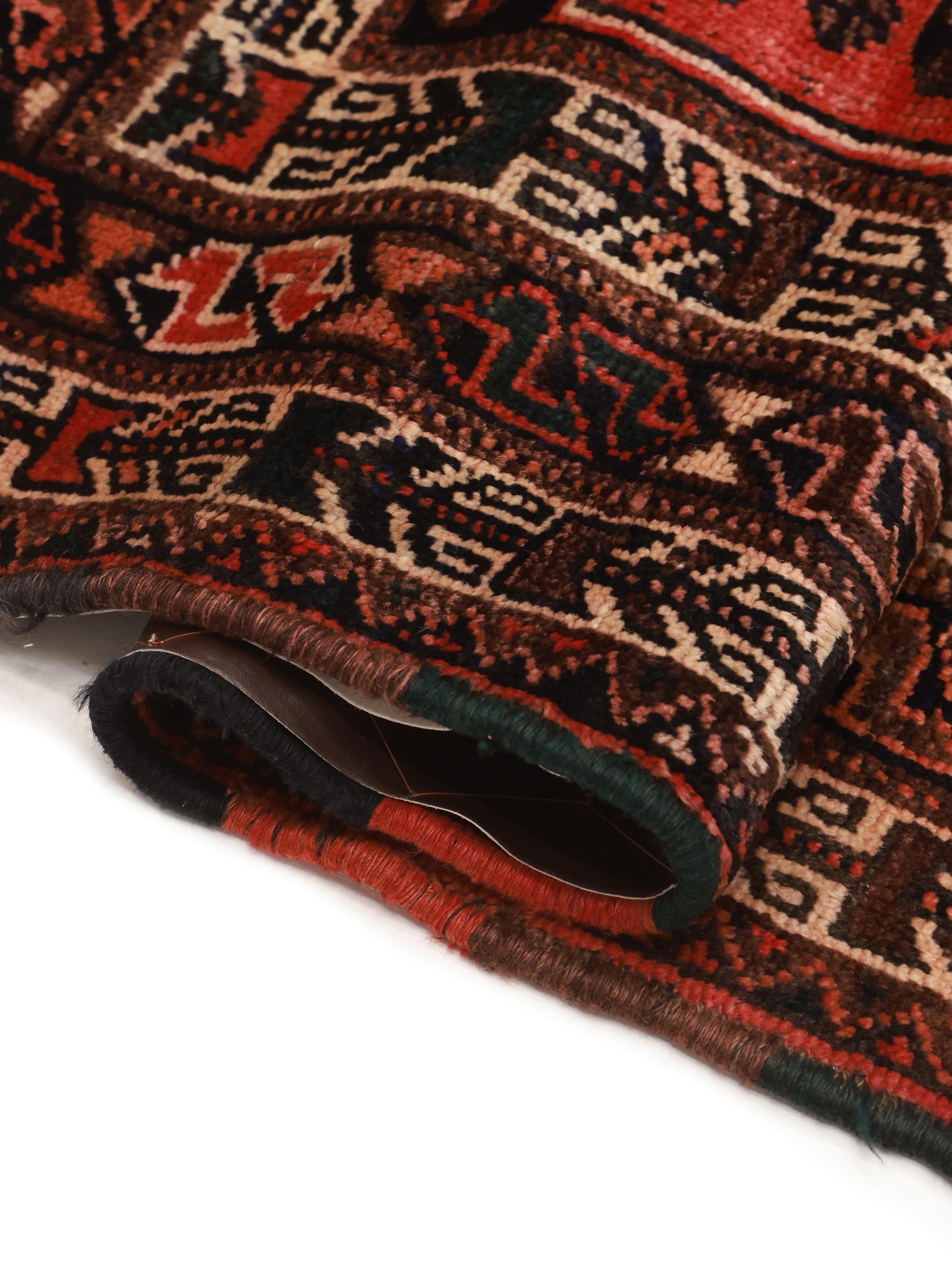
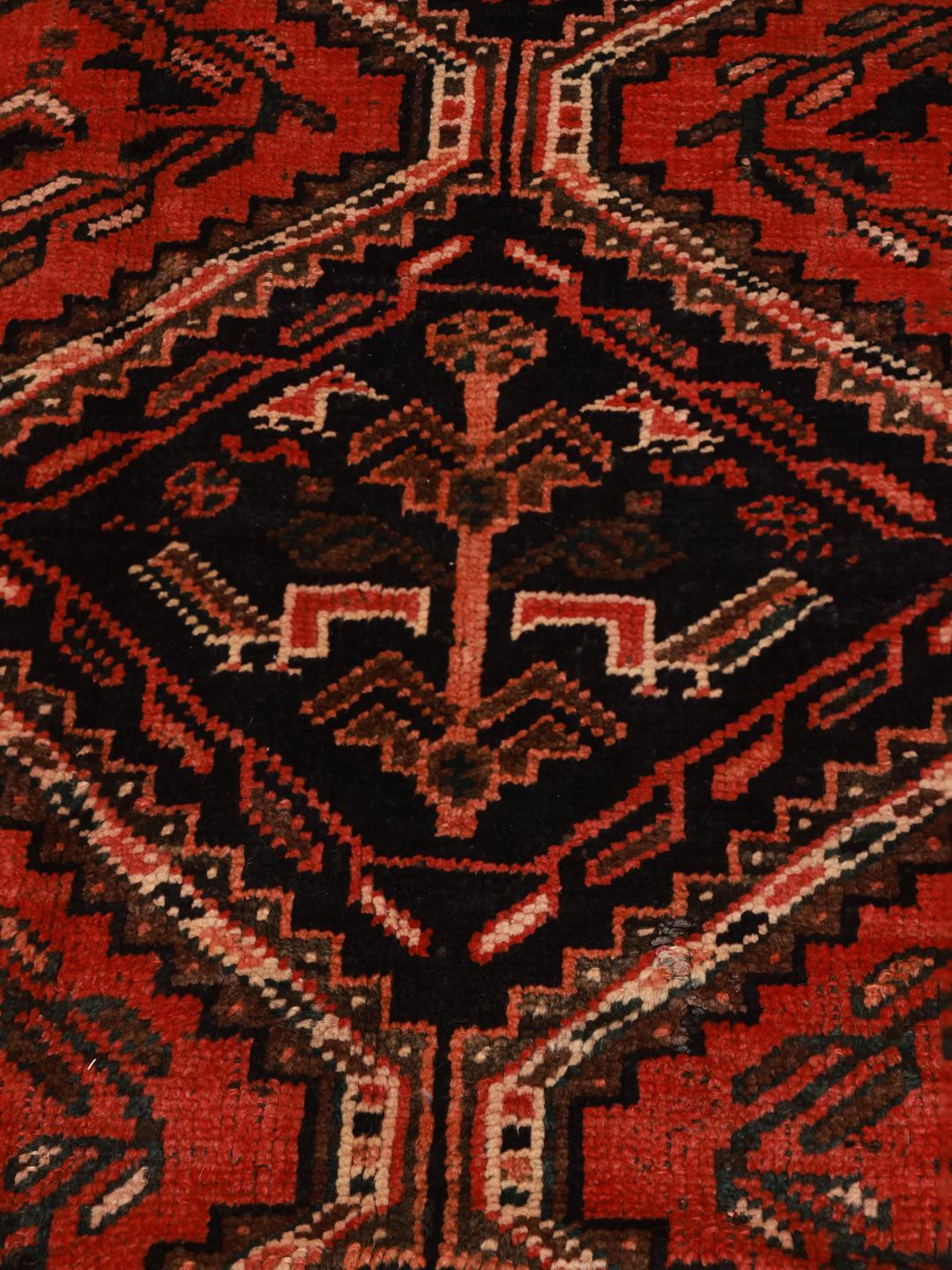
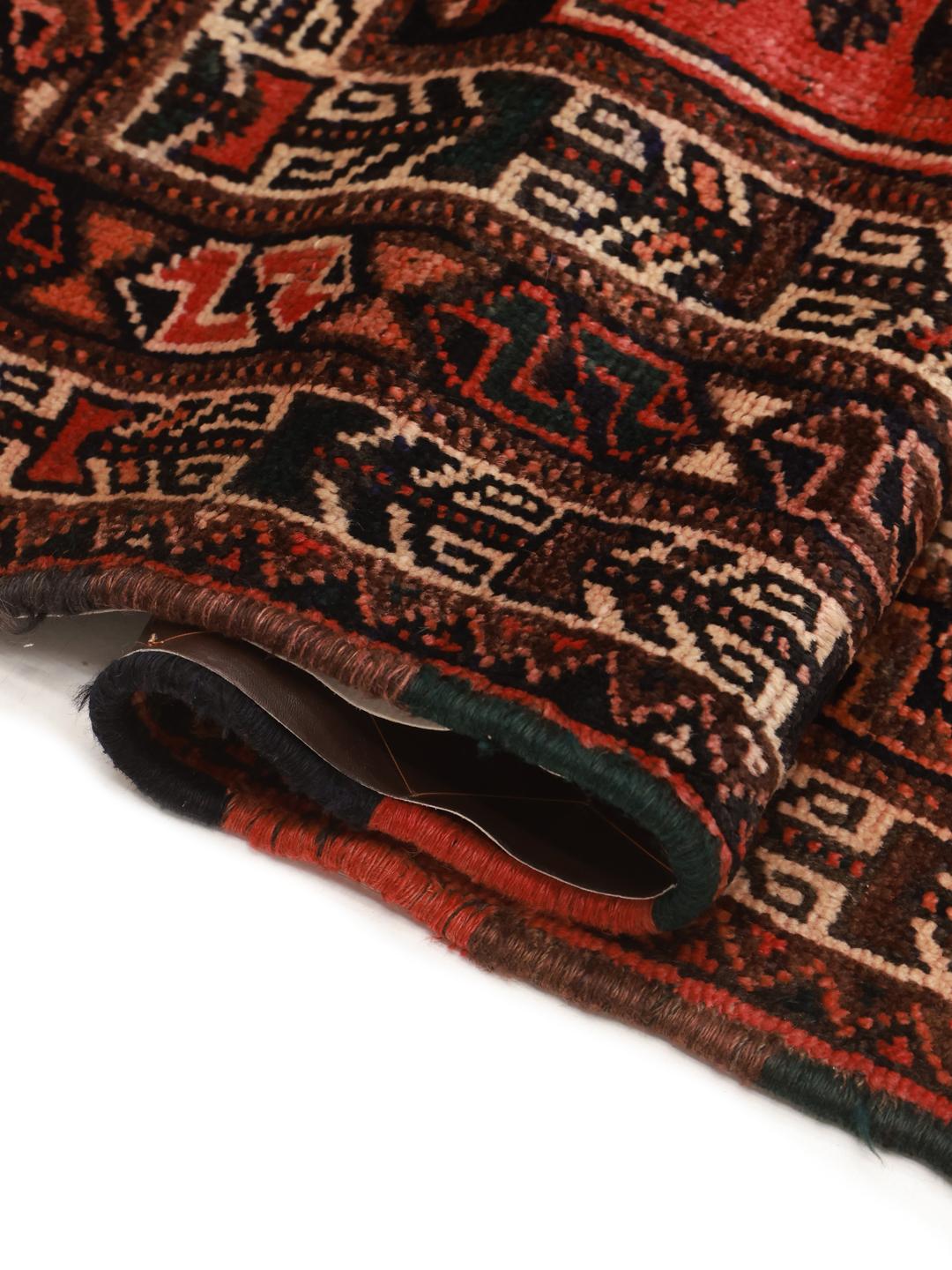
Signature elements of these rugs include stylized geometric motifs, such as diamonds, latch-hook borders, and occasionally pictorial elements representing local flora and fauna. The use of warm, vibrant reds and deep, contrasting dark tones is characteristic of the region, creating a bold, rhythmic aesthetic that is instantly recognisable to collectors.
These rugs are highly valued for their authenticity and the way they bridge the gap between functional household items and tribal art. Owning a piece from this tradition is an investment in cultural heritage, representing a connection to a long, nomadic history of skill and artistic expression that continues to influence interior design today.