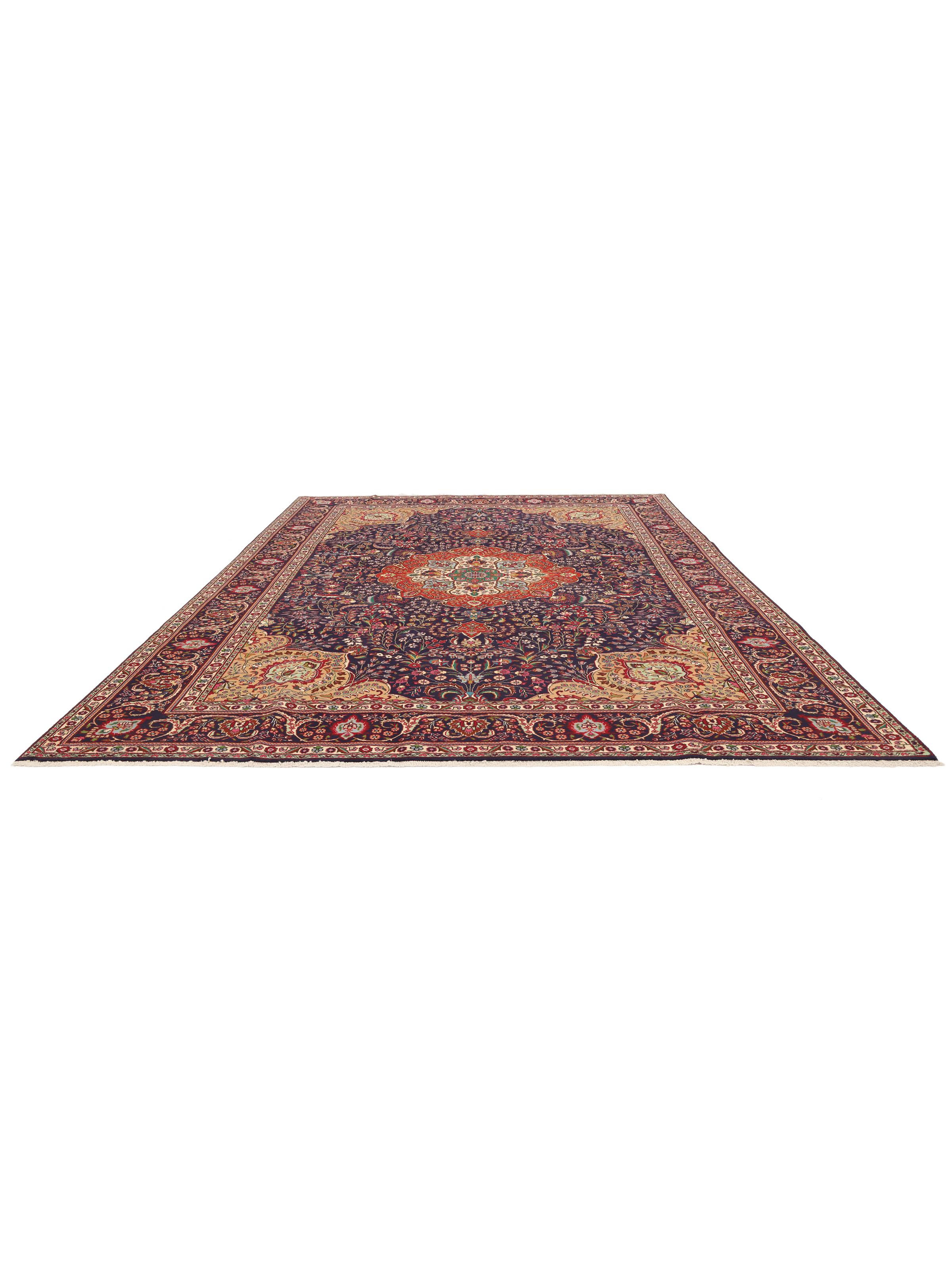
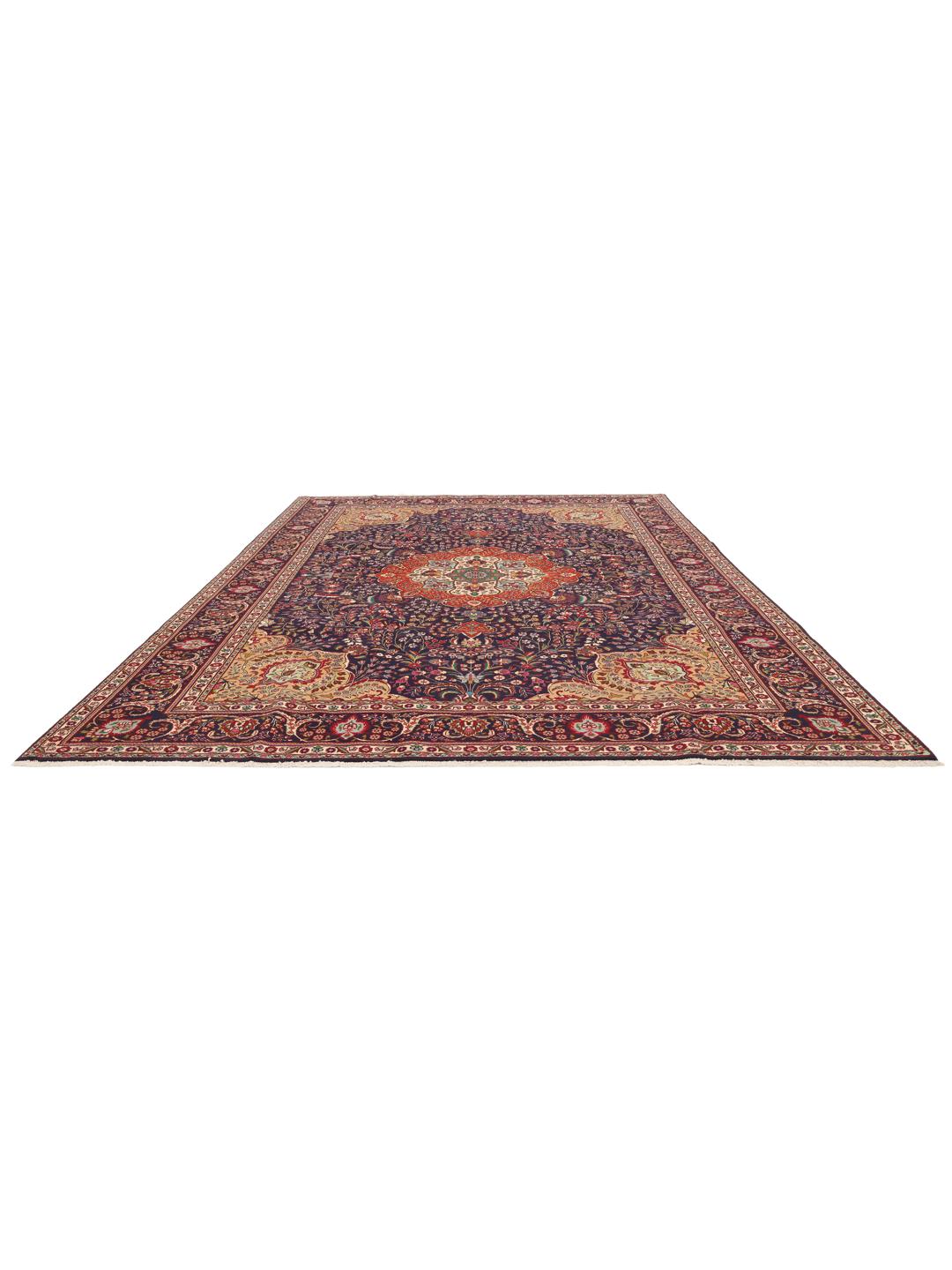
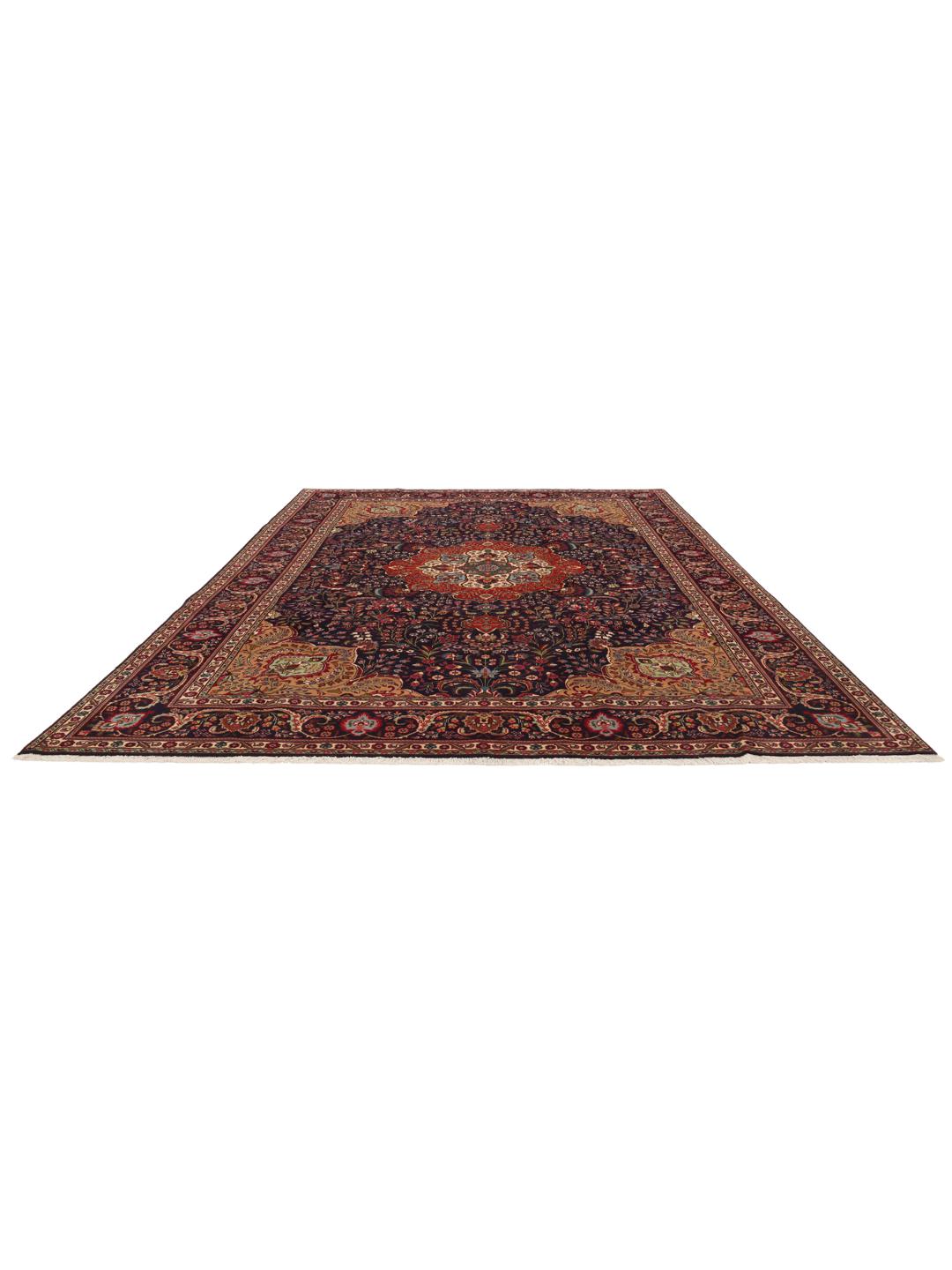
Tabriz rugs originate from one of the oldest rug-weaving centres in the Middle East. Located on the historic Silk Road, the city of Tabriz has long been a melting pot of artistic influences, allowing its weavers to master both traditional geometric patterns and the complex, flowing floral designs that define the best pieces today.
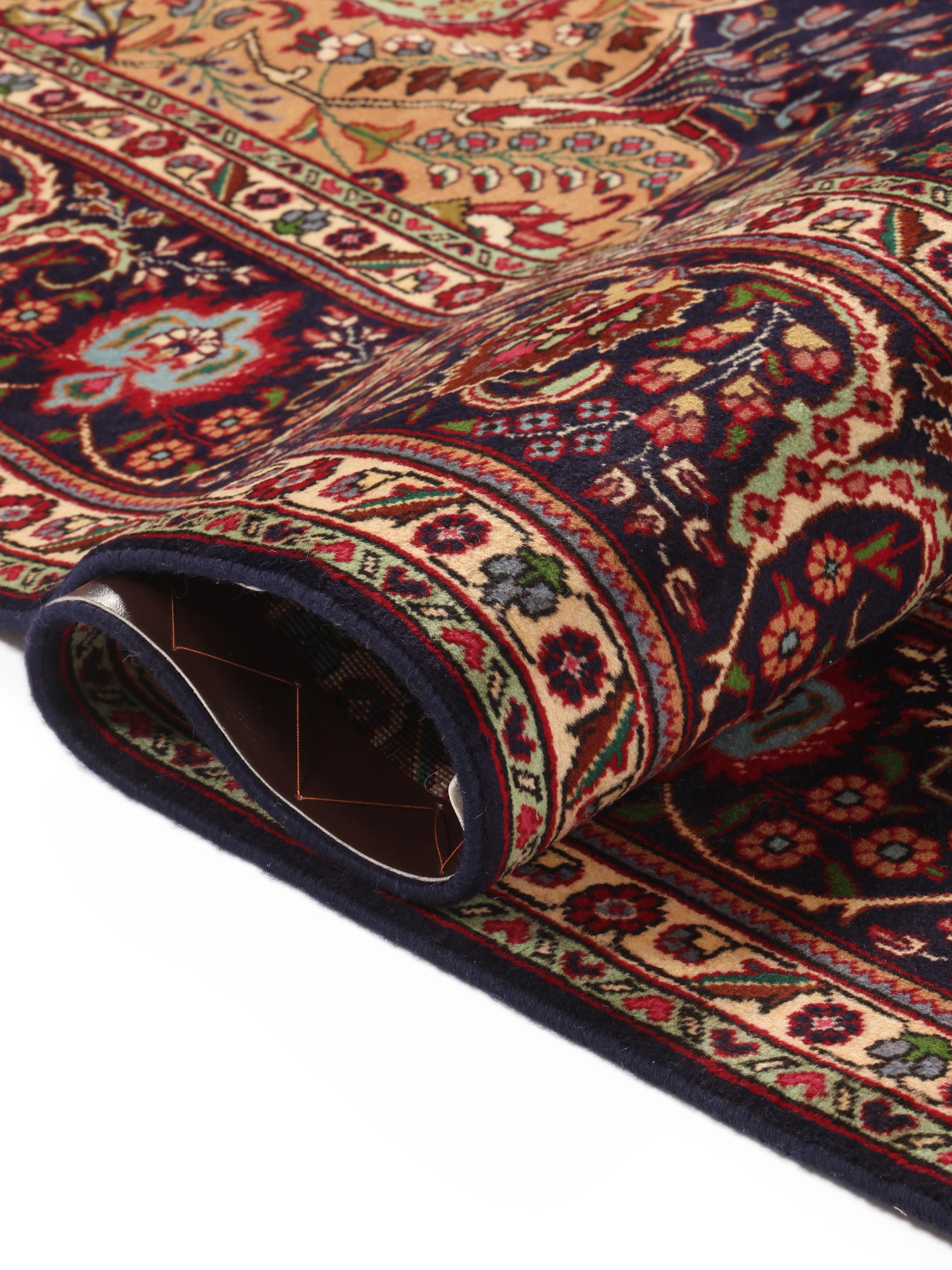
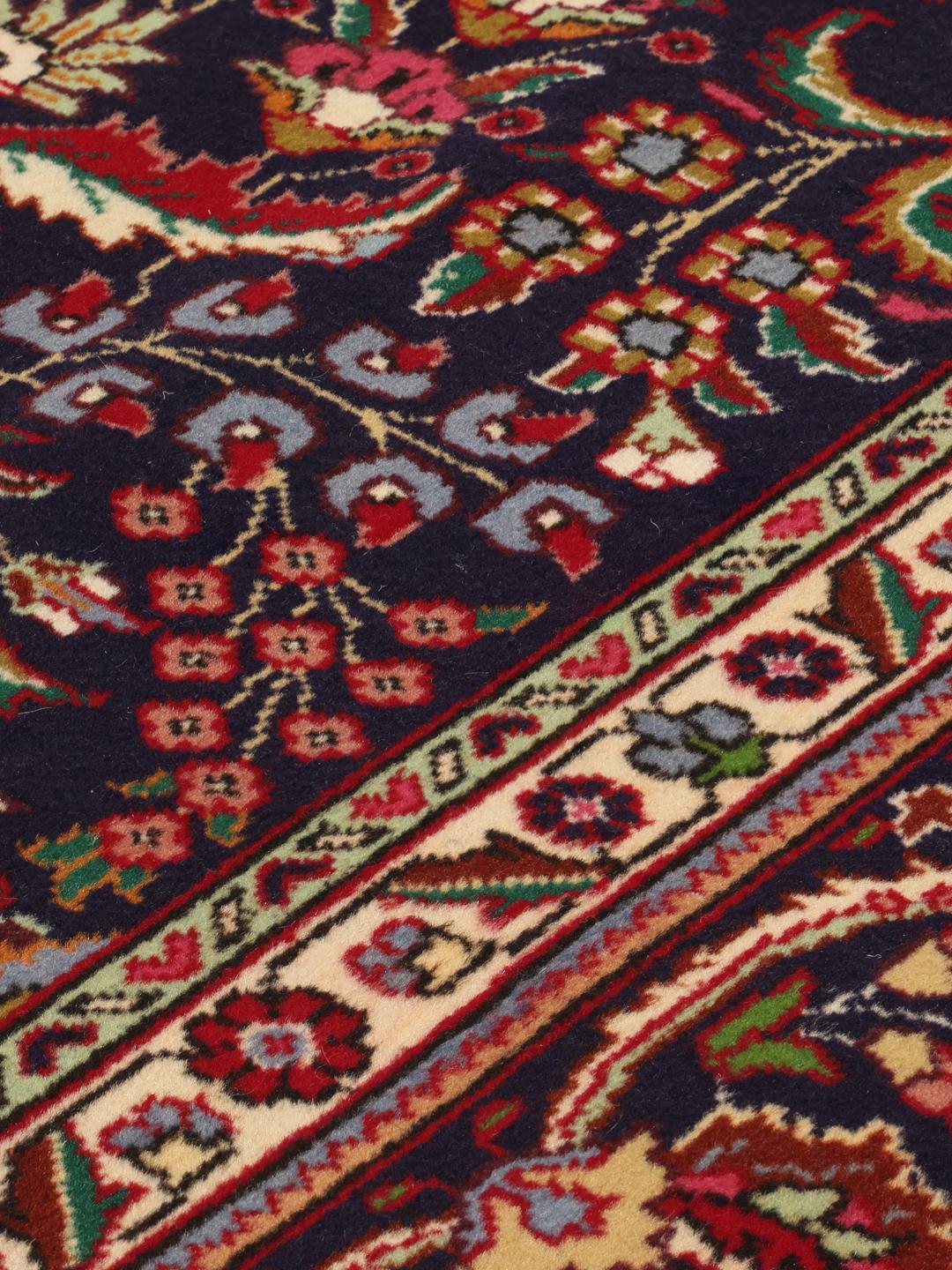
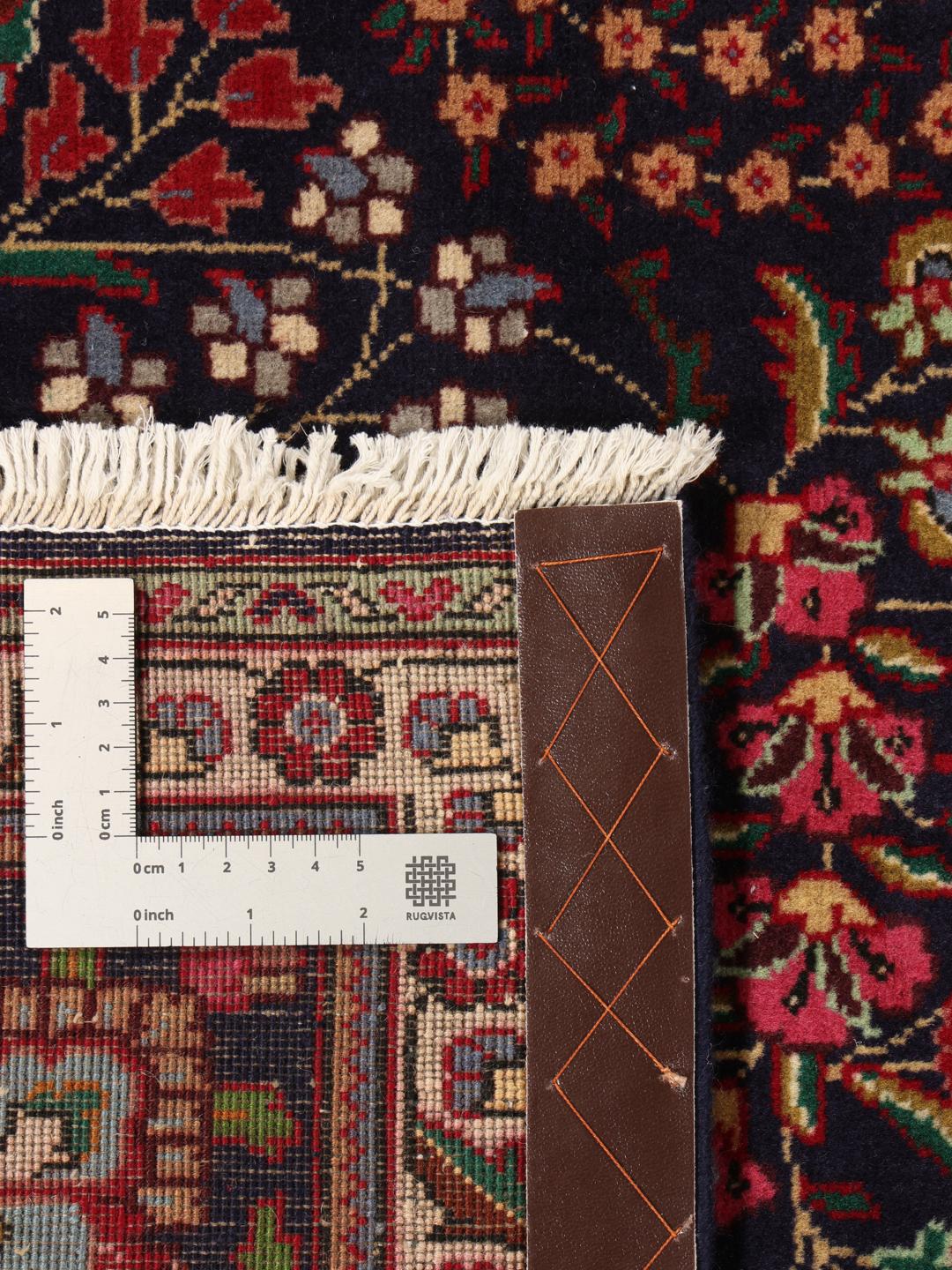
The term '40 Raj' refers to a specific technical standard of knot density, which serves as a measure of the rug's quality and the artisan's skill. This classification system ensures that the foundation of the rug is sufficiently tight, allowing for the intricate, curvilinear motifs that are hallmarks of the Tabriz style. For the owner, this means a more detailed pattern and a more resilient, long-lasting pile.
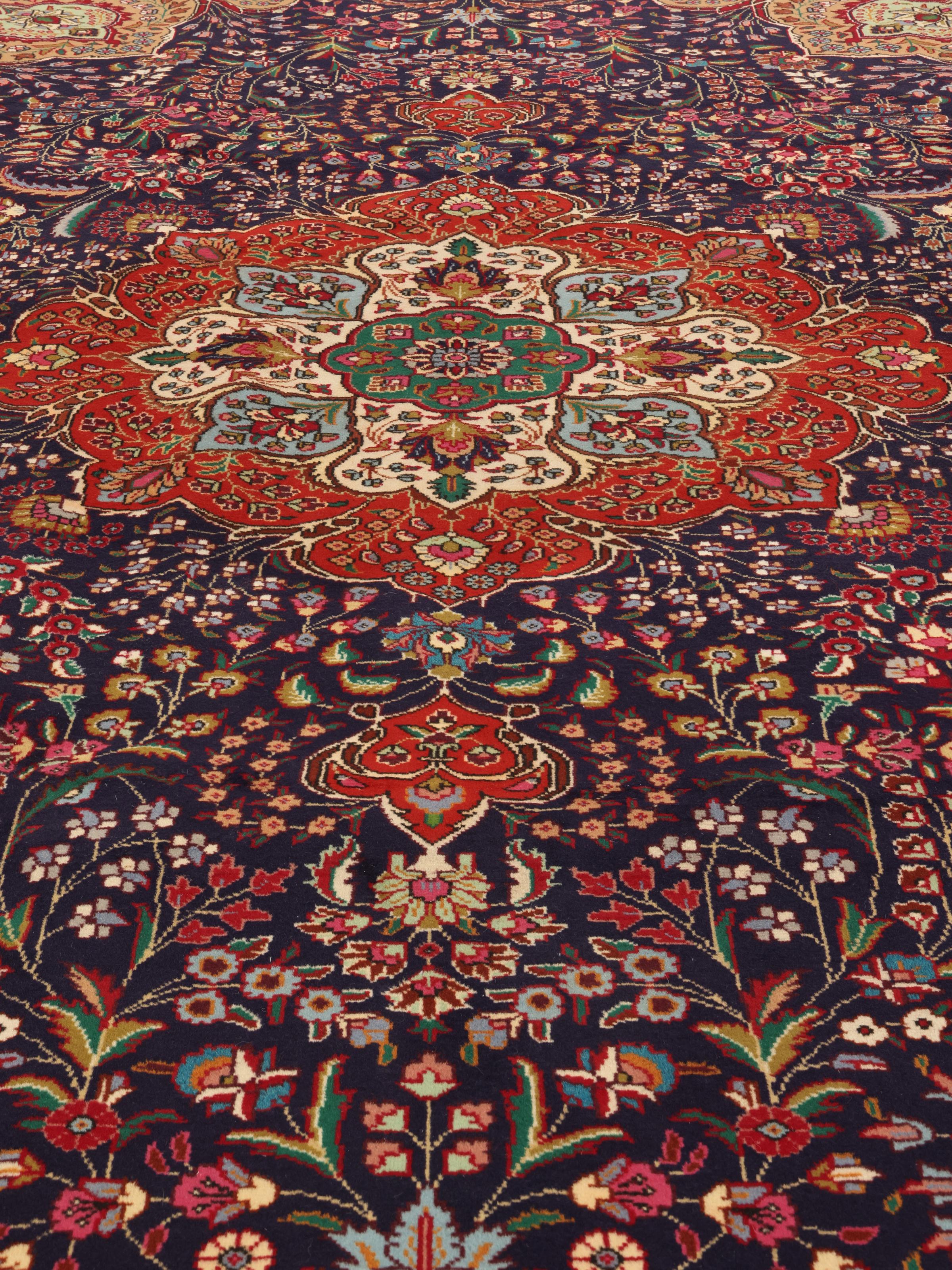
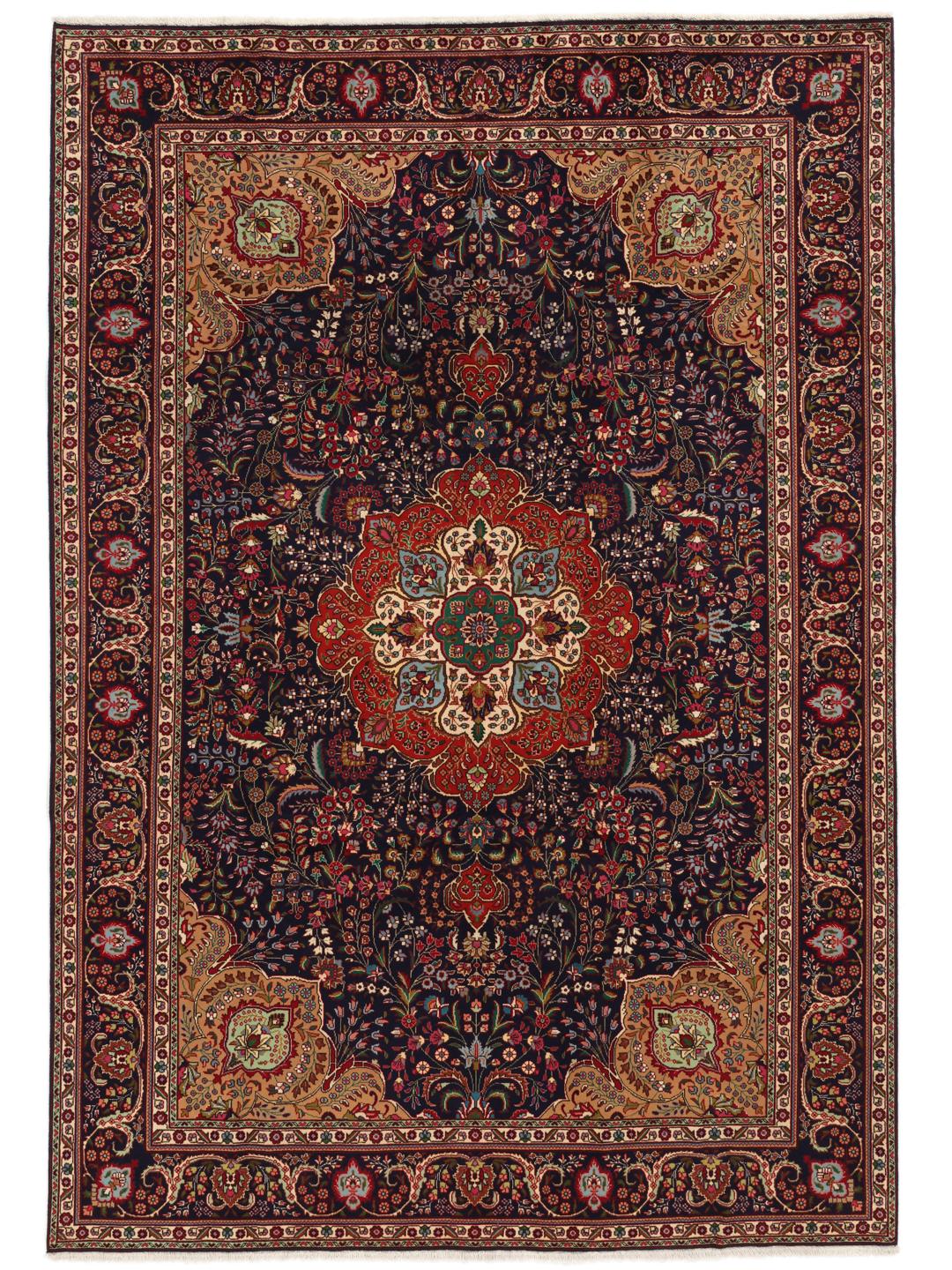
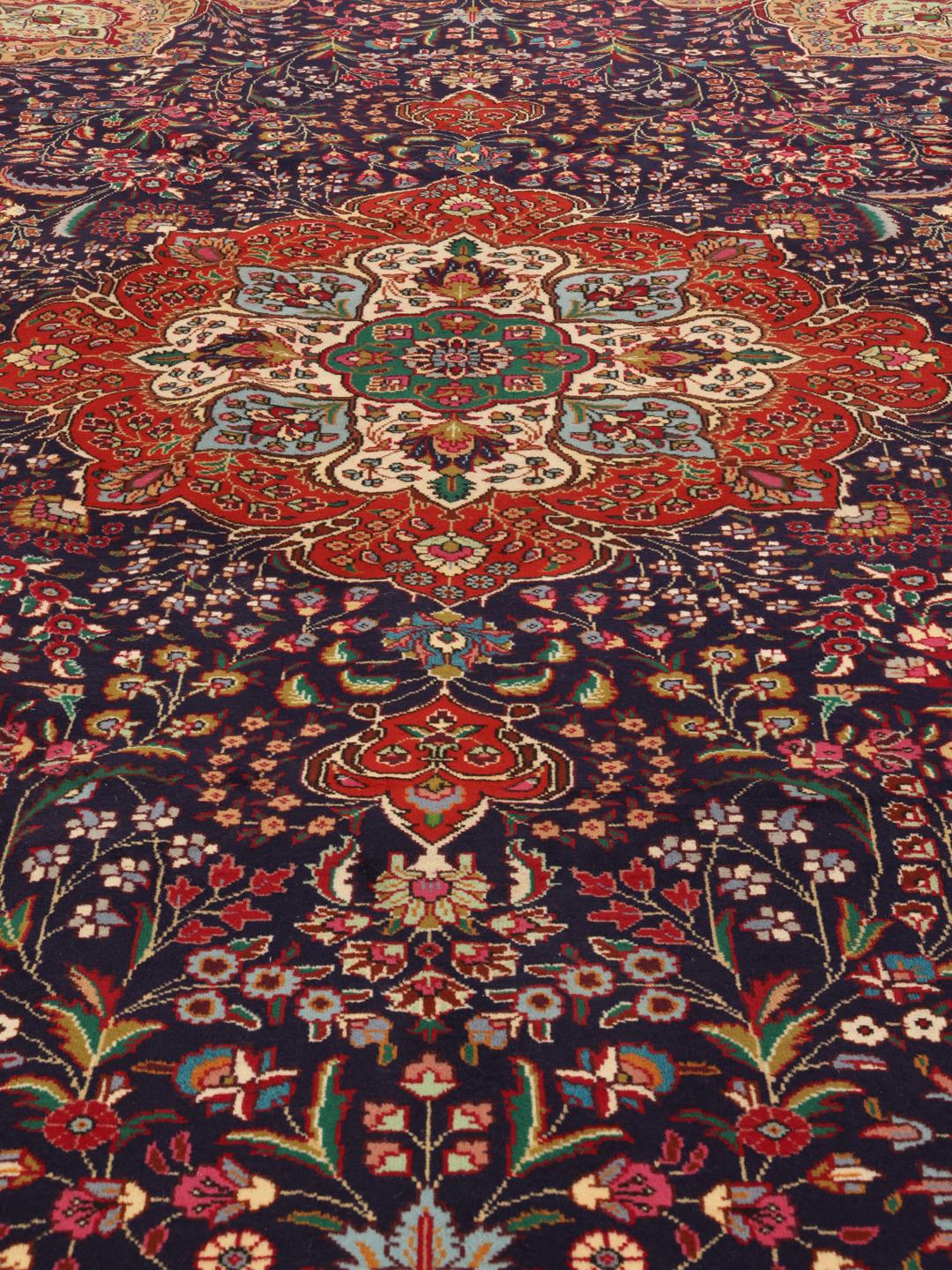
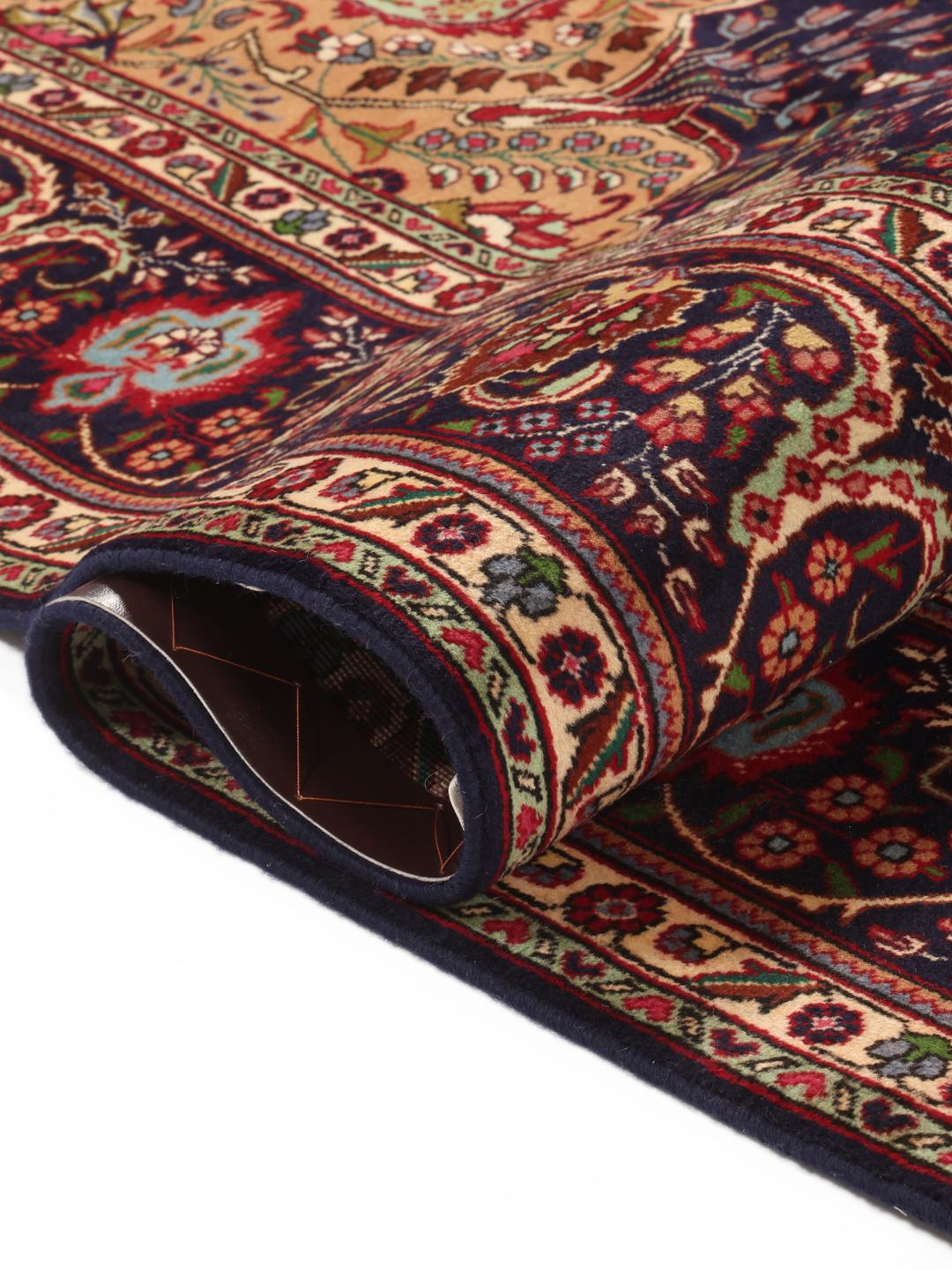
Visually, these rugs are celebrated for their balanced compositions. They typically feature a central medallion surrounded by dense floral sprays and vines, all framed by a formal, multi-layered border. While many follow this classic template, each weaver brings their own interpretation to the loom, resulting in subtle variations in colour and motif placement that make every rug a unique expression of the tradition.
Collecting a Tabriz rug is a commitment to heritage and exceptional skill. Because these pieces are created using techniques passed down through generations, they hold a cultural weight that mass-produced items cannot match. Owning one is an opportunity to preserve a piece of living history, ensuring that the art of hand-knotting continues to be valued and celebrated in modern homes.