Tabriz rugs originate from the historic city of Tabriz in the Middle East, a centre of trade and artistic exchange for centuries. Located along ancient trade routes, the city became a melting pot of design influences, fostering a tradition of rug making that is renowned for its technical precision and artistic diversity.
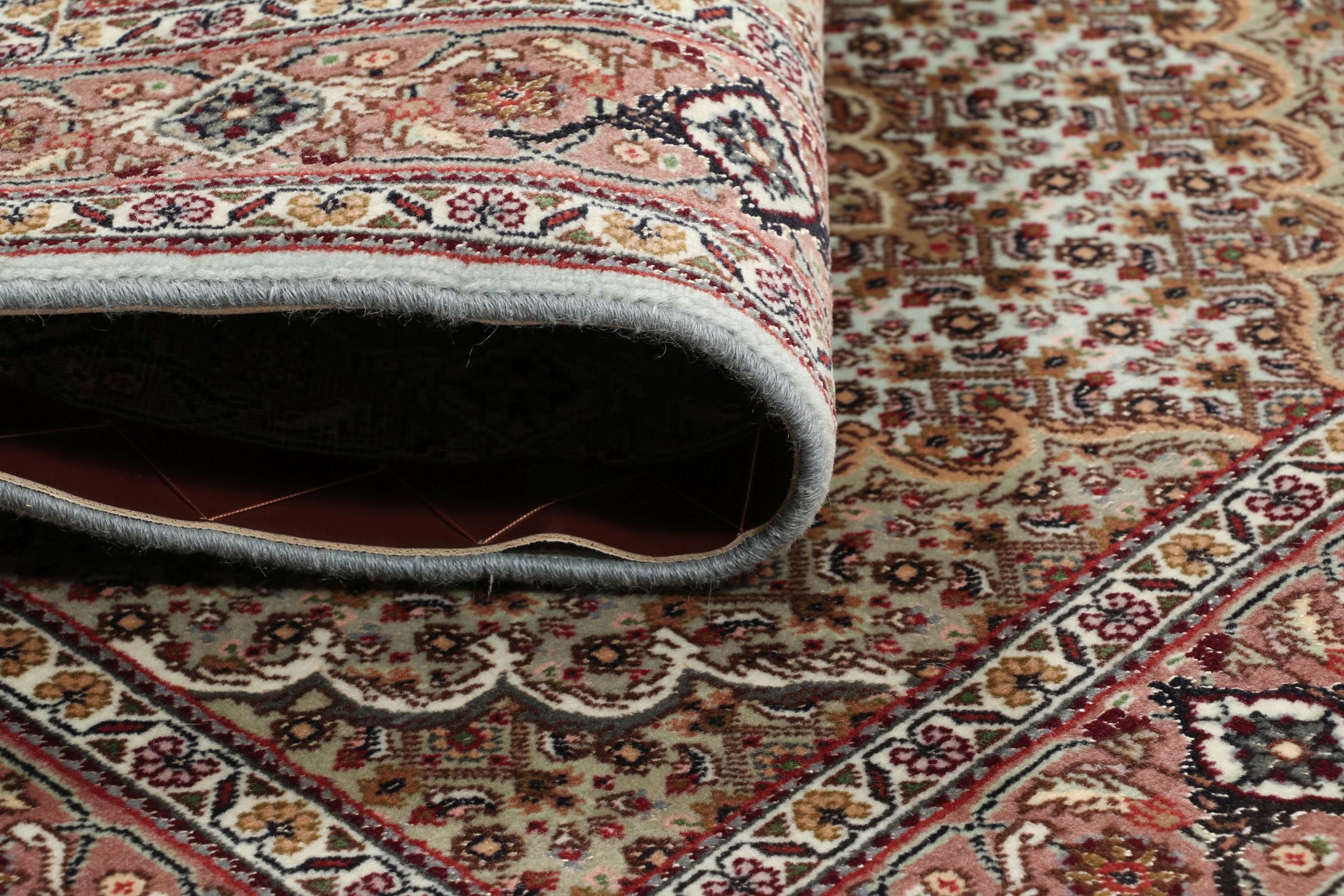
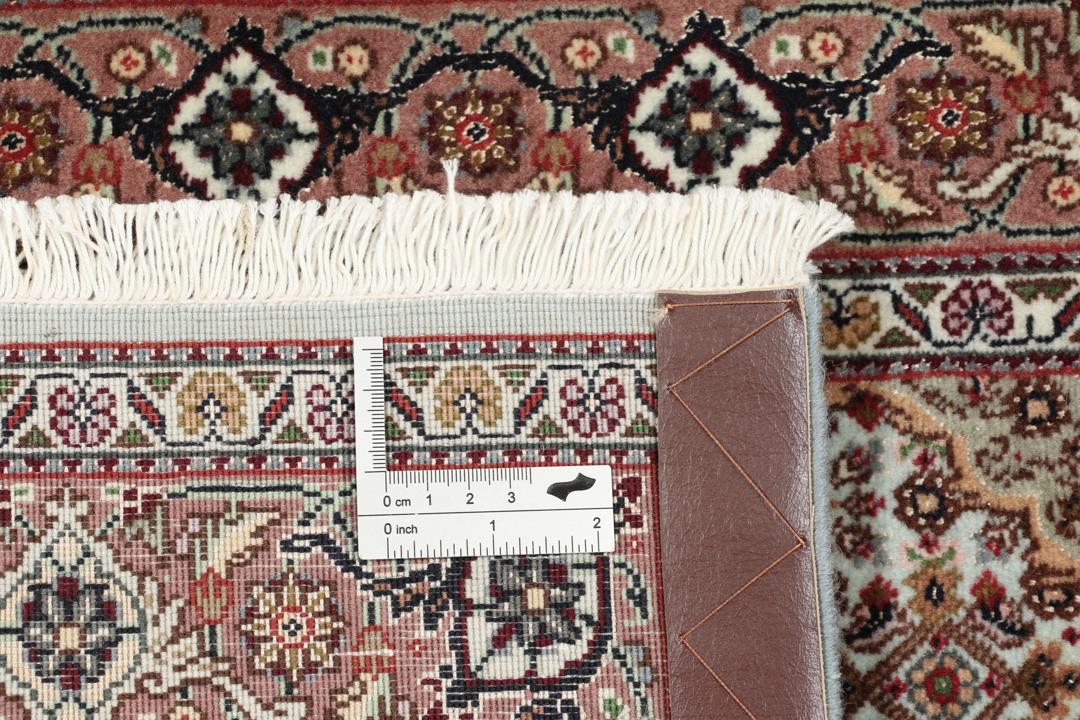
The term '50 Raj' refers to the specific knotting density and technical quality of the rug. In the Tabriz tradition, the Raj count is a measure of the number of knots within a specific width, directly correlating to the complexity of the design and the refinement of the pile. This system serves as a hallmark of quality, distinguishing pieces that require a higher level of skill and time to produce.
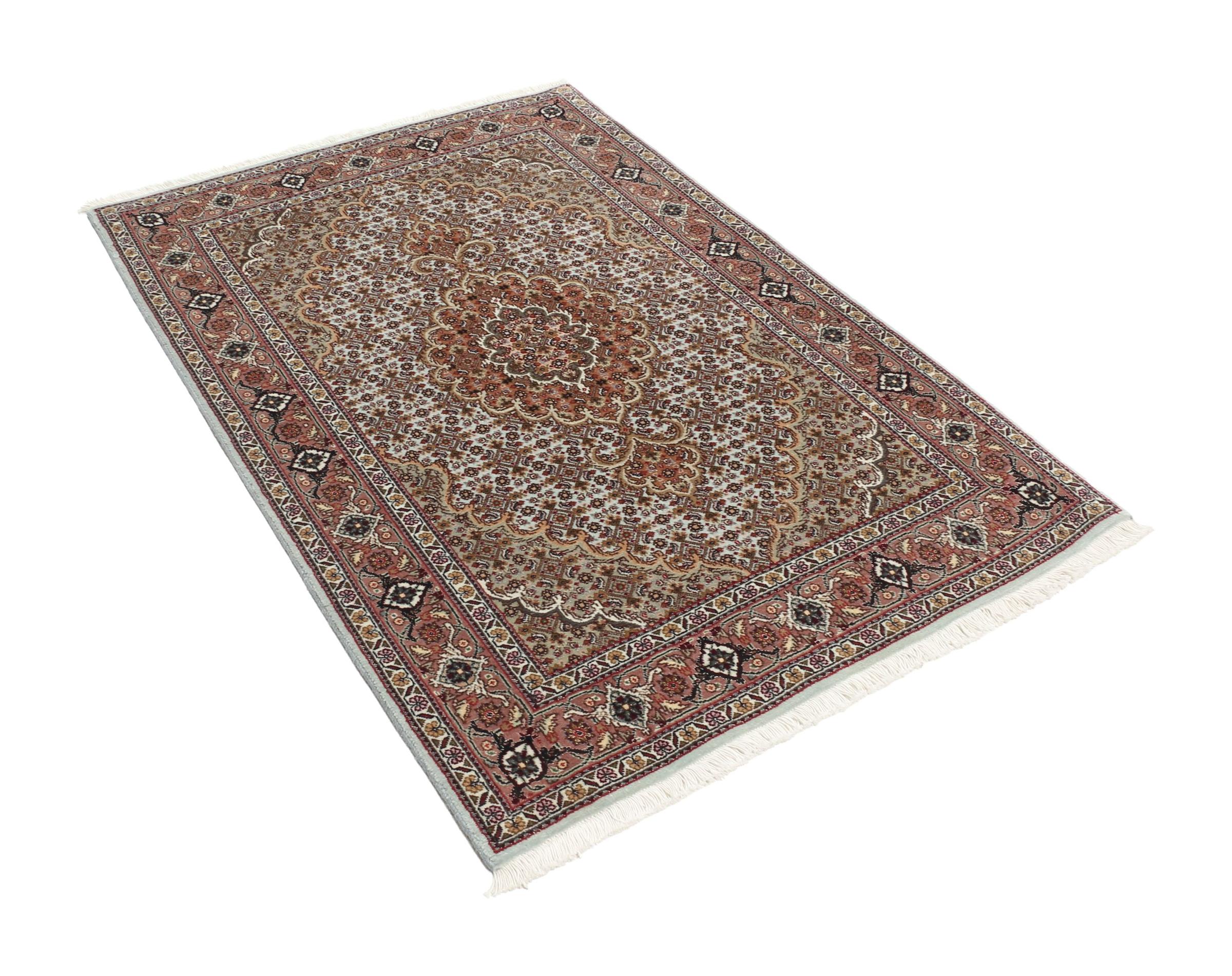
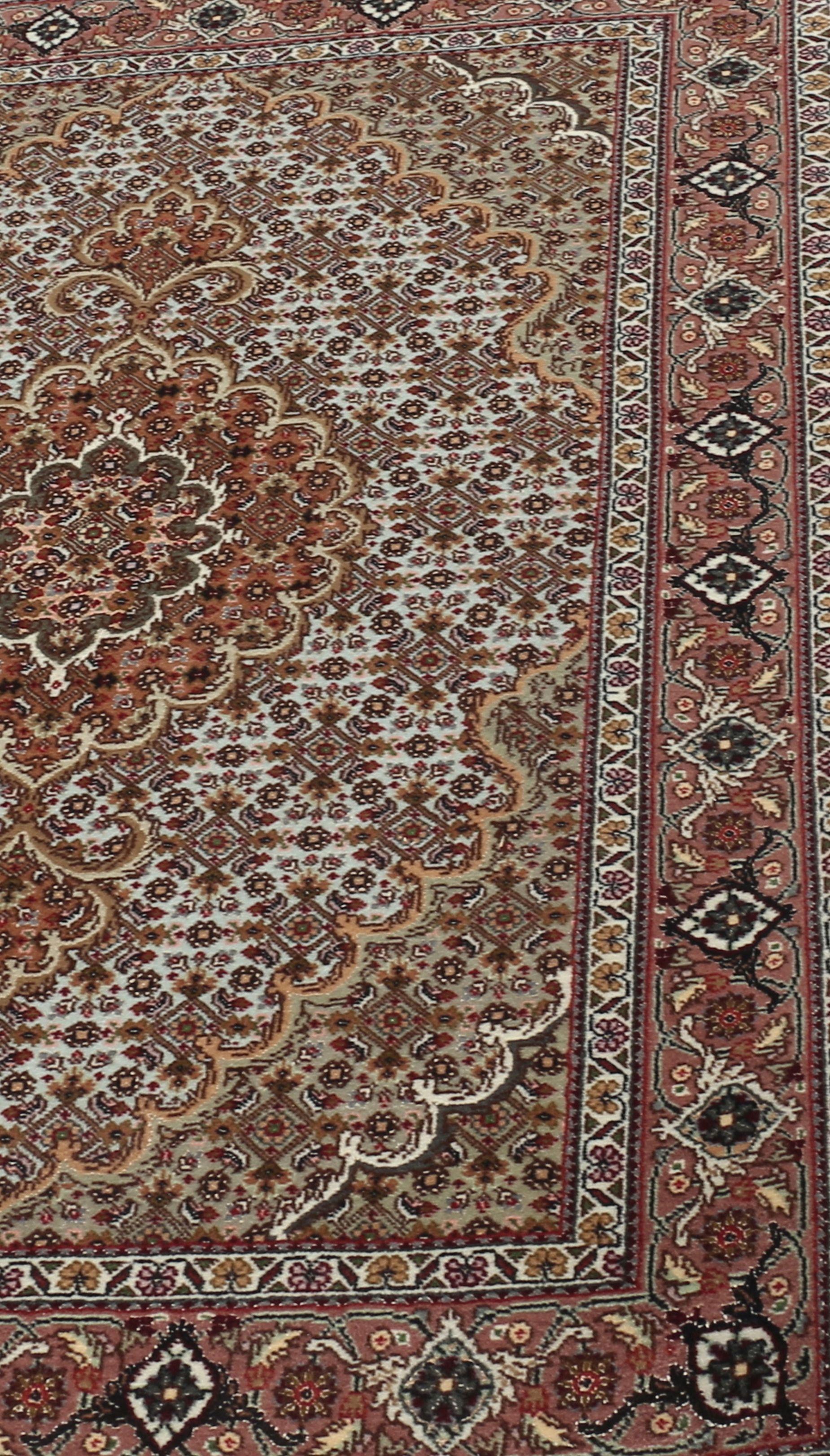
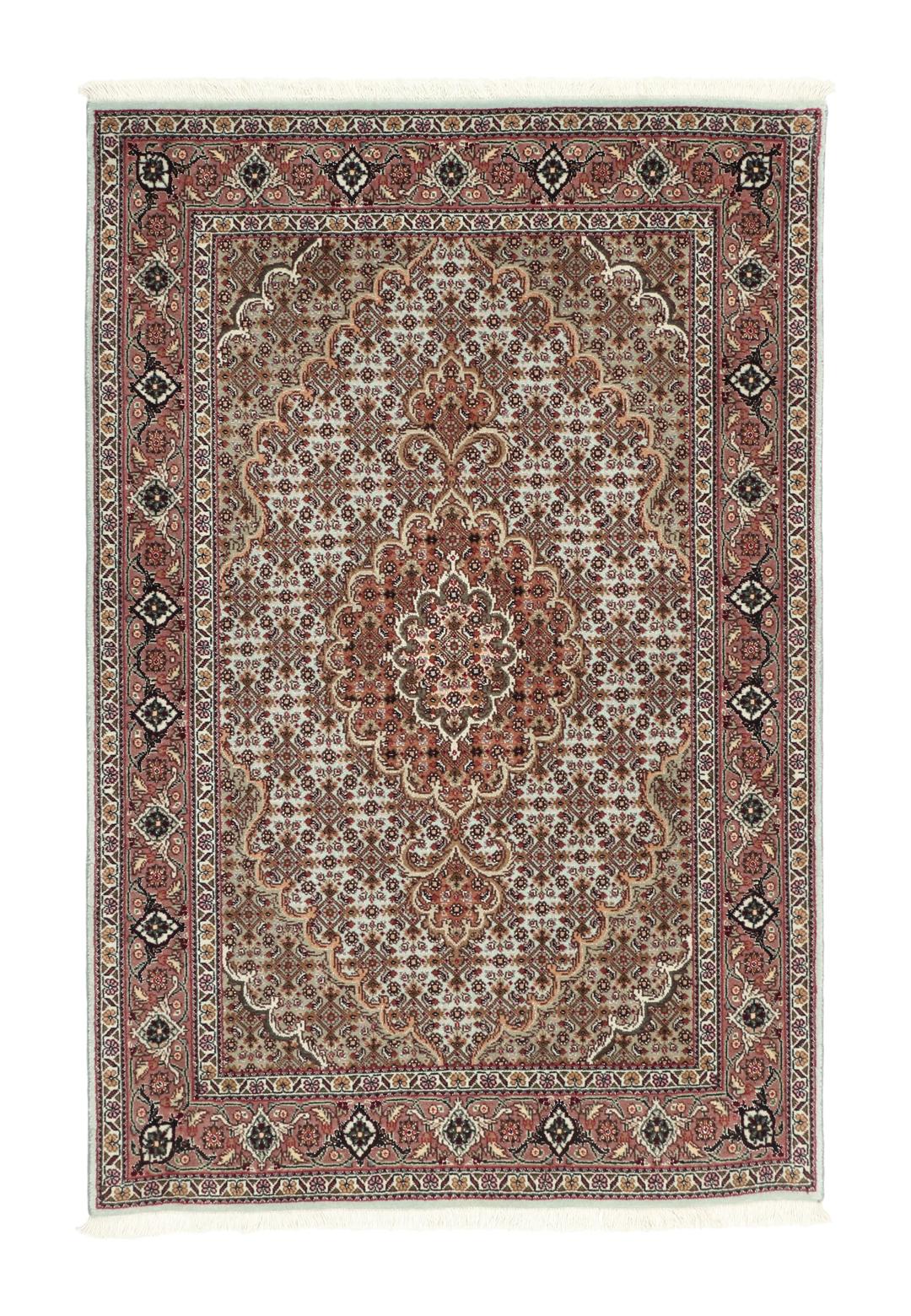
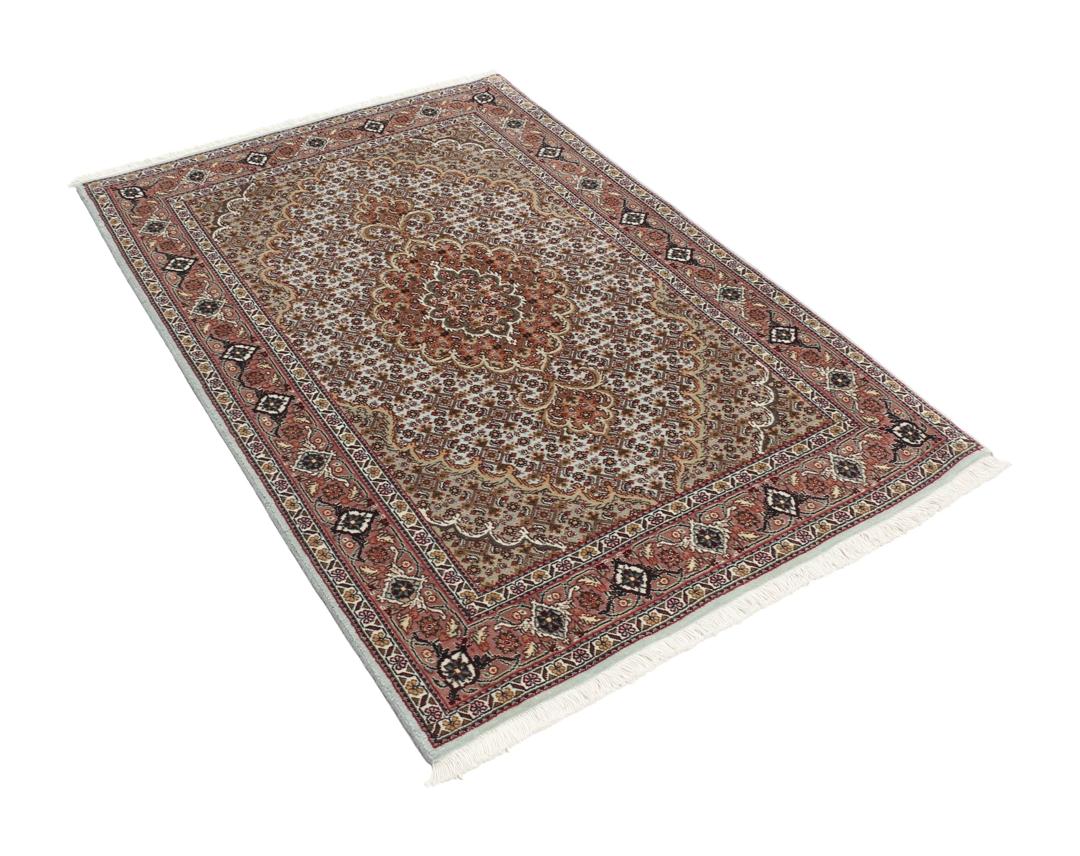
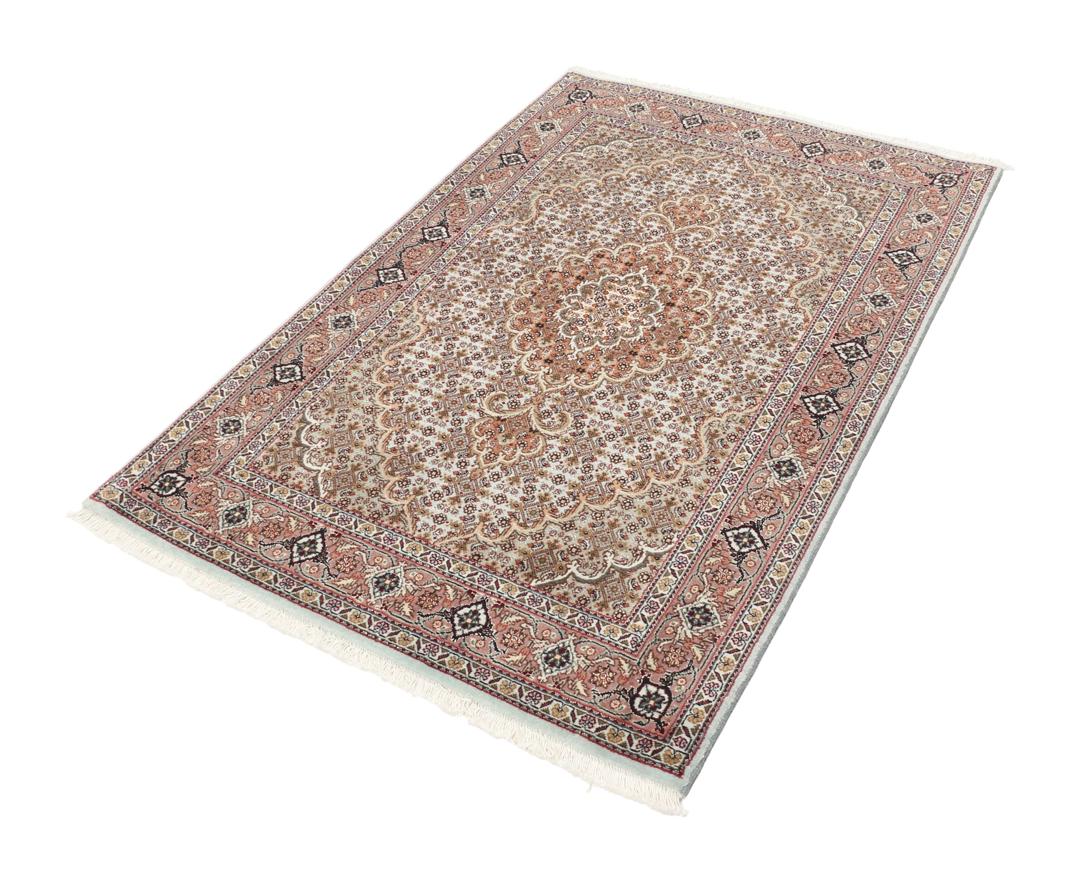
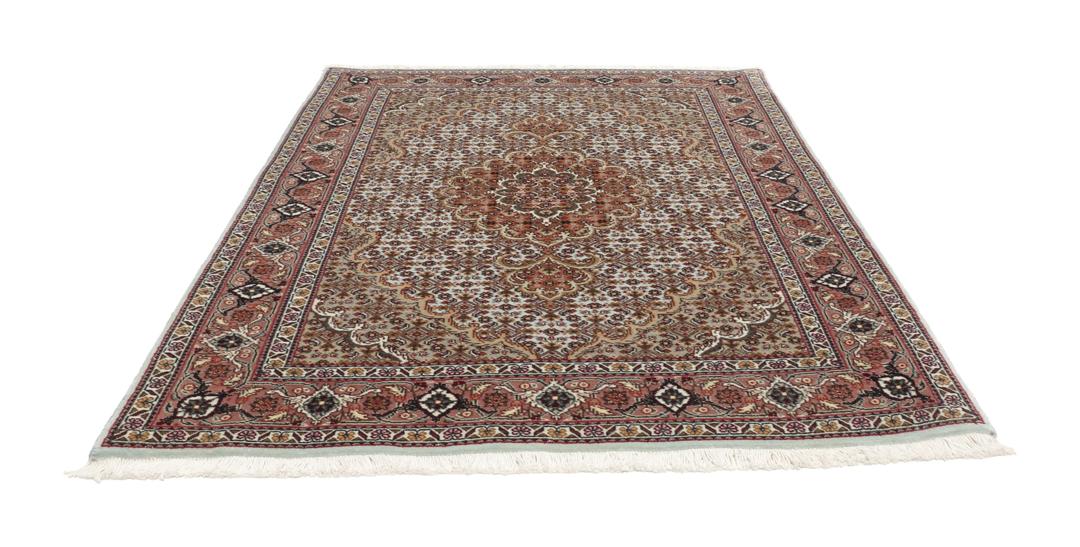
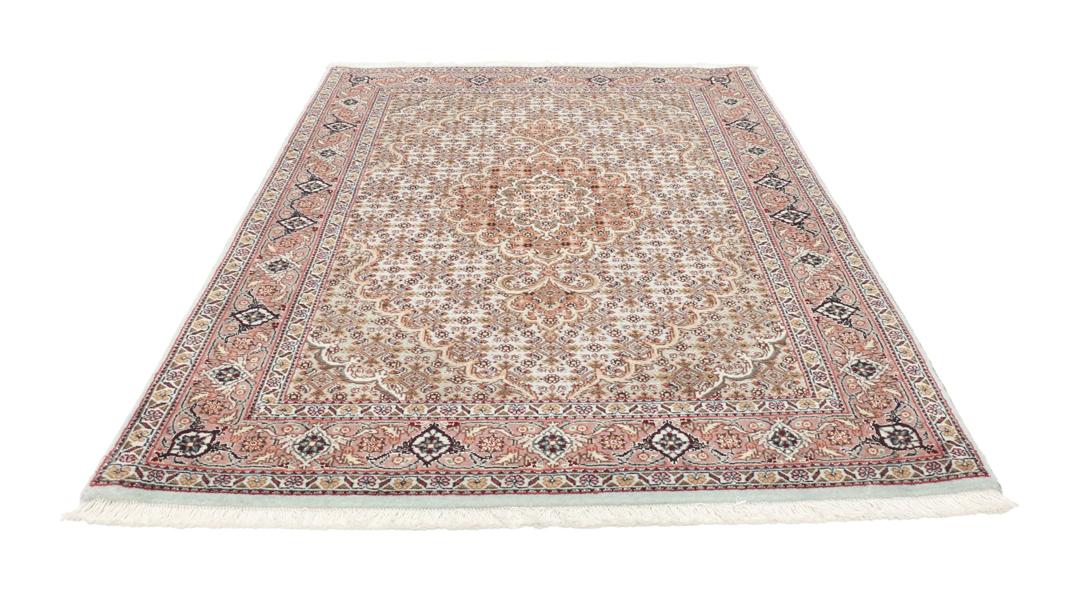
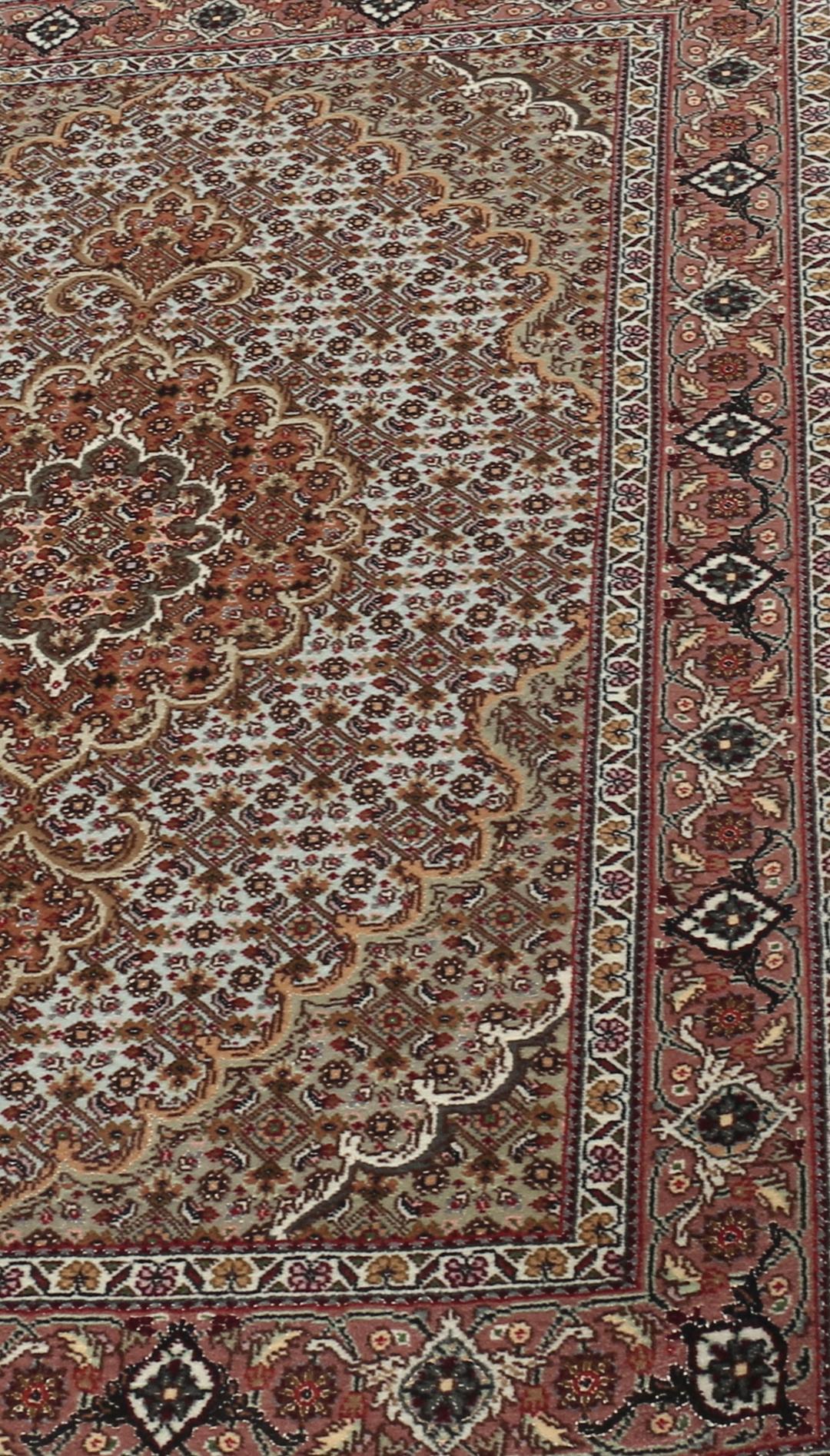
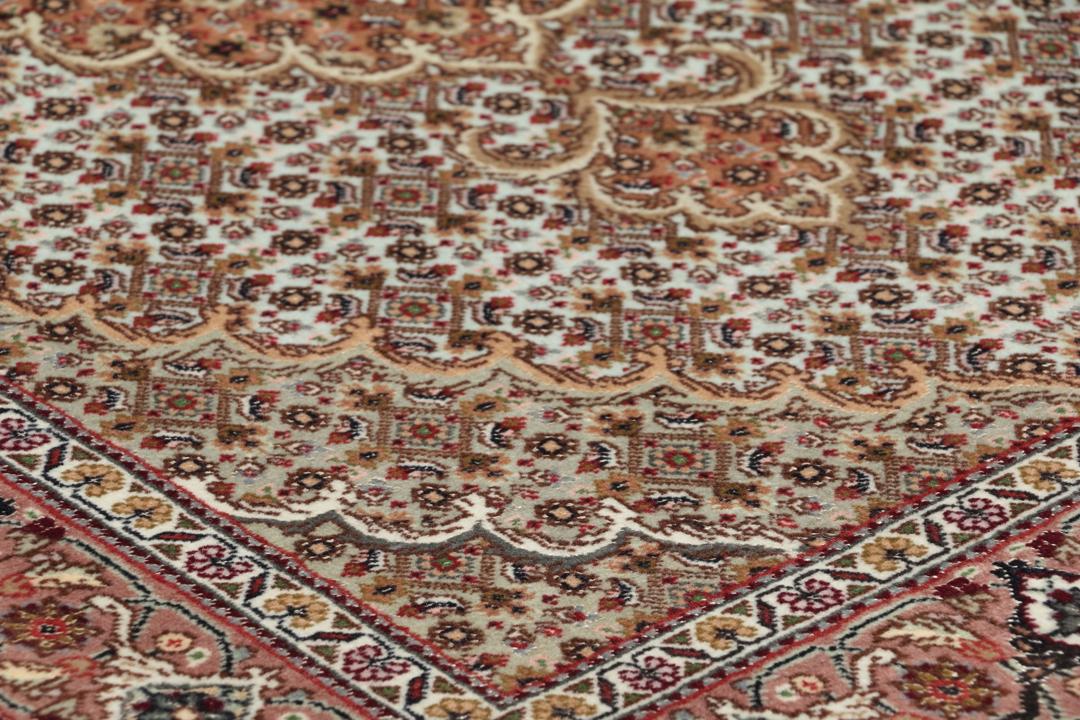
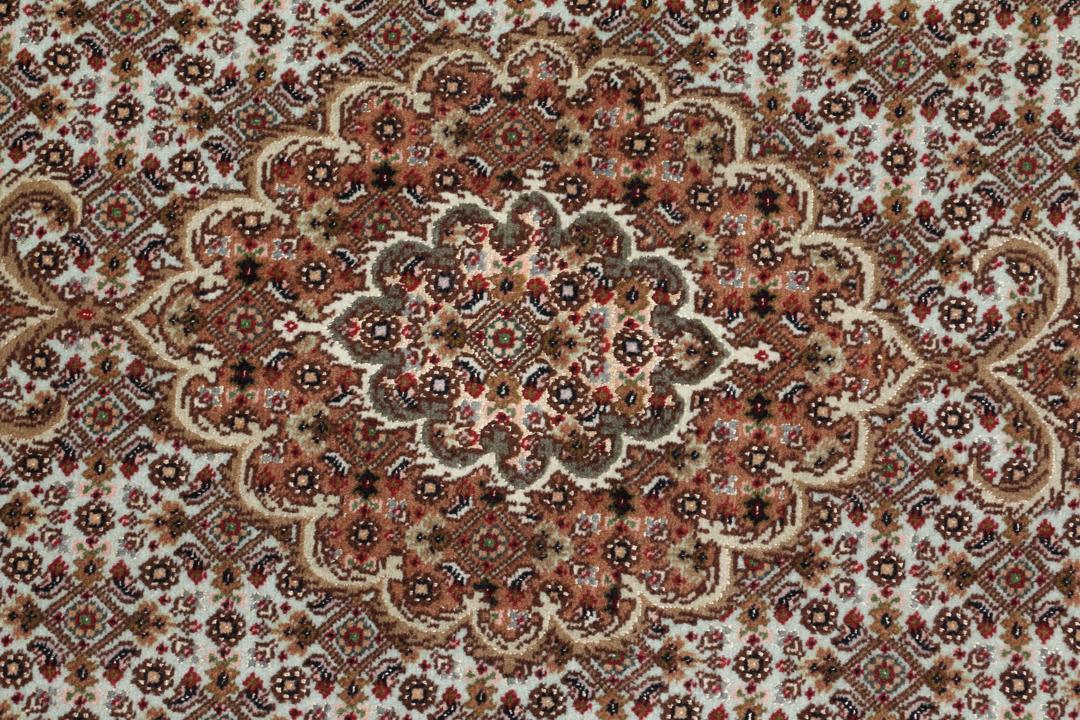
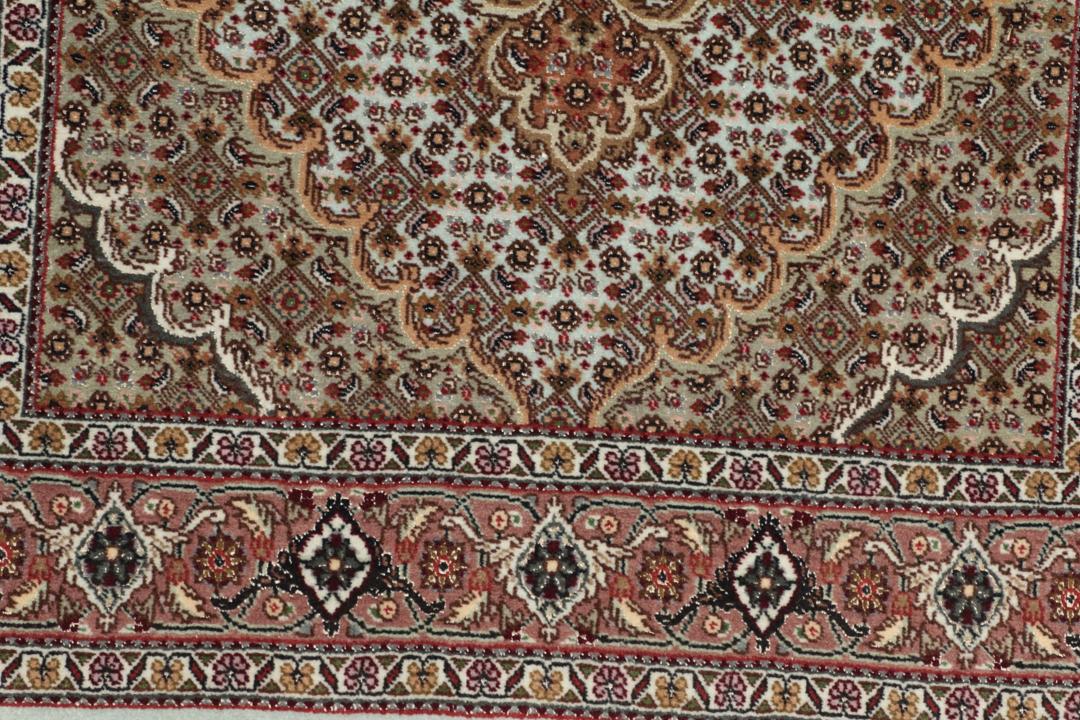
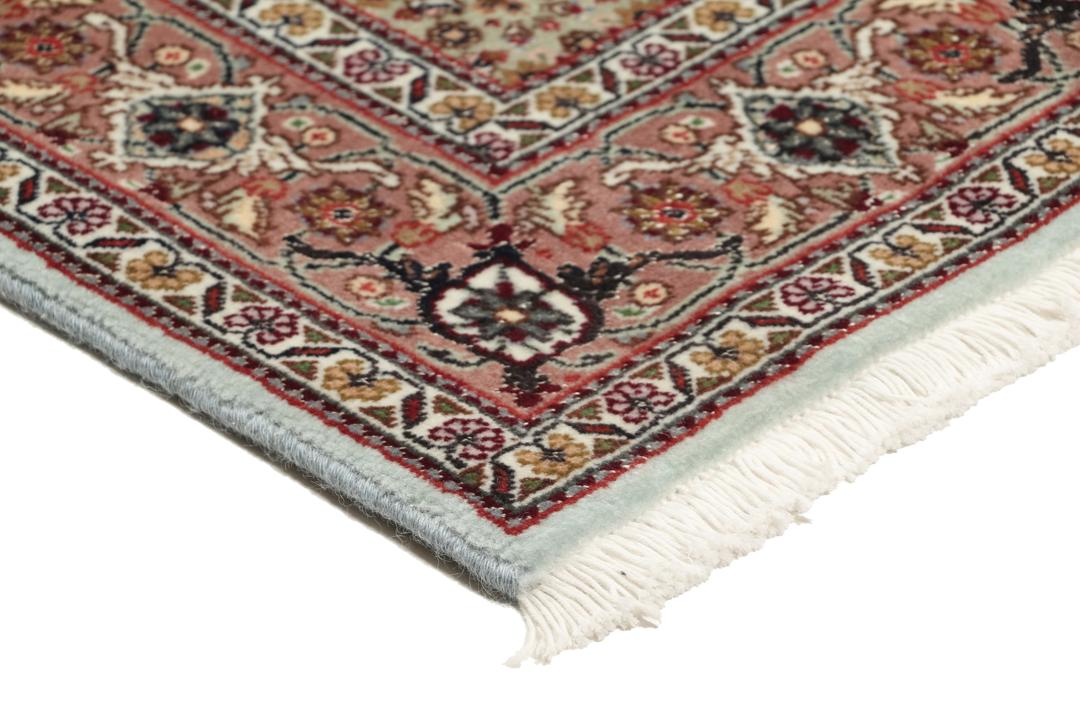
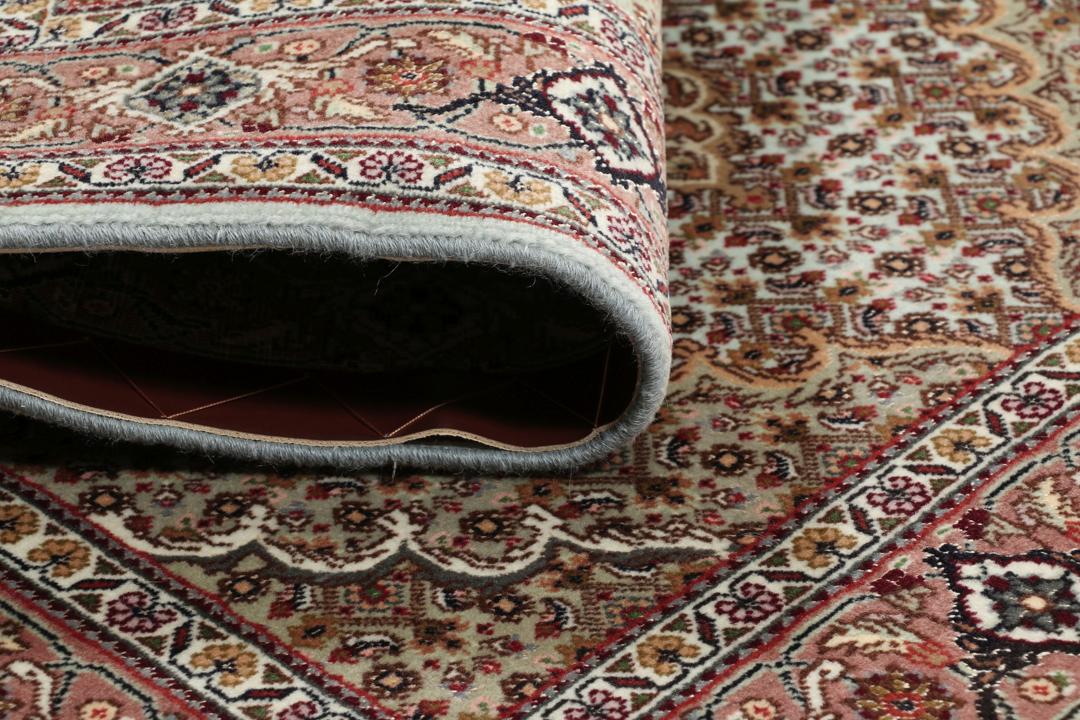
Visually, Tabriz rugs are celebrated for their intricate, balanced compositions. They often feature a central medallion, which acts as the heart of the rug, surrounded by elaborate floral motifs and decorative borders. This rug follows that legacy, utilising a sophisticated colour palette that highlights the depth of the pattern and the harmony of the design elements.
Collecting a Tabriz rug is an investment in cultural history and human skill. These pieces are valued for their ability to blend traditional motifs with a timeless aesthetic, making them highly sought after by those who appreciate the intersection of heritage, artistry, and lasting quality.