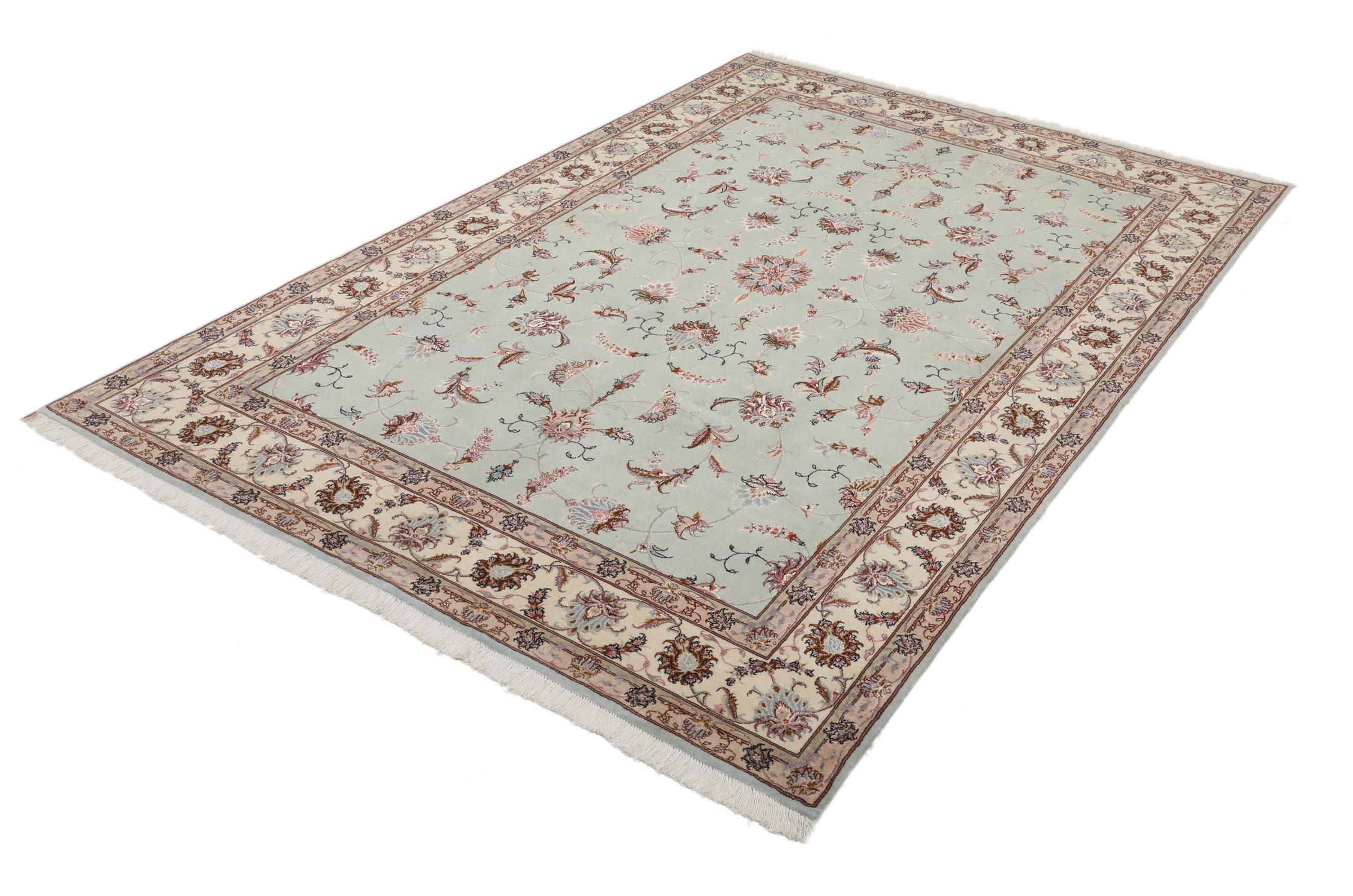
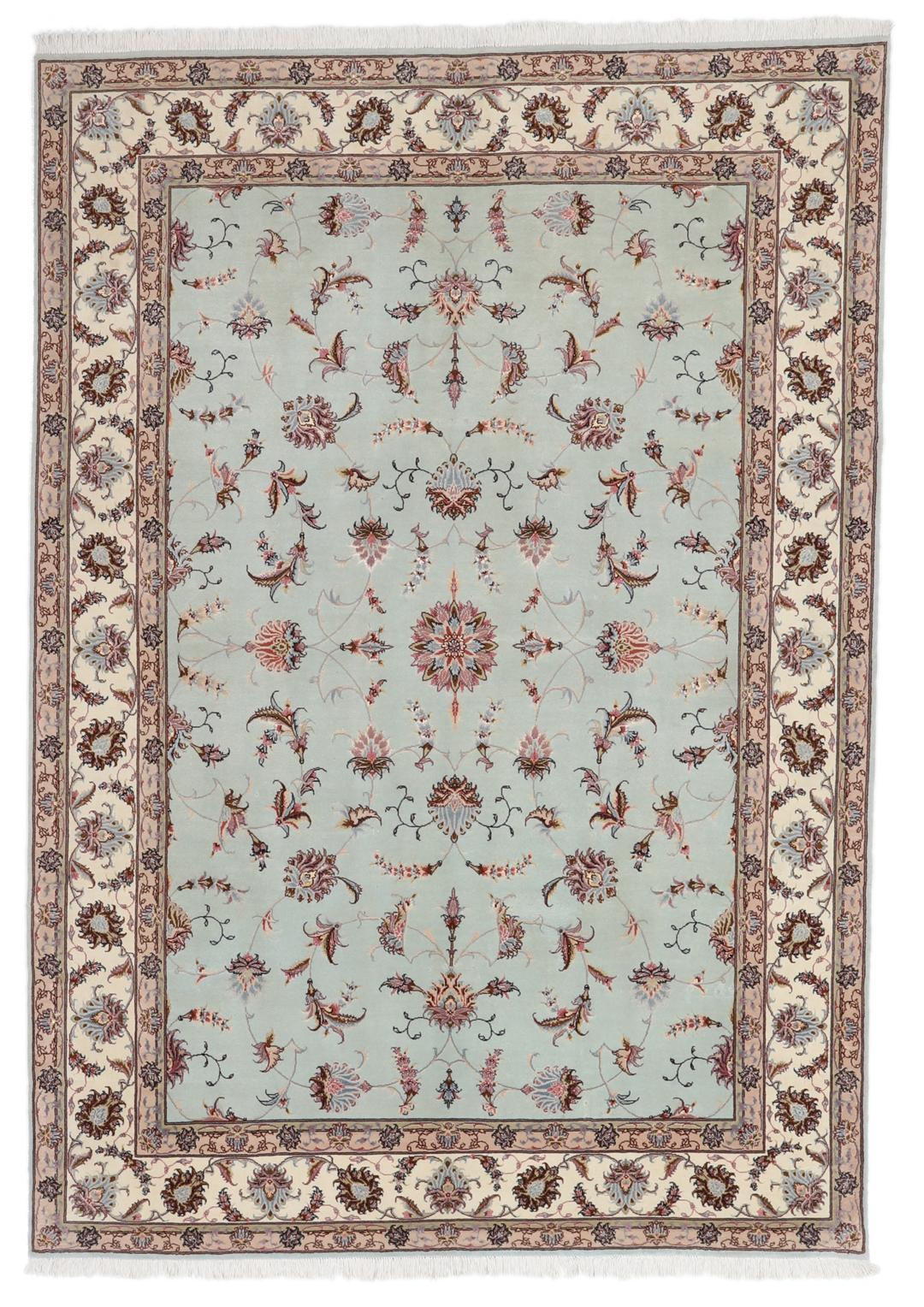
Tabriz is one of the oldest and most respected rug-weaving centres in the Middle East, with a history spanning centuries. Located in northwestern territory, the city has long been a hub for trade and artistic exchange, allowing its weavers to master a wide array of styles and techniques that have evolved to represent the pinnacle of regional craftsmanship.
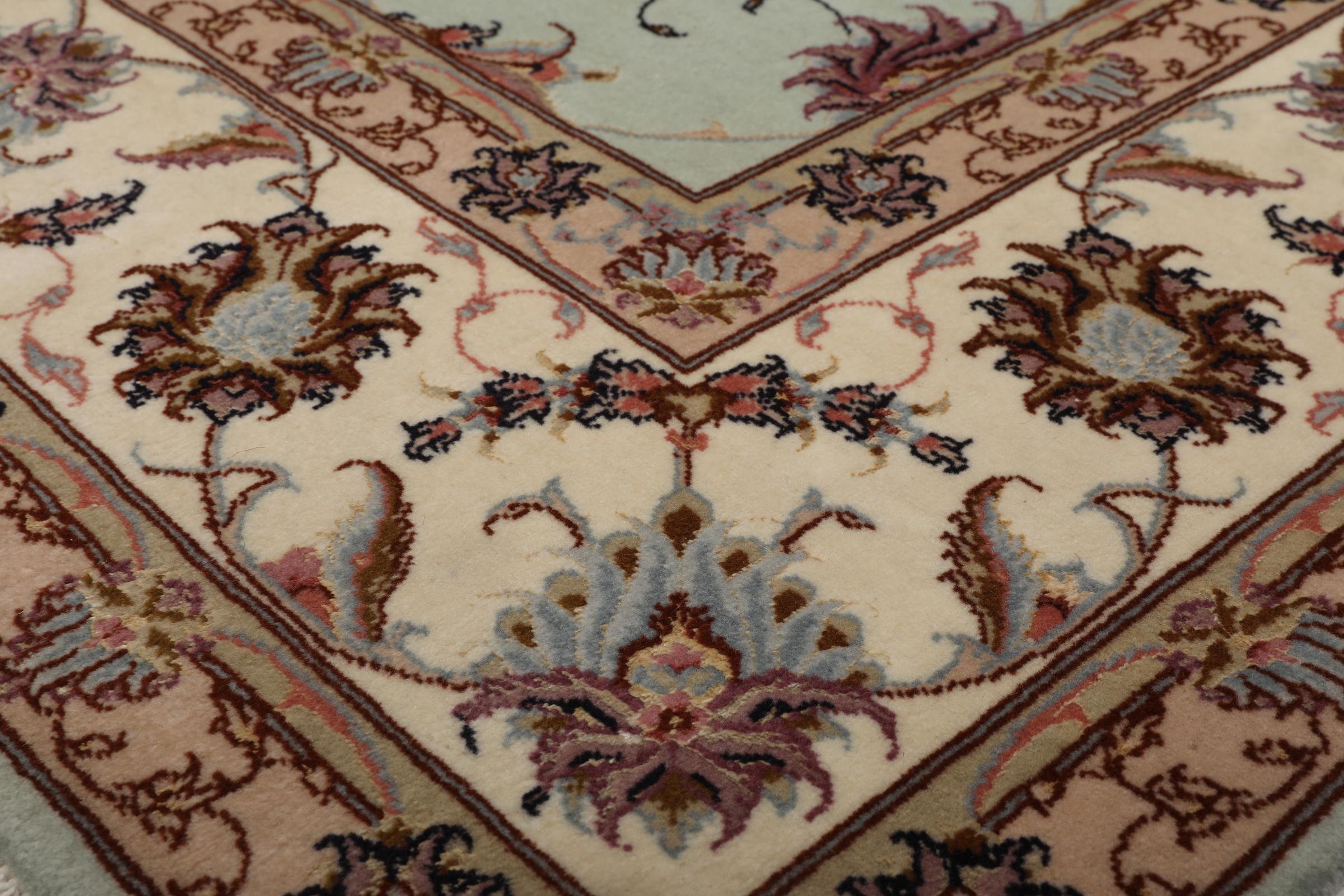
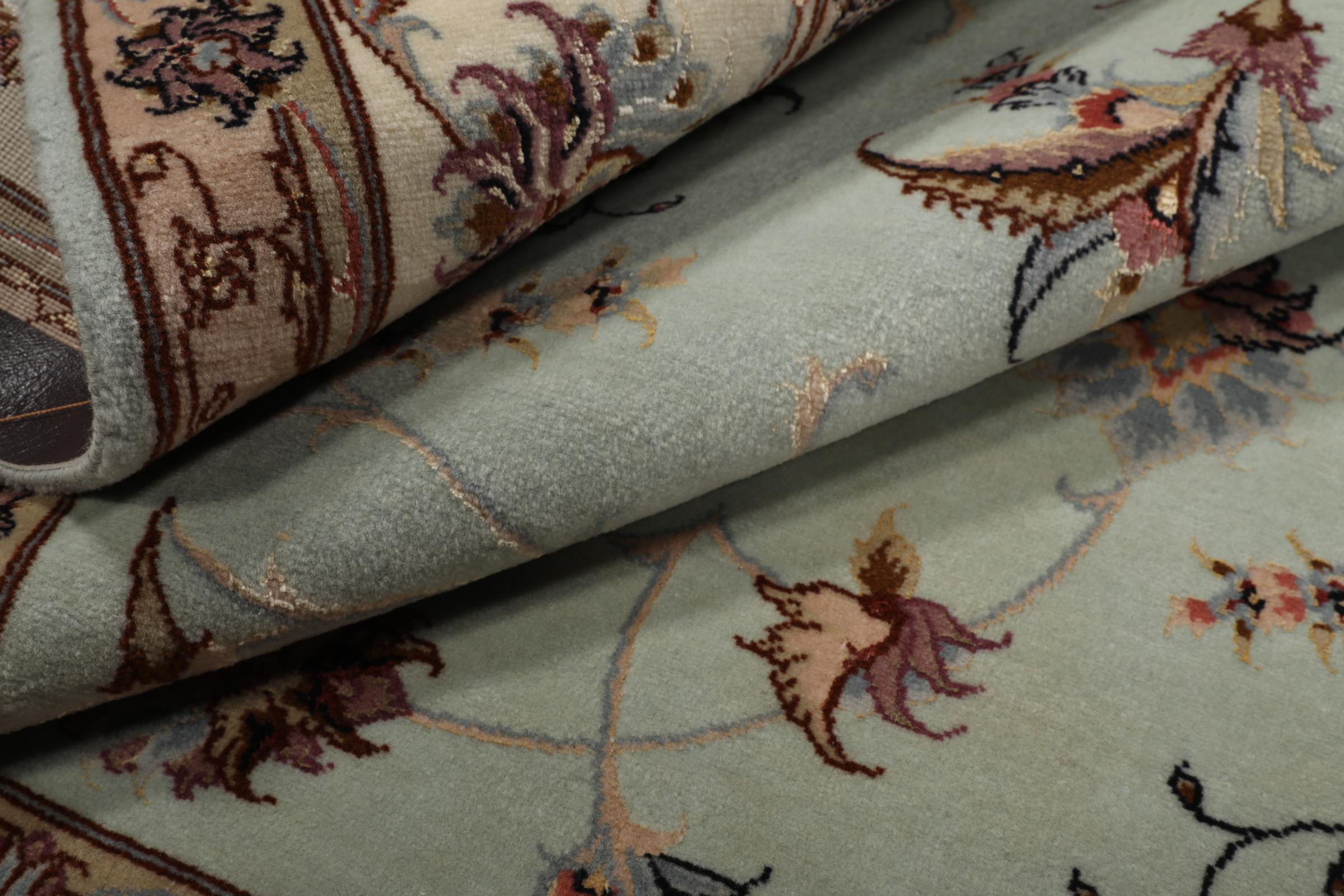
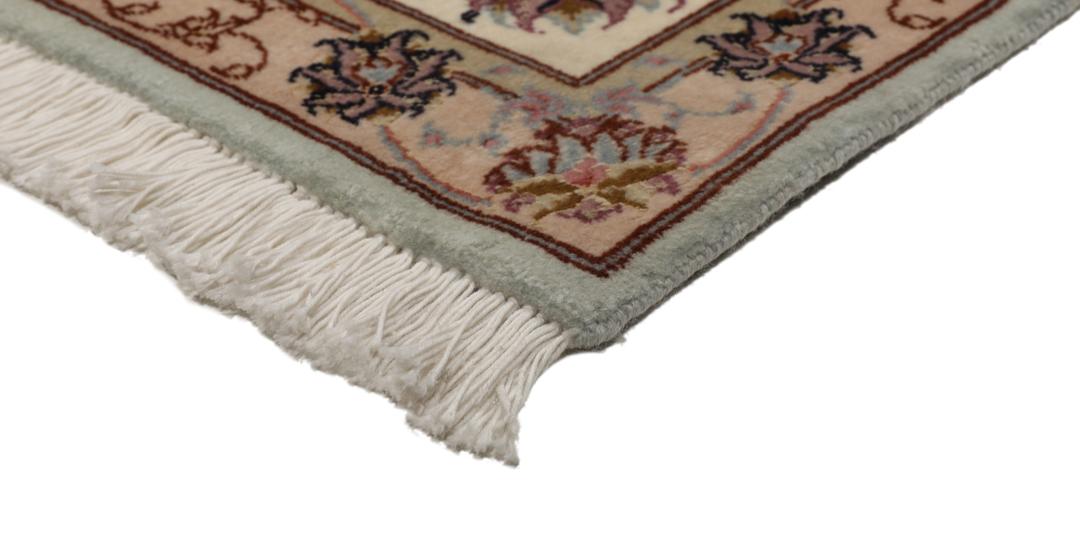
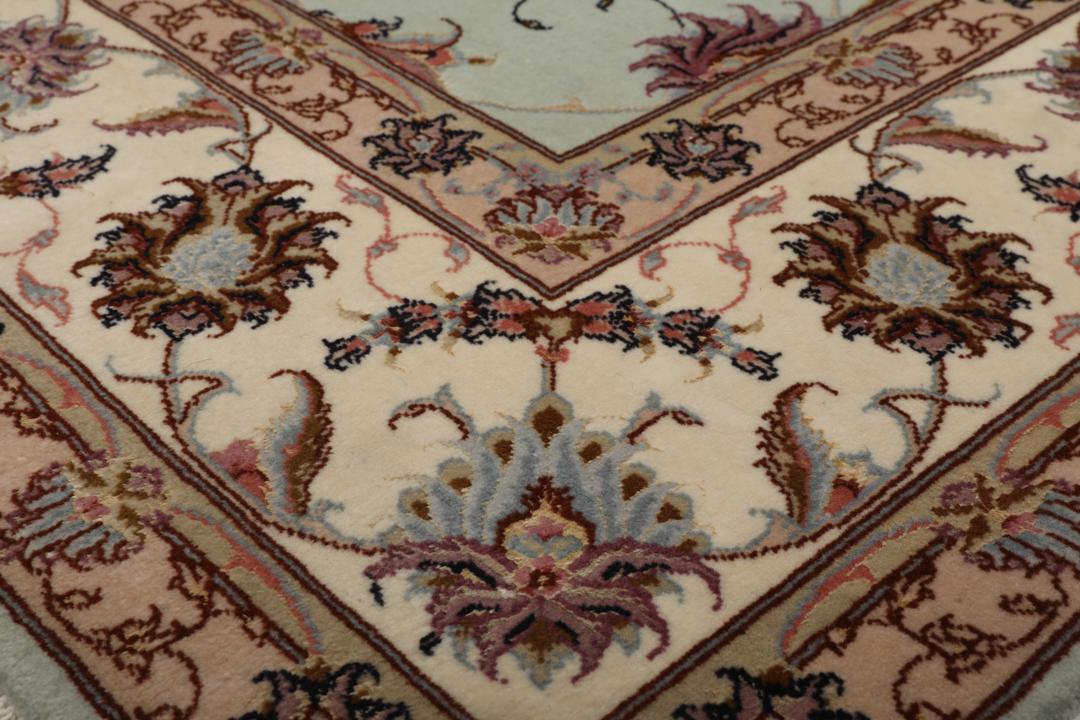
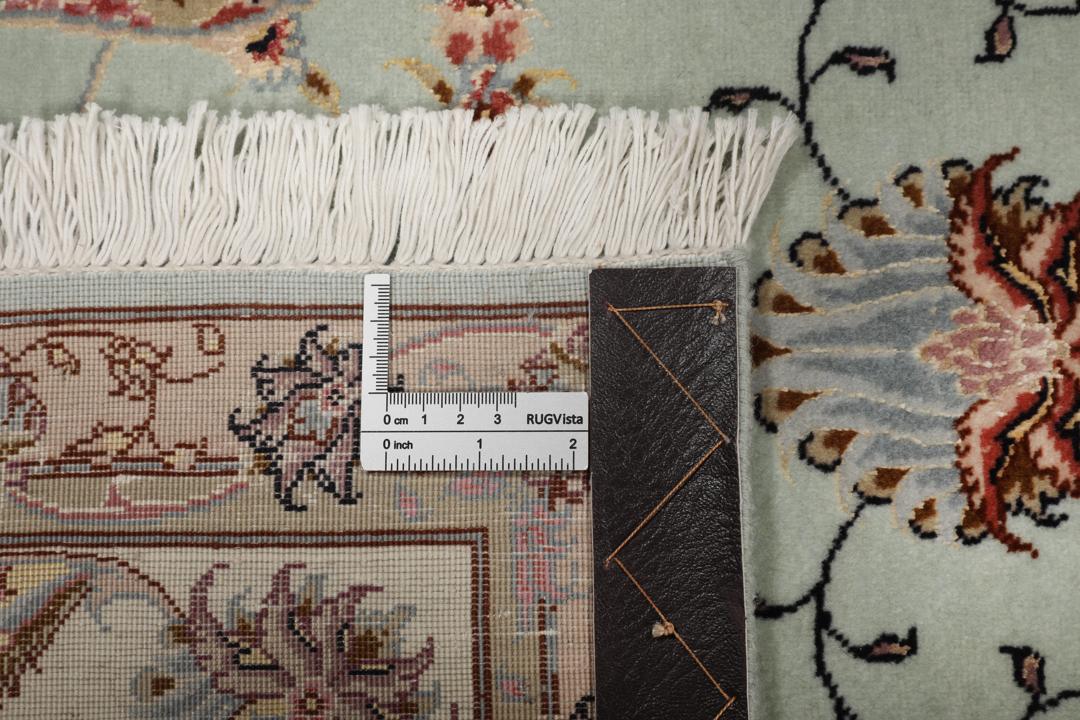
The term 60 Raj refers to a specific system of measurement used to denote the fineness of the knotting. In this traditional grading system, the number of knots across a specific width is counted to determine the quality. A 60 Raj classification indicates a remarkably high density, which allows for the fluid, curved lines and complex floral motifs that define the most sought-after examples from this region.
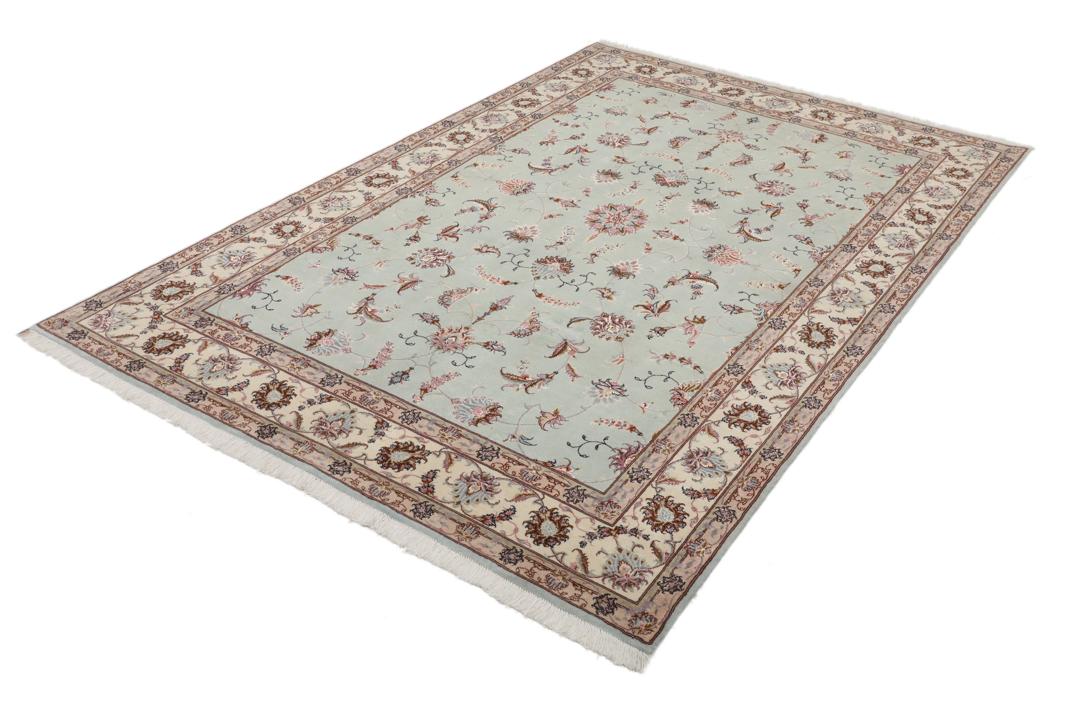
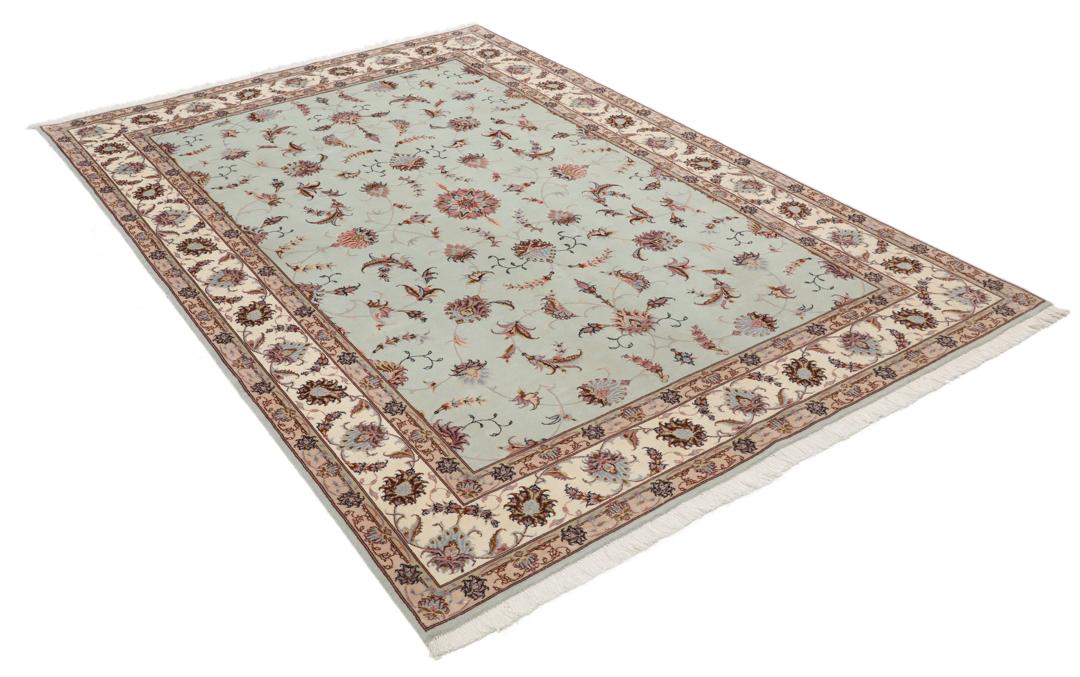
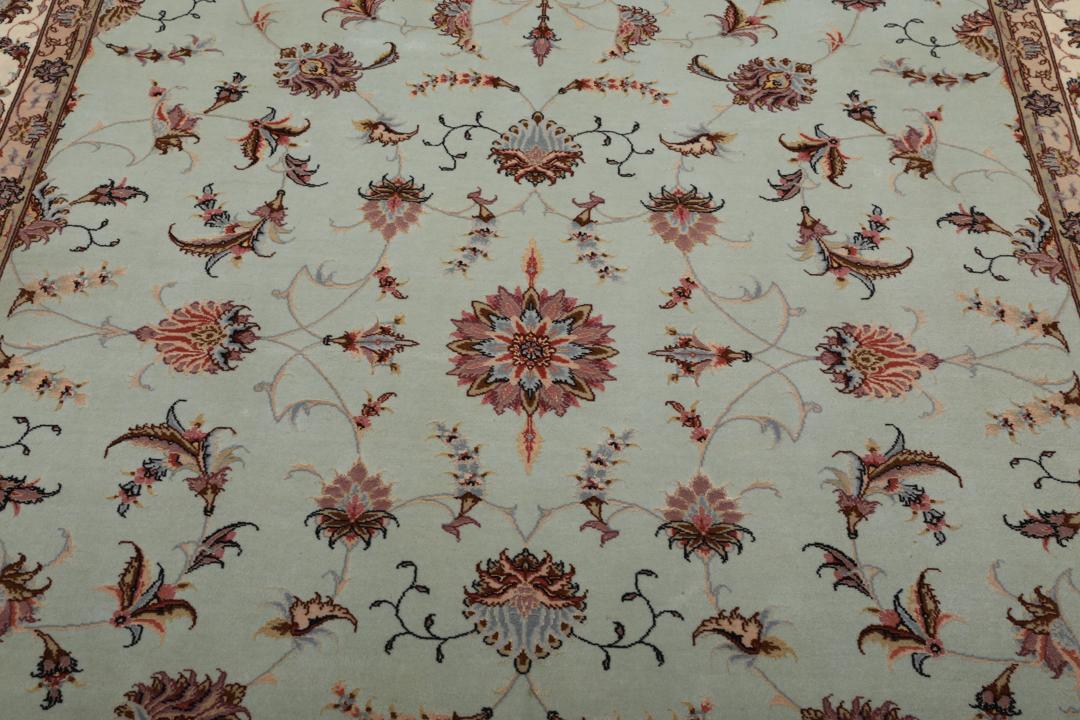
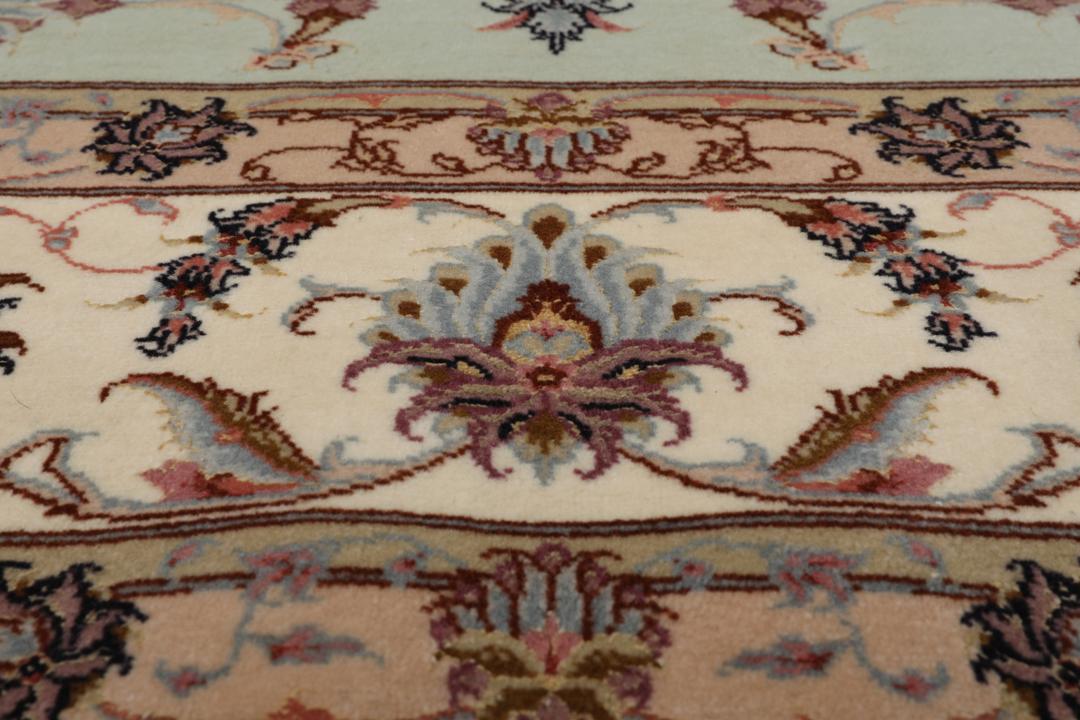
Visually, these rugs are celebrated for their sophisticated design language, often featuring central medallions surrounded by elegant arabesques and floral sprays. While traditional palettes often lean toward deep reds and blues, this piece showcases a softer, more ethereal light-blue tone, demonstrating the versatility and creative evolution of contemporary Tabriz weavers.
Collectors value Tabriz rugs for their combination of artistic beauty and technical perfection. Owning such a piece is more than just acquiring a floor covering; it is a connection to a long-standing heritage of skill, patience, and visual storytelling that has been refined over generations to produce objects of enduring value.