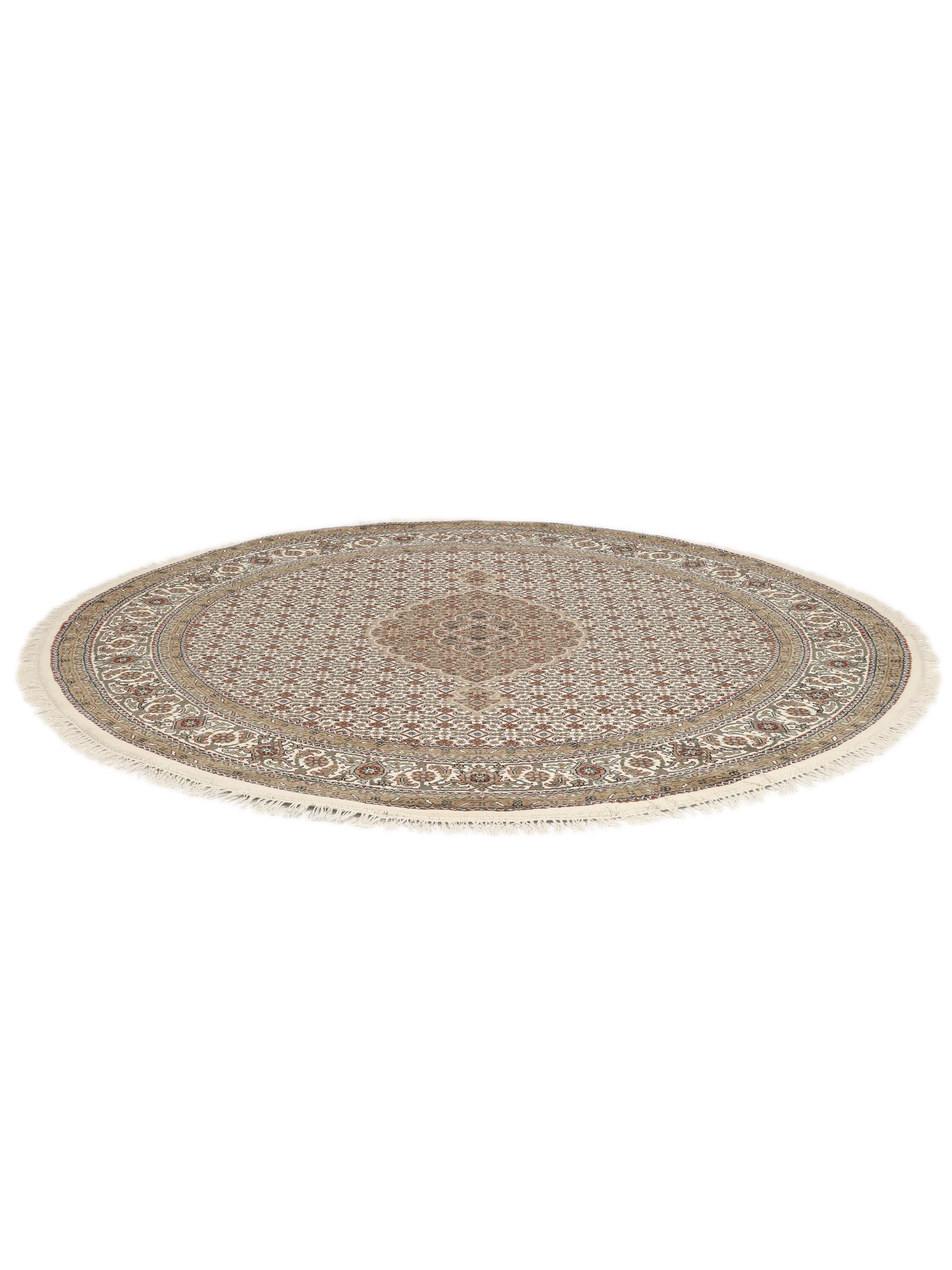
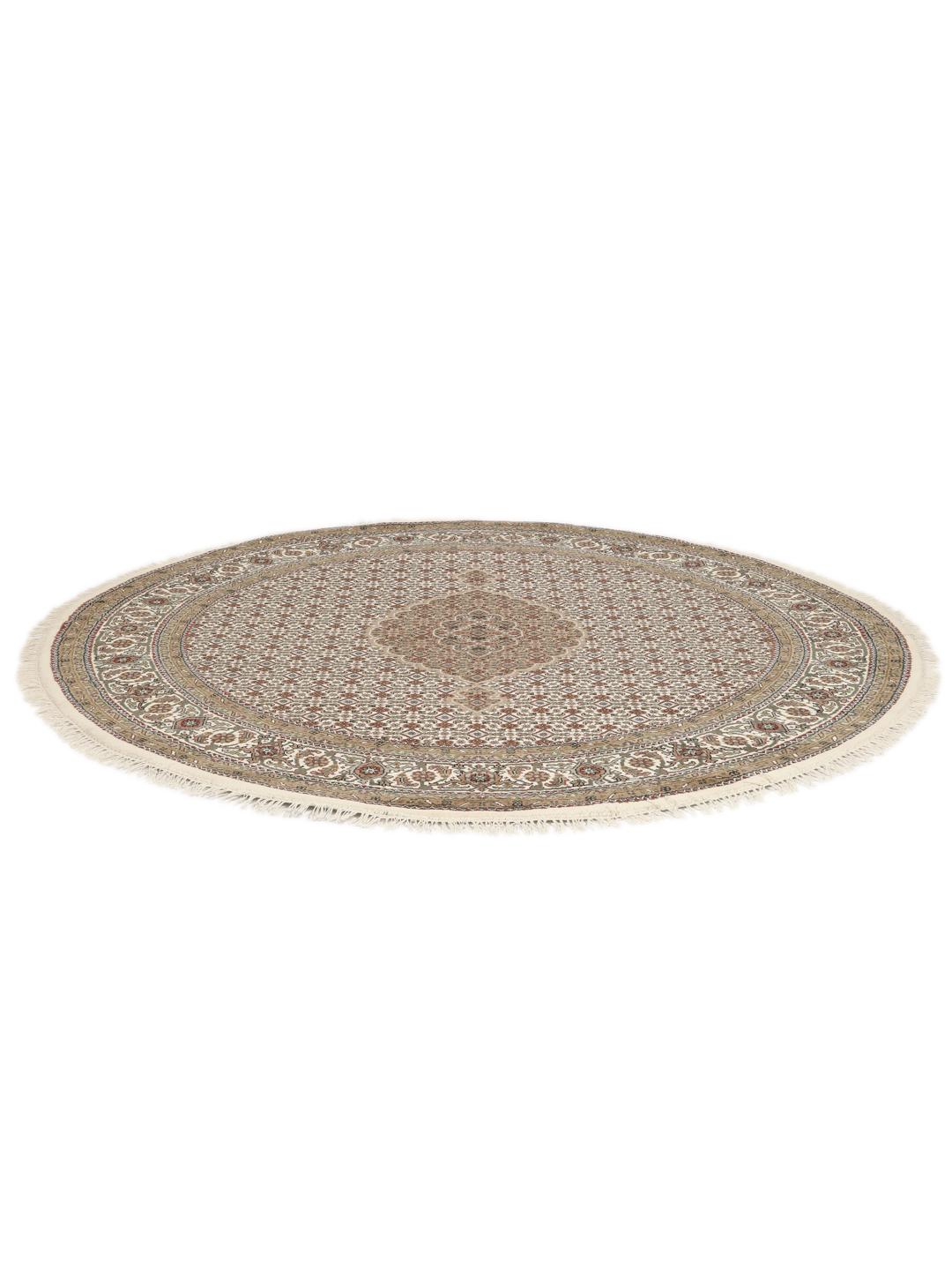
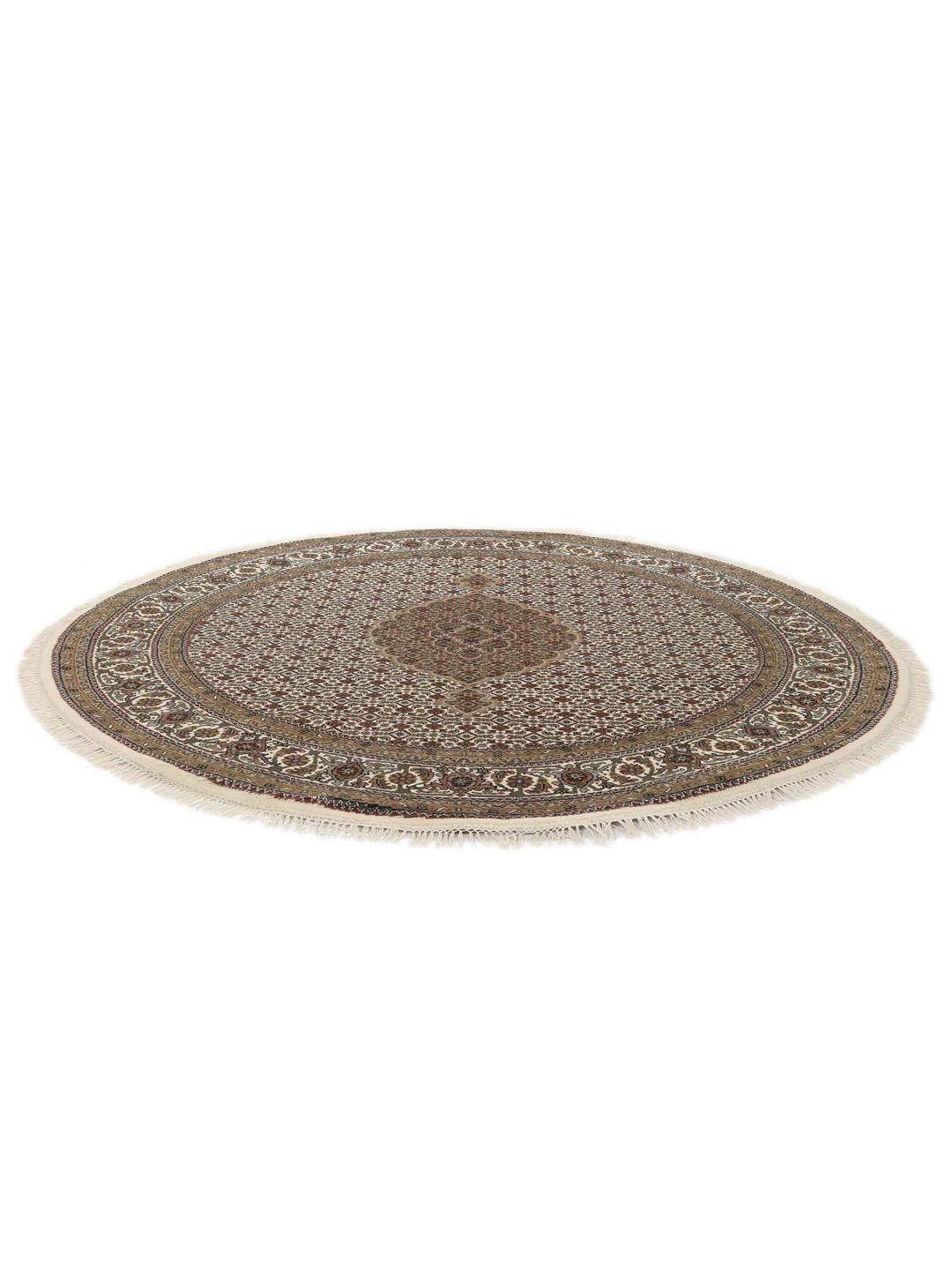
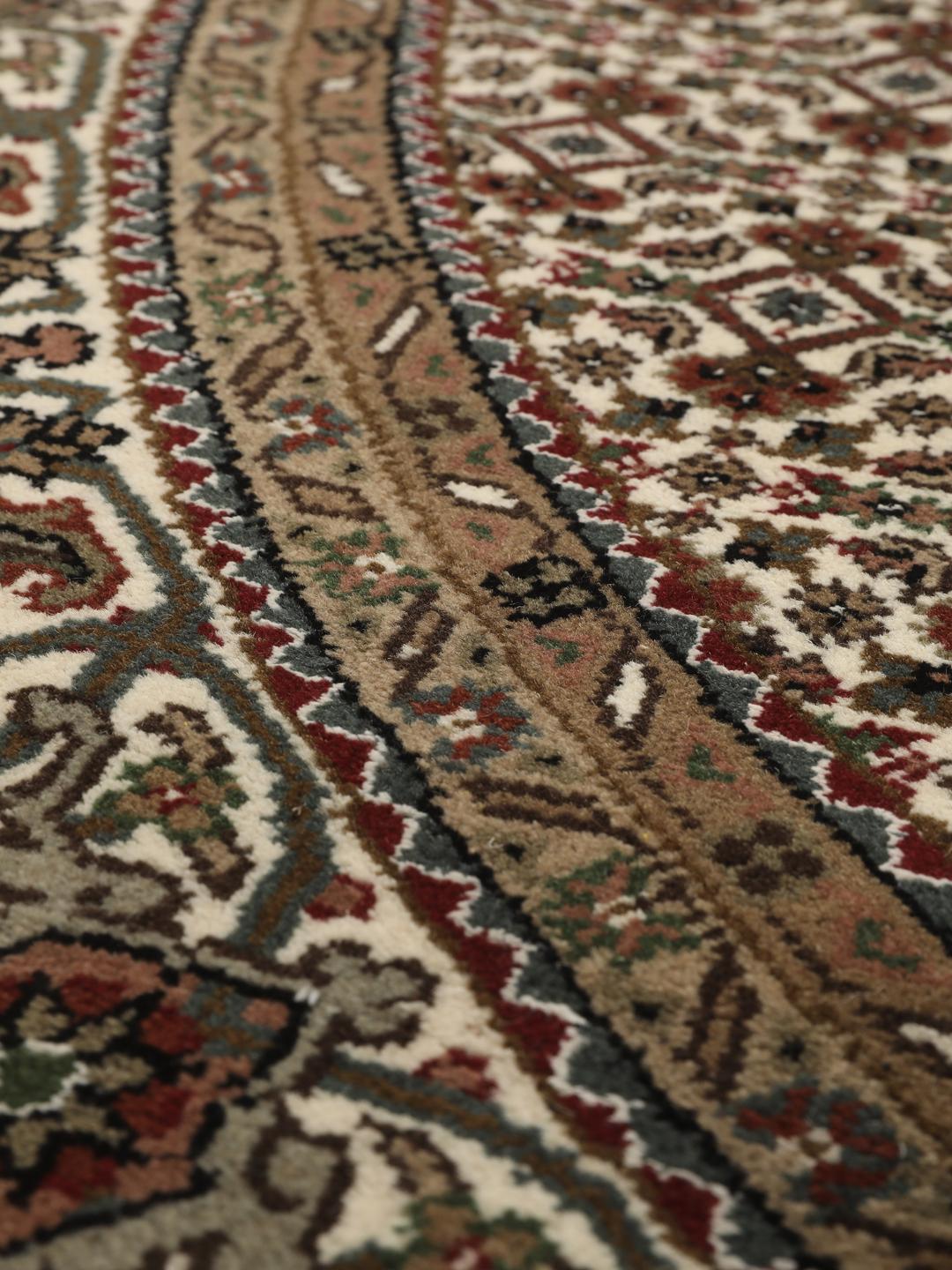
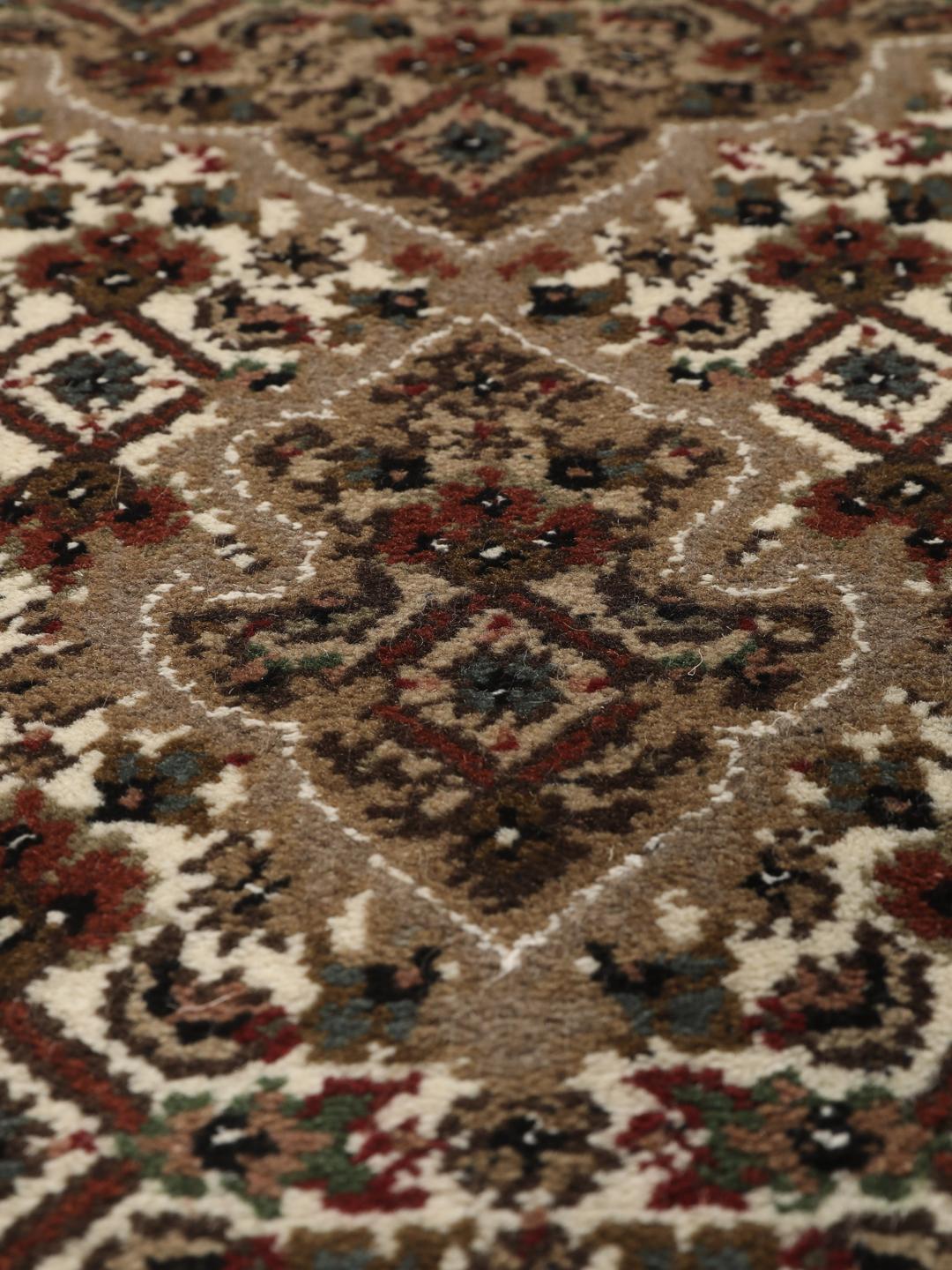
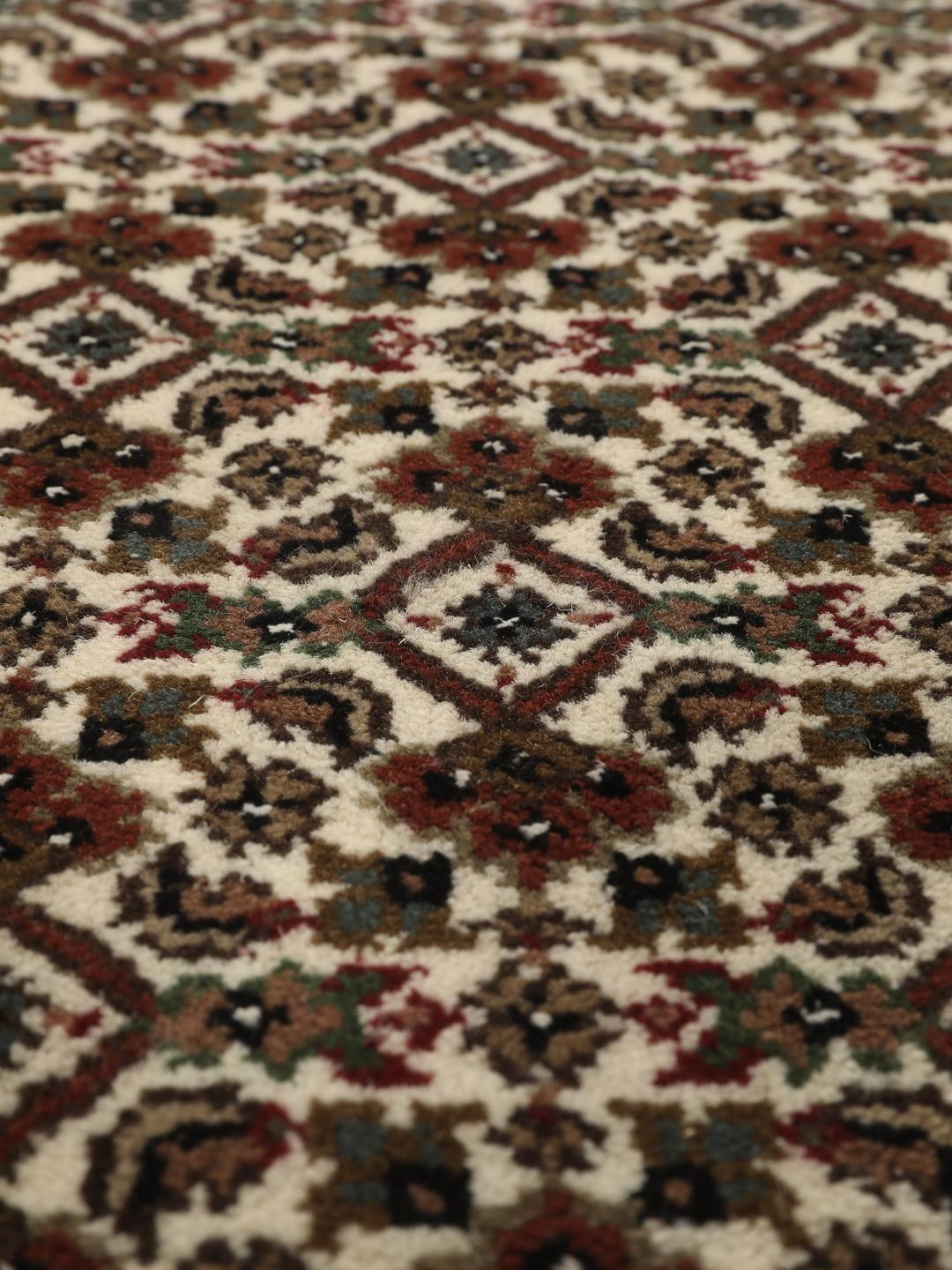
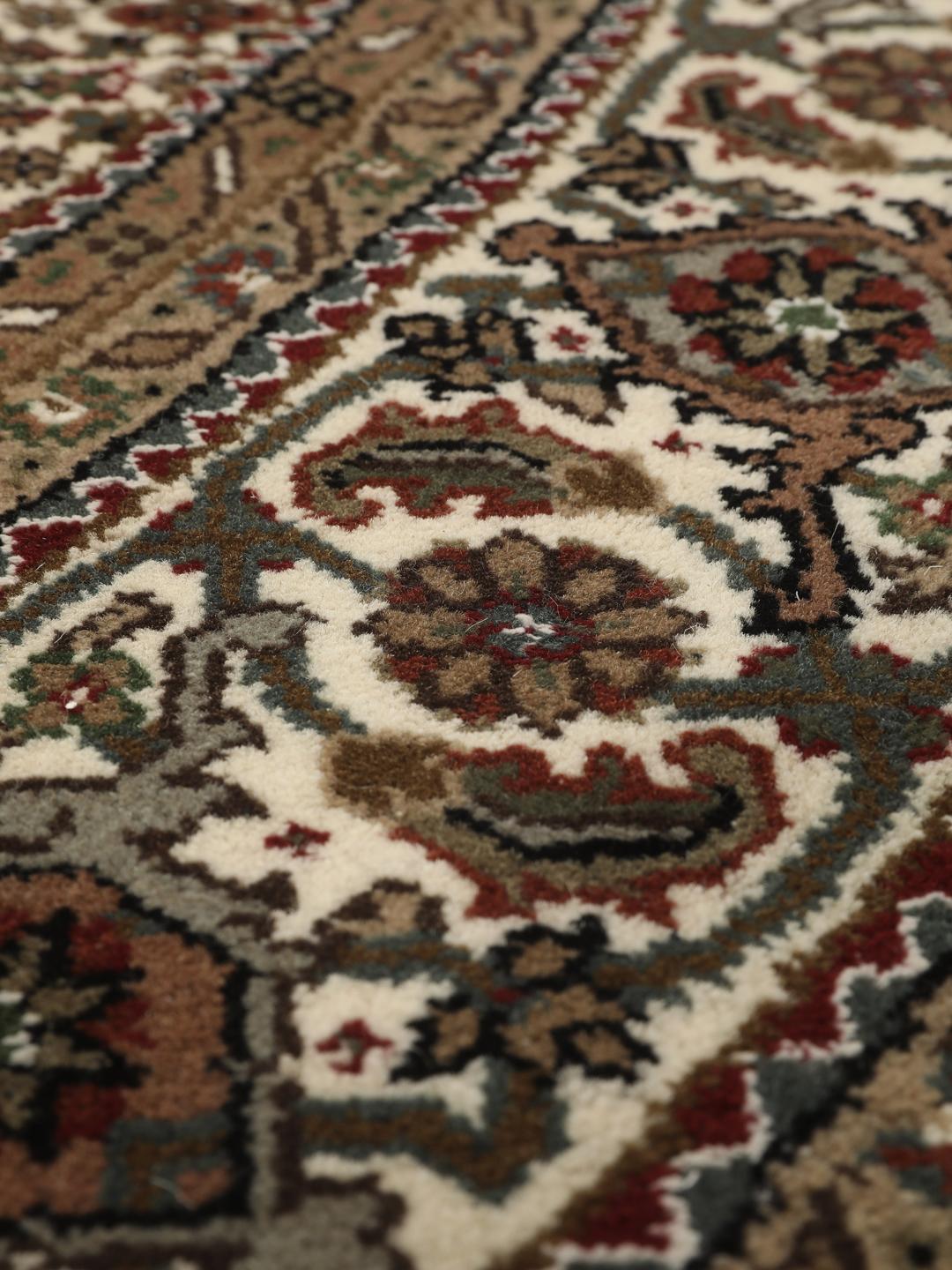
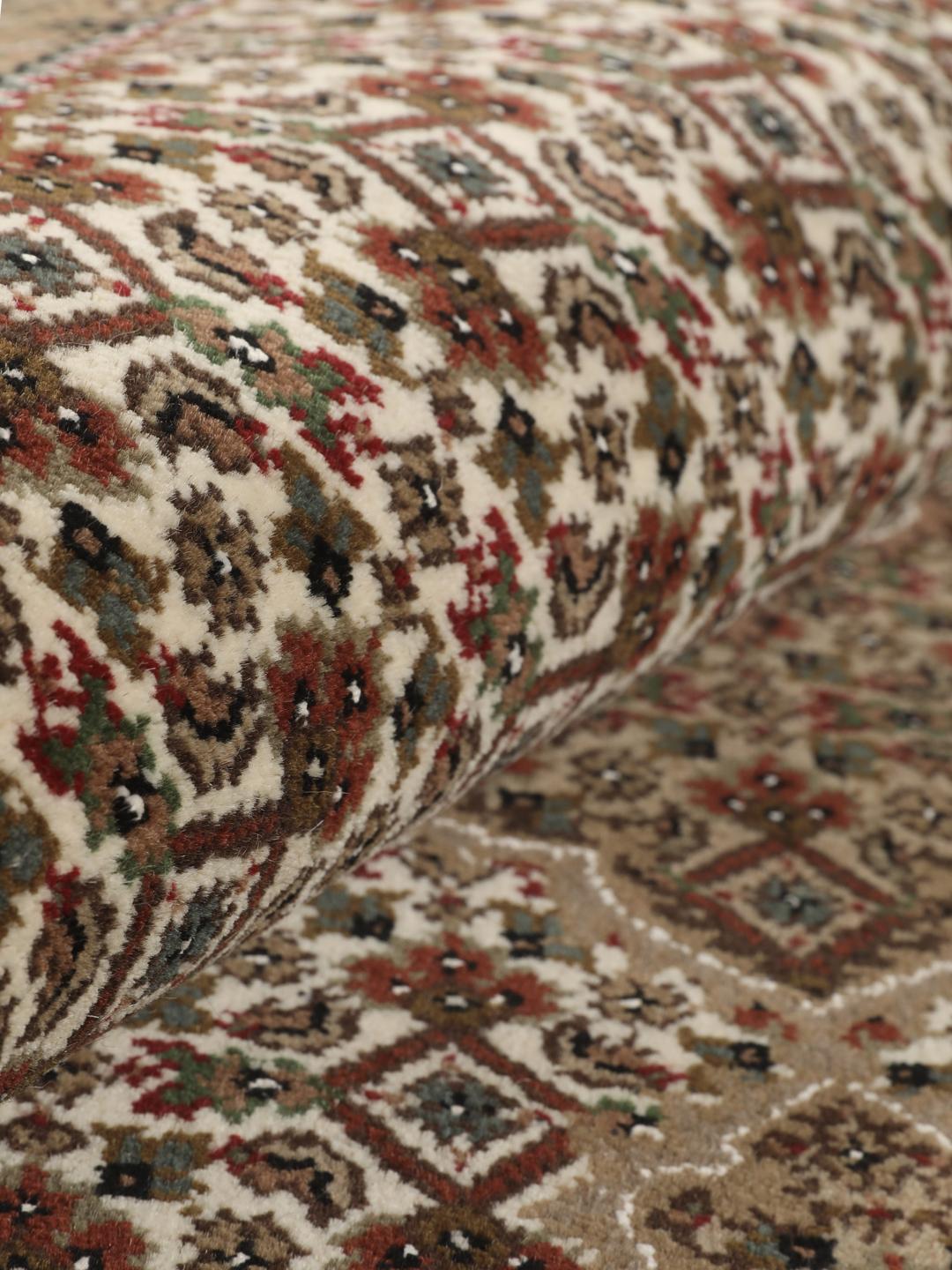
The Tabriz tradition originates from the historic city of Tabriz in the Middle East, a legendary centre of trade and art along the Silk Road. For centuries, this region has been synonymous with the finest rug-making in the world, developing a distinct style that is celebrated for its technical precision and artistic sophistication. Today, the legacy of these traditional designs is upheld by skilled artisans in India, who continue to honour these complex patterns and weave them with a deep respect for historical techniques.
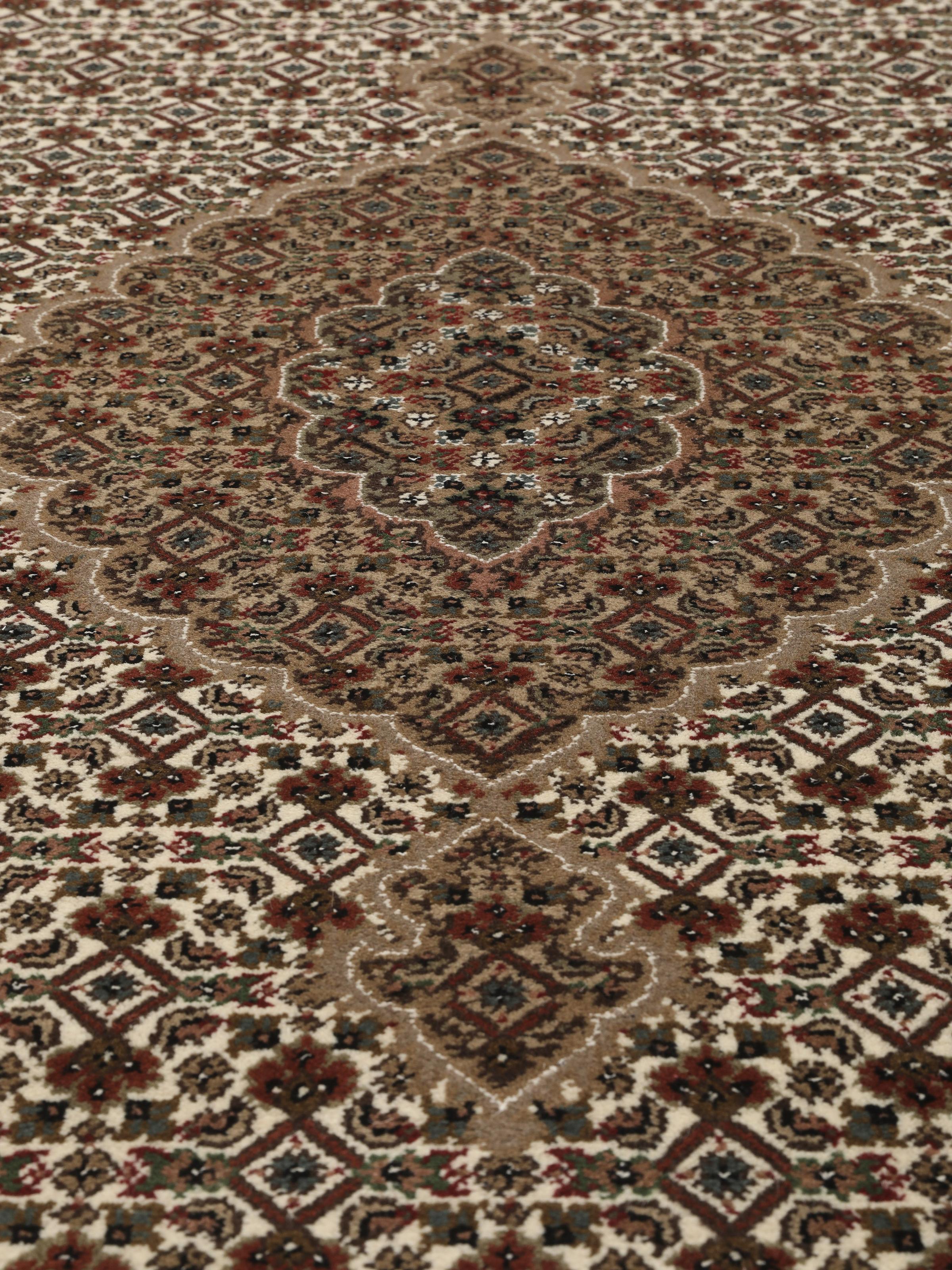
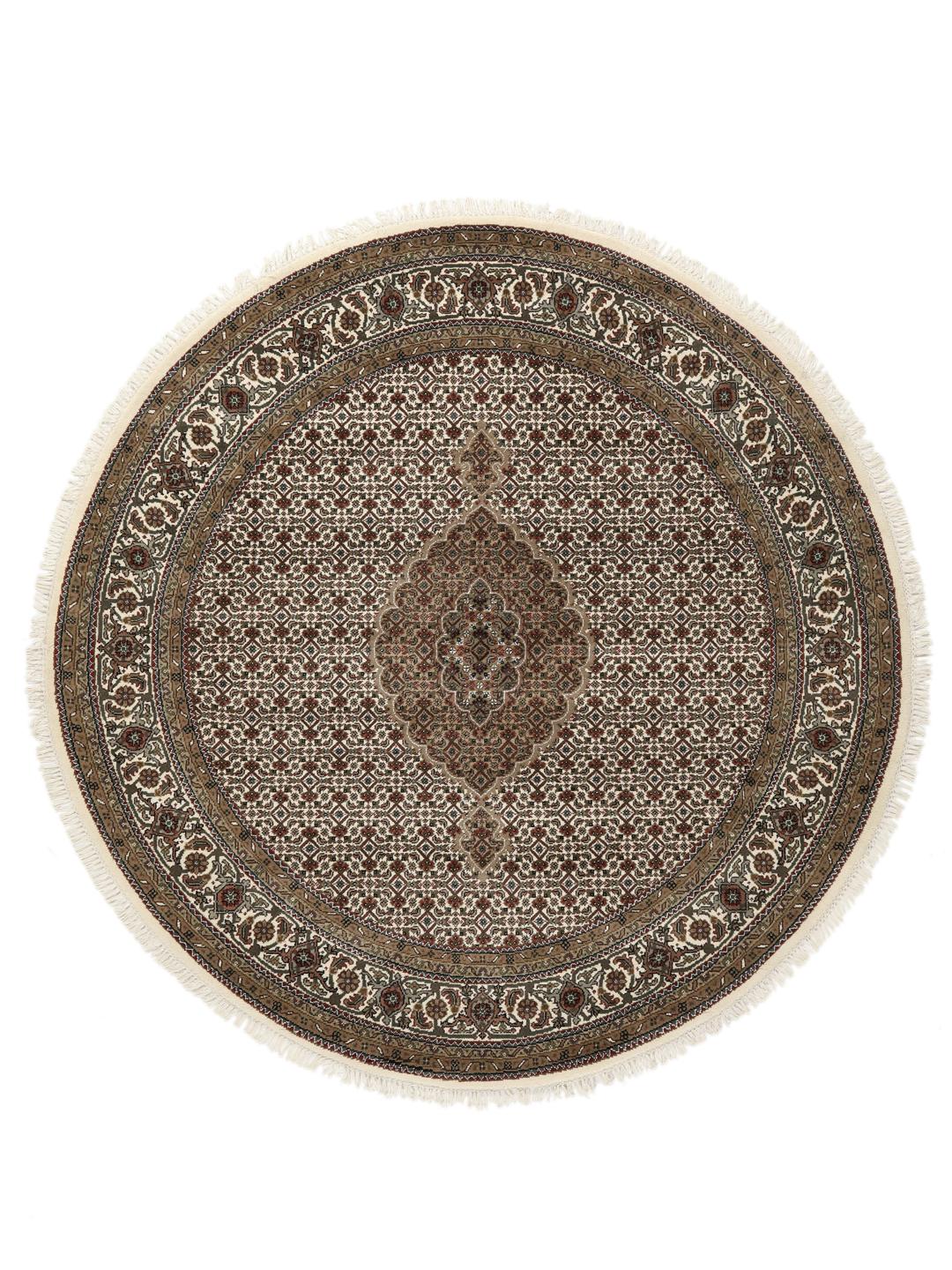
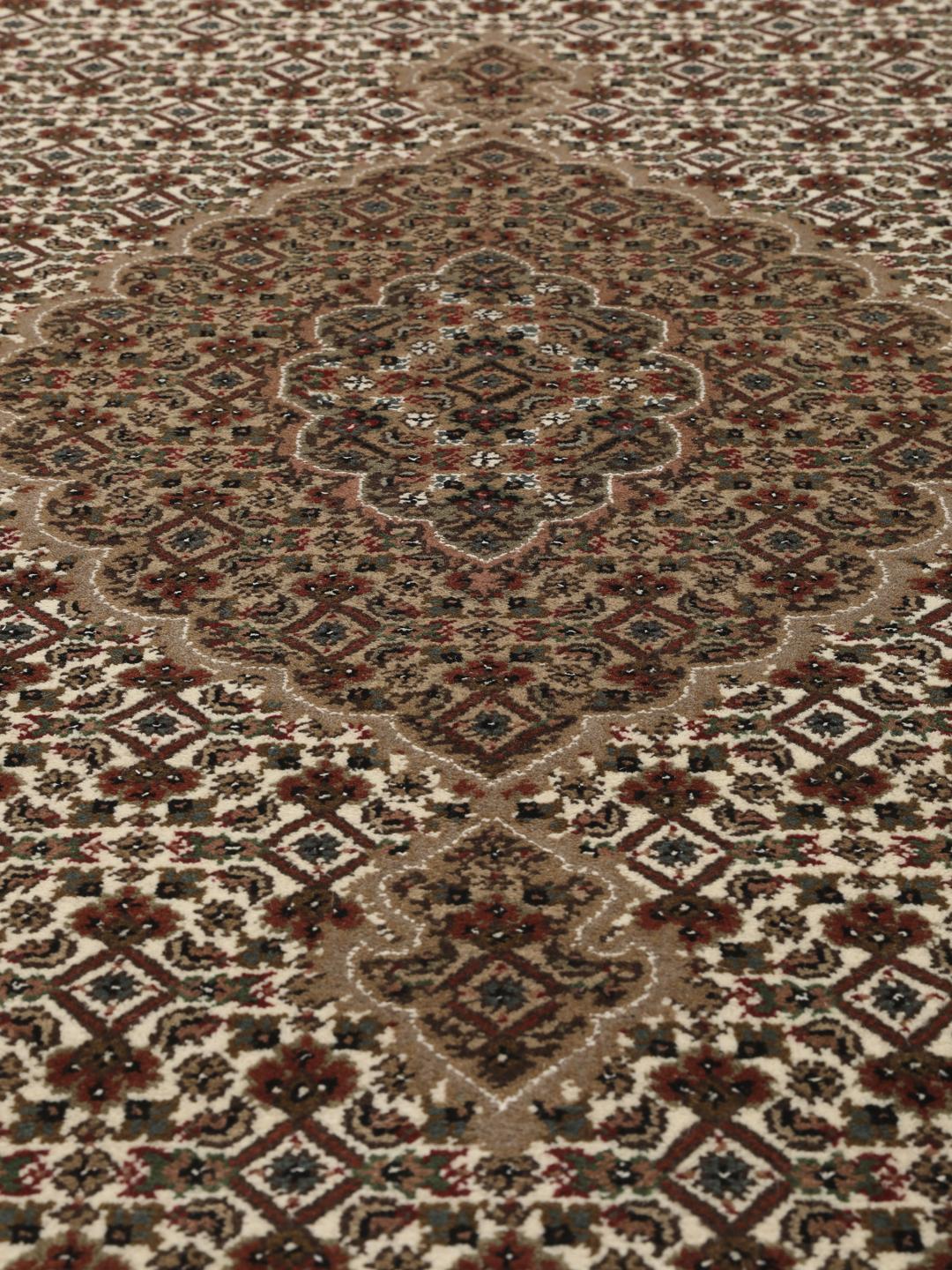
Technical mastery is the hallmark of the Tabriz style. These rugs are famously known for their intricate floral and geometric motifs, often featuring a central medallion that radiates outwards into a field of vines, palmettes, and leaves. The term 'Royal' in the name signifies a design that draws inspiration from the most elevated, courtly traditions, characterised by a high level of detail and a balanced, harmonious composition that reflects the artistic heritage of the region.
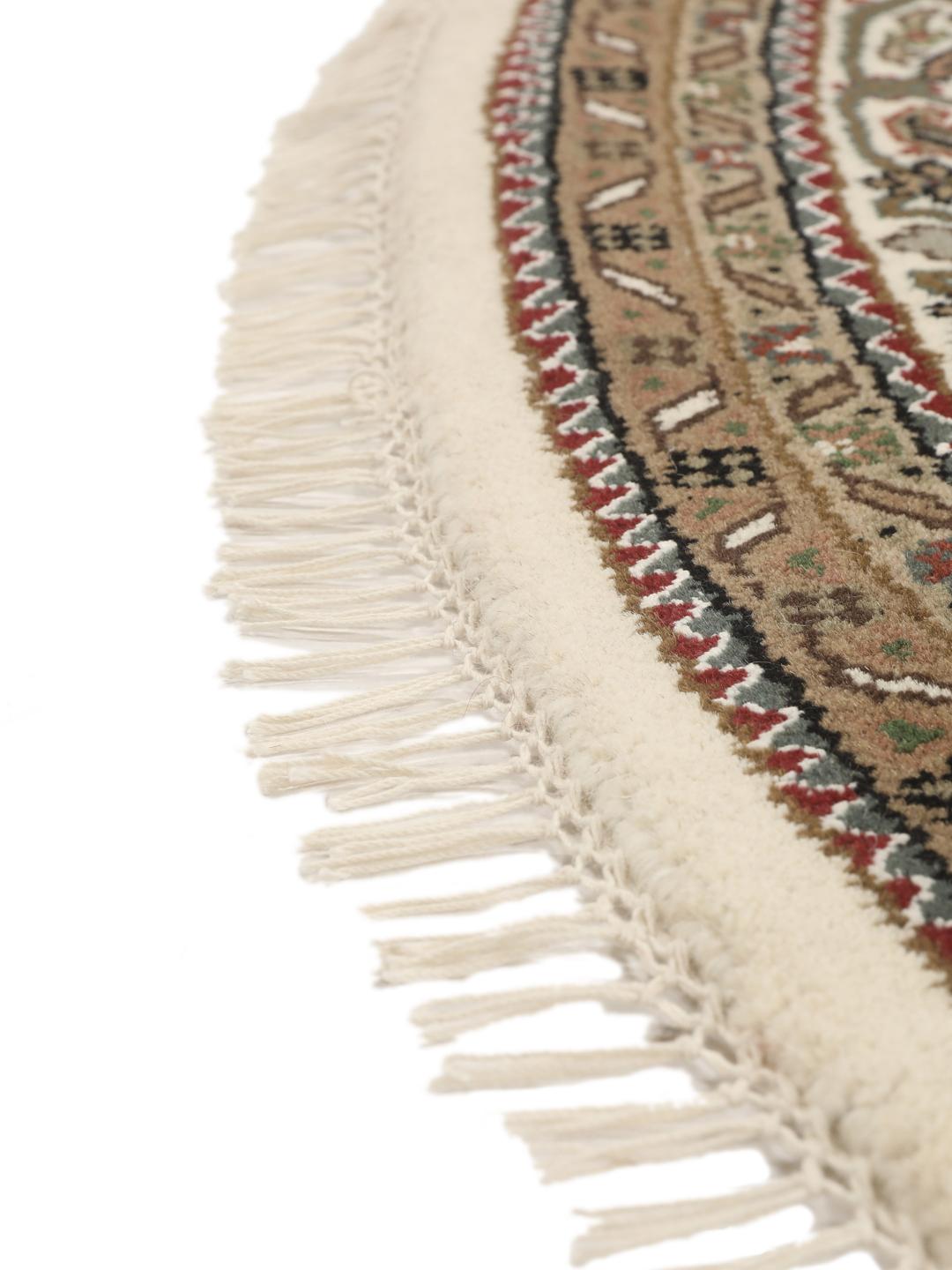
One of the defining features of this tradition is the use of a formal, decorative border that acts as a frame for the central field. This structure creates a sense of order and elegance, making these rugs highly prized for their aesthetic versatility. The patterns are not merely decorative but are symbolic, often representing gardens or cosmic order, a testament to the rich cultural tapestry from which they emerge.
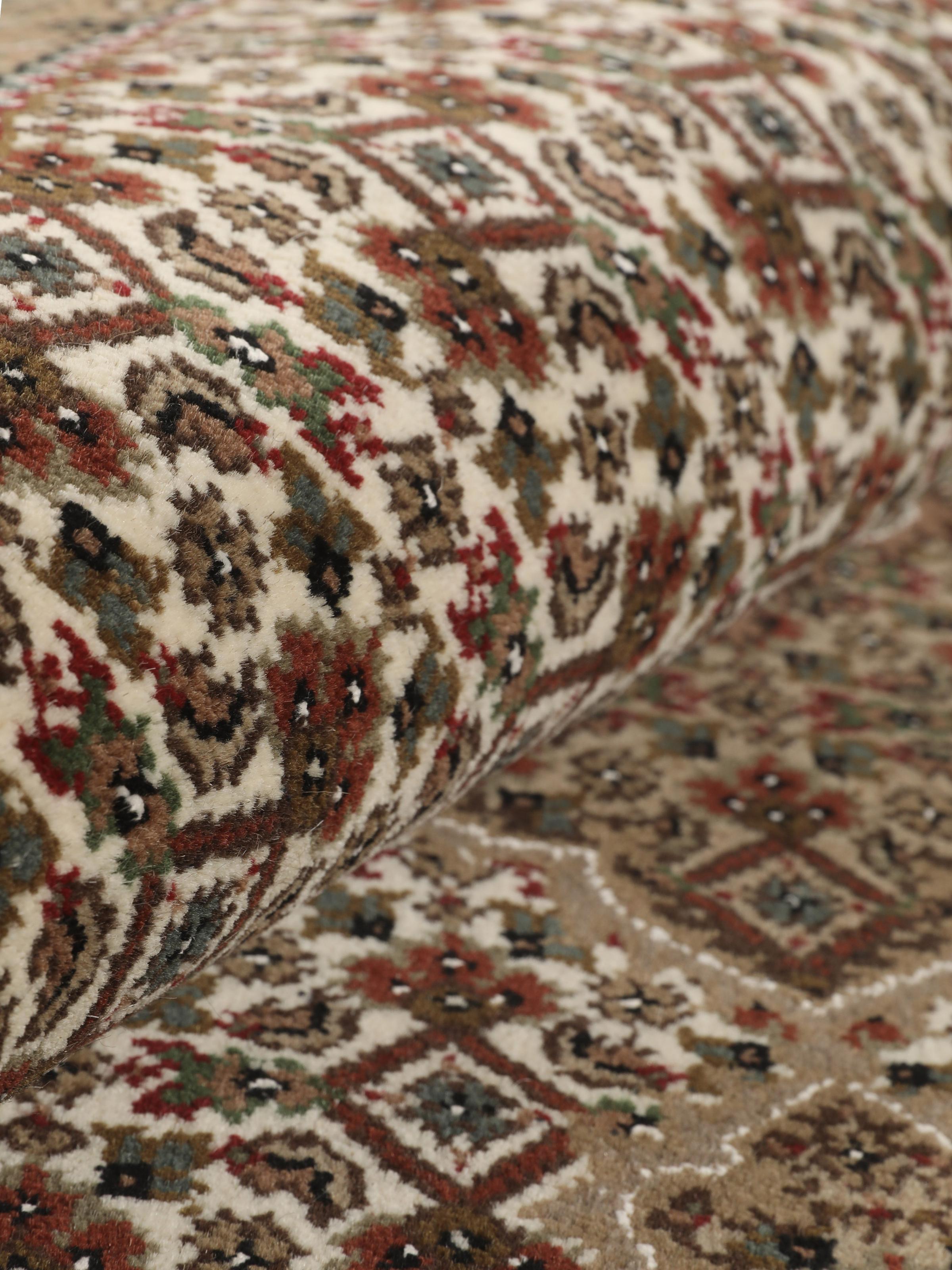
Collecting a rug from this tradition is an act of preserving history. These pieces are valued not only for their beauty but for the immense skill required to execute such complex designs by hand. By bringing a Tabriz-inspired rug into your home, you are connecting with a long lineage of craft, securing a piece that carries the weight of cultural tradition while providing a sophisticated, lasting focal point for your living space.