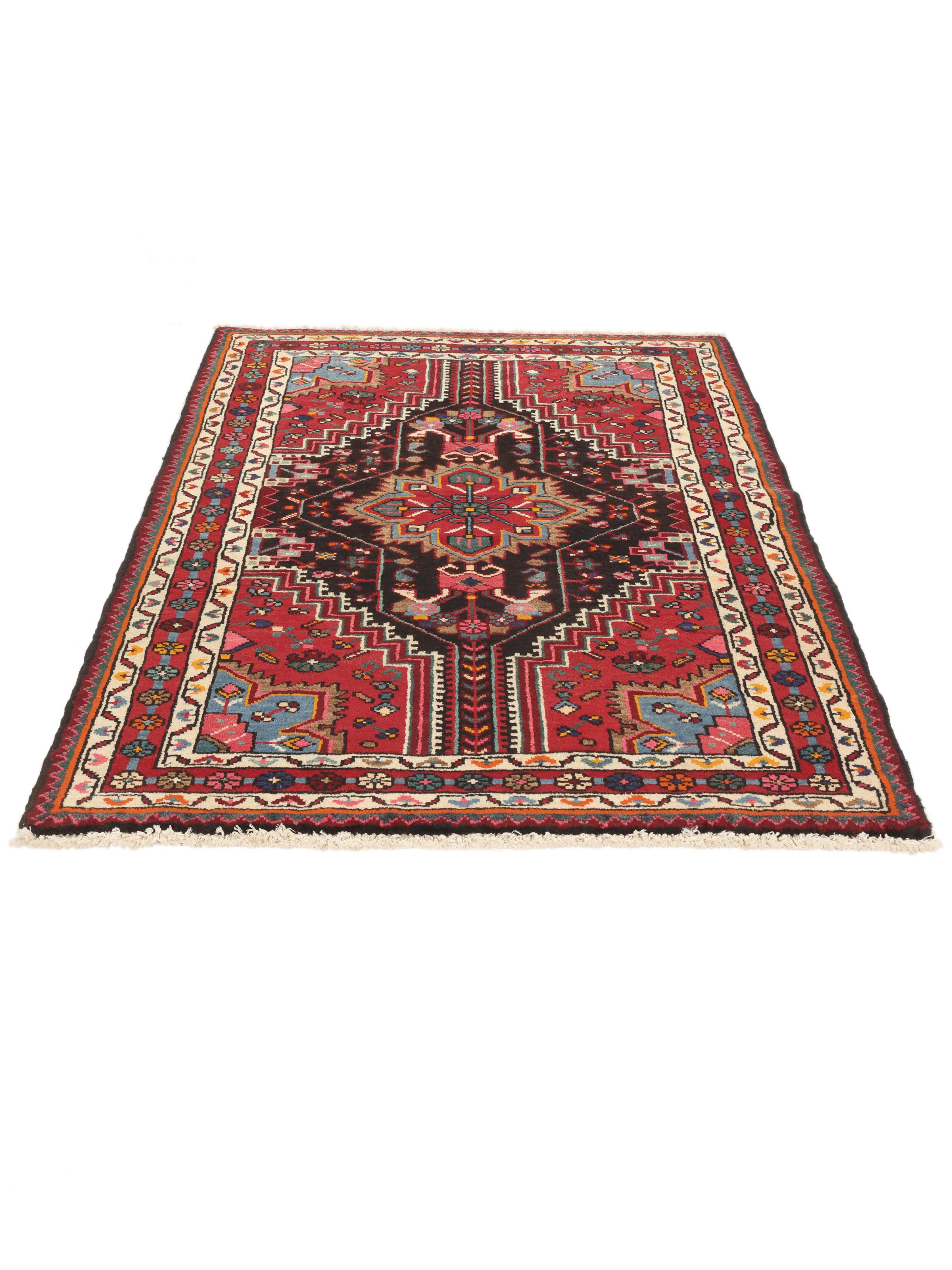
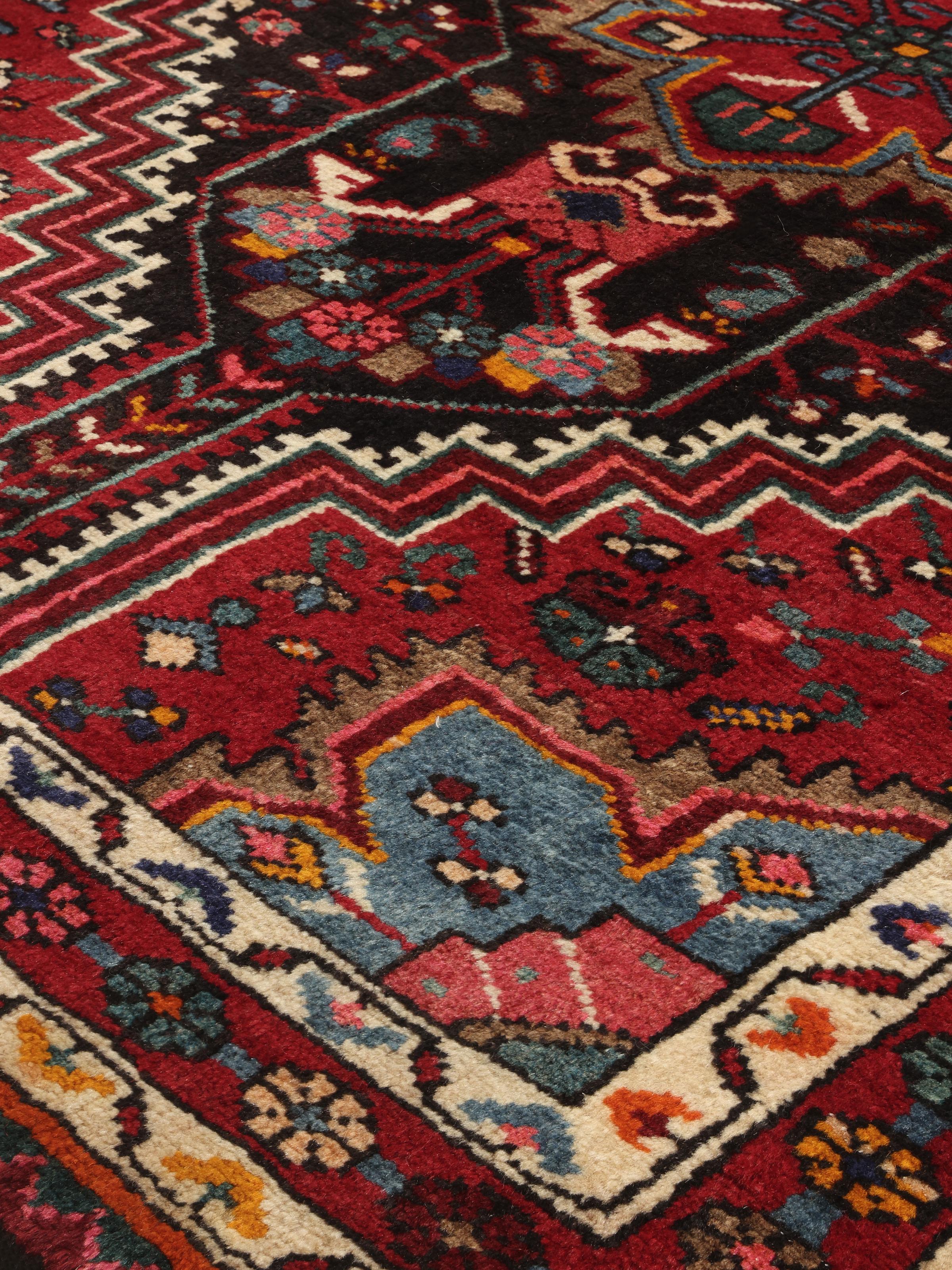
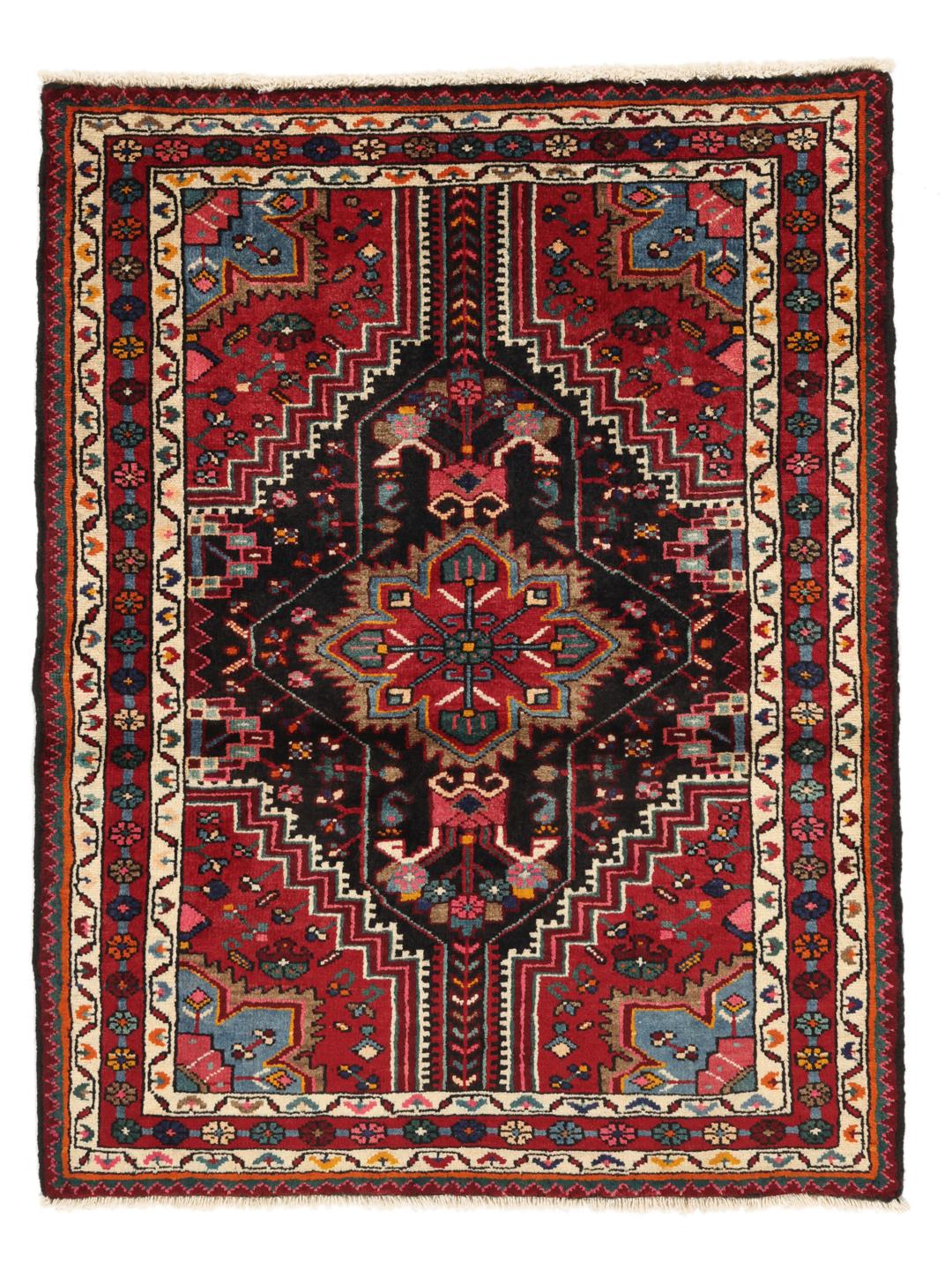
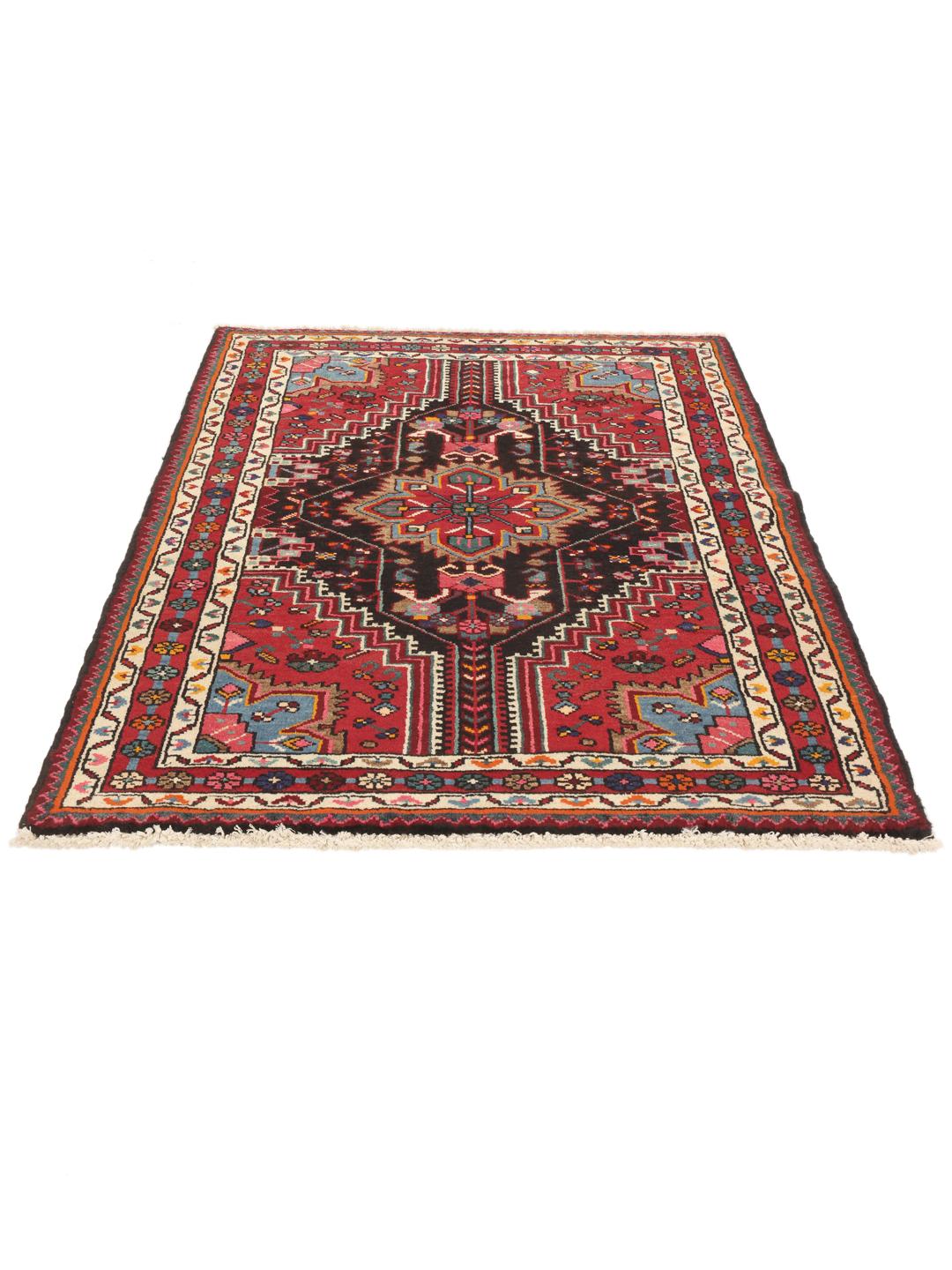
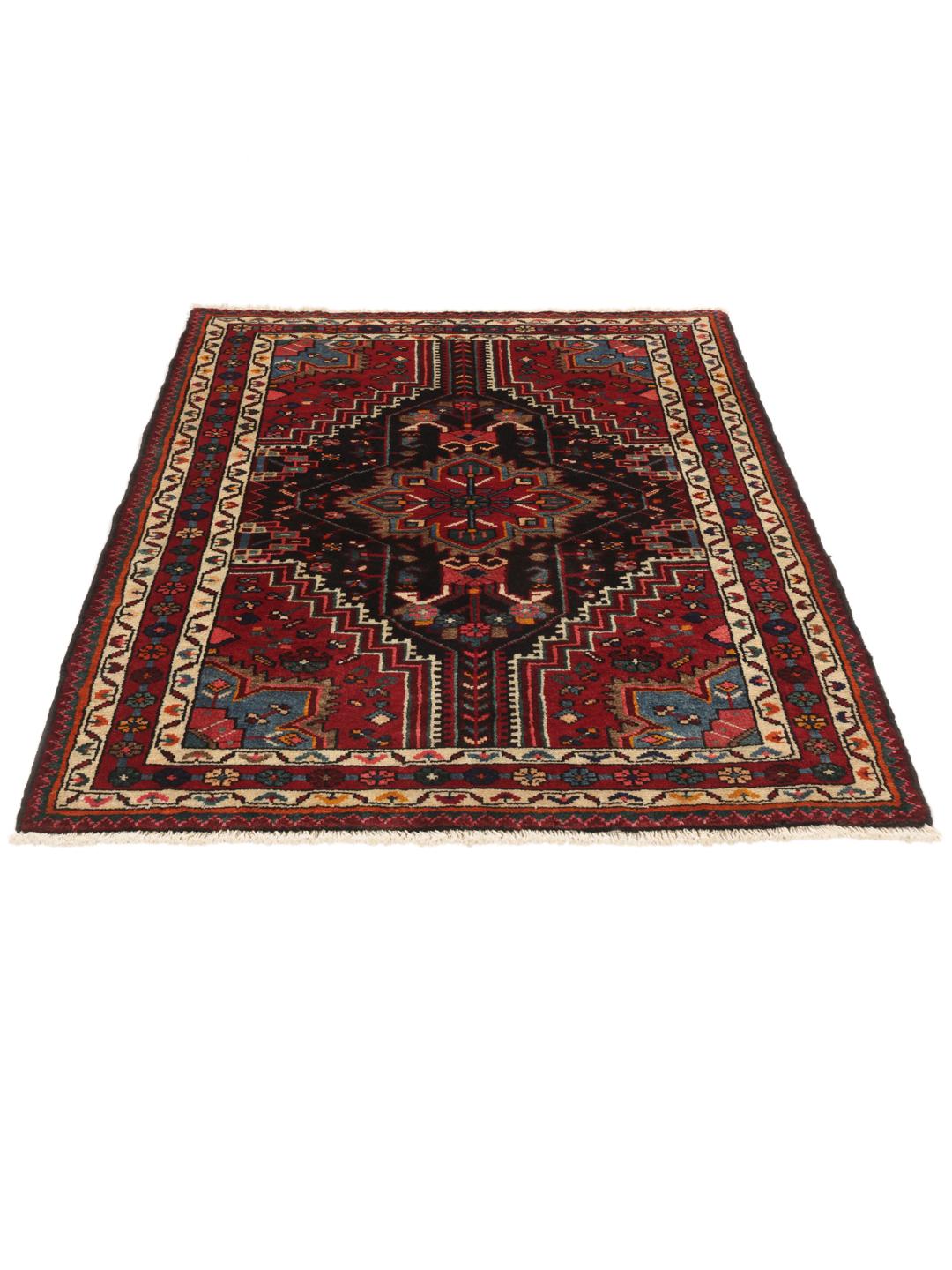
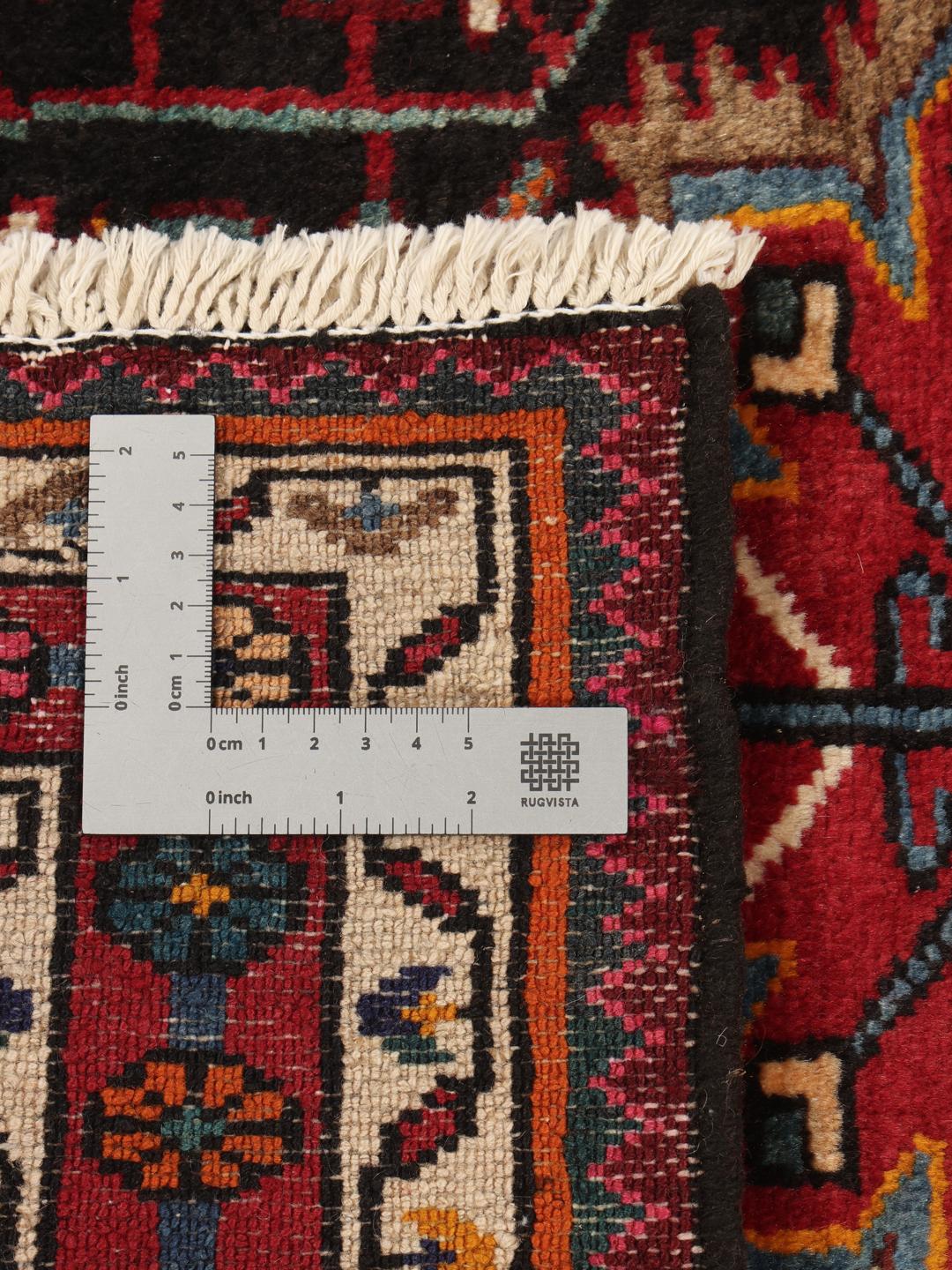
The Toiserkan rug originates from the Hamadan region of the Middle East, an area renowned for its deep-rooted history in village-based weaving. These rugs are often created in households where the knowledge of pattern and technique is passed down through generations, maintaining a link to ancient regional traditions.
The term Hamadan refers to a wide variety of rugs produced in the city and surrounding villages, known for their robust construction and varied designs. Toiserkan, a specific town within this region, is celebrated for producing rugs that often feature a more refined aesthetic, blending the durability of a village rug with a sophisticated, often medallion-centered design language.
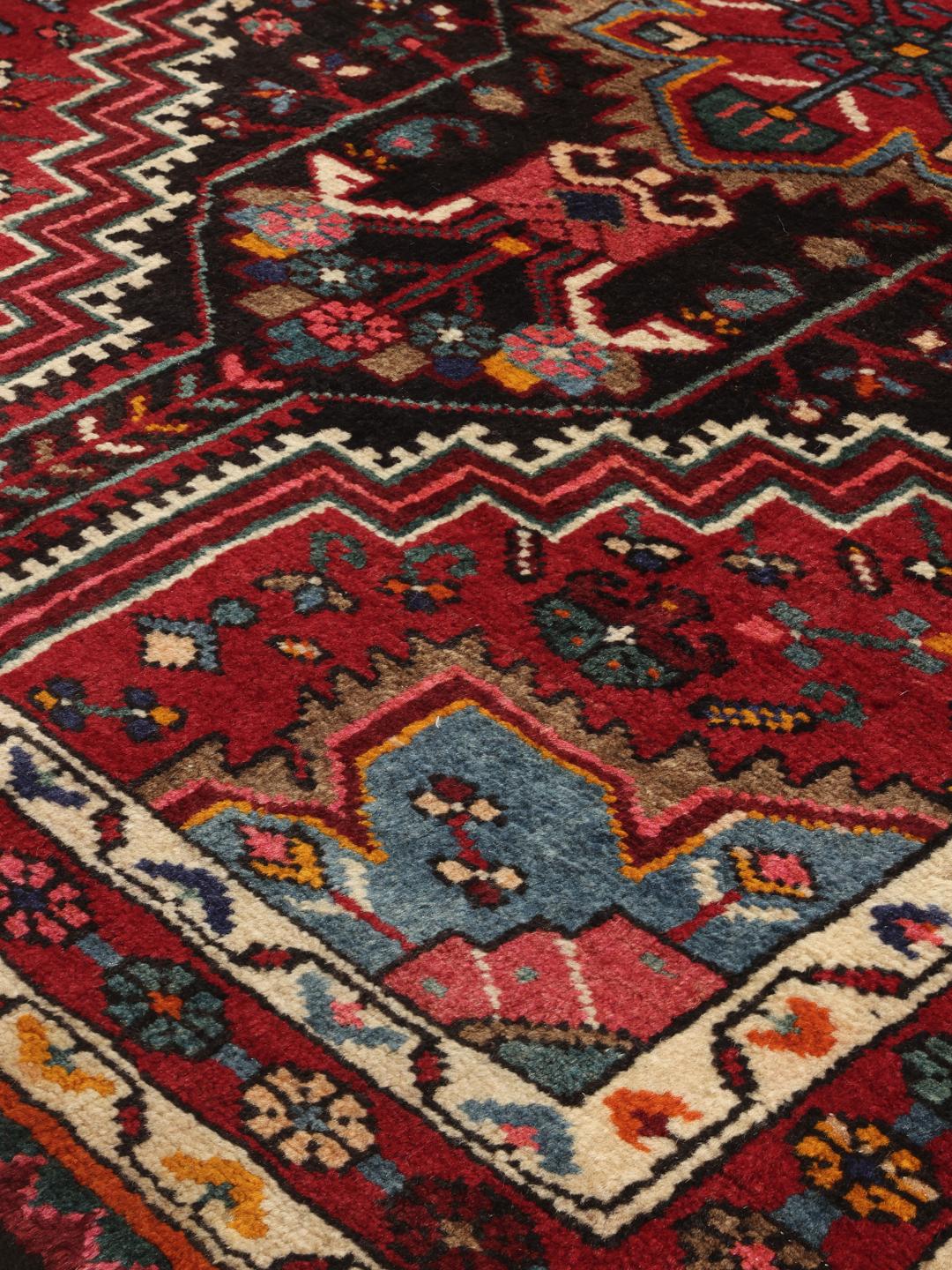
Signature elements of these rugs include bold, geometric medallions and strong, clear borders. The use of dark-red and deep blue tones is a hallmark of the area, reflecting the natural and traditional dyes that have defined this aesthetic for centuries. The patterns often incorporate stylized floral motifs that have been abstracted into geometric forms over generations of practice.
Collecting a Toiserkan rug is an investment in cultural heritage and skilled craftsmanship. These rugs are highly valued for their ability to bring a sense of gravity and history to a home, serving as a reminder of the human element in decor. To own one is to participate in a living tradition that prioritises longevity and intentional design.