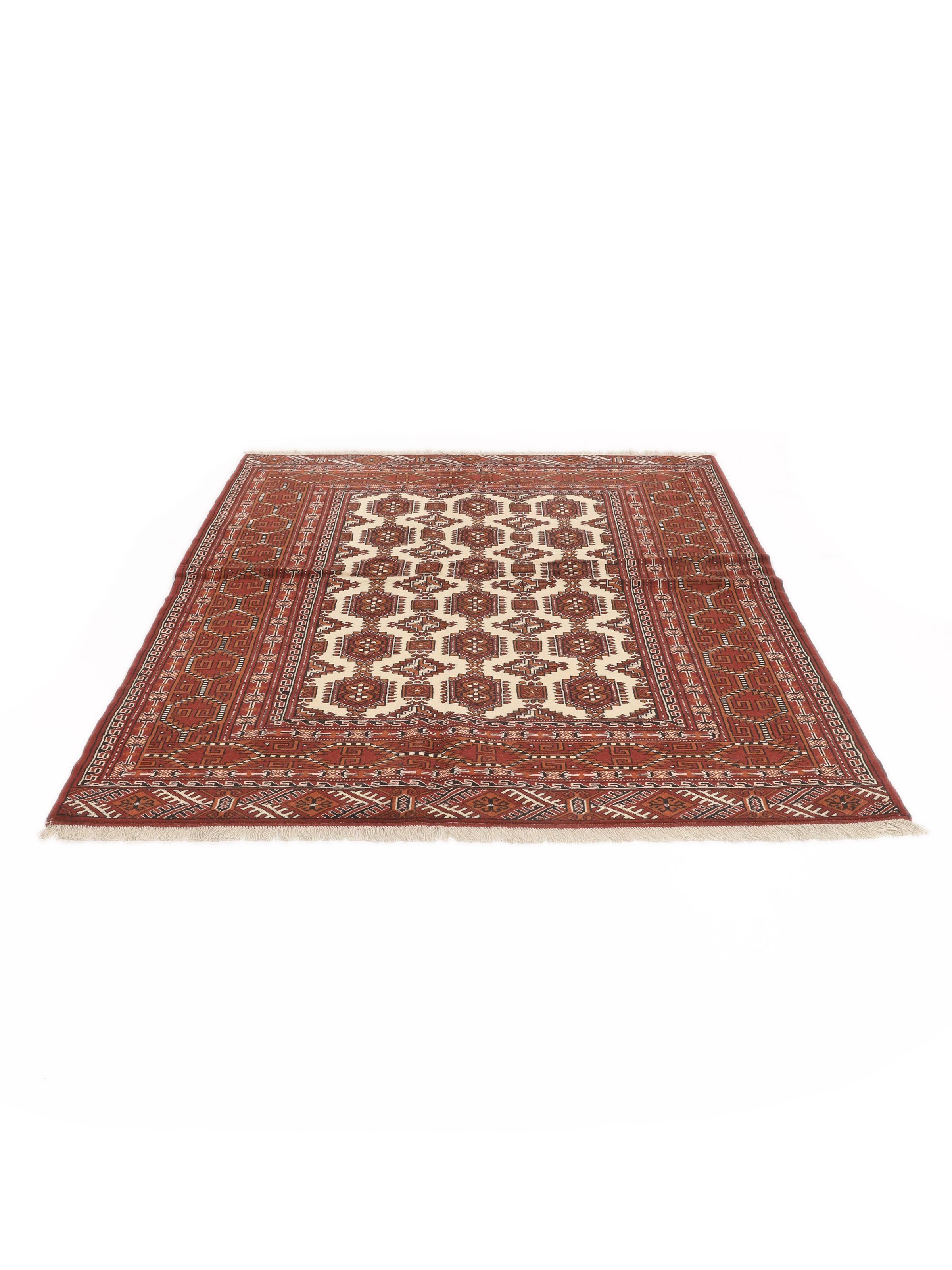
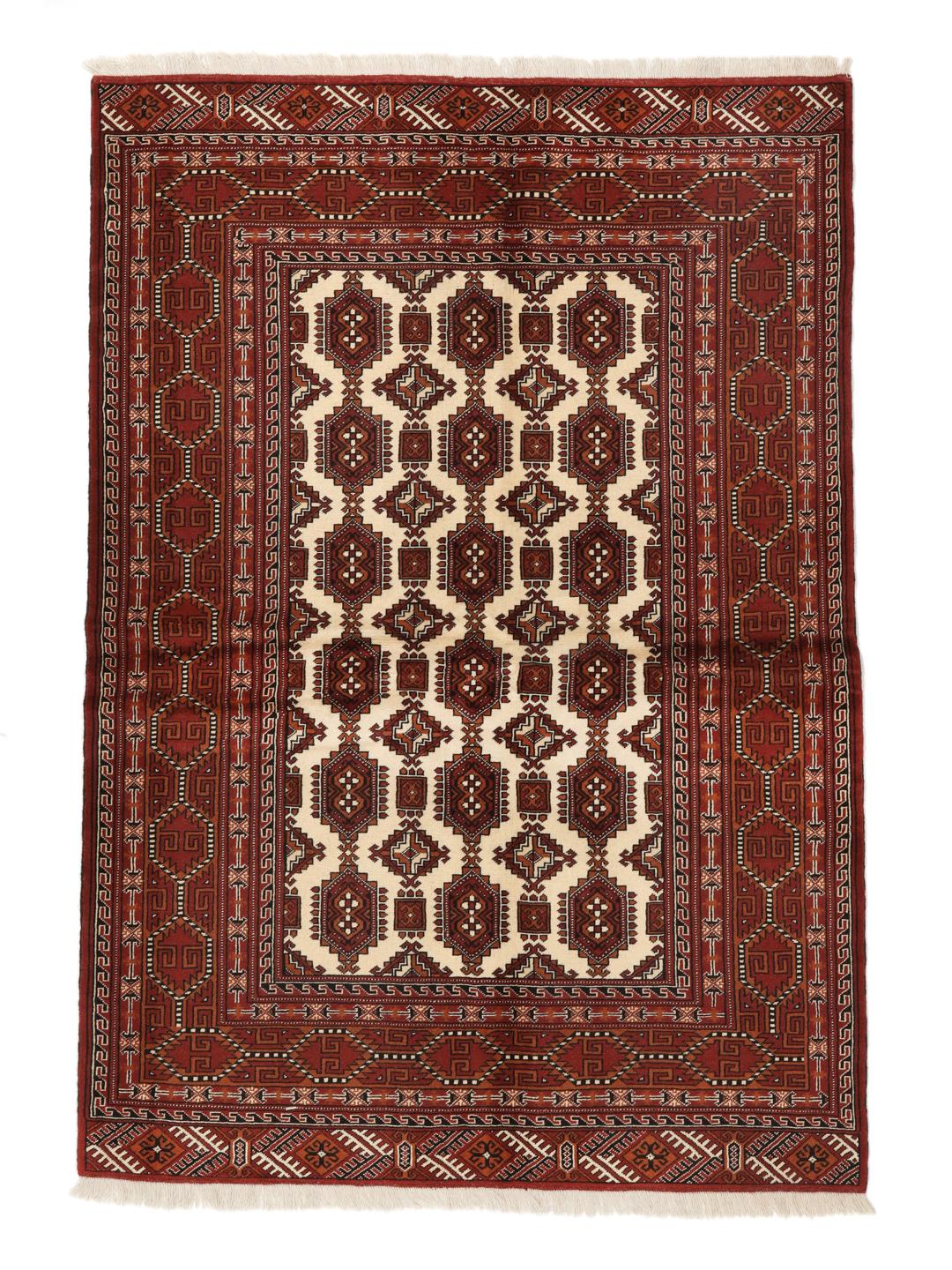
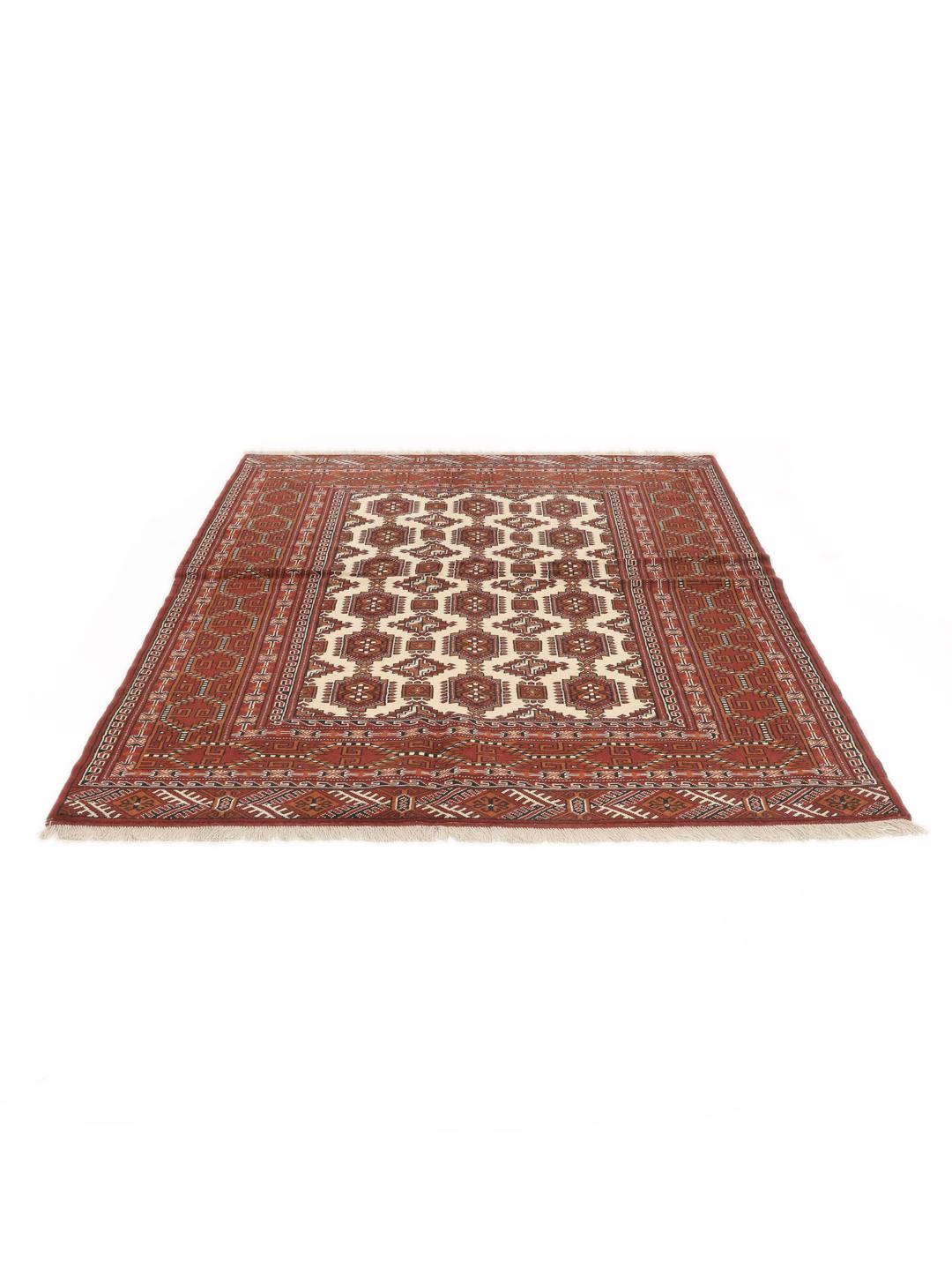
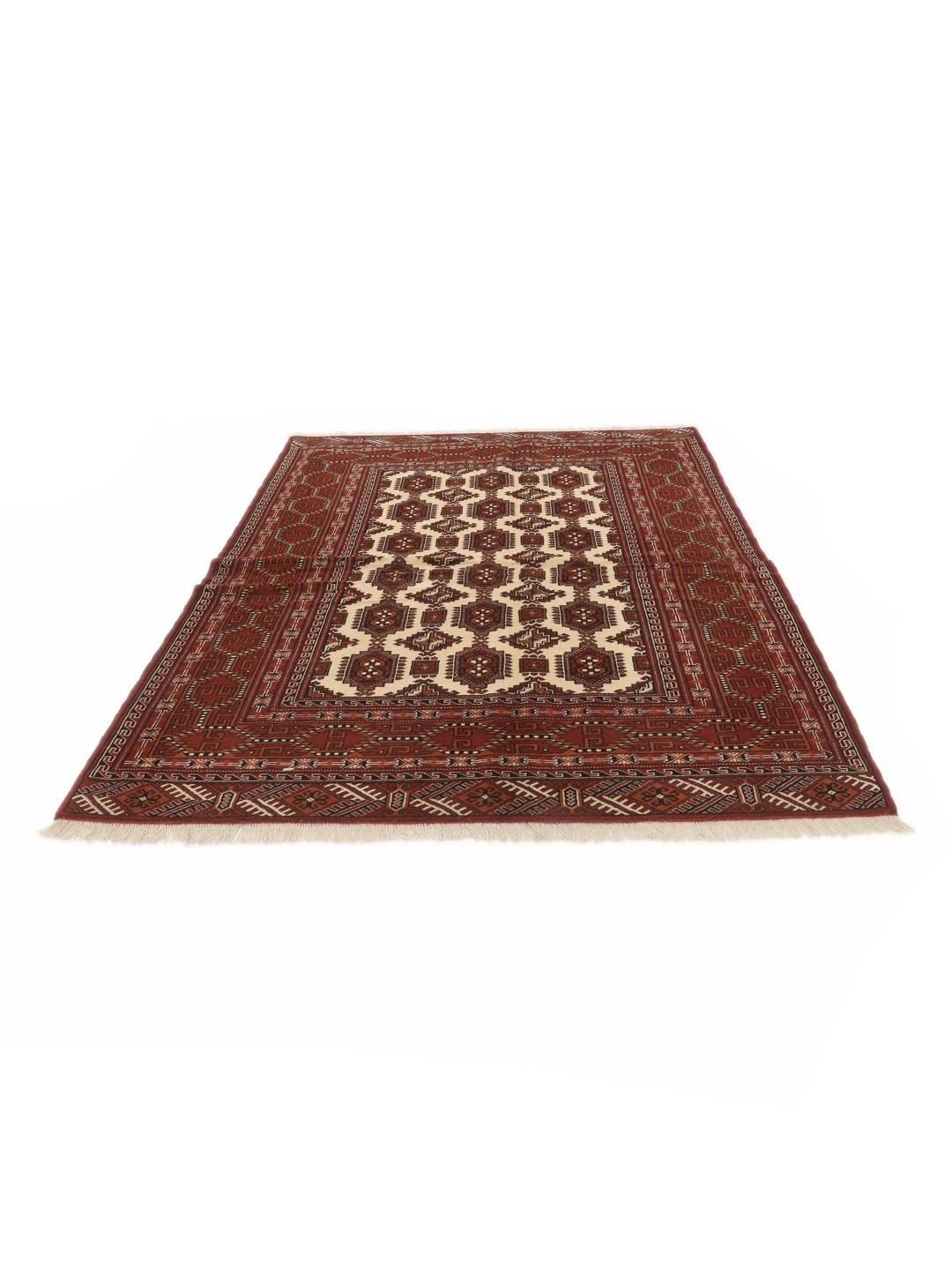
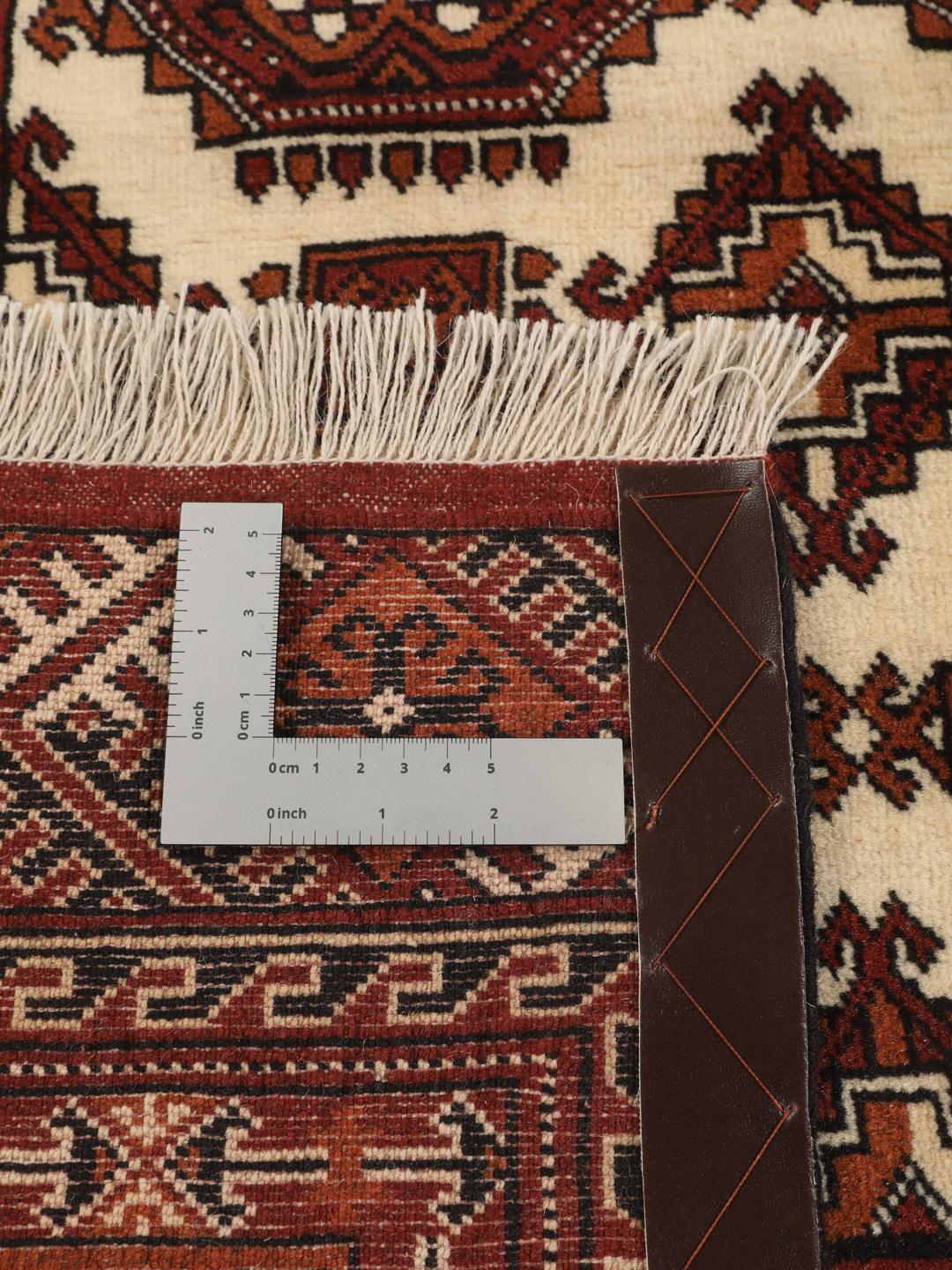
The Turkaman rug tradition stems from the nomadic tribes of Central Asia and the surrounding regions of the Middle East. Historically, these rugs were woven by tribal groups to serve as practical, portable, and durable items for tent life, evolving over centuries into the highly refined and decorative art form we admire today. The migration of these tribes across the vast landscapes of the region has heavily influenced the development of their distinct weaving styles.
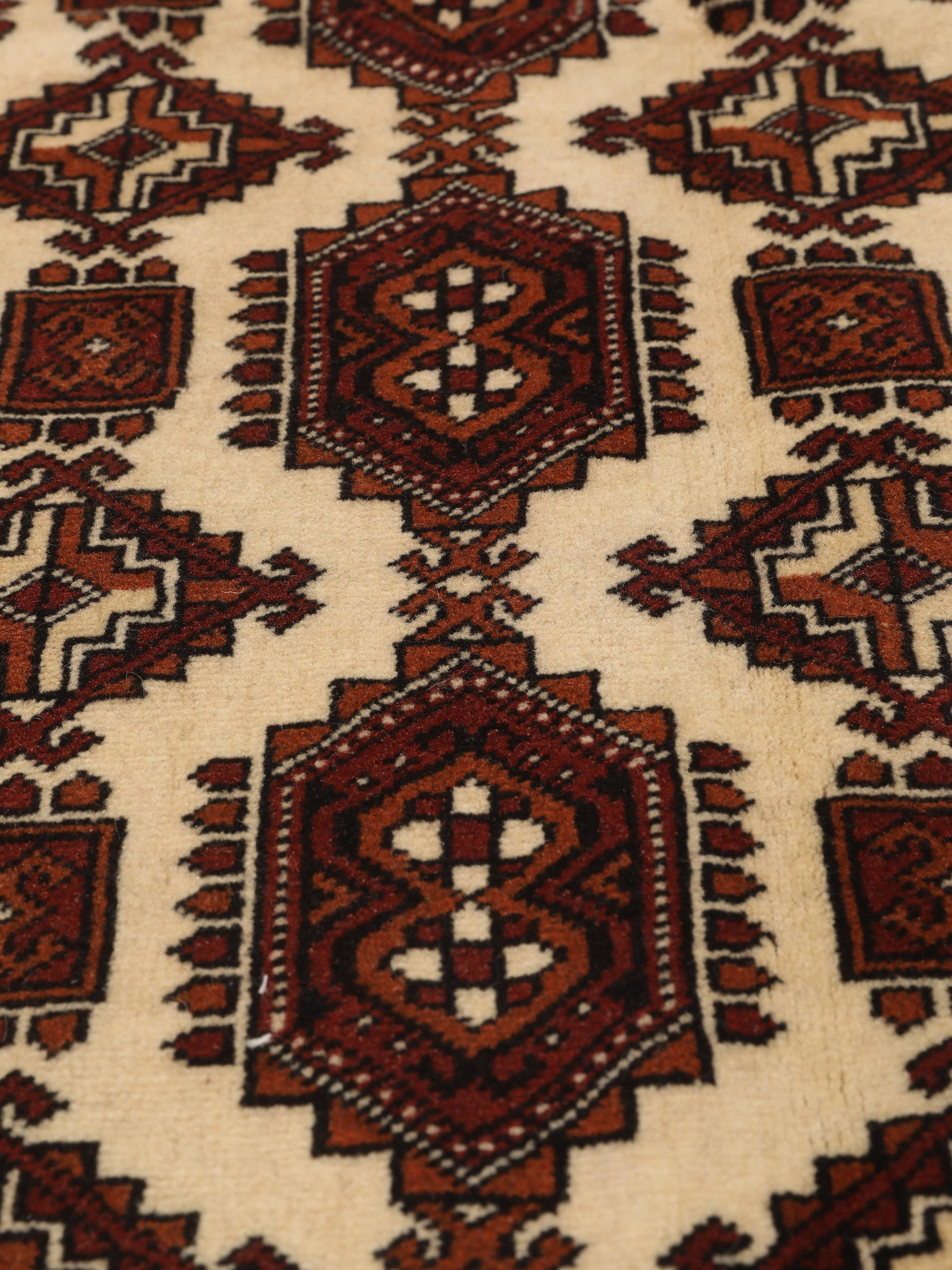
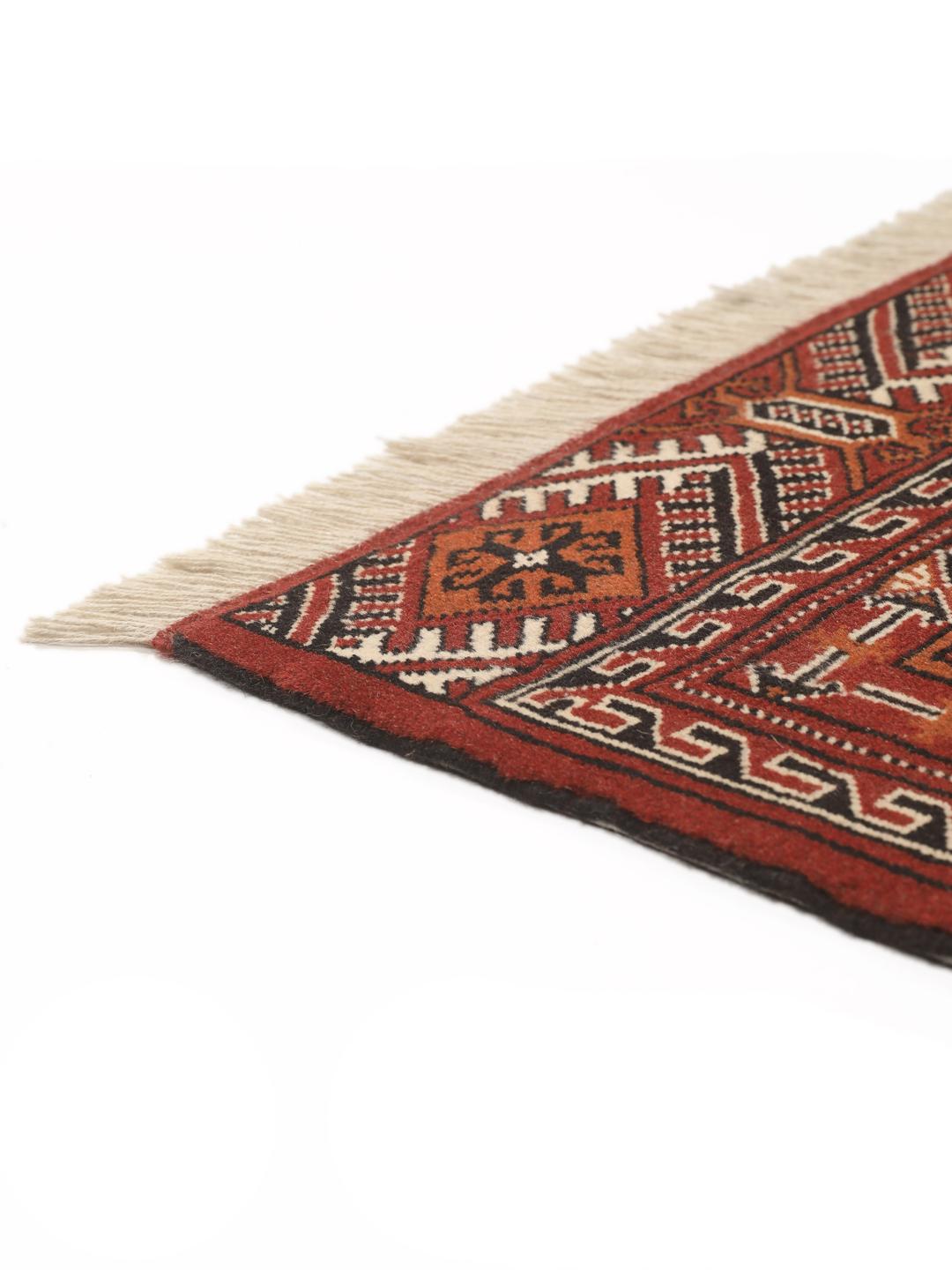
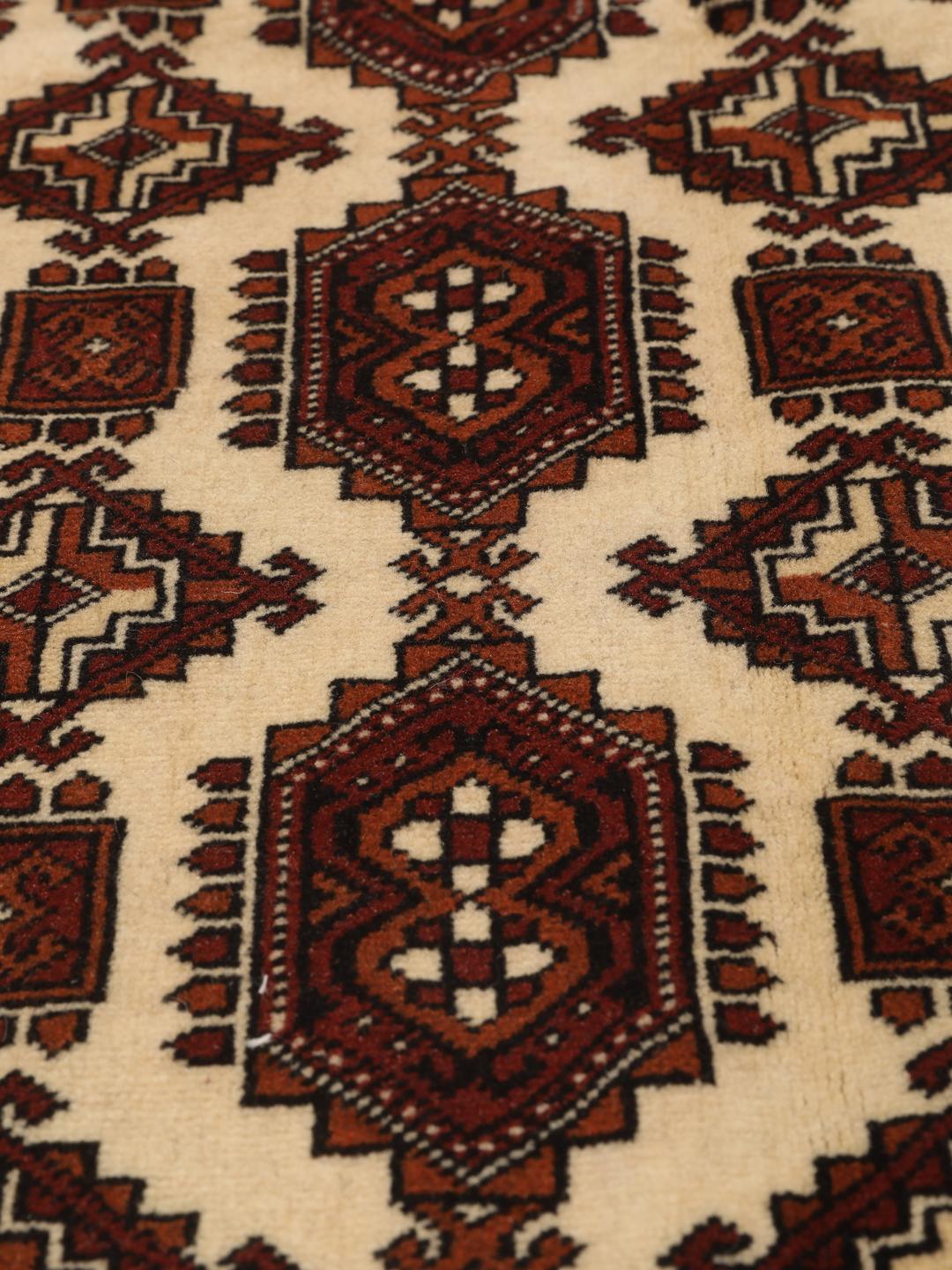
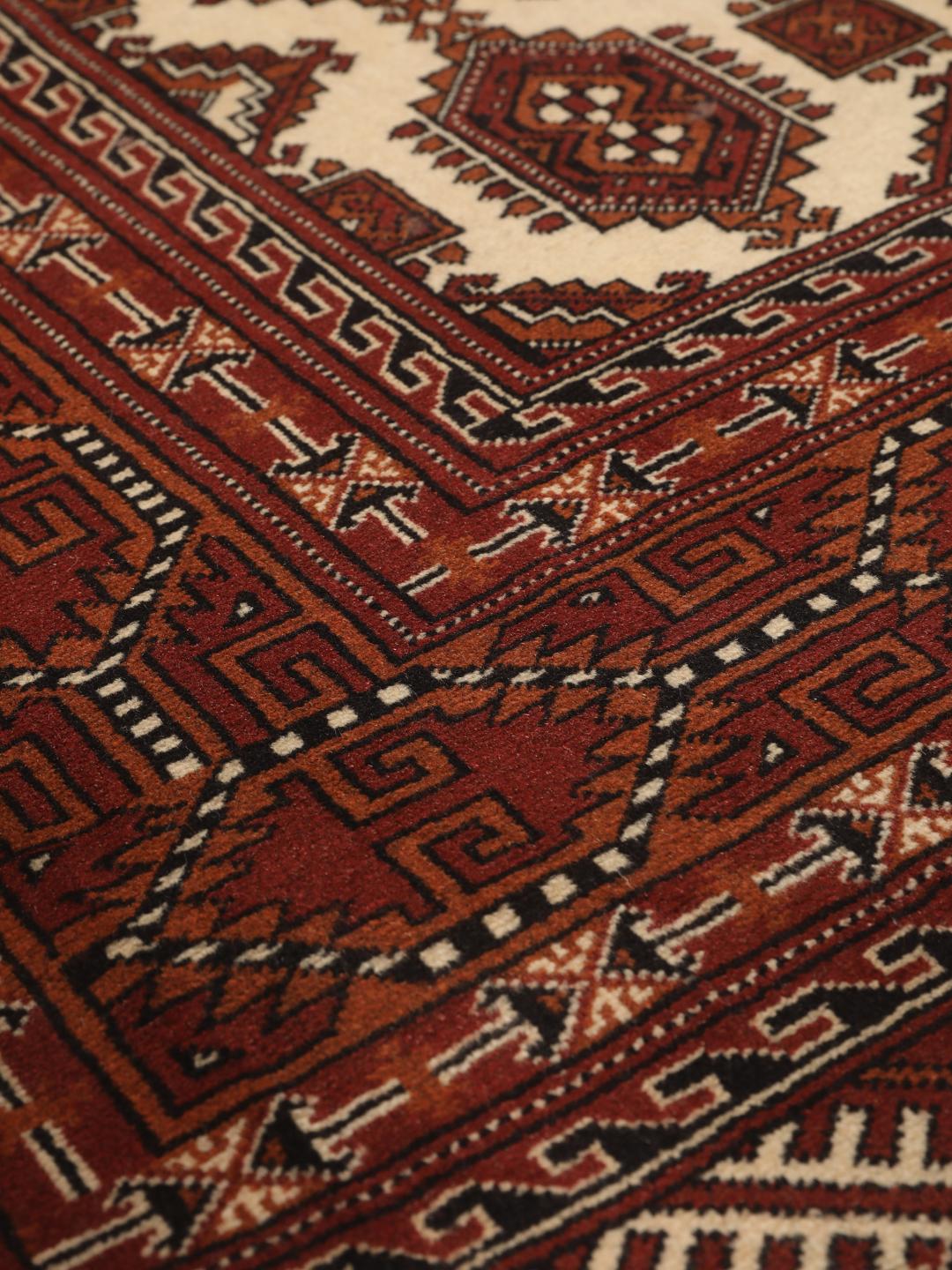
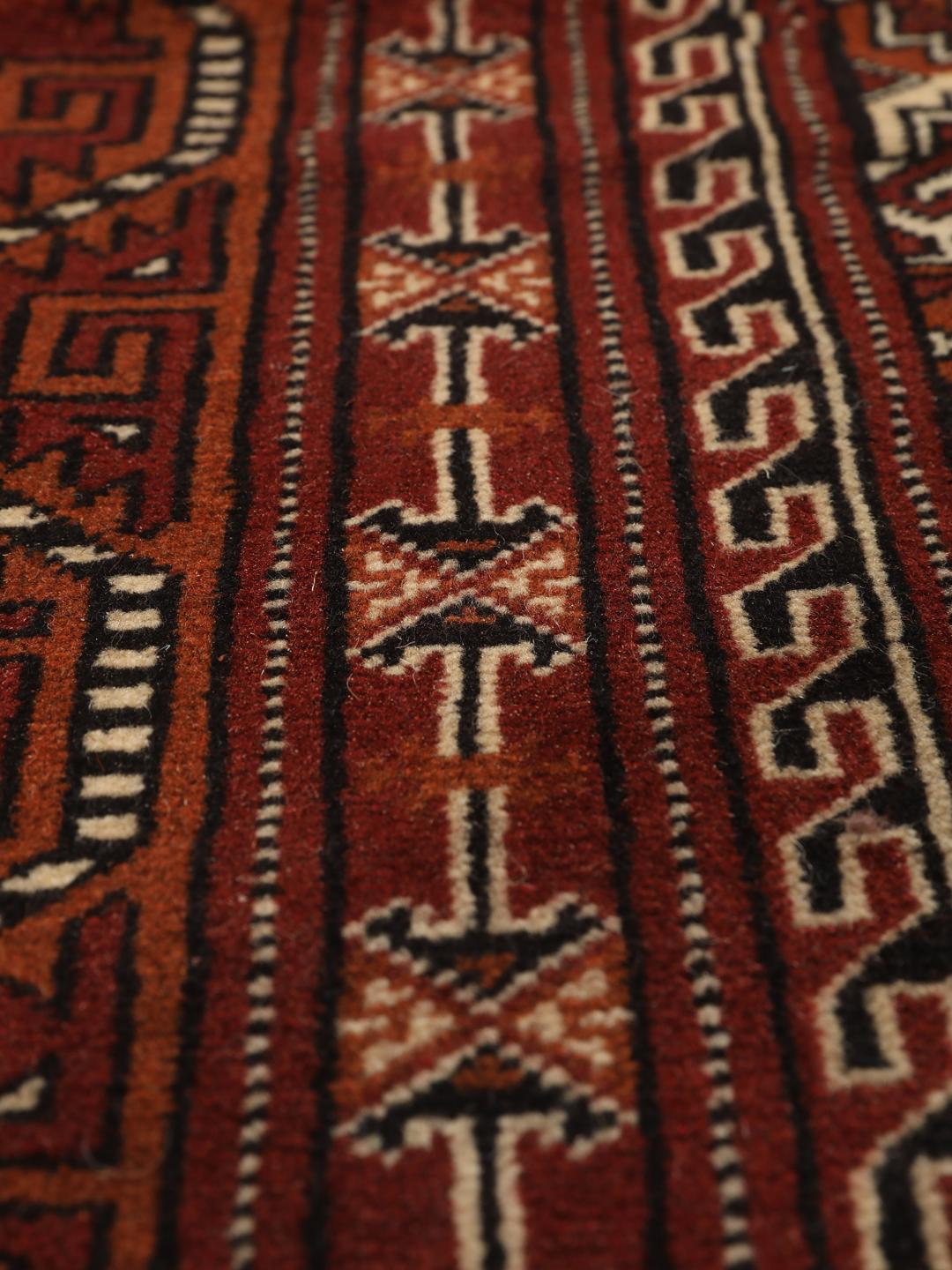
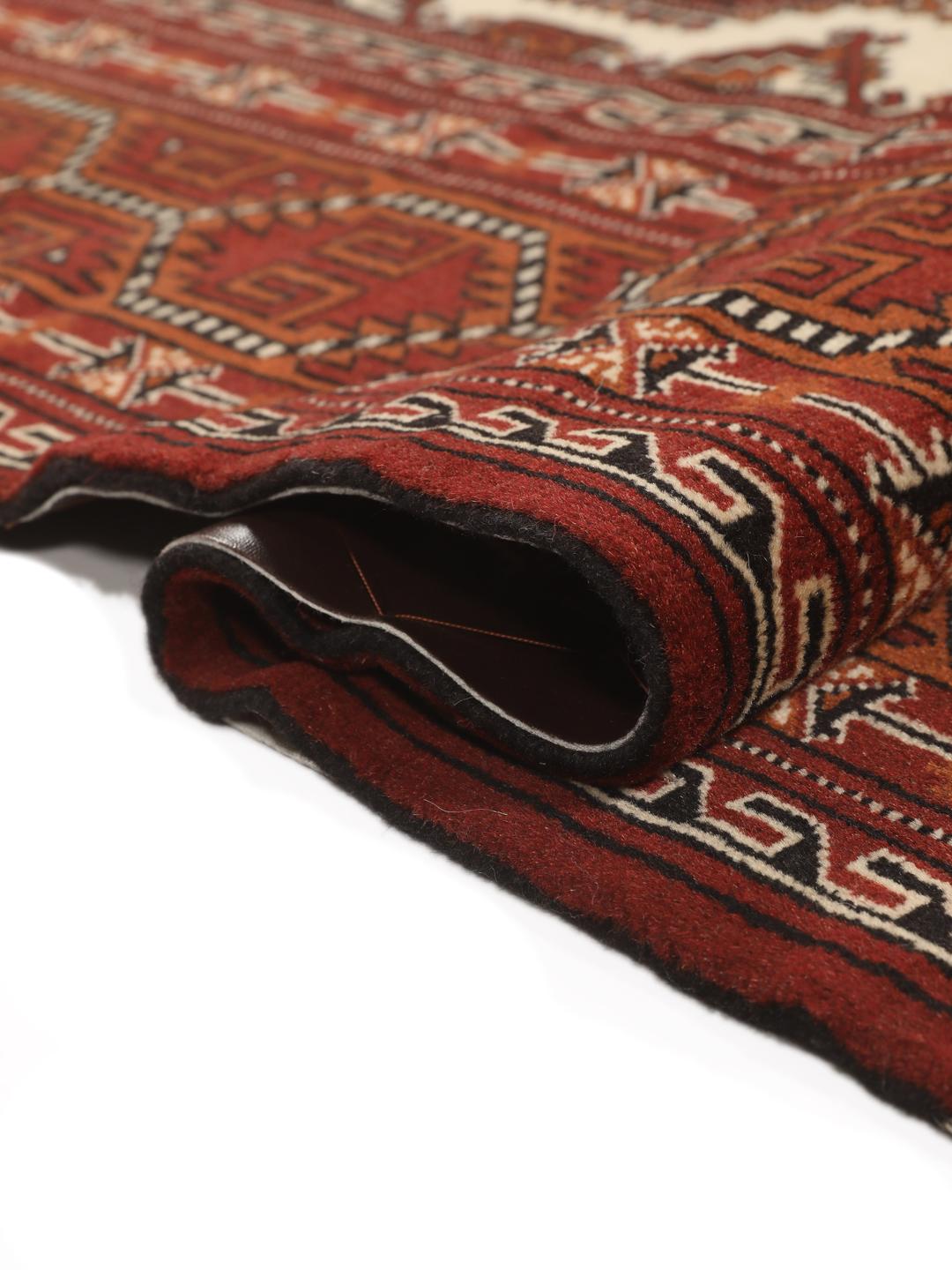
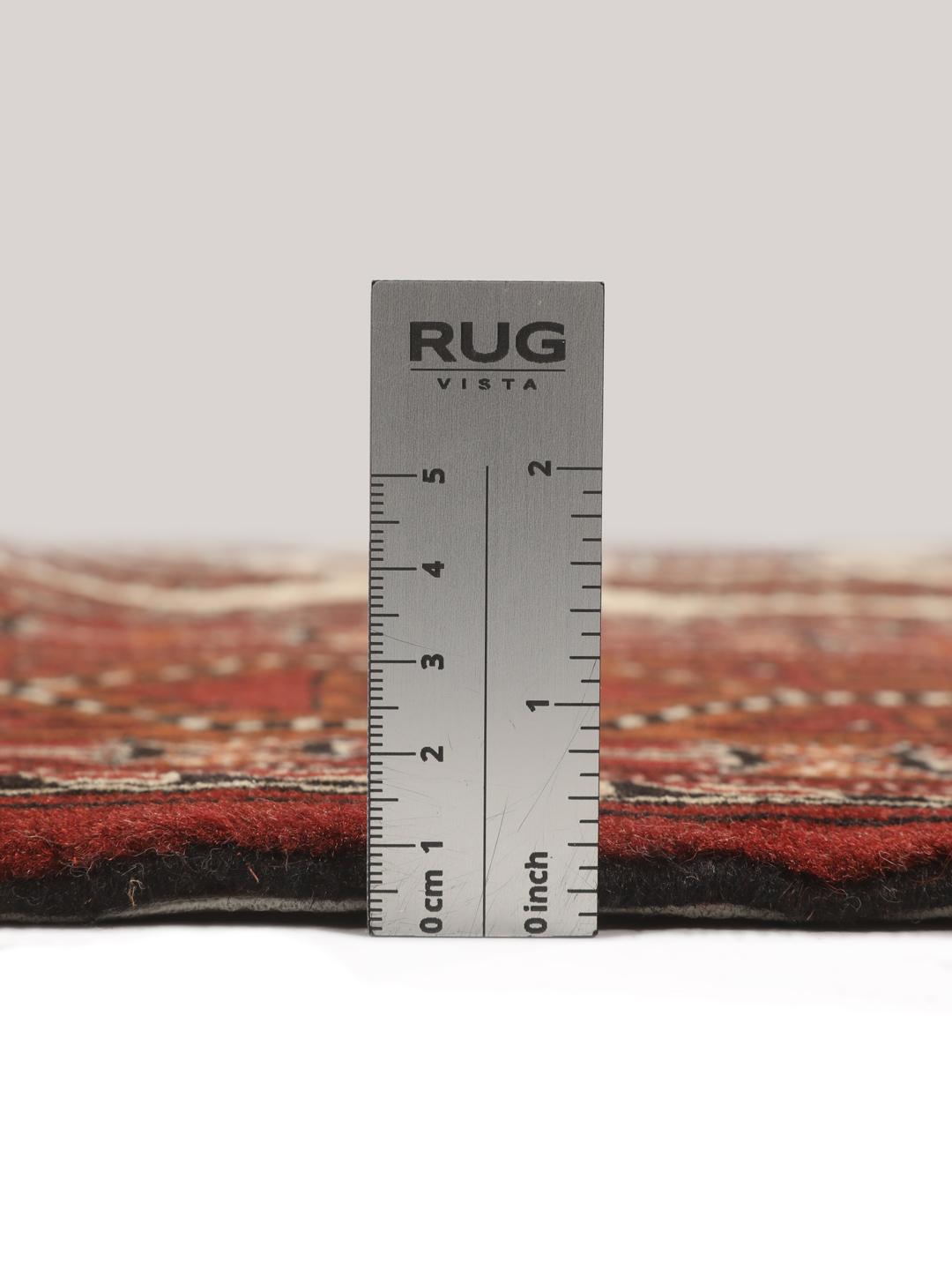
Technically, the quality of a Turkaman rug is defined by the fineness of its weave and the specific way the knots are anchored. The use of a dense pile allows for complex, crisp detailing that remains sharp even after years of use. This structural integrity is a hallmark of the tradition, as the artisans have always prioritised a tight, uniform knotting technique to ensure the rugs could withstand the rigours of nomadic life.
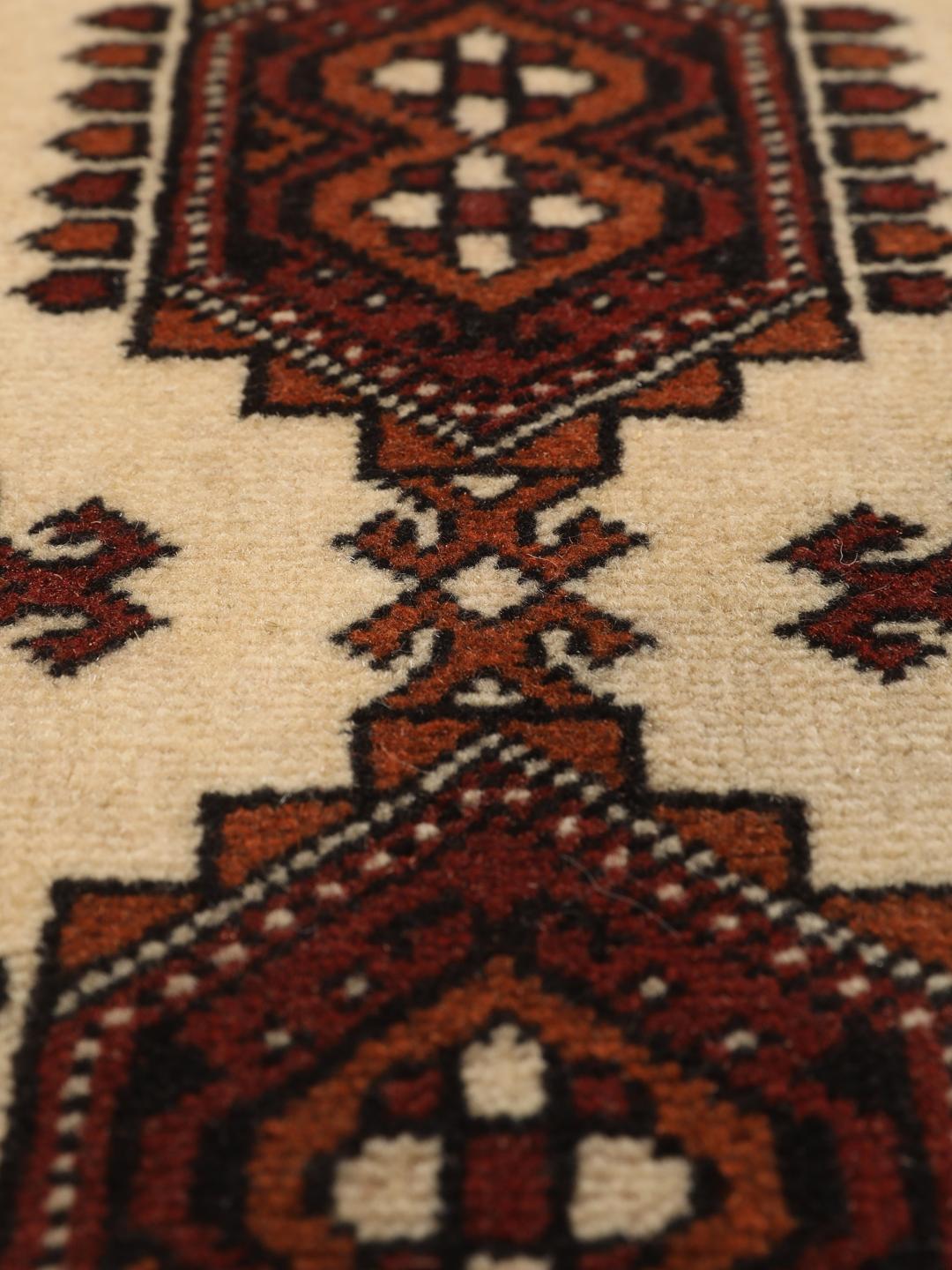
The visual language of these rugs is instantly recognisable through the repetition of the gul—a geometric, octagonal medallion that often resembles a stylized elephant foot or a floral emblem. These motifs are typically arranged in a structured grid, creating a sense of order and balance that is balanced by a rich, warm colour palette. The borders are equally significant, often featuring intricate geometric patterns that frame the field with precision.
Collecting a piece from this tradition is an act of preserving a rich cultural narrative. These rugs are valued not just for their aesthetic beauty, but for the immense human skill and ancestral knowledge they represent. To own one is to possess a piece of a living history, a craft that has been passed down through generations and remains a testament to the enduring connection between artistry and function.