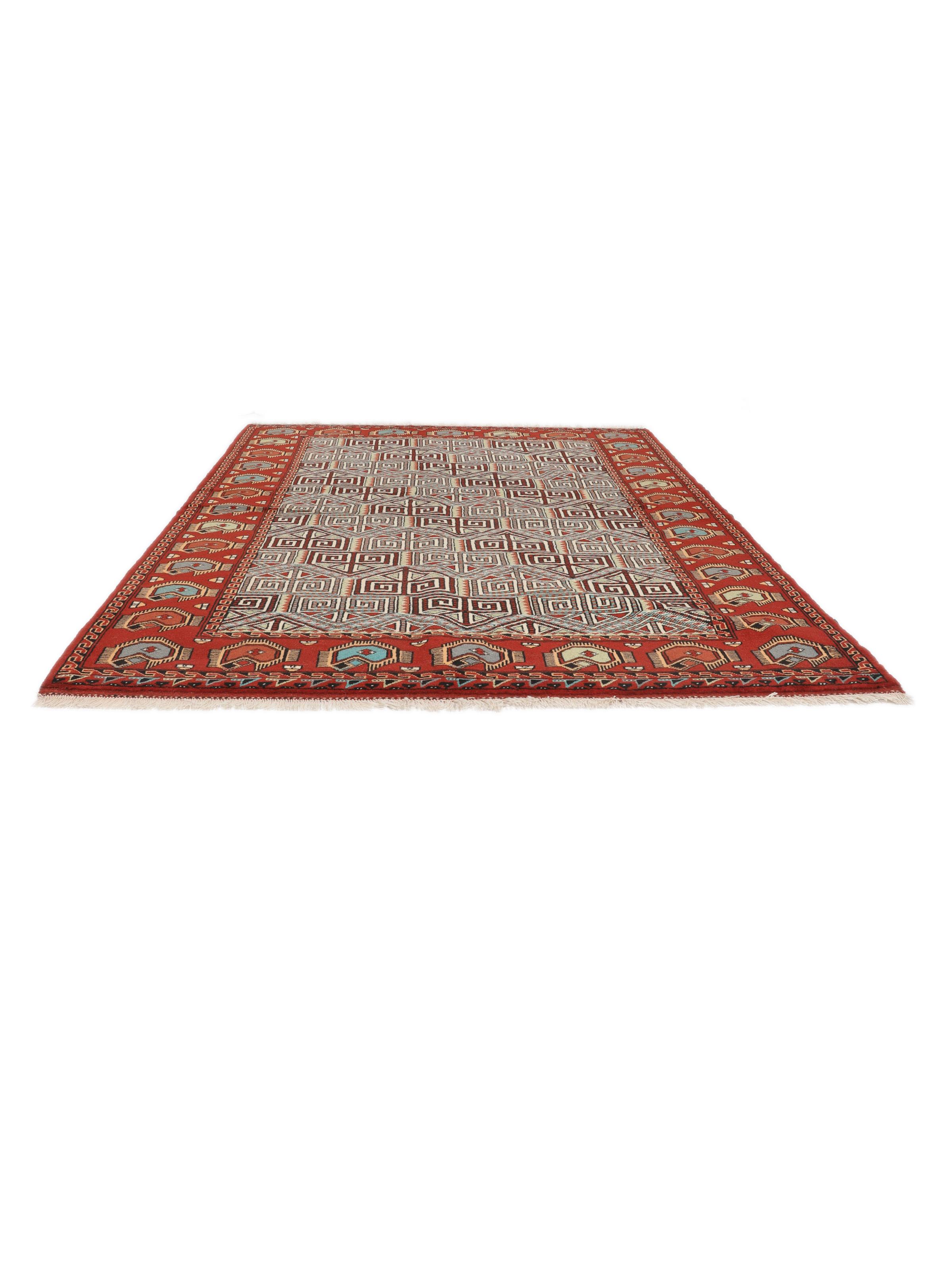
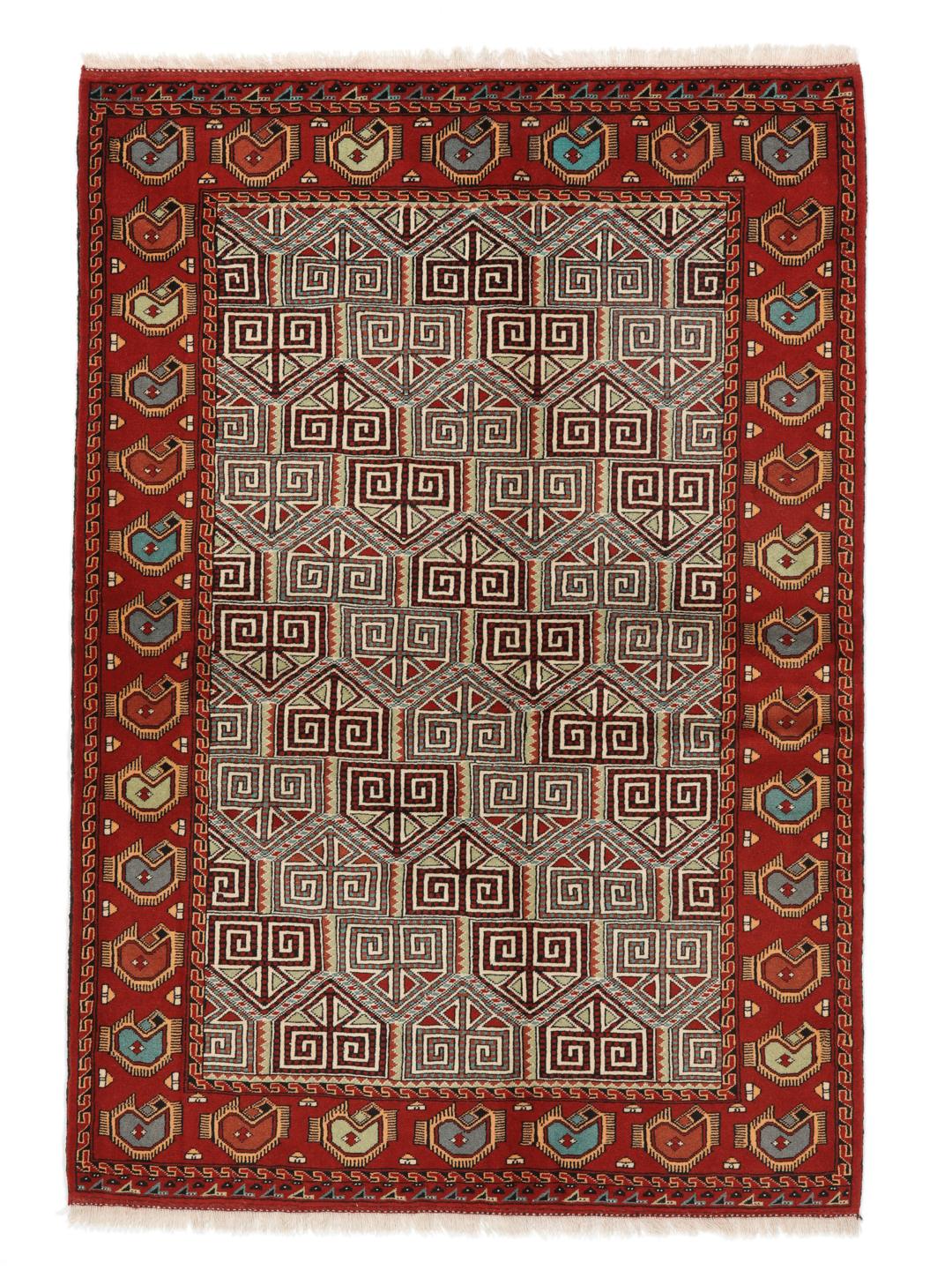
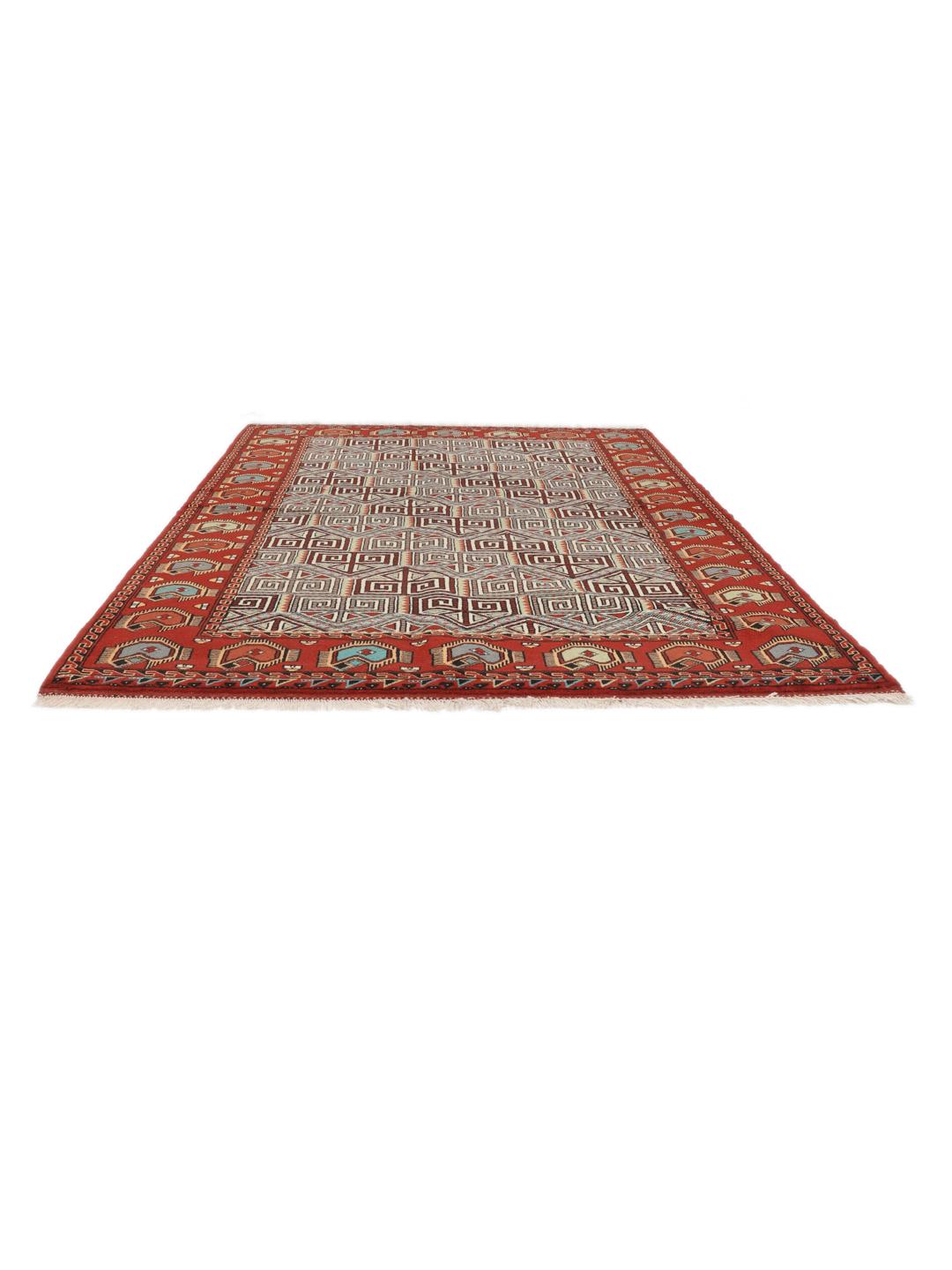
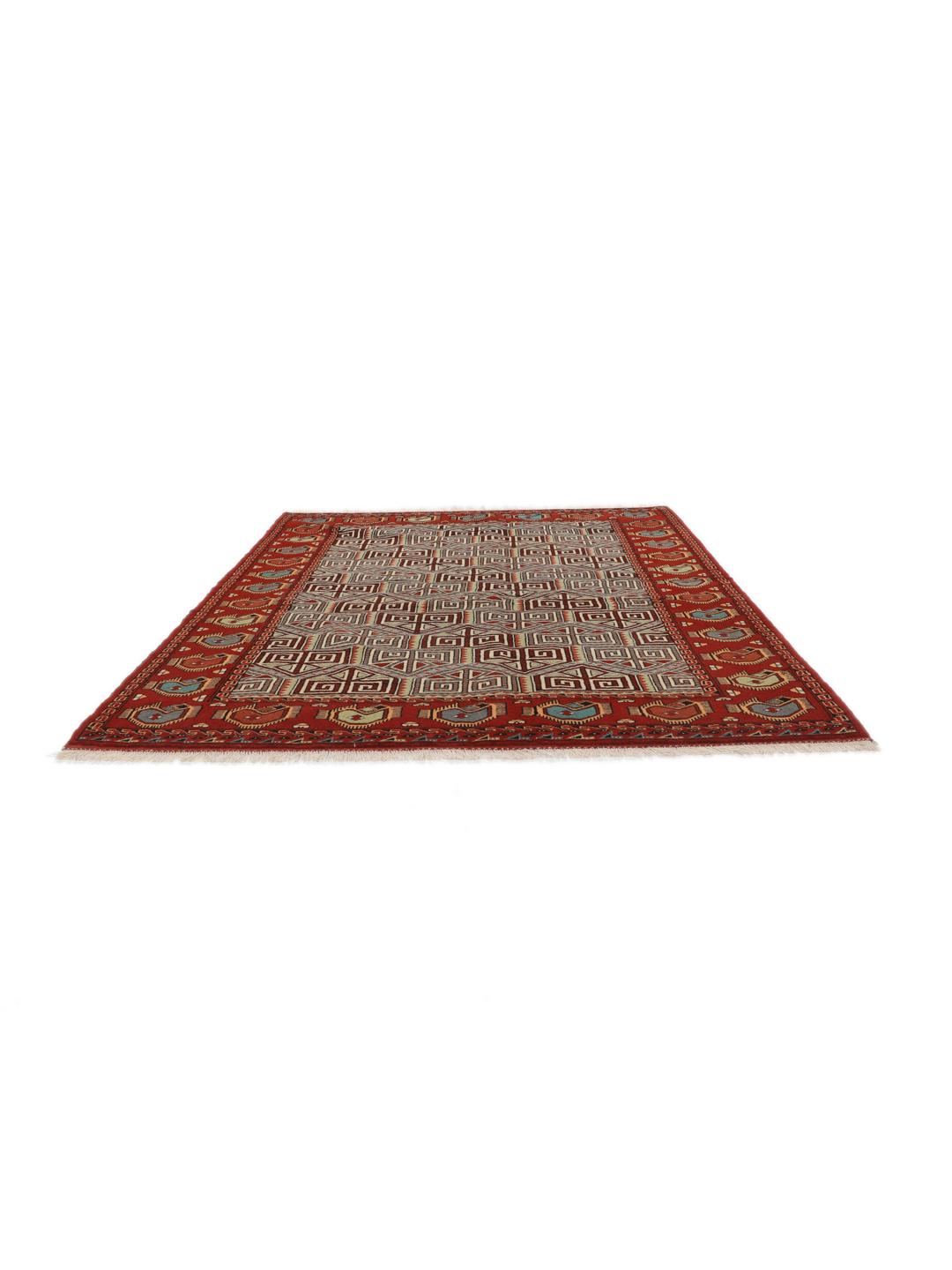
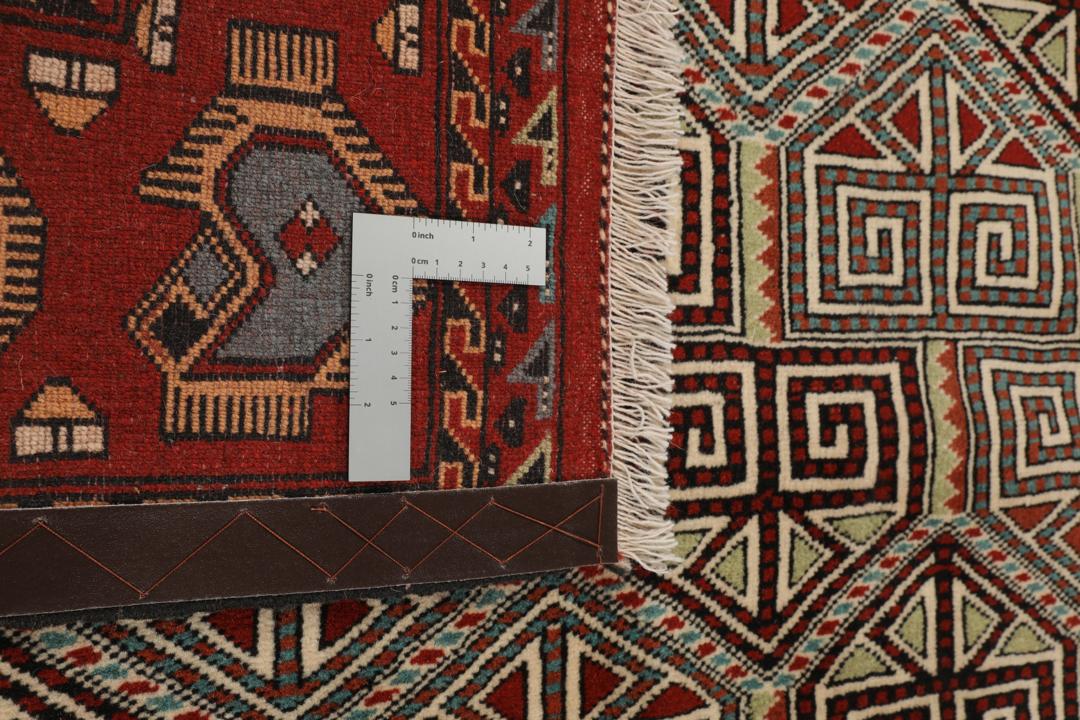
Turkaman rugs originate from the nomadic tribes of Central Asia and the surrounding regions of the Middle East. Historically, these pieces were essential to nomadic life, serving as blankets, bags, and floor coverings. The designs were deeply tied to the identity of specific tribes, with each group developing its own signature aesthetic and symbolic language.
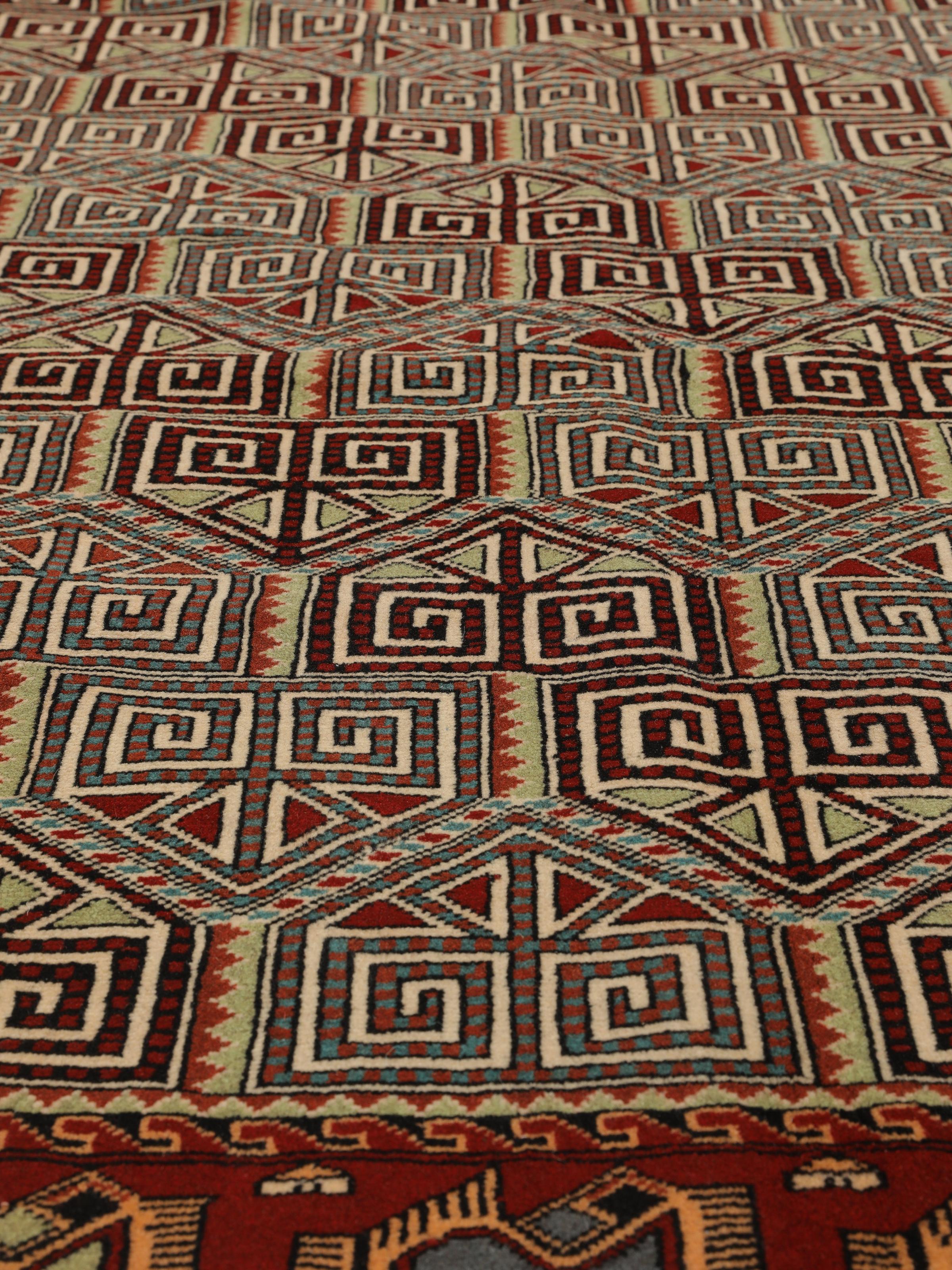
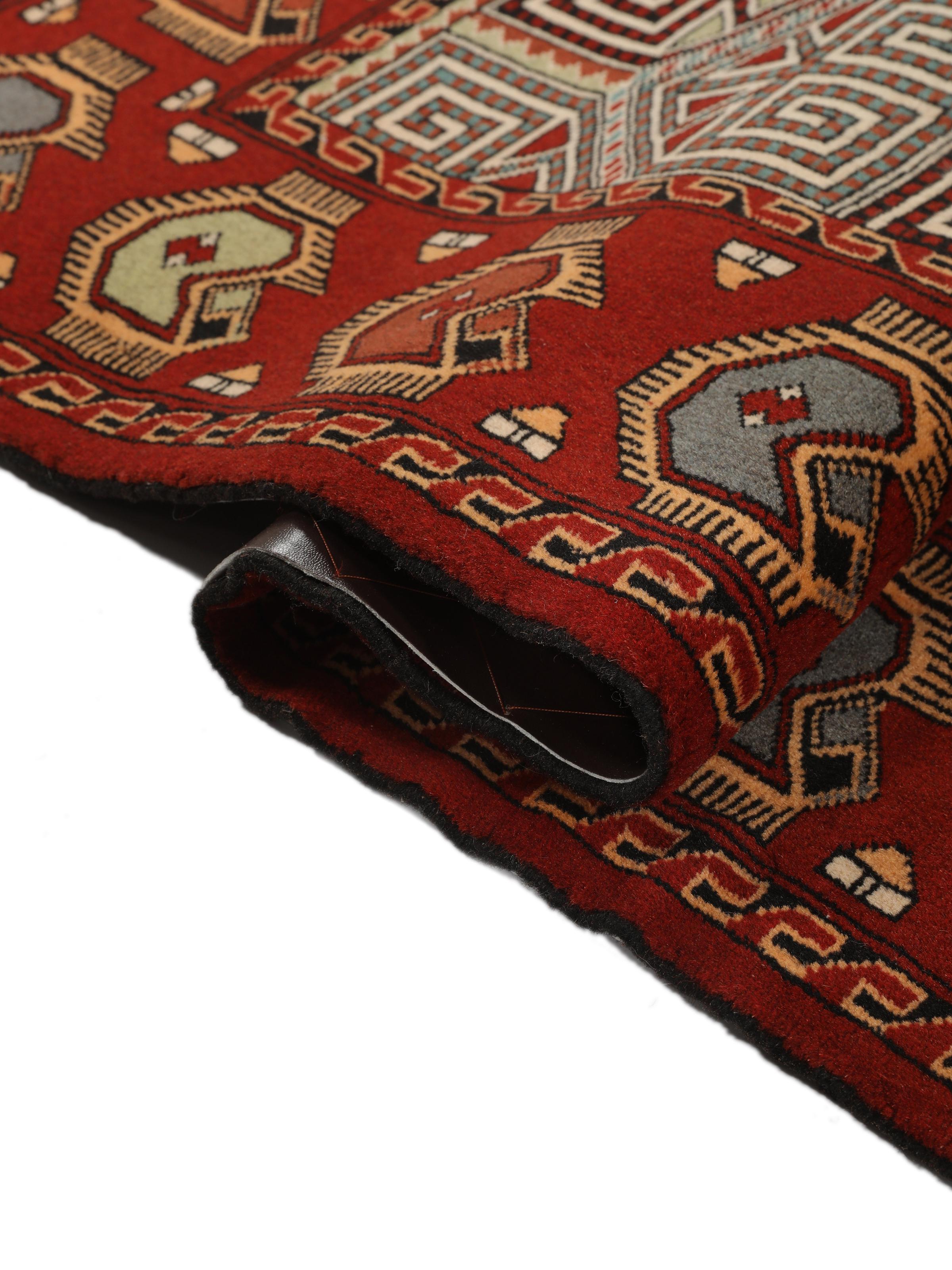
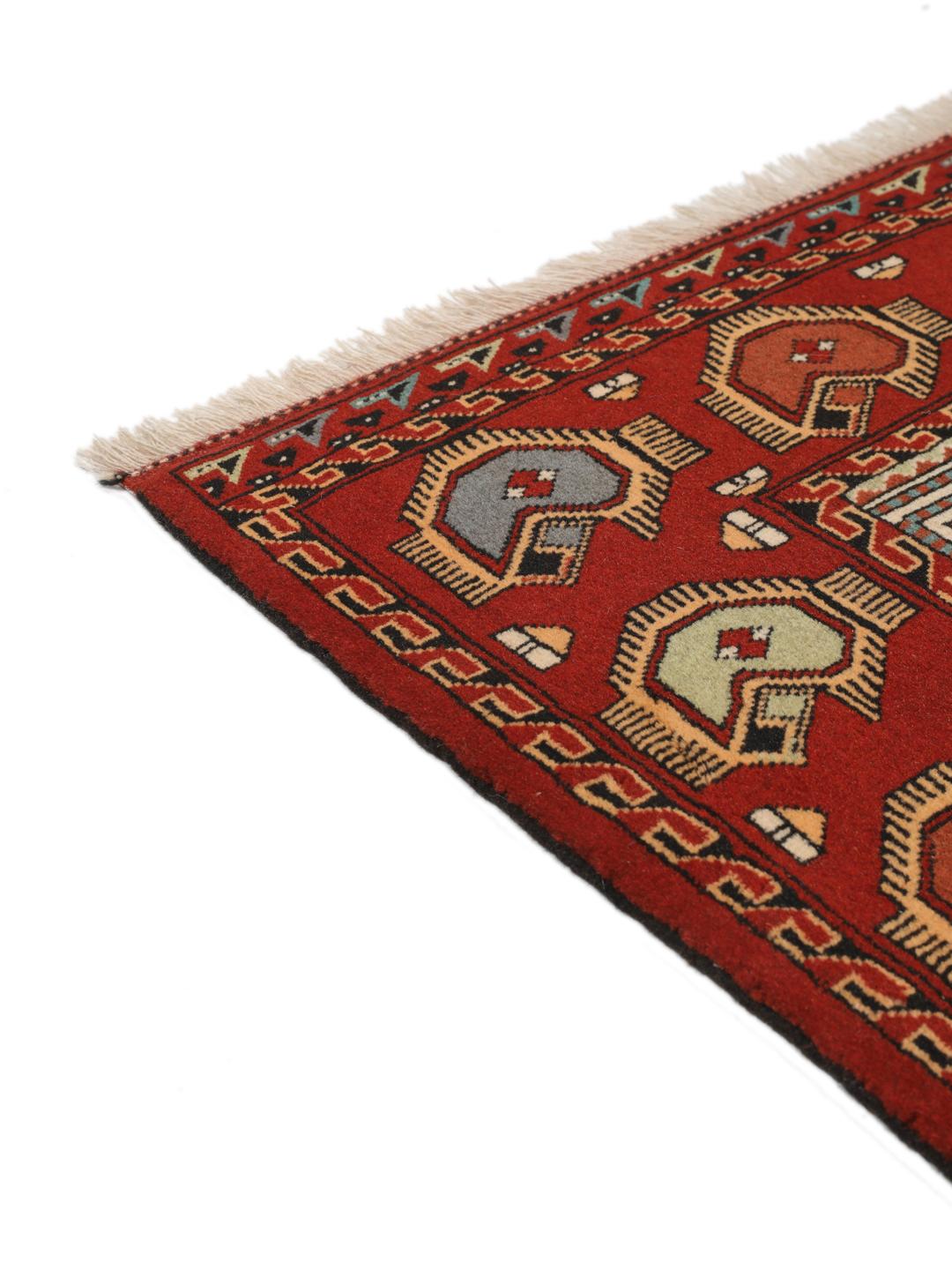
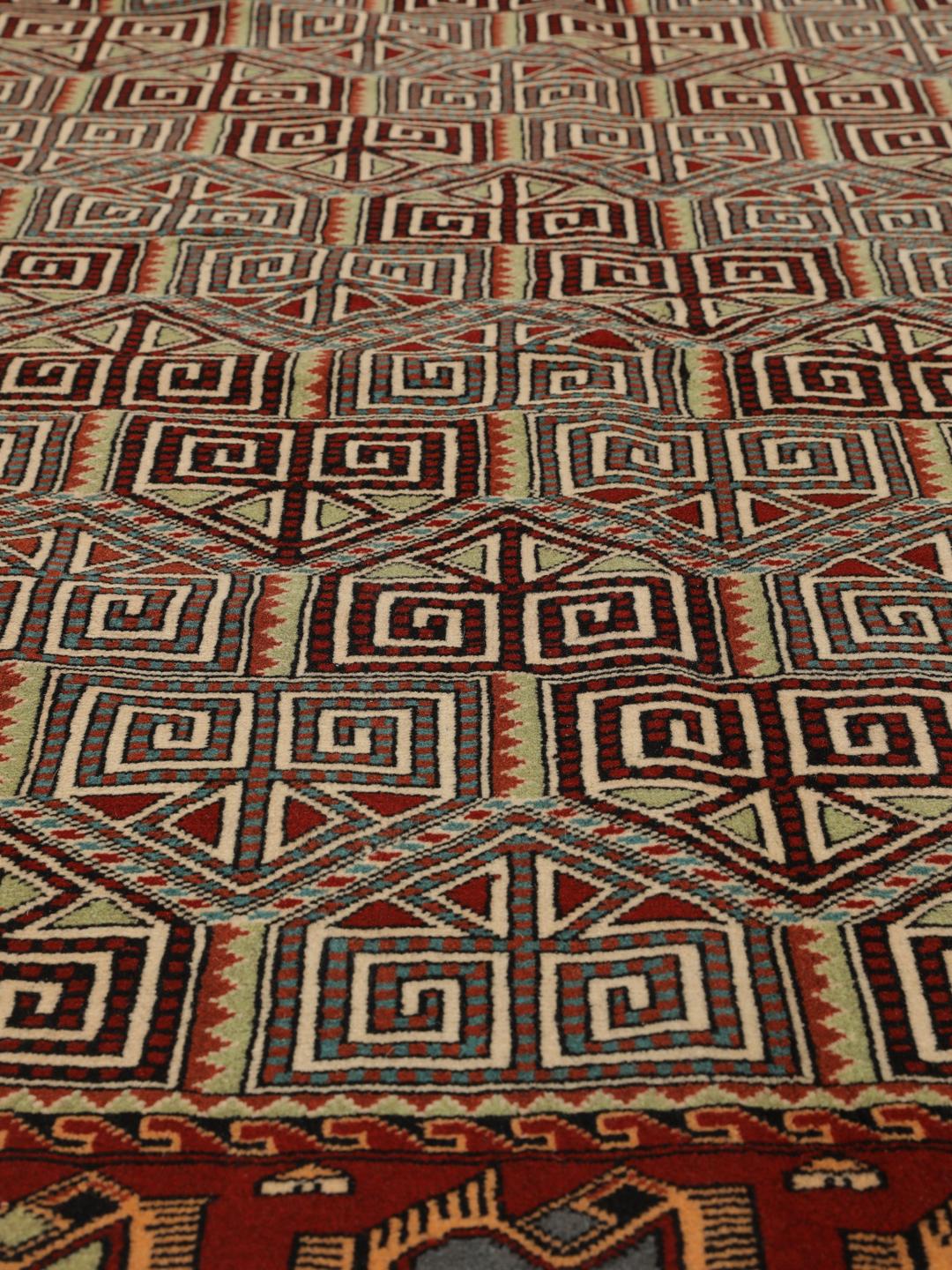
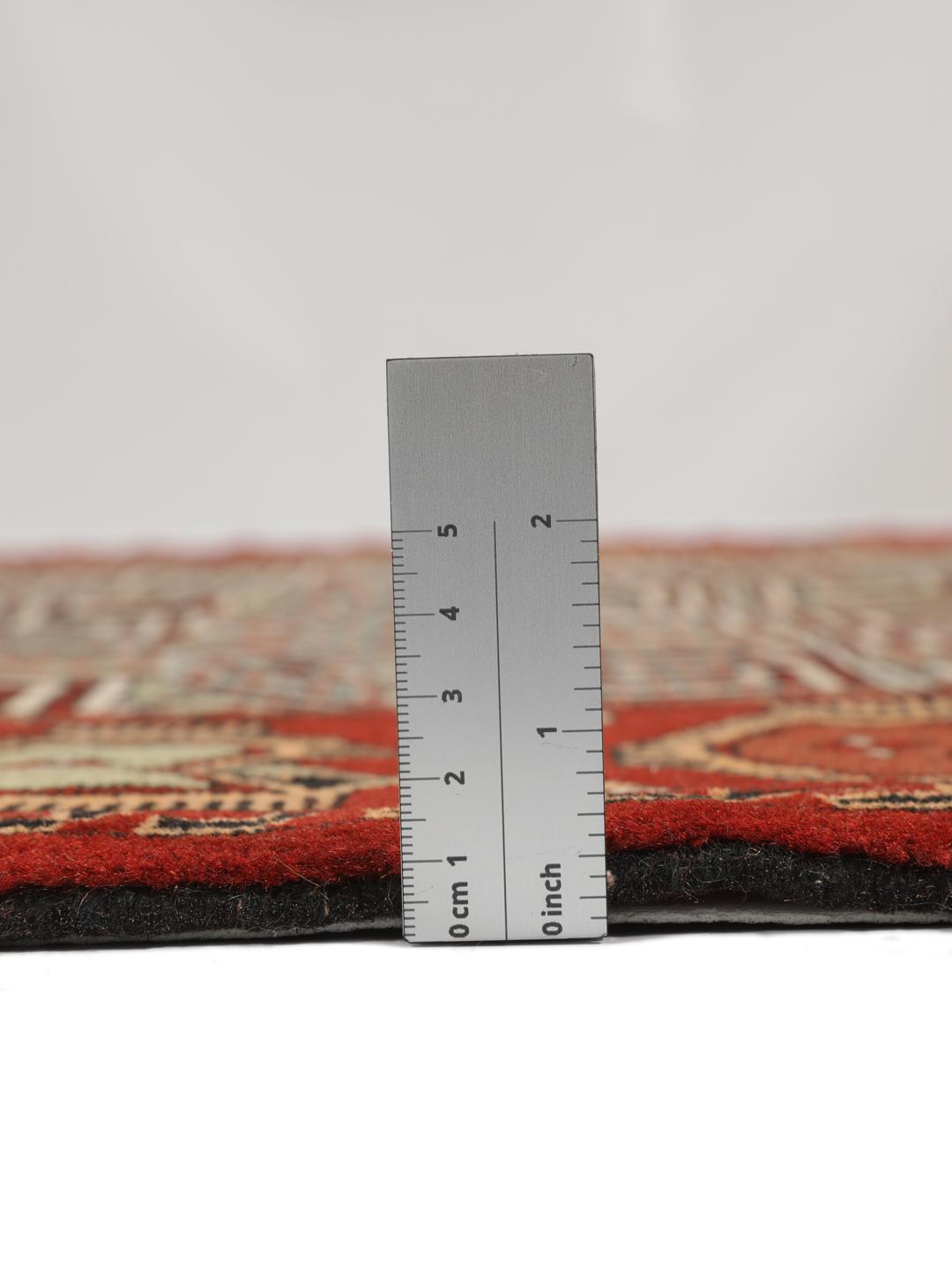
The term Turkaman refers to these tribal traditions, which have been refined over centuries. A key aspect of their quality is the use of robust wool, which is often spun into a tight, dense pile. This construction is not just for aesthetic appeal but is a practical response to the need for durable, insulating textiles that could withstand the rigours of nomadic travel and harsh climates.
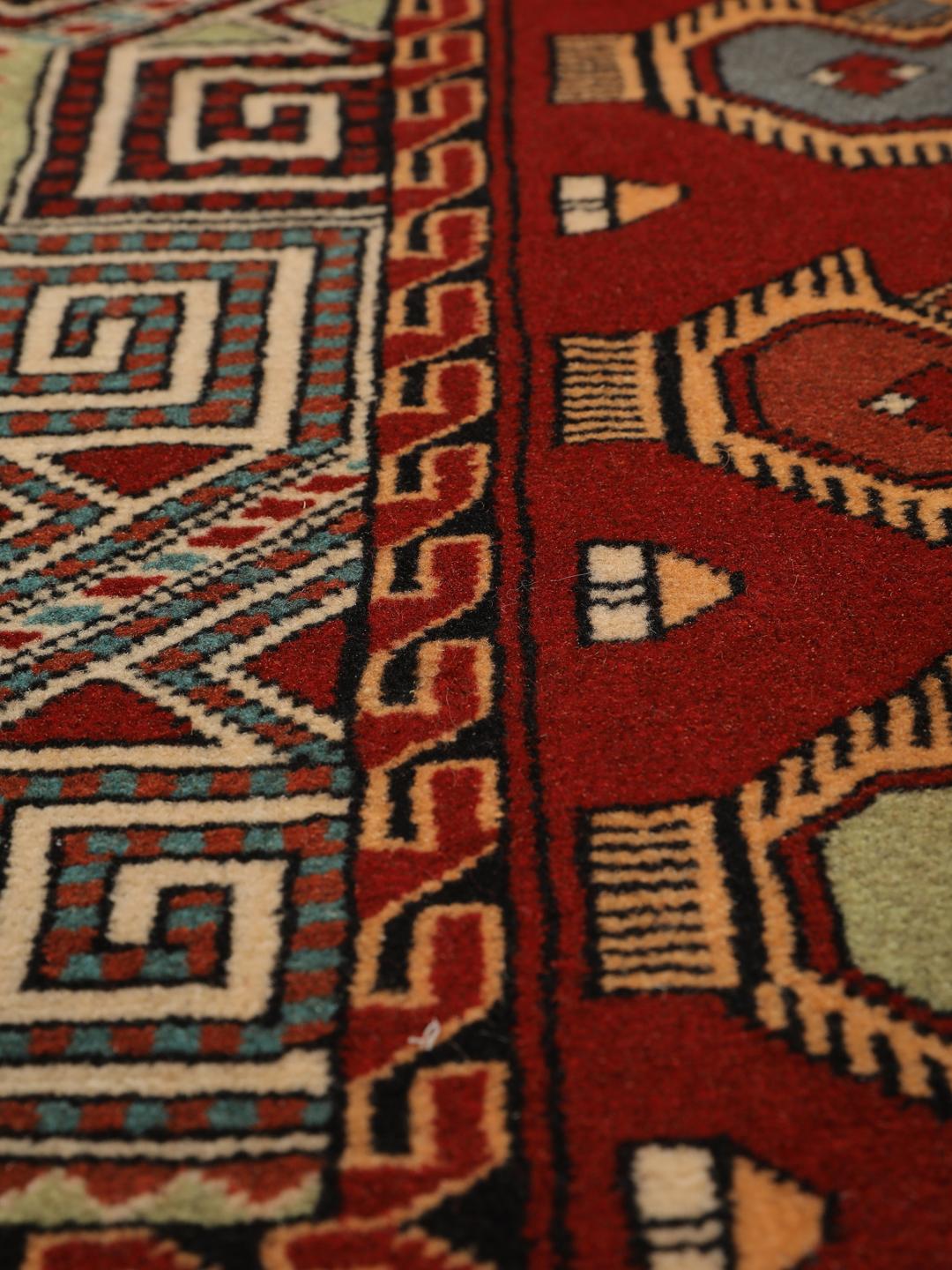
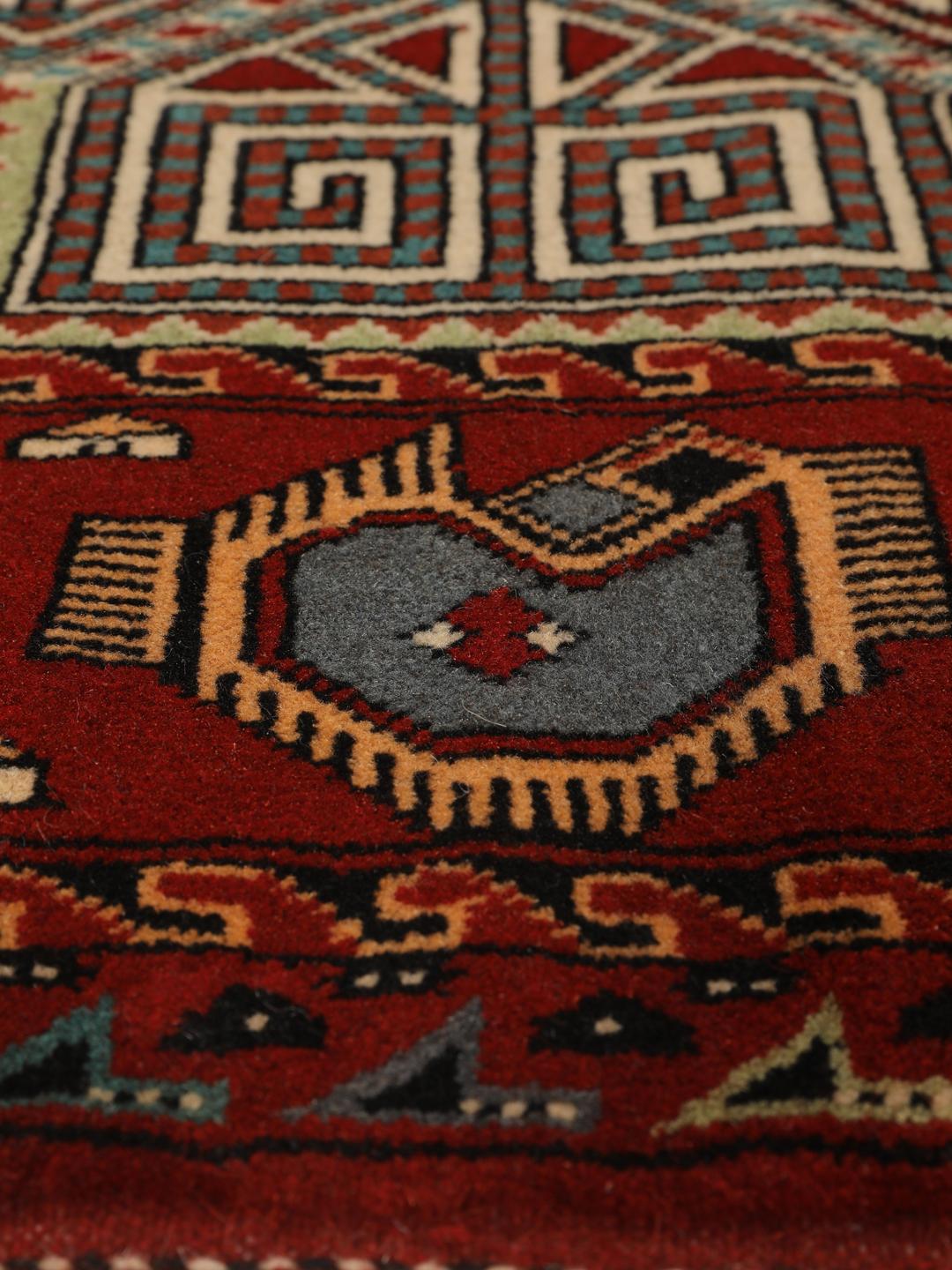
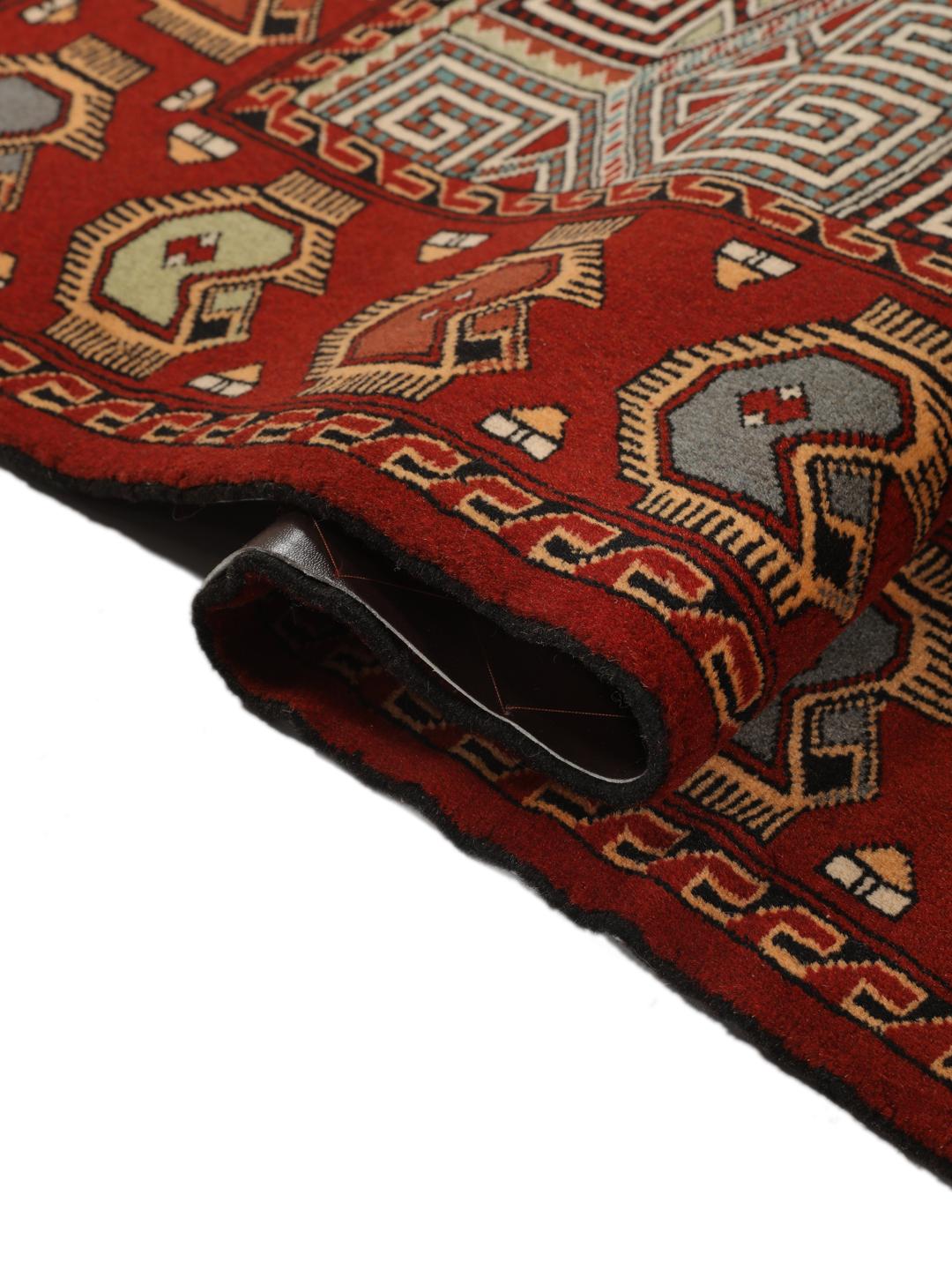
Signature elements of these rugs include repeating geometric patterns, such as the famous gul motifs, which are stylised medallions often arranged in orderly rows. The borders are typically framed by intricate, repeating linear designs that provide a sense of structure. The colour palette is famously dominated by deep, earthy reds, which are derived from traditional natural dyes and lend the rugs their iconic, warm appearance.
Today, these rugs are highly valued by collectors for their cultural significance and the human effort required to produce them. Owning a Turkaman rug is an investment in a living history, representing a bridge between ancient tribal customs and modern home design. They are celebrated for their enduring quality and the way they bring a sense of grounded, authentic character to any interior.