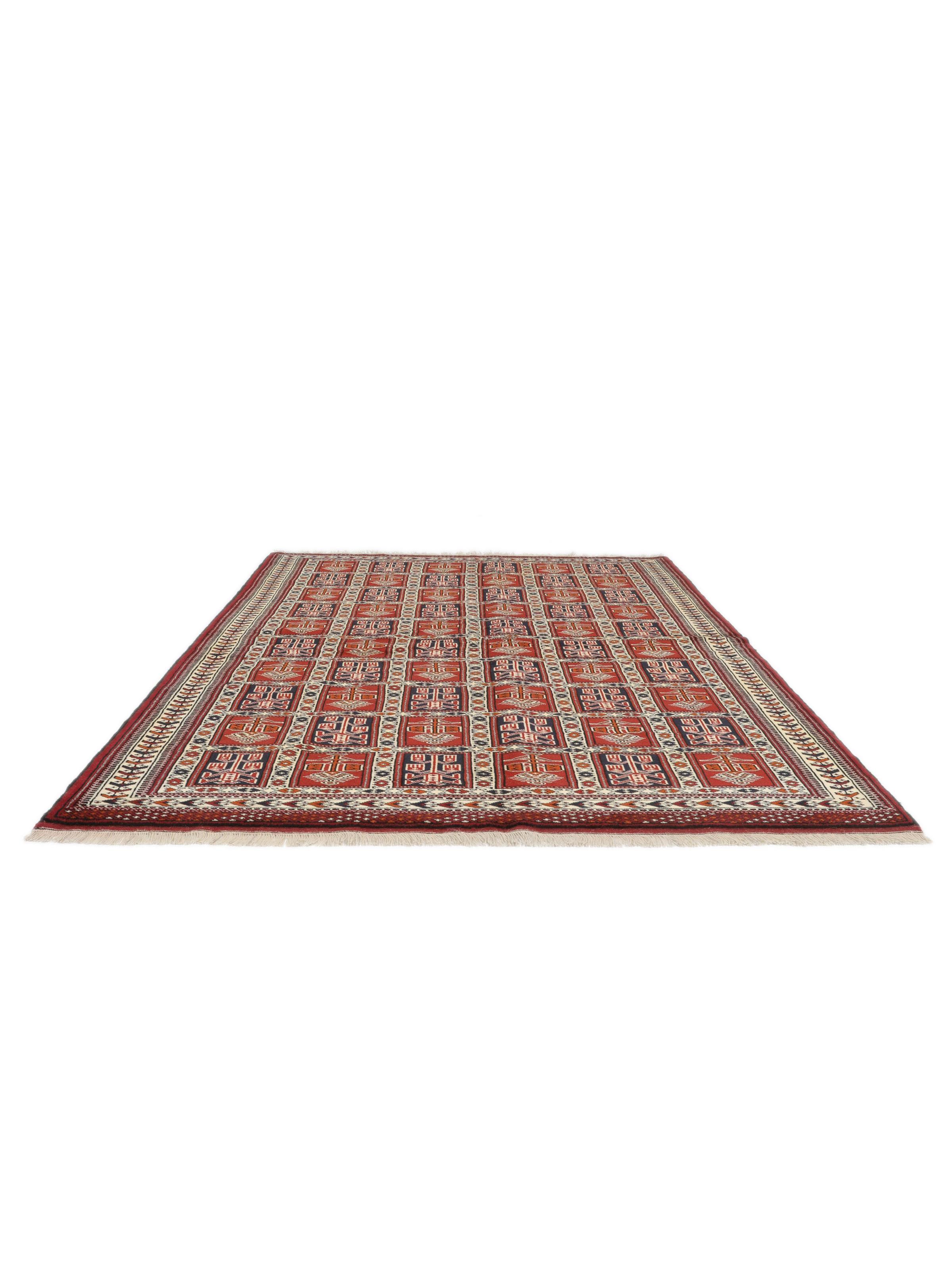
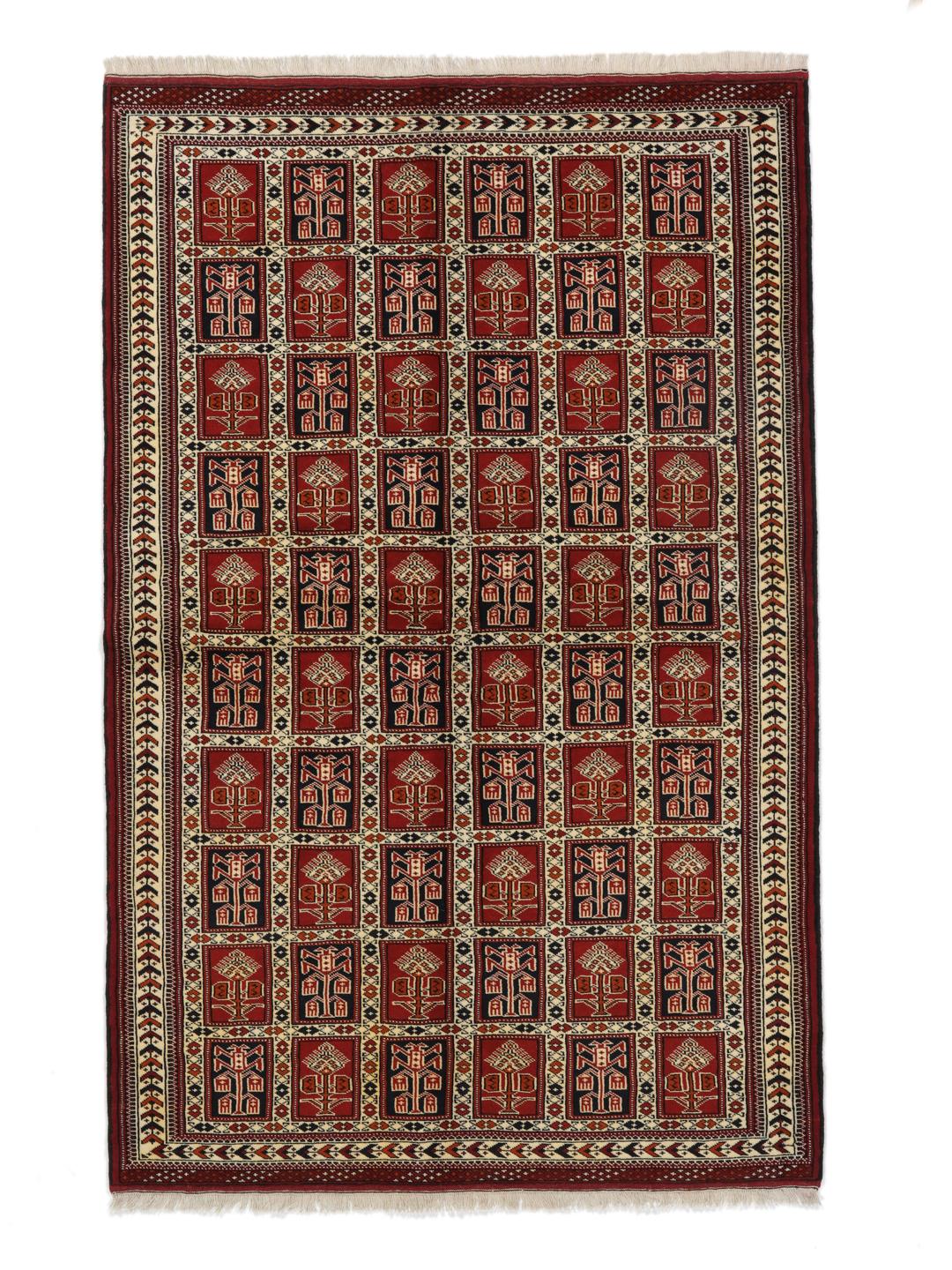
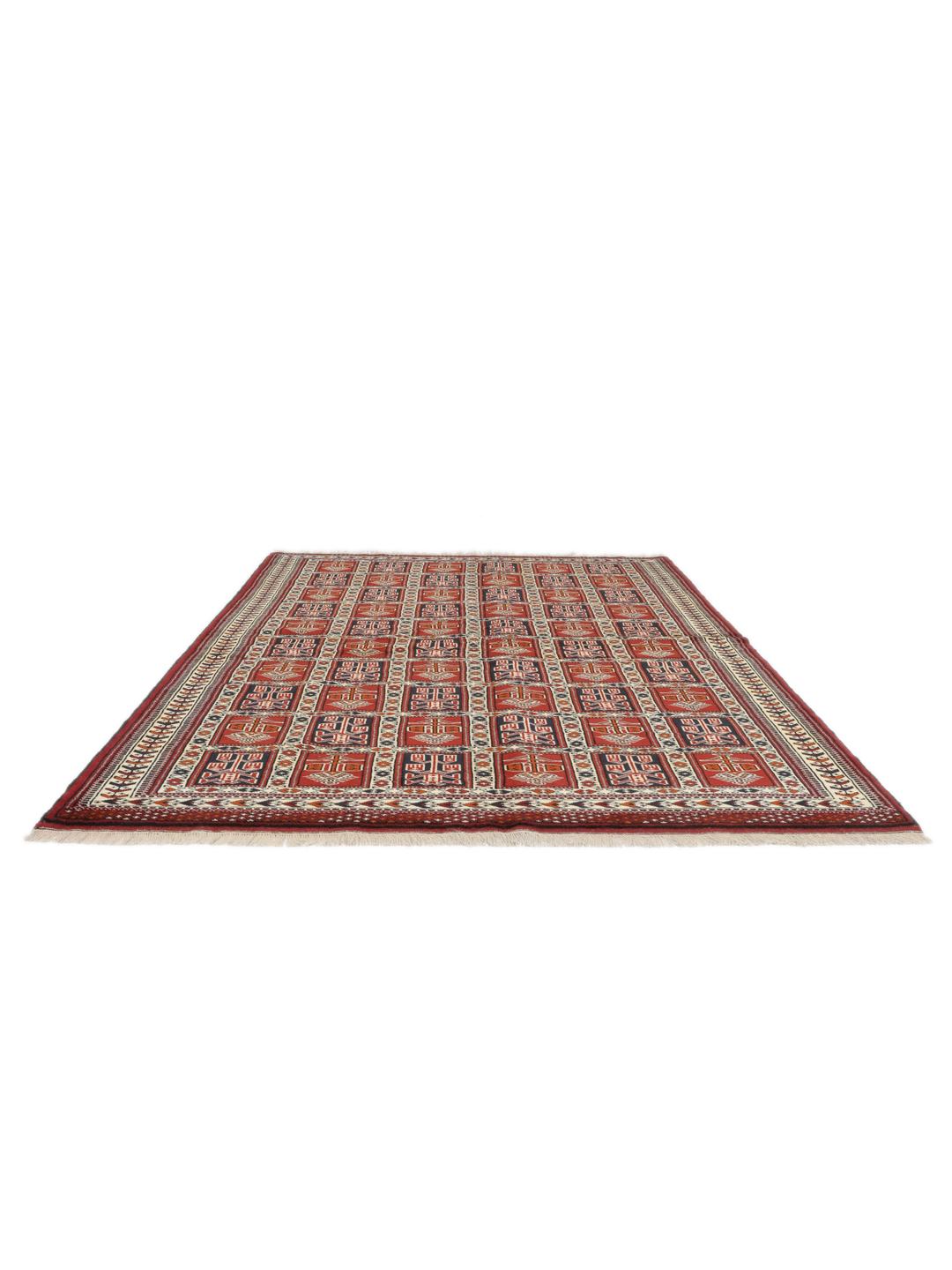
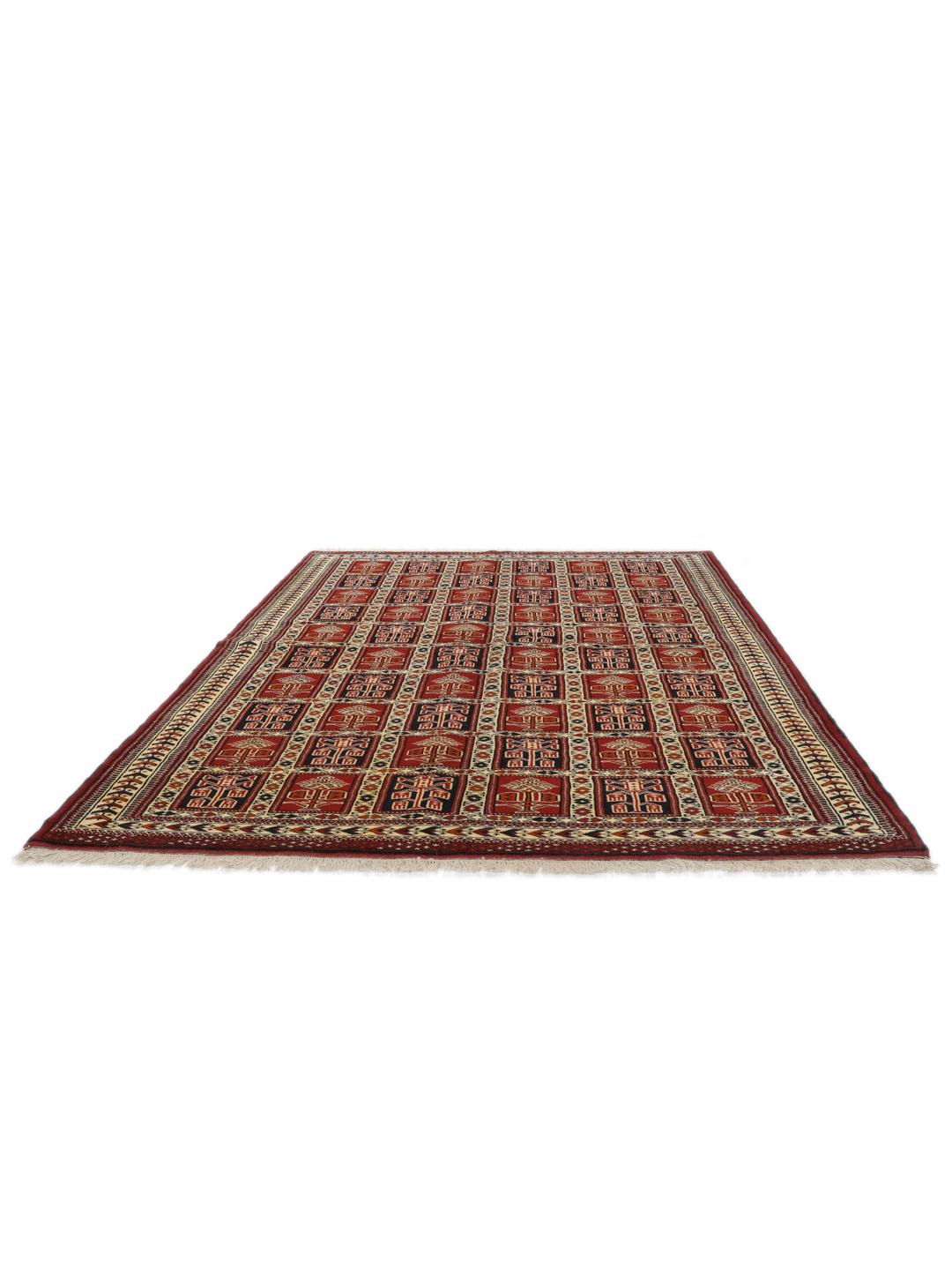
Turkaman rugs originate from the nomadic tribes of Central Asia, whose weaving traditions have evolved over centuries. While these designs are deeply rooted in the history of the Middle Eastern region, they have become globally recognised for their sophisticated geometric language and disciplined, harmonious colour palettes.
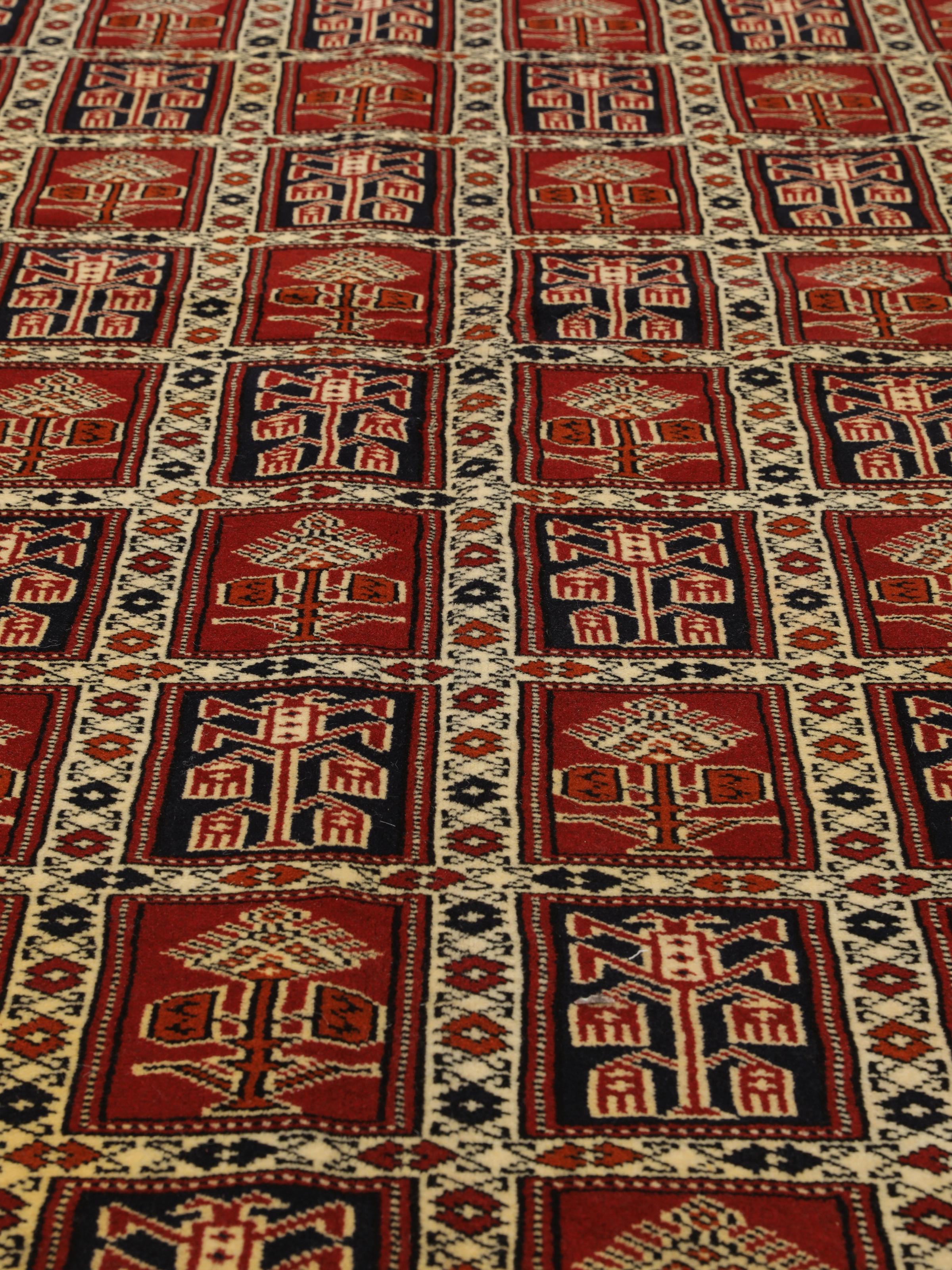
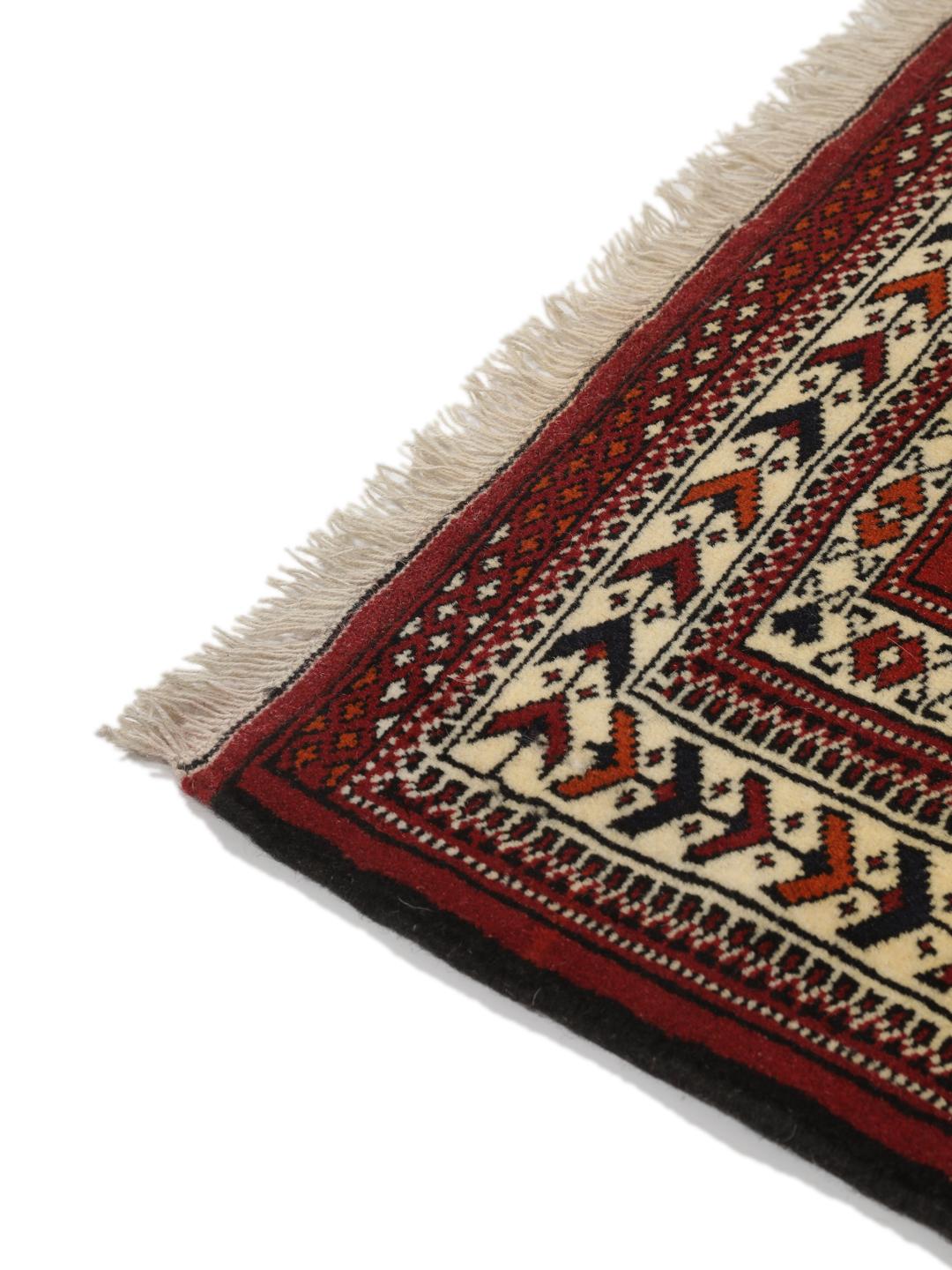
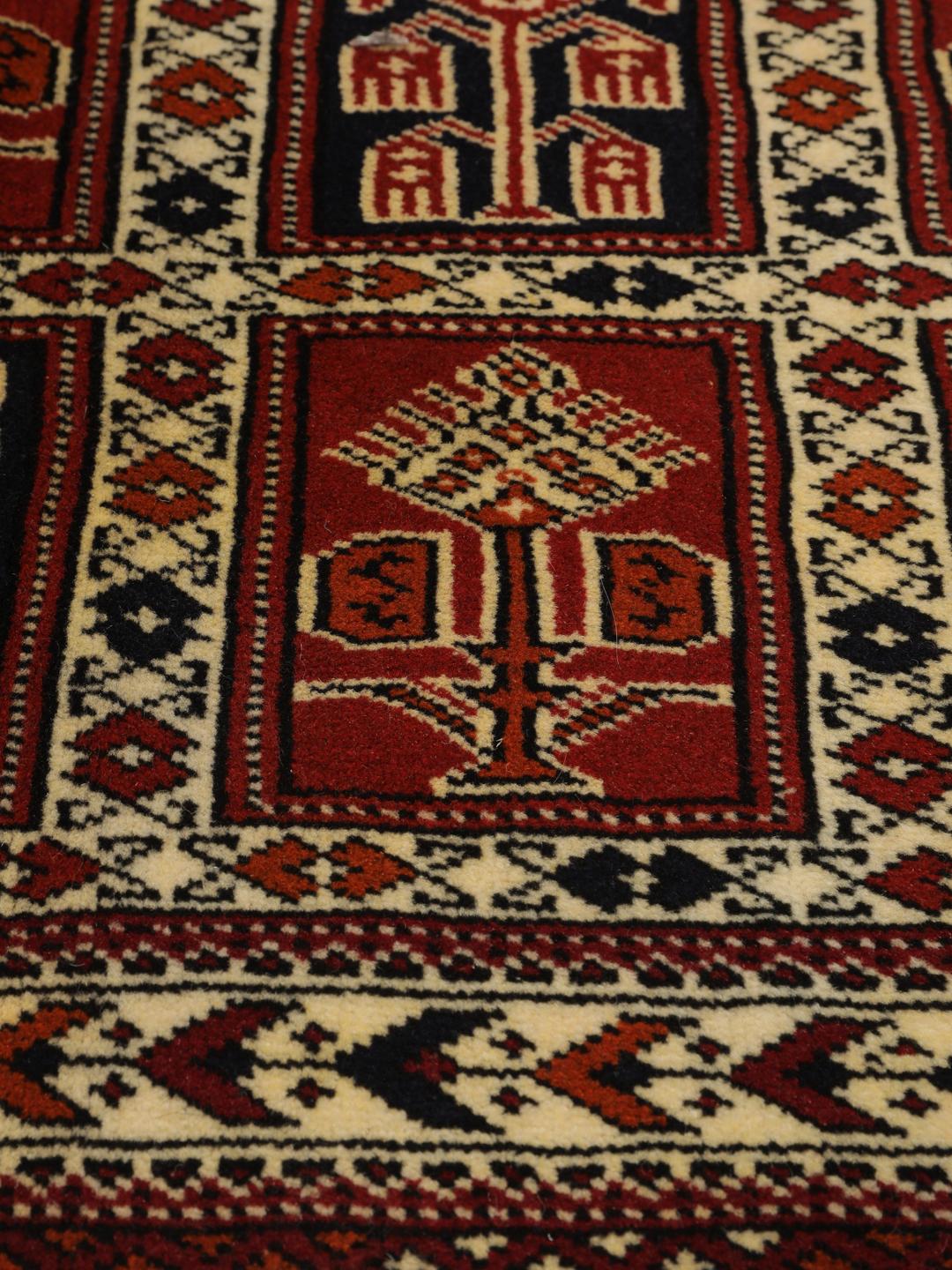
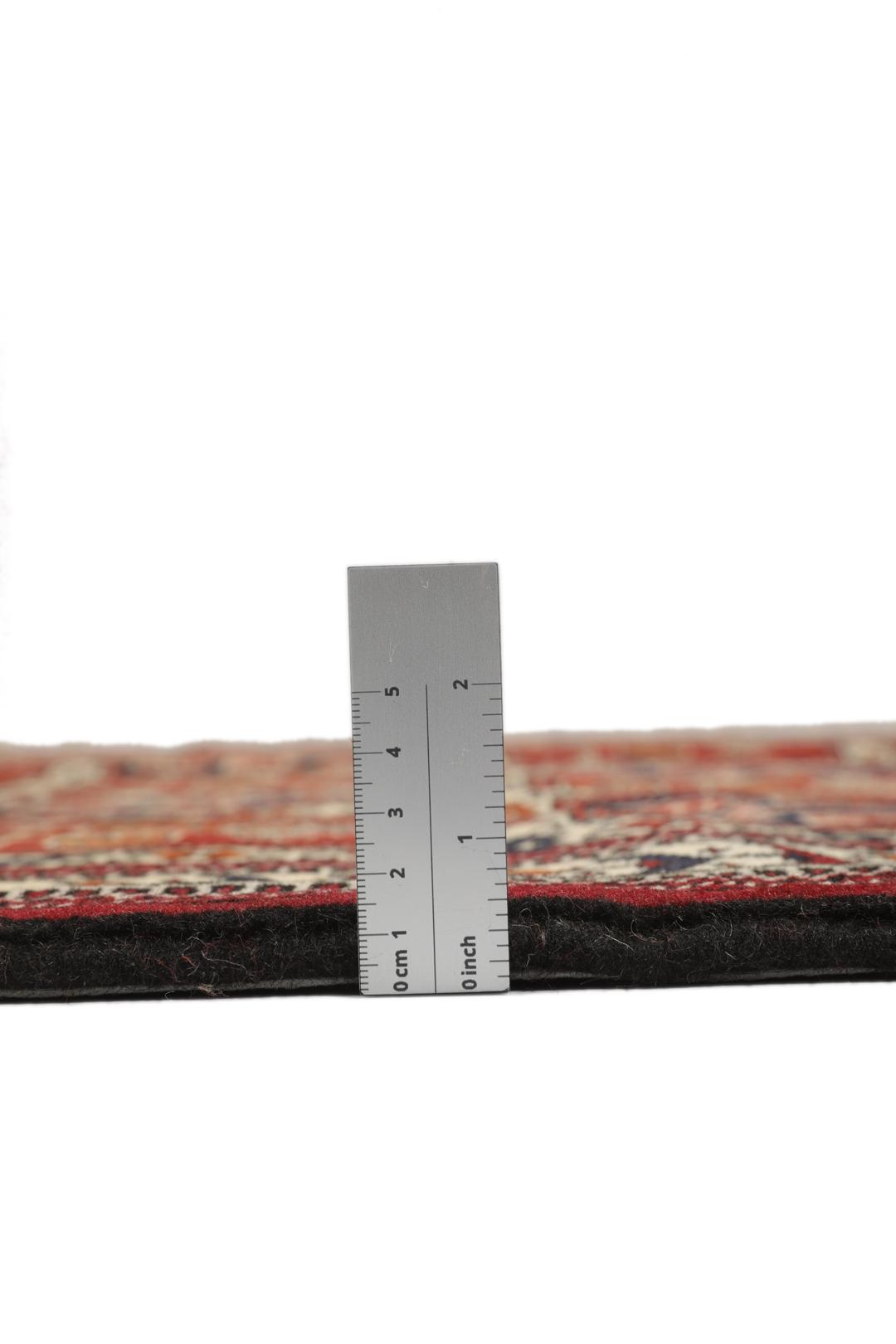
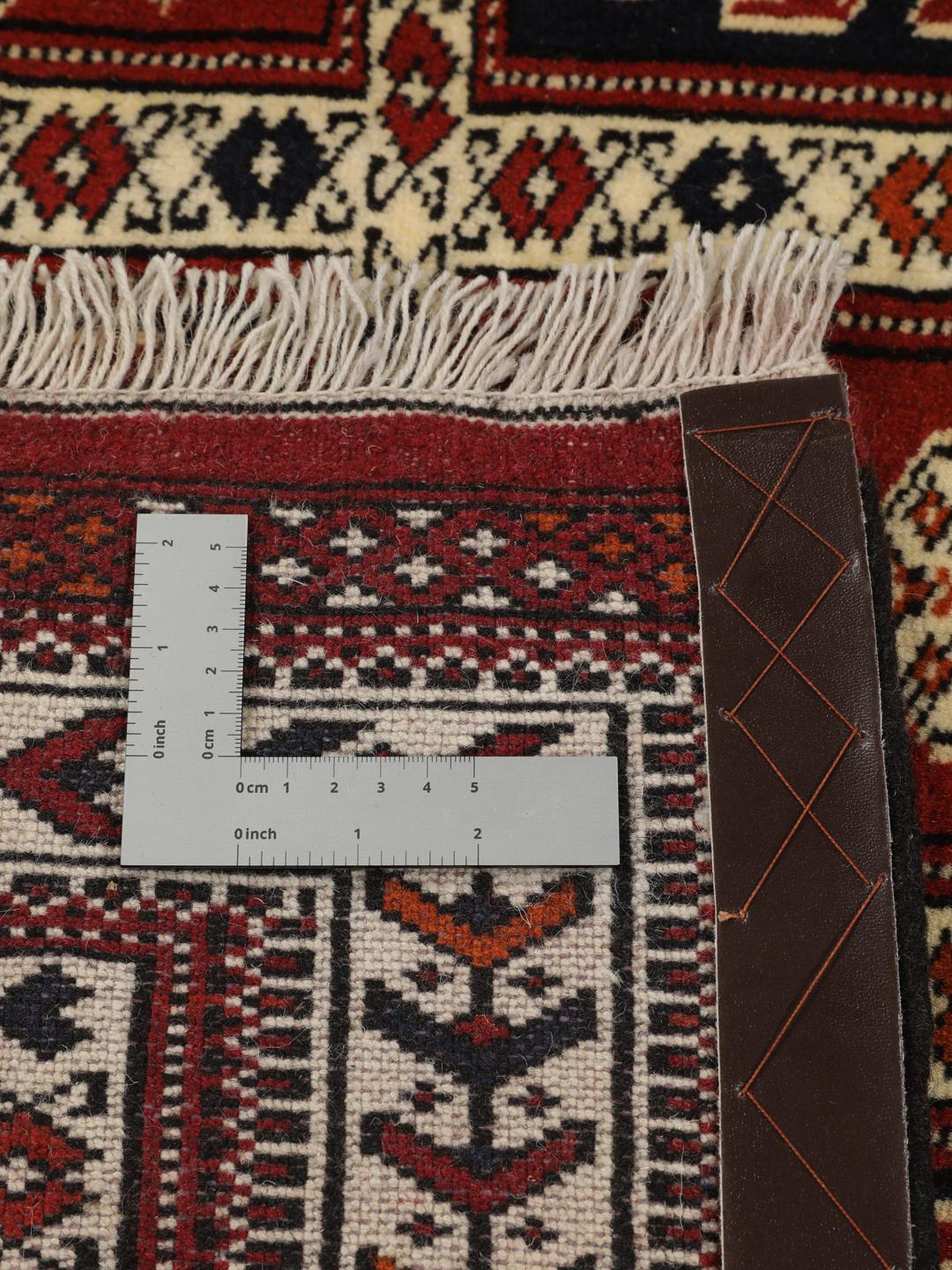
The term Turkaman refers to a style of weaving that emphasises precision and symmetry. These rugs are traditionally known for their dense, durable construction, which is achieved through specific knotting techniques. This density is essential for the longevity of the rug, as it protects the foundation and ensures that the intricate patterns remain sharp and clear throughout the life of the piece.
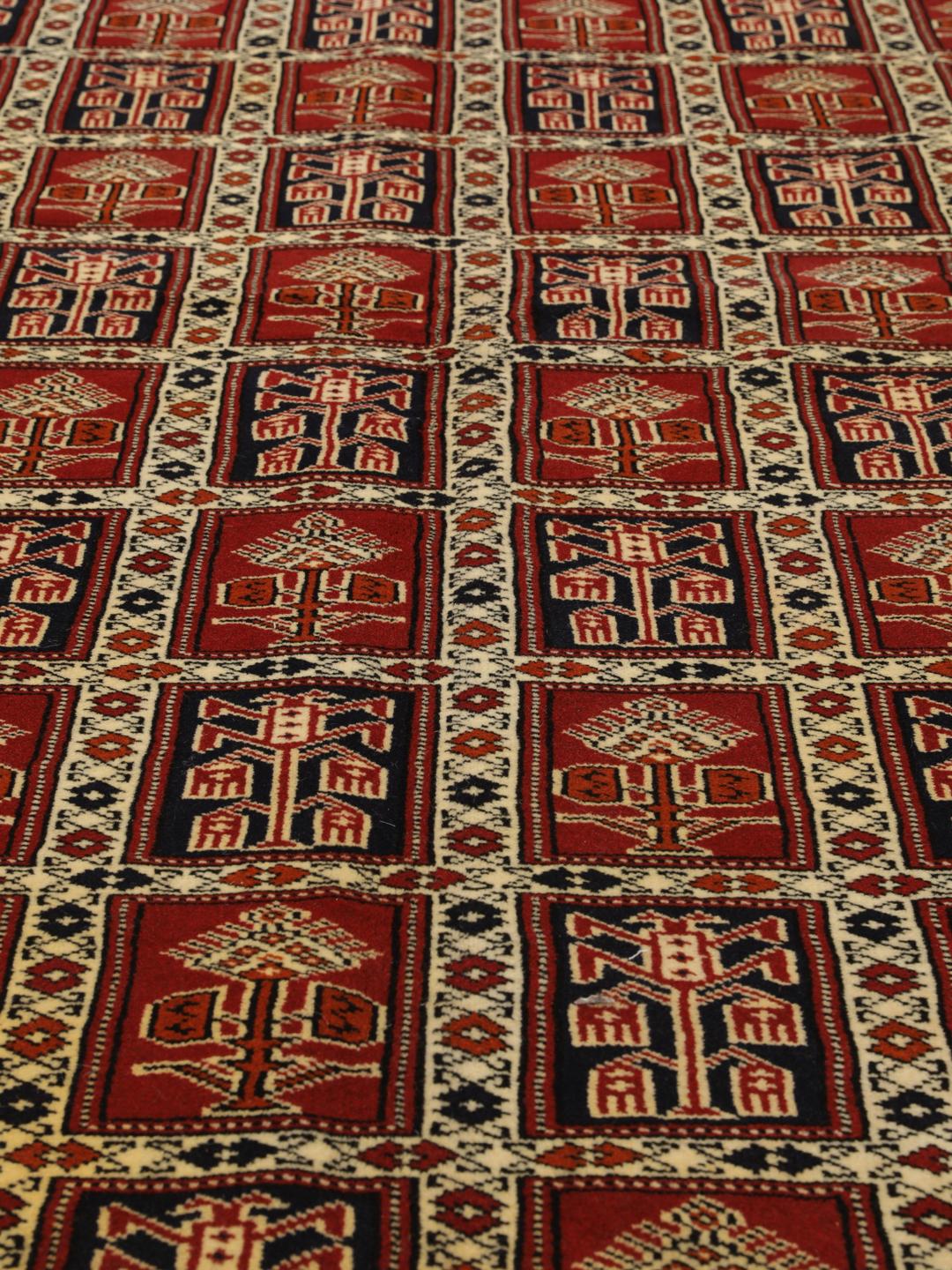
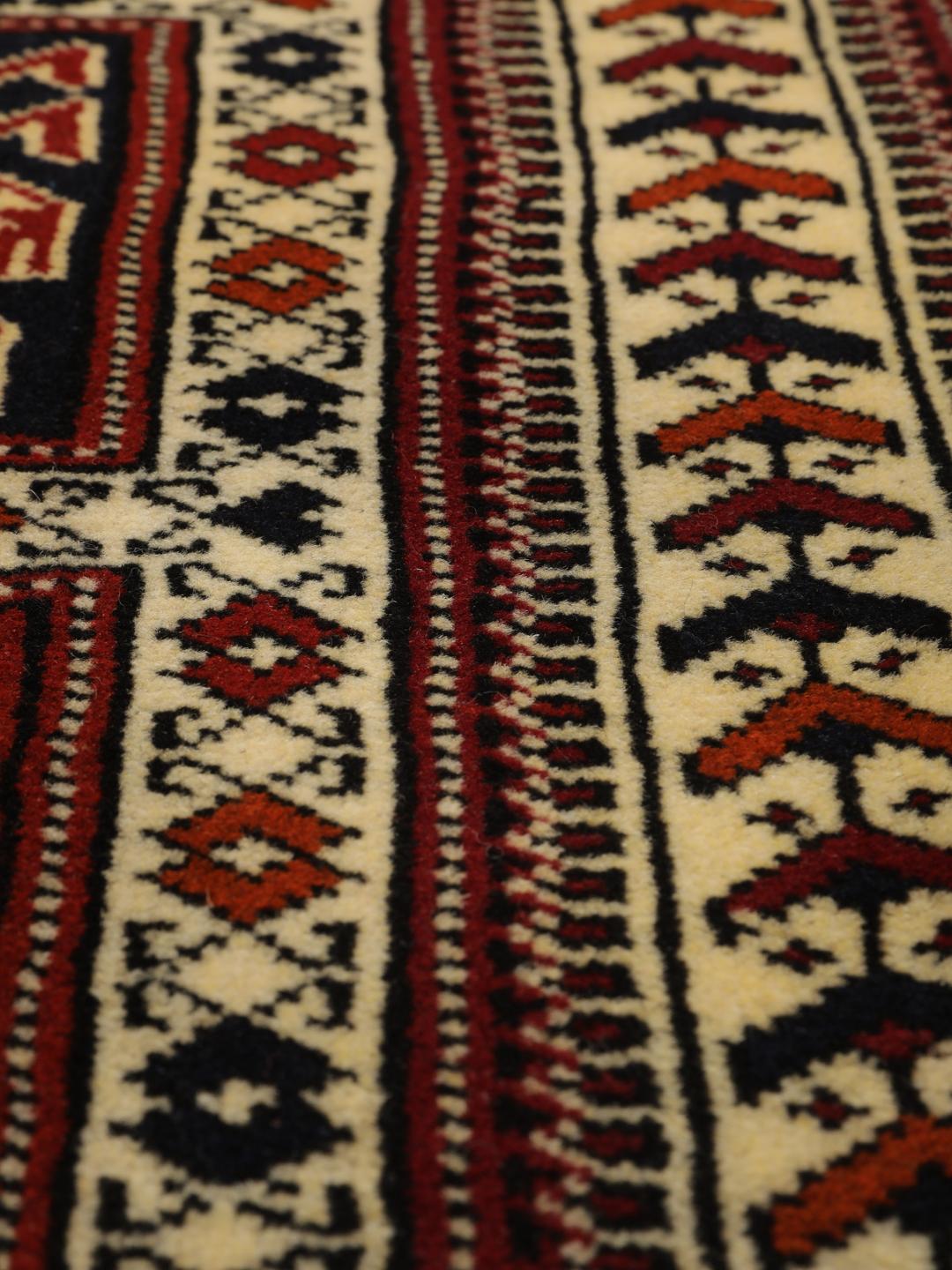
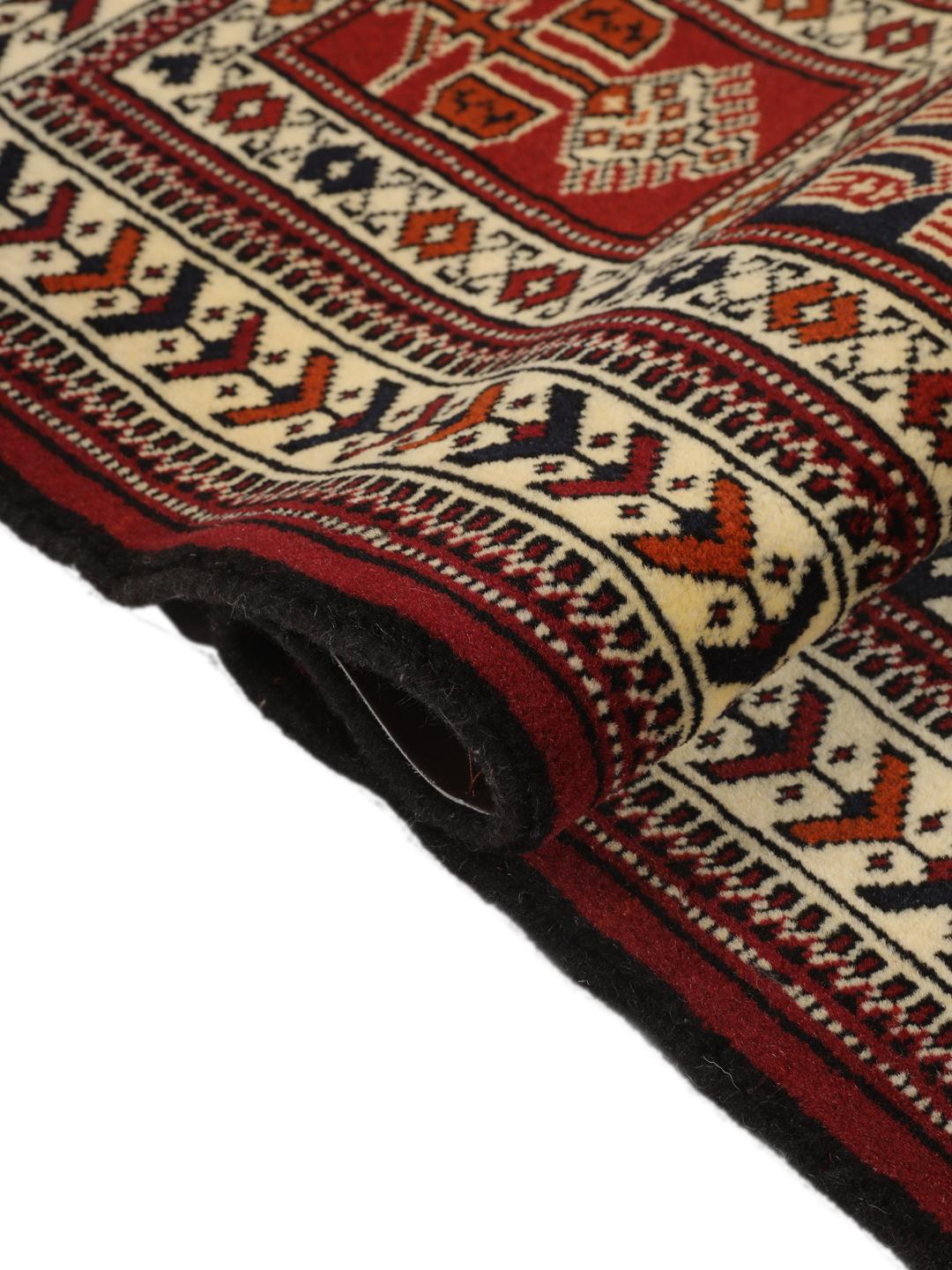
Visually, these rugs are defined by their repeating gul motifs, which are stylised floral or geometric medallions often arranged in rows. The borders are typically filled with complex, rhythmic patterns that frame the field perfectly. In this particular piece, the choice of a deep, rich red field provides a classic backdrop that highlights the secondary colours used in the motifs, creating a balanced and orderly aesthetic.
Owning a Turkaman rug is an opportunity to connect with a long-standing tradition of craftsmanship. These rugs are highly valued by collectors not only for their beauty but also for the skill required to produce them. By bringing this rug into your home, you are preserving a piece of cultural heritage and enjoying the lasting quality that only traditional hand-knotting can provide.