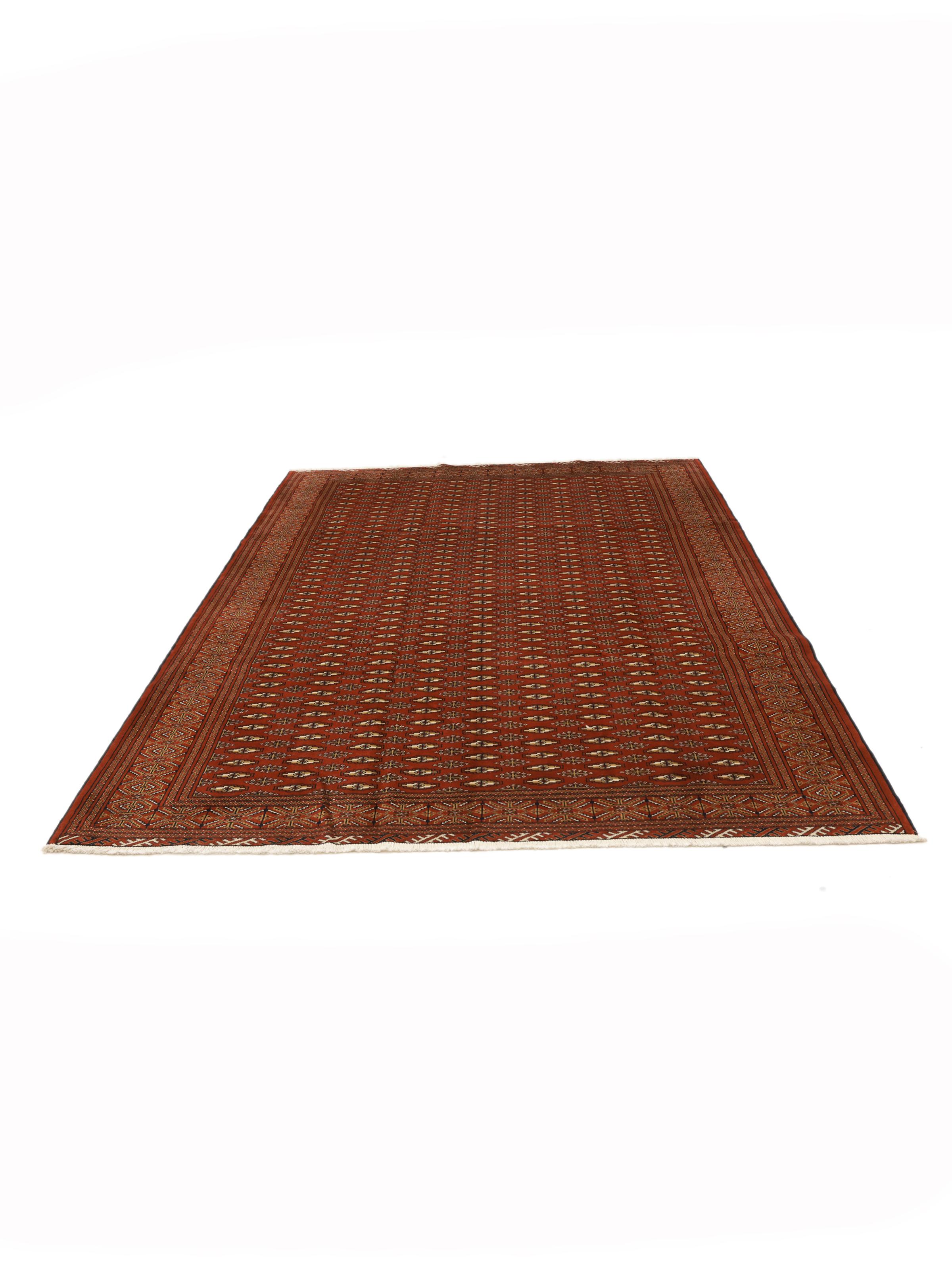
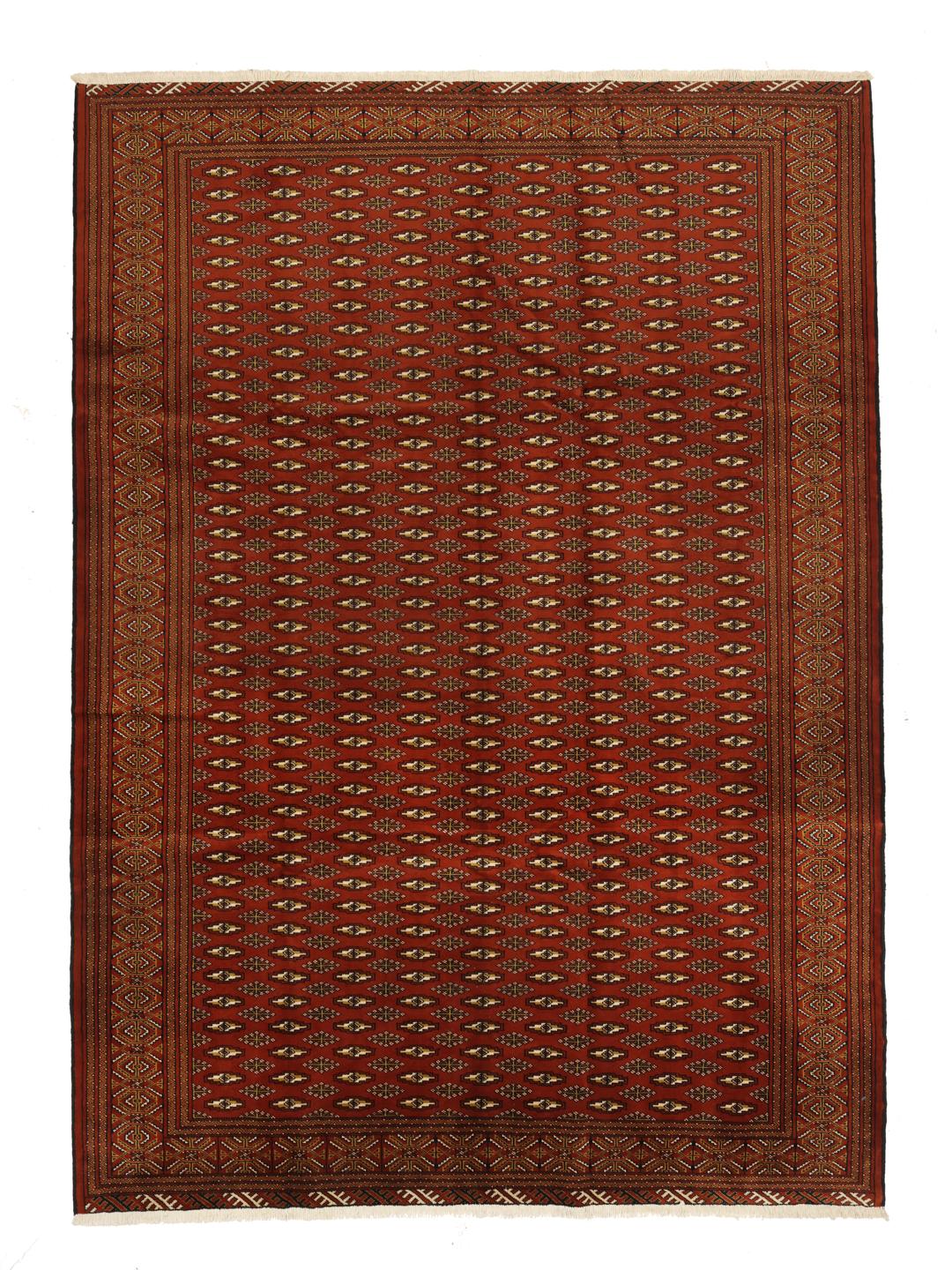
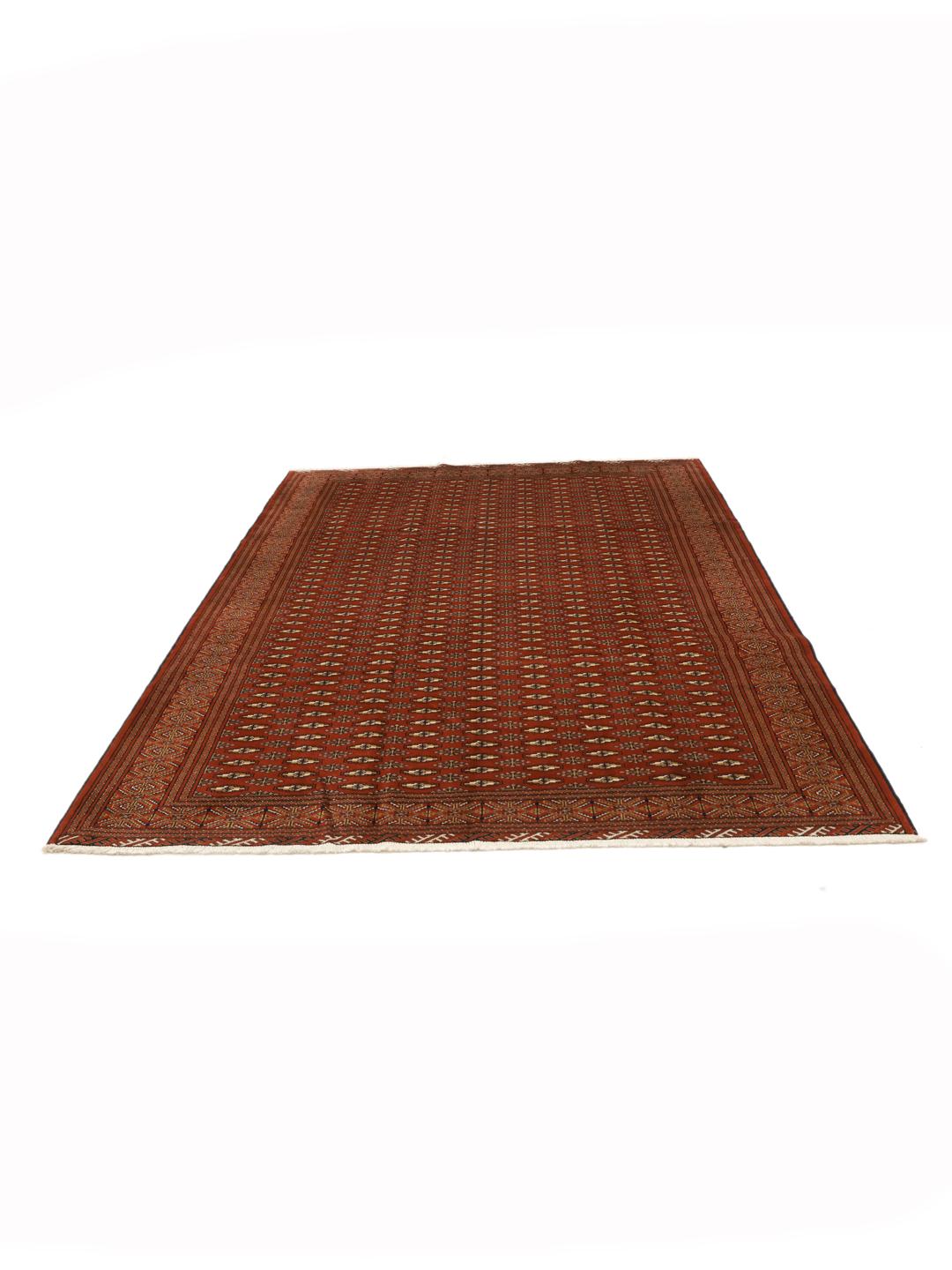
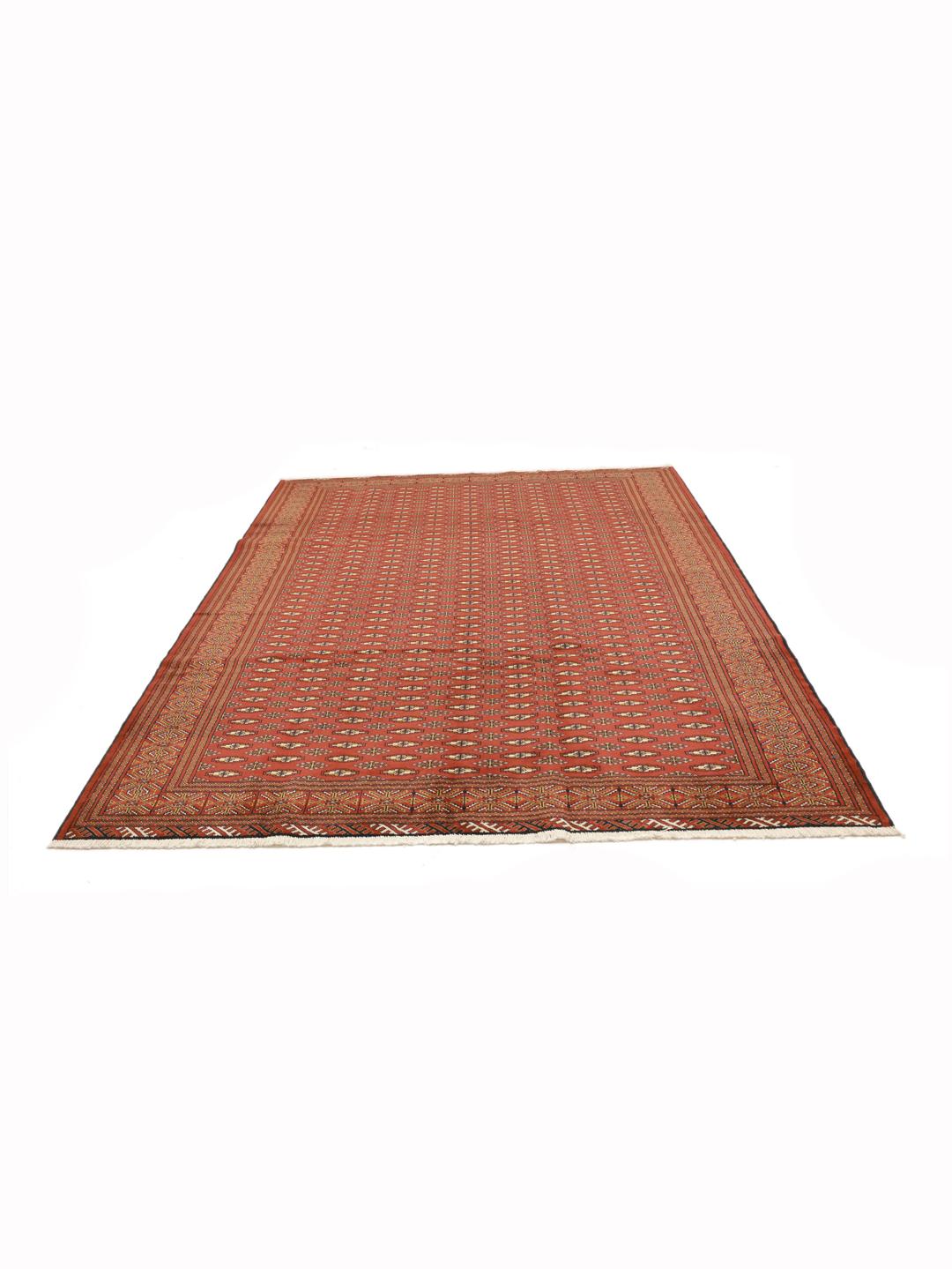
Turkaman rugs originate from the nomadic tribes of Central Asia and the Middle East, representing a lineage of weaving that spans centuries. Traditionally, these rugs were essential to nomadic life, used as floor coverings, tent decorations, and transport bags, which necessitated a construction focused on both beauty and extreme durability.
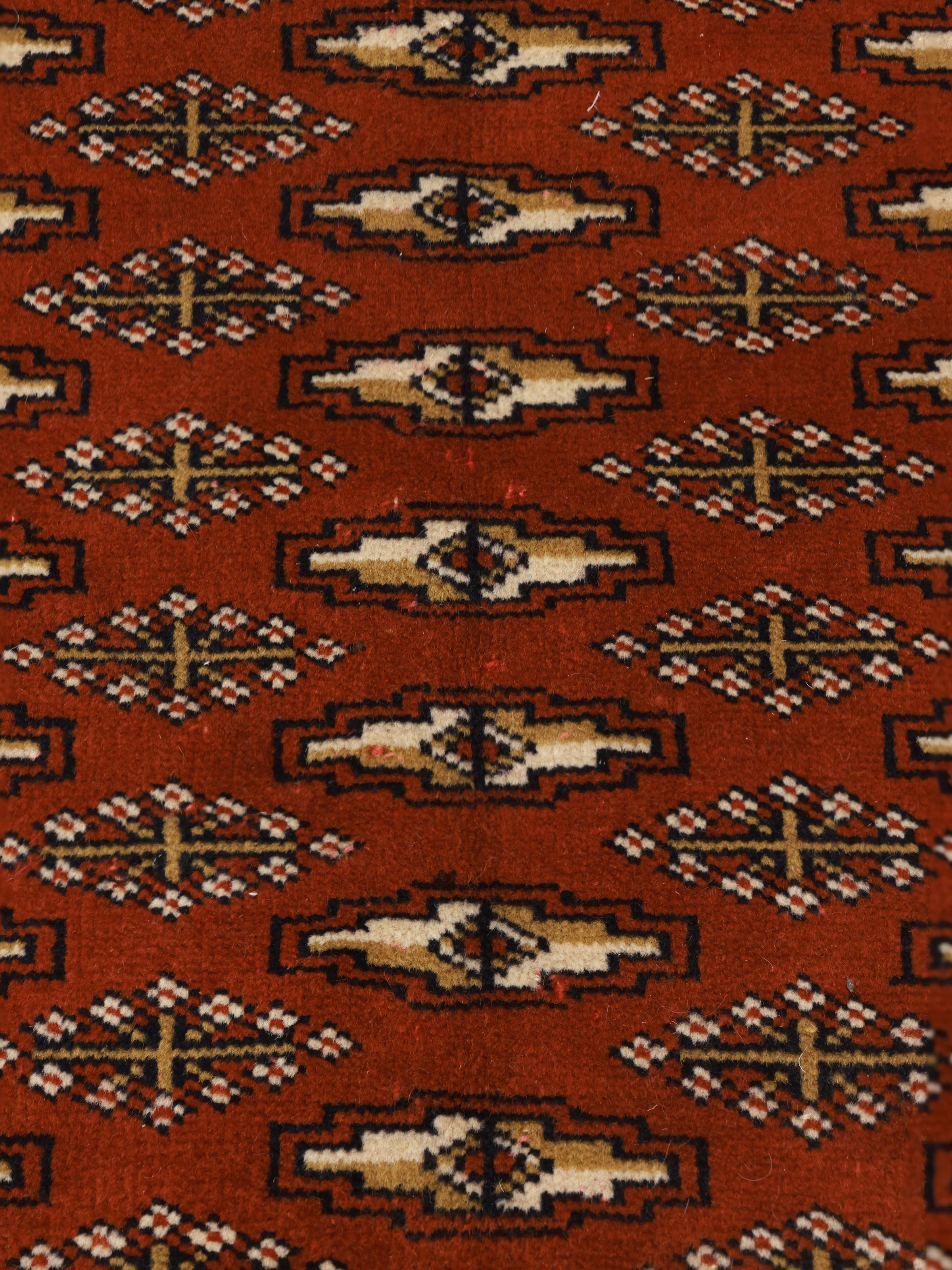
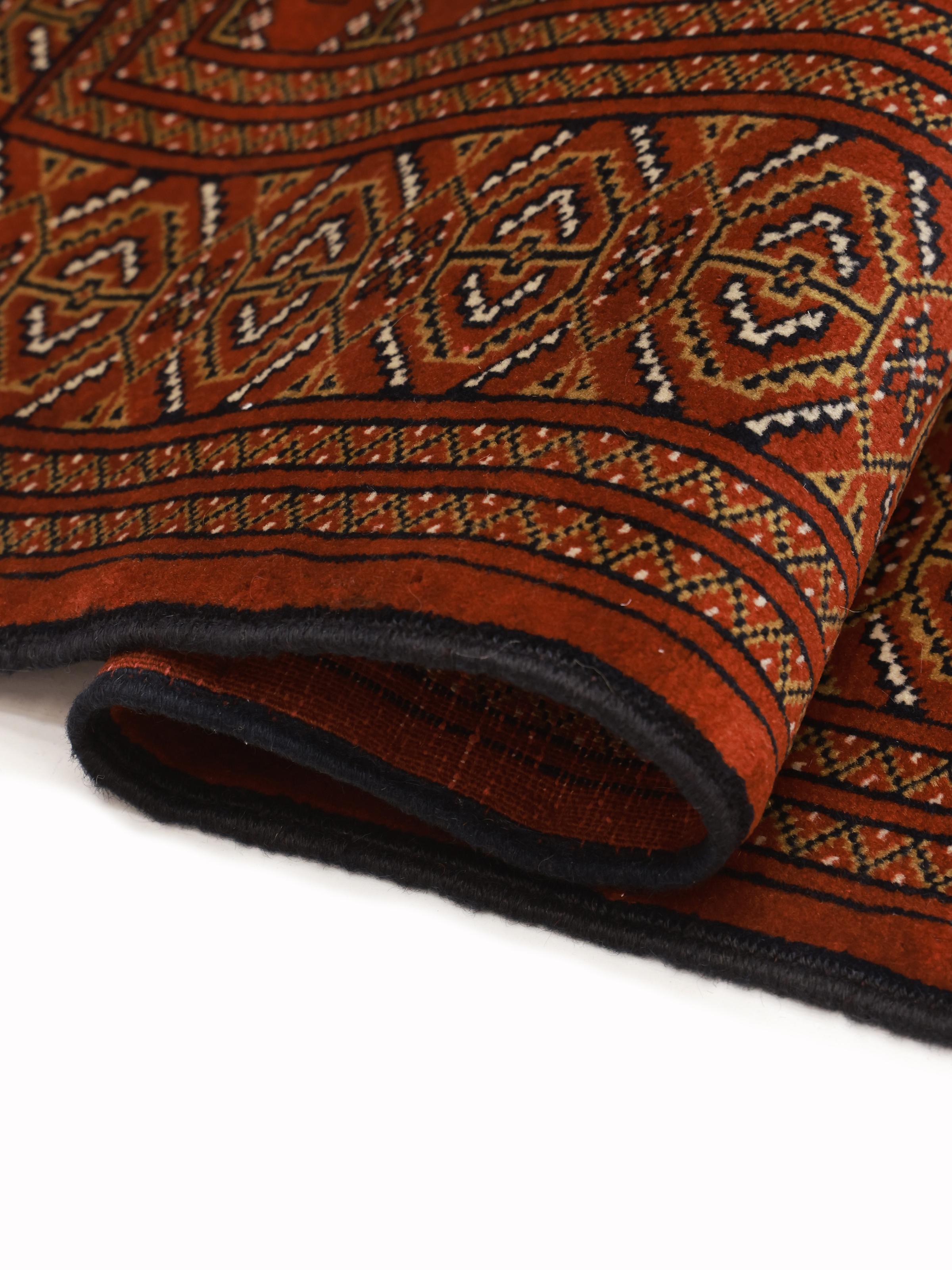
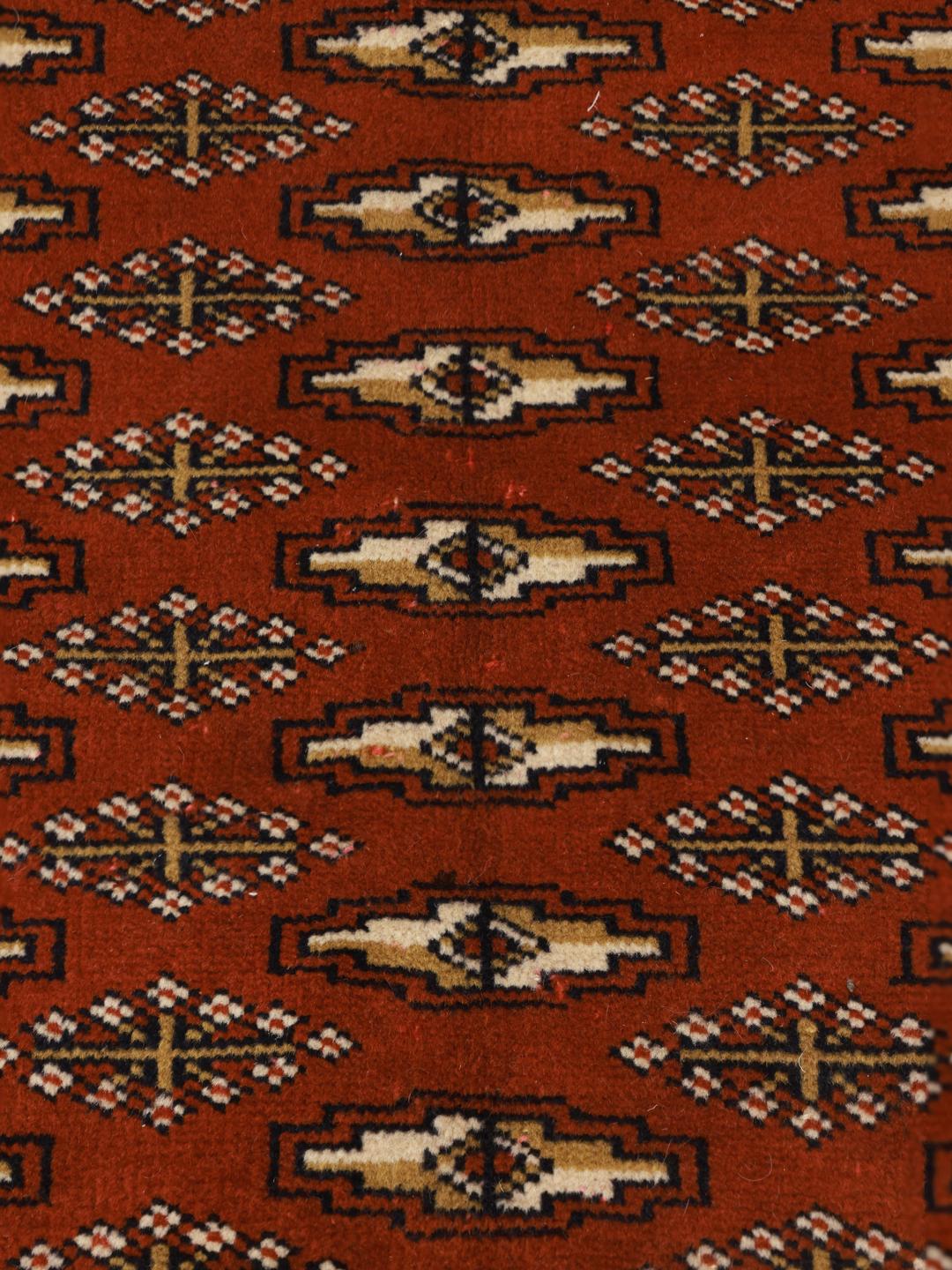
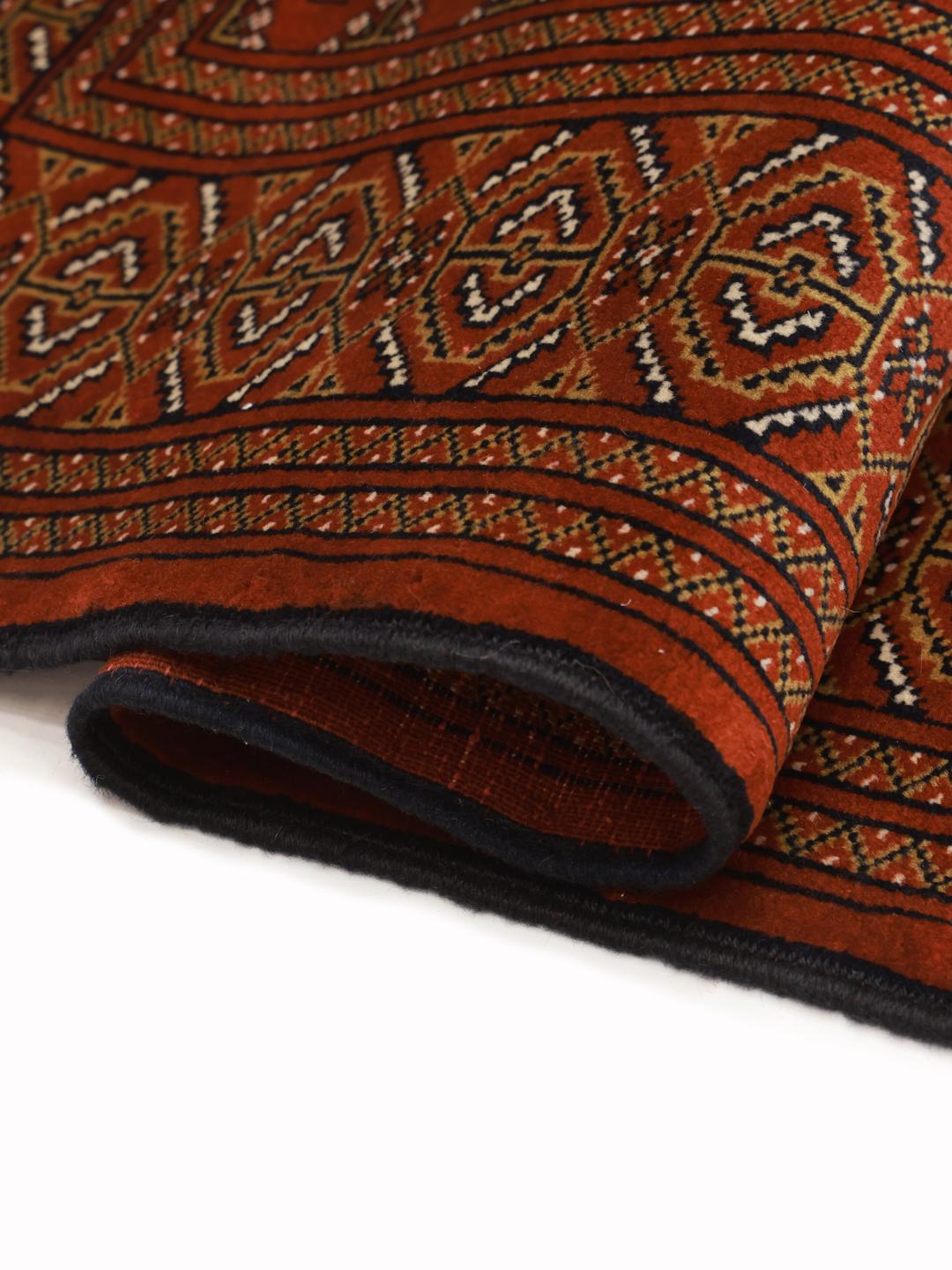
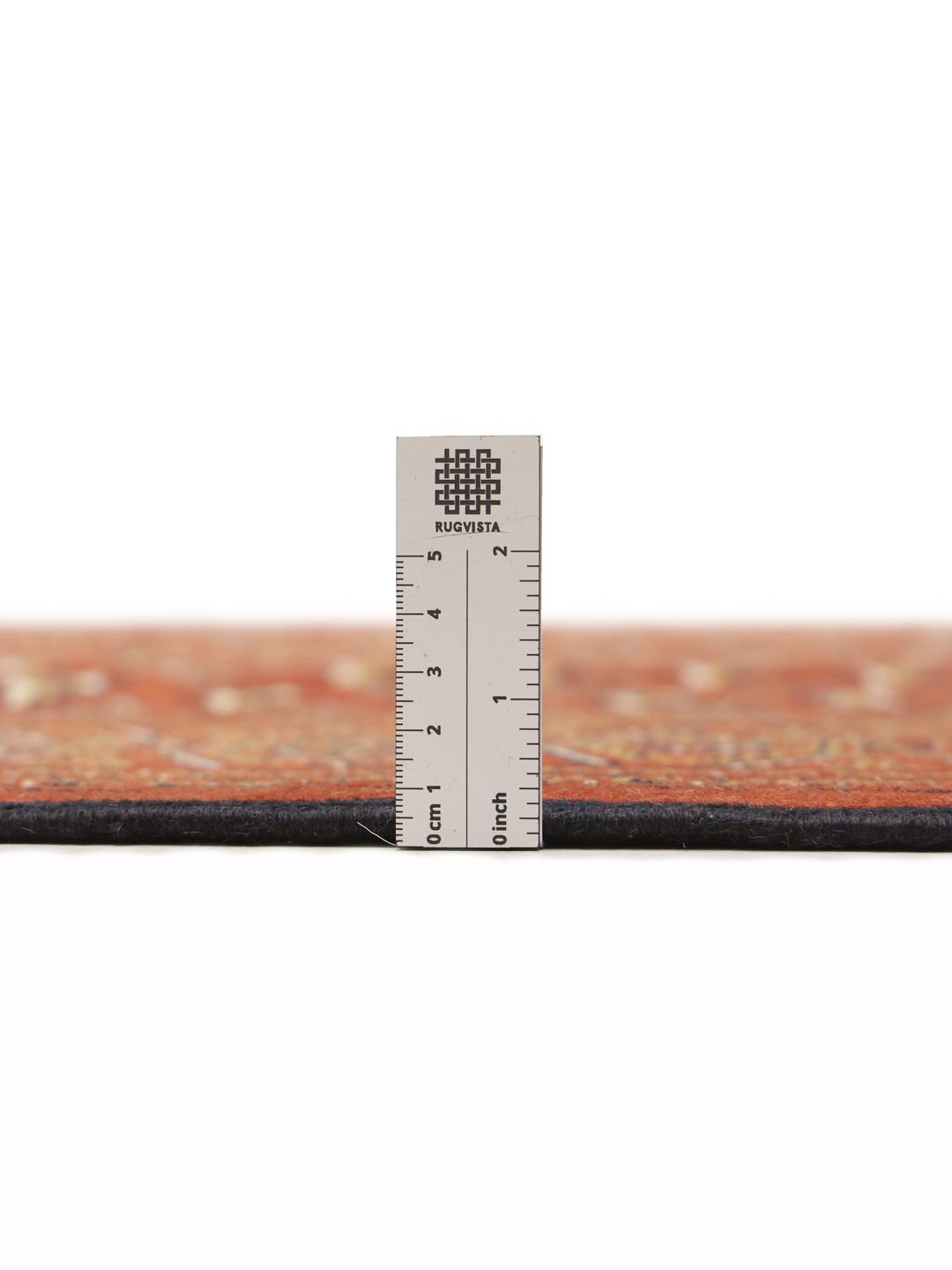
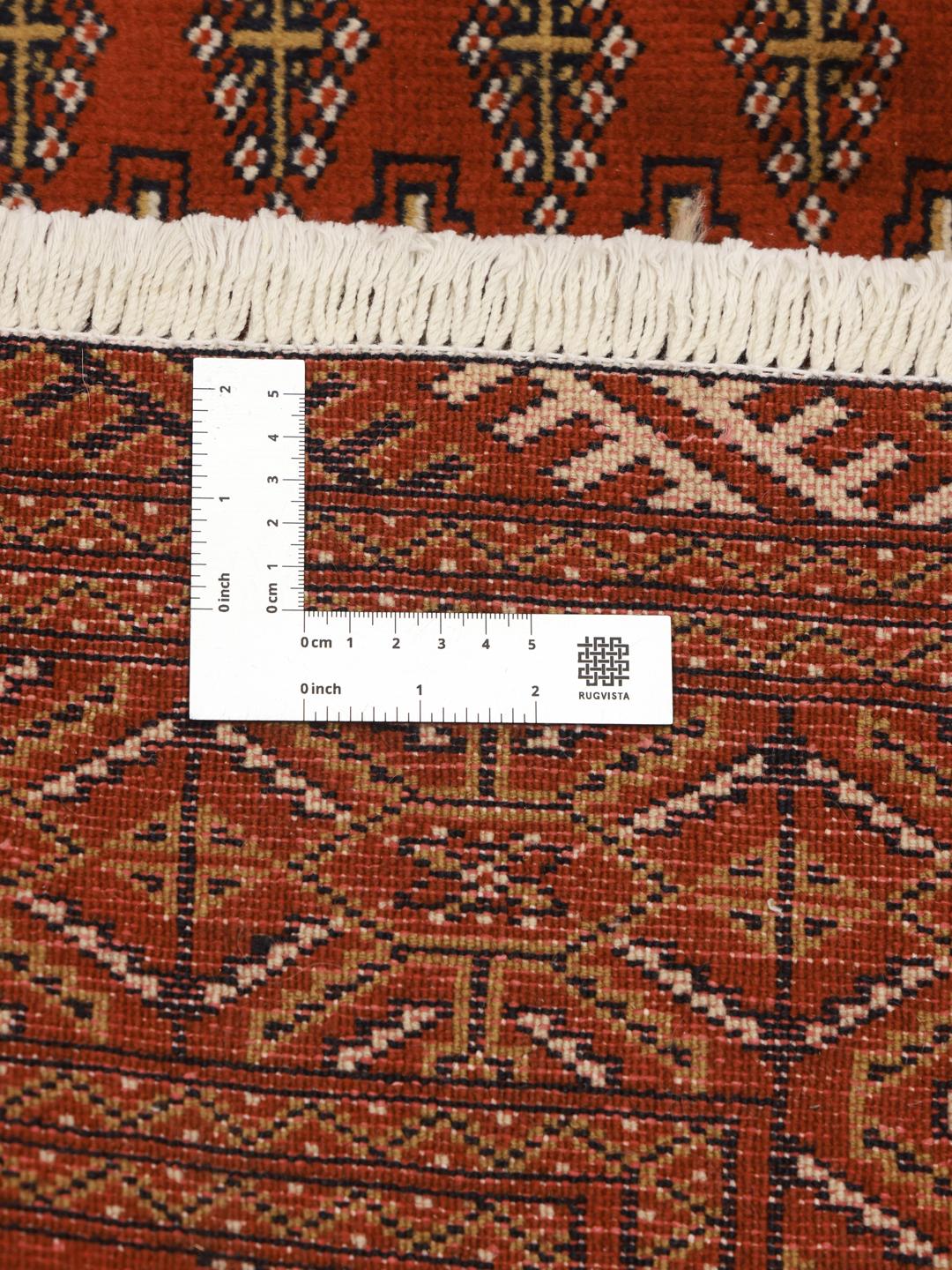
The distinctive character of these rugs lies in their technical execution. Hand-knotted construction allows for a dense, resilient pile that handles high-traffic areas with ease. This method creates a firm foundation that keeps the rug lying flat and ensures the intricate patterns remain sharp and clear even after years of use.
Visually, these rugs are defined by their iconic repeating motifs, often referred to as guls. These medallions, arranged in orderly rows, are typically enclosed by complex, geometric borders that frame the field. The use of deep, earthy reds is a signature element of the style, creating a warm, grounded aesthetic that has remained popular for generations.
Collectors value Turkaman rugs for their cultural heritage and the sheer human effort required to produce them. Owning one is not merely about decorating a floor, but about preserving a piece of craft history. Each piece is a testament to the weaver's skill, offering a timeless quality that brings a sense of authenticity and depth to any interior.