Turkaman rugs originate from the nomadic tribes of Central Asia, a region with a deep-rooted history of textile artistry. Over centuries, these traditions migrated and evolved, eventually finding a strong foothold in the Middle East, where local weavers adapted the techniques to create the sophisticated rugs known today. The Turkaman style is celebrated for its disciplined approach to design and its focus on creating functional items that could withstand the demands of nomadic life.
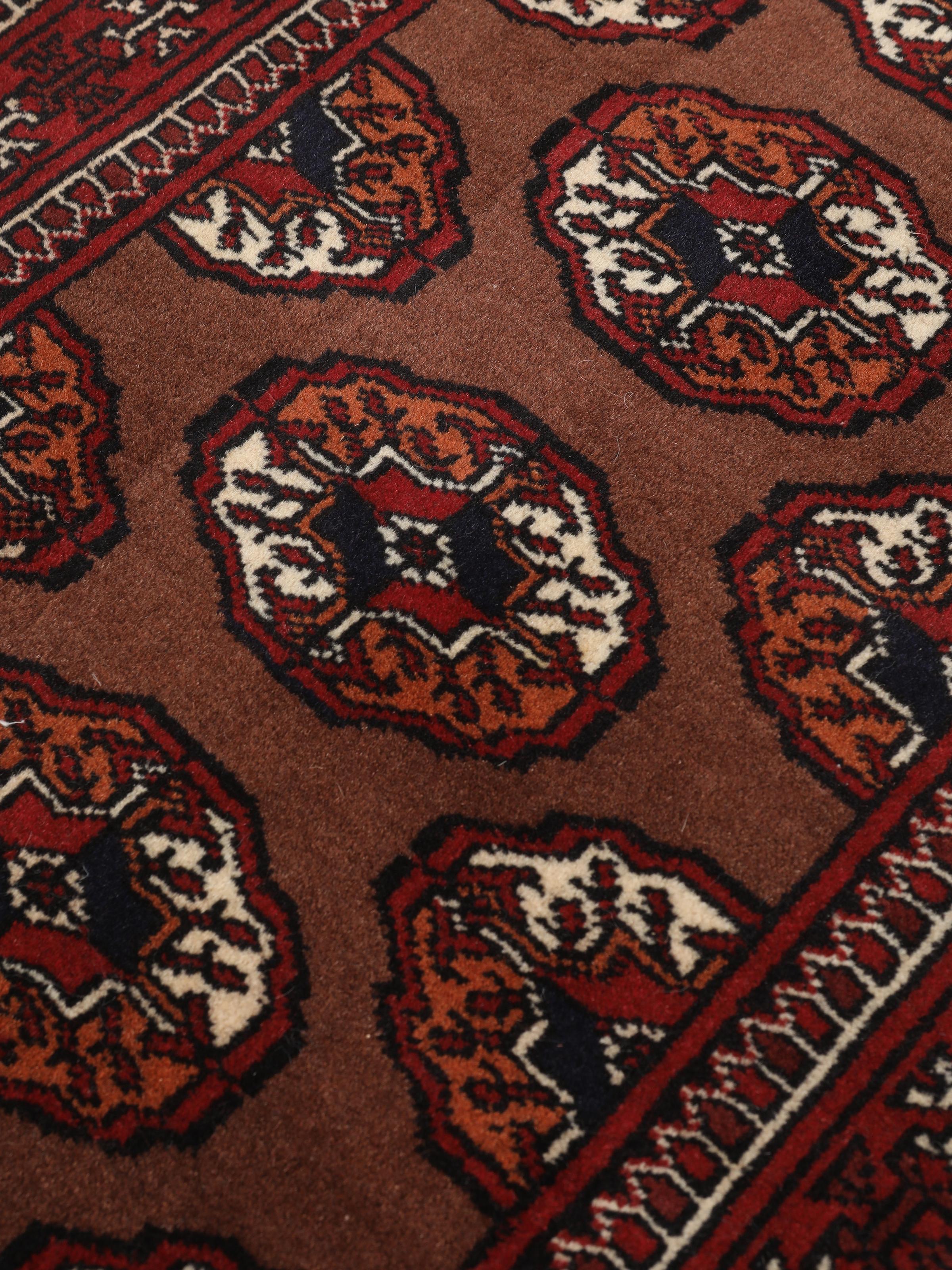
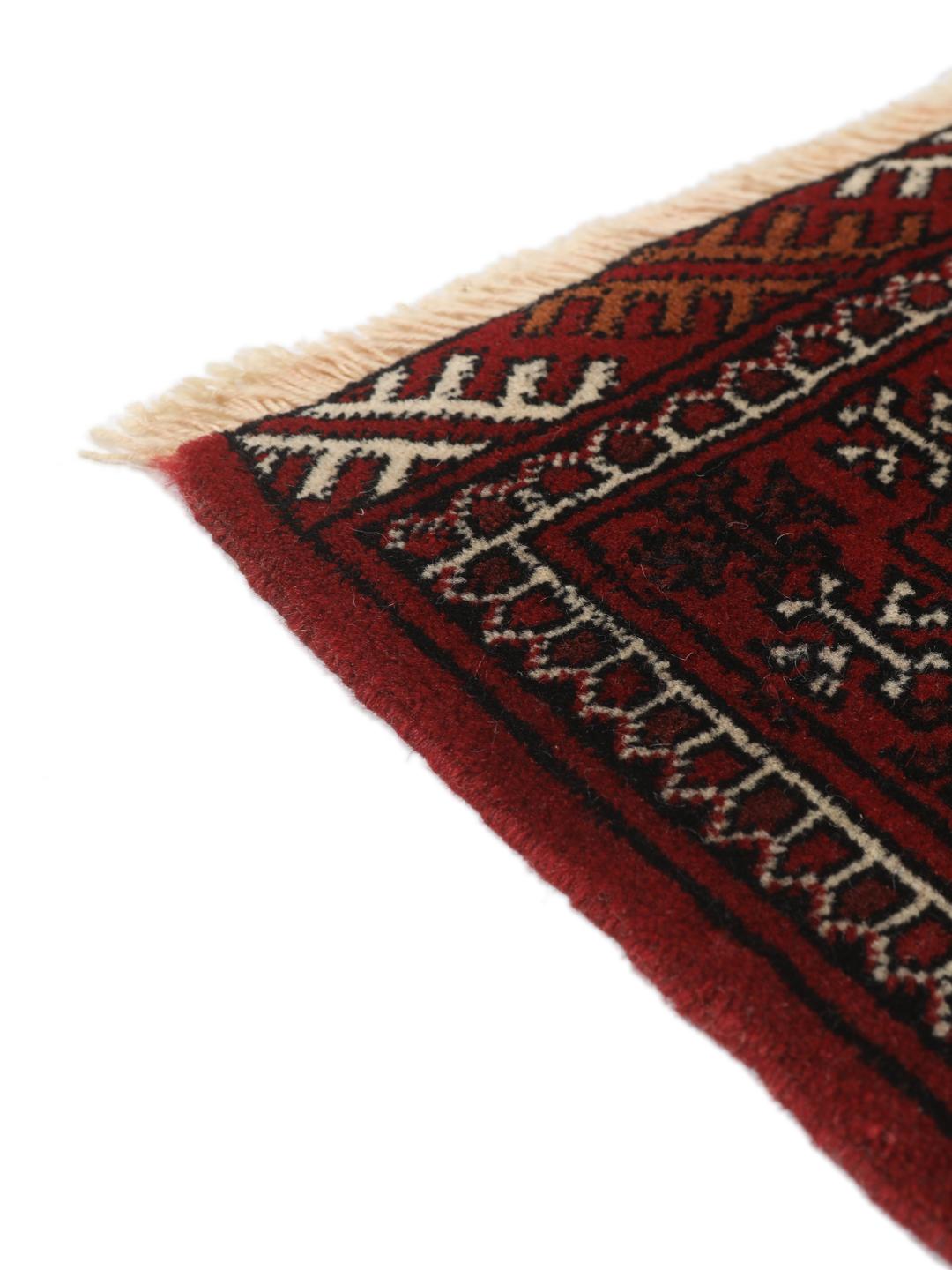
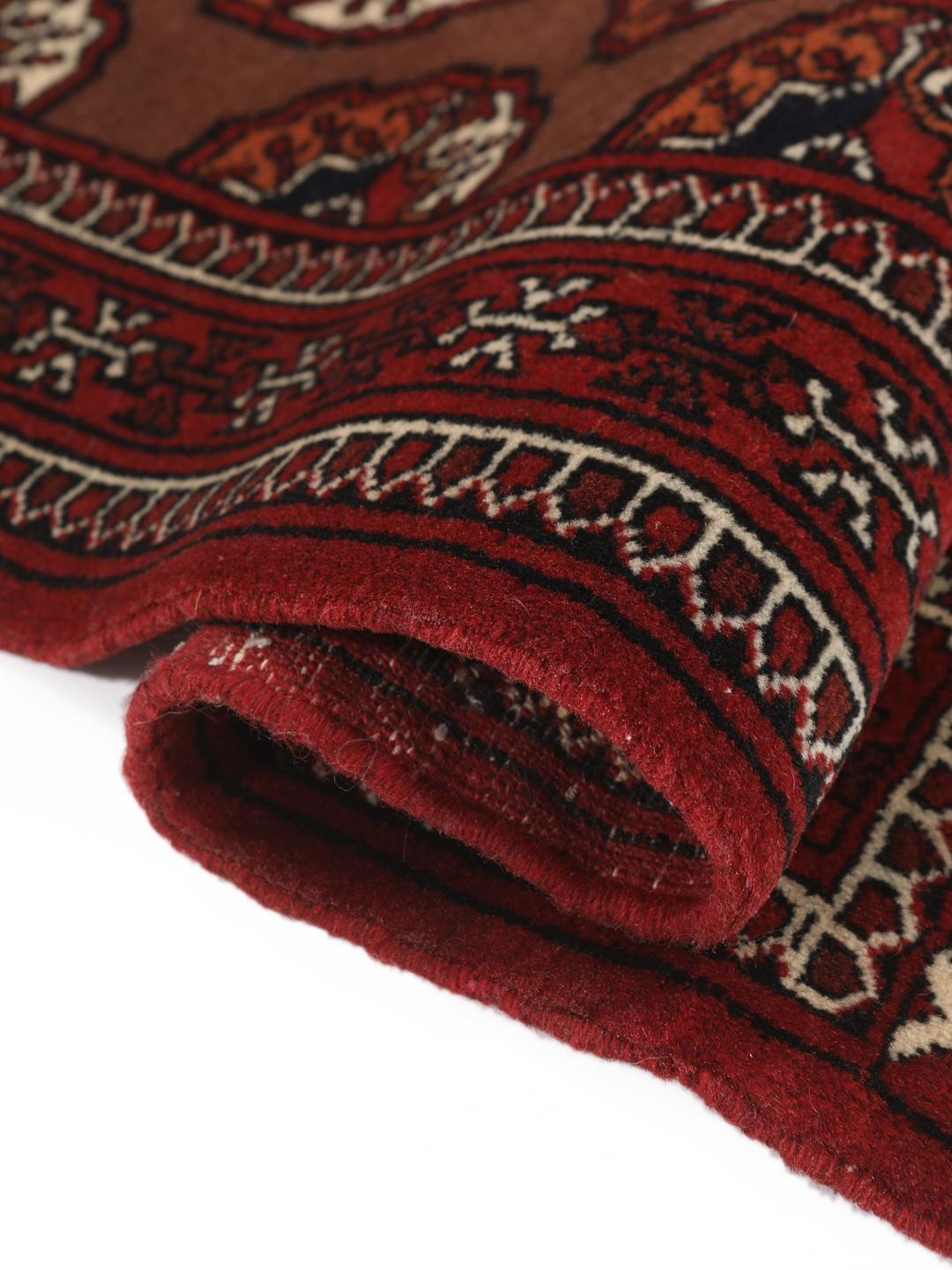
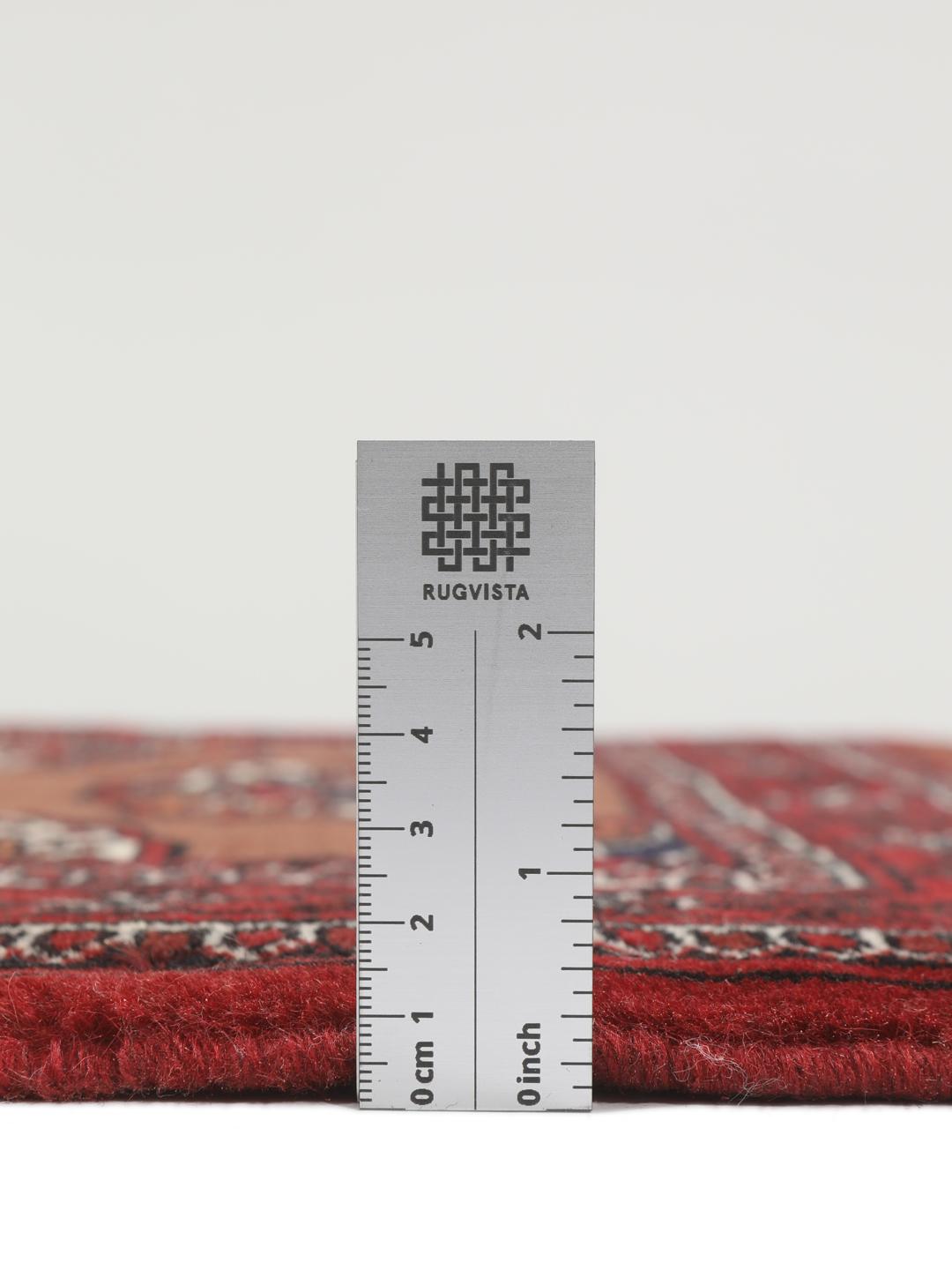
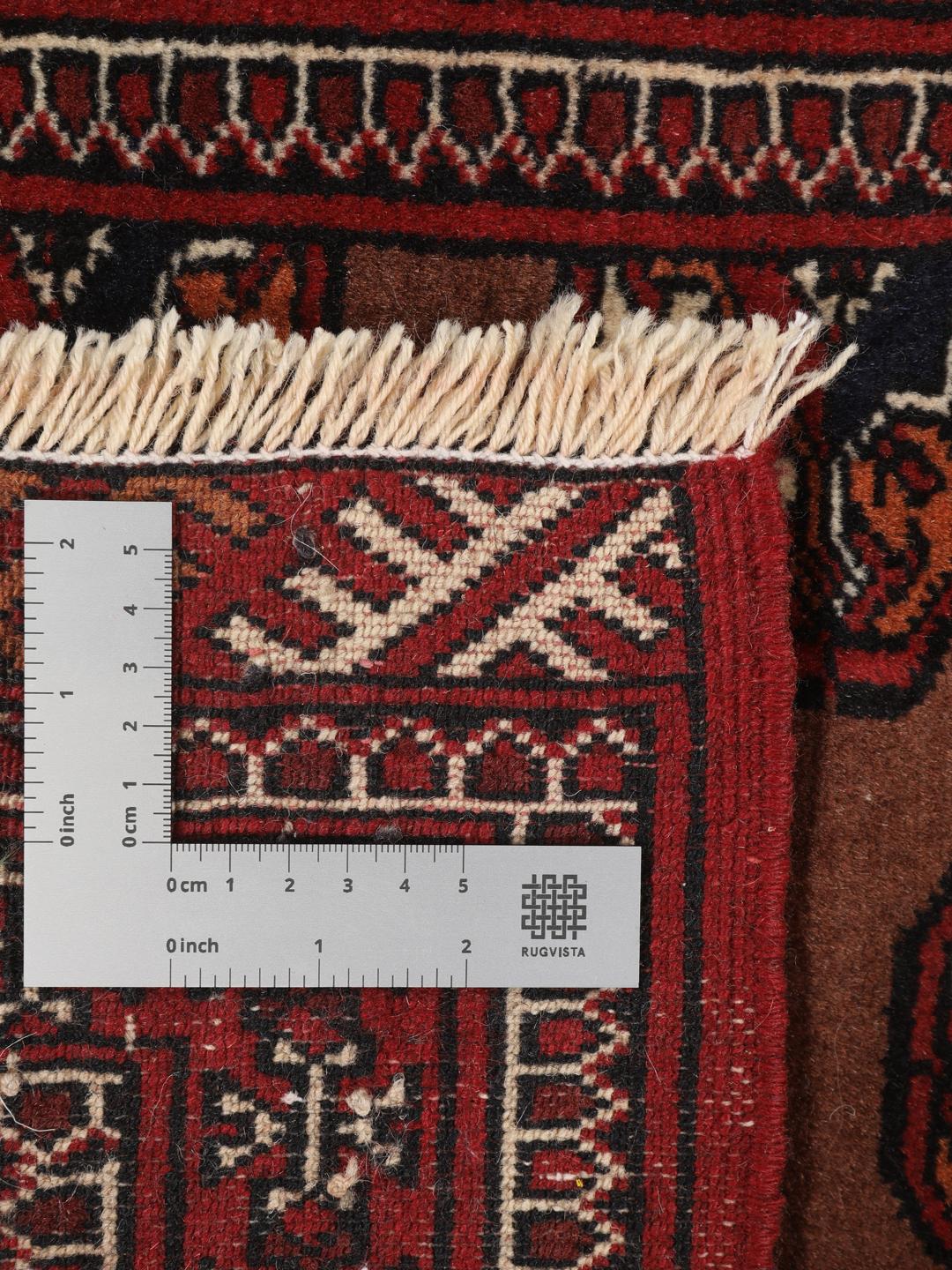
The technical quality of these rugs is defined by their construction, often featuring high knot counts that result in a dense, durable, and lustrous pile. This density is essential for the longevity of the rug, as it protects the foundation and ensures that the intricate patterns remain sharp and clear even after years of use. Understanding this construction helps you appreciate why these rugs are not just floor coverings, but durable heirlooms crafted to last for generations.
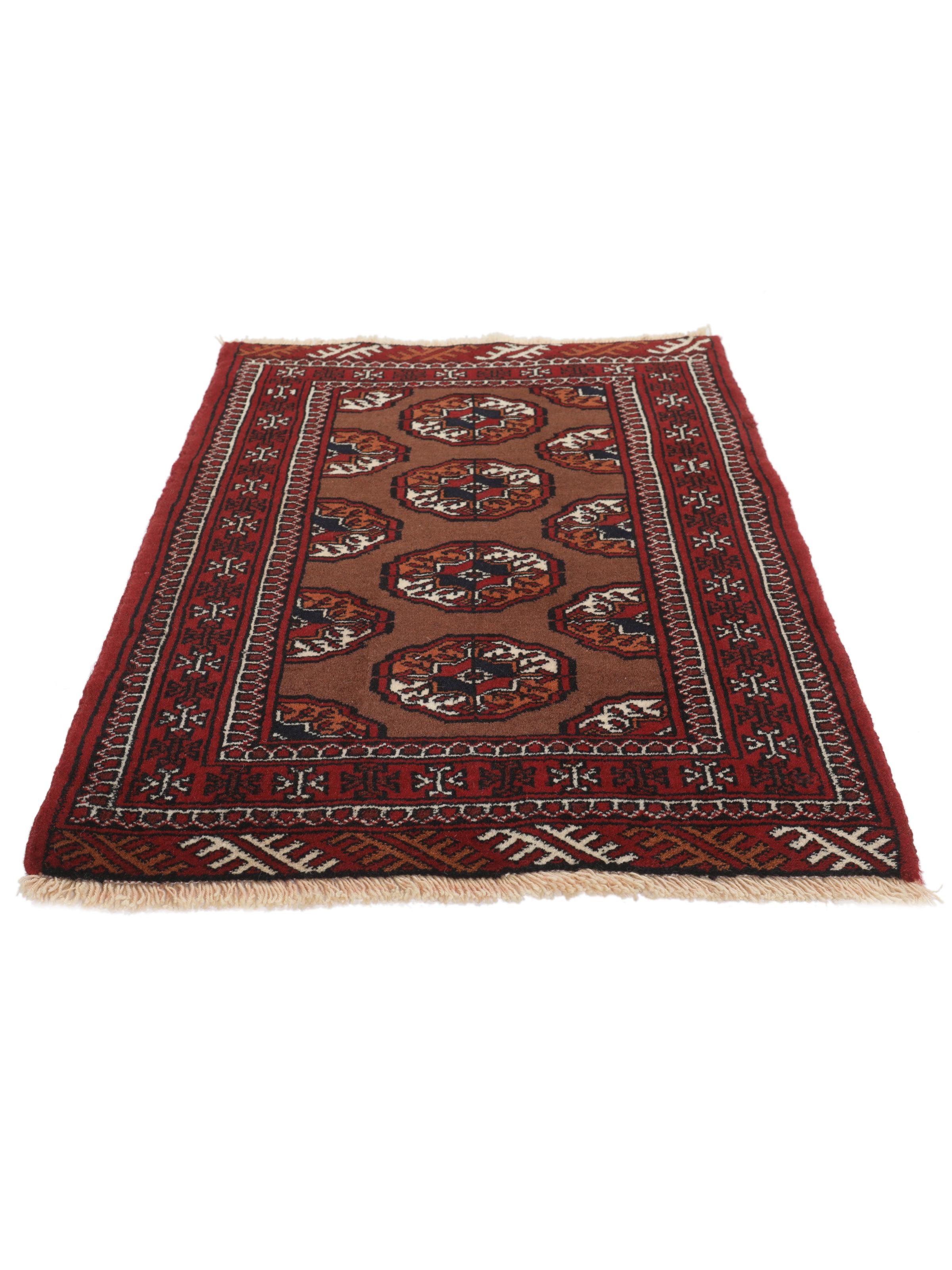
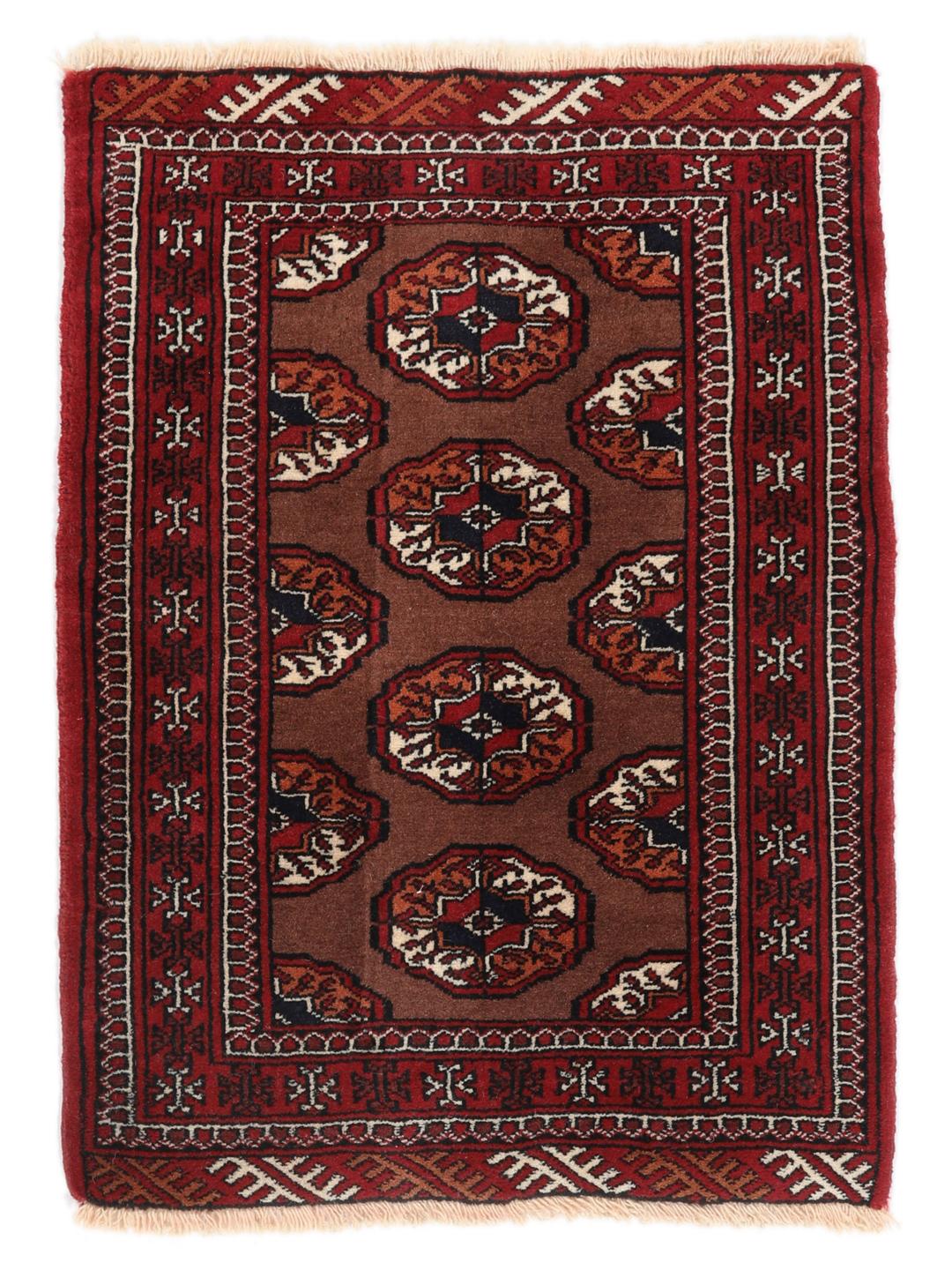
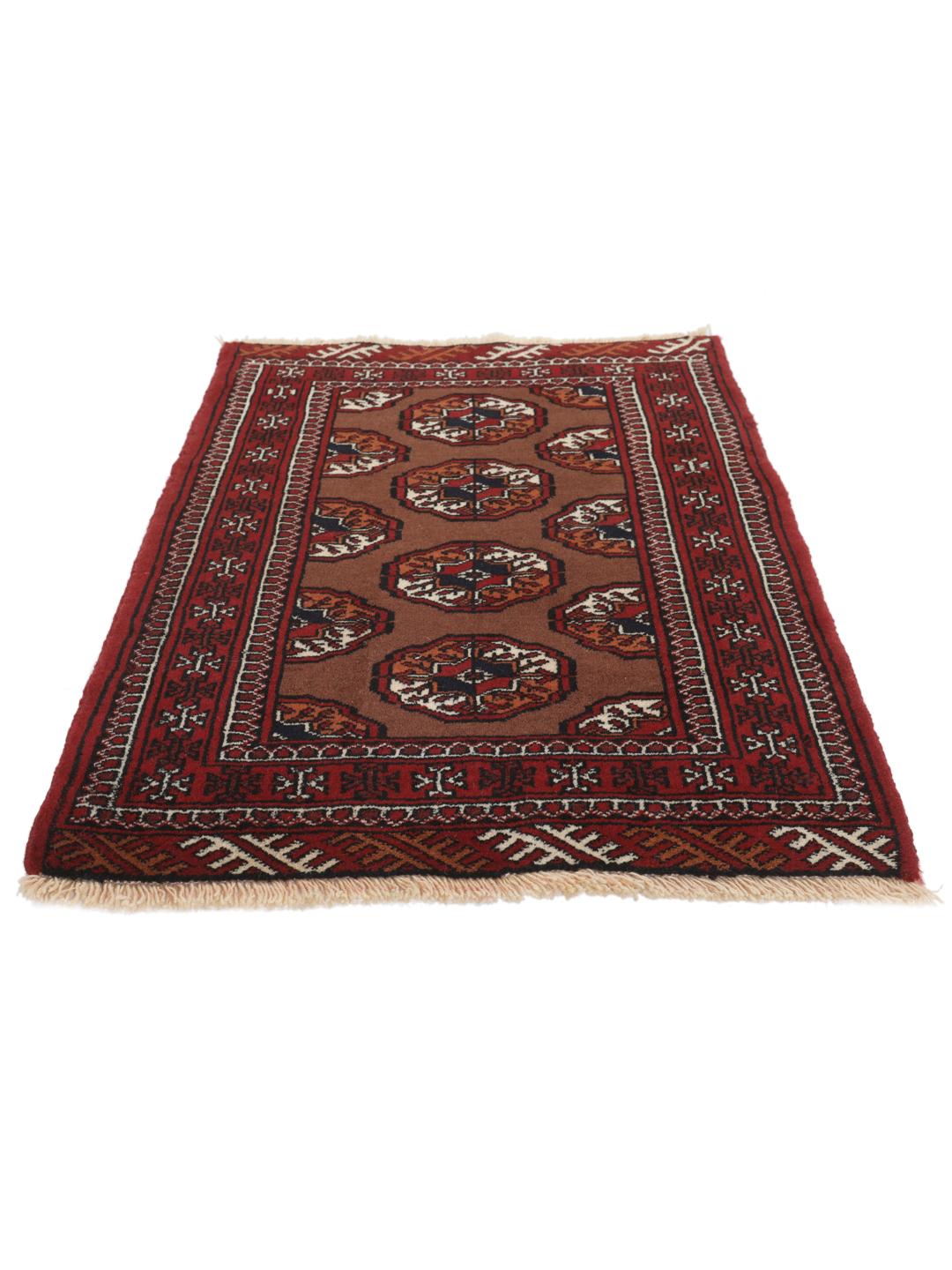
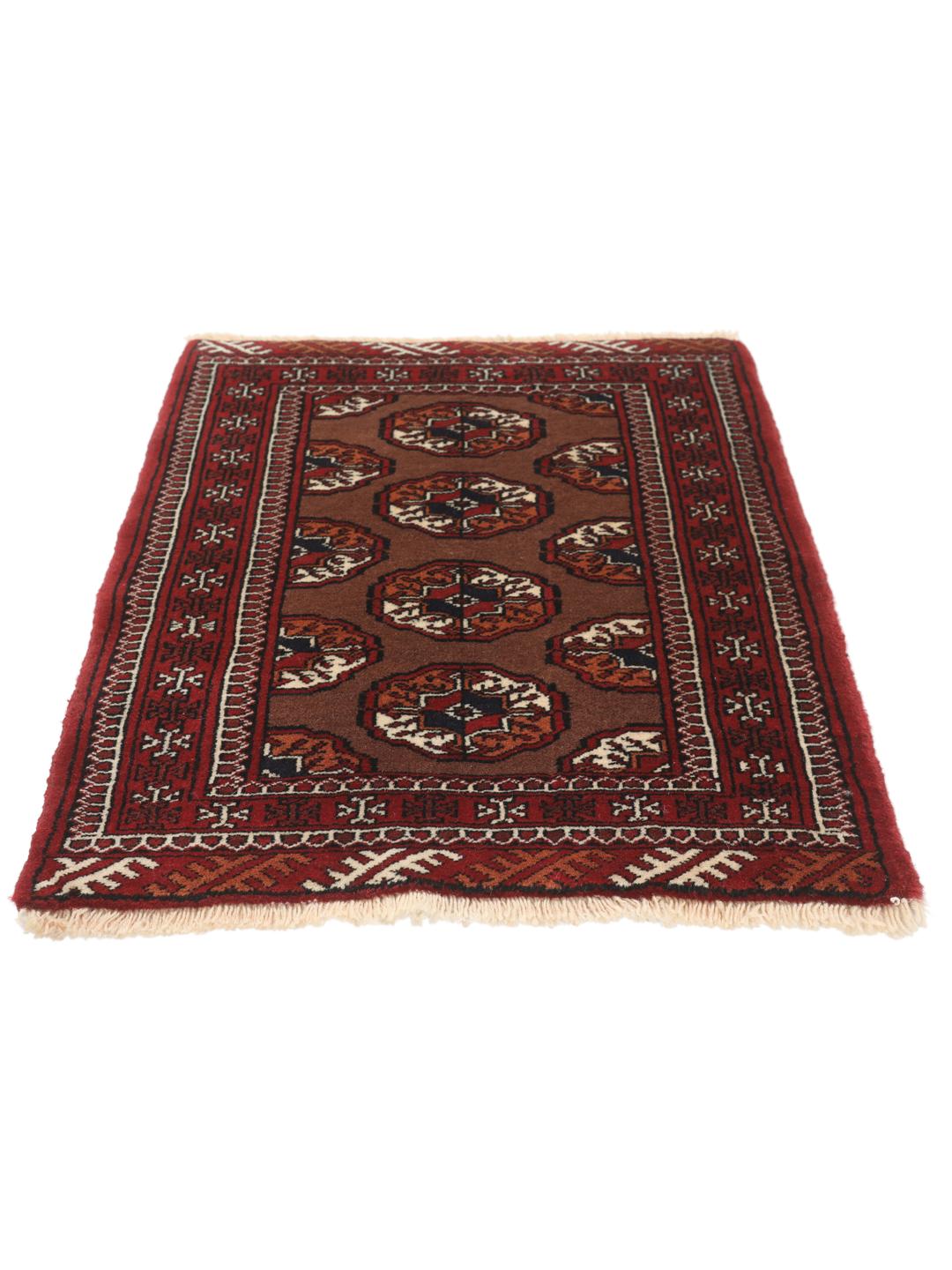
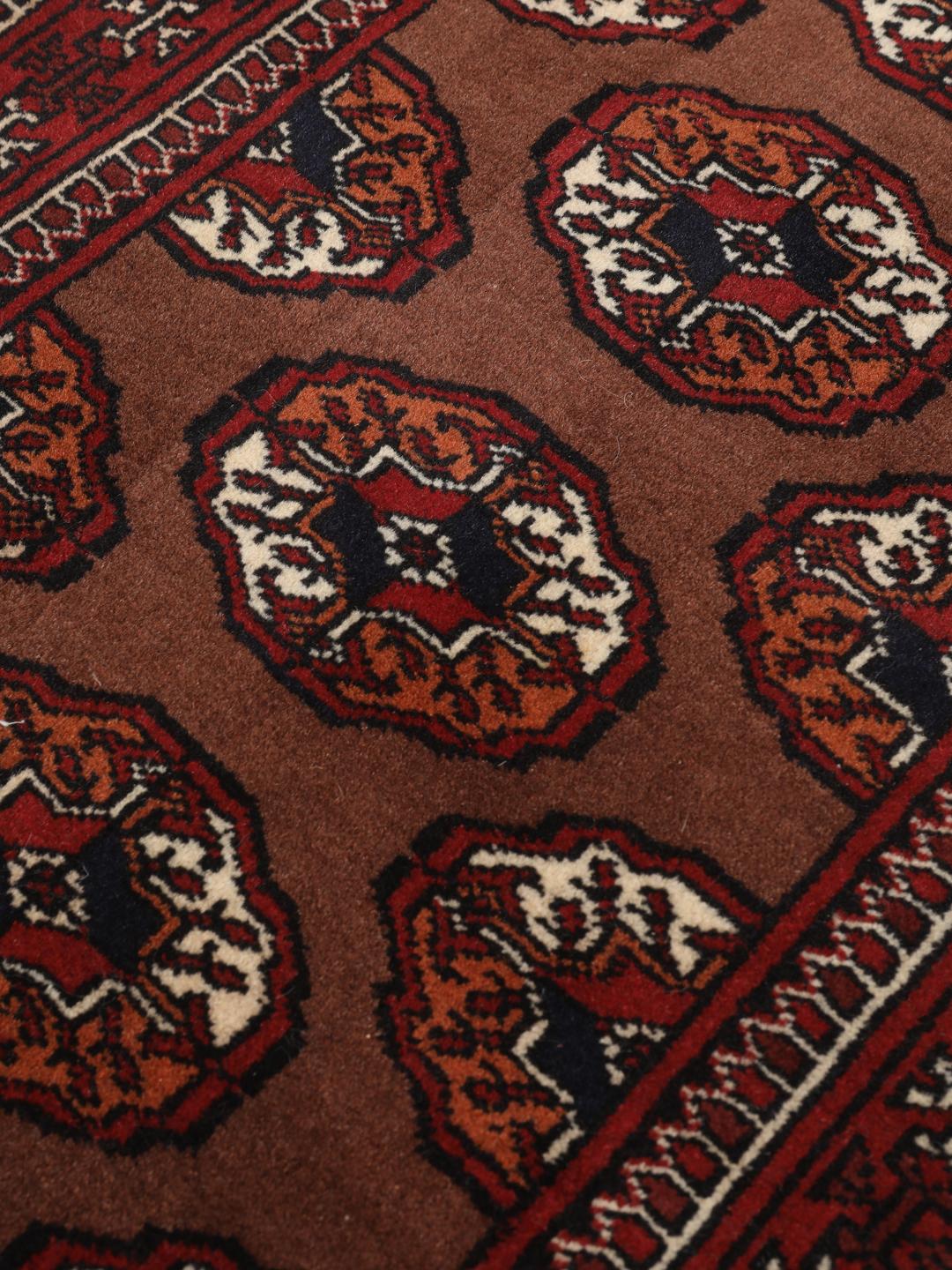
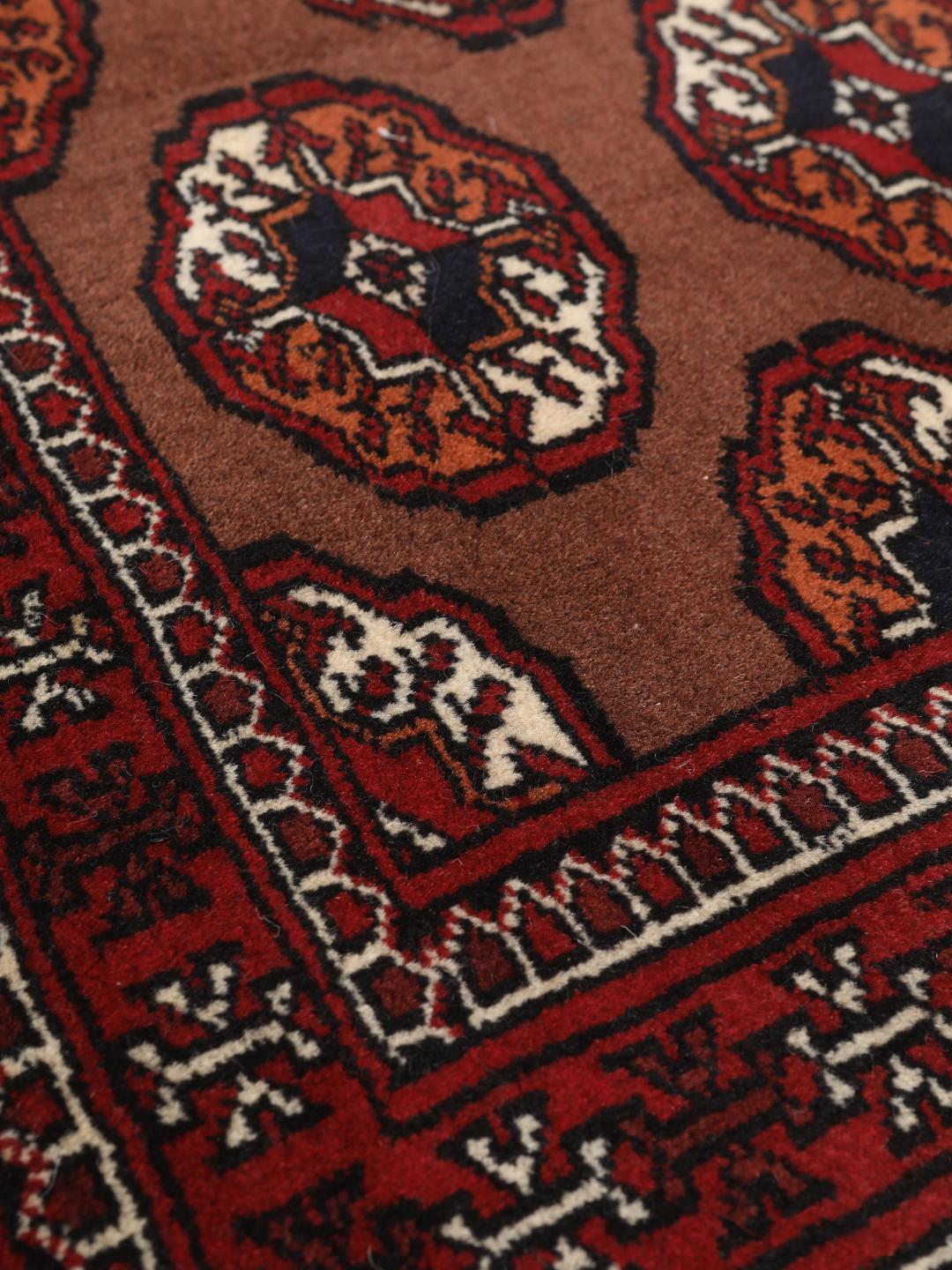
Visually, Turkaman rugs are instantly recognisable for their use of repeating motifs, most notably the gul. These octagonal or elephant-foot medallions are arranged in structured rows, creating a sense of balance and rhythm across the field. While deep red is the traditional palette for these pieces, this rug’s unique incorporation of earthy brown tones provides a warm, grounded variation that feels both classic and distinctive within the wider tradition.
Collectors value Turkaman rugs for their cultural significance and the high level of technical skill required to produce them. Owning one is a way to preserve a piece of human heritage, celebrating the patience and precision that go into every knot. These rugs are highly regarded for their ability to bring a sense of history and gravitas to a home, making them a preferred choice for those who appreciate the intersection of functionality and artistic tradition.