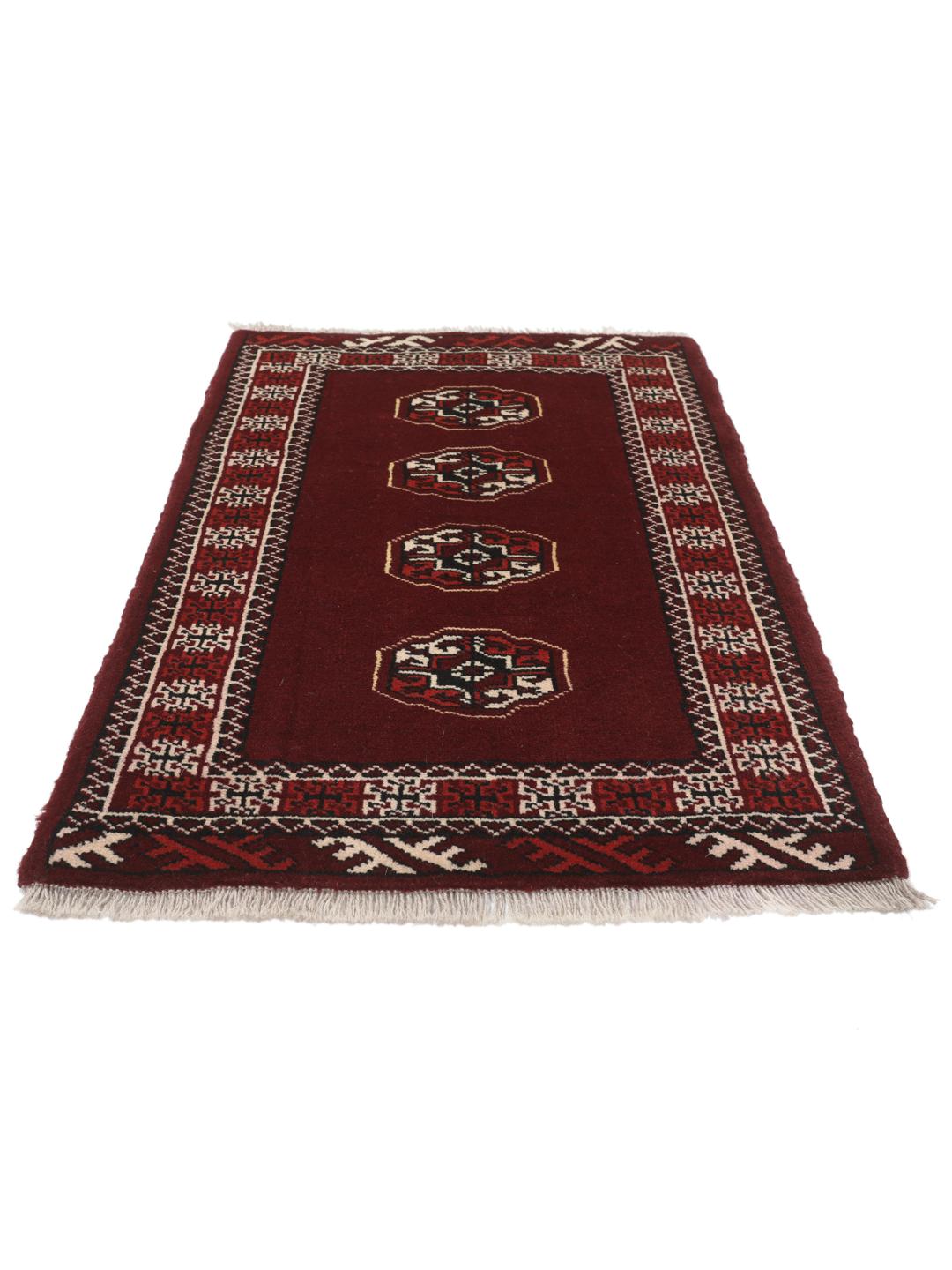
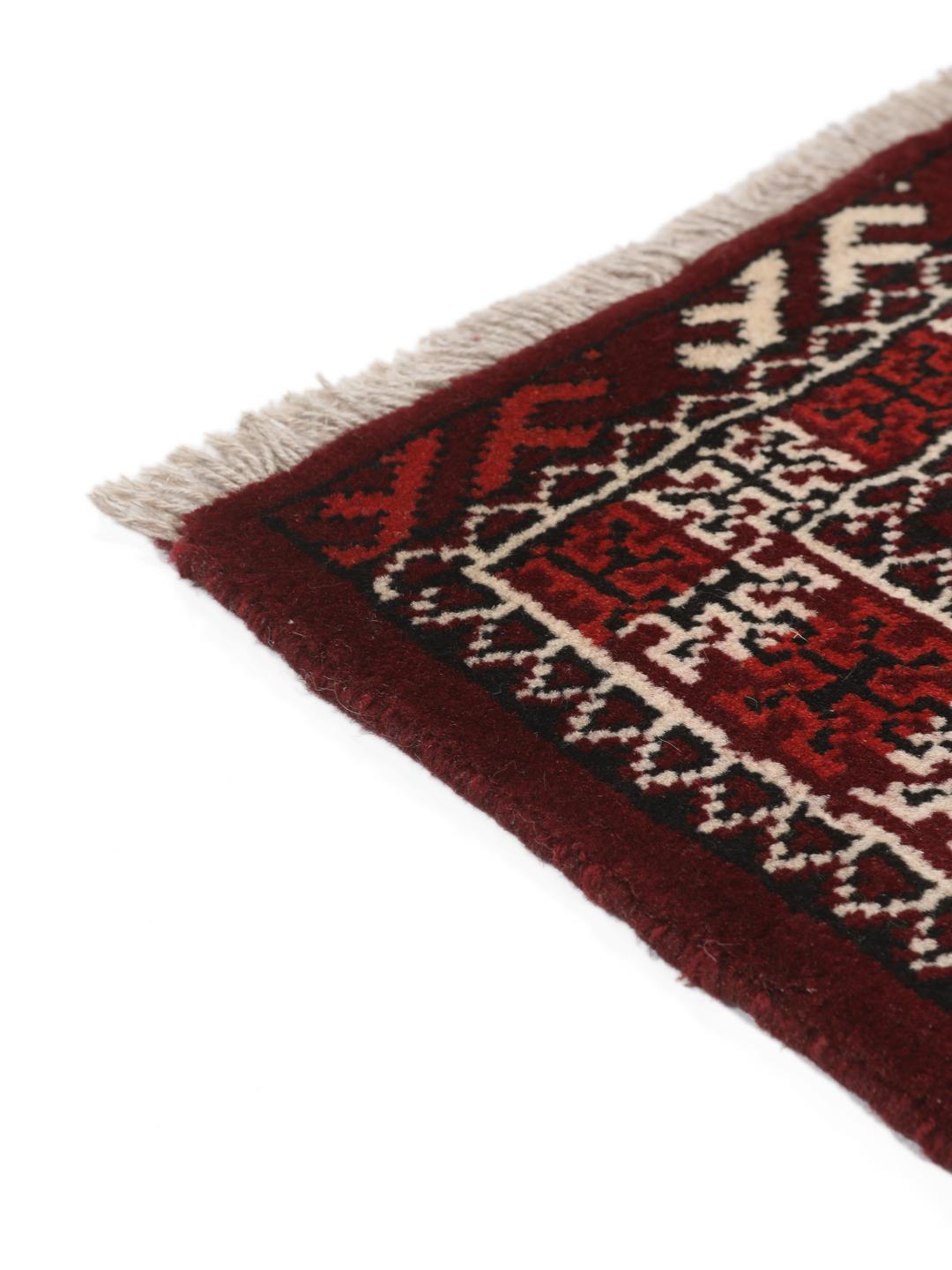
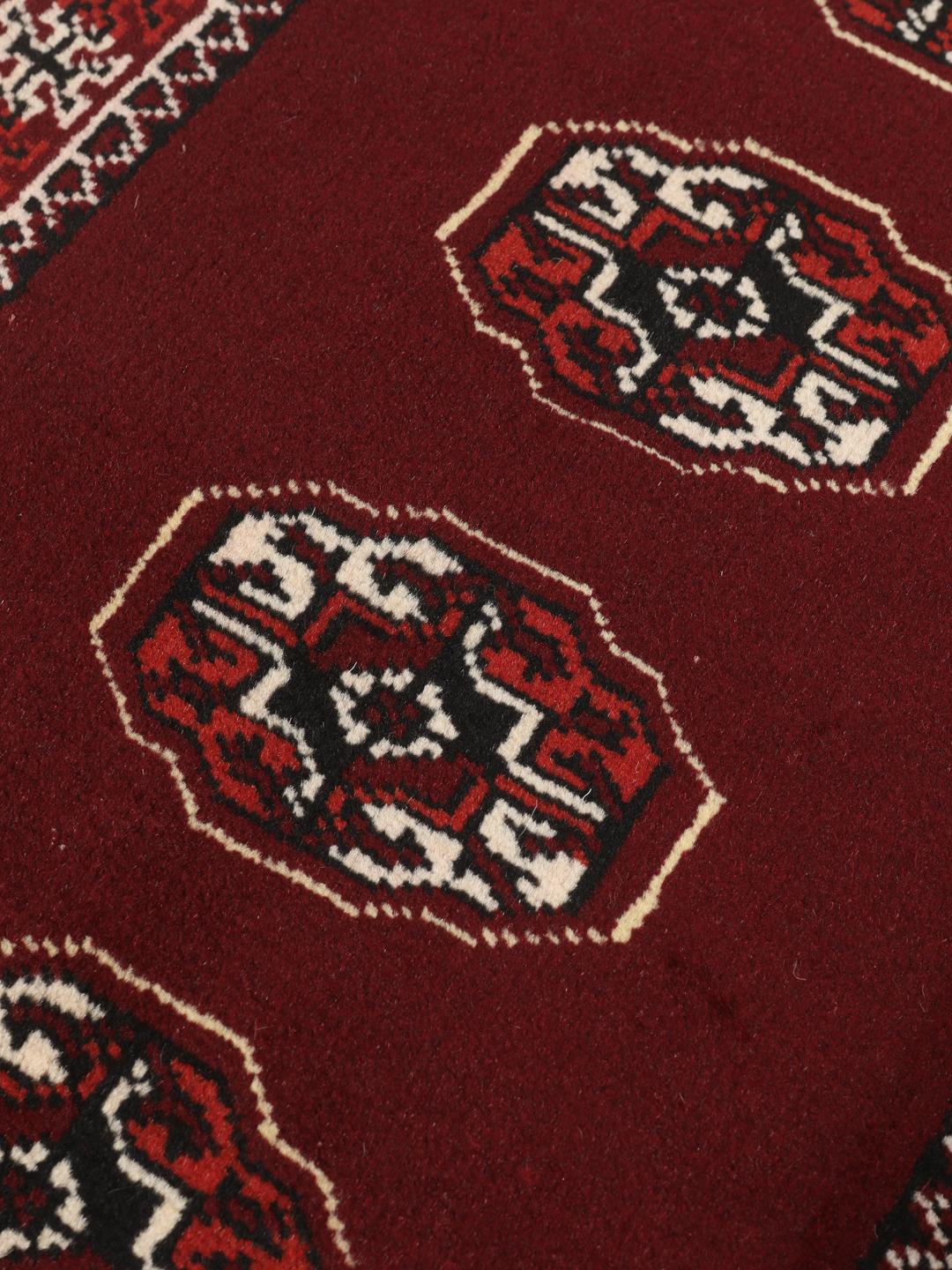
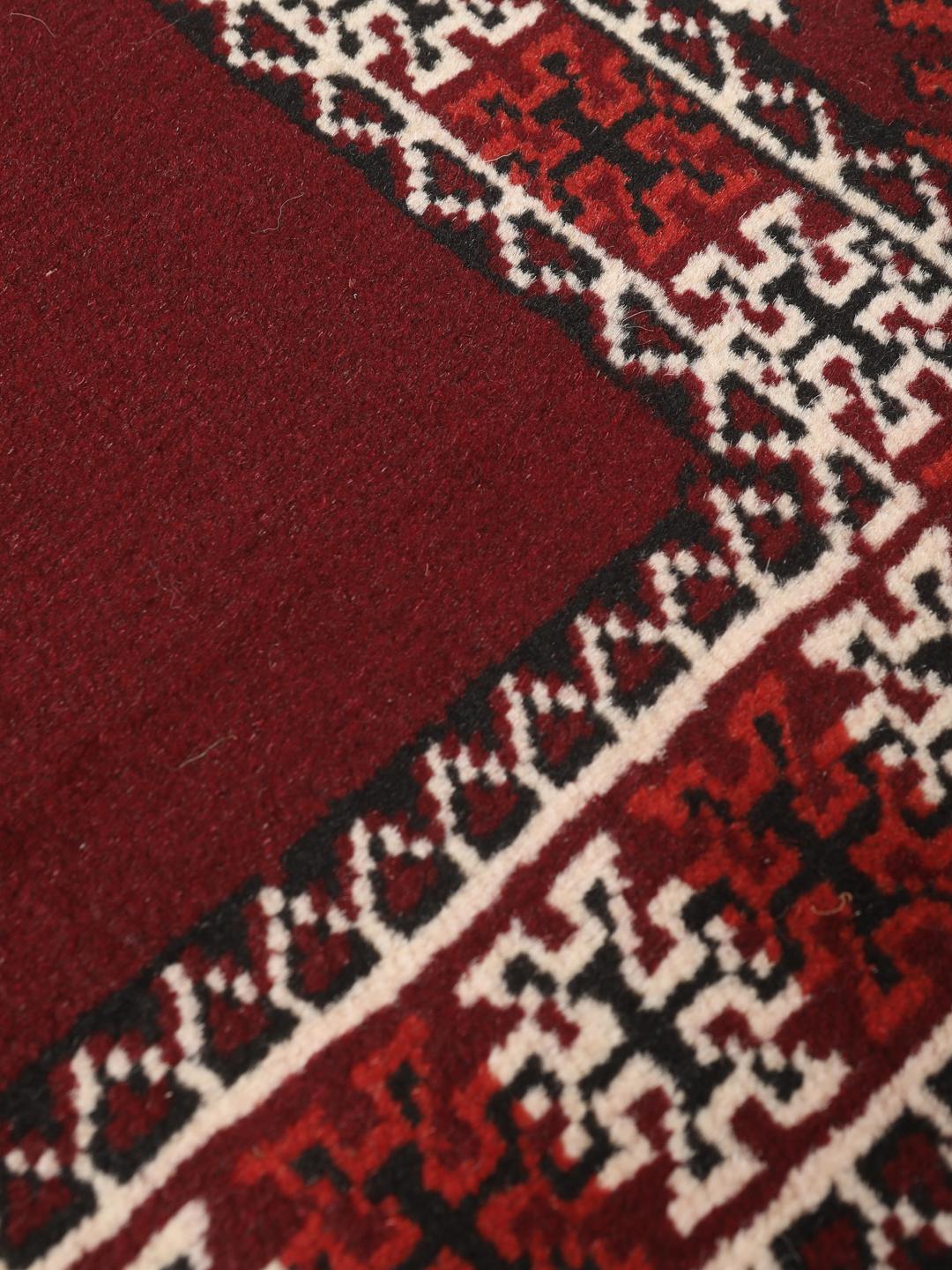
Turkaman rugs originate from the nomadic tribes of the Central Asian steppes, a region with a long and storied tradition of textile artistry. Over centuries, these designs have evolved, with the term Turkaman now encompassing a diverse range of styles that have been influenced by cross-cultural exchanges along historic trade routes, eventually finding a home in the workshops of the Middle East.
The construction of these rugs relies on a deep understanding of Wool and foundation materials. The use of high-quality Wool for the pile is central to the tradition, chosen for its resilience and ability to take vibrant, natural dyes. This creates a lustrous surface that ages beautifully, developing a soft patina that only enhances the rug's character over time.
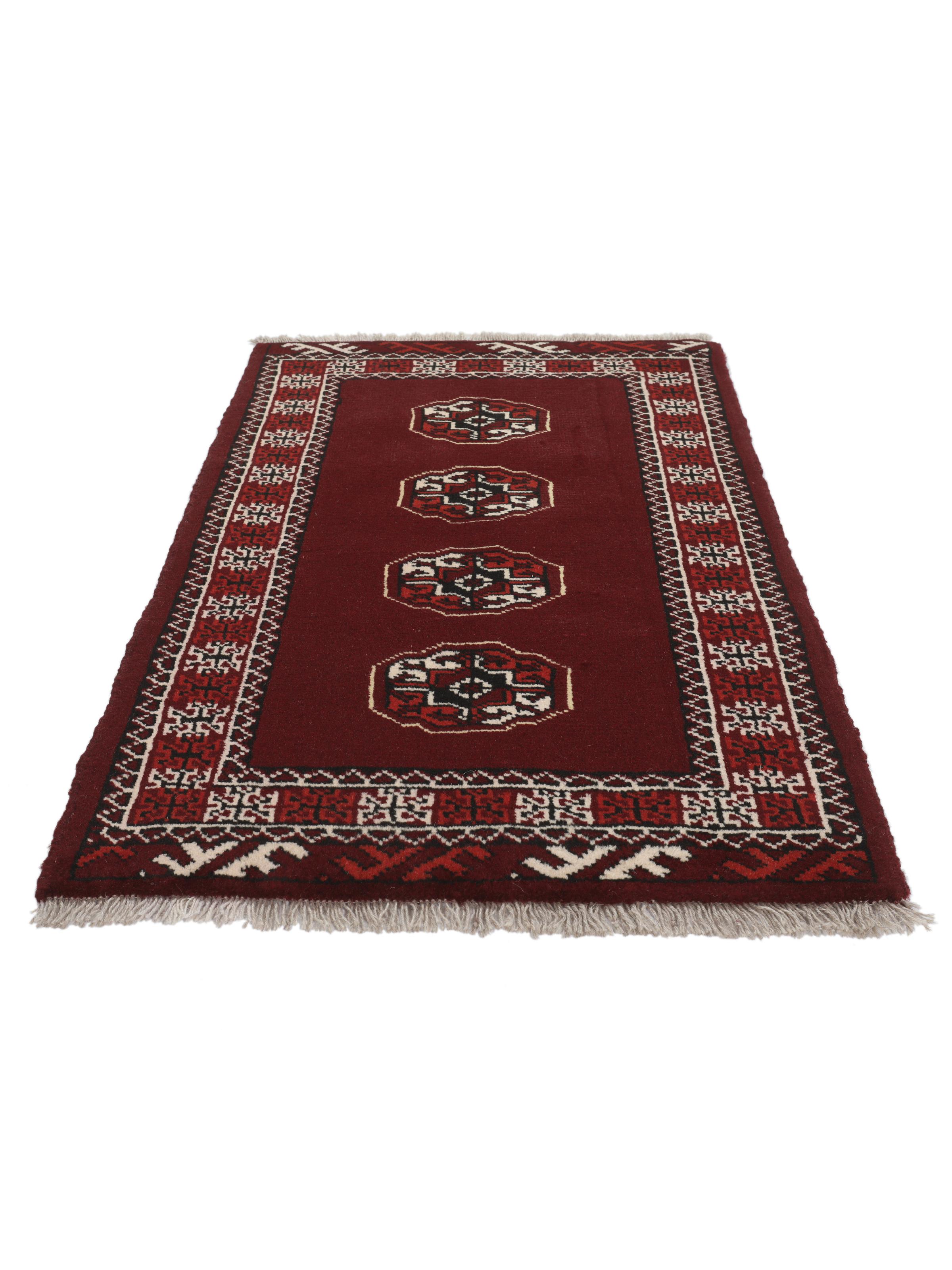
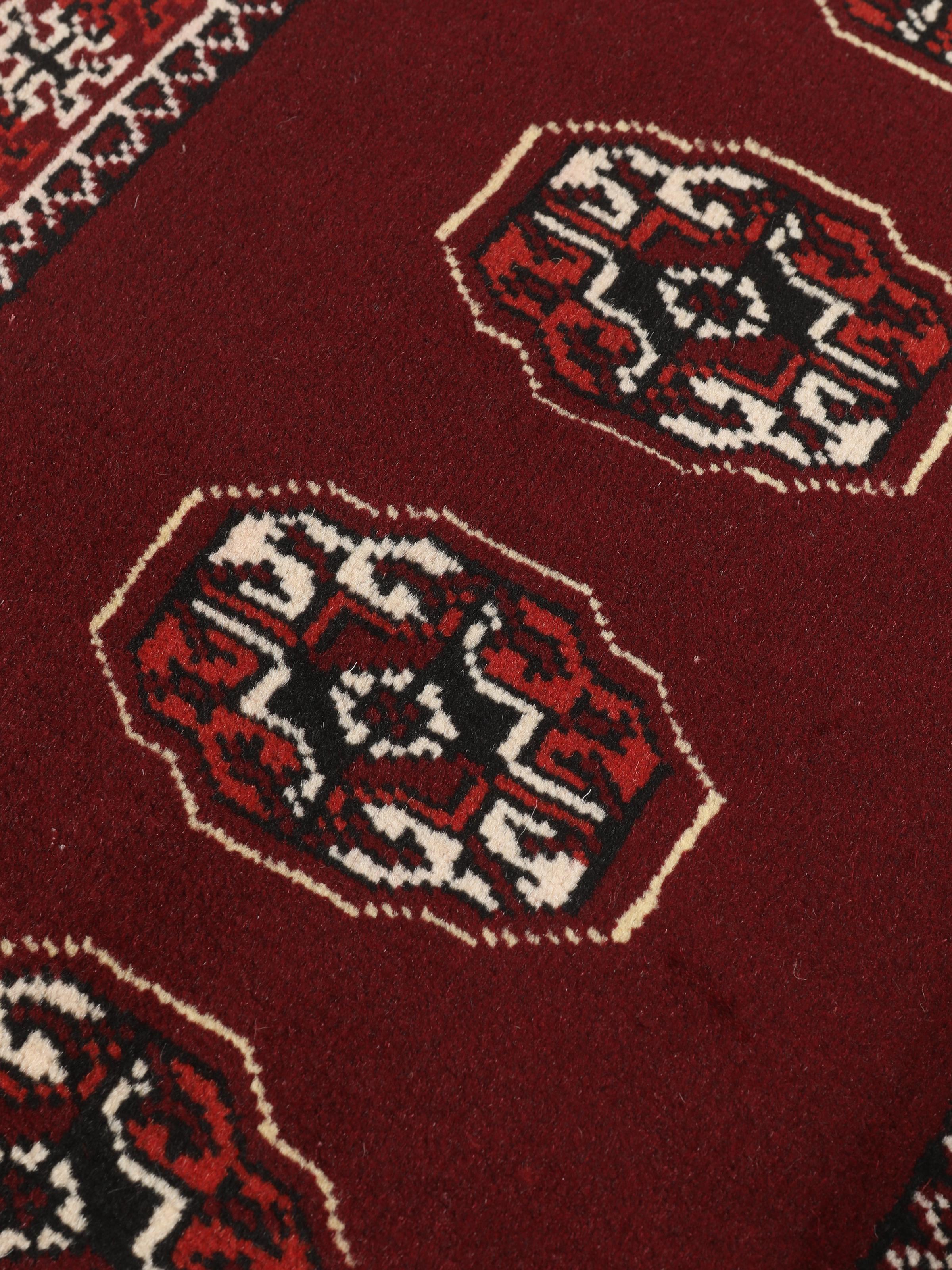
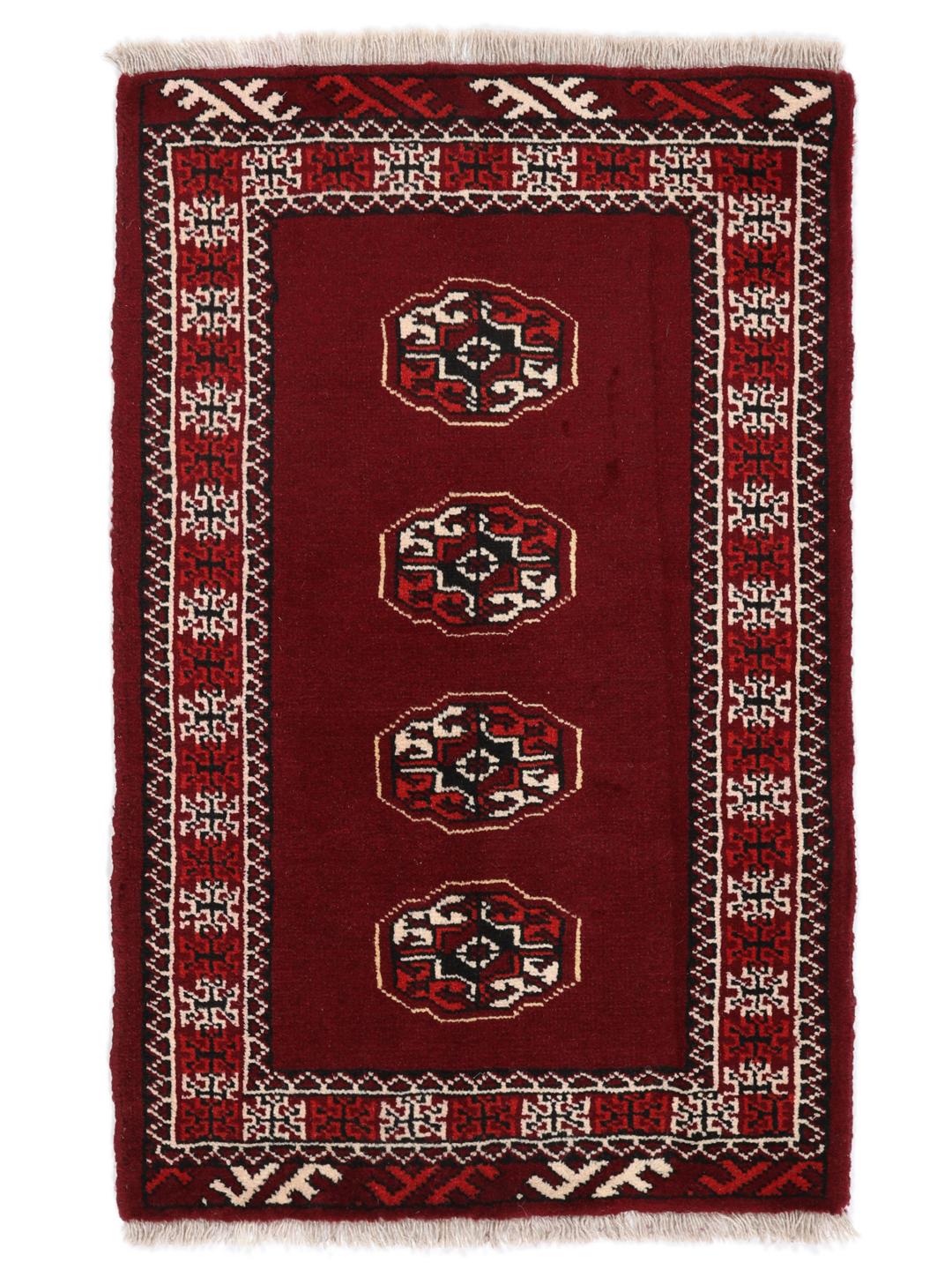
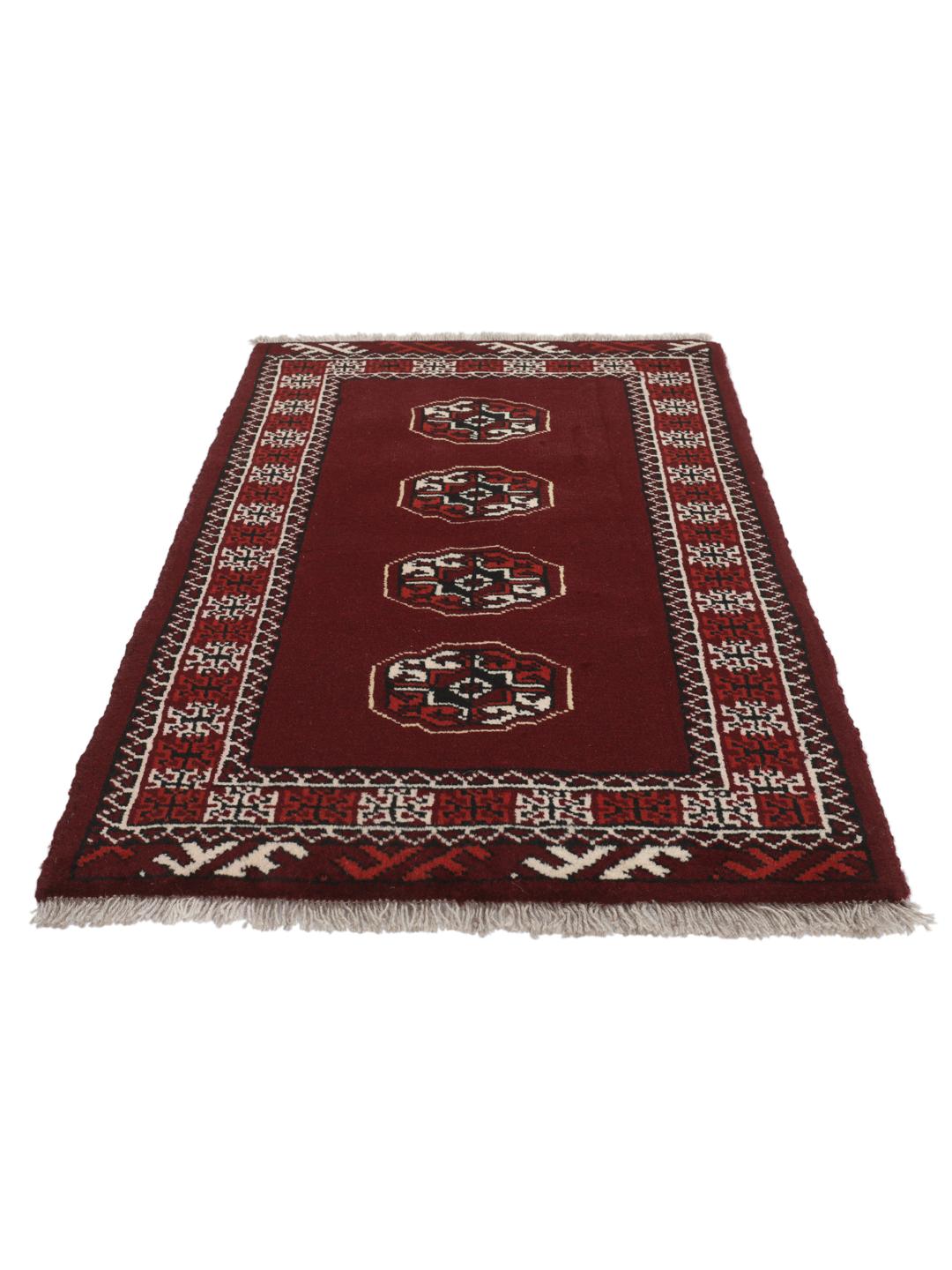
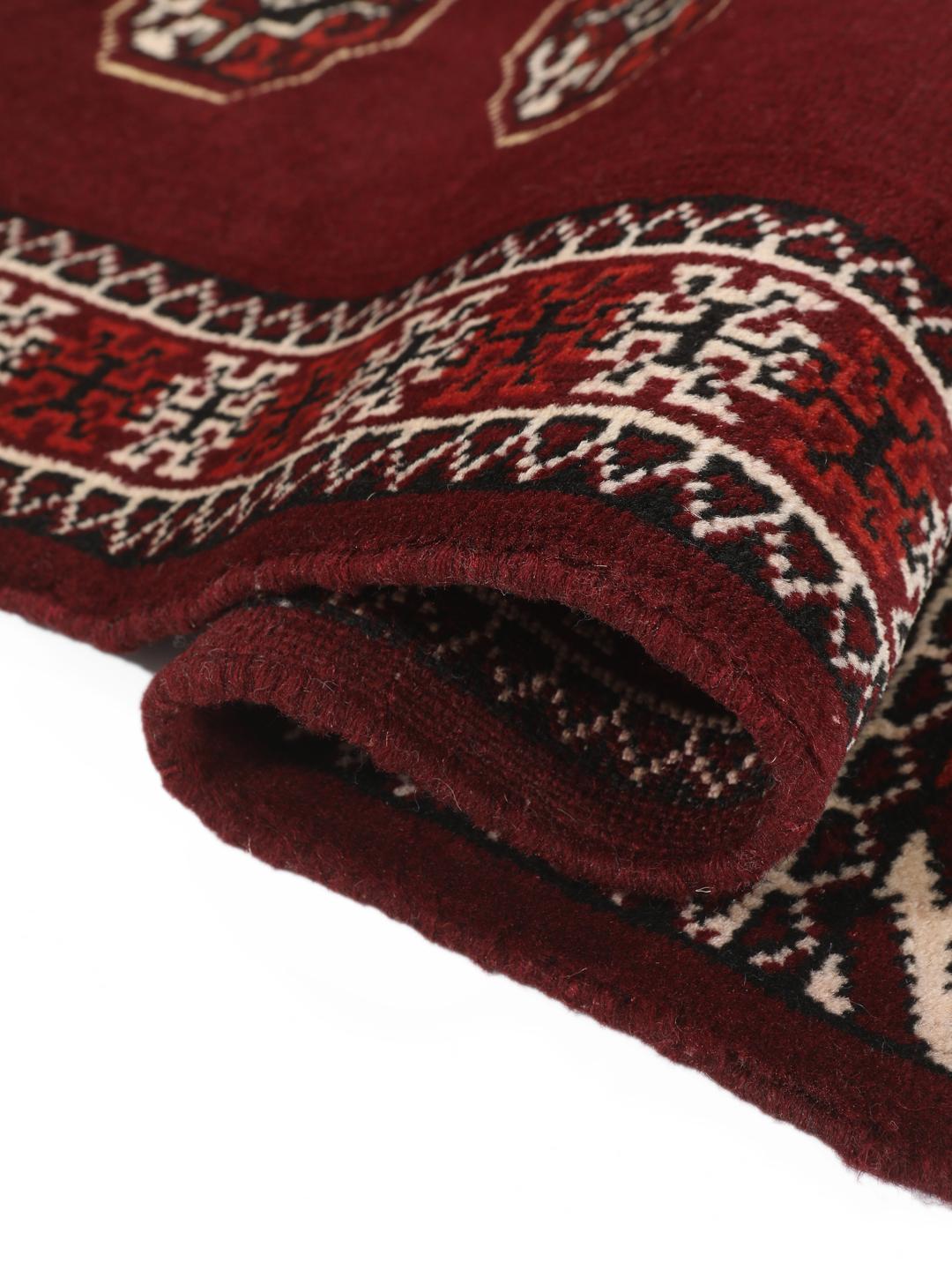
Visually, these rugs are defined by their repetitive, structured motifs, most notably the 'gul'—a stylised, octagonal emblem that represents the tribal lineage of the weaver. The deep red palette is a hallmark of the tradition, symbolising strength and prosperity, while the geometric borders serve to frame the field and provide a sense of balance and symmetry.
Owning a Turkaman rug is more than just a decor choice; it is an investment in a legacy of skill that has been passed down through generations. These pieces are highly valued by collectors for their cultural significance and the dedication required to produce them, making each rug a cherished heirloom that brings a piece of living history into a modern home.