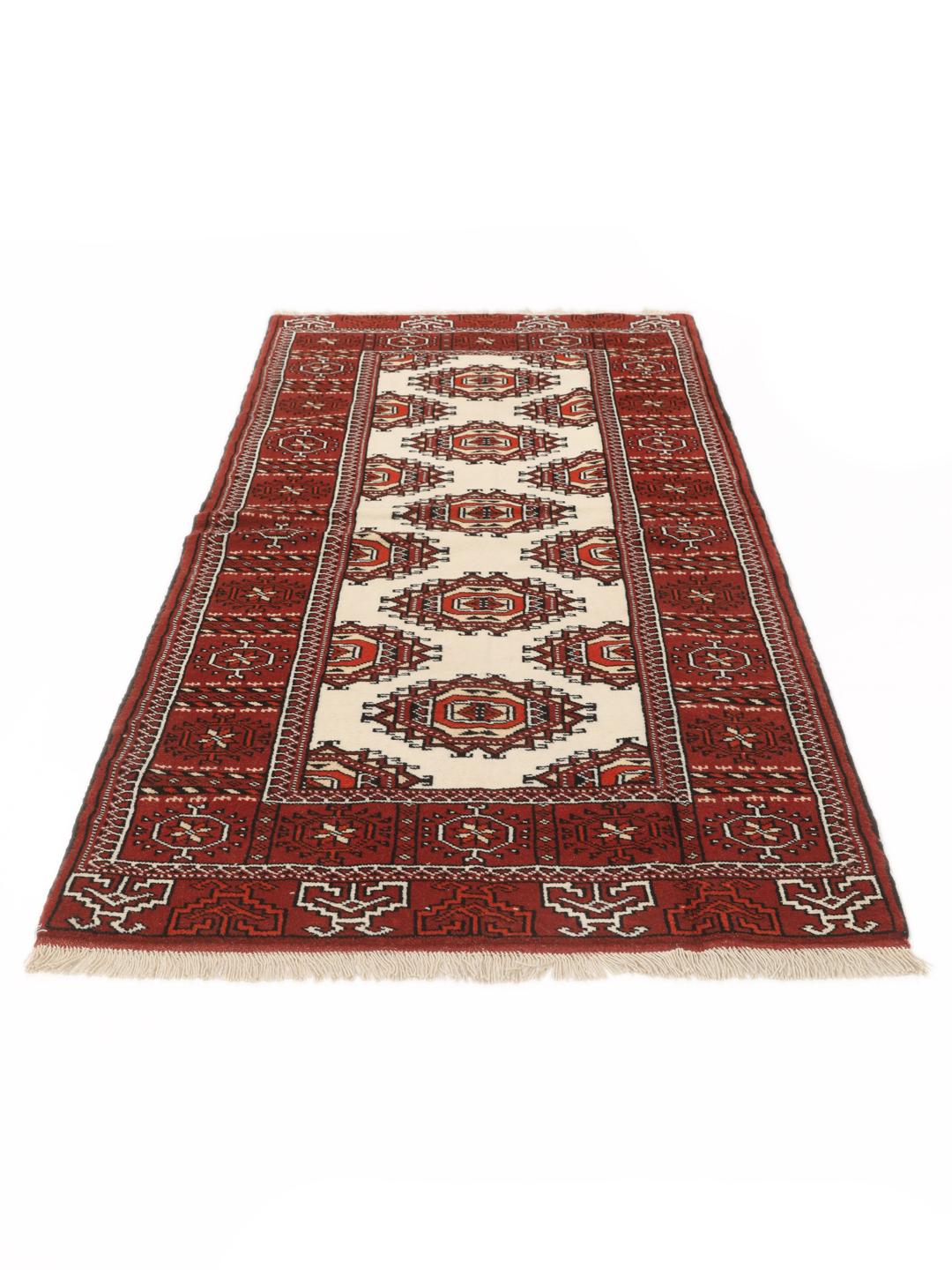
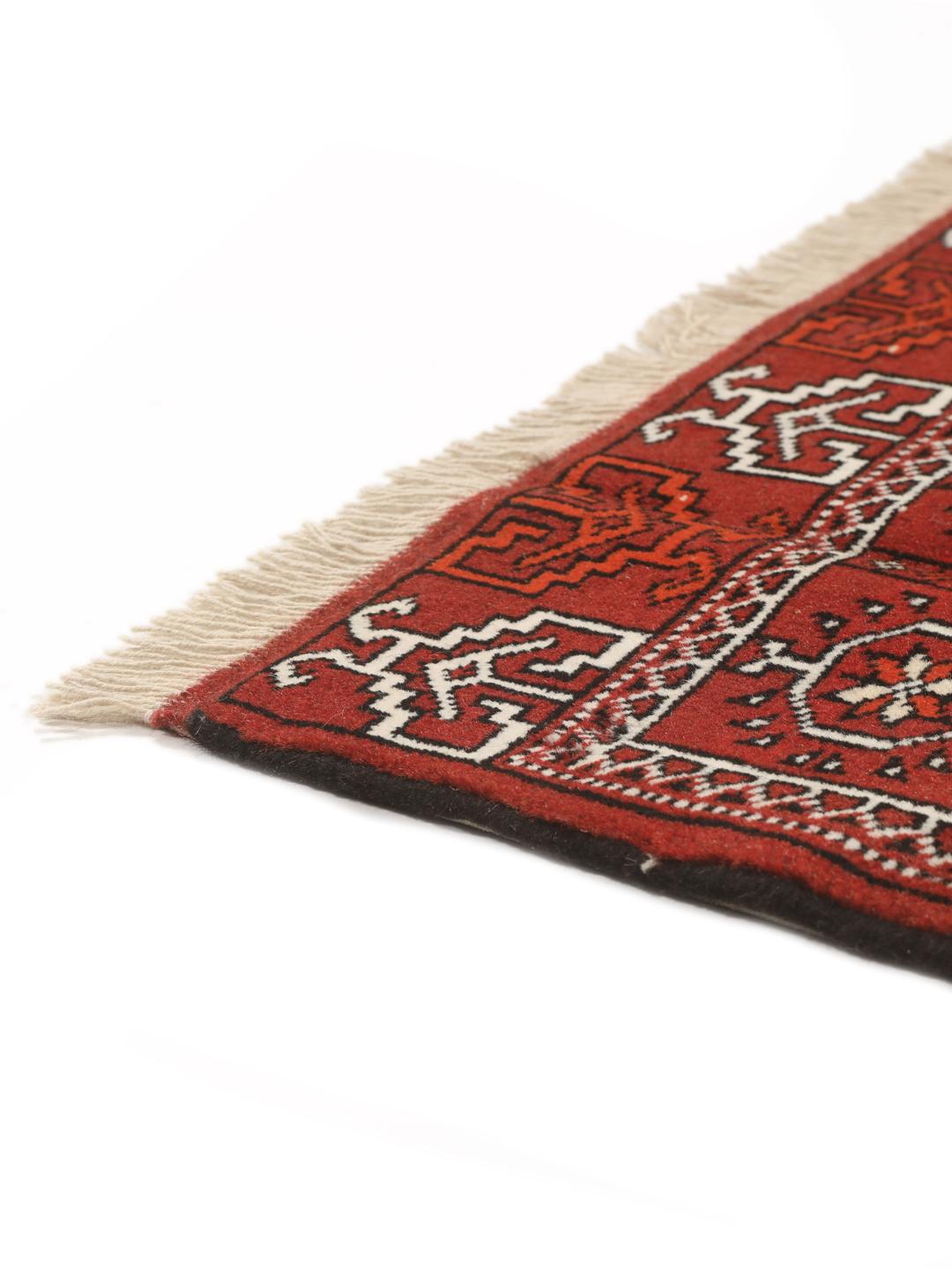
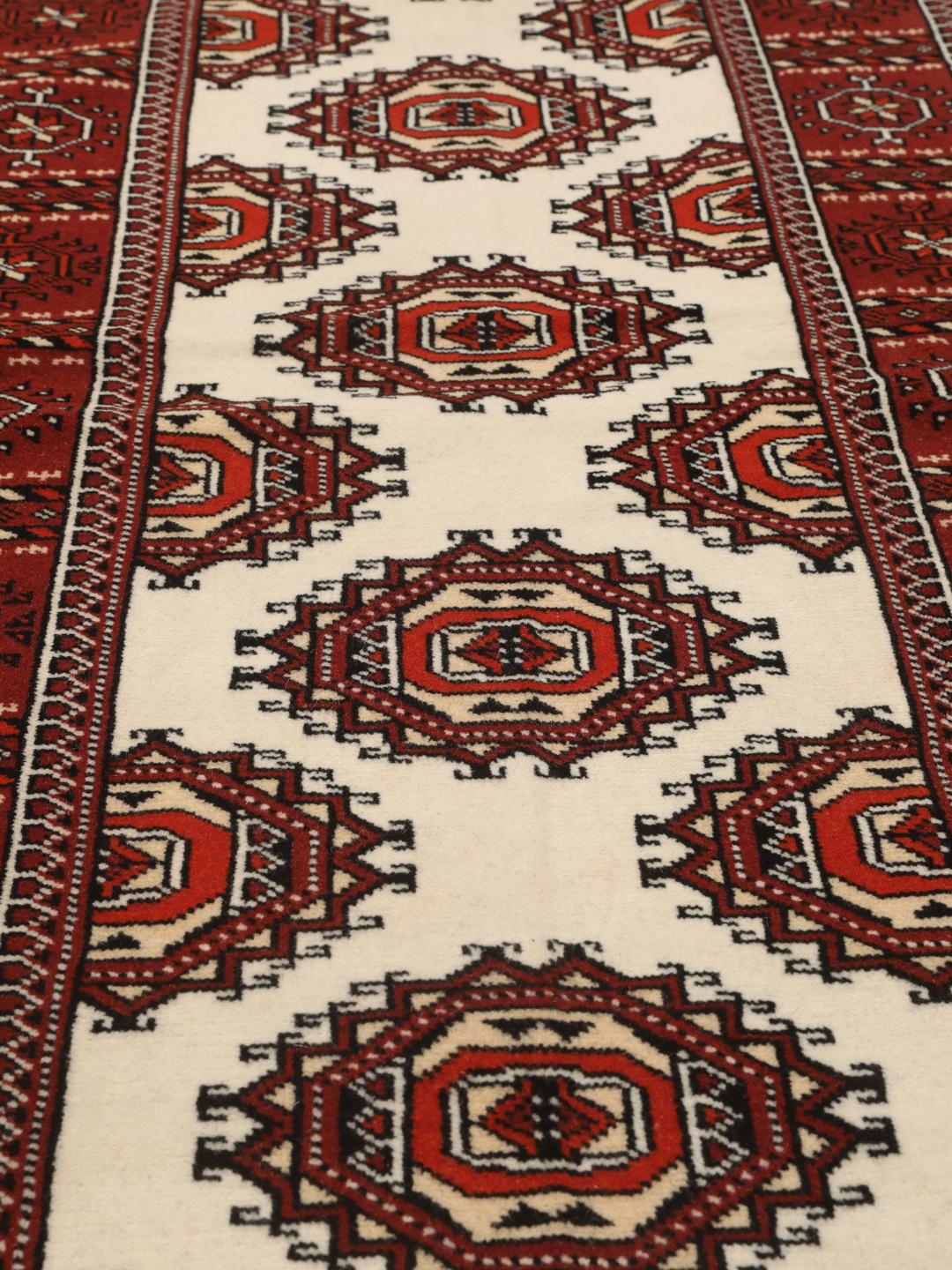
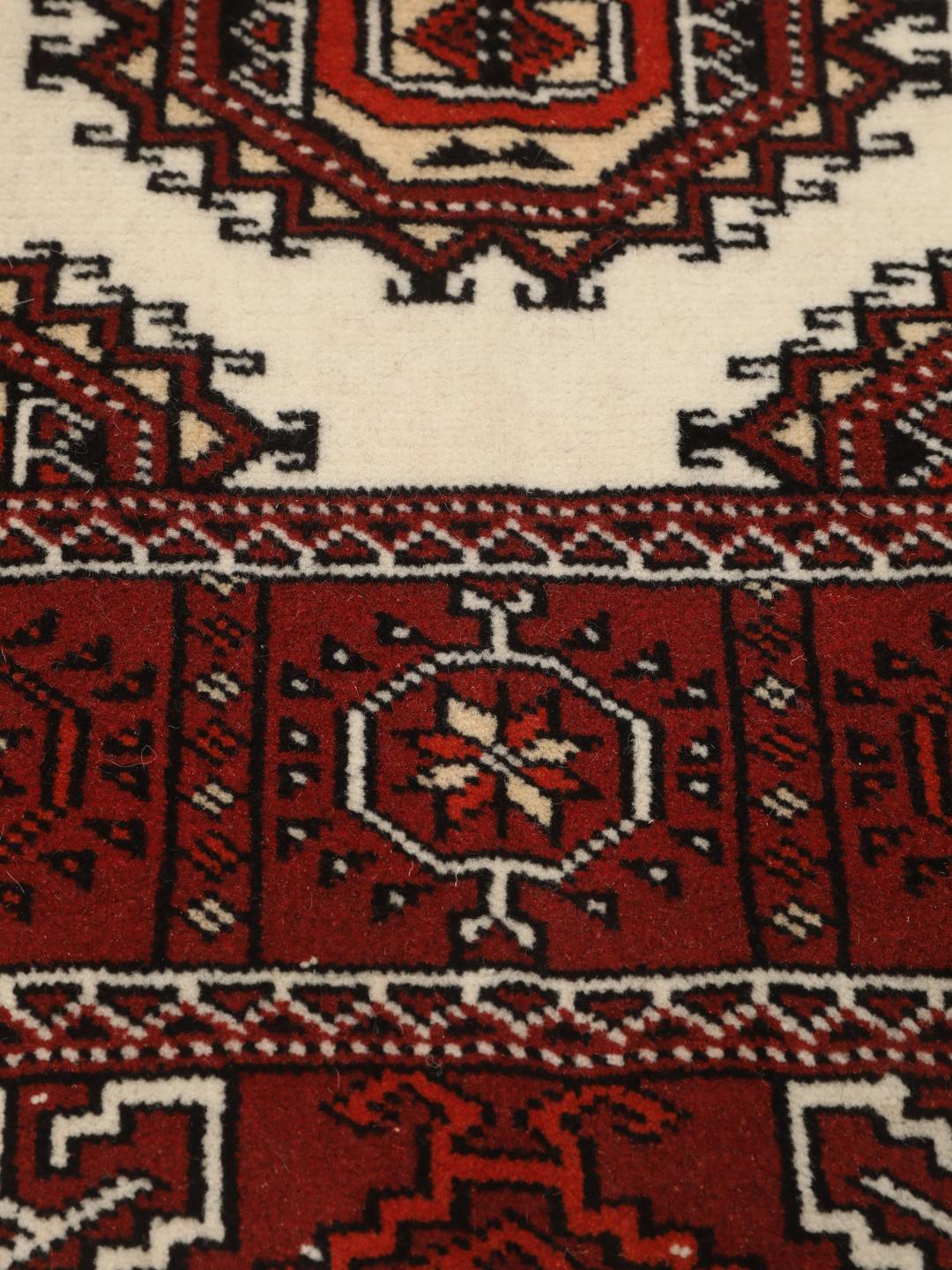
Turkaman rugs originate from the nomadic tribes of Central Asia, where weaving was not just a craft, but a vital cultural expression. These rugs were traditionally created to serve both functional and aesthetic purposes within the nomadic lifestyle, often used as floor coverings, tent decorations, and transport bags.
The term Turkaman refers to this specific lineage of design, which has evolved and spread across regions over centuries. Today, the tradition is maintained by skilled artisans who continue to use the classic techniques and motifs that have defined these rugs for generations.
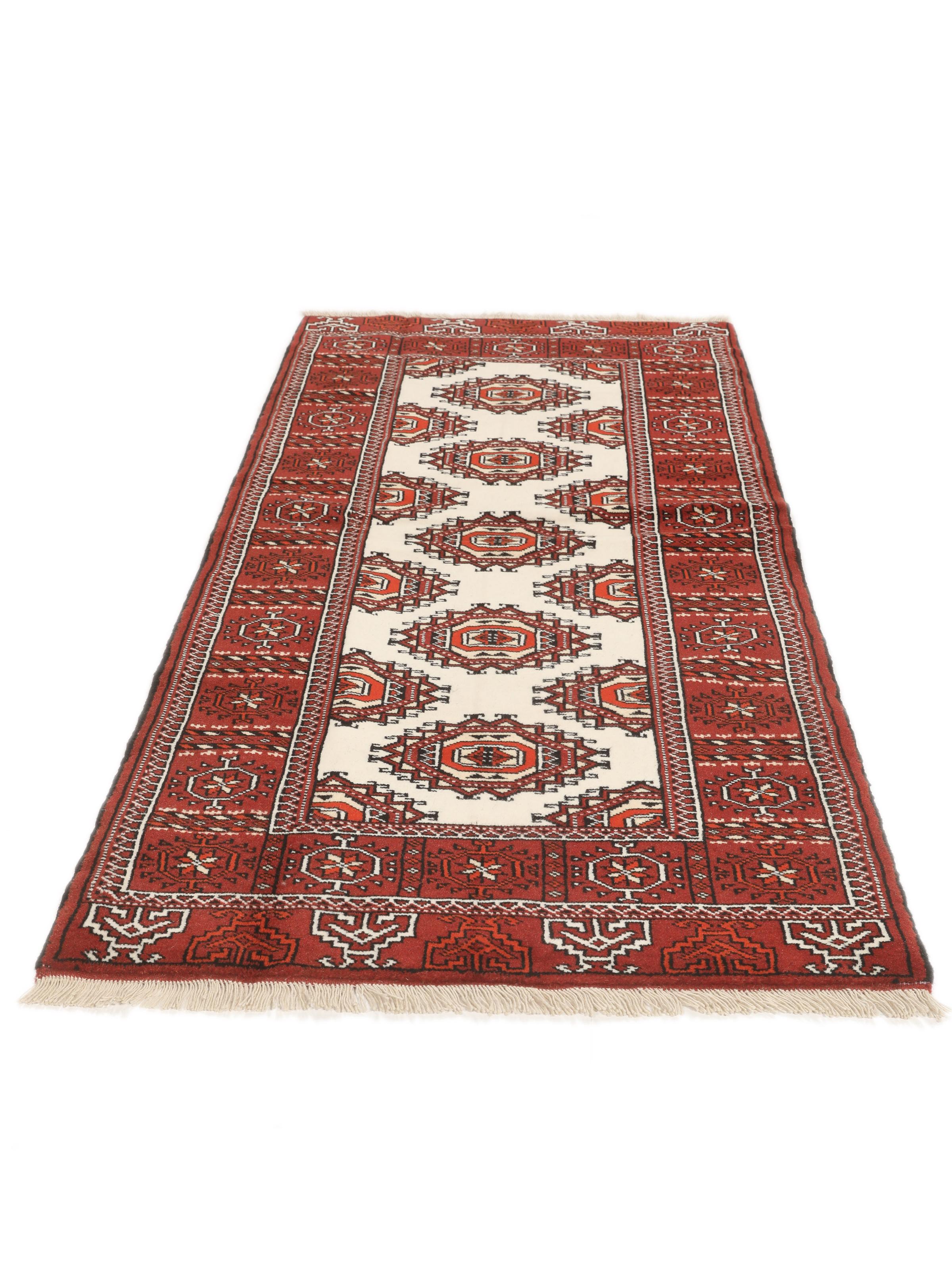
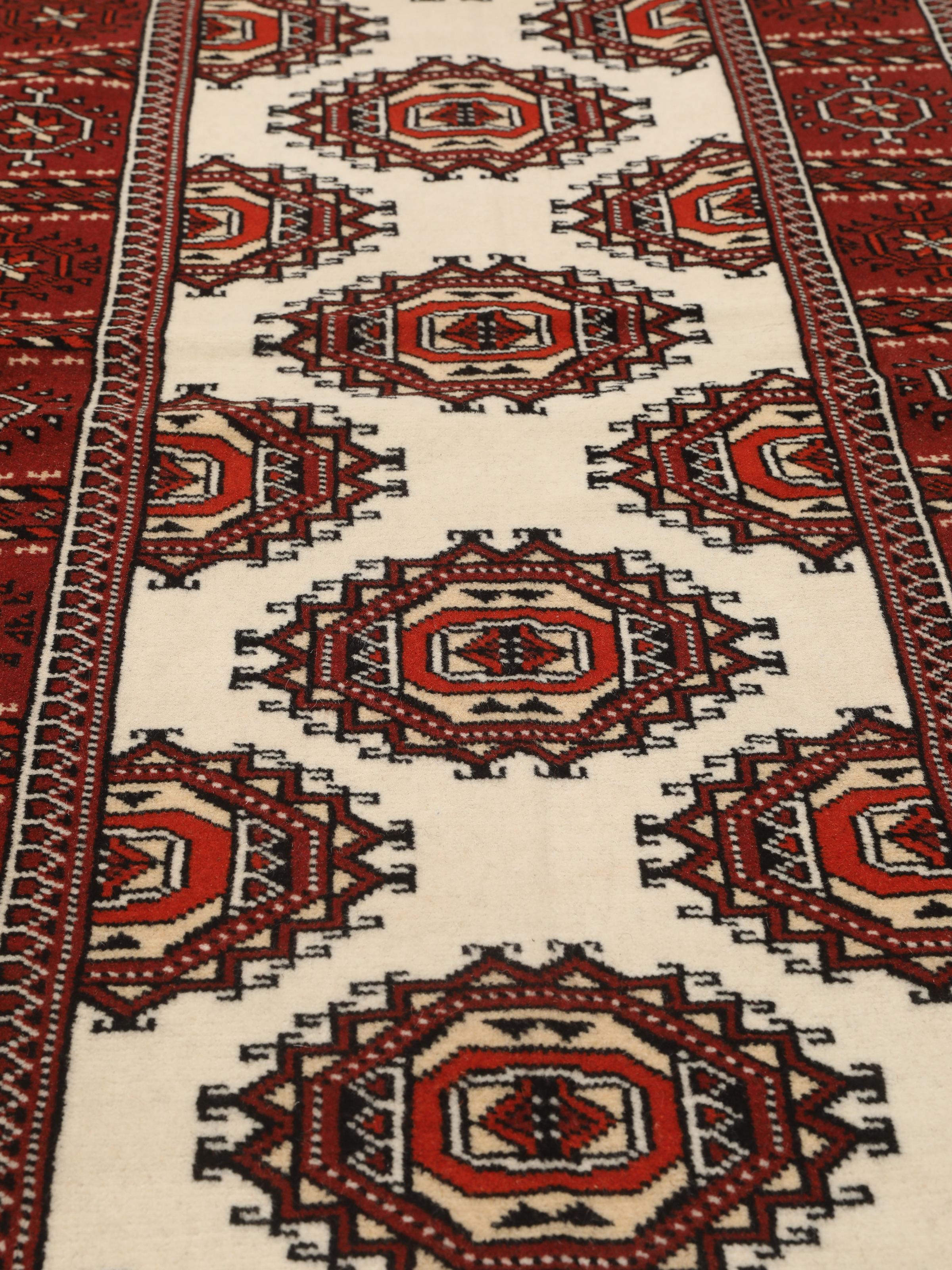
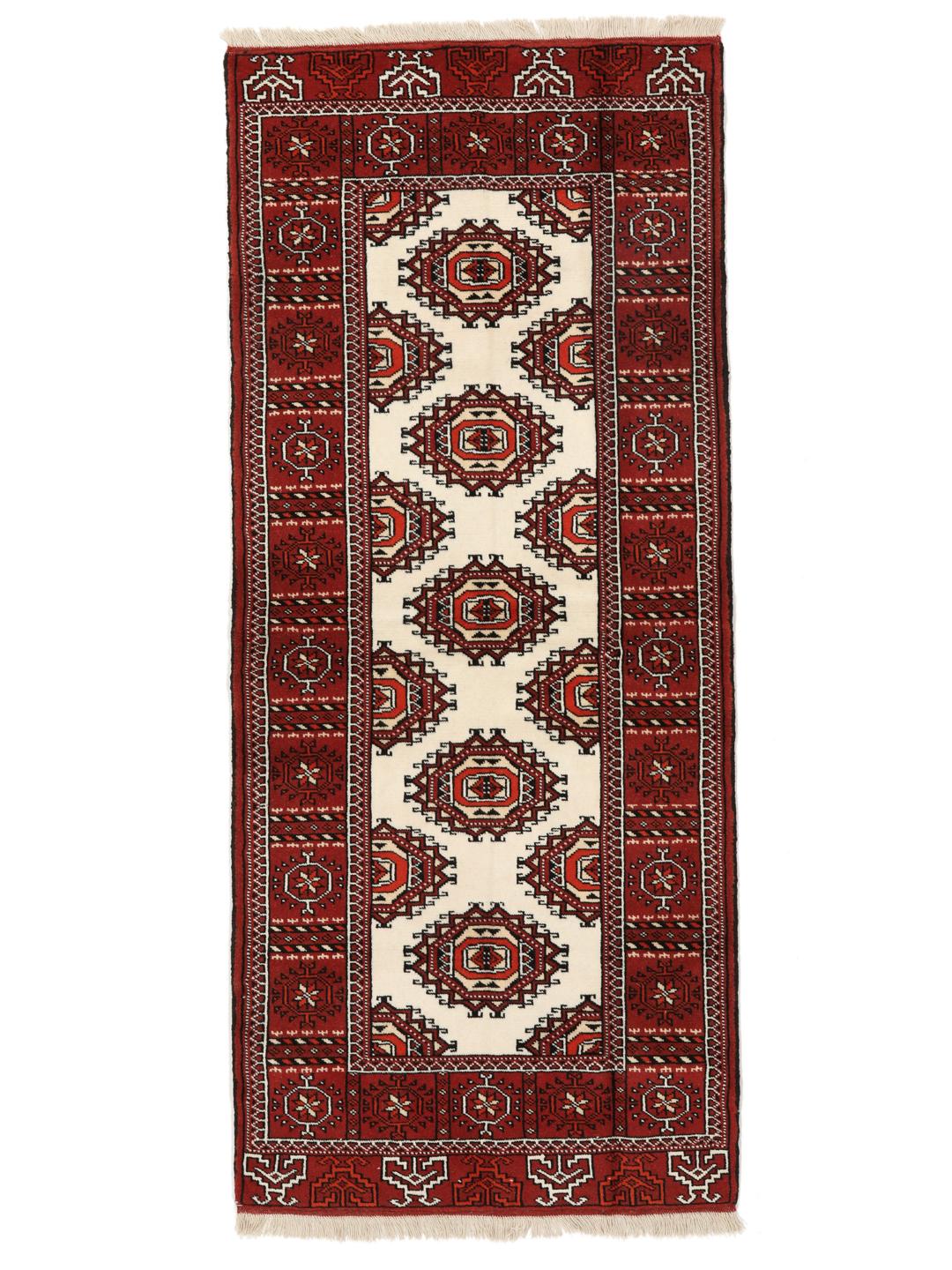
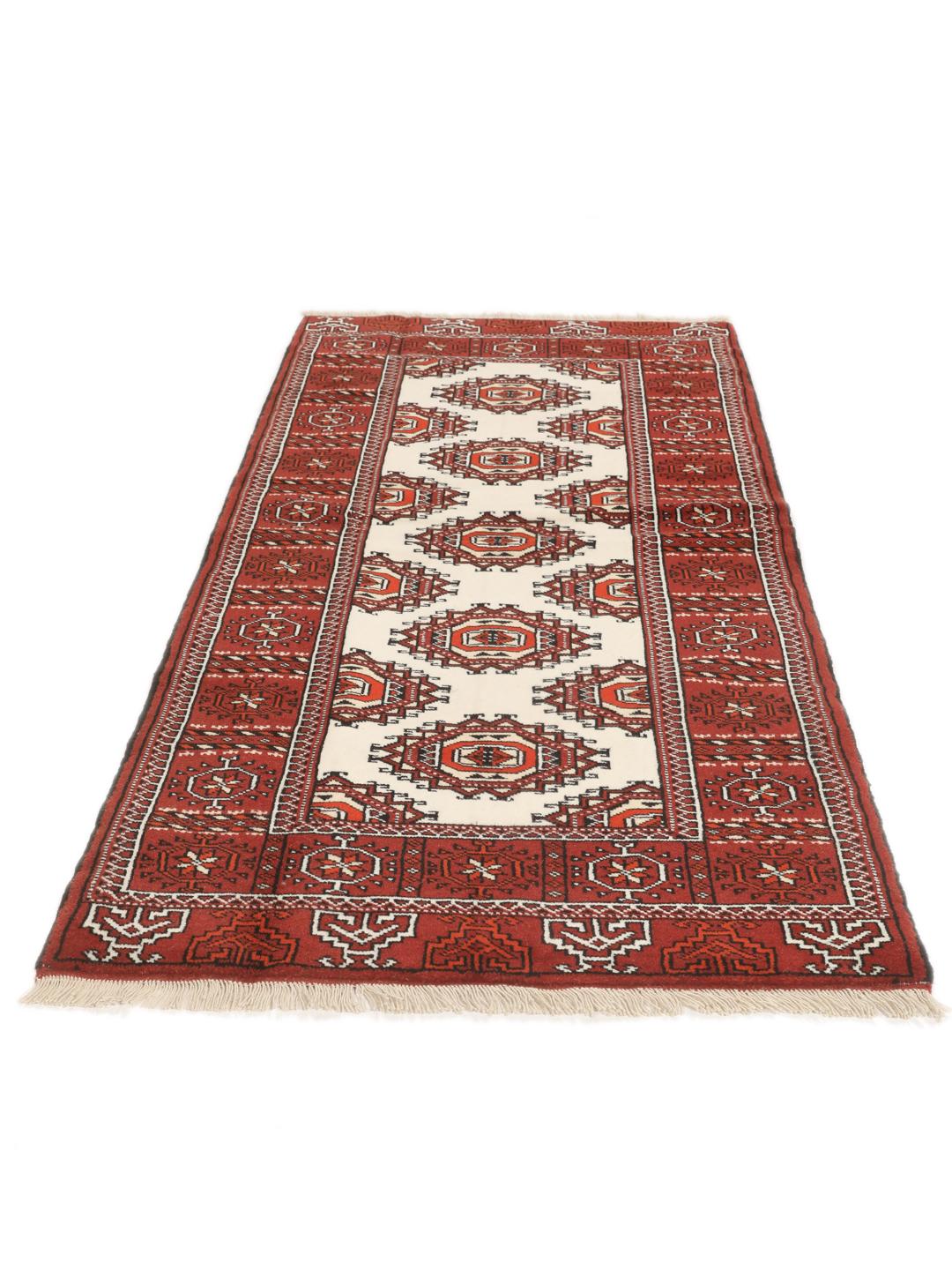
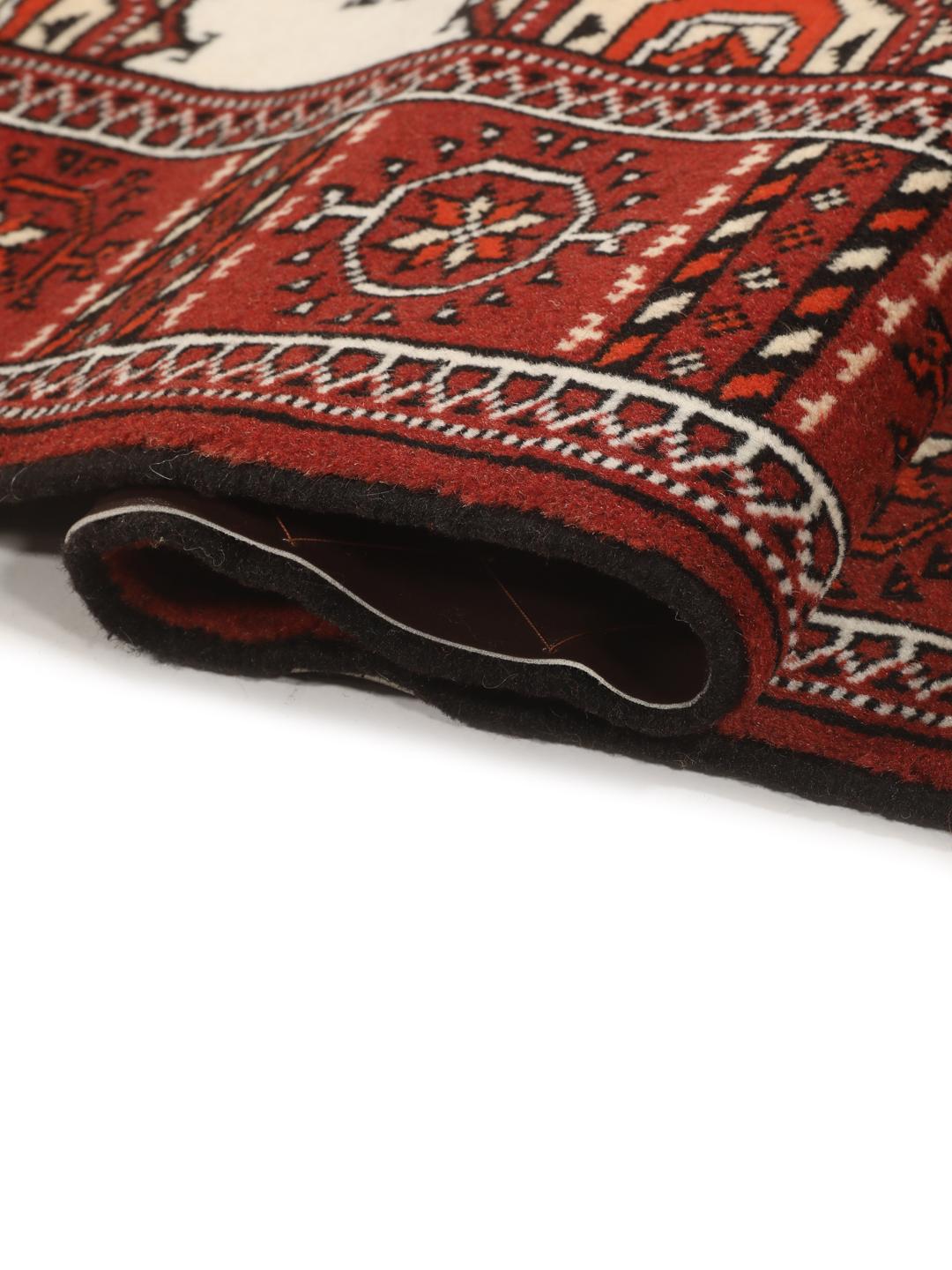
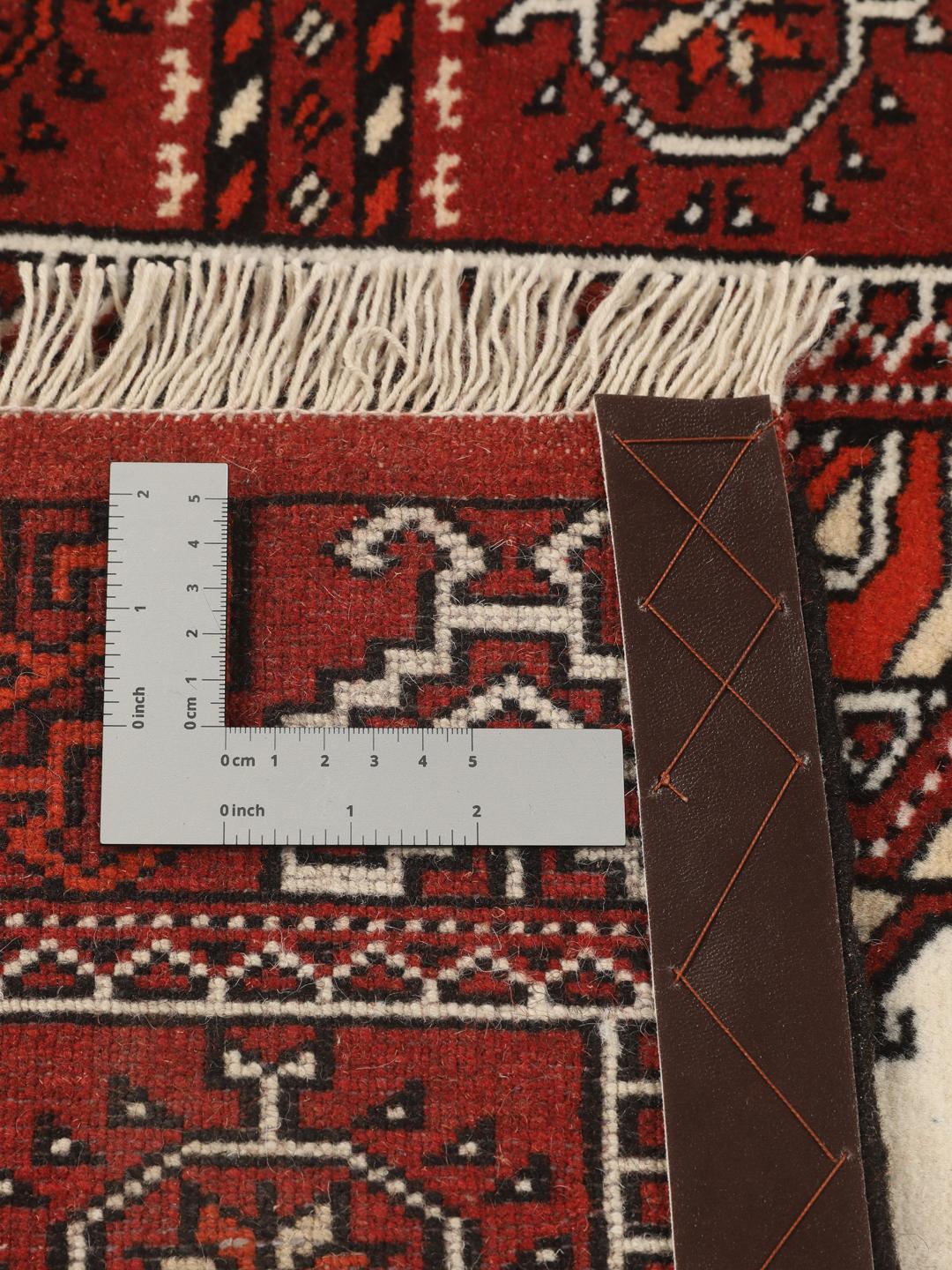
The signature design of this rug features repeating gul motifs, which are stylized, medallion-like shapes that represent tribal heritage and identity. The deep red background is a hallmark of this tradition, symbolising warmth and endurance, often contrasted with cream or dark accents to create a balanced, harmonious aesthetic.
Collectors value these rugs for their deep cultural significance and the skill required to produce them. Owning a Turkaman rug is more than just purchasing a floor covering; it is an investment in a living heritage that celebrates human creativity and the enduring quality of traditional hand-knotting.