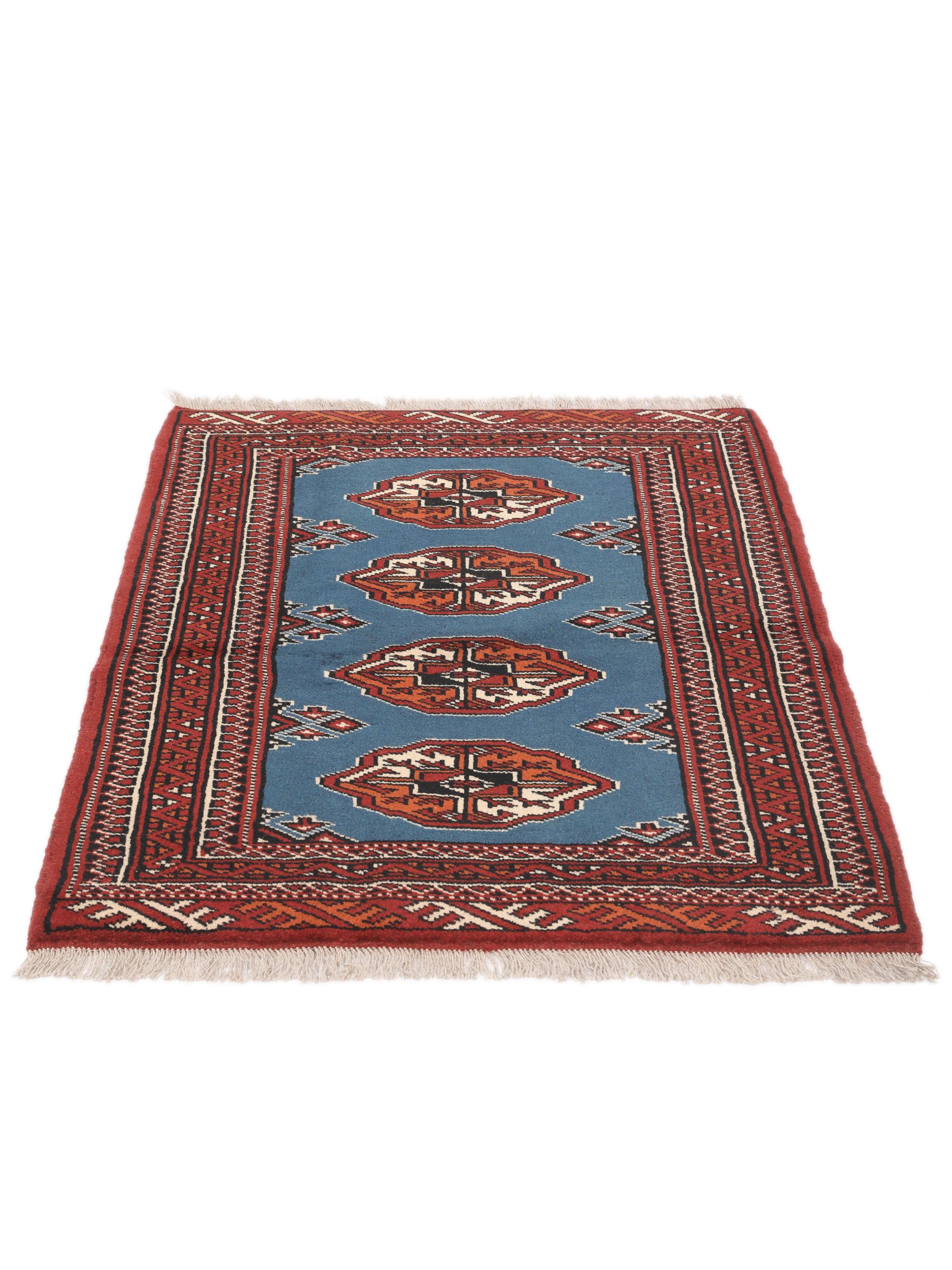
Turkaman rugs originate from the nomadic and semi-nomadic tribes of Central Asia and the broader Middle Eastern region. Historically, these textiles were woven by tribal women who used local wool to create functional items for their tents, such as floor coverings, tent bags, and animal trappings. Over centuries, these designs evolved and gained international recognition for their distinct aesthetic and exceptional durability.
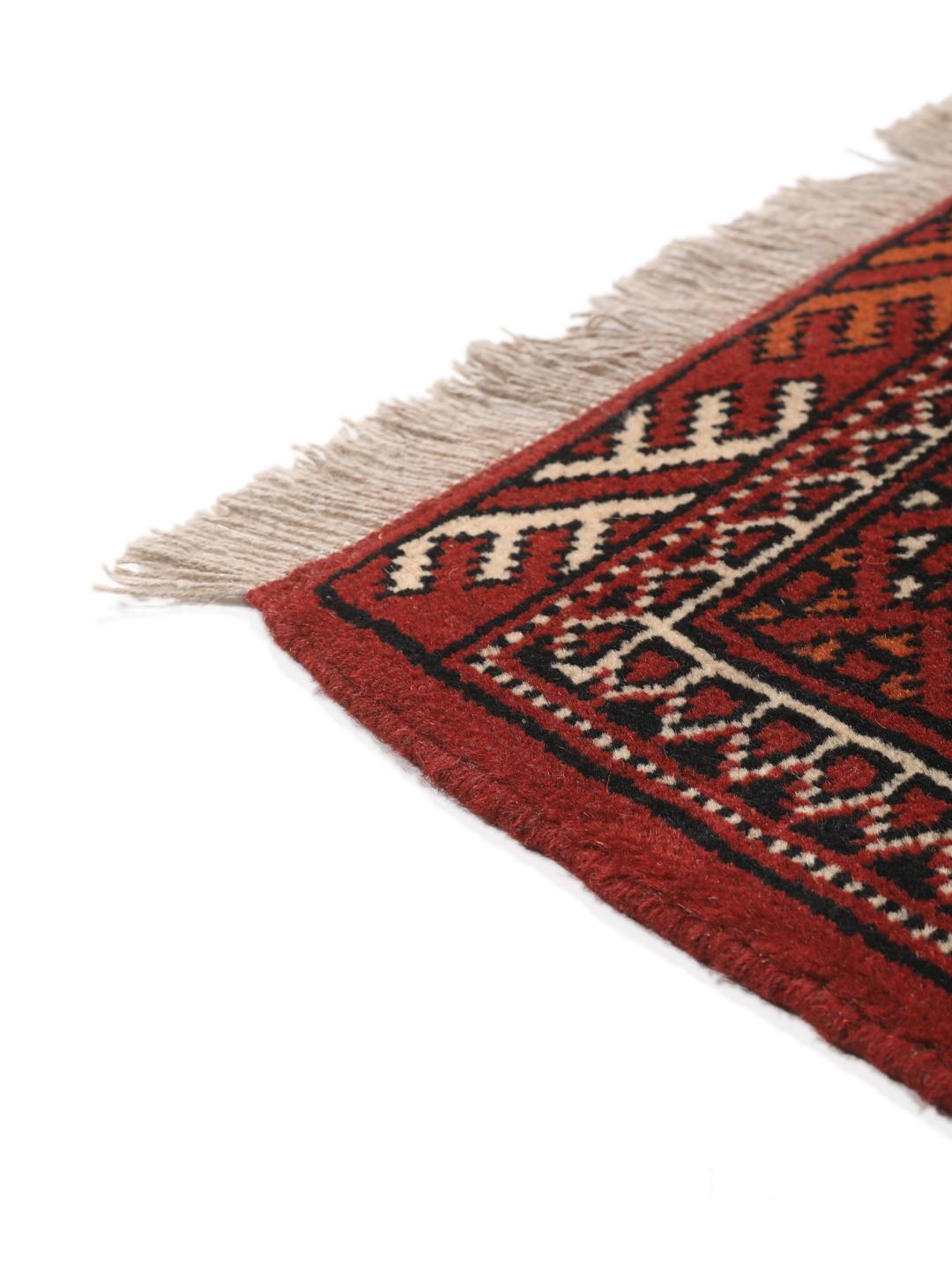
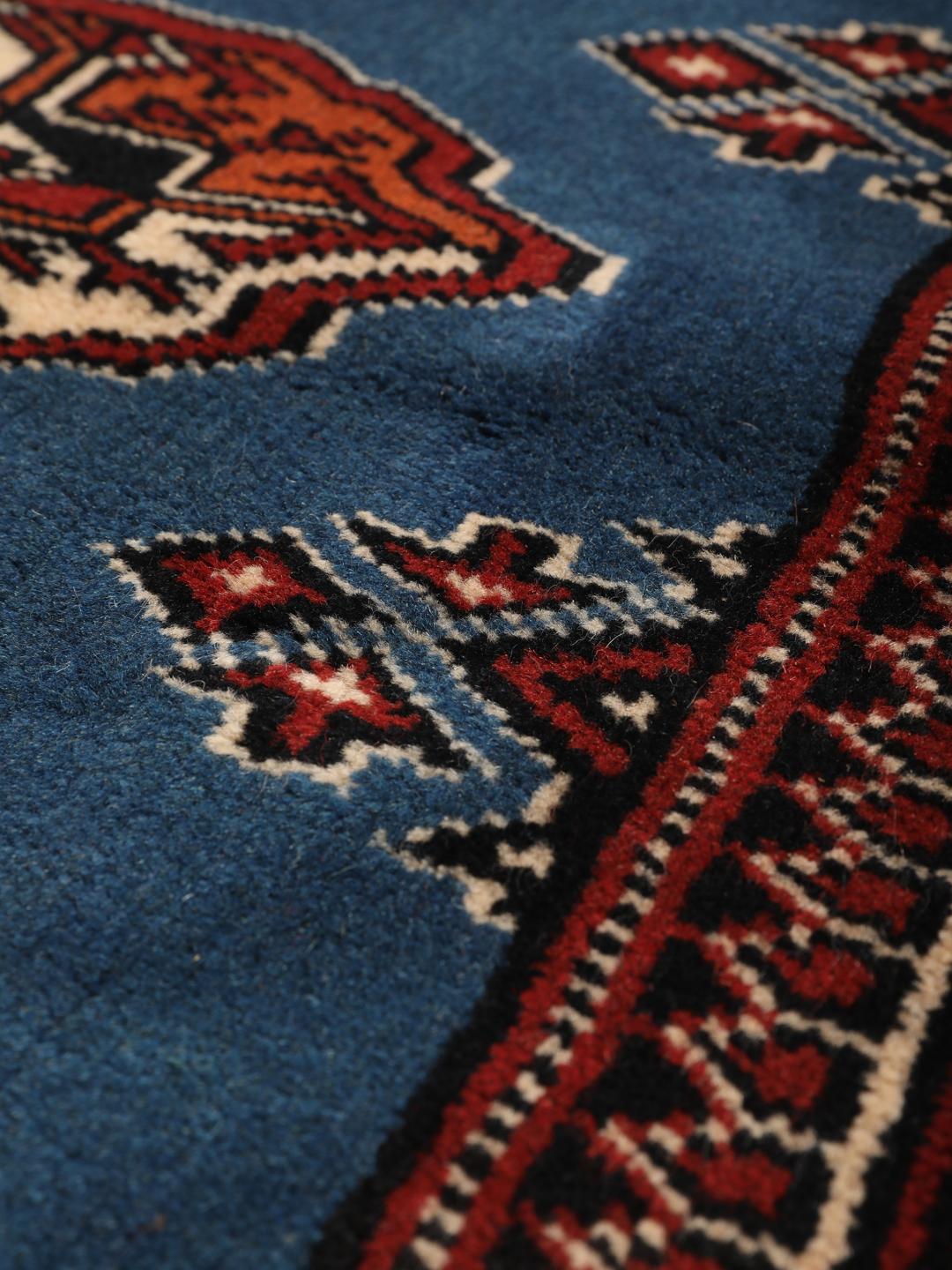
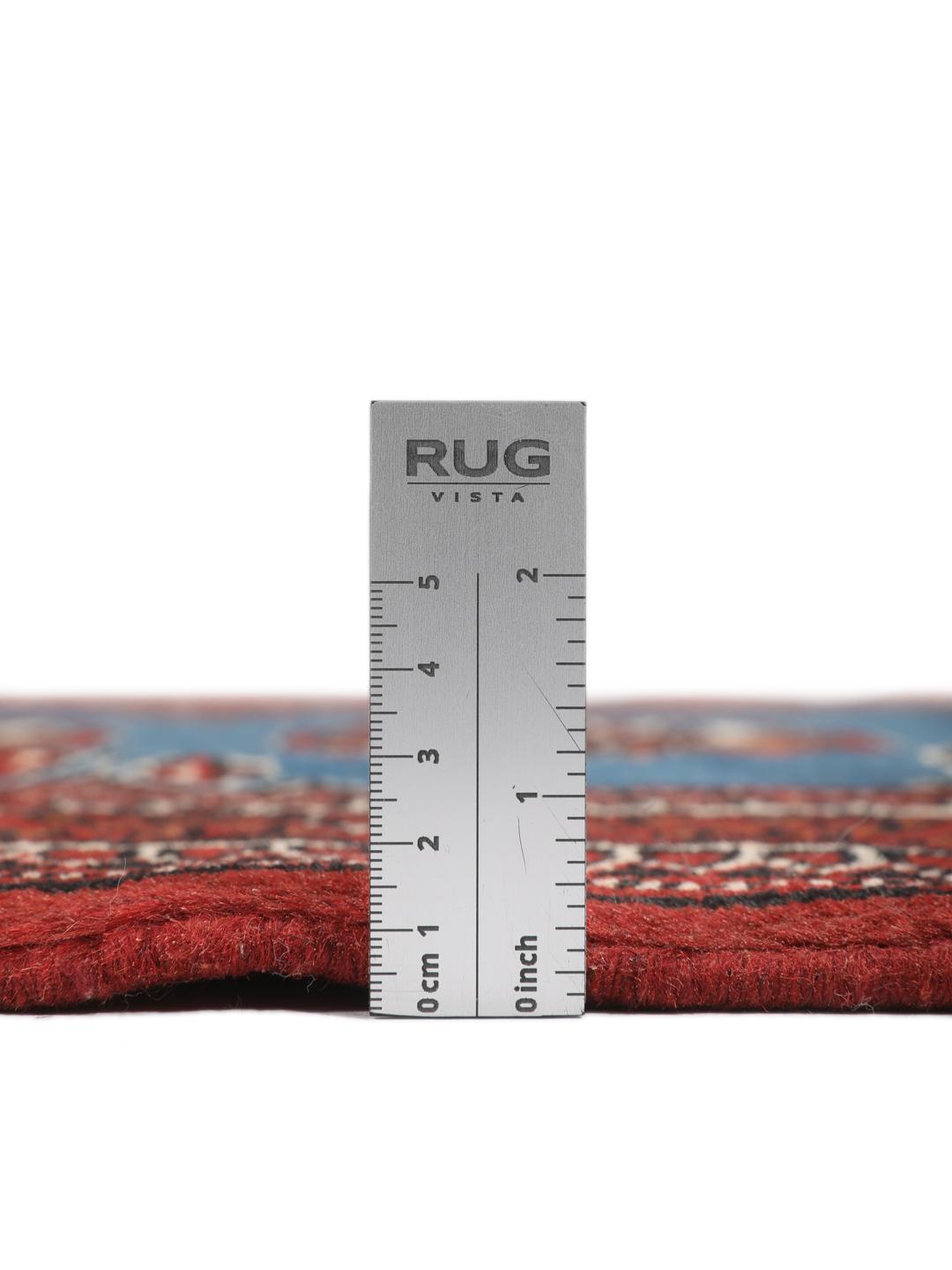
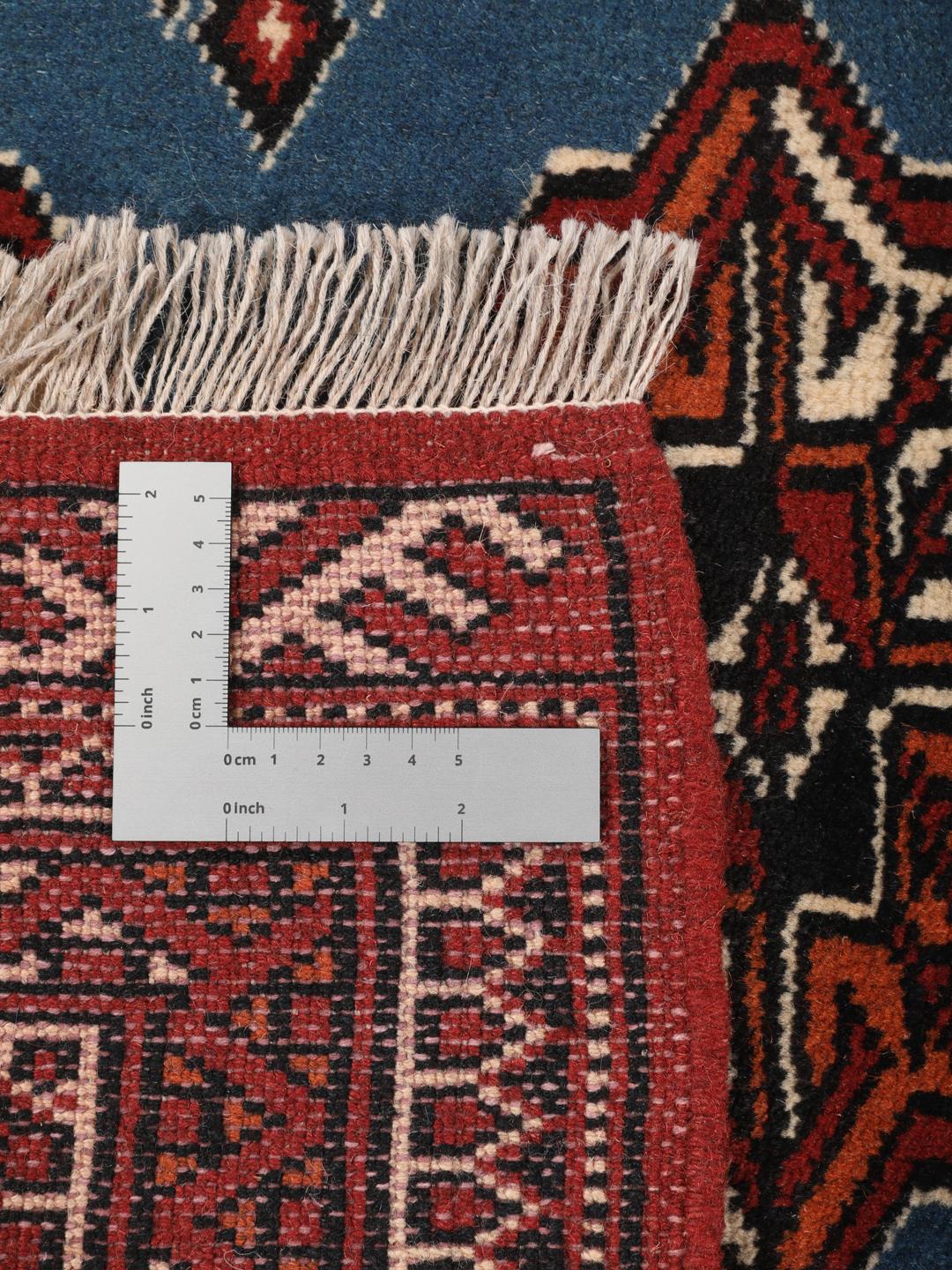
The technical quality of a Turkaman rug is often defined by its knotting style and the use of high-quality, long-staple wool. These rugs are known for their dense construction, which provides a lustrous, sturdy pile. This durability is achieved through traditional methods passed down through generations, ensuring that the rug is not only visually striking but also physically robust enough to handle the rigours of daily life.
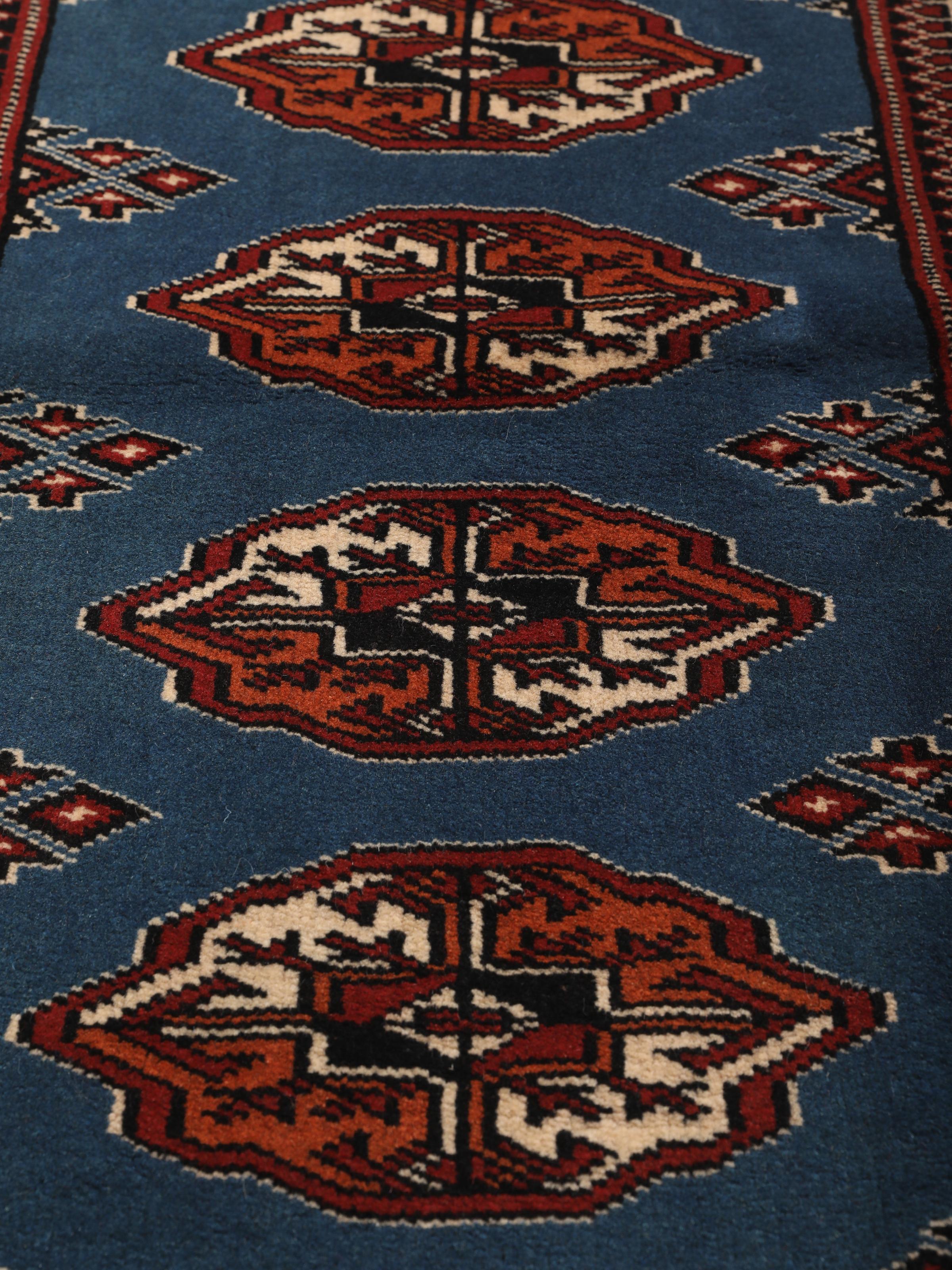
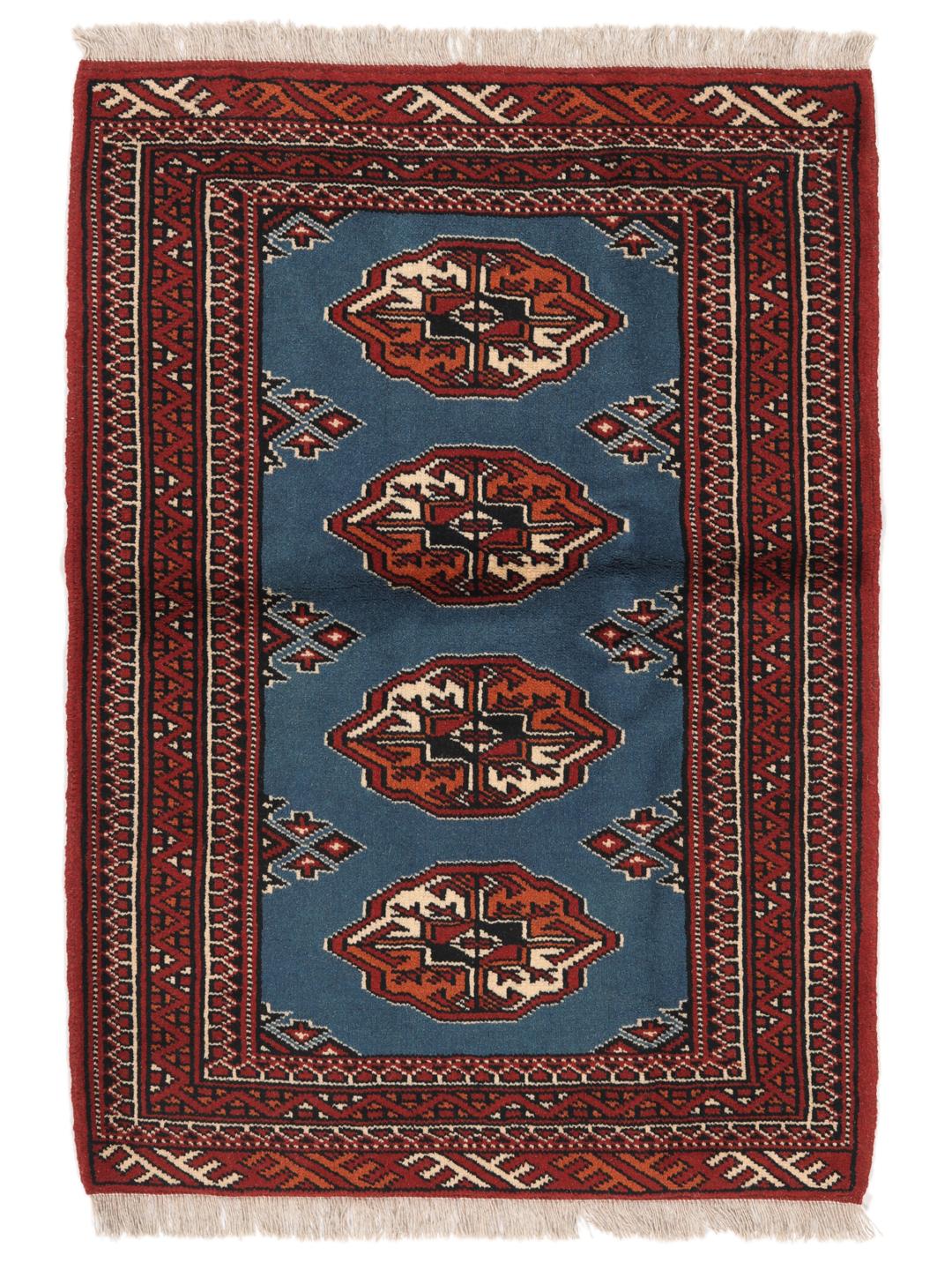
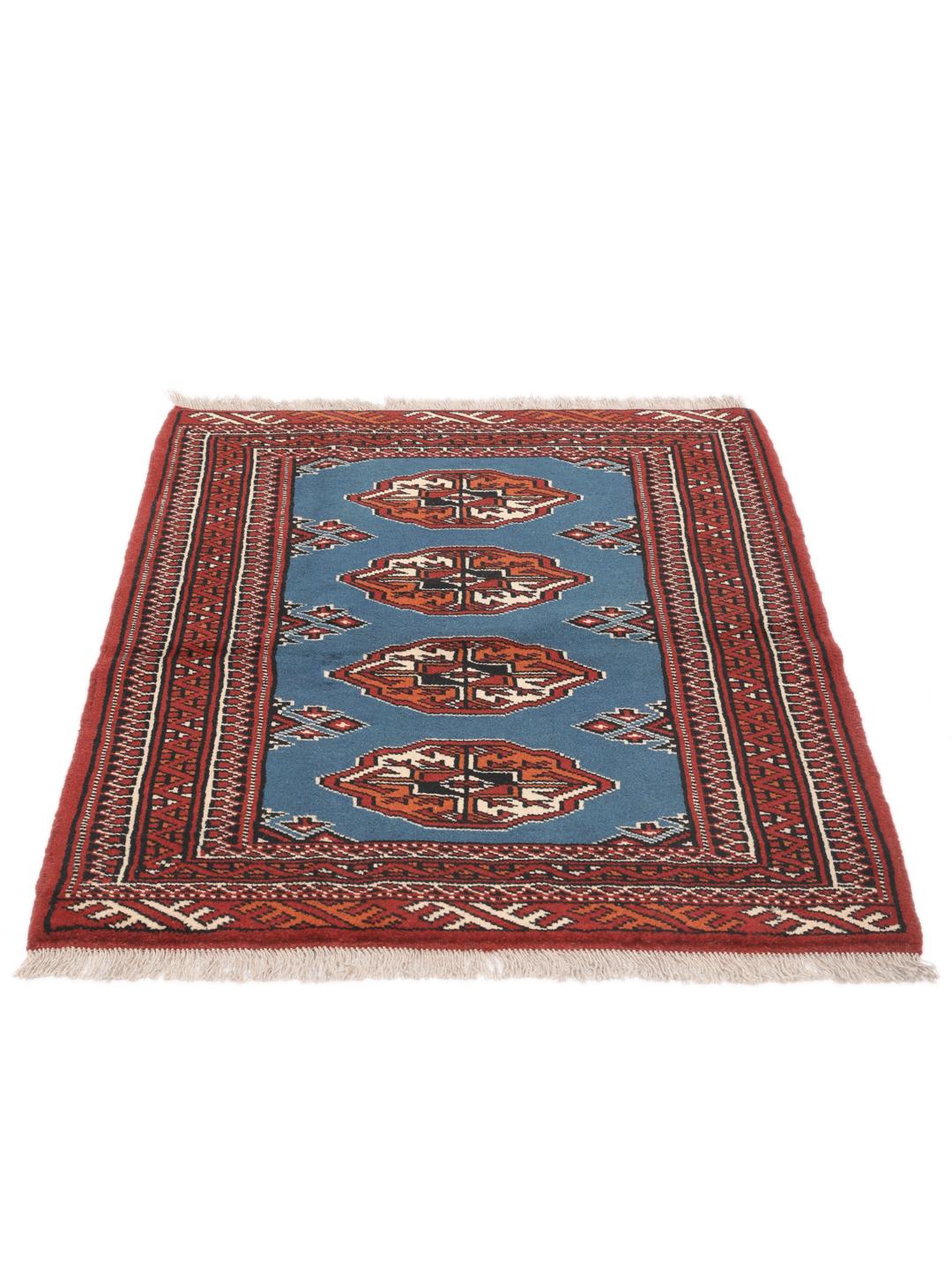
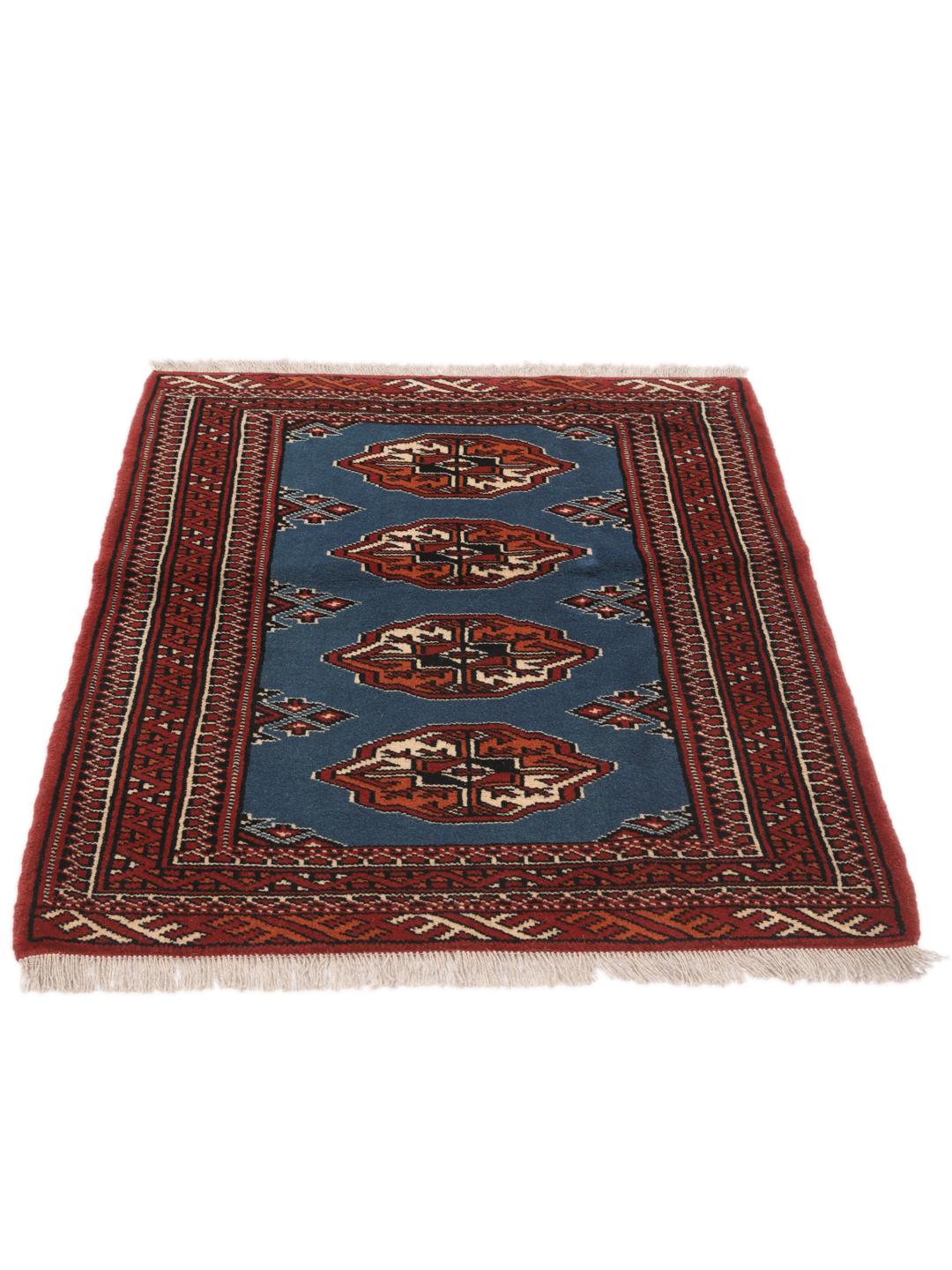
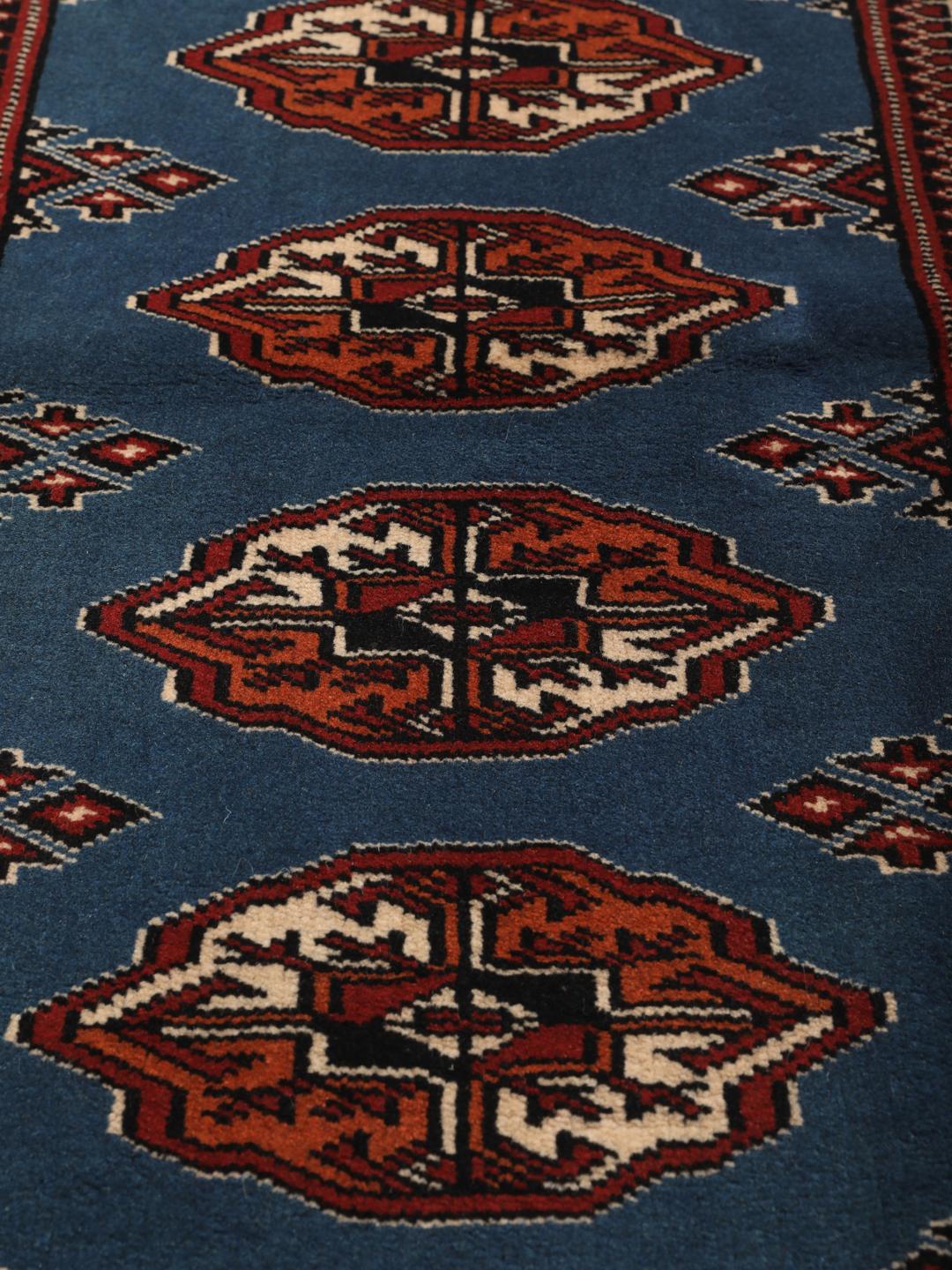
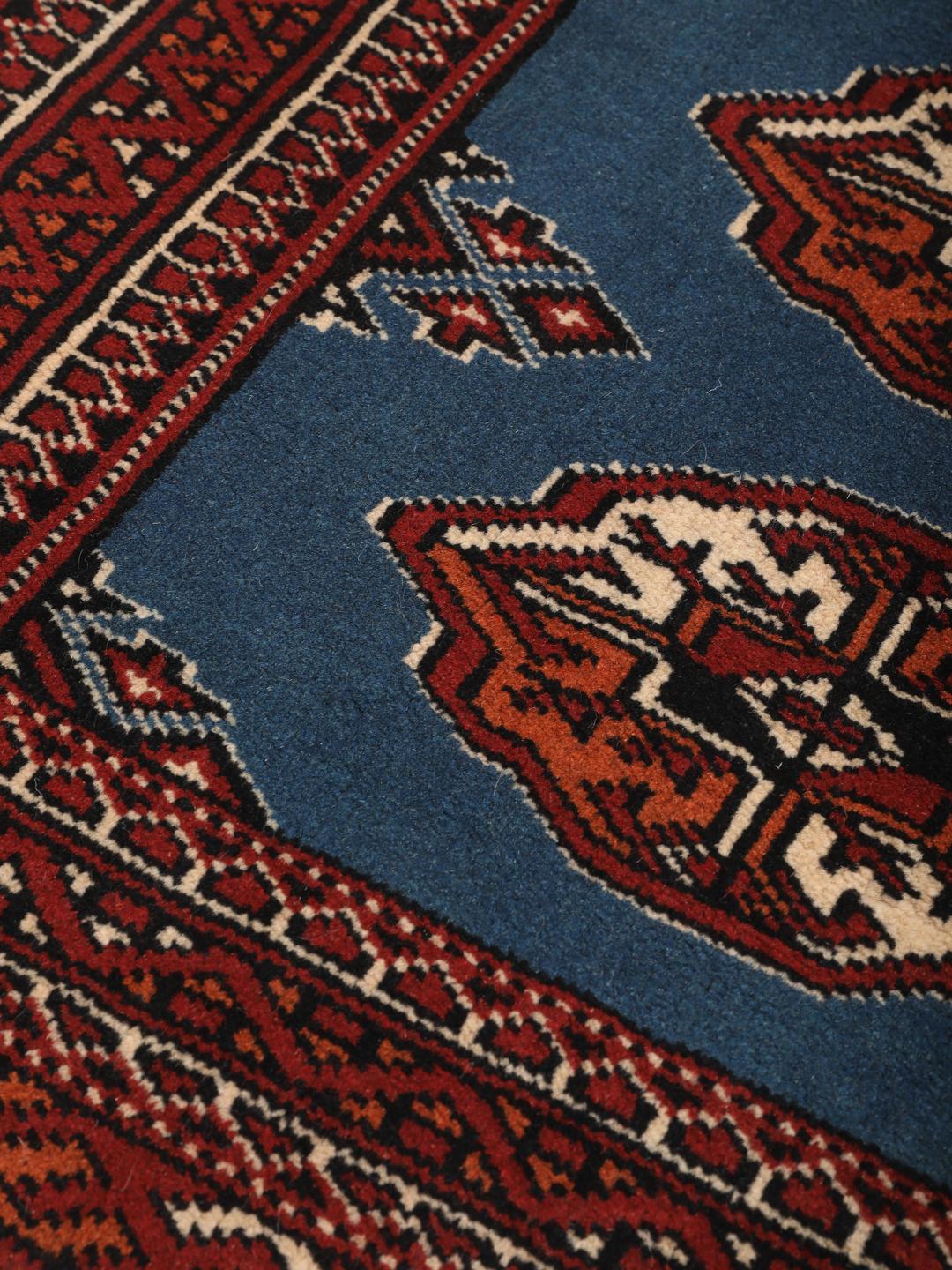
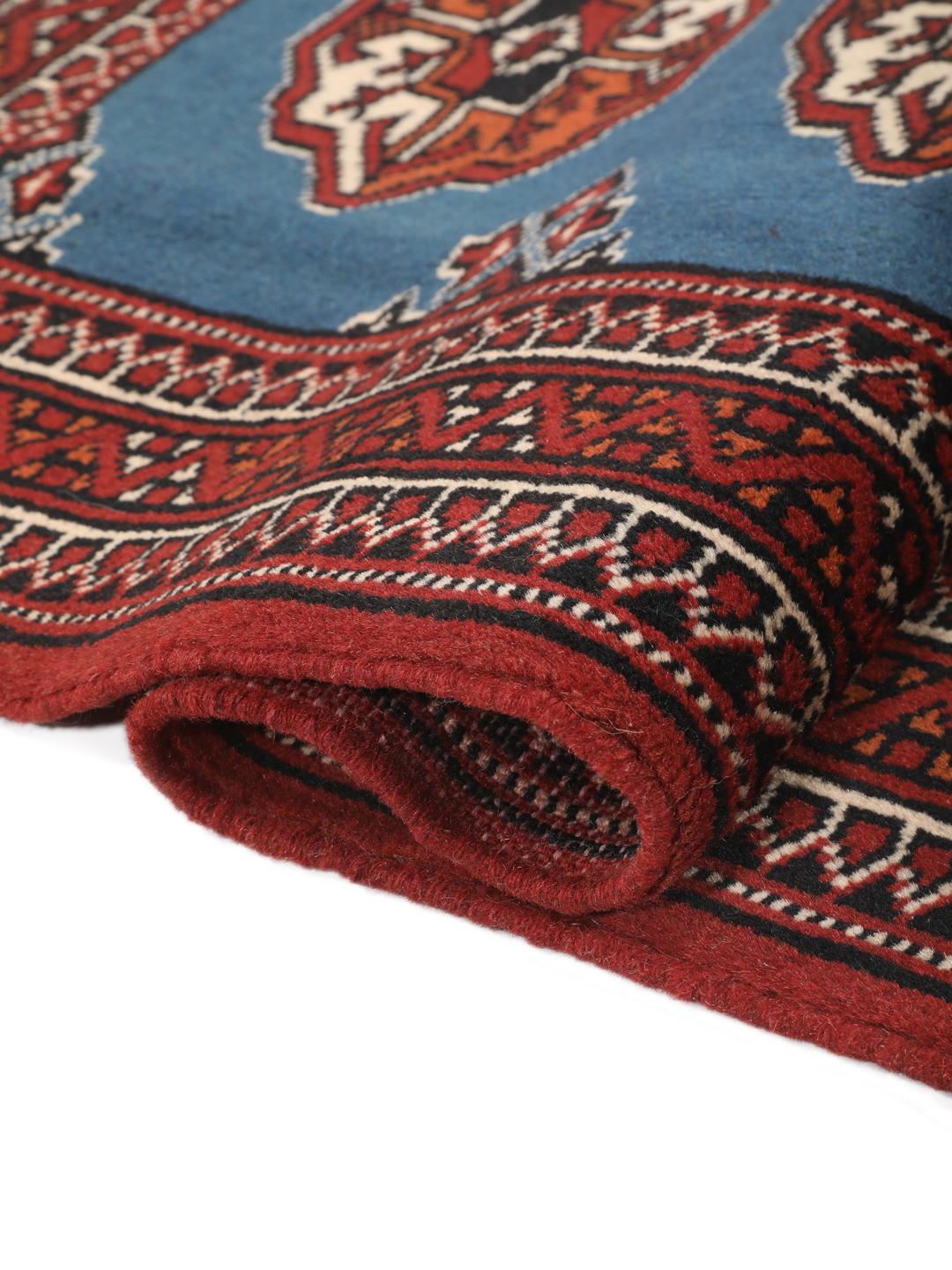
Signature design elements of the Turkaman tradition include the iconic repeating gul motifs. These are often octagonal, geometric shapes that represent tribal identity, arranged in orderly rows across the field. The borders are typically filled with intricate geometric patterns that frame the primary design. While red and blue are traditional colour palettes, the specific interplay of these shades in this rug highlights the characteristic visual language of the region.
Collecting Turkaman rugs is an appreciation of a living heritage. Each rug serves as a narrative of the weaver's skill and the cultural history of the tribe from which it originated. By owning one, you are participating in a tradition that values patience, precision, and the artistic expression of nomadic life, ensuring that these skills remain relevant in the modern home.