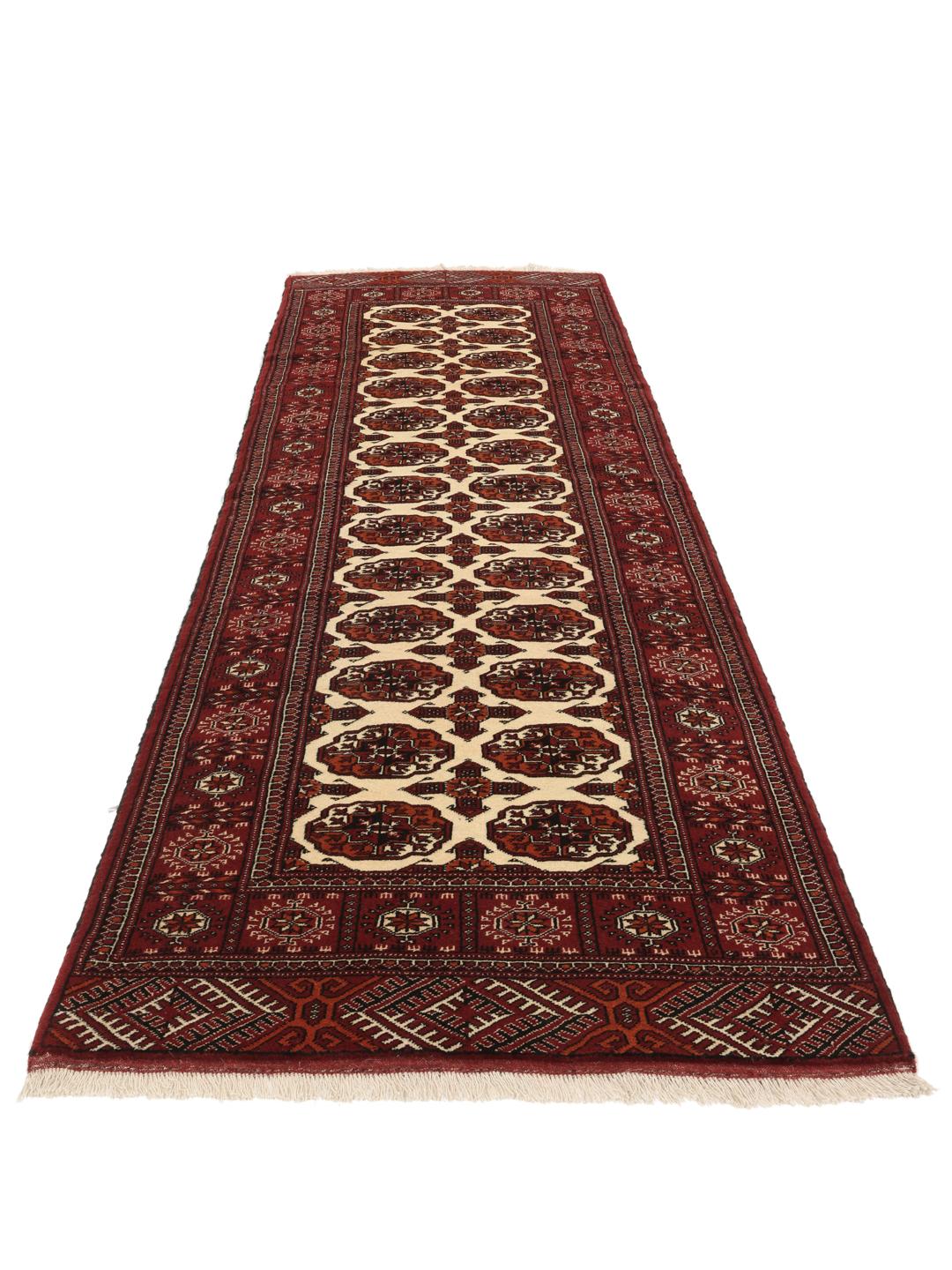
The Turkaman tradition is deeply rooted in the nomadic history of the Middle Eastern region. Historically, these rugs were woven by tribal groups who moved across vast landscapes, creating textiles that were both functional floor coverings and expressions of cultural identity. Over centuries, these designs have evolved, yet they remain deeply connected to the ancient techniques passed down through generations of skilled weavers.
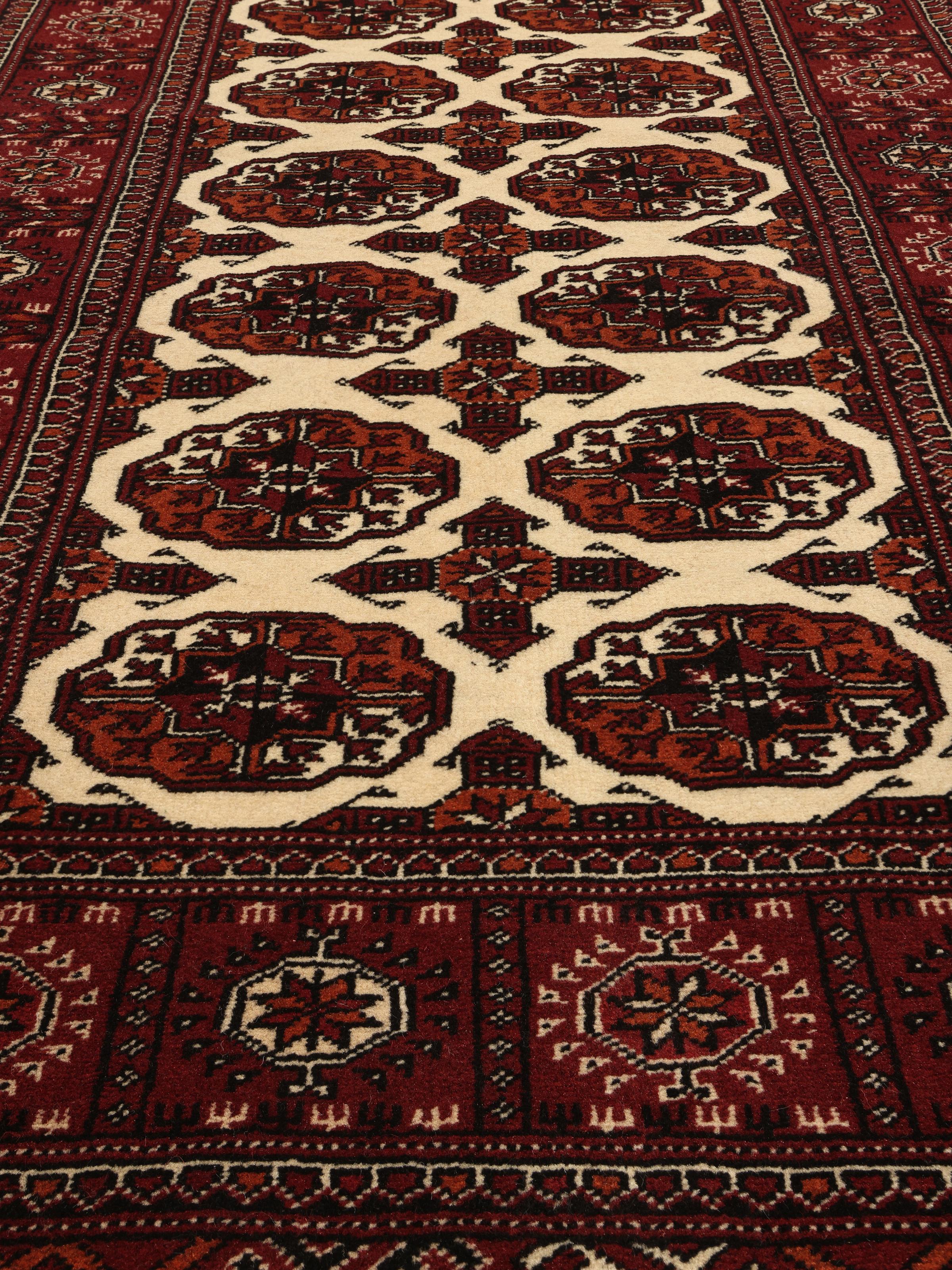
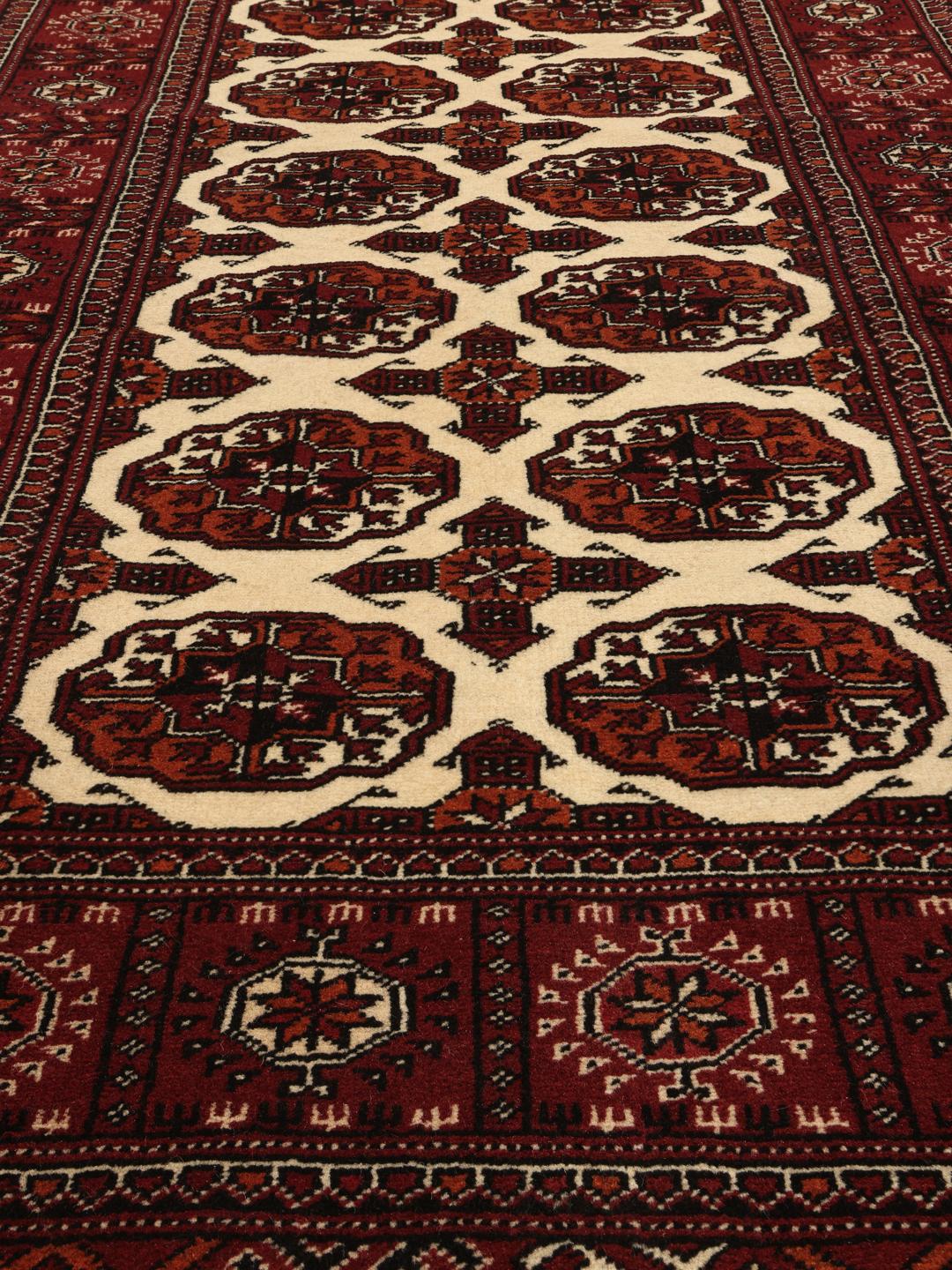
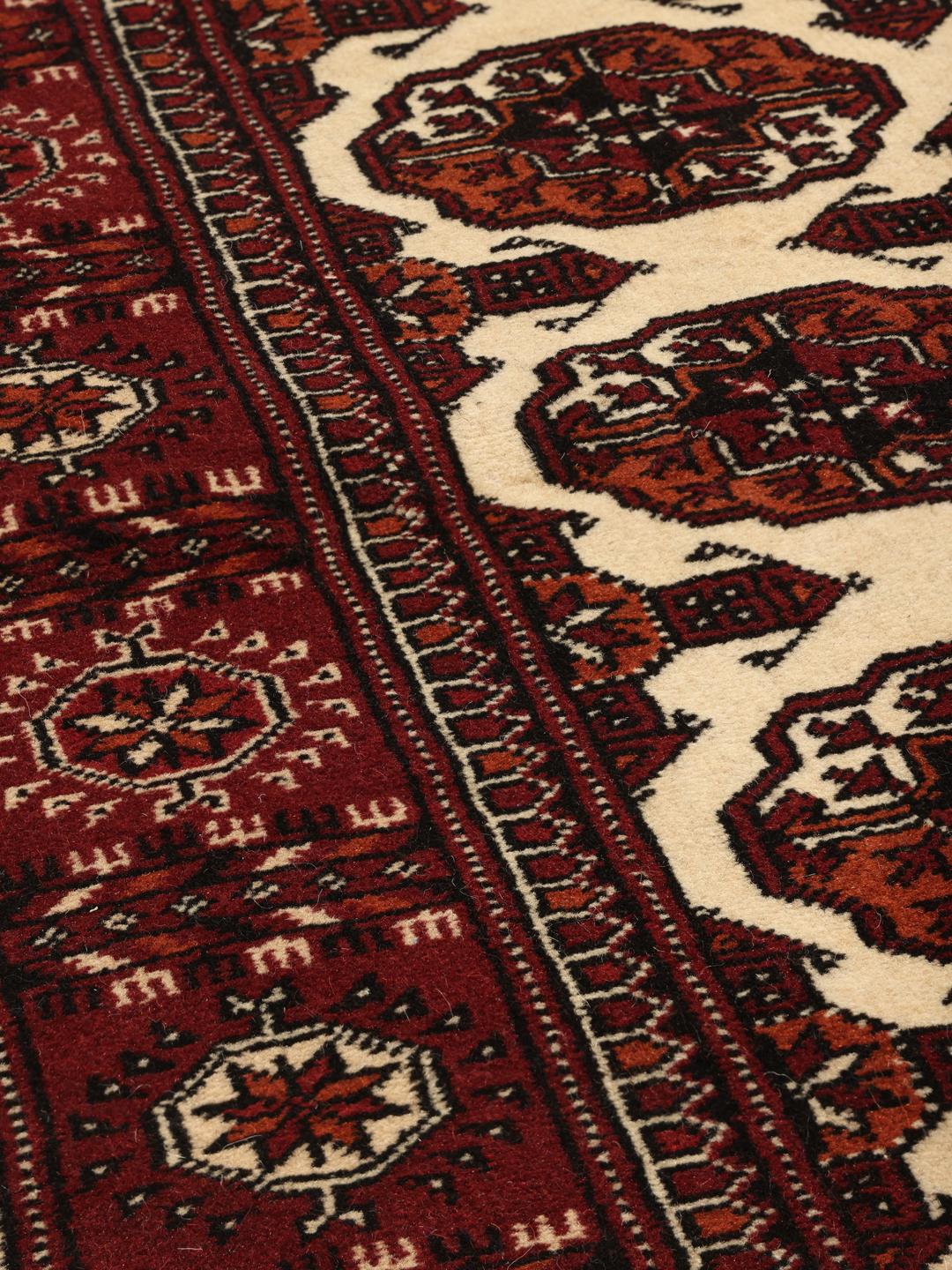
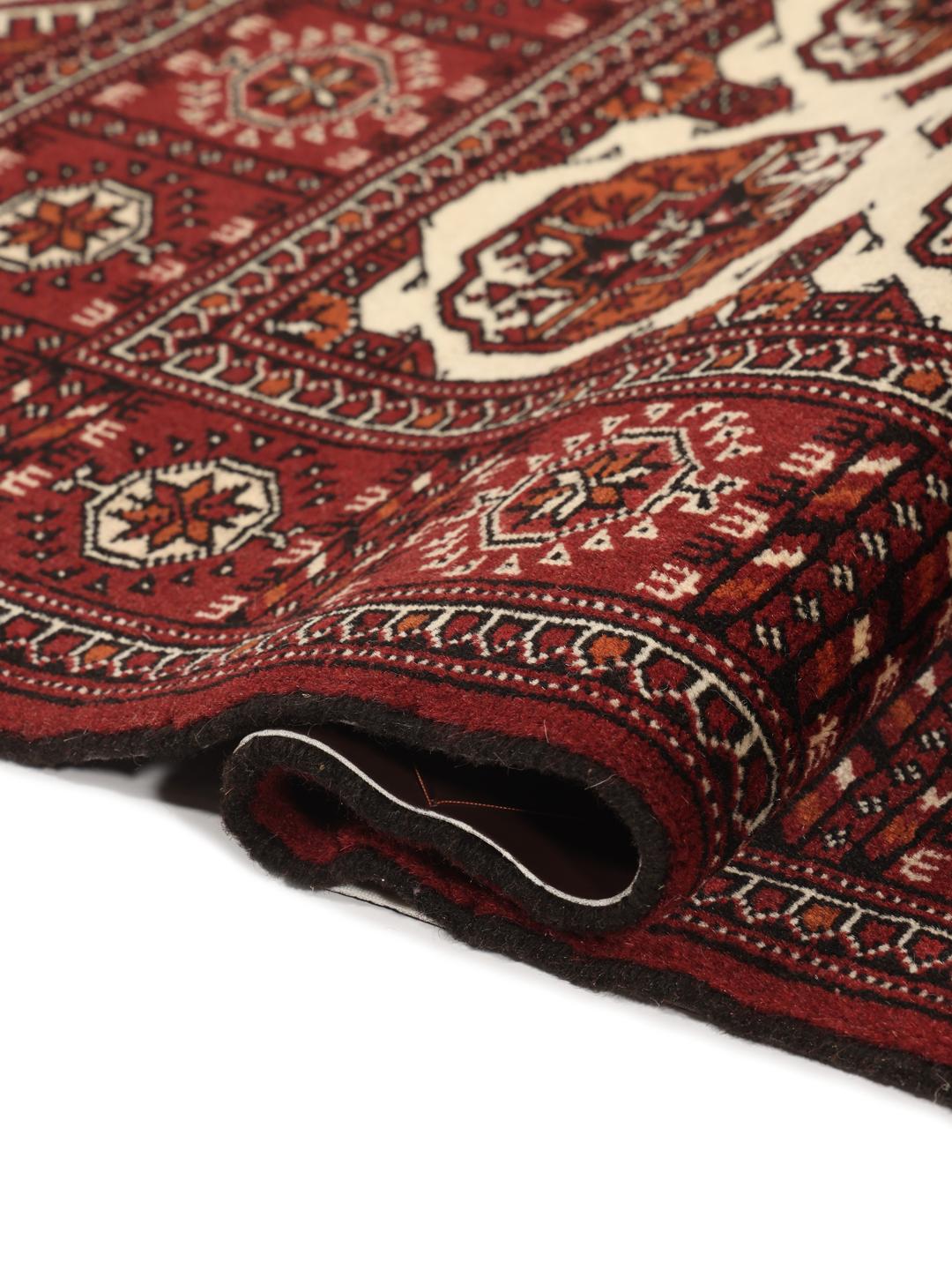
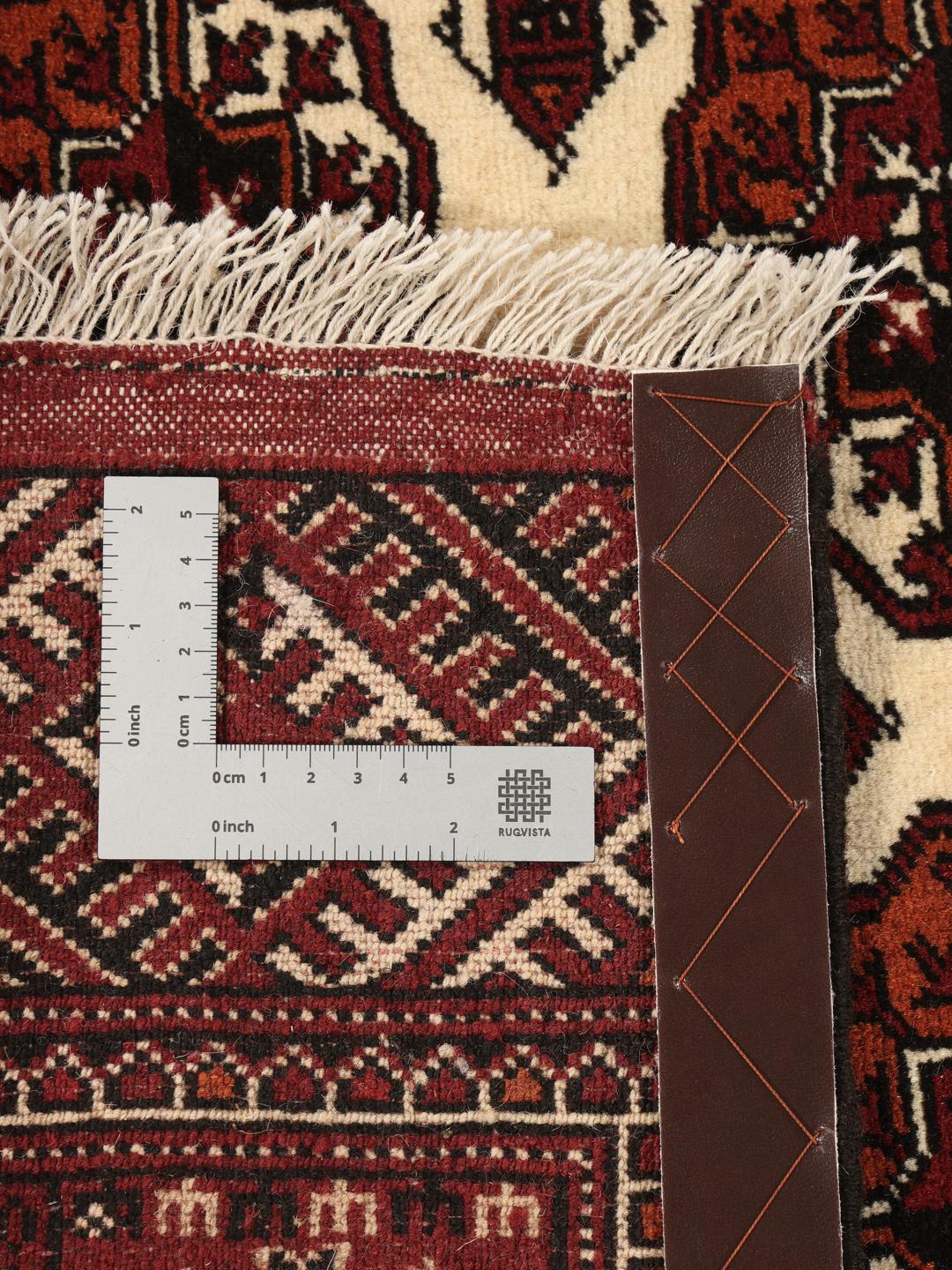
The term 'Turkaman' refers to a specific style of knotting and design that is synonymous with quality and longevity. The construction often involves a very tight knot count, which is crucial for achieving the sharp, defined motifs that characterise these pieces. This density is not merely aesthetic; it is what gives the wool its lustrous finish and ensures the rug can withstand generations of use.
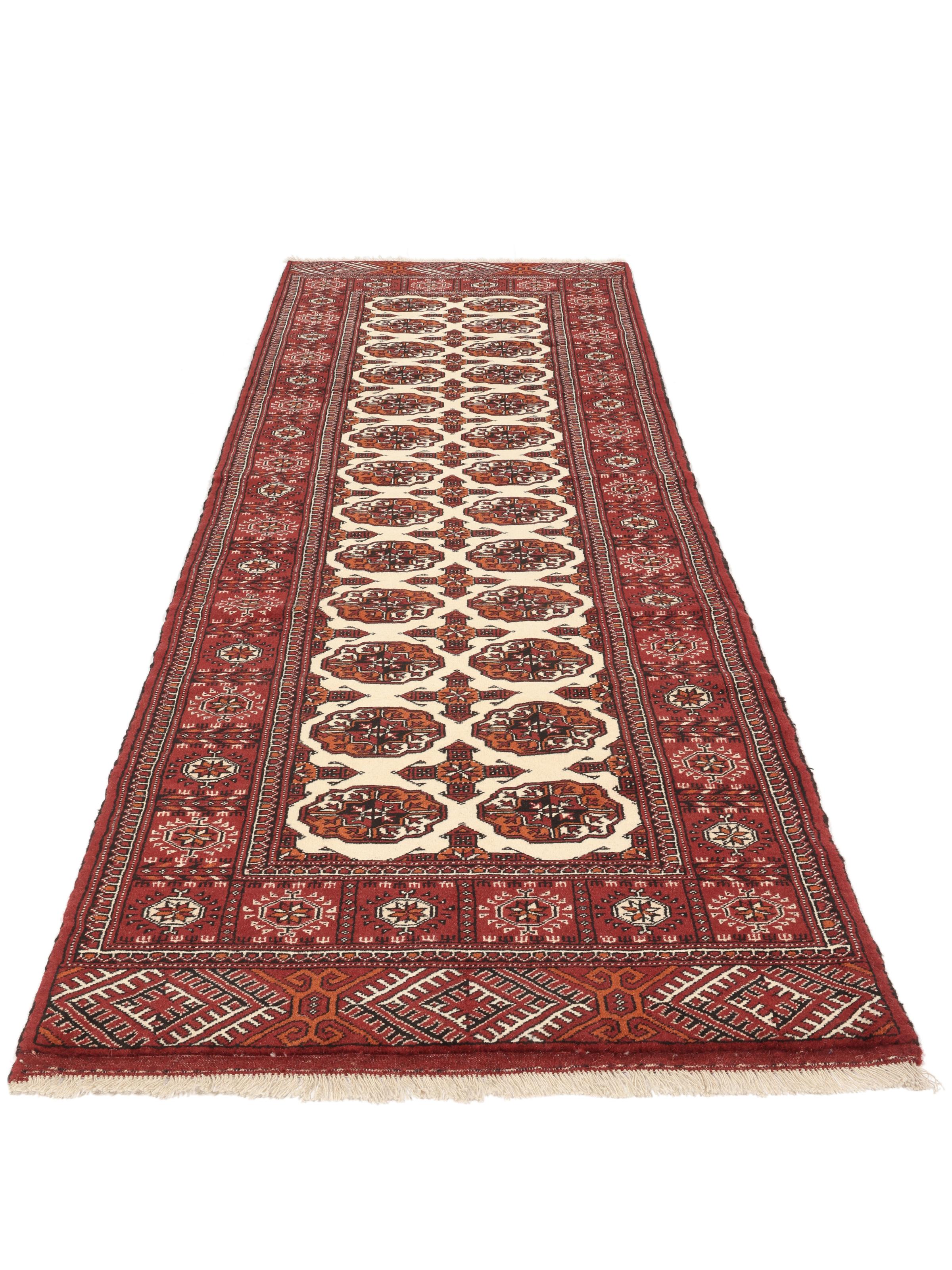
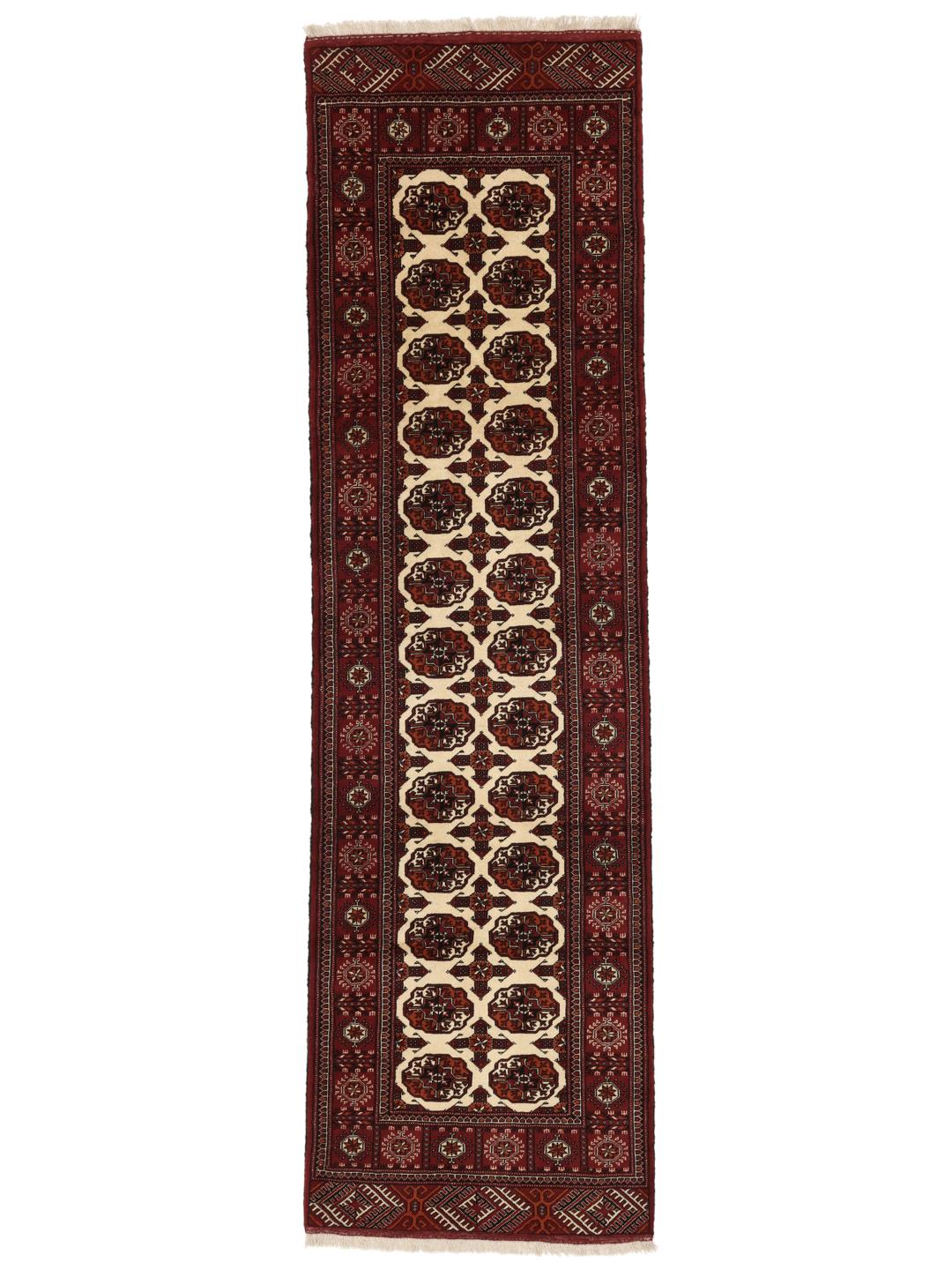
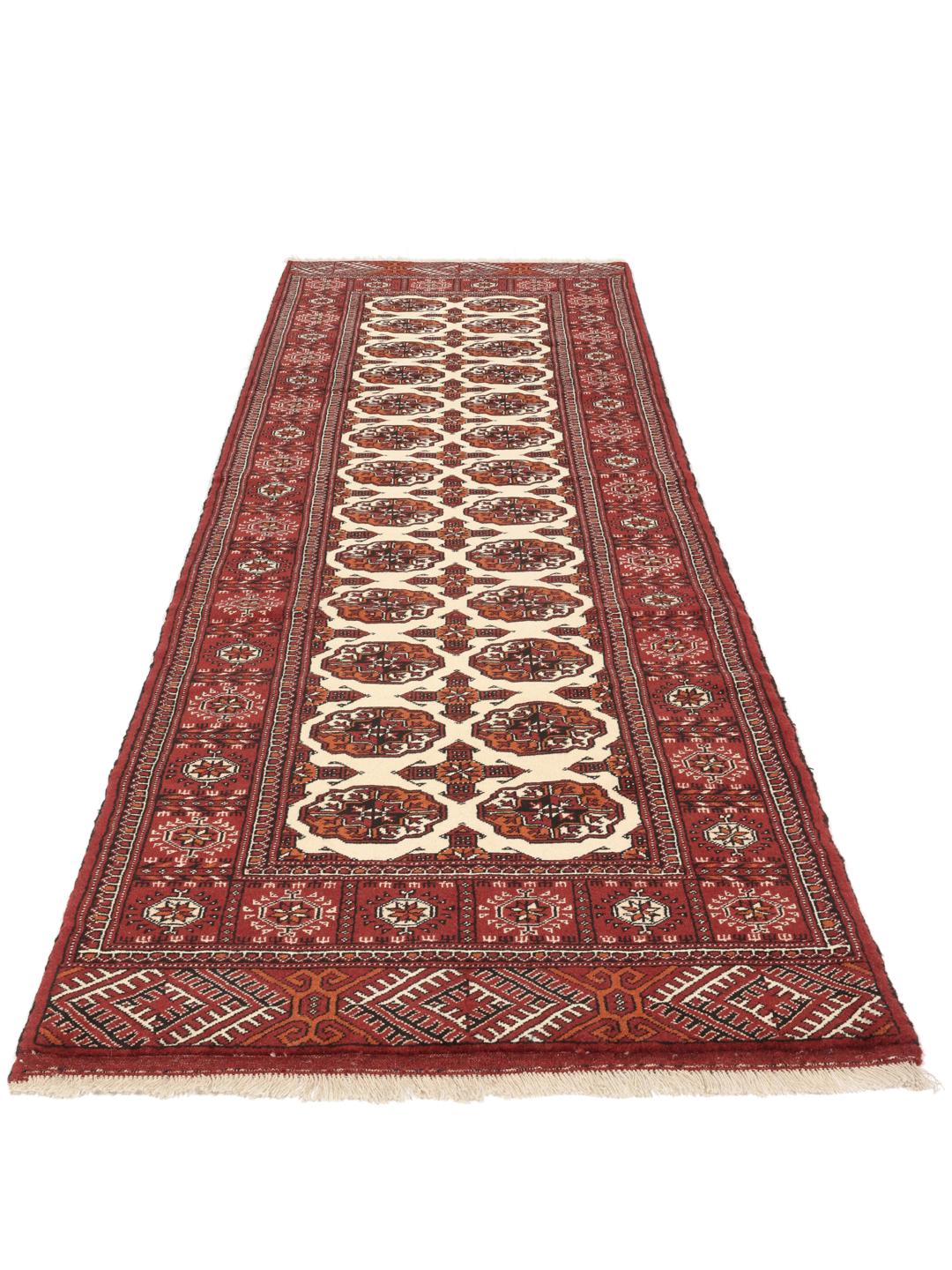
Visually, these rugs are defined by their use of repeating motifs, most notably the 'gul'—a stylised, octagonal emblem that represents the tribal lineage of the weaver. These medallions are typically set against a deep, rich field of red, creating a sense of harmony and balance. The borders are often complex, featuring geometric patterns that frame the field with precision.
Owning a piece from this tradition is an act of preserving heritage. These rugs are highly valued by collectors not only for their beauty but for the skill required to produce them. When you bring this runner into your home, you are acquiring a piece of history, crafted with an attention to detail that reflects a timeless dedication to the weaver's art.