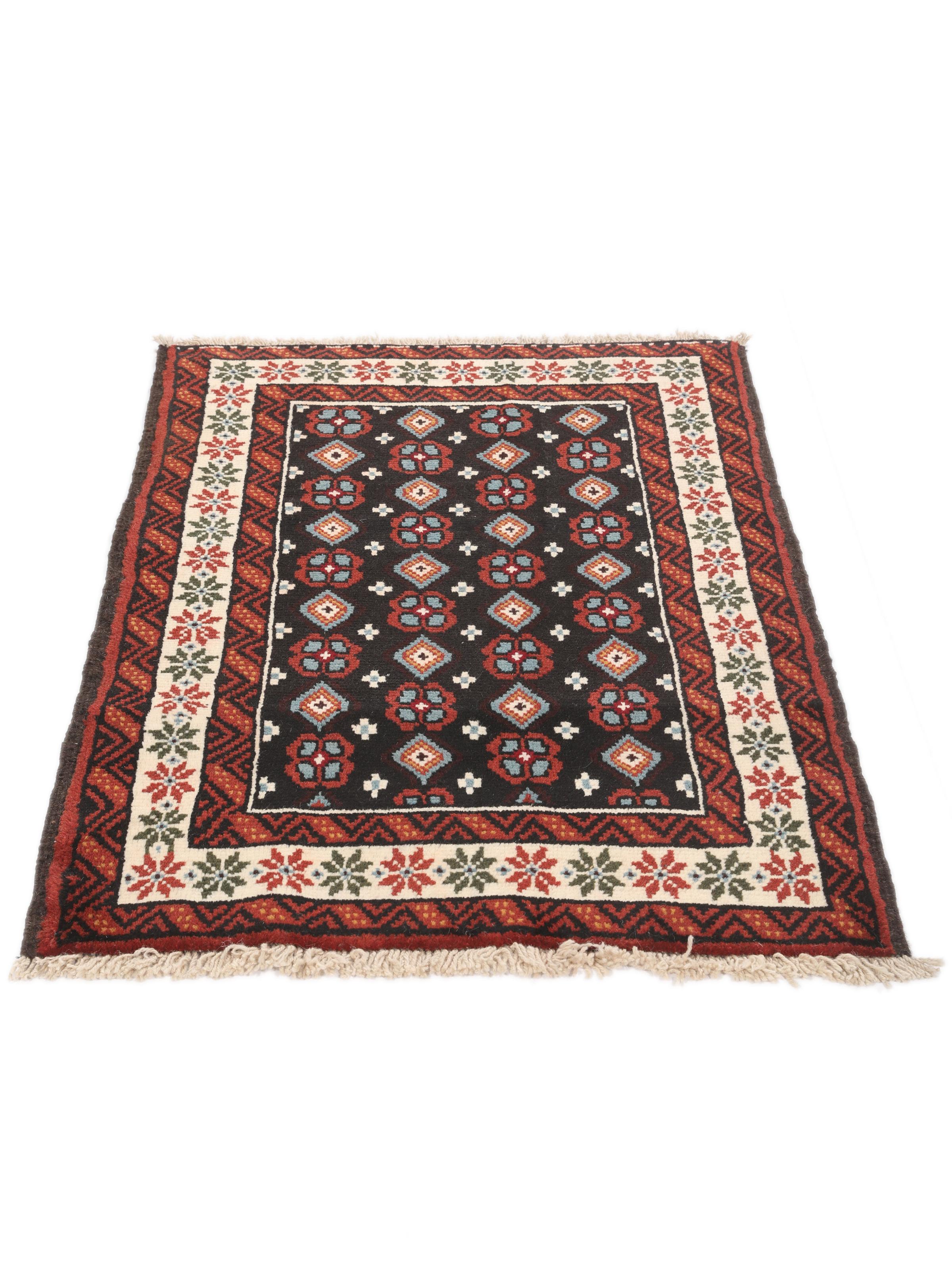
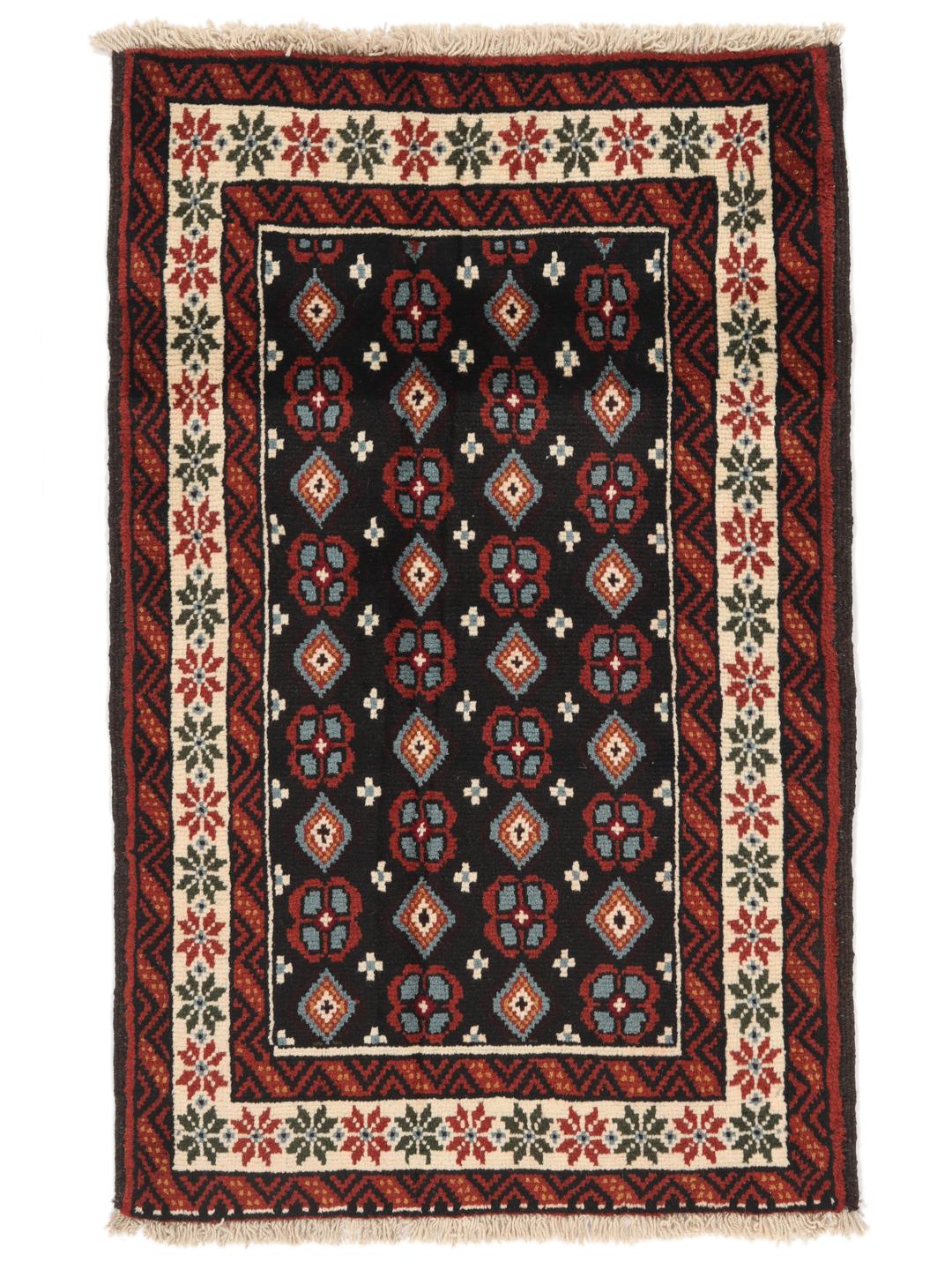
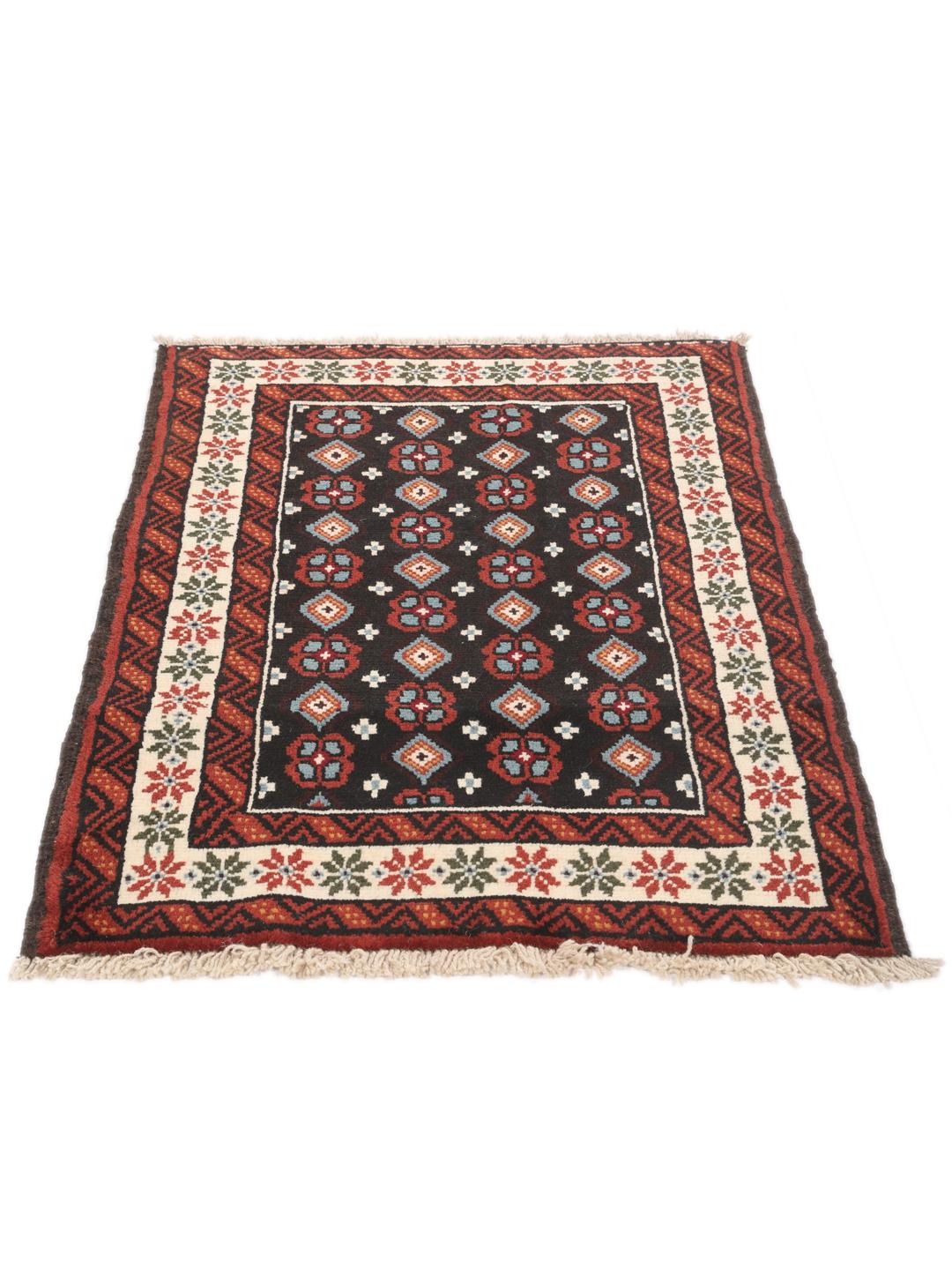
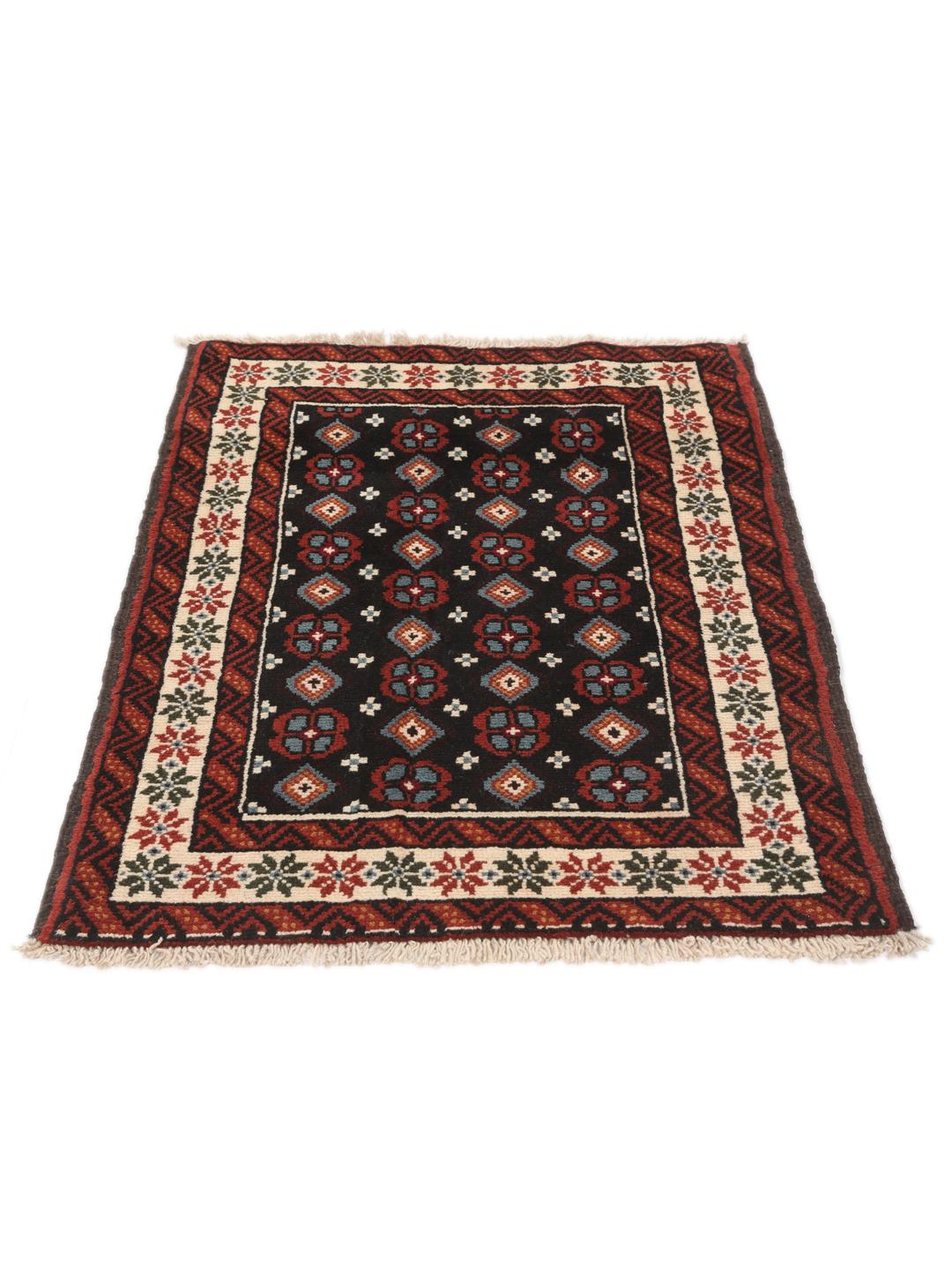
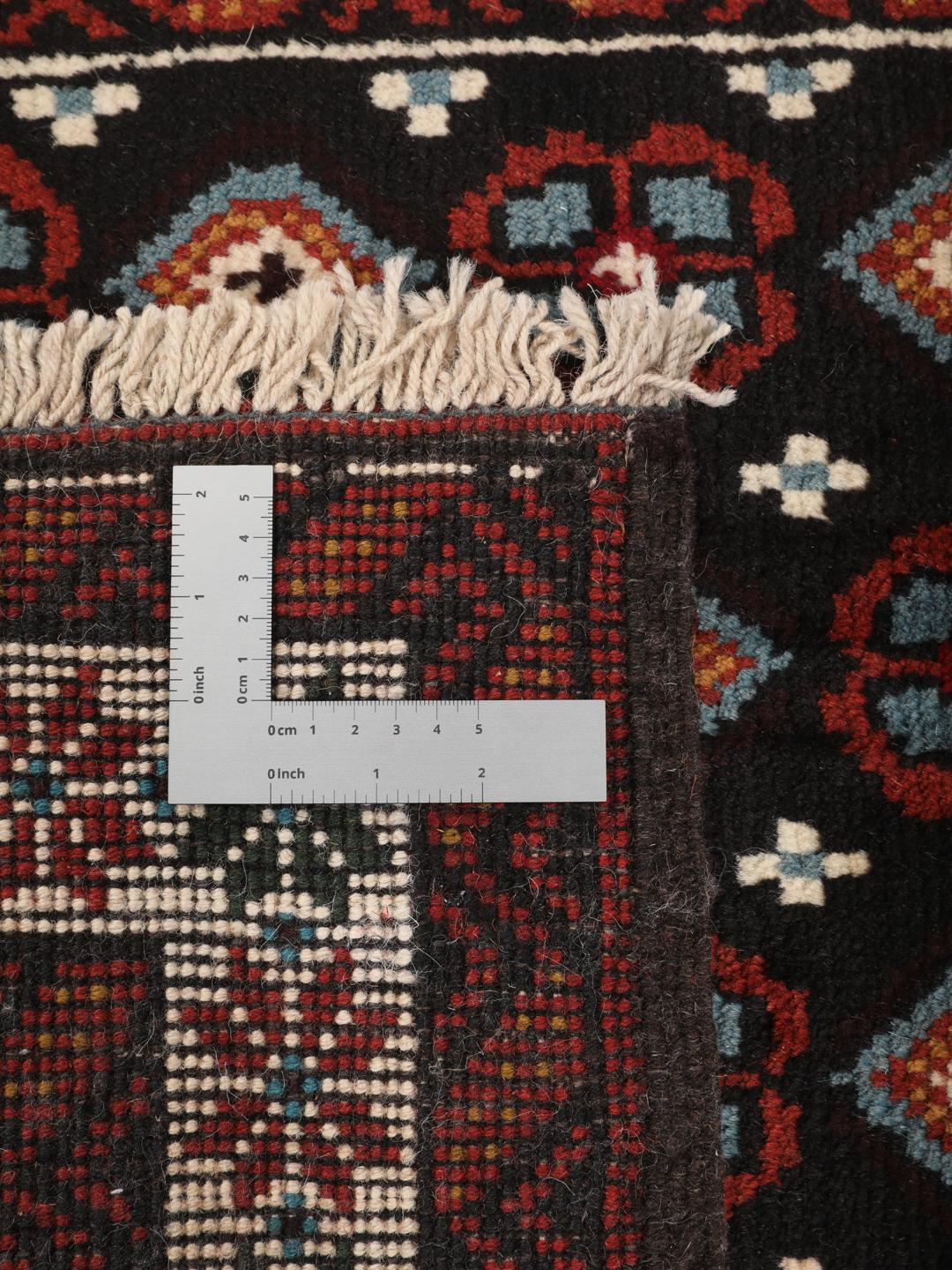
Baluch rugs originate from the nomadic and semi-nomadic tribes living in the border regions of the Middle East. These rugs are deeply rooted in a rich nomadic tradition, where designs are passed down through generations, often reflecting the environment, beliefs, and stories of the weavers who create them.
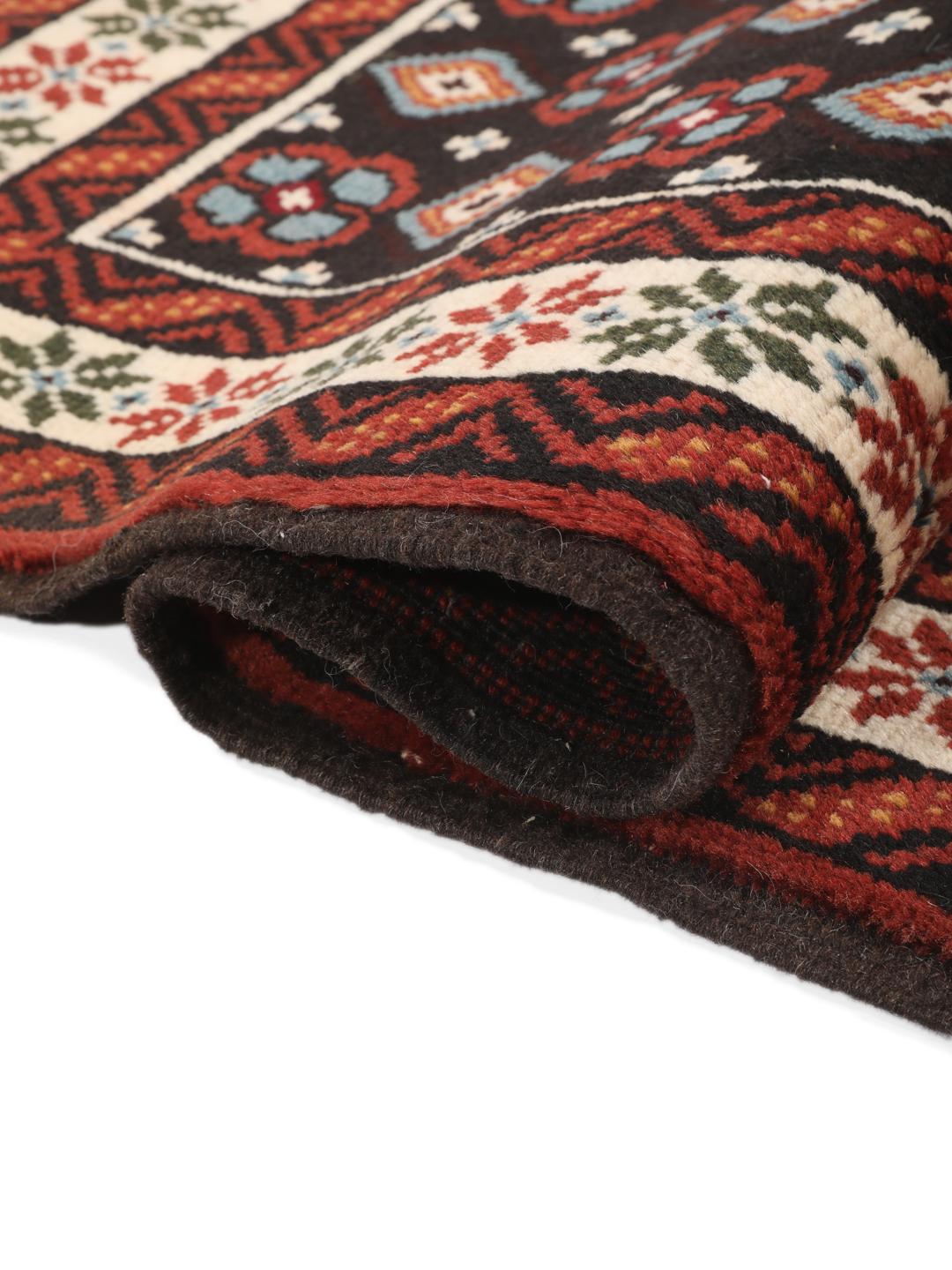
The term Baluch refers to these tribal groups who have historically maintained a distinct weaving culture. Their rugs are known for being produced in smaller formats, often serving as prayer rugs or decorative pieces within the home, characterised by their portable nature and exceptional durability.
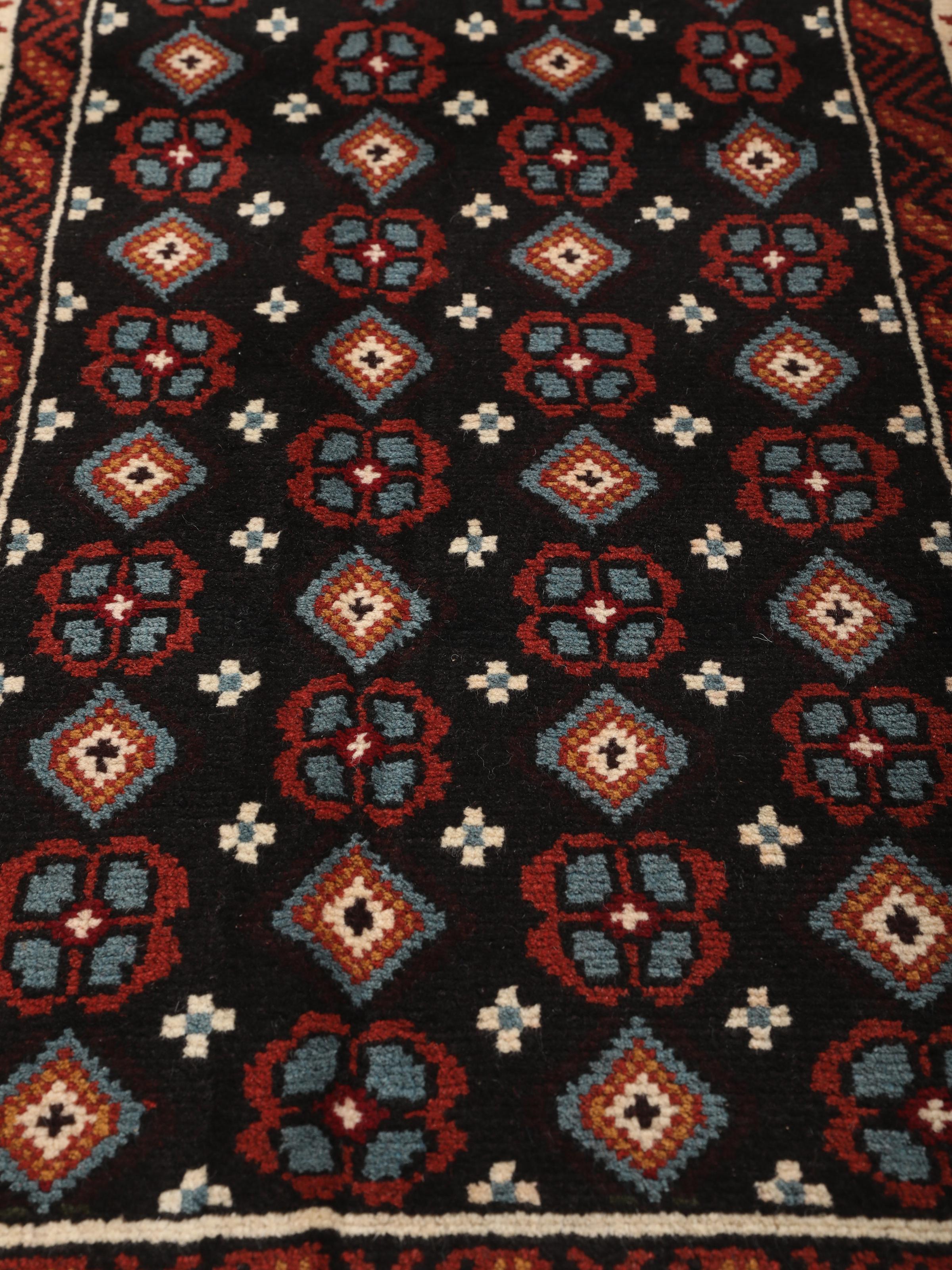
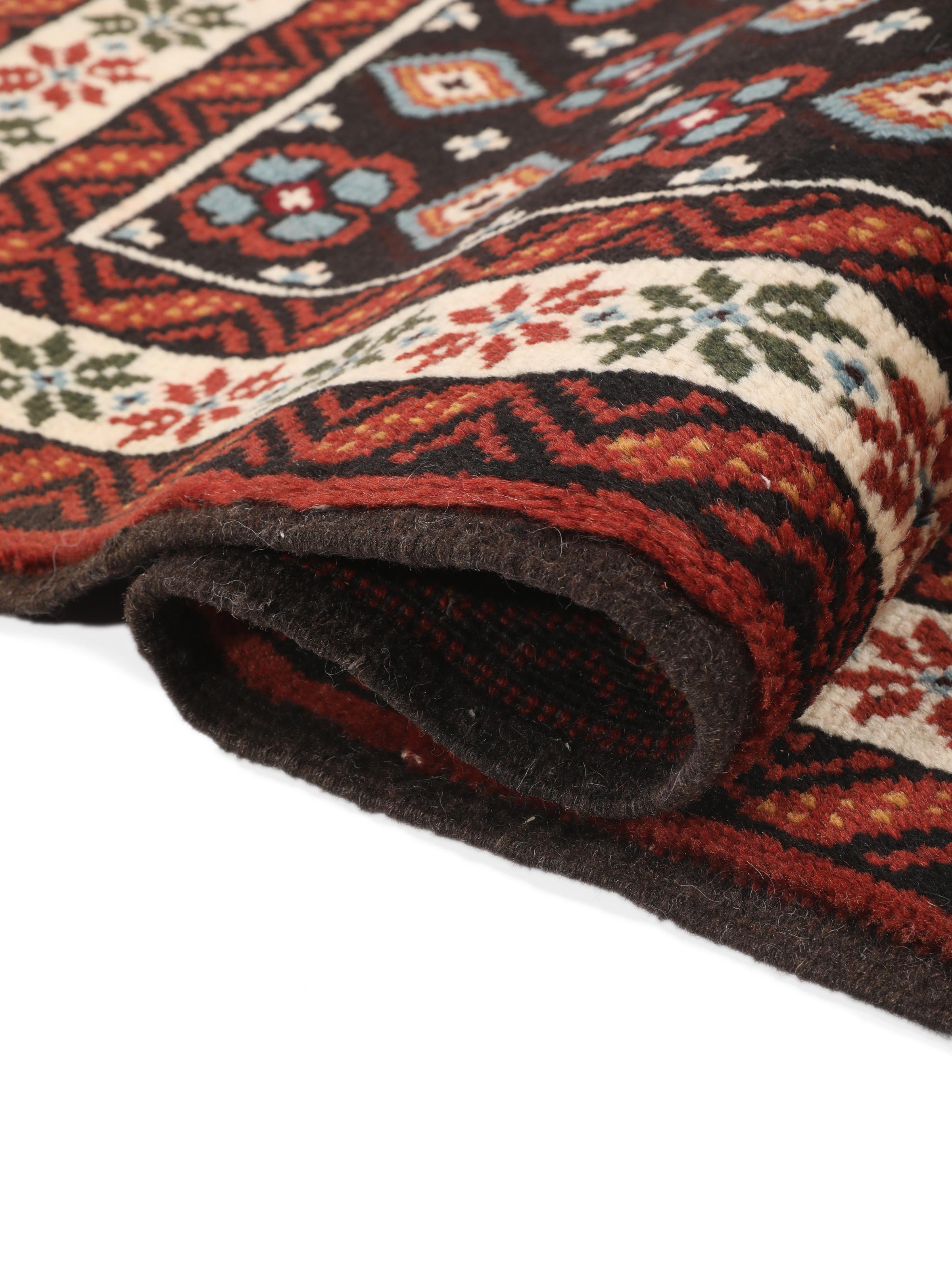
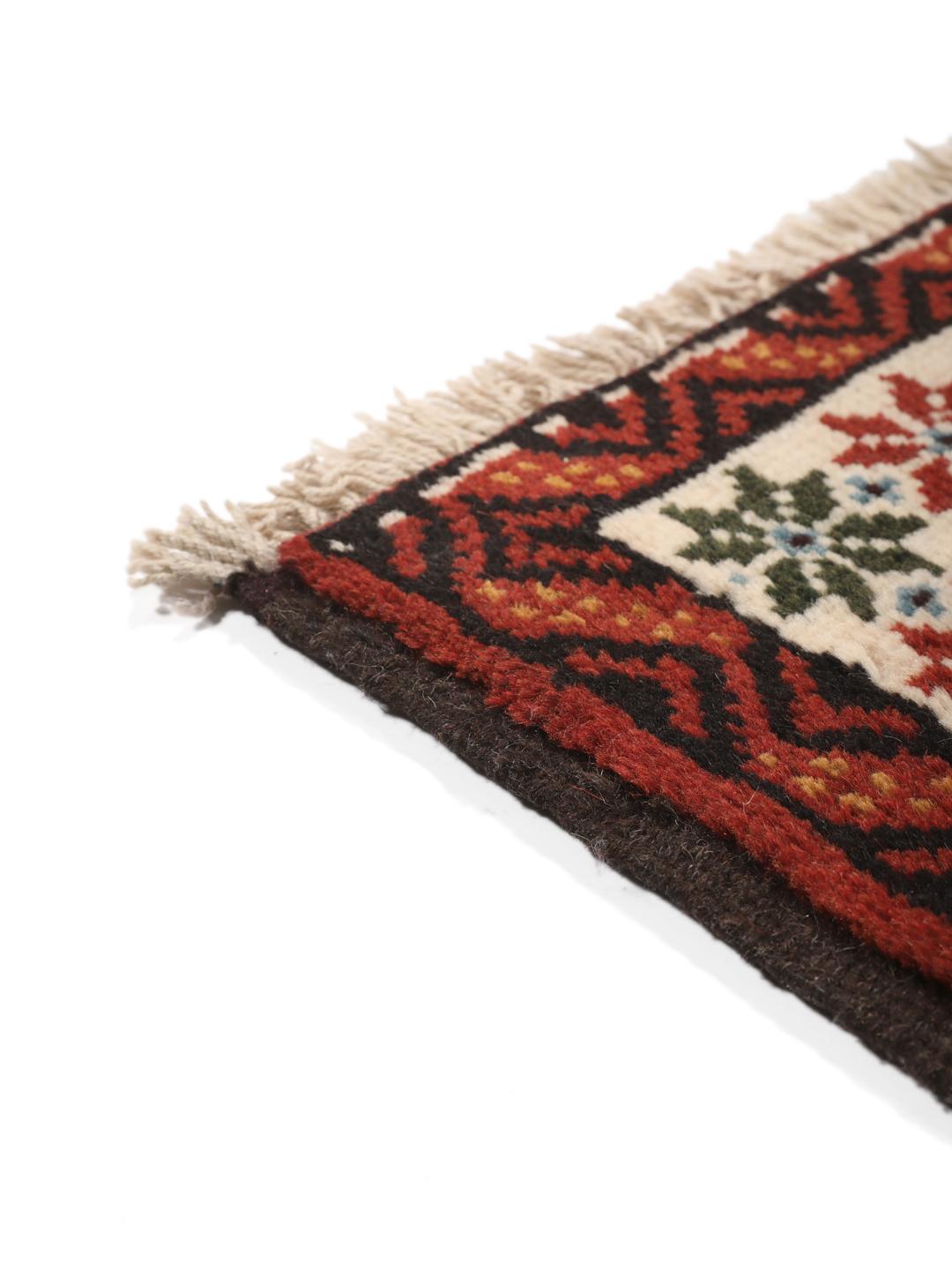
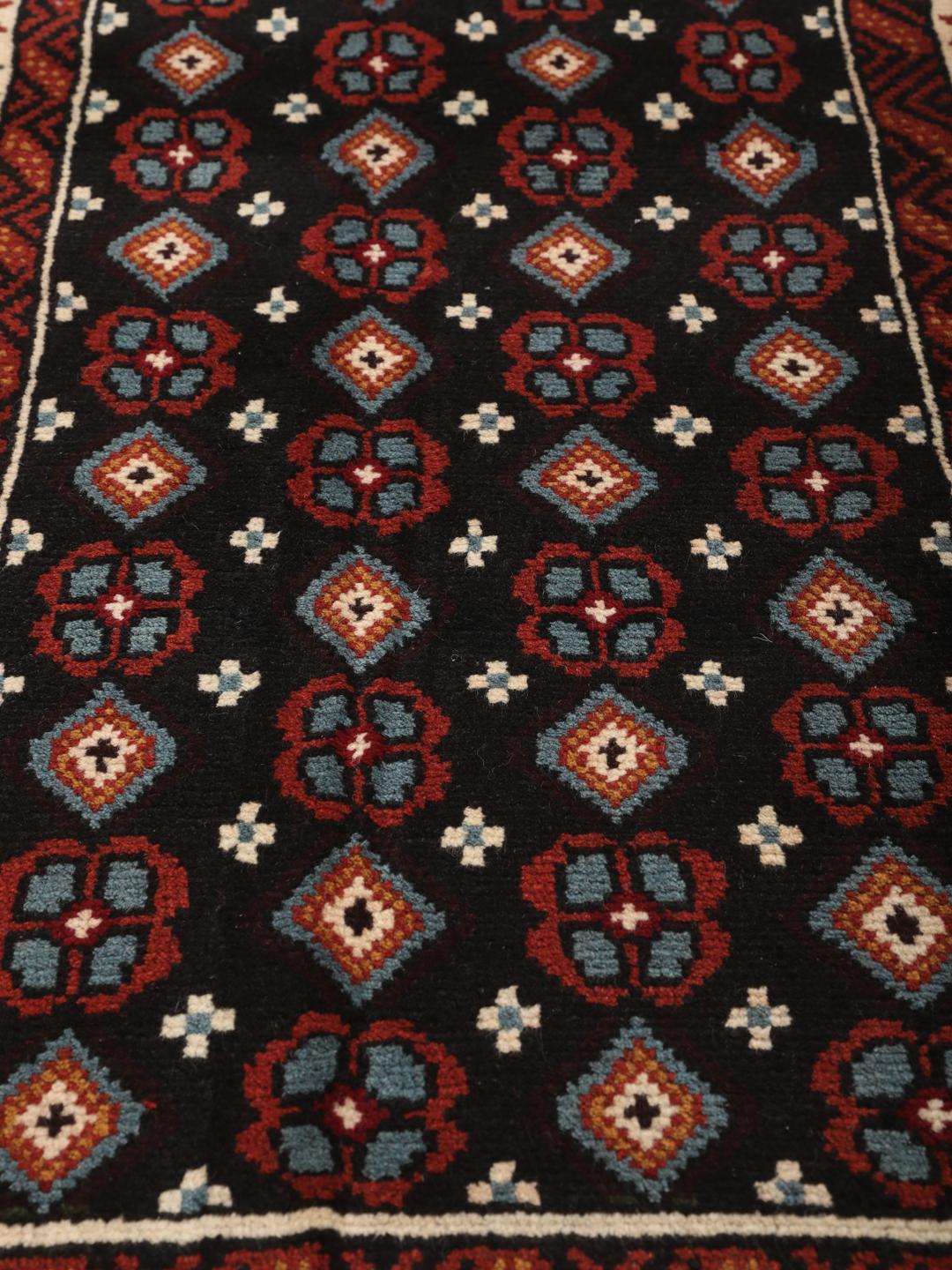
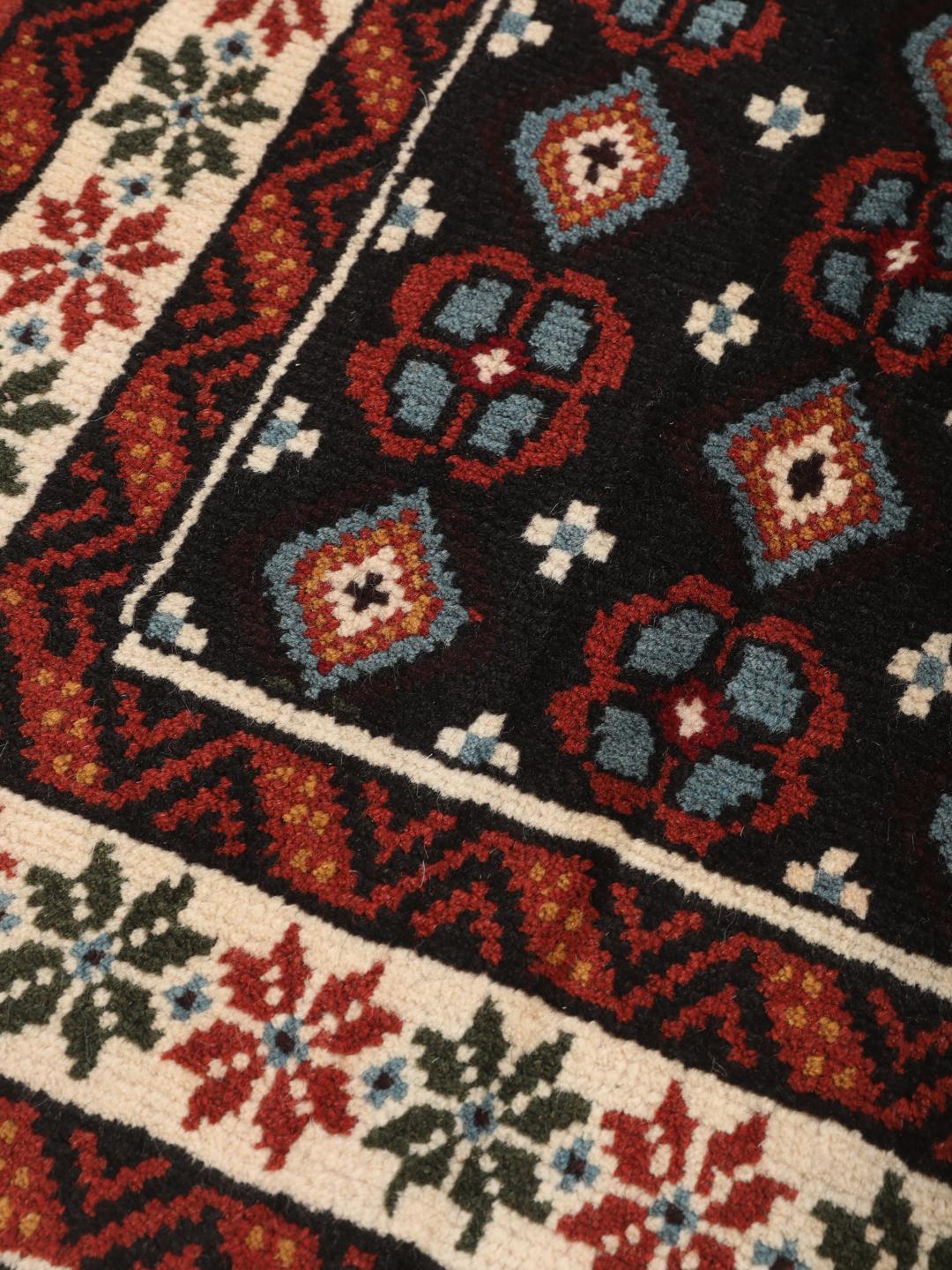
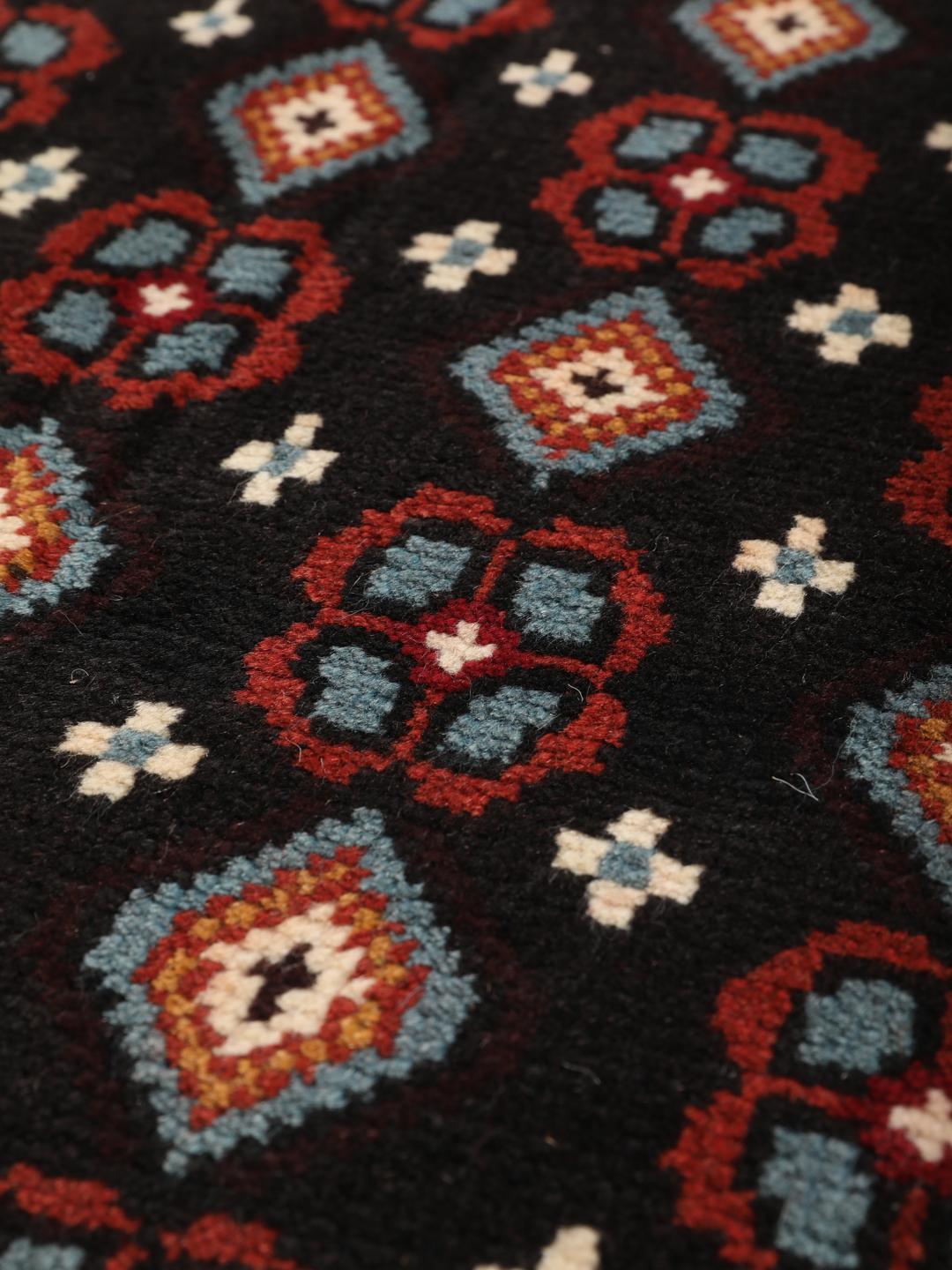
Visually, these rugs are celebrated for their sophisticated use of dark, rich tones—frequently black, deep red, and earthy shades—which provide a dramatic backdrop for intricate geometric and tribal motifs. The patterns often include stylised floral elements, diamonds, and borders that reveal the weaver's mastery of symmetry and symbolic storytelling.
Collectors value these rugs for their authenticity and the personal connection they represent to a fading nomadic lifestyle. Owning a Baluch rug is an opportunity to preserve a piece of cultural heritage, as the skill and tradition embedded in every knot reflect a dedication to craft that remains highly respected in the world of textile arts.