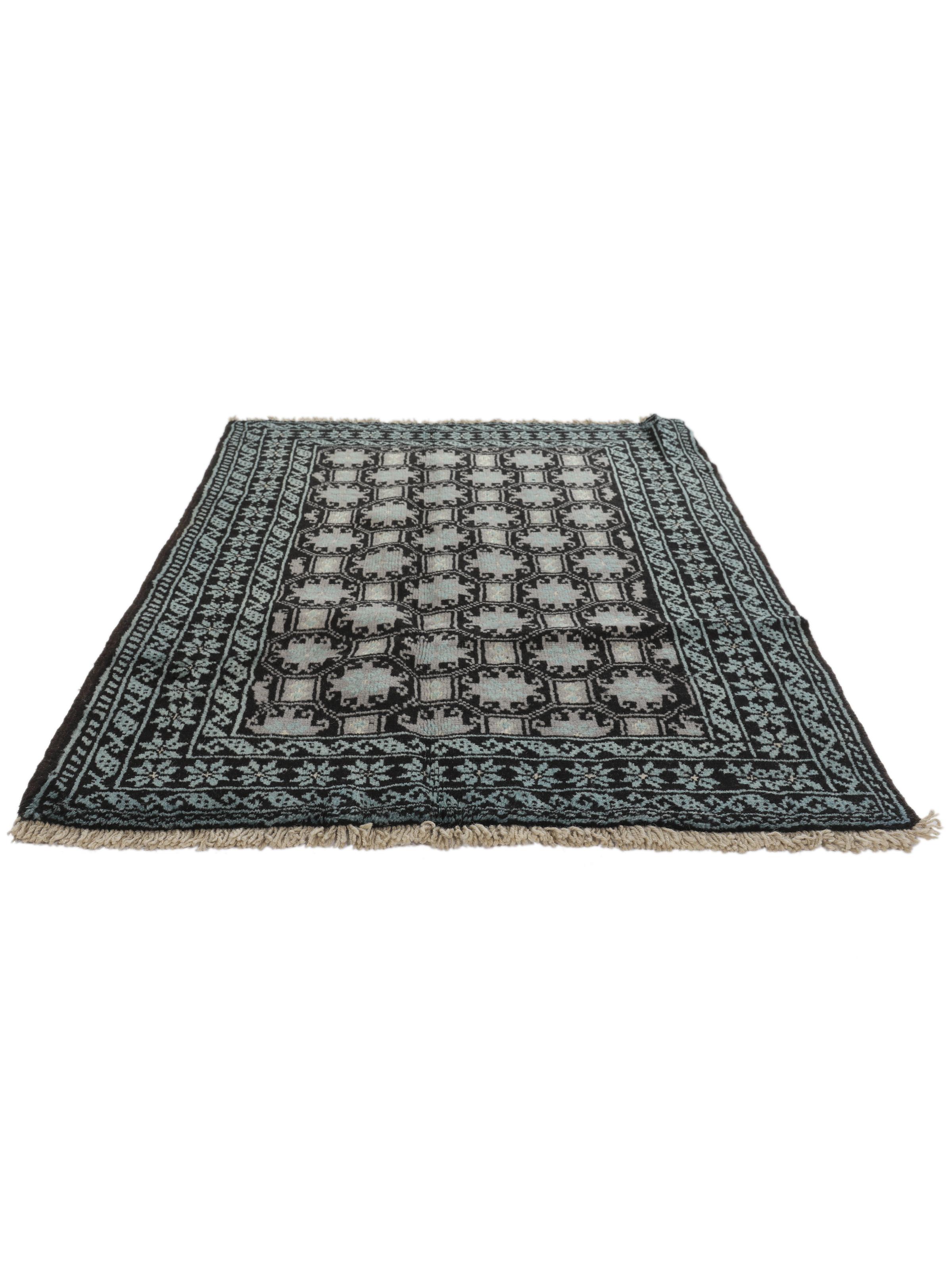
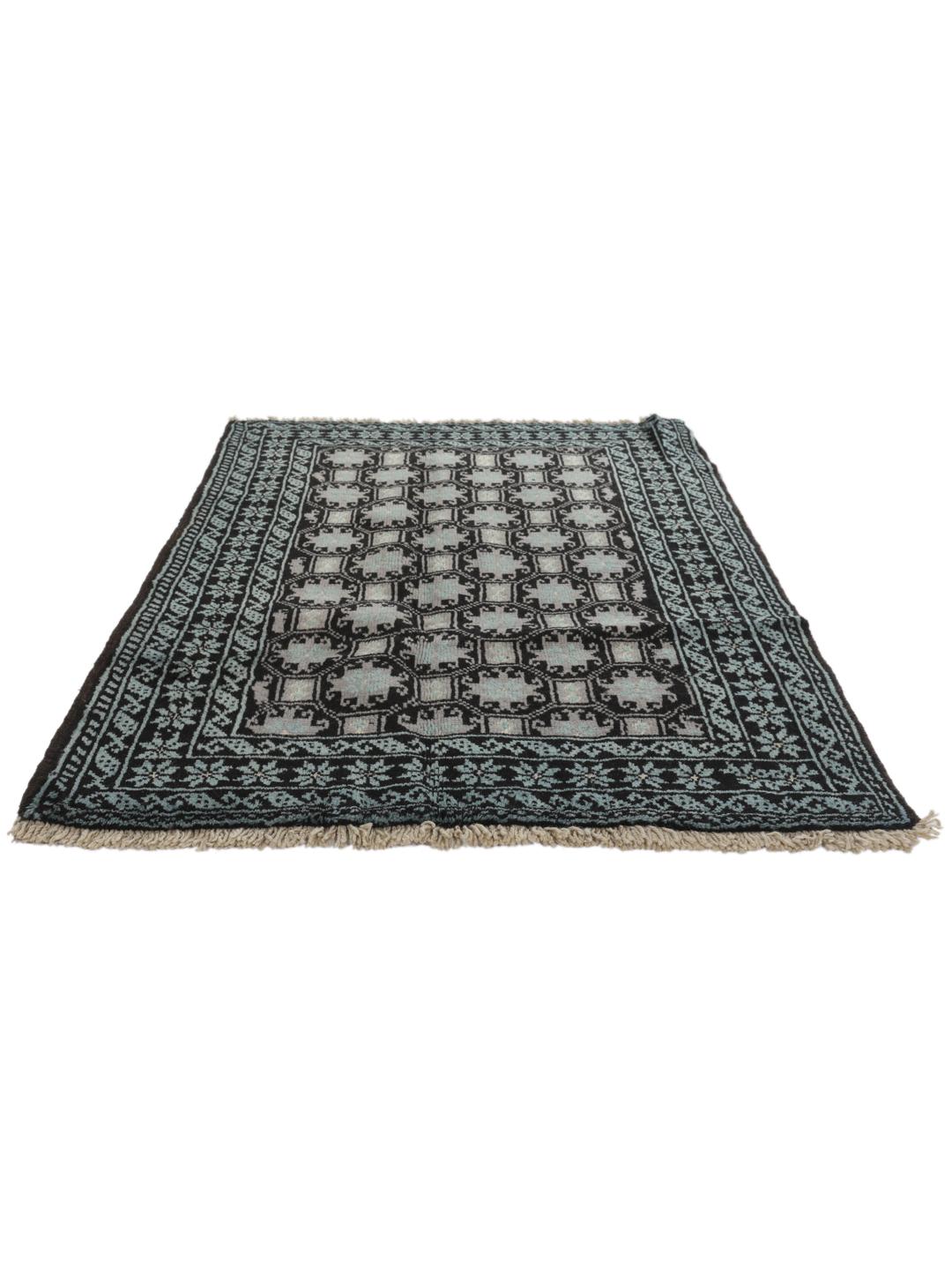
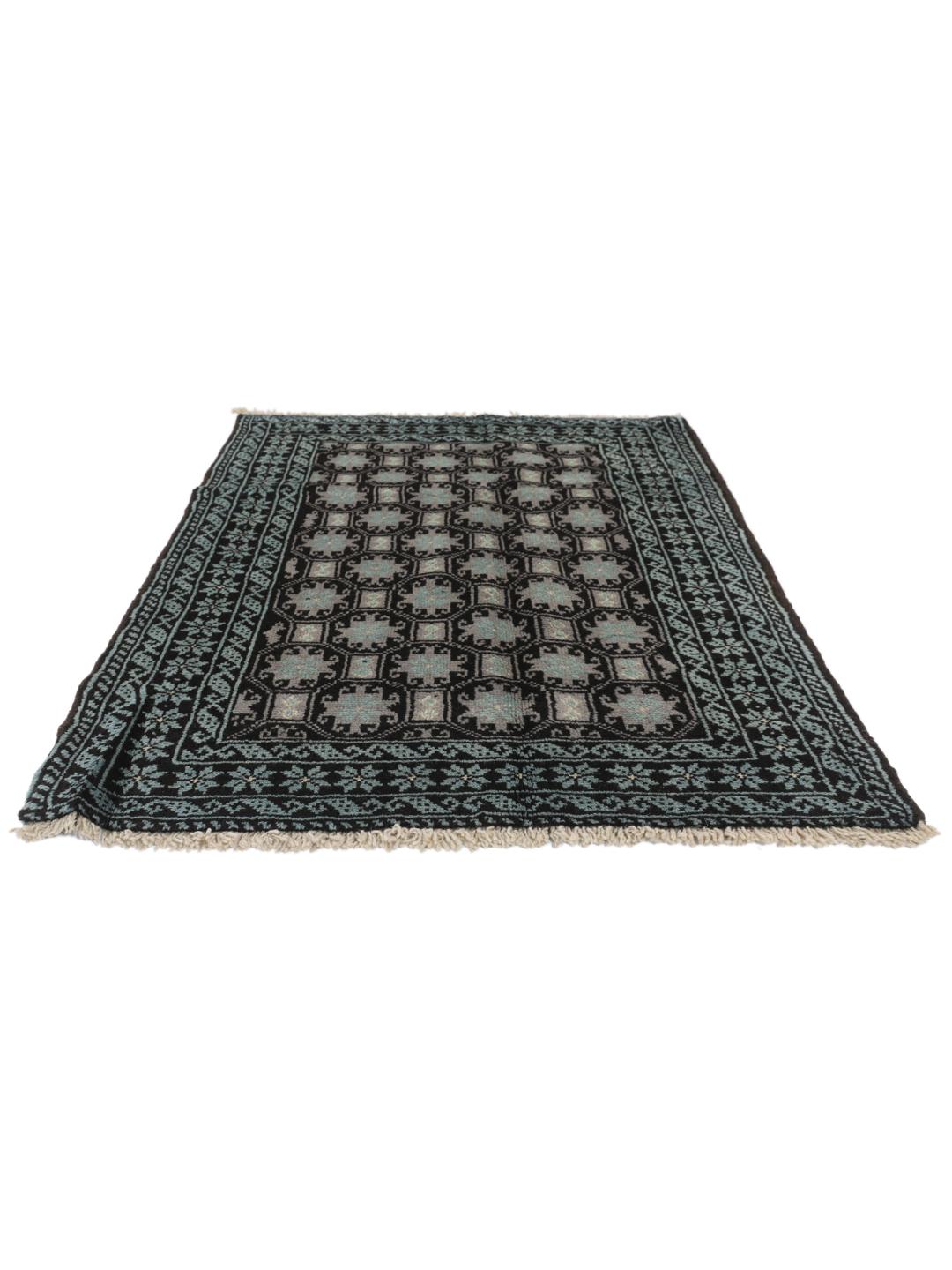
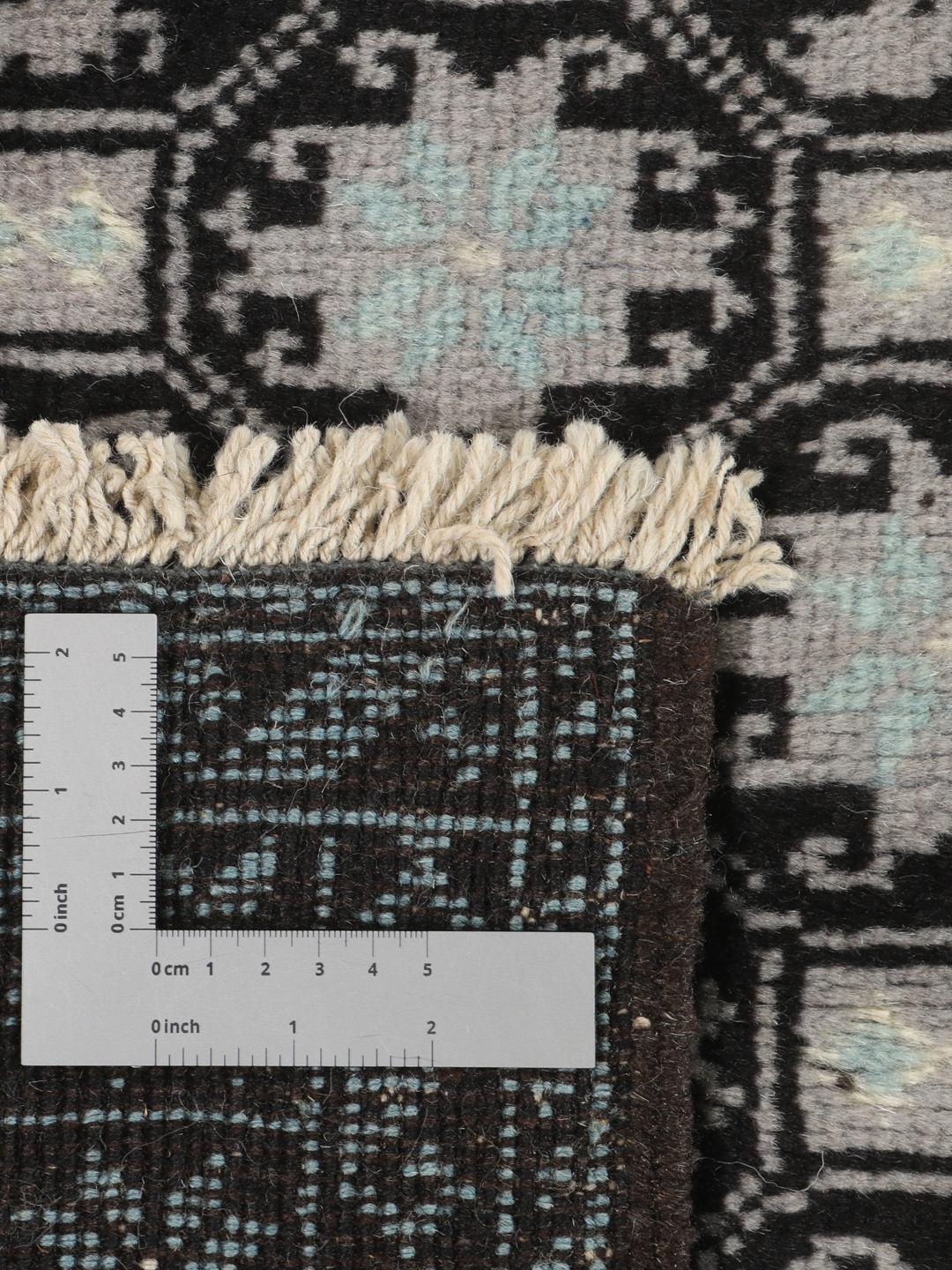
Baluch rugs originate from the nomadic and semi-nomadic Baluchi tribes who inhabit the border regions of the Middle East. These rugs are deeply rooted in a history of migration, reflecting the resilience and creativity of tribes moving across vast, often harsh landscapes. Historically, they were created for practical use in tents, serving as floor coverings, bags, and blankets.
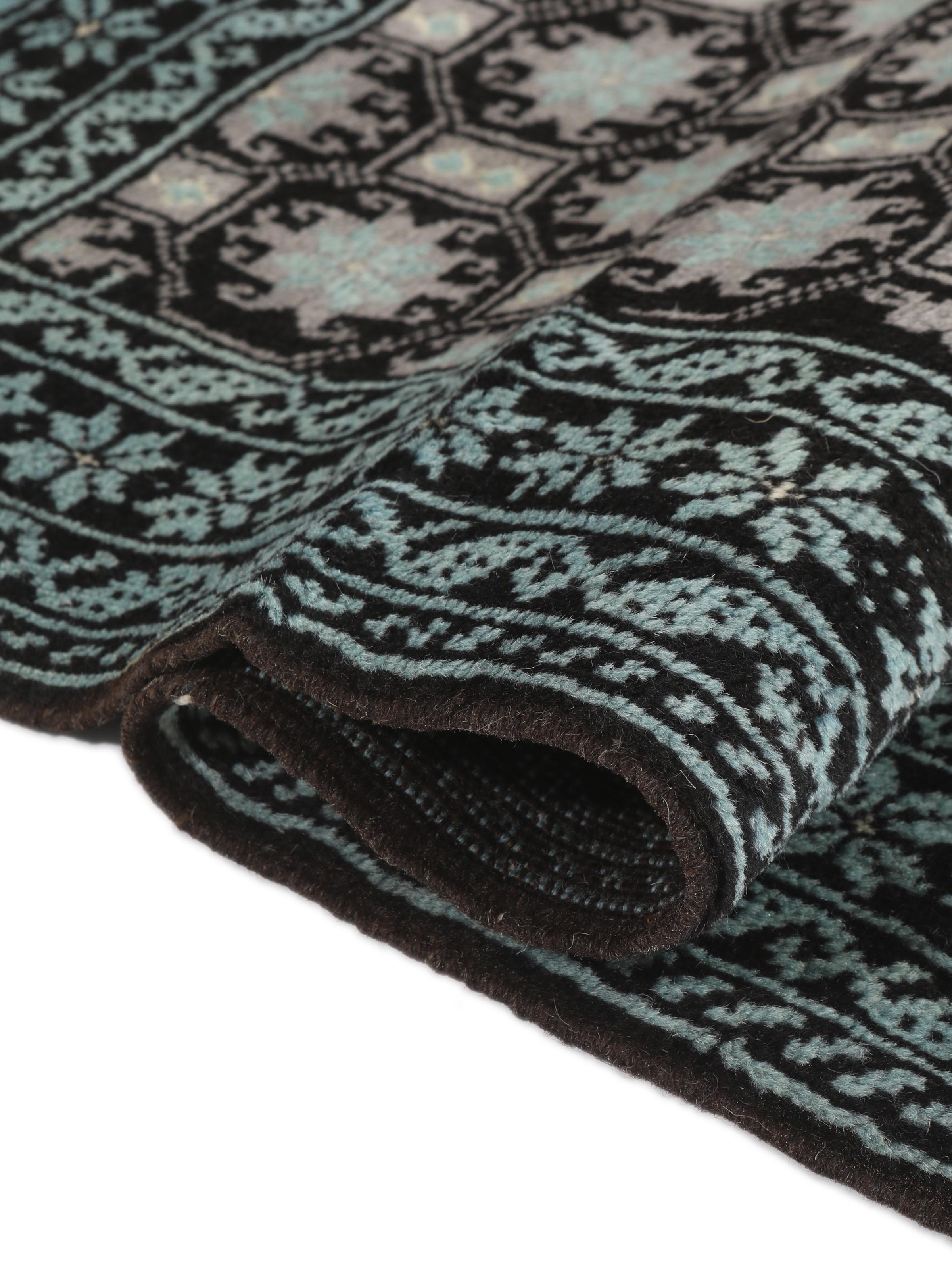
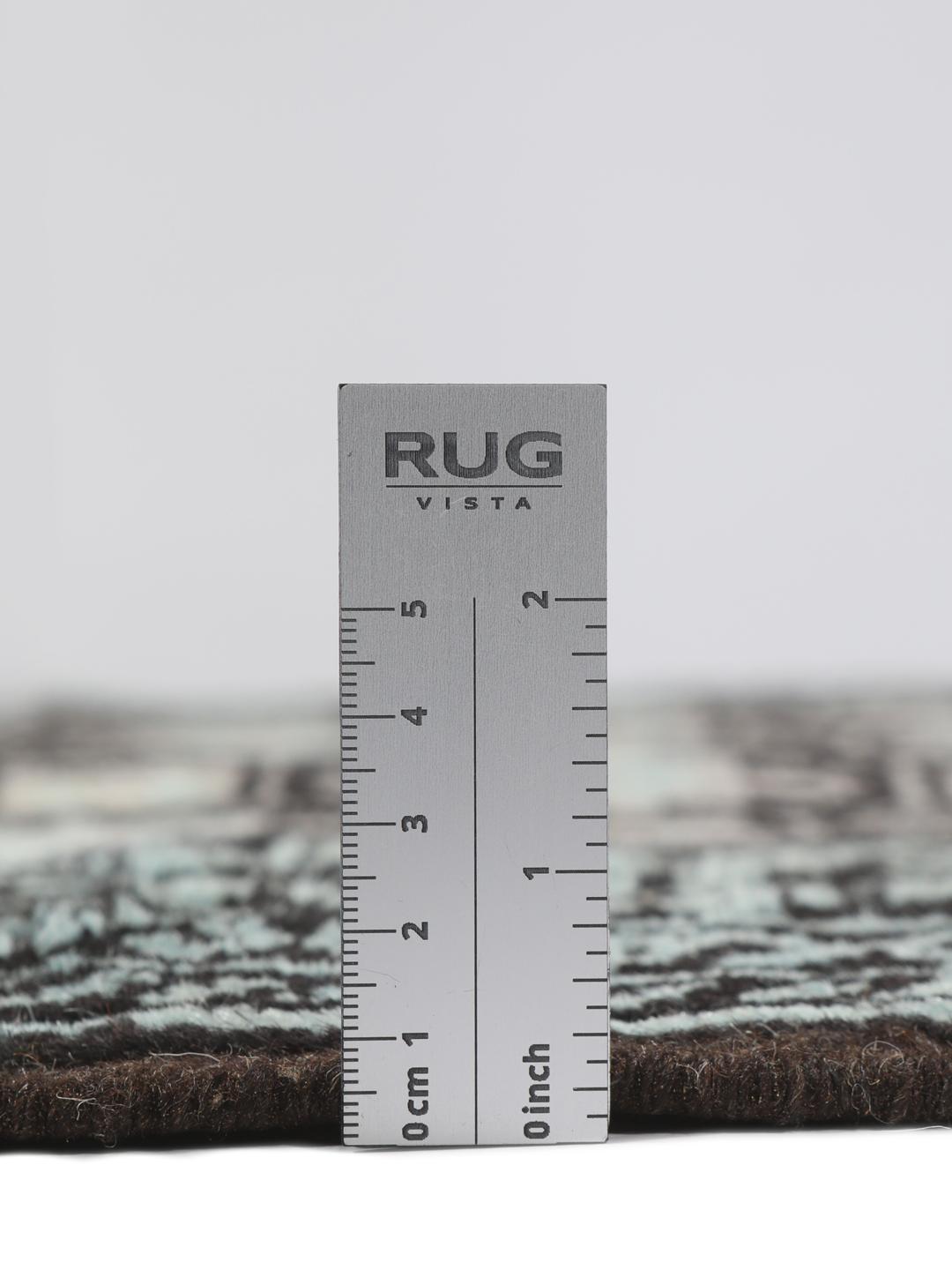
The term Baluch refers to these specific tribal traditions, where the construction is characterised by the use of high-quality wool and a robust foundation. These rugs are typically smaller in size, making them highly portable for nomadic lifestyles, but their dense construction ensures they are remarkably hard-wearing and capable of withstanding generations of use.
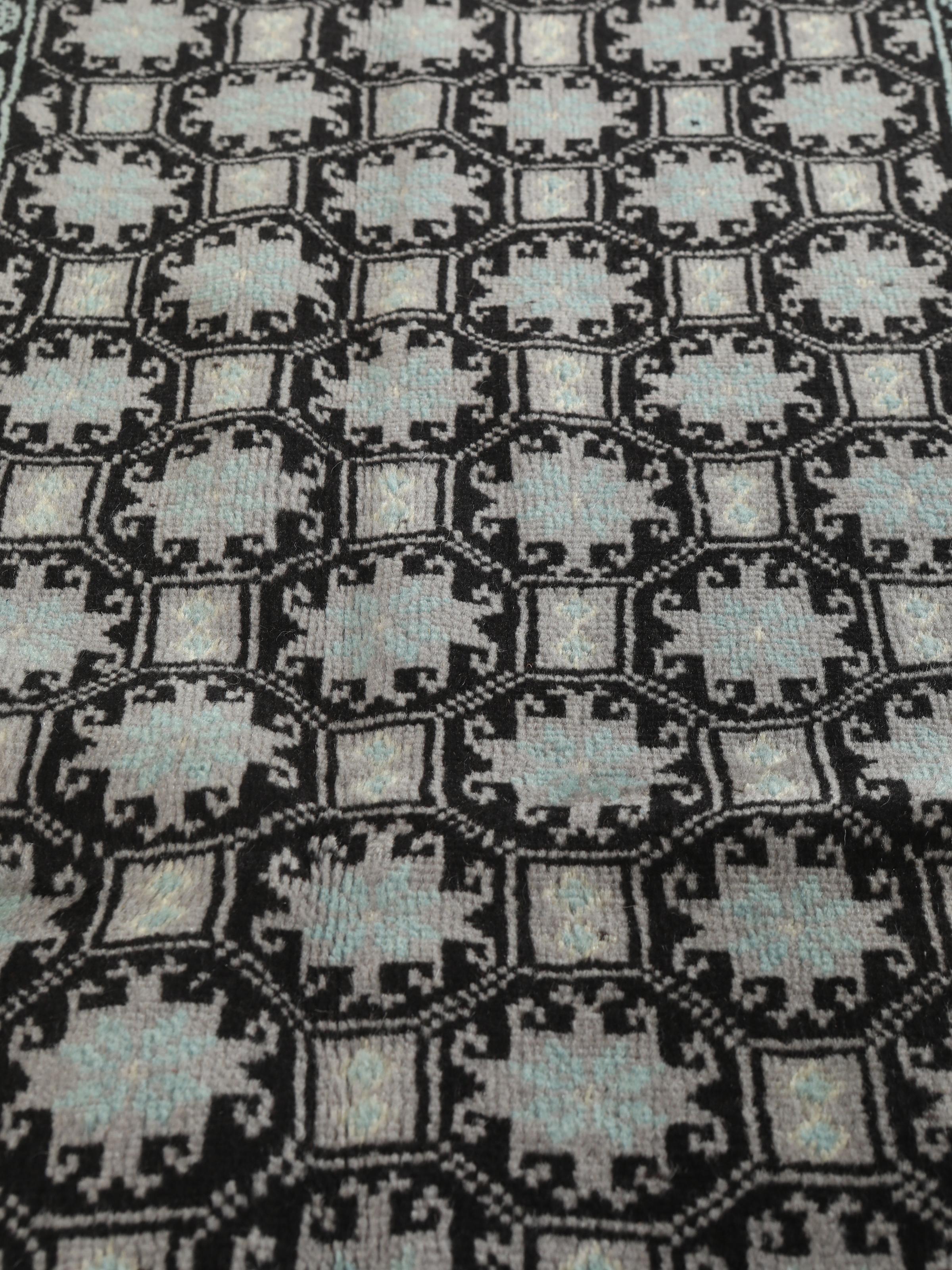
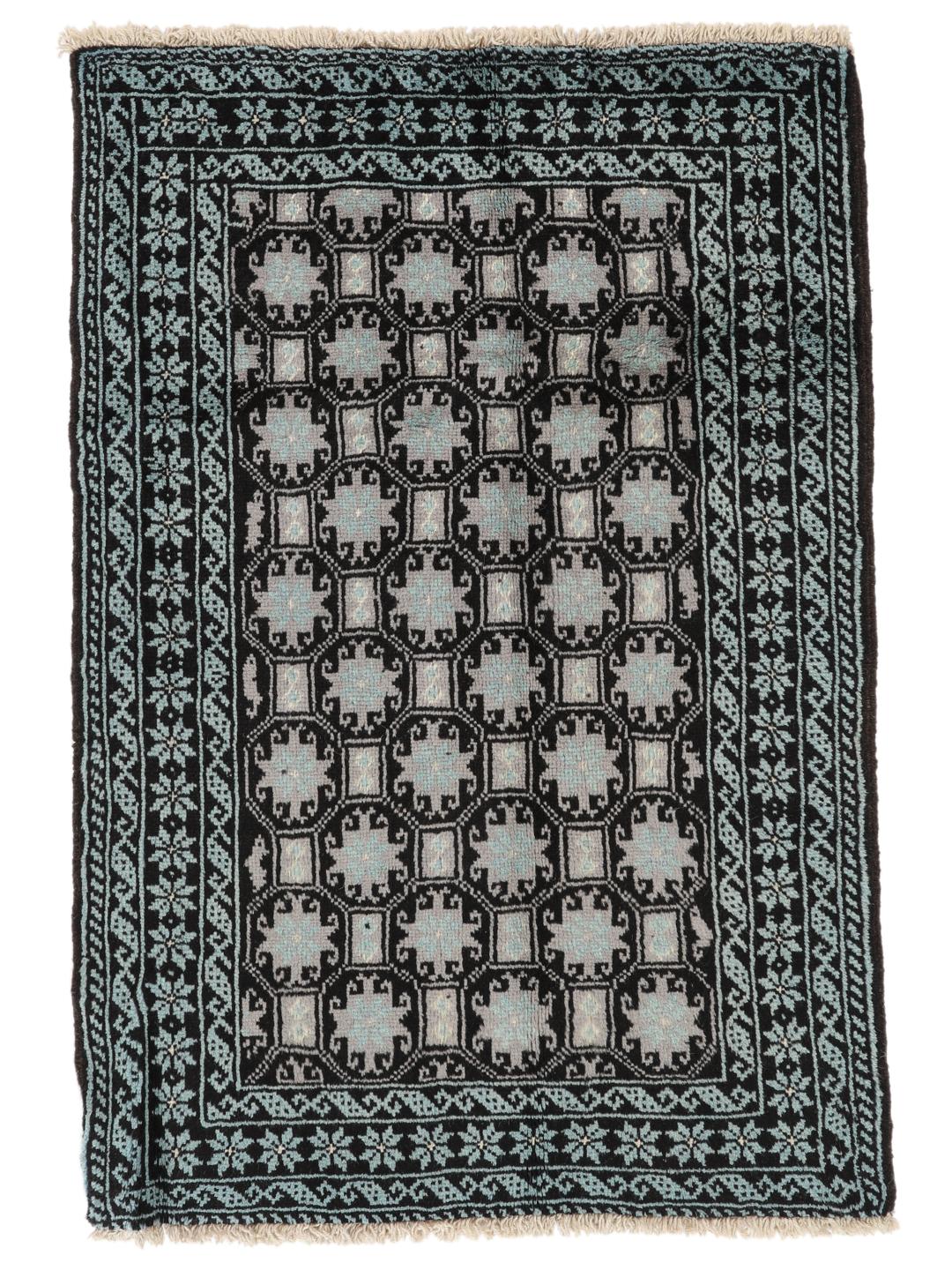
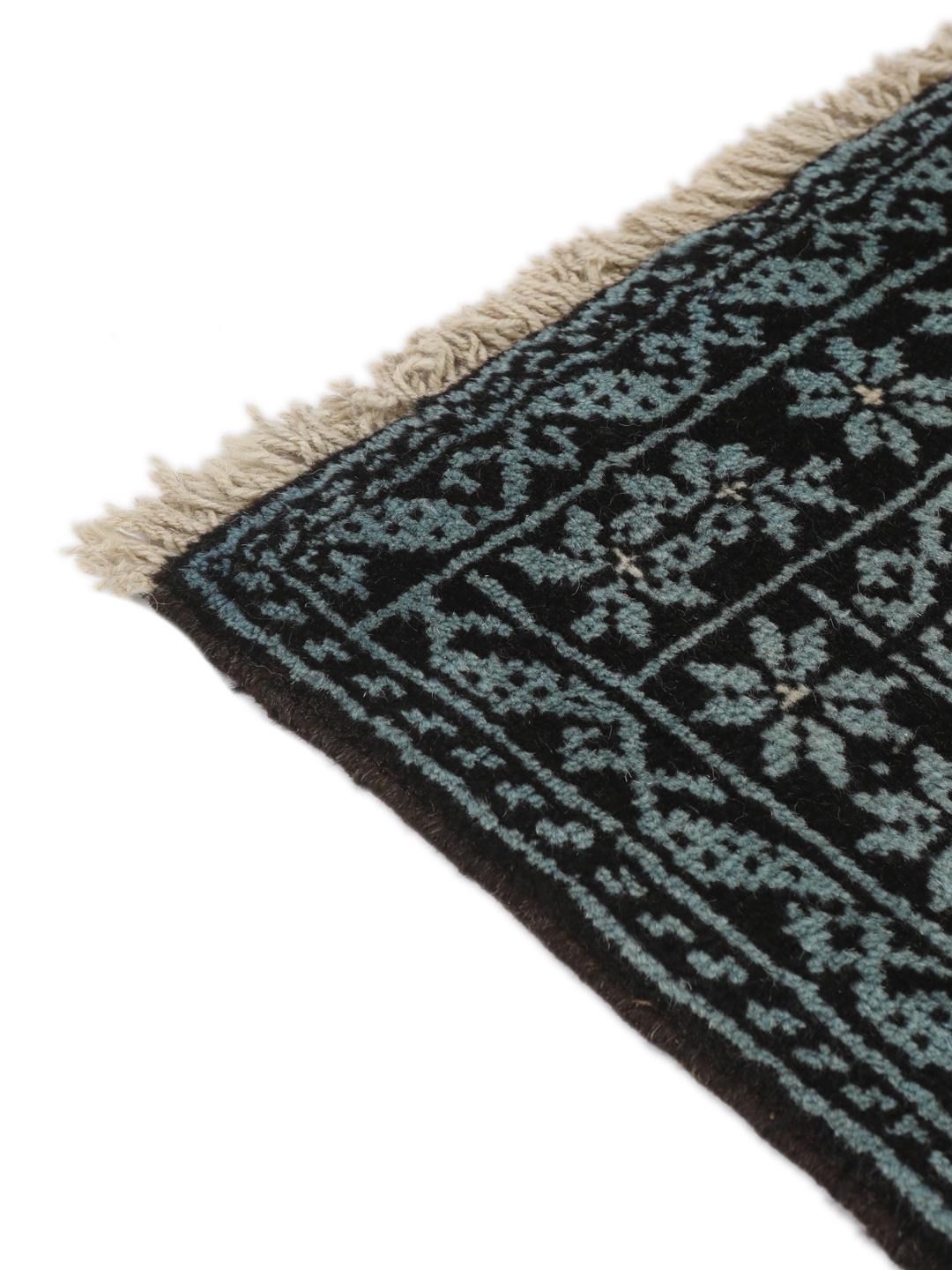
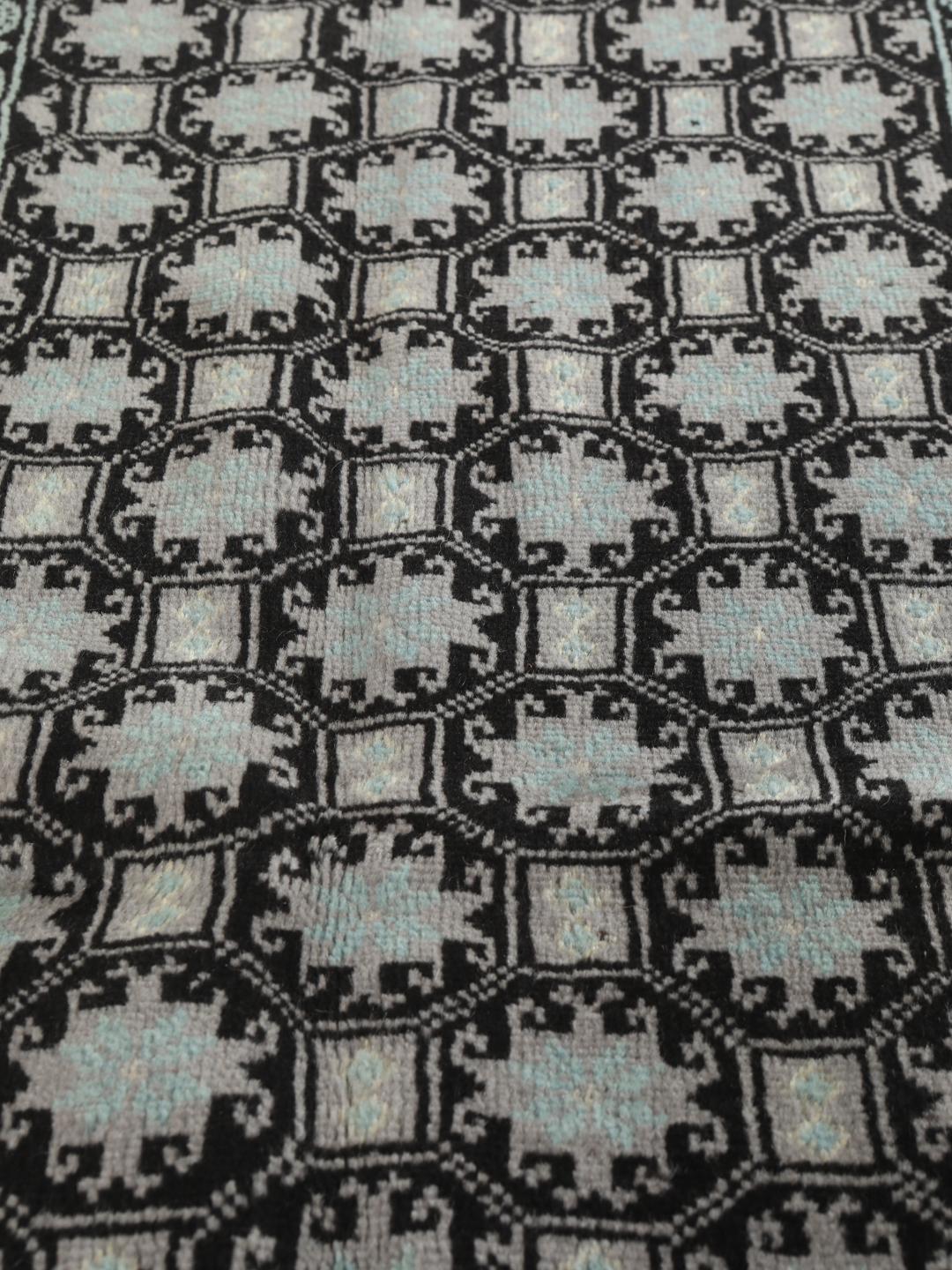
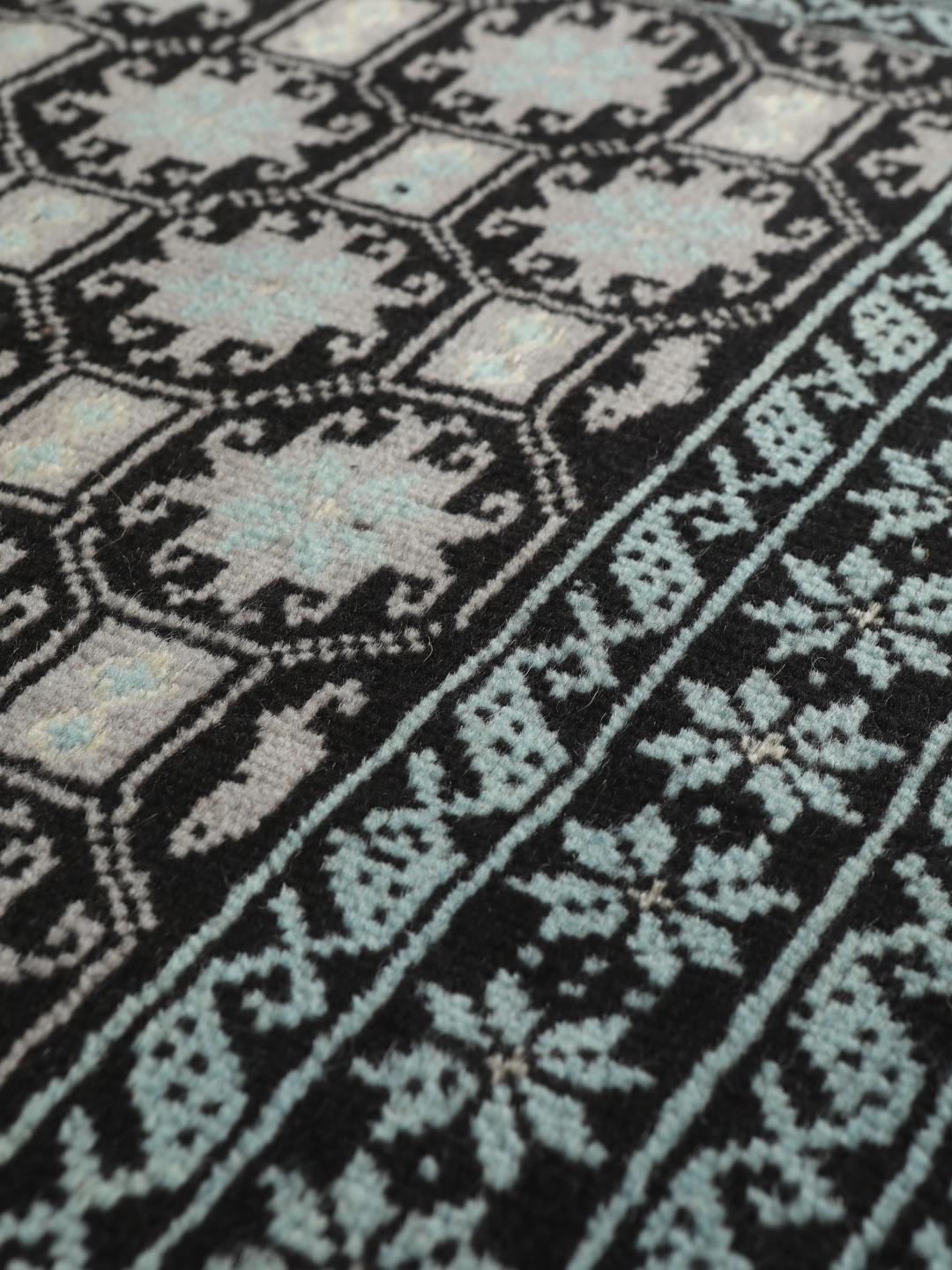
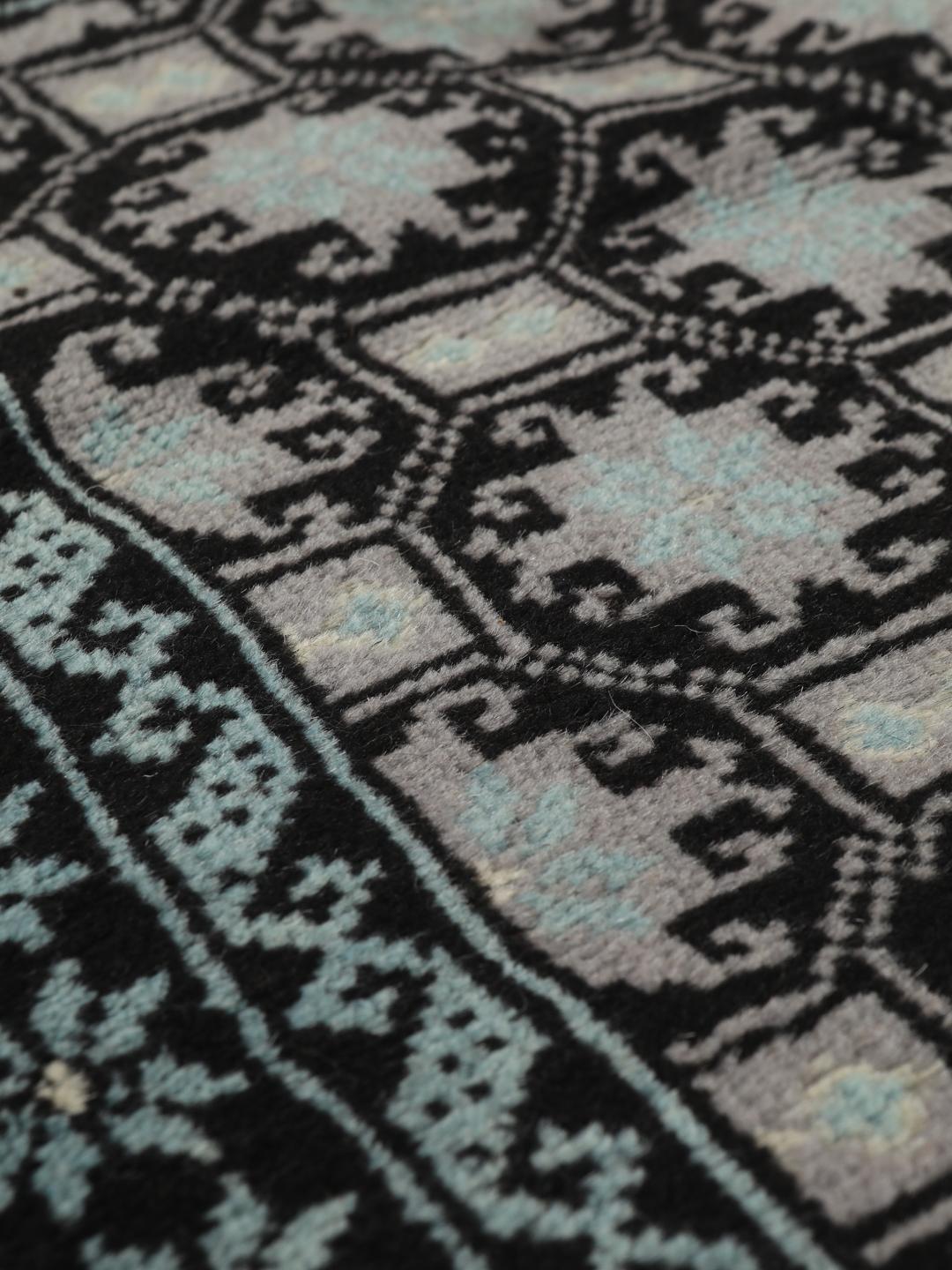
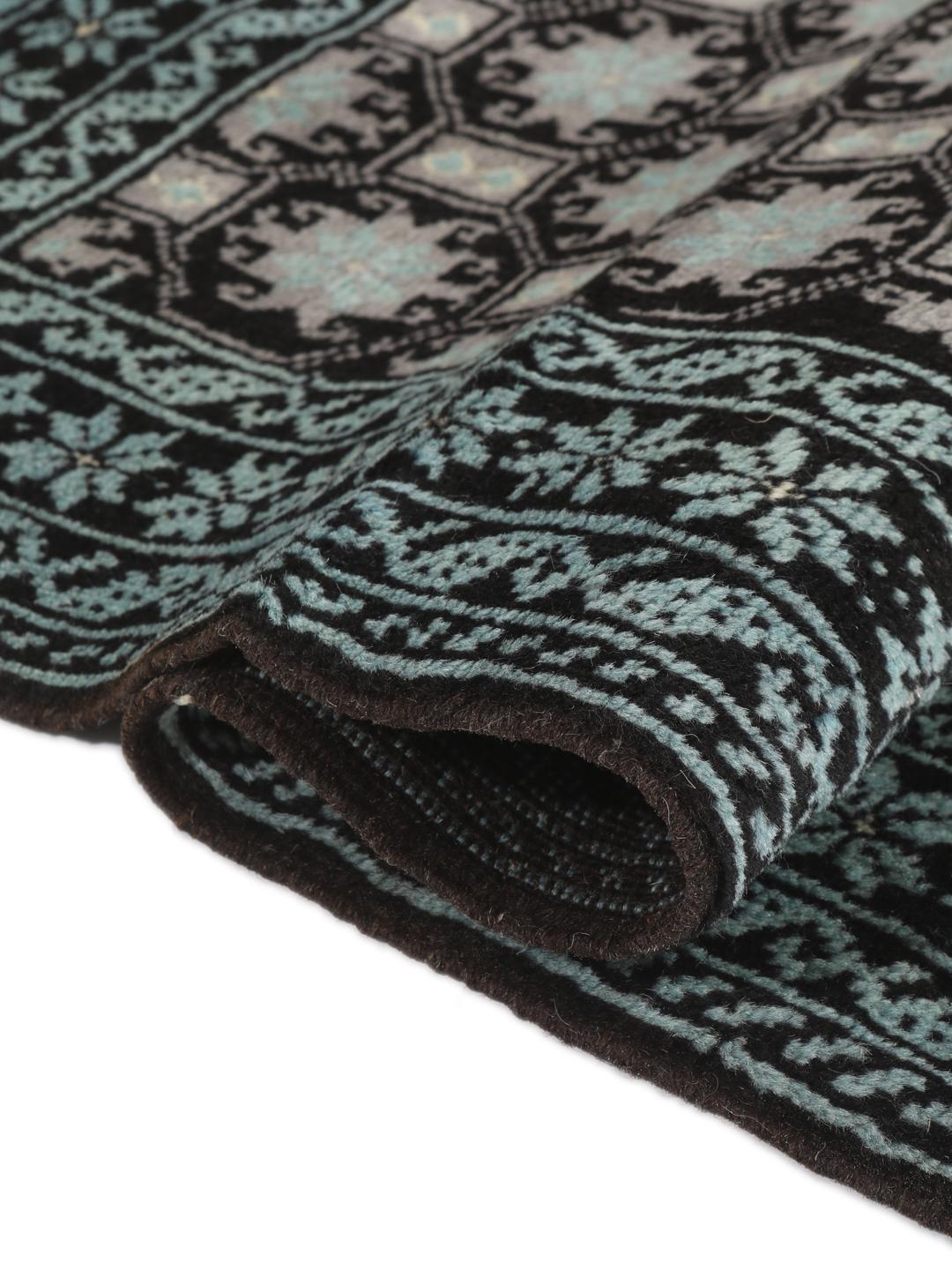
The visual language of Baluch rugs is famously geometric and symbolic. They often feature repeating motifs such as diamonds, stylised floral elements, and protective geometric borders. The colours are traditionally derived from natural dyes, with a preference for deep, earthy tones, though the use of striking contrast colours like the teal seen here adds a more modern, decorative flair to the classical tribal aesthetic.
Today, Baluch rugs are highly sought after by collectors who value the authenticity and human touch behind each piece. Owning a Baluch rug is more than just acquiring a floor covering; it is an investment in a storied craft tradition that celebrates the skill of the weaver and the unique cultural heritage of the Baluchi people.