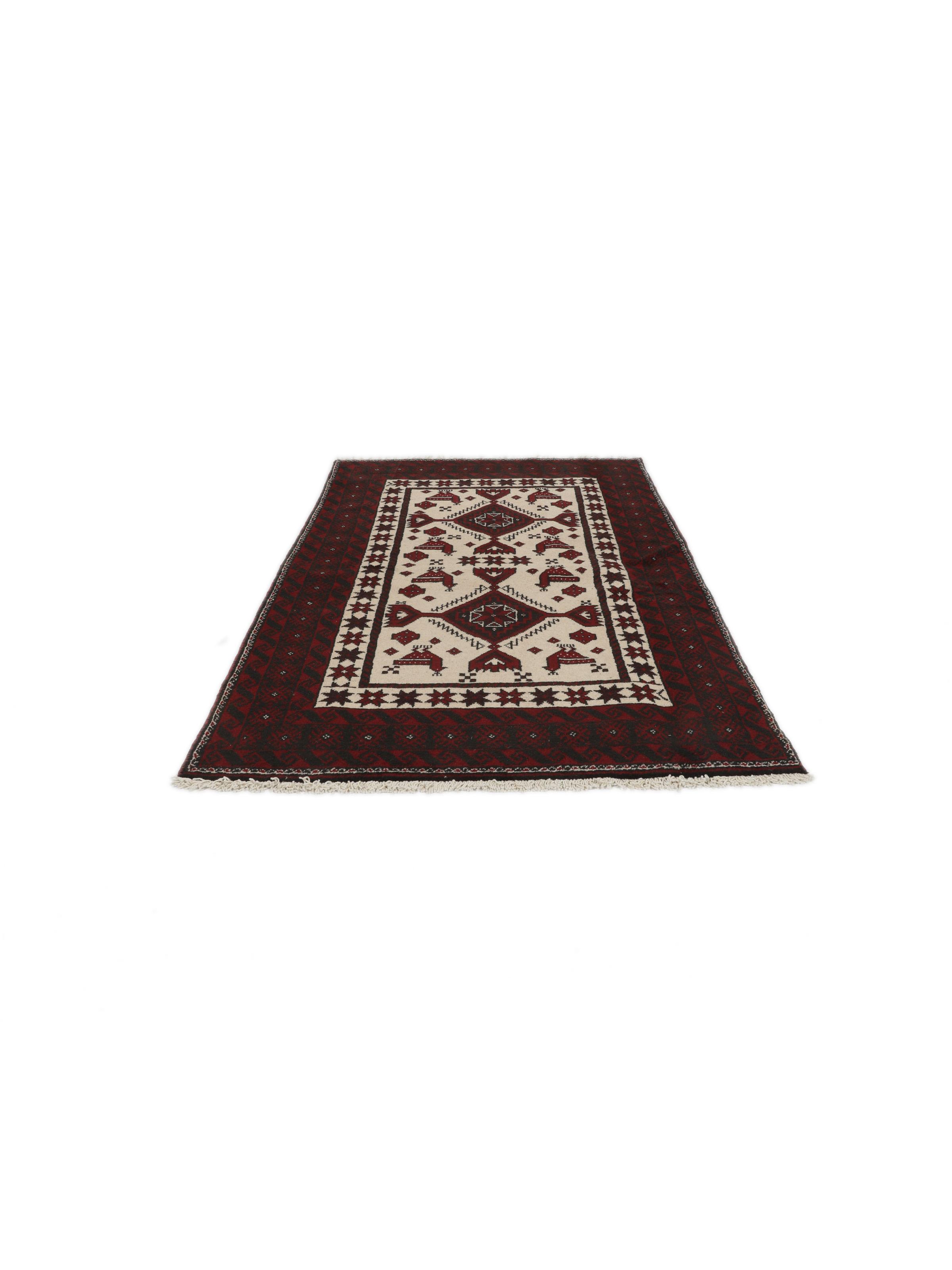
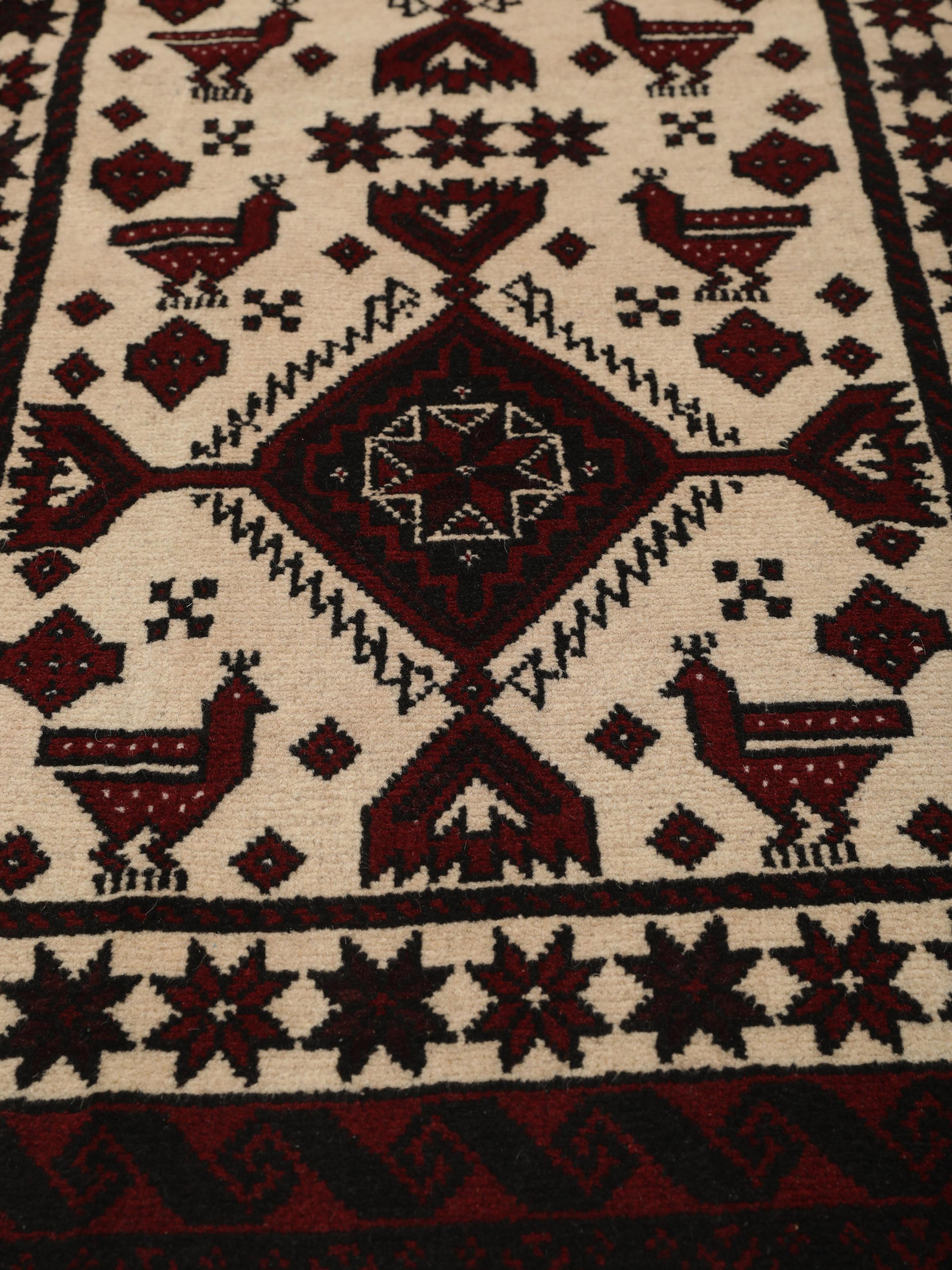
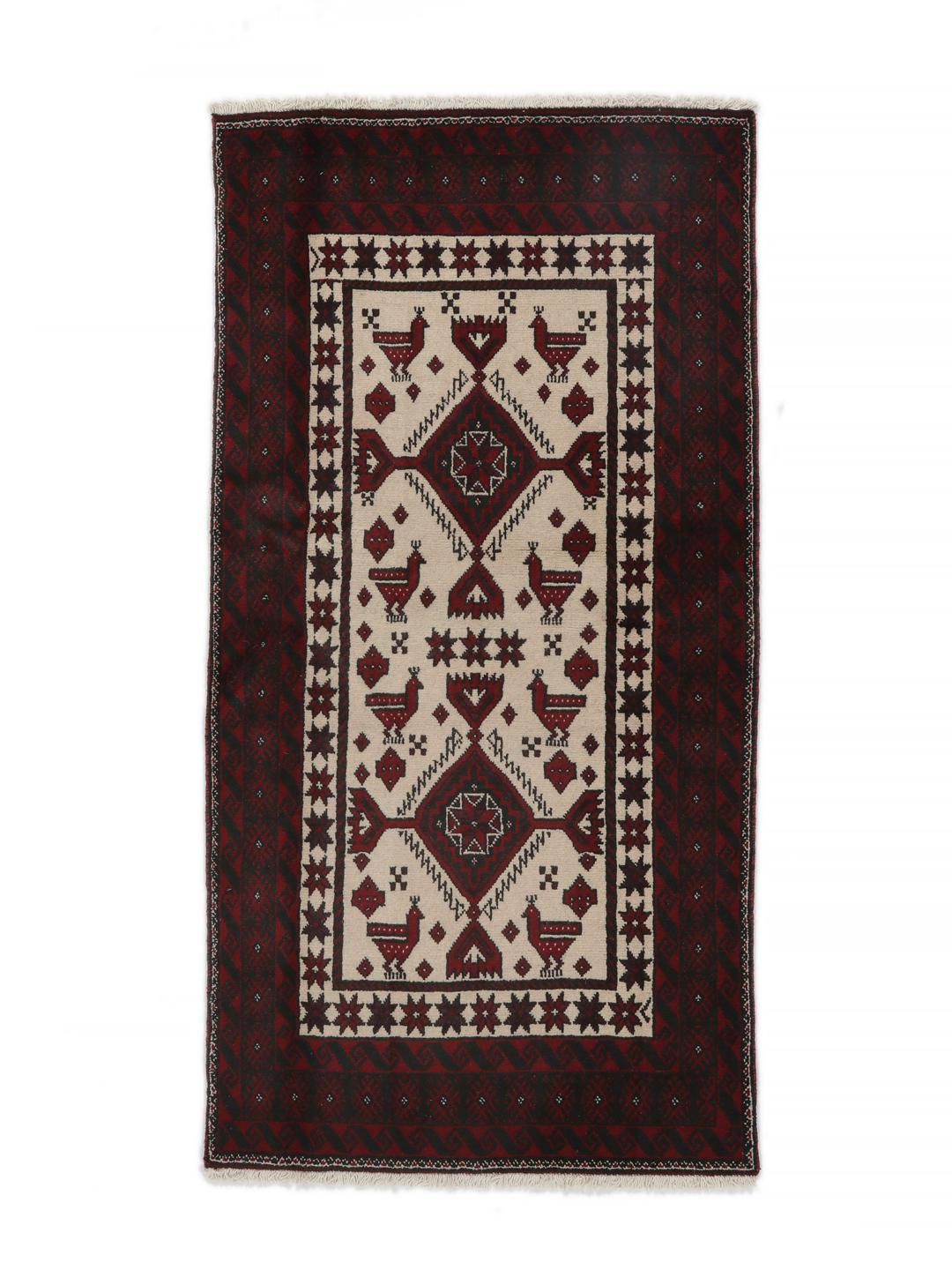
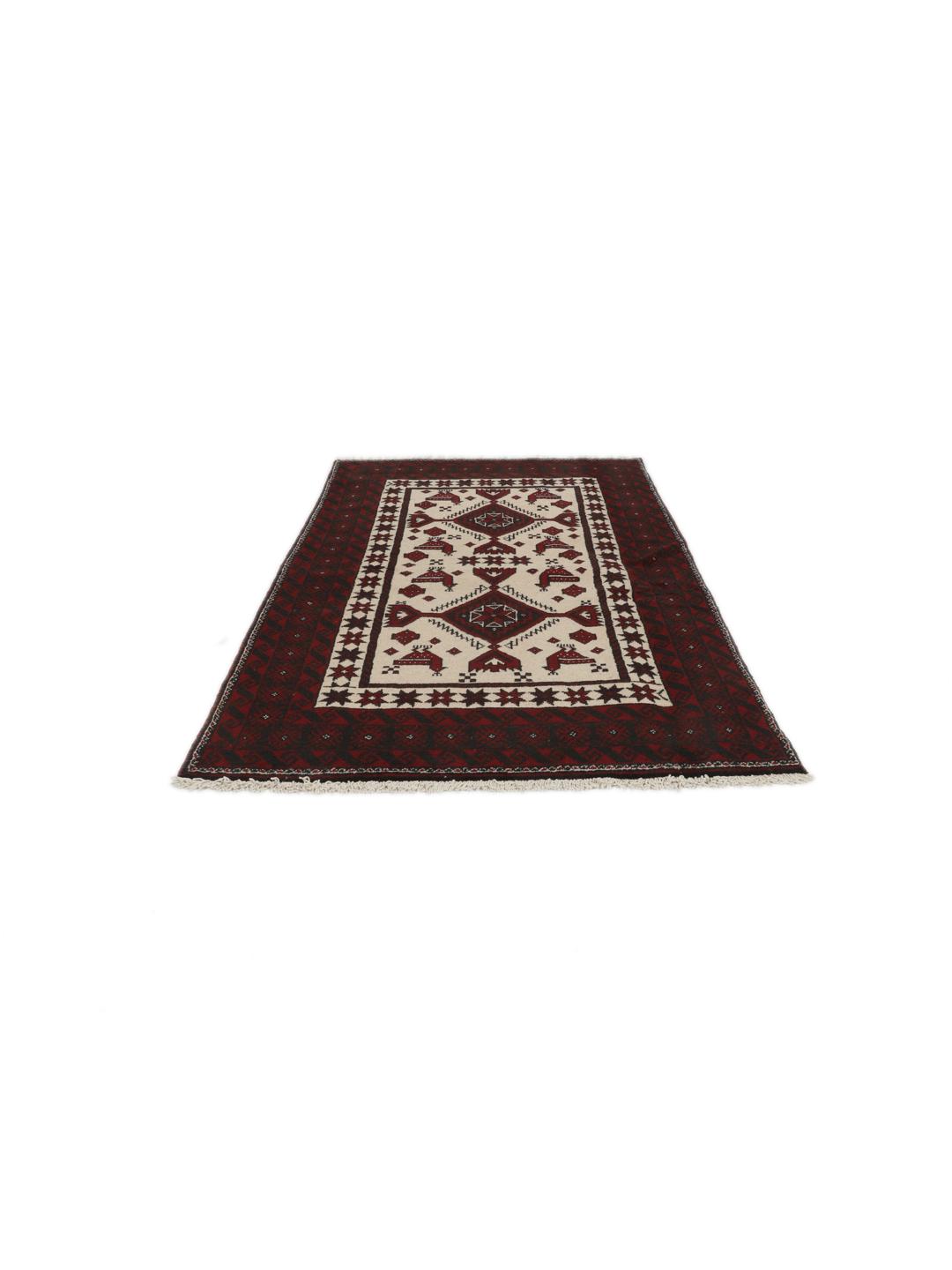
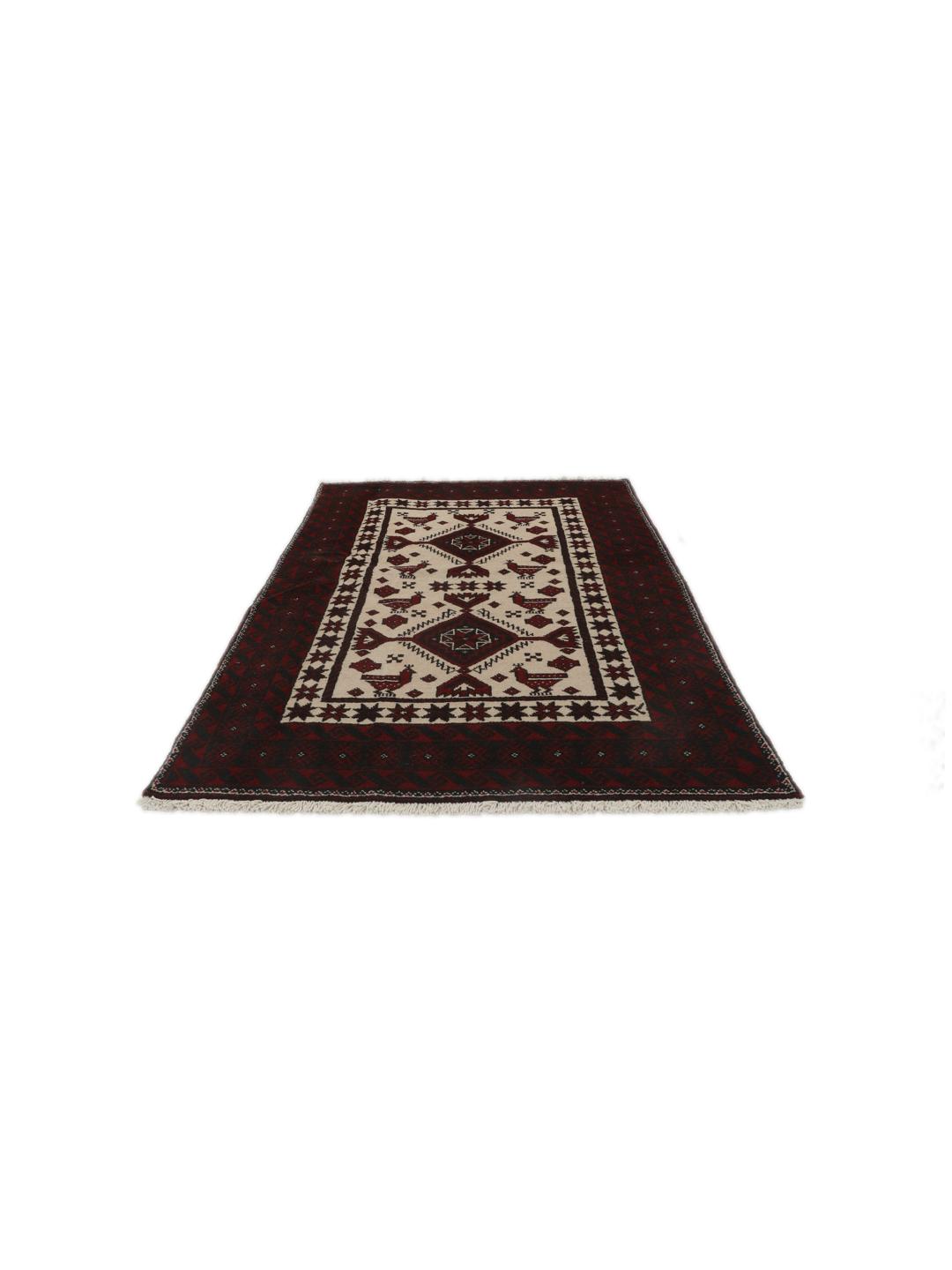
The Baluch rugs originate from the nomadic and semi-nomadic tribes residing in the border regions of the Middle East. These tribes have a long history of weaving, creating textiles that were designed to be both portable and highly durable to withstand the rigors of a nomadic lifestyle. Over centuries, these traditions have evolved into a distinct style characterised by deep, moody colour palettes and highly symbolic, geometric ornamentation.
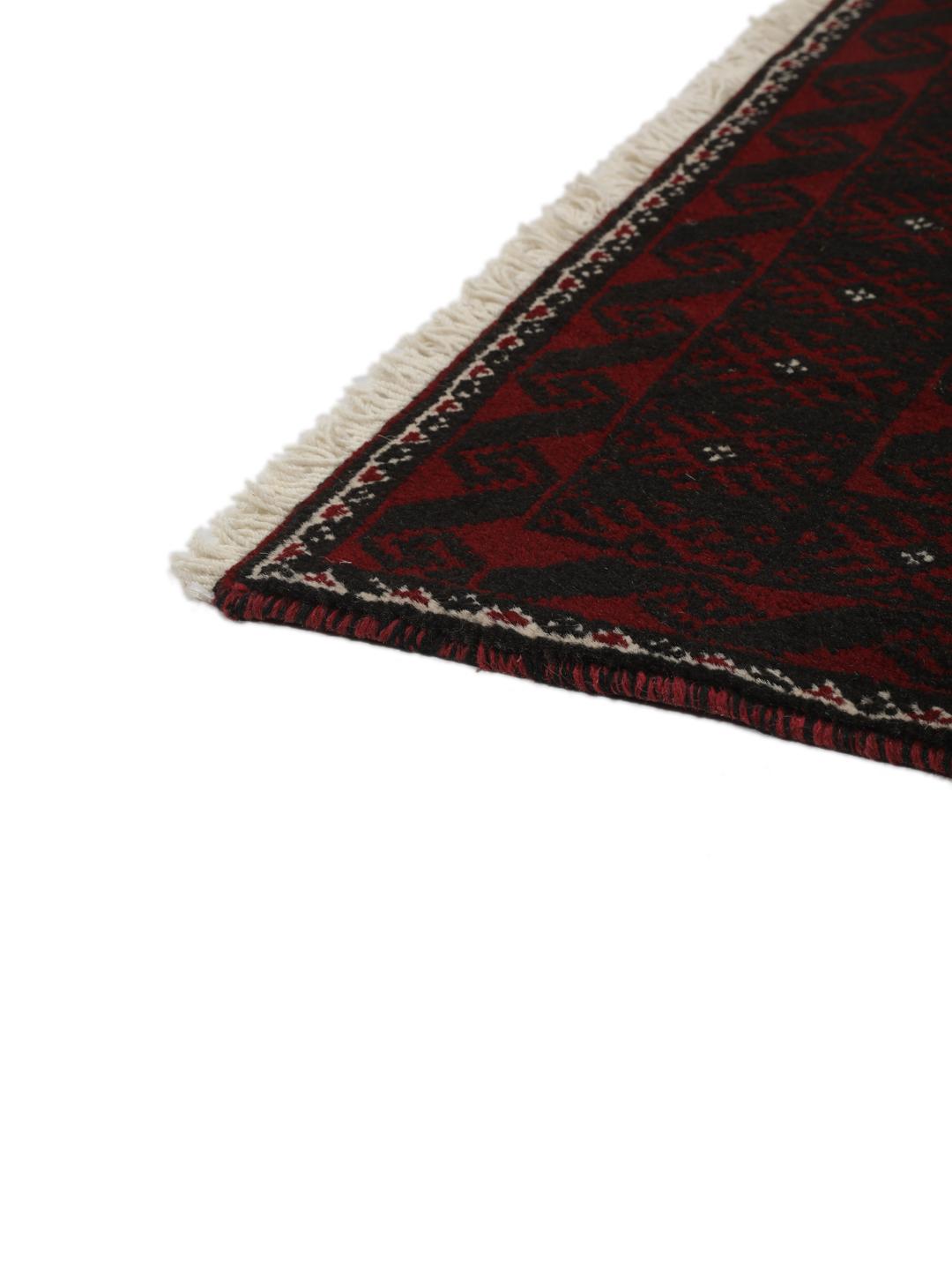
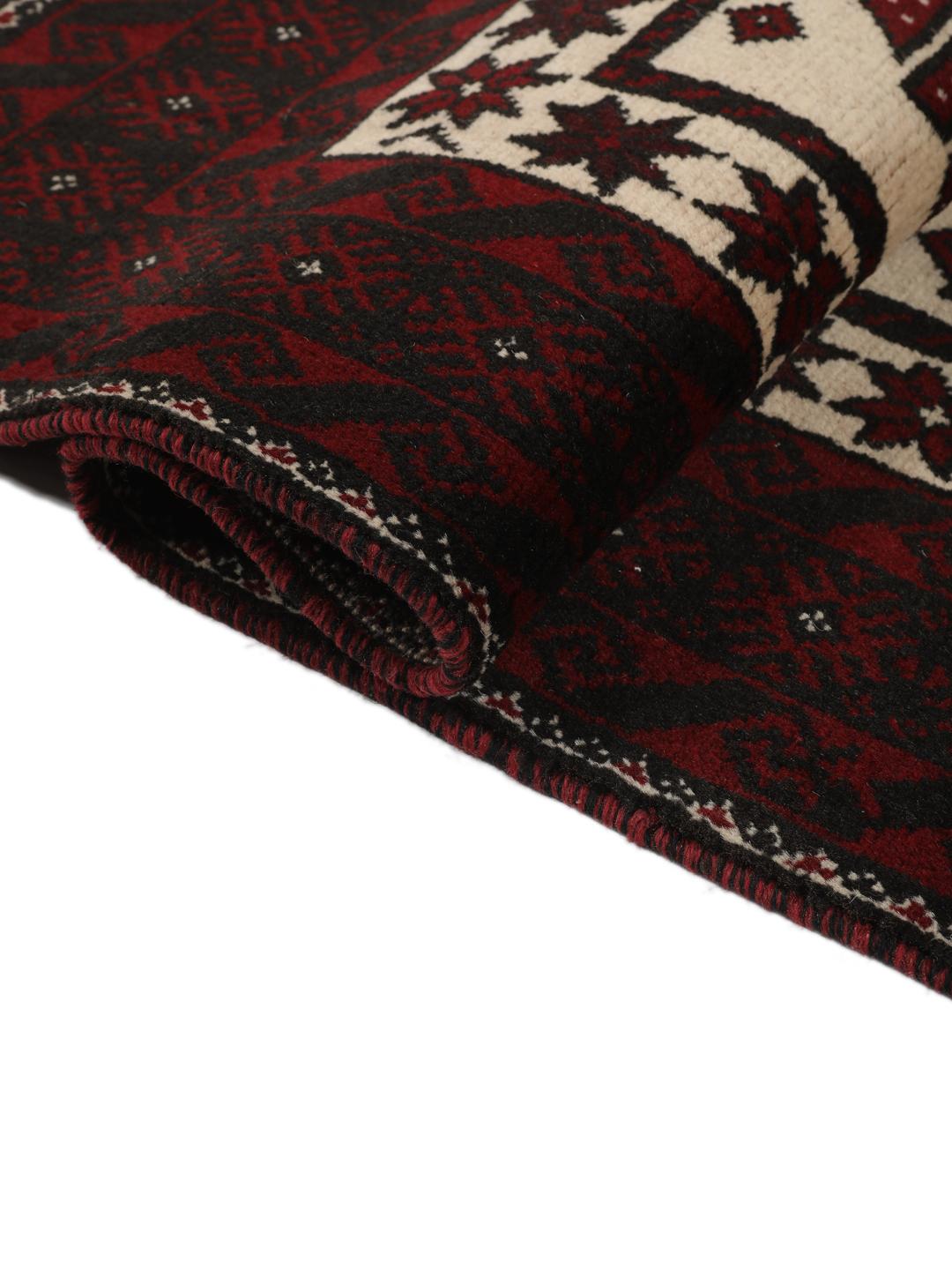
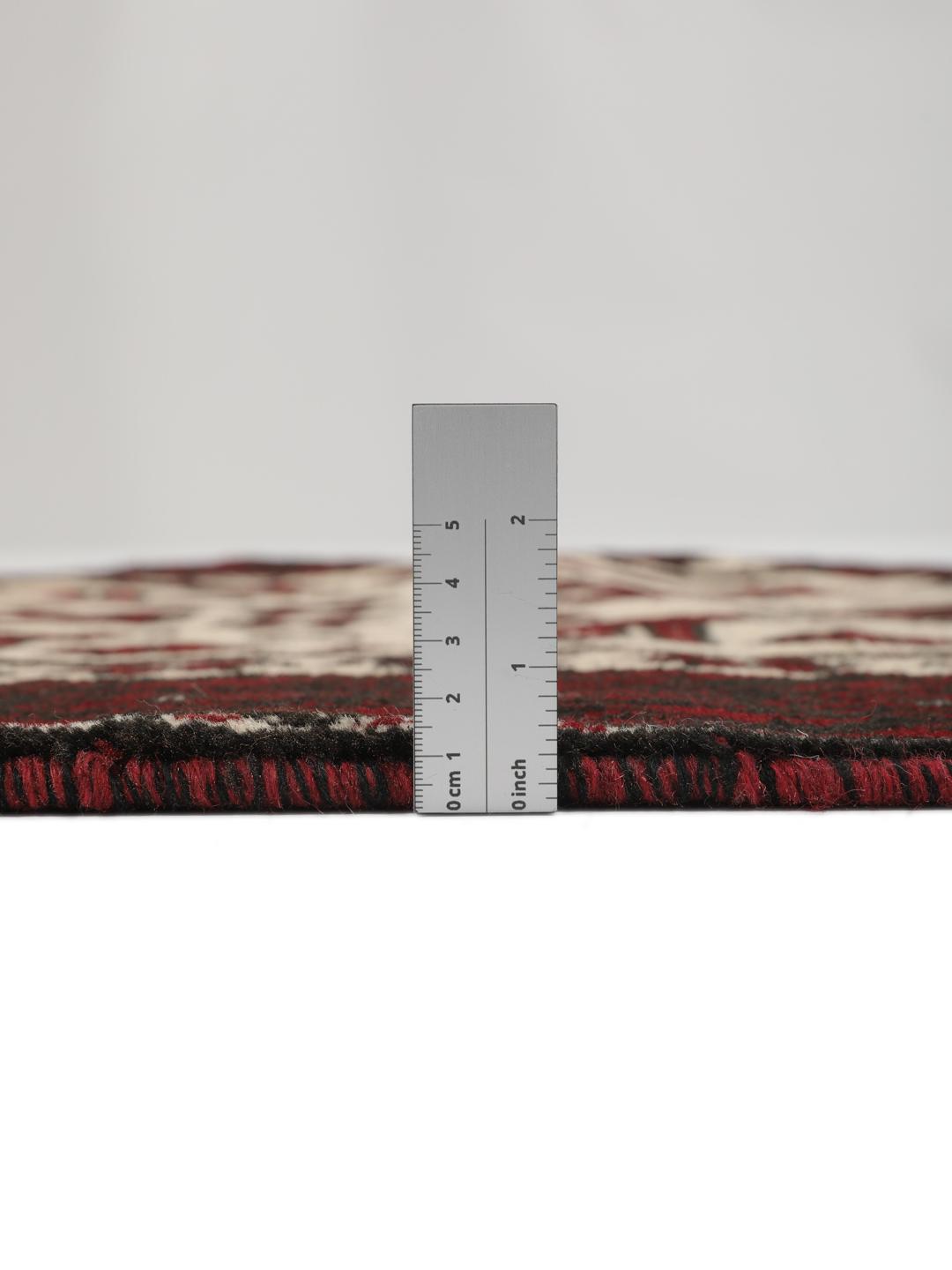
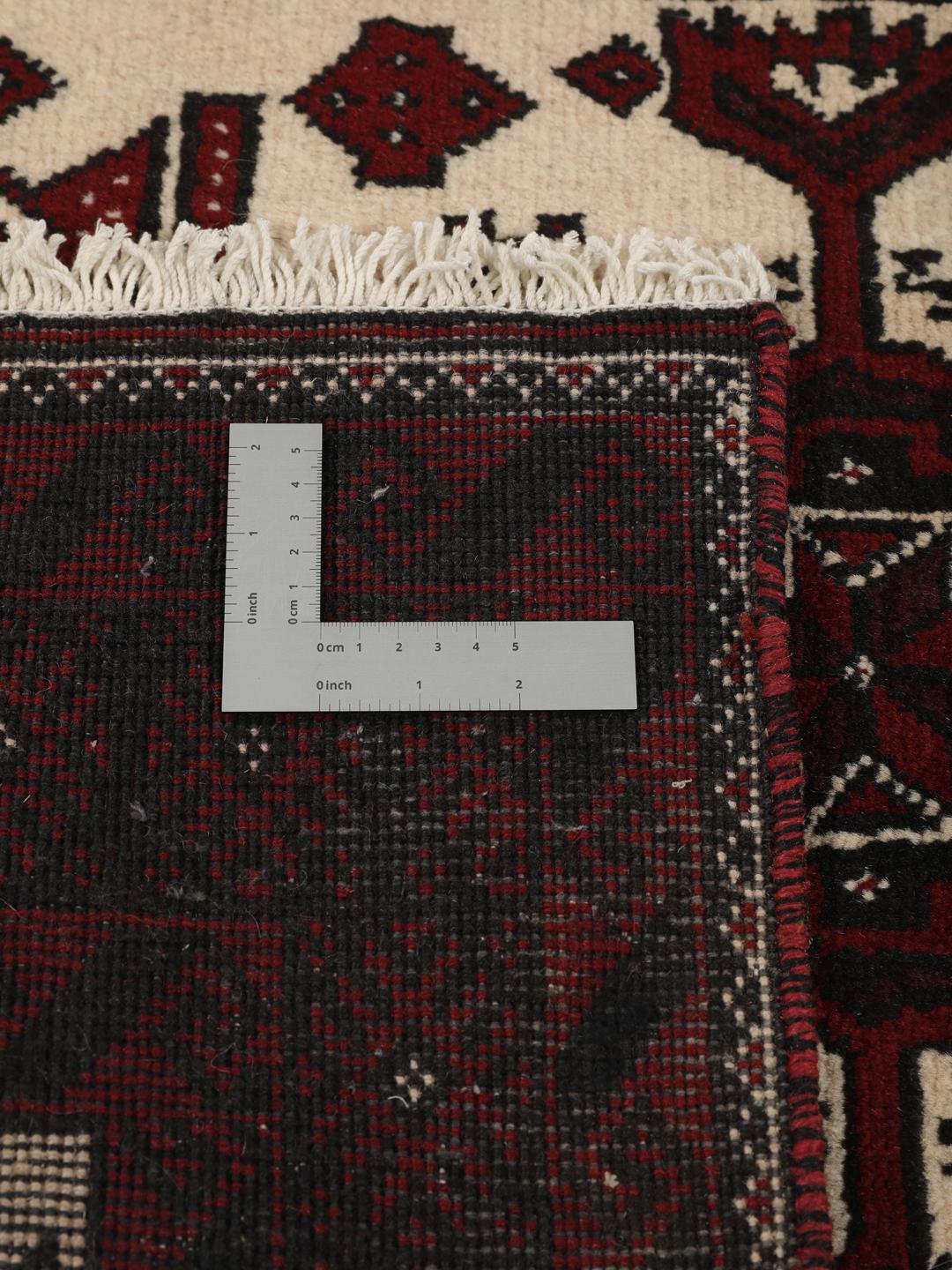
Technically, the quality of a Baluch rug is found in the interplay of its materials and the tightness of the knotting. Traditionally, these rugs are woven with wool that is sourced from local flocks, which is known for its natural lustre and durability. The term 'hand-knotted' here refers to the specific way each strand of wool is looped around the foundation, creating a pile that is dense, flexible, and capable of lasting for decades.
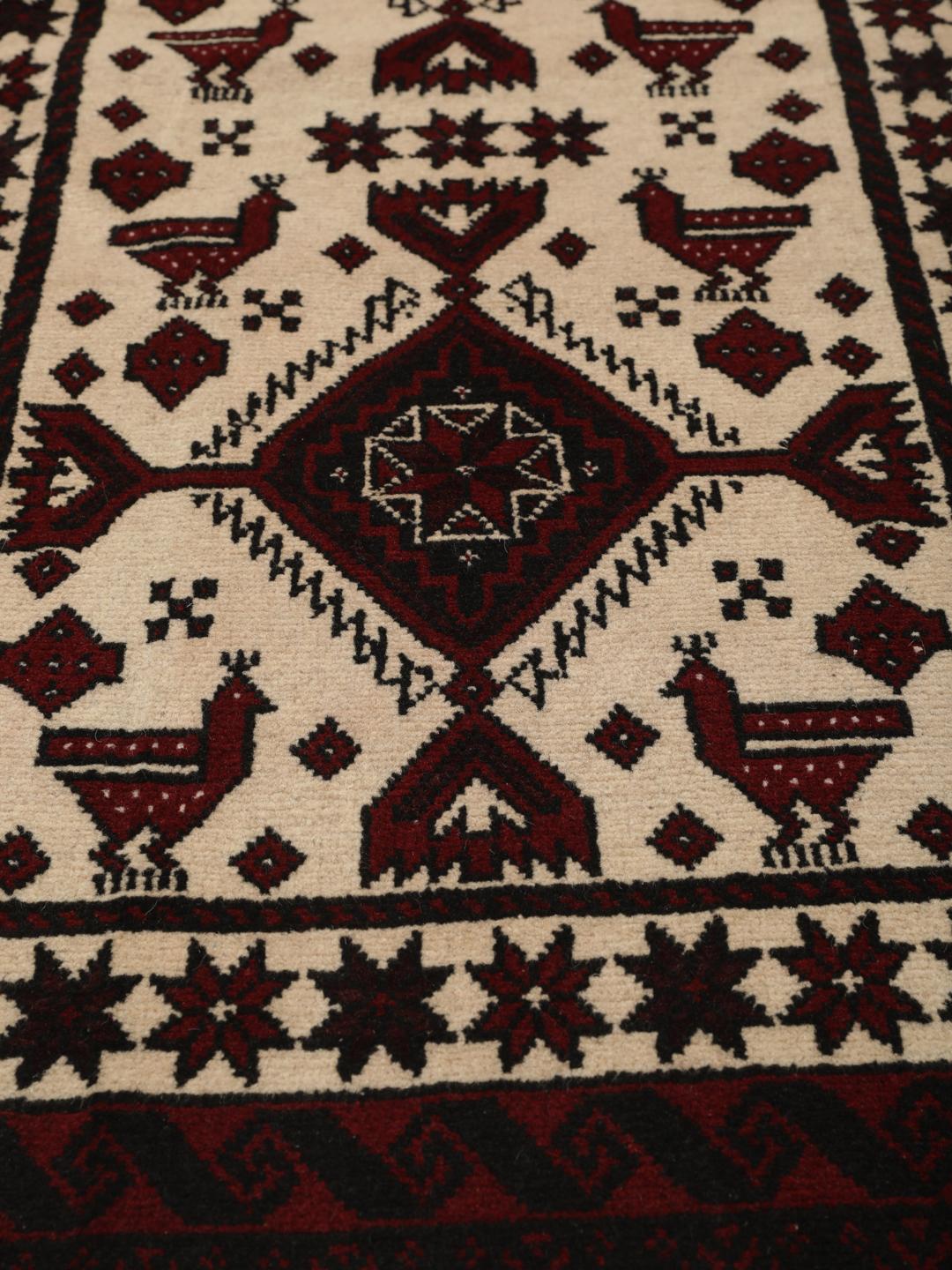
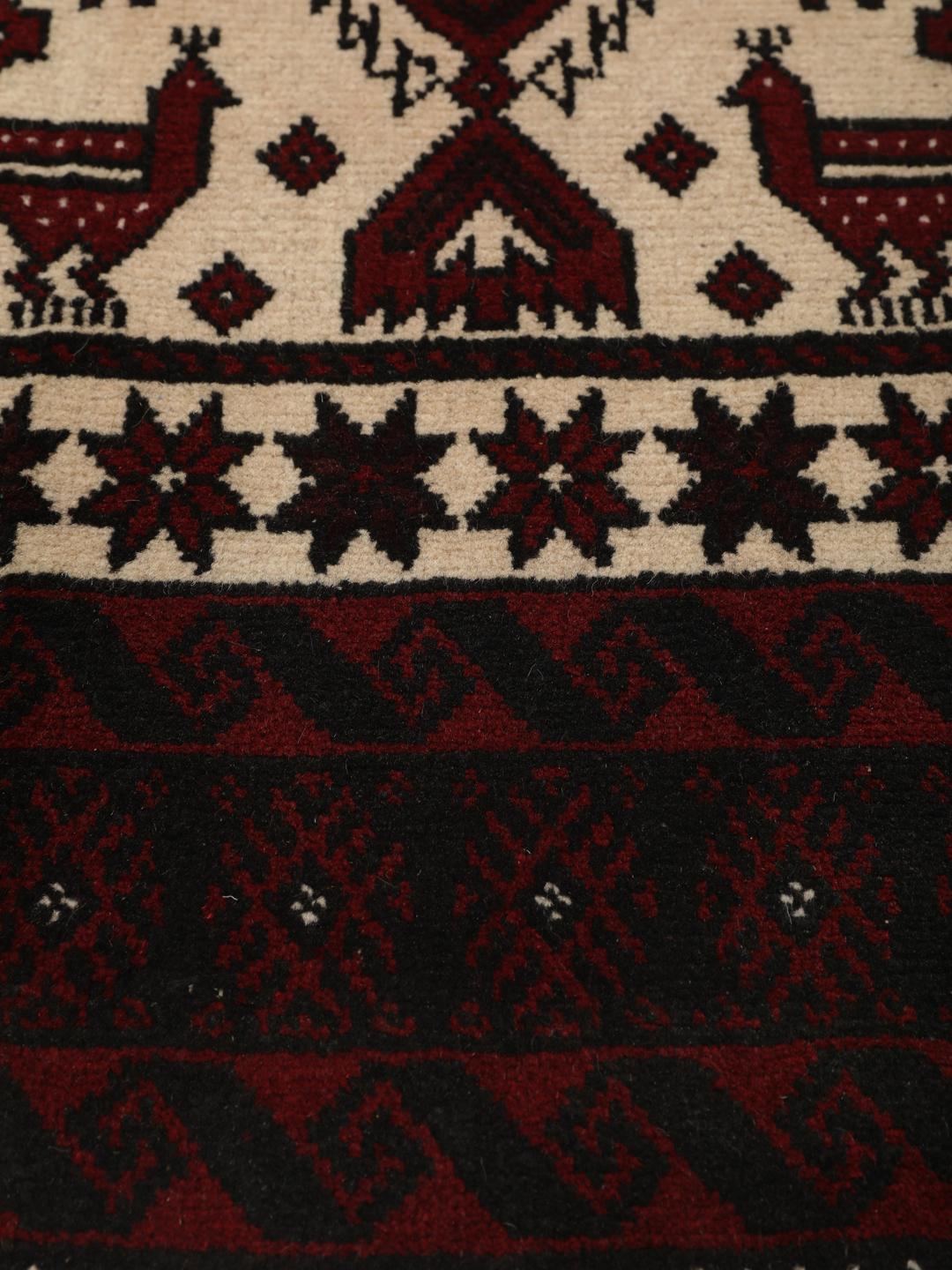
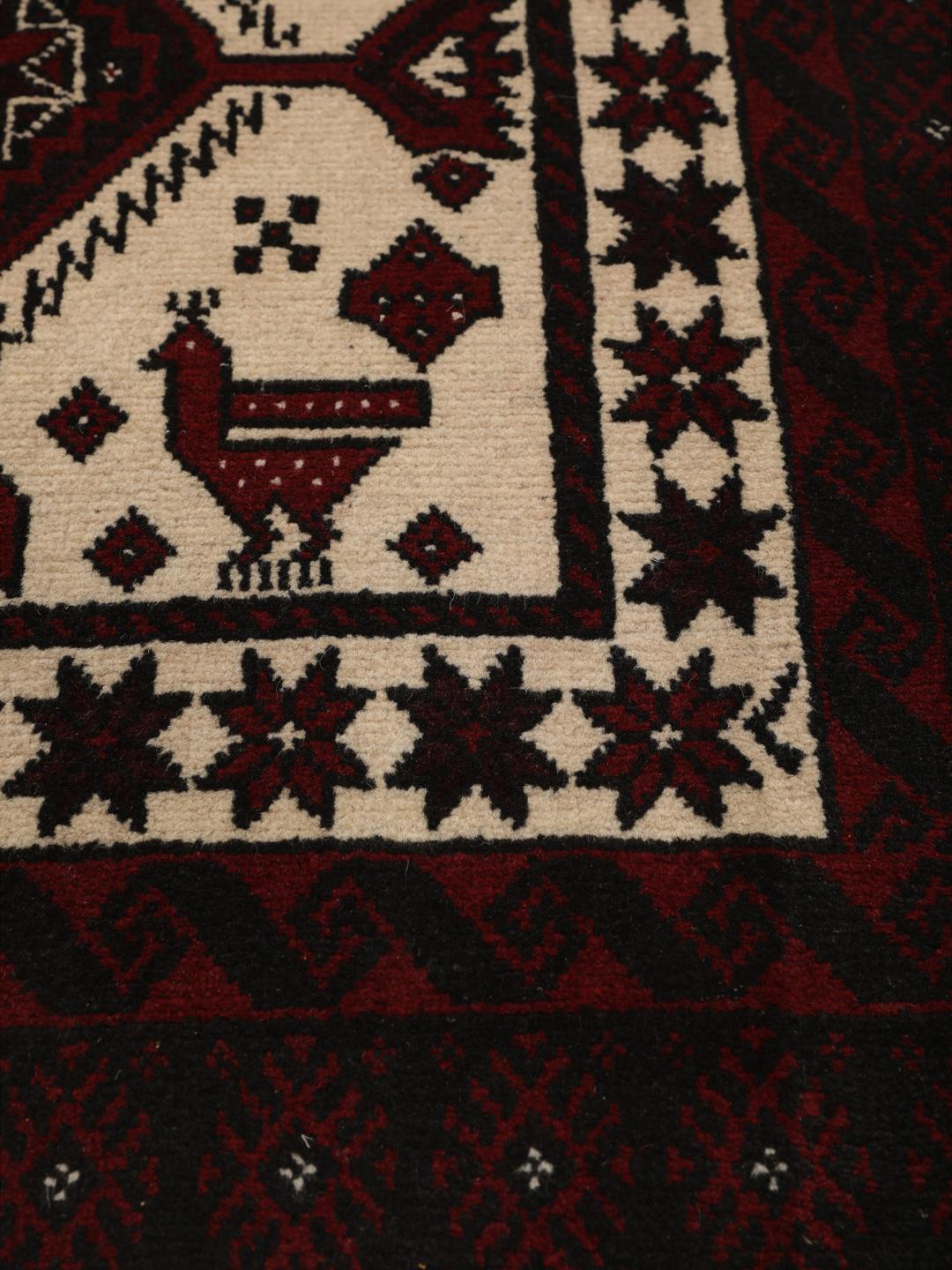
The visual language of these rugs is deeply rooted in tribal lore, often featuring repeating geometric medallions, stylized birds, or floral-inspired motifs known as guls. The use of dark-red and deep, earthy tones is a signature of the tradition, designed to hide the dust and wear of life in desert environments. This rug follows that classic aesthetic, utilizing a formal border to frame the intricate, symbolic activity occurring in the central field.
Baluch rugs are highly valued by collectors for their authenticity and the way they capture the spirit of their makers. Owning one is an opportunity to preserve a piece of living history, as each rug reflects the individual weaver's interpretation of traditional patterns. They are prized not just for their aesthetic beauty, but for the skill, patience, and cultural heritage embedded in every single knot.