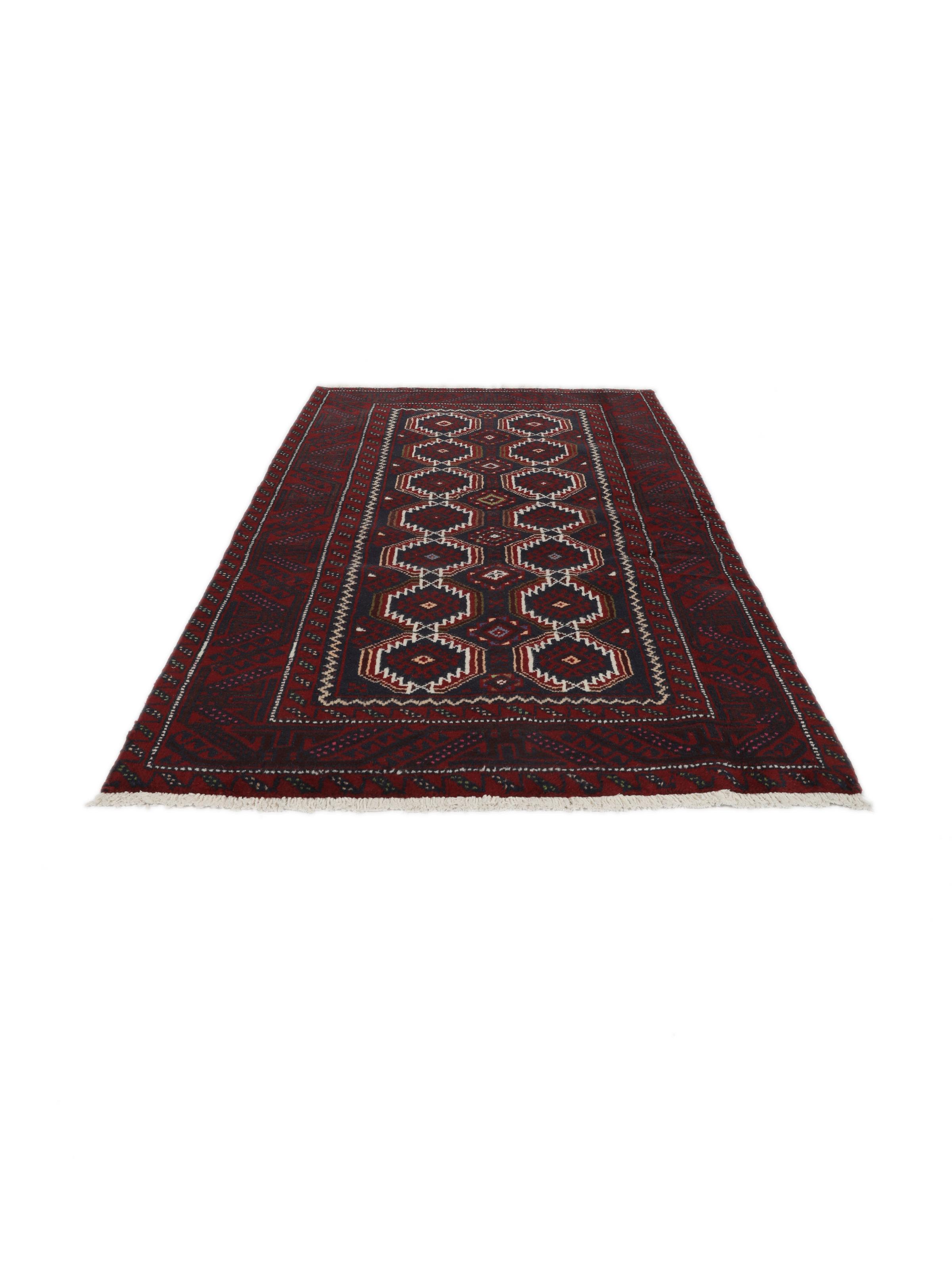
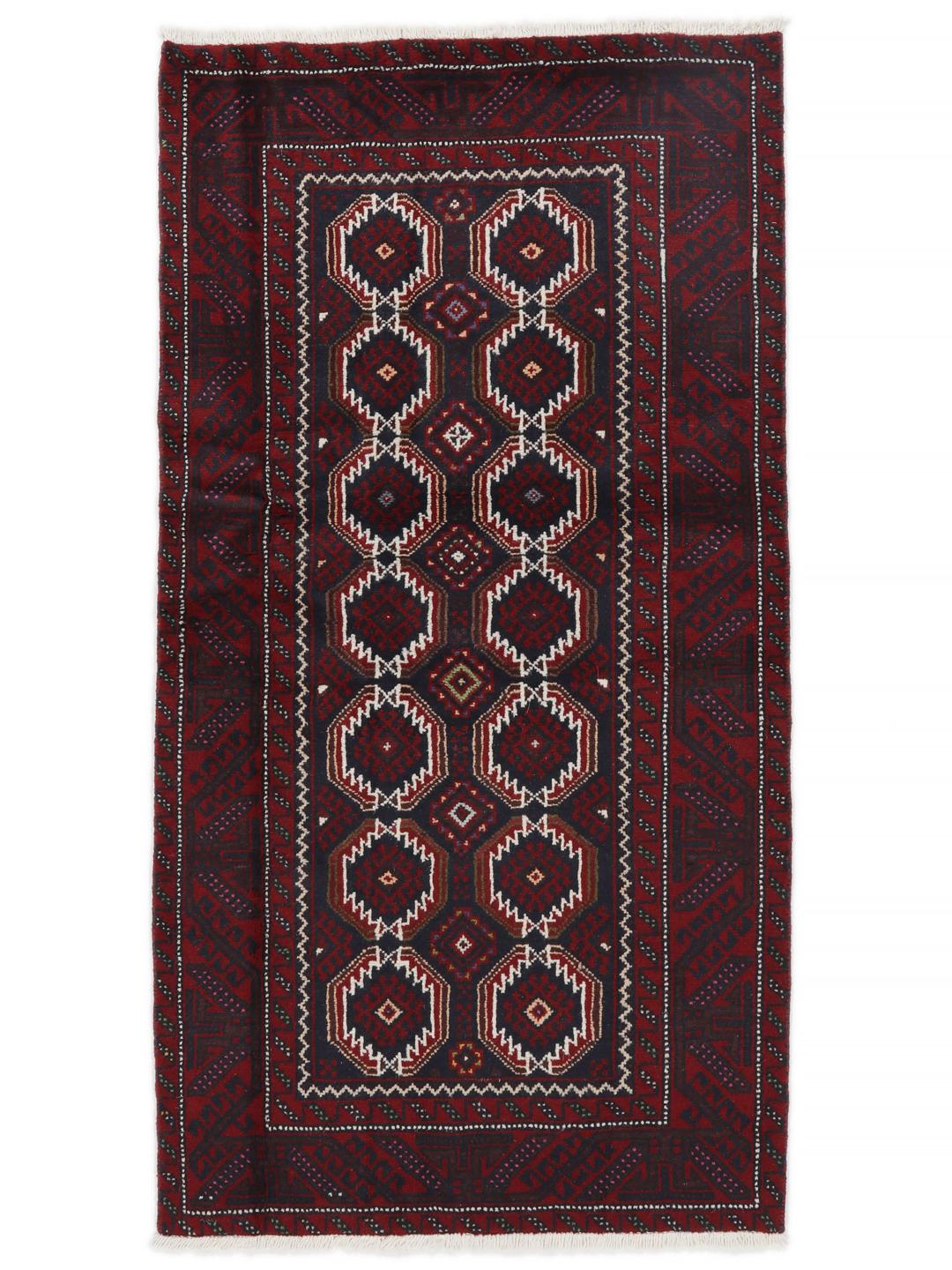
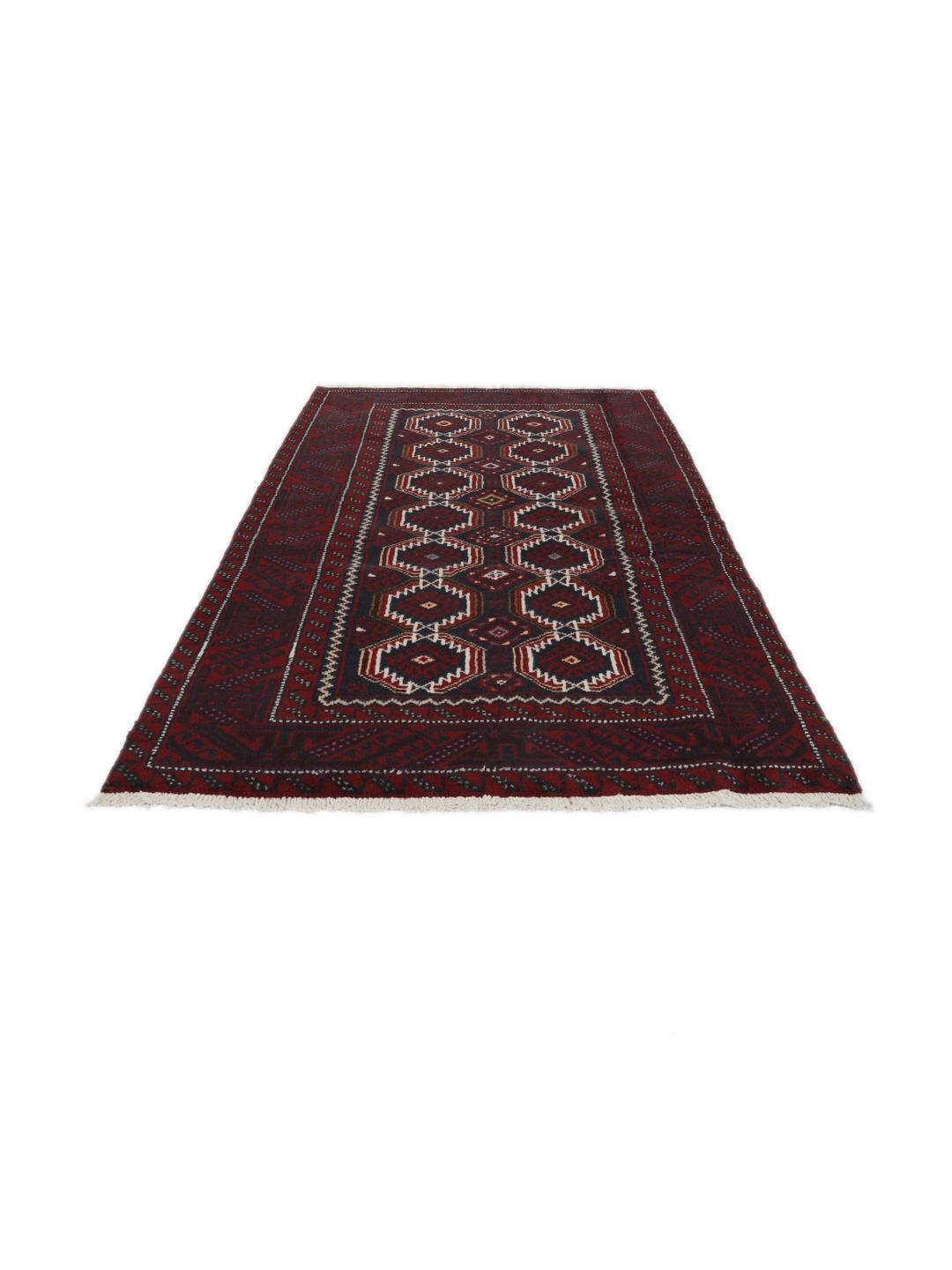
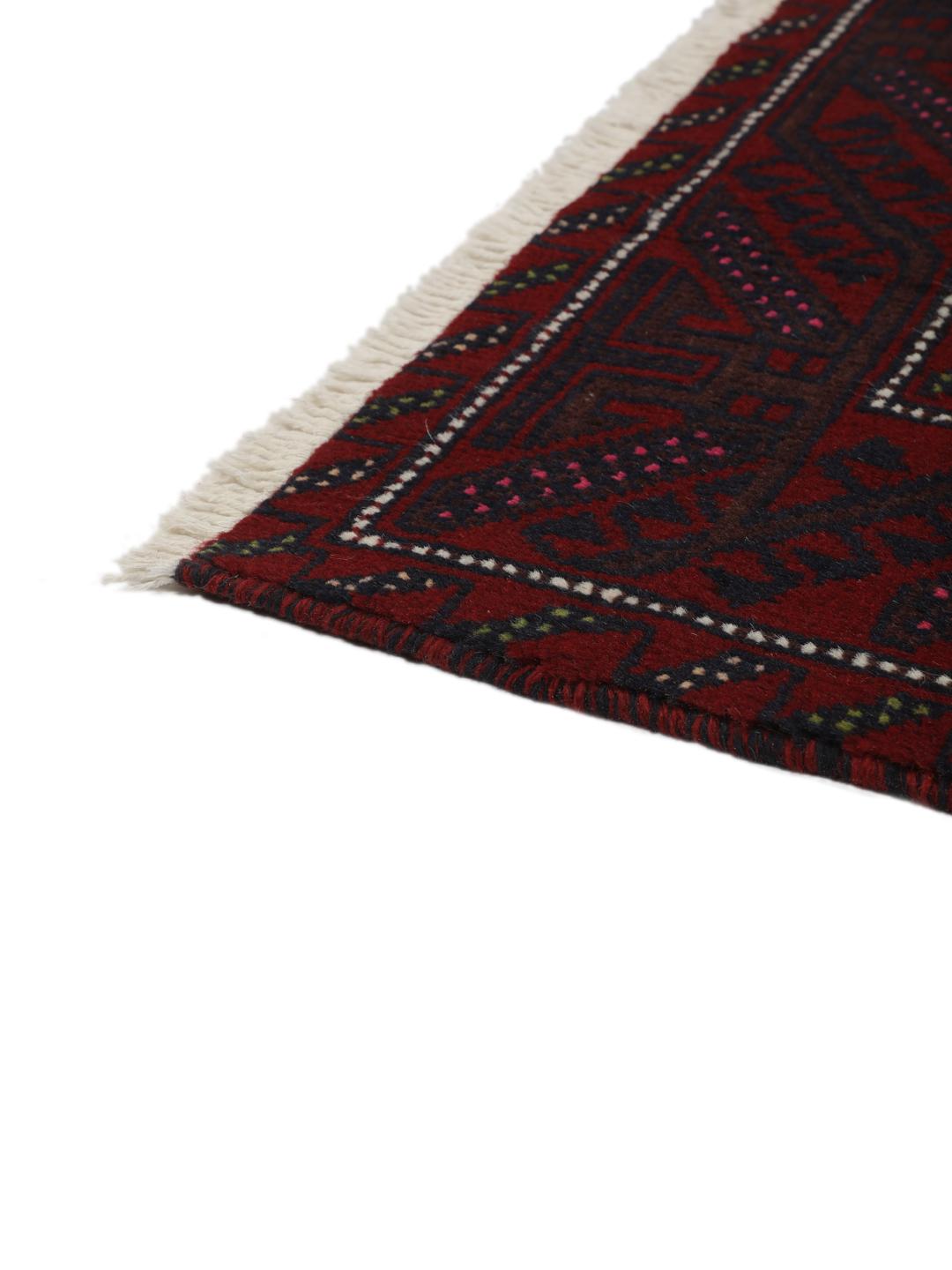
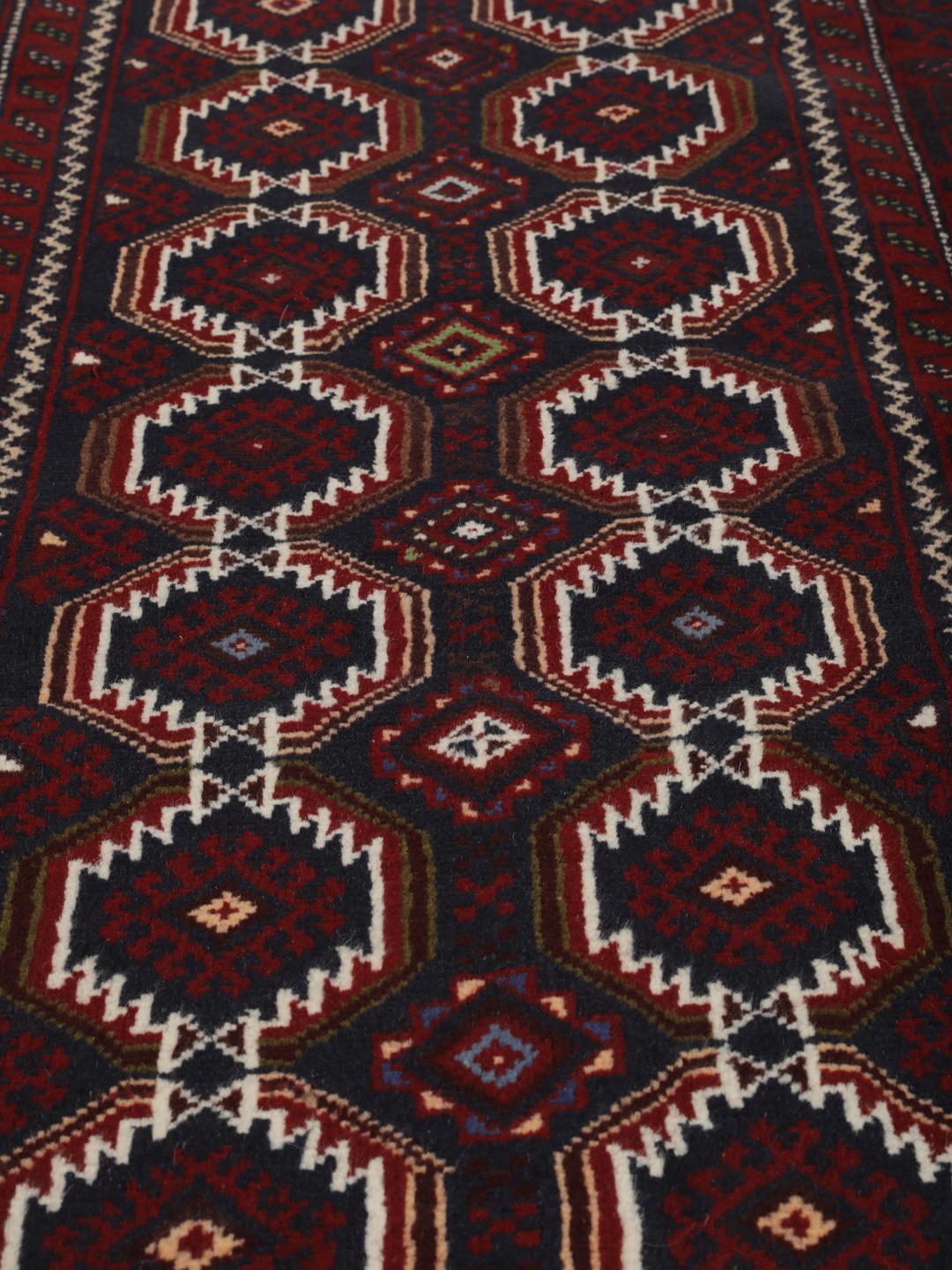
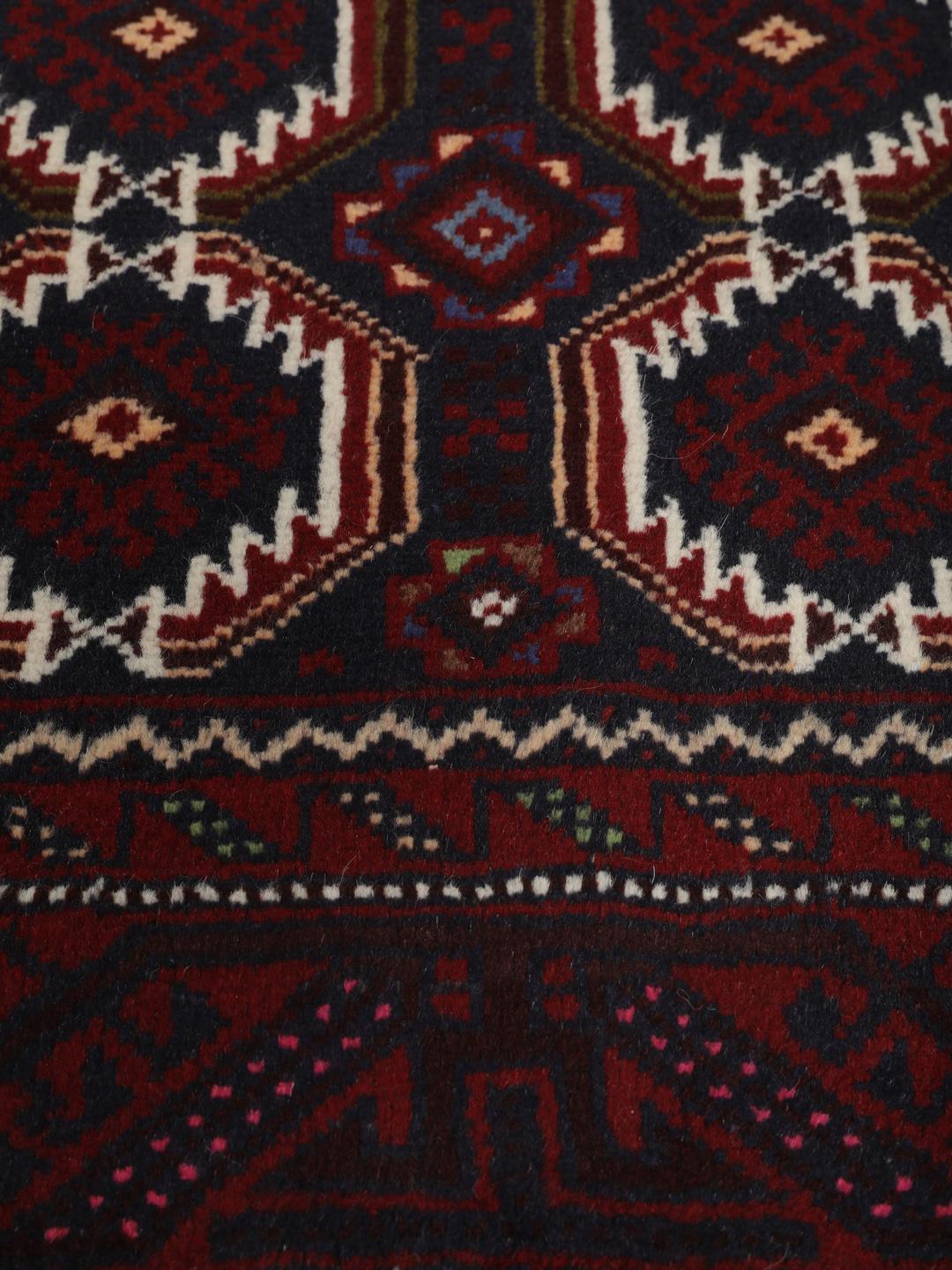
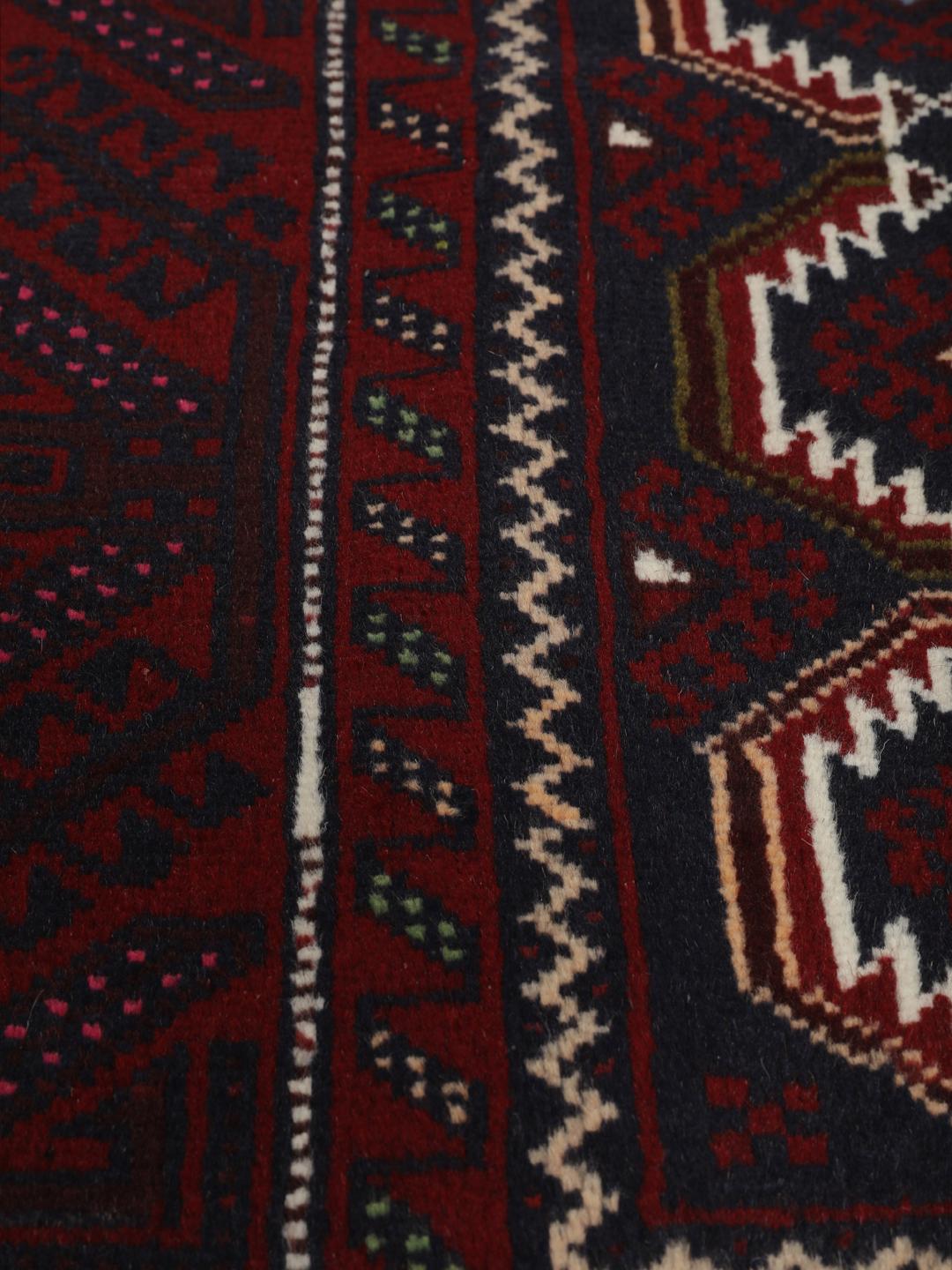
Baluch rugs originate from the nomadic tribes that traverse the border regions of the Middle East. These rugs are deeply connected to the semi-nomadic lifestyle of the Baluchi people, who have long been known for their exceptional skill in weaving textiles that are both portable and incredibly durable. Historically, these rugs were created to serve the practical needs of tribal life, acting as floor coverings, blankets, or wall hangings in tents.
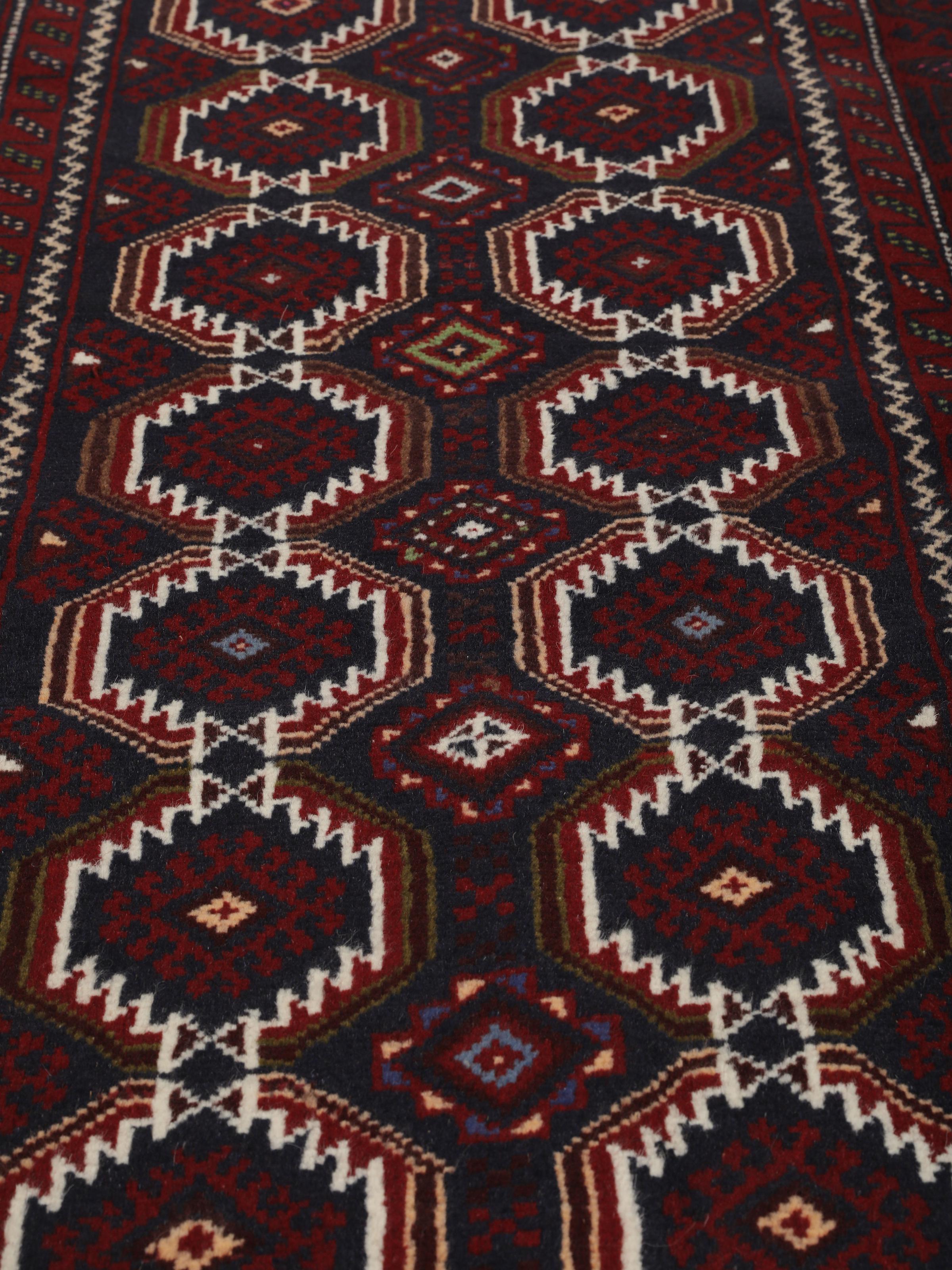
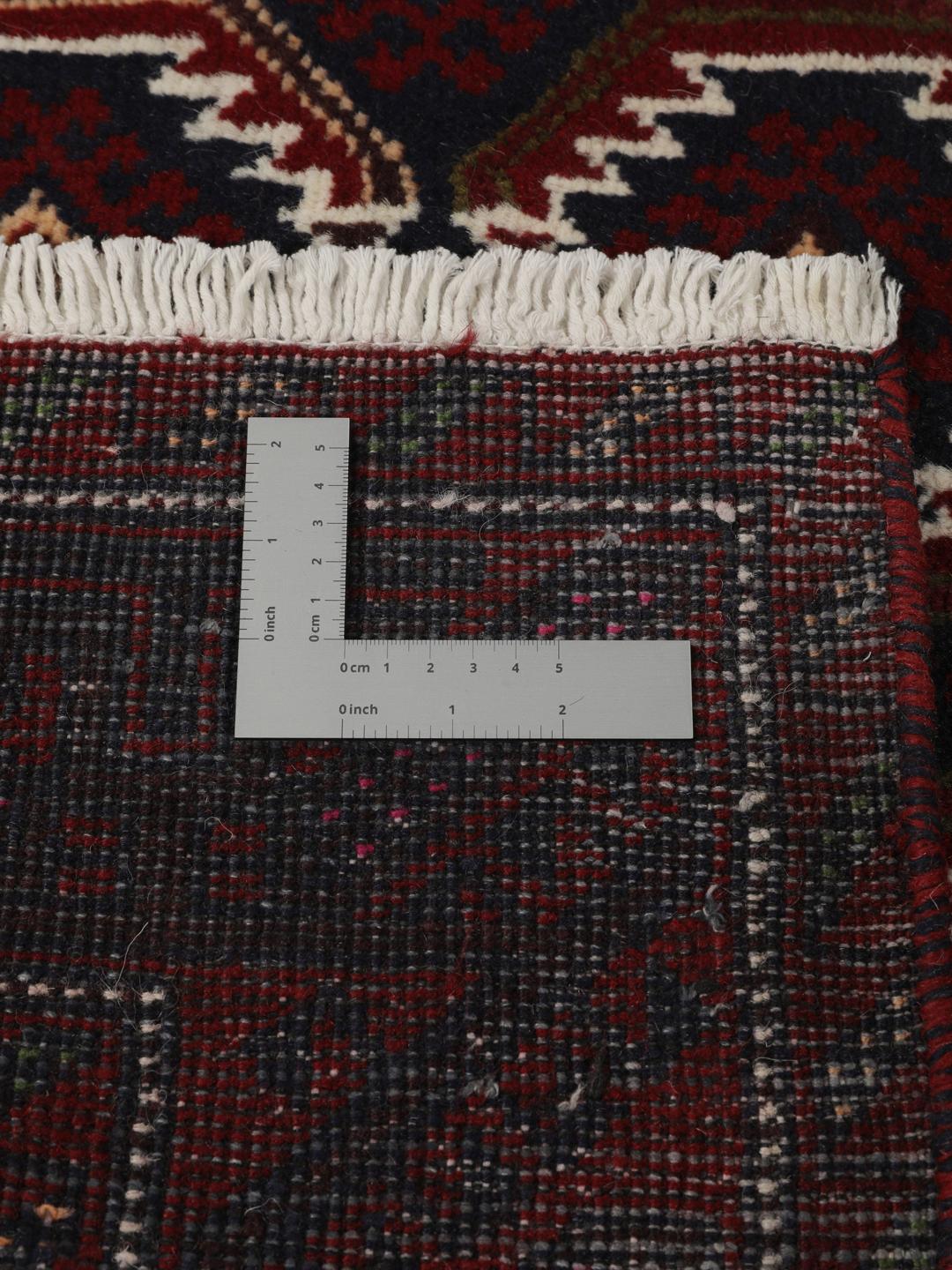
The craftsmanship behind these pieces relies on a deep understanding of traditional weaving techniques passed down through generations. The use of hand-spun wool is central to their quality, as it retains natural oils that provide a unique lustre and strength. This artisanal approach ensures that each rug possesses a distinct character and a depth of colour that evolves beautifully as the wool ages.
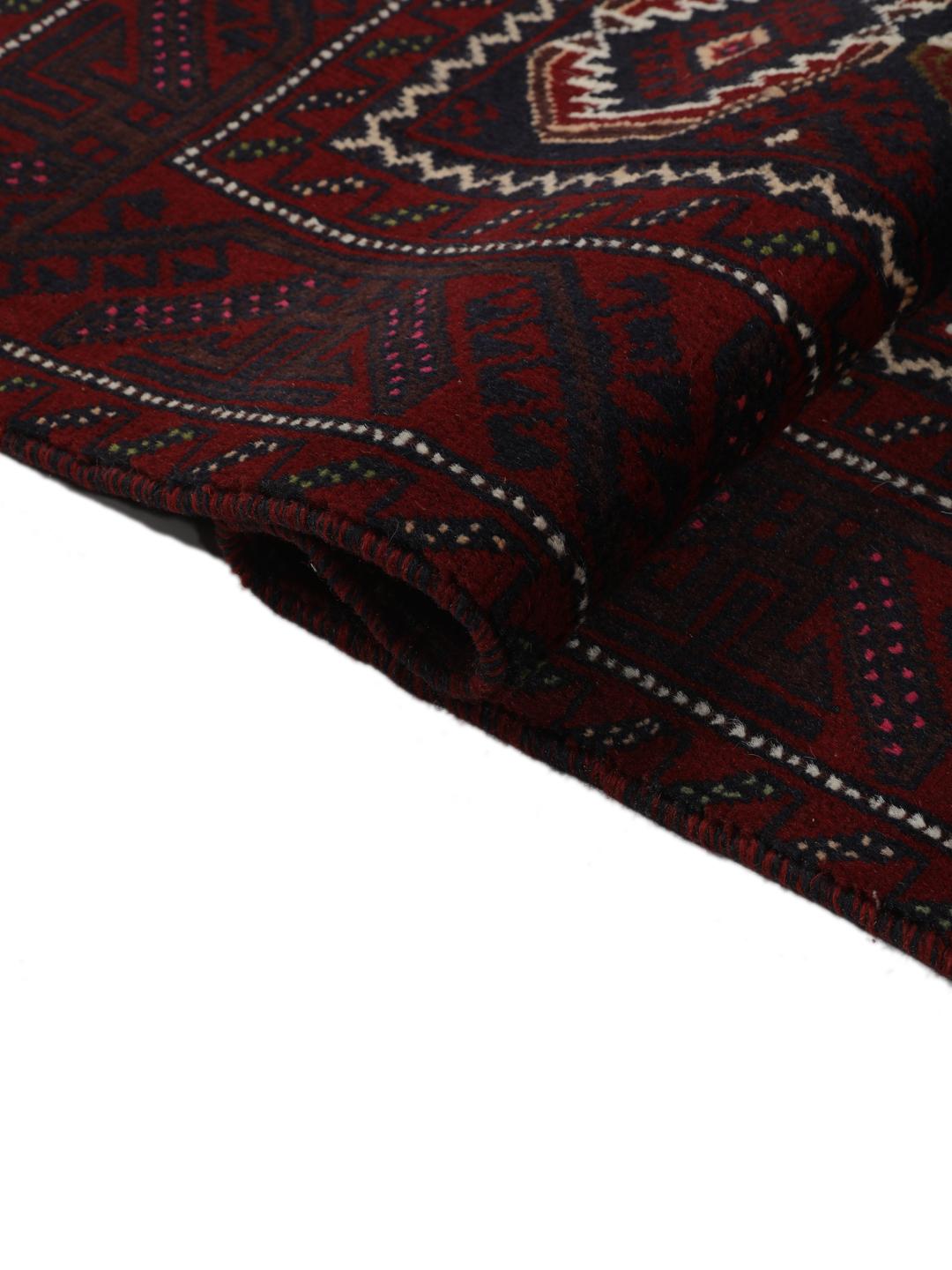
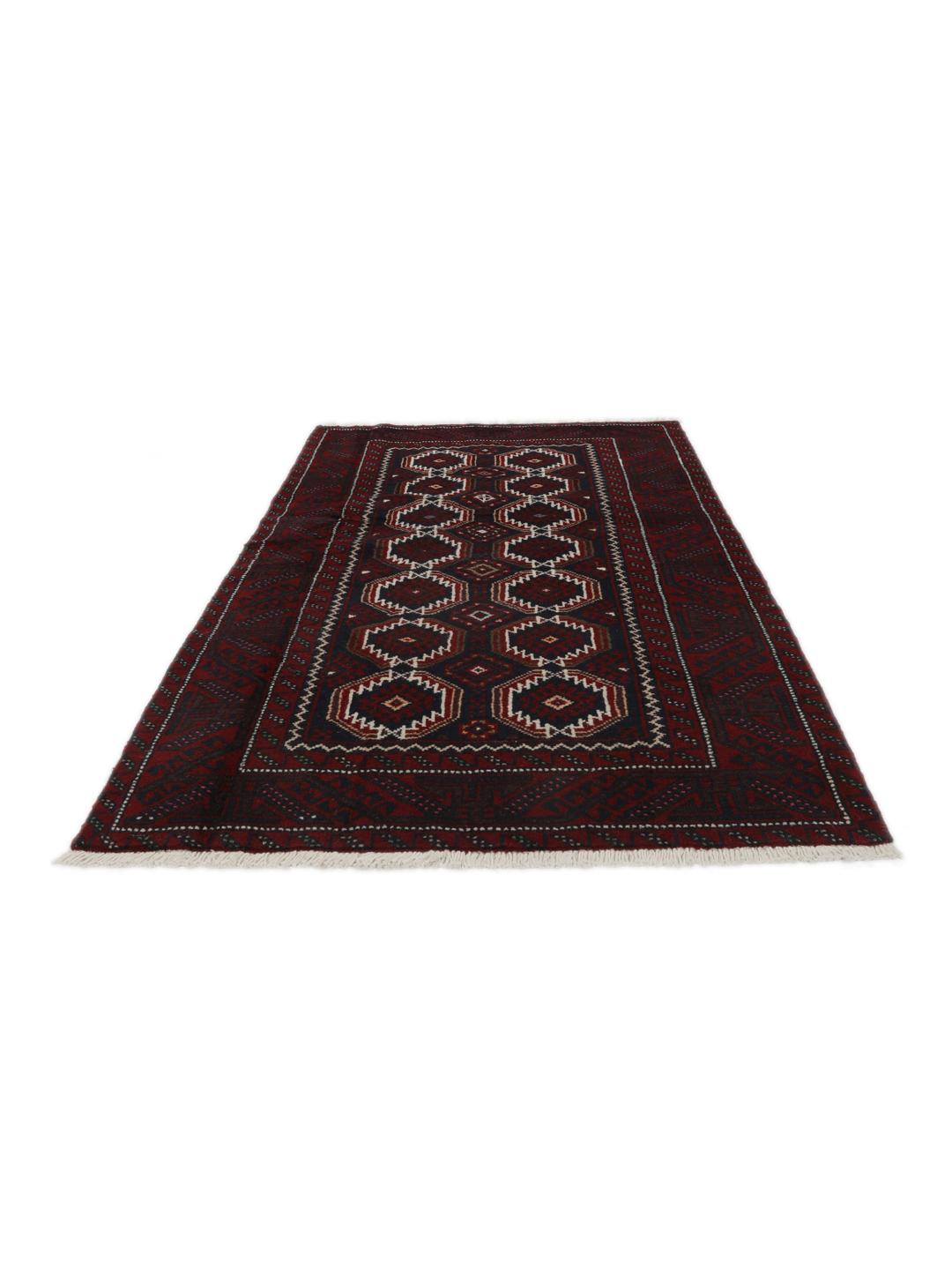
Visually, Baluch rugs are defined by their sophisticated use of dark, earthy tones, predominantly deep reds, blacks, and browns. The field is typically filled with intricate geometric patterns, such as stylised trees of life, diamond shapes, or repeated medallions, all enclosed by narrow, detailed borders. These motifs are not merely decorative but often carry symbolic meanings rooted in the tribal history and environment of the weavers.
Today, these rugs are highly sought after by collectors who value the authenticity and cultural narrative embedded in every piece. Owning a Baluch rug is an opportunity to preserve a fading art form that prioritises human skill over mass production. It represents a connection to a rich, nomadic past and serves as a testament to the enduring quality of traditional hand-knotted textiles.