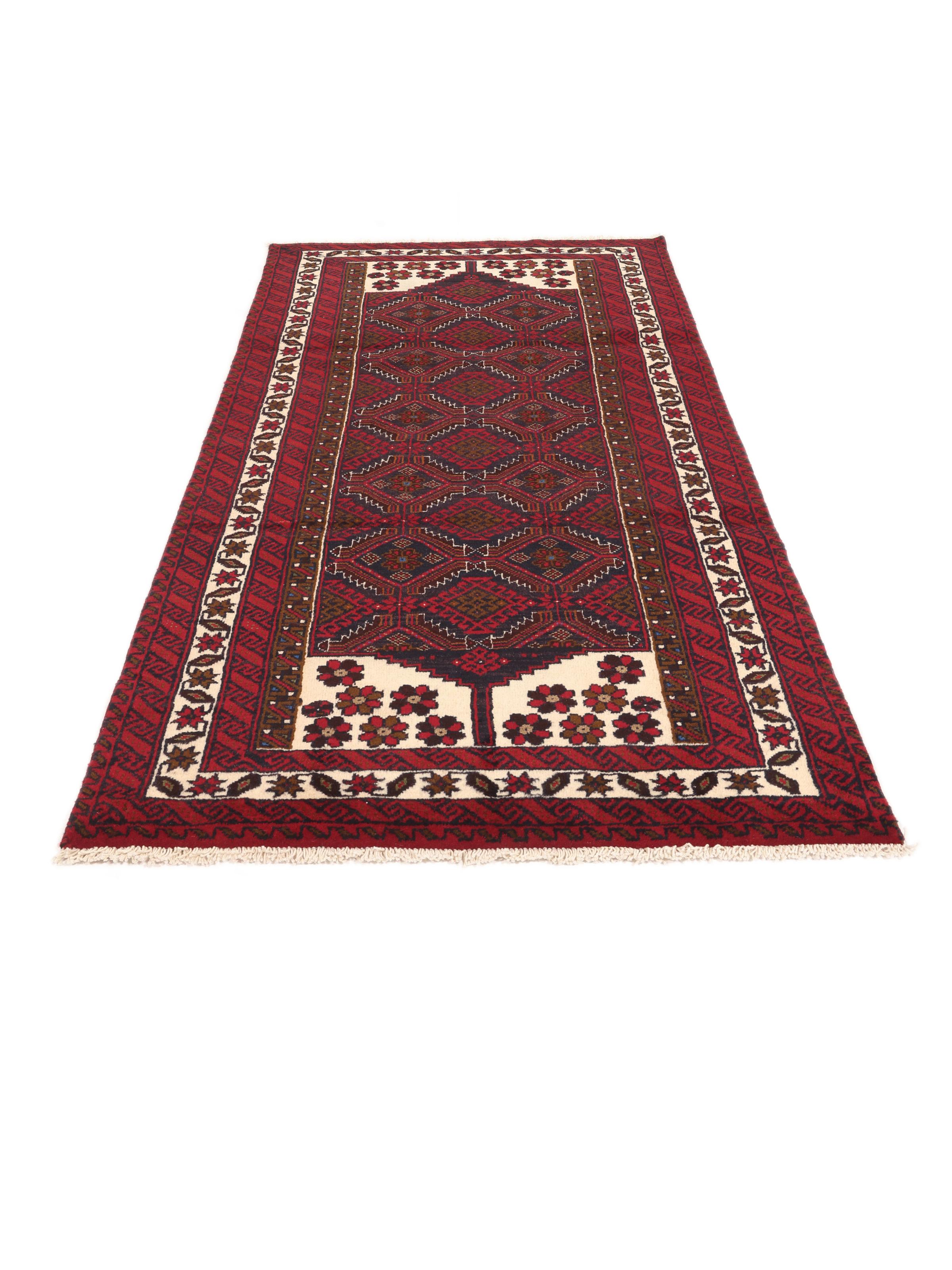
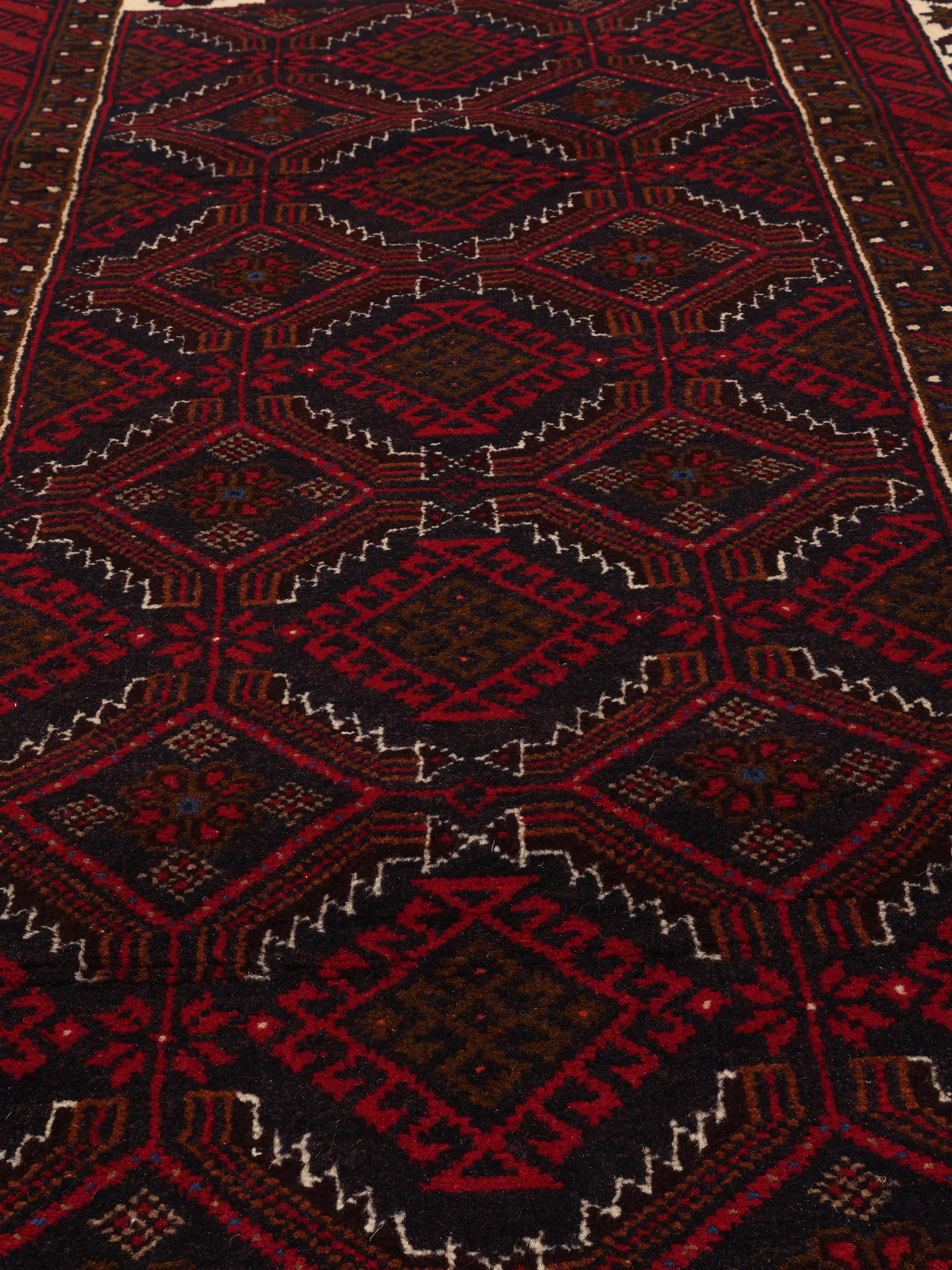
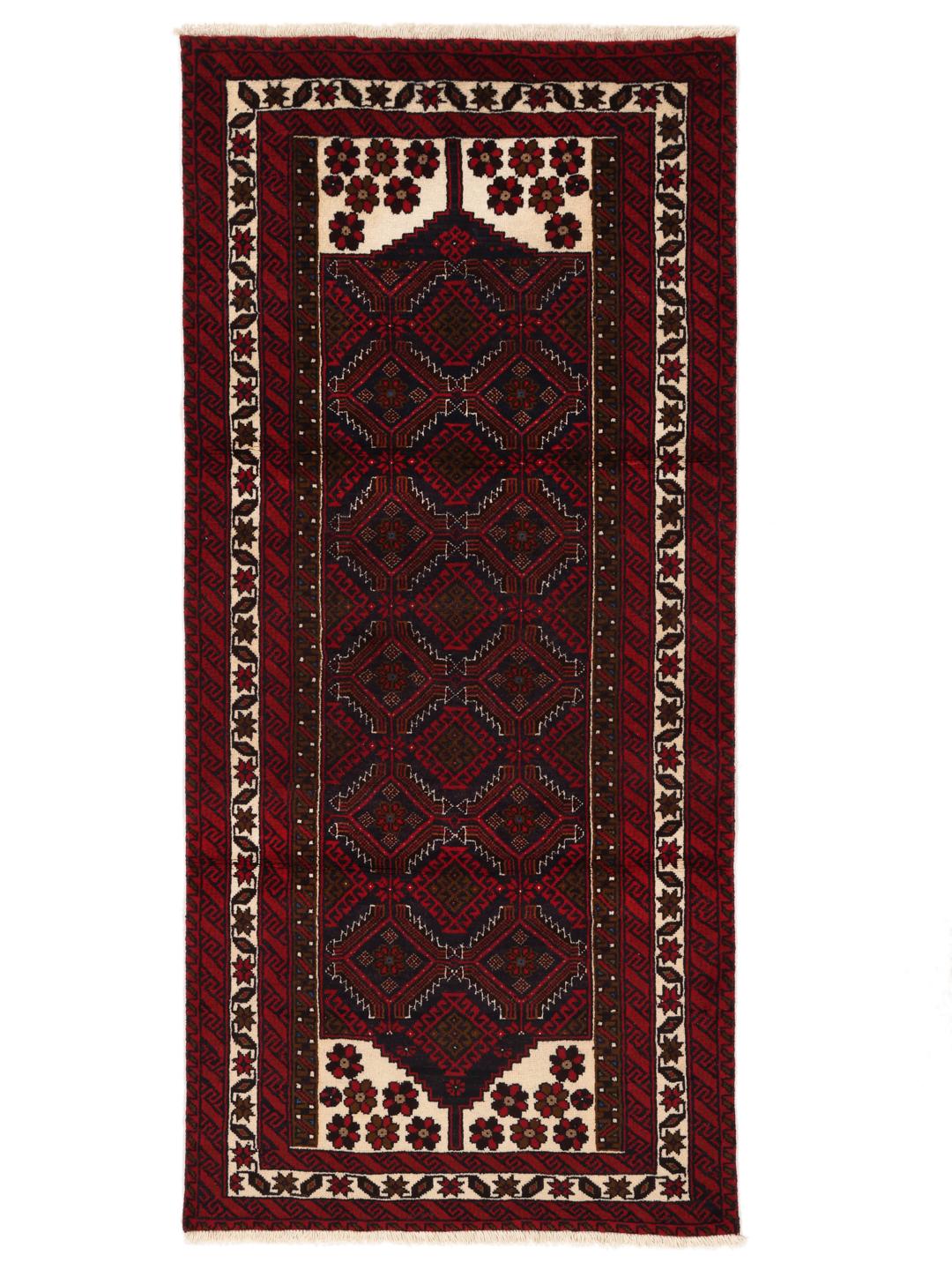
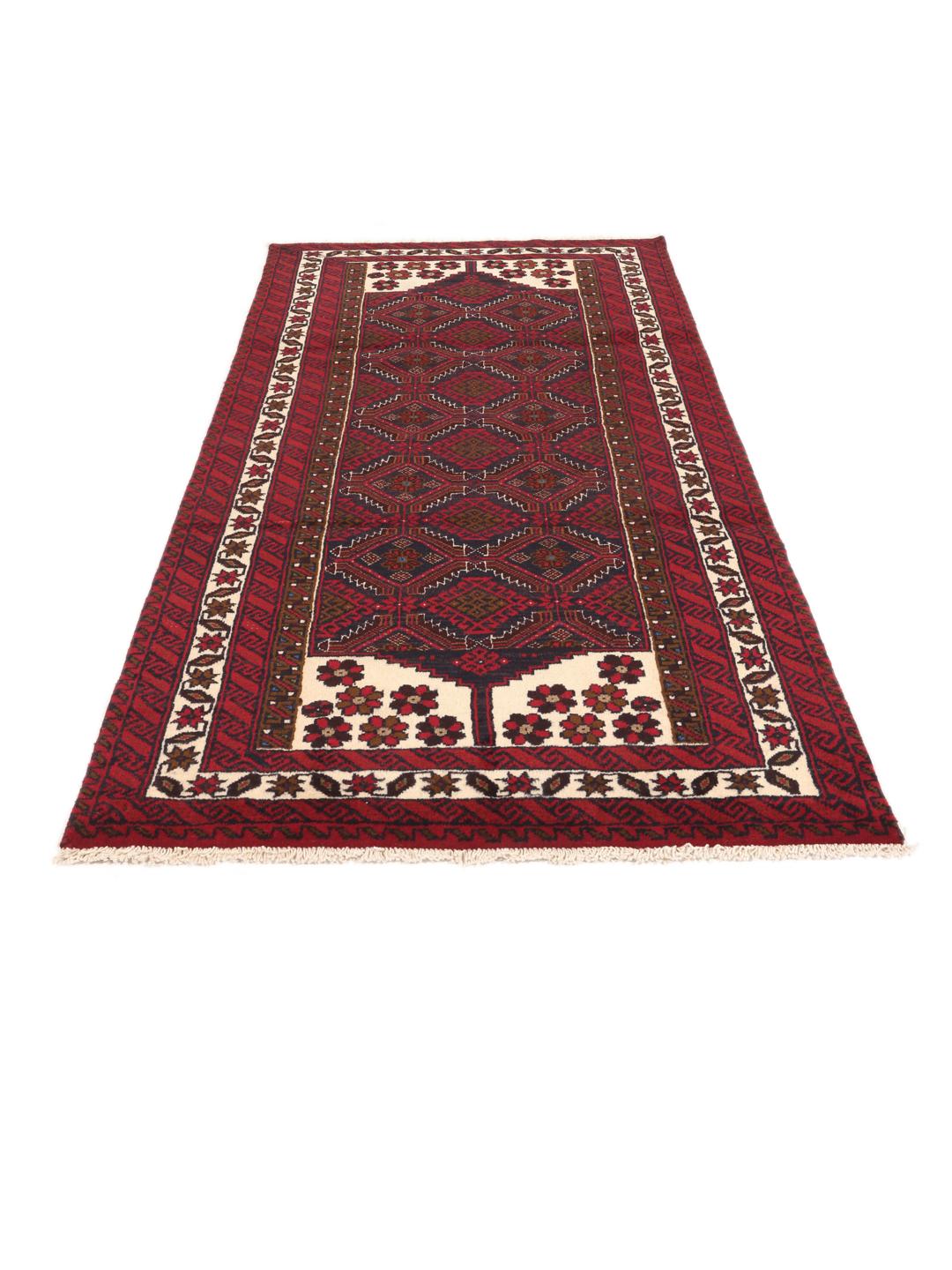
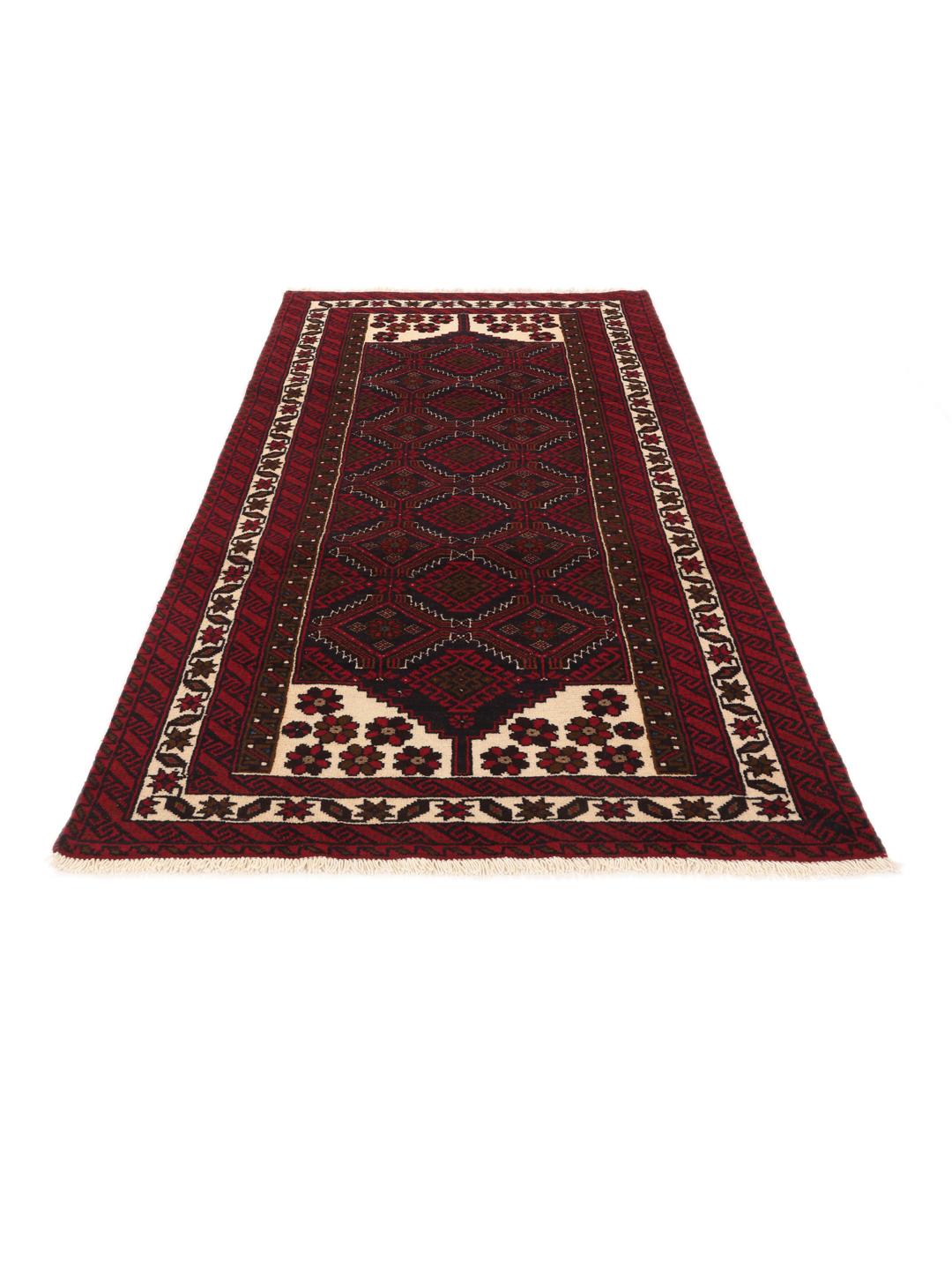
The Baluch rug tradition originates from the nomadic and semi-nomadic tribes of the border regions between the Middle East and neighbouring areas. These weavers have historically been known for their ability to create deeply expressive textiles that reflect their environment and cultural identity, often working on portable horizontal looms that allow them to maintain their craft even while travelling across harsh, rugged landscapes.
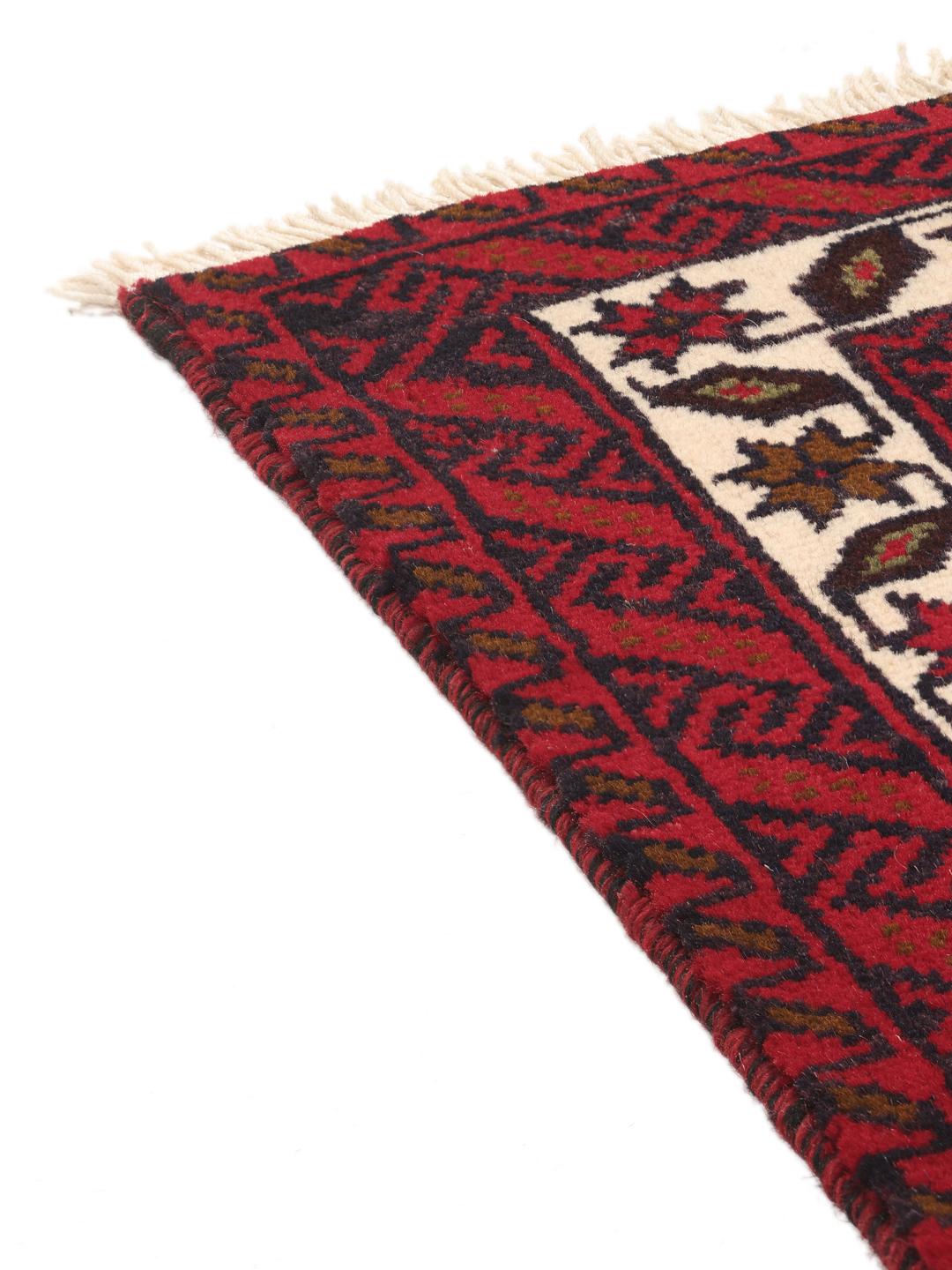
The term Baluch refers to the specific tribal aesthetic that prioritises dark, moody palettes and sharp, geometric motifs. These rugs are highly regarded for their use of high-quality, lustrous wool, which is often sourced from the tribes' own flocks. The durability of the material, combined with traditional spinning and dyeing techniques, results in a rug that is not only beautiful but also capable of enduring the demands of nomadic life.
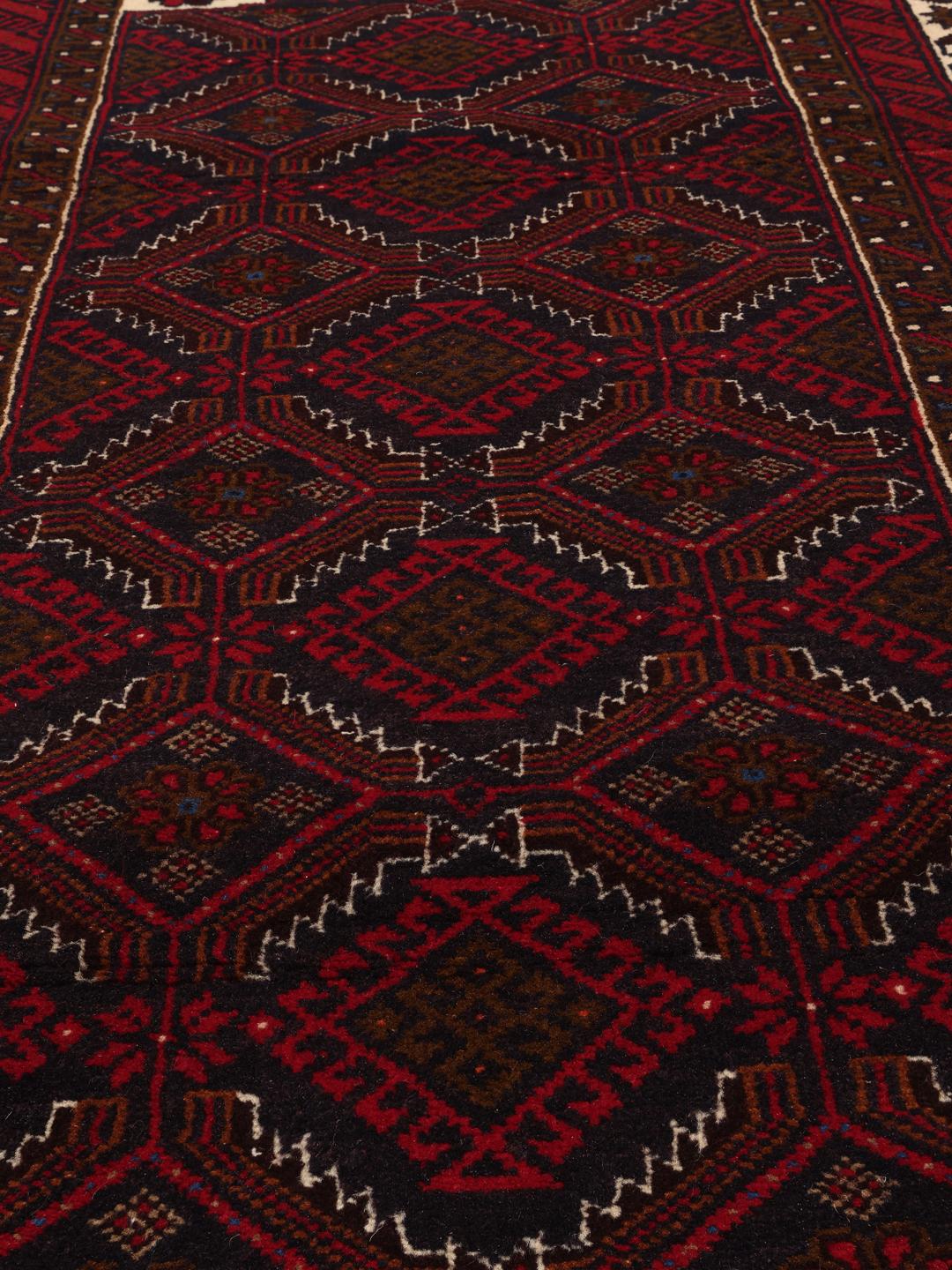
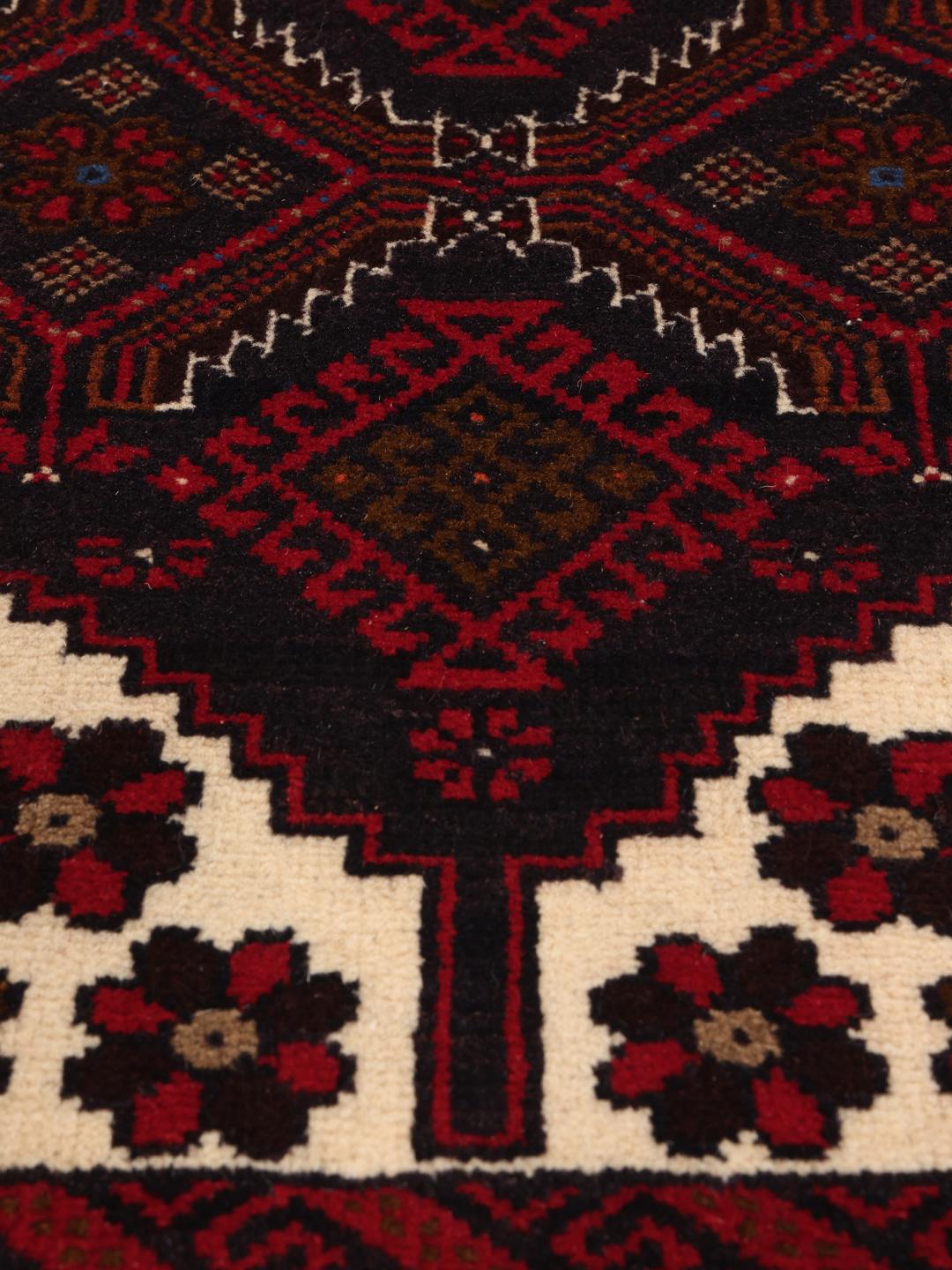
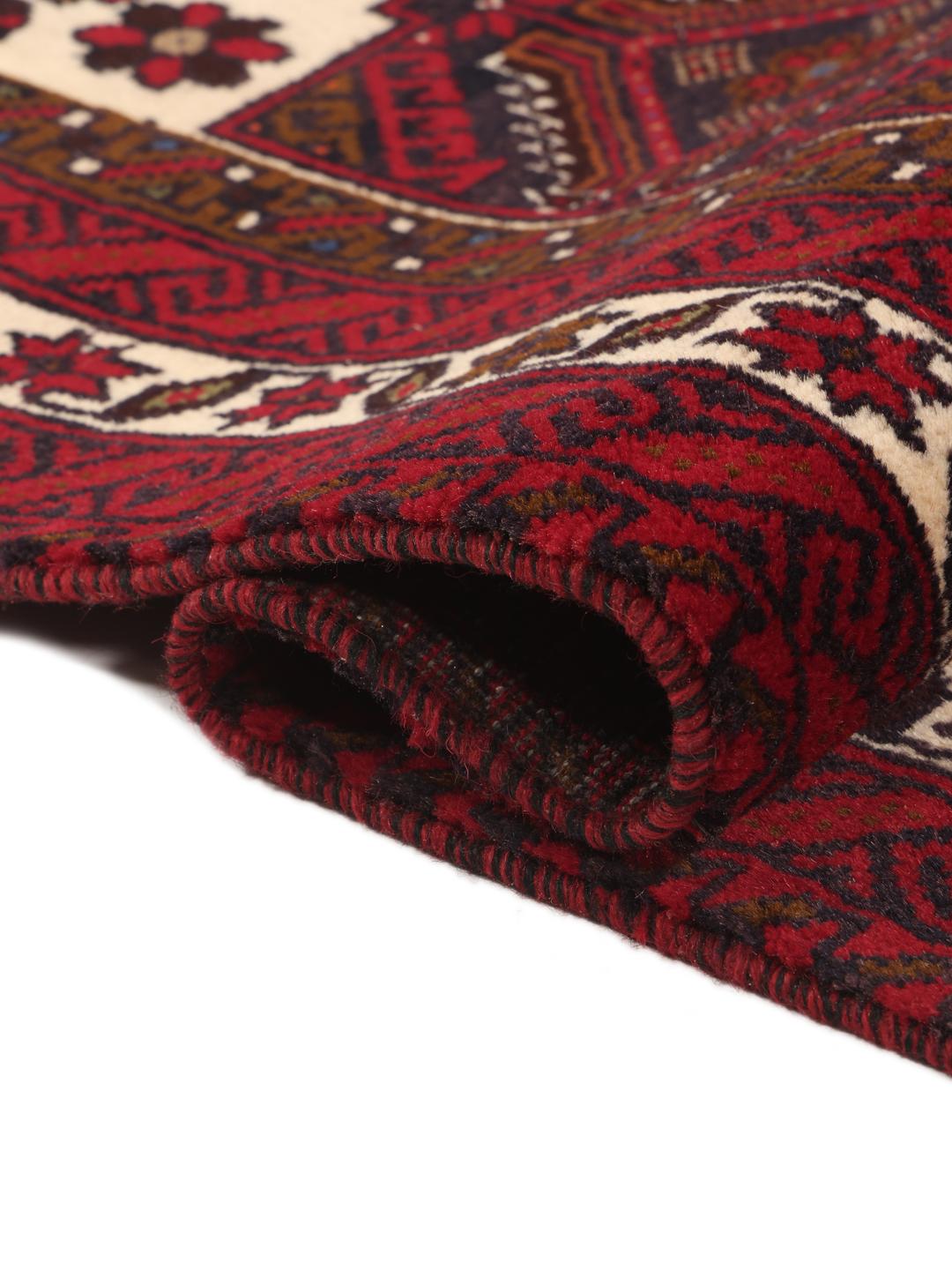
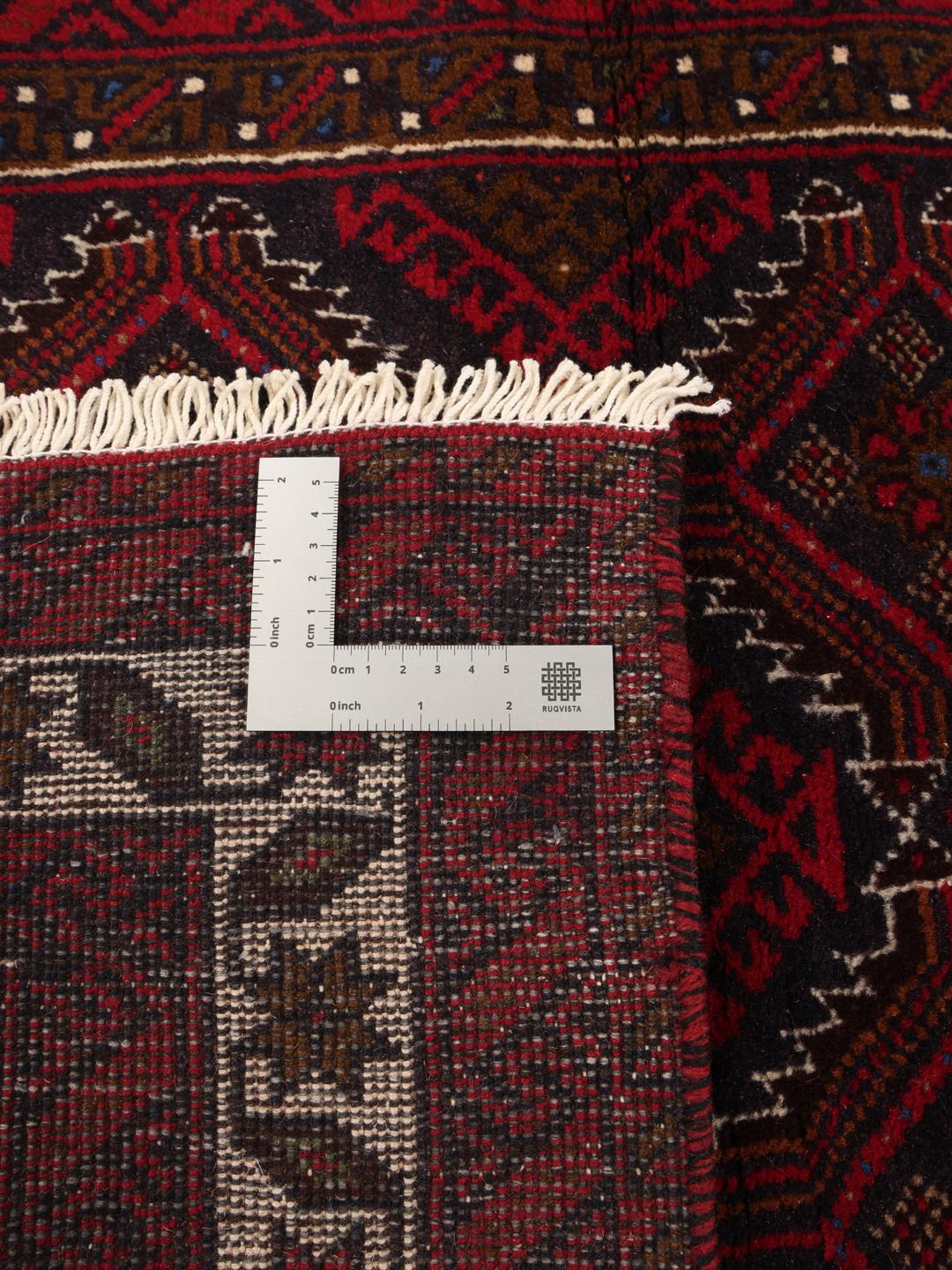
Visually, these rugs are defined by their intricate geometric field patterns, often featuring repeating medallions or tribal motifs like the gul, and framed by elaborate, symbolic borders. The use of dark, earthy tones like deep reds, browns, and dark blues is a signature of the style, creating a sophisticated and grounded look that is immediately recognisable to those familiar with regional textile traditions.
Collecting a Baluch rug is an investment in a rich cultural heritage. Because these rugs are produced in limited quantities by small communities, they are highly valued by collectors who appreciate the individual expression of the weaver. Owning one is an opportunity to connect with a centuries-old tradition where every pattern and colour choice tells a story, making it a significant addition to any home.